SoftBank lines up €75bn data centre investment in France

News

“France is uniquely positioned to become a leading AI infrastructure hub in Europe,” says SoftBank CEO Masayoshi Son.

This week, SoftBank Group has announced plans to invest up to €75 billion to deploy 5 GW of AI-focused data centres in France.

Phase one of the project will see €45 billion building out 3.1 GW of AI data centre capacity at a variety of locations in northern France including Dunkirk, Bosquel, and Bouchain.

The first of these new locations is expected to be operational by 2031, with additional sites to be announced at a later date.

SoftBank Group will work with national energy company EDF and digital automation specialist Schneider Electric throughout the project.

“SoftBank is proud to make this major commitment to France,” said SoftBank Group CEO Masayoshi Son. “With its industrial capabilities, talent base and national ambition, France is uniquely positioned to become a leading AI infrastructure hub in Europe.”

The French government praised the decision, similarly highlighting the favourable environment for data centre deployments.

“SoftBank’s decision to invest massively in AI datacenters in France – a first for the group in Europe – is testament to President Emmanuel Macron’s ambition to position France as a leading destination all along the AI value chain,” said Roland Lescure, Minister of Economy, Finance, & Industrial, Energy, & Digital Sovereignty. “ It reflects our country’s substantial assets: fast access to the most reliable electrical grid in Europe, a strong digital and industrial ecosystem with a skilled workforce, and a government that works in unison with local authorities and stakeholders to fast track procedures for strategic projects.”

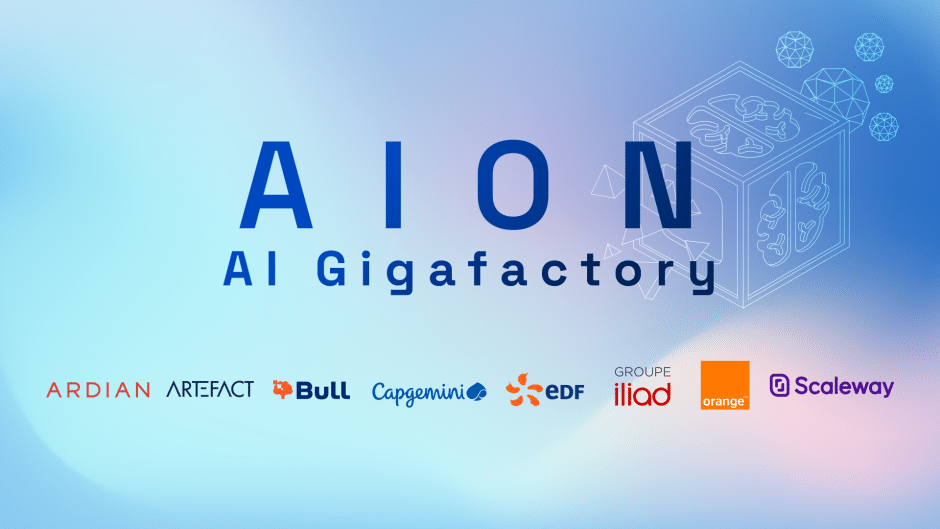
France is quickly becoming something of a European champion for AI data centres, with major tech and telco consortium AION pledging to build an ‘AI gigafactory’ in the country just last month.

For SoftBank, on the other hand, this announcement comes as an addendum to its Stargate Project, which pledges to deploy $500 billion-worth of AI infrastructure in partnership with Open AI over the next four years.

As well as expanding its AI capacity, SoftBank is also digging deeper into the AI value chain. Last month, the company announced plans to build its own batteries to support its own AI data centres, suggesting that these batteries could eventually be sold to others.

Also in the news
TELUS and L-SPARK give Canadian startups access to AI supercomputer
Belden to acquire RUCKUS Networks for $1.85bn
VMO2 taps Suffolk solar farm for 10 years of clean energy

BT outlines mobile video pilots with Meta

Press Release

When we watch videos on our phones, we expect them to load instantly and play smoothly – even in the busiest places or at peak times. But as demand for video continues to grow, mobile networks can sometimes come under pressure, leading to buffering or drops in quality.

Keeping videos smooth on the UK’s best mobile network 

That’s why we’ve introduced a range of tools across our industry-leading EE network to ensure seamless performance for customers – from capacity-boosting small cell mini-masts to our world-first implementation of Advanced RAN Coordination (ARC) technology. This helps improve everyday experiences like streaming video, scrolling social media and watching live content on the go. As part of BT, EE benefits from the scale, investment and innovation that enable us to keep the UK at the forefront of connectivity. 

Working together with Meta  

But it’s also important that we work with content providers to tackle this shared challenge, and so we’re delighted to announce the success of a recent pilot with Meta which makes watching videos on Facebook and Instagram more reliable for EE mobile customers, even during periods of high network demand.  

The pilot saw the two teams test a smarter approach to video delivery using new congestion awareness technology that adapts automatically during busy periods, easing potential pressure on the network while maintaining a highquality experience for customers. In simple terms, it helps reduce those frustrating moments where videos buffer or stall when networks are busy. 

The ambition is simple: to help more people enjoy a smooth viewing experience, while at the same time reducing impact on the network.

Smarter video delivery during busy moments 

Rather than delivering video in the same way regardless of conditions, Meta’s congestion awareness technology intelligently responds when parts of the network are under pressure. By making small, realtime adjustments when detecting high cell load during peak moments, it reduces the amount of data needed without noticeably affecting video quality. This helps ease potential congestion so more people can keep watching without interruptions, while making better use of available network capacity. It also supports a more consistent experience when using video apps in busy areas like city centres, transport hubs or large events. 

Proven results for EE customers 

The pilot delivered strong results, including a 6–8% bitrate reduction when congestion was identified and around a 4% reduction in traffic to congested cells – all while maintaining a highquality experience for EE customers using Facebook and Instagram. That means fewer slowdowns and a more reliable video streaming experience on mobile data. With this success, the congestion awareness technology has now been rolled out across the EE network, and Meta will expand the solution to other markets and partners throughout 2026. 

This latest work builds on BT and Meta’s earlier collaboration to improve video performance for EE customers, further demonstrating how closer coordination between networks and platforms can support growing demand. As video continues to play a central role in everyday life, initiatives like this show how incremental innovation behind the scenes can deliver meaningful benefits for customers – while helping networks remain efficient into the future. 

UK’s fibre fiesta sees CityFibre’s Project Gigabit contracts ‘re-scoped’

News

The scale of the UK’s commercial fibre rollout means some target areas no longer warrant government support

Today, fibre network operator CityFibre and Government’s Building Digital UK (BDUK) agency have agreed to ‘re-scope’ the nine contracts the operator holds as part of Project Gigabit.

The decision, the companies say, comes “in response to the accelerated rollout of commercially funded full fibre across Project Gigabit areas”, meaning government subsidies are no longer necessary.

Officially launched in 2021, Project Gigabit promised £5 billion in government subsidies to help fibre network operators reach some of the UK’s hardest-to-reach premises.

In 2023, CityFibre won ten Project Gigabit contracts with subsidies totalling around £782 million. This funding, CityFibre said, would help the company to reach 1.3 million homes and businesses across rural or hard-to-reach areas.

Work related to each of the contracts was reportedly underway by the start of last year, with CityFibre saying it had reached 150,000 premises in the covered areas, 70,000 of which had made use of subsidies.

Now, following analysis of information gained from BDUK’s ongoing Open Market Review process, the partners agree that the scope of the contracts is too broad for today’s market conditions. As a result, the revised targets will see CityFibre aim for 450,000 rural or hard-to-reach premises by 2030, with 226,000 of these directly subsidised by Project Gigabit.

In addition, a £58.6 million contract covering Nottinghamshire and West Lincolnshire will be ‘returned’ to BDUK.

“We are immensely proud of CityFibre’s involvement in Project Gigabit, an ambitious programme that has helped unlock the benefits of full fibre infrastructure for households and businesses previously at risk of being left behind. BDUK’s commitment has helped spur further investment and continued innovation and the time is right to focus on where we will have the biggest impact as we establish the competitive digital infrastructure market the UK deserves,” said Simon Holden, CityFibre’s Chief Executive Officer.

The government was quick to take credit for facilitating the rapid rollout of fibre across the UK.

“Over the past 18 months, this government has delivered upgrades to more than 229,000 hard-to-reach premises across the country. Our reforms to the telecoms market have unlocked a surge in commercial broadband rollout, meaning many areas previously in scope for CityFibre’s Project Gigabit contracts will now be upgraded without cost to taxpayers,” said Liz Lloyd, Telecoms Minister.

The announcement notes that this revision “will not affect BDUK’s ability to achieve the UK government target of 99% UK gigabit coverage by 2032”.

Keep up to date with all the latest news with the Total Telecom newsletter

Also in the news
TELUS and L-SPARK give Canadian startups access to AI supercomputer
Belden to acquire RUCKUS Networks for $1.85bn
VMO2 taps Suffolk solar farm for 10 years of clean energy

Telia and QMill demonstrate a new quantum-enhanced data encryption method for mobile networks

ESPOO, FINLAND, May 26, 2026—Telia Finland and QMill have developed quantum-enhanced message encryption for mobile networks. QMill’s new encryption method is enabled by local or cloud quantum computers. Once completed, the method is designed to protect messages against attacks carried out using either classical or quantum resources.

”The security of our networks is becoming more crucial, especially for our mission-critical customers. In this first demonstration with QMill we focused on the most critical part of our network, but this method could be applied more widely and, in the long-term, it could potentially establish a new standard for encrypted communications,” says Jari Collin, Head of Customer Segment Defense, Telia Finland.

 “It is important that we were able to include Telia as a telecom operator in this phase. We will continue developing our quantum-enhanced security method with the objective of making it available as a standalone product, while also using it to complement other encryption methods by adding an additional layer of security,” says Hannu Kauppinen, CEO of QMill, which is a pioneering quantum algorithm and software company based in Finland.

The method has also been demonstrated to the Finnish Defense Forces. 

According to the C5 Division of the Defense Command Finland, “Encryption is a critical component of the Defense Forces’ information networks. It is important for us to monitor developments in both encryption and quantum technology, and to assess their impact on the systems used by the Defense Forces. Testing in collaboration with companies offers an interesting perspective on this.”

This demonstration complements Telia’s previous achievement of being the first commercial operator to successfully test quantum key distribution (QKD) in their network, done as part of Finland’s national quantum-secure network NaQCI.fi project. Quantum key distribution is based on transmitting quantum states. In the future, it could serve as one of the means of ensuring a high-level of security in dedicated infrastructure, as opposed to a standard mobile network, which was used in the latest demonstration.

In the future, Telia and QMill will expand the newly demonstrated point-to-point connection with quantum-enhanced security to a wide variety of use cases as part of their ongoing collaboration project.

_ _ _

About Telia
Telia is a technology company that provides telecommunications, IT and digital services to its millions of consumer and business customers as well as public administration. Telia has approximately 3300 employees in Finland, and our customers have nearly 4.4 million subscriptions in our various services. Safety is the starting point for everything we do. Telia strengthens its critical infrastructure by investing approximately EUR 200 million annually in Finland’s nationwide telecommunications networks and secure ICT services.

Telia Finland is part of Telia Company, which operates in the Nordic and Baltic countries. Telia Company’s revenue in 2024 was EUR 8 billion. The company is committed to achieving net zero emissions throughout its value chain by 2040.

Read more: www.telia.fi/medialle,  X: @teliafinland, LinkedIn: @Telia.


About QMill
QMill is a quantum‑algorithm and software company making quantum computing practical and accessible for real-world industrial use cases on existing and near‑term quantum computers. The company develops algorithms especially geared towards the NISQ era, supporting quantum researchers and developers as well as industrial sectors such as defense, energy, telecom, and transport. QMill is headquartered in Espoo, Finland. www.qmill.com

The Persian Gulf topped our 2026 cable risk index. Here’s what it means for operators and what they can do about it

Contributed Article

by Pete Harvey, Senior Product Manager Subsea, Starboard Maritime Intelligence

When Starboard published Cable Risk Intelligence 2026 (Issue 1) in April, the Persian Gulf scored 4.6 out of 5.0 on our risk index, the highest of the 25 cable landing zones we assessed globally. At the time, that rating was grounded in a combination of geopolitical tension, high traffic density, constrained repair access, and documented vessel behaviour around cable routes in the region.

Since then, the situation has deteriorated further. Iran has explicitly threatened to sever submarine cables in the Strait of Hormuz as part of the 2026 conflict, with state media circulating maps of Gulf undersea cable routes. At least 17 cable systems transit the Red Sea and Persian Gulf, carrying the majority of data traffic between Asia and Europe. Cable construction work across the Gulf has come to a standstill because repair ships can’t operate in active conflict zones.

The Persian Gulf rating was a forecast of the conditions that have now materialised.

The window of opportunity

Most operators find out a cable is at risk through a service degradation report from a customer, an optical monitoring alarm, or a repair dispatch. By the time any of those signals fire, the cable is already cut, and the repair window begins. Under normal conditions, that window averages 40 days for a deepwater fault. In a conflict zone there’s no definitive end.

The solution is to collate and analyse the risk data within the prevention window, giving operators a chance to intervene before a cable is struck.

Whether accidental or deliberate, every cable incident is preceded by vessel behaviour that is detectable before damage occurs. An anchor drag begins as a vessel drifting over a known route. A trawler working a protected zone slows to trawling speed before it makes contact. A vessel executing a deliberate act loiters, changes course without apparent purpose, or goes dark in a sensitive area. If you’re looking for them in the right way with the right tools, these patterns can be seen in the data before the fault event.

Early detection in practice

Starboard fuses AIS, satellite data, fibre sensing (DAS and SoP), and bathymetry into a single operational view, then applies behavioural models to flag when vessel activity near a cable route deviates from established patterns. The output is a prioritised alert with enough vessel data for a Marine Operations Centre or an operator to act.

In a New Zealand cable protection trial conducted with the New Zealand Government, commercial cable owners, and a marine operations centre, this approach generated 86 alerts, prompted 17 VHF vessel calls, and resulted in three vessels changing course, none of which required waiting for a fault signal.

When Starboard’s vessel risk alerts are integrated directly into a carrier’s NOC software, response time drops from 25 minutes to 3. The compressed timeline from signal to action is where damage is prevented.

Hormuz

The events of 2026 have clarified that ambiguity is itself a threat vector. When a vessel drags anchor over a cable, attribution is uncertain. When a sanctioned vessel transits a cable corridor slowly and without AIS, intent is unclear. When a cable is cut in or near a conflict zone, the line between accident and deliberate act is difficult to establish, and difficult to act on legally or operationally.

Starboard’s behavioural models are designed to provide information, clarity, and explanation that shed light on the challenges. They flag deviations from established traffic patterns even when AIS data is absent or inconsistent, and correlate vessel activity with known risk indicators to deliver an assessed picture rather than a raw data feed.

This is the operating environment the Submarine Networks EMEA and Subsea Security Summit communities are navigating in 2026. The technology to detect threatening behaviour before it causes damage exists today. The question is whether it’s integrated into the operational workflows of the teams who need it.

Read the full risk index

Cable Risk Intelligence 2026 (Issue 1) covers 25 cable landing zones across the Baltic, Red Sea, Taiwan Strait, North Sea, Persian Gulf, and trans-Atlantic and trans-Pacific corridors. The interactive map and full methodology are available at starboardintelligence.com/learn/where-submarine-cables-are-most-at-risk-in-2026.

Starboard Maritime Intelligence provides maritime domain awareness that helps governments, defence agencies, and critical infrastructure operators detect risks, prevent threats, and build resilience in real time. Partners include Ciena, Tampnet, Alcatel Submarine Networks, Kordia, and Searisk.


Submarine Networks EMEA takes place in London tomorrow! Get your ticket and join the discussion today.

Find Starboard Maritime Intelligence at Stand 10 of the co-located Subsea Security Summit & Expo.

AION consortium set to build French AI Gigafactory

Press Release

In the coming years, the competitiveness of EU economies will directly depend on their ability to access massive computing power that is available, affordable and sovereign. The challenge is industrial, financial and strategic: enabling European companies to train, deploy and operate their AI models under controlled conditions in terms of performance, cost and sovereignty.

This is precisely the aim of the project put forward by the AION consortium.

Mobilizing French excellence to build world-leading AI infrastructure

In response to the rapid adoption of AI and the explosion in demand for computing power, AION brings together all of the critical skills required for creating new-generation European infrastructure.

The consortium leverages the complementary strengths of a wide spectrum of benchmark players covering the entire value chain: supercomputers, microprocessors, quantum computing solutions and critical infrastructure, expertise in energy, cloud platforms, sovereign AI and the development and operation of datacenter infrastructure, as well as AI deployment capabilities, investment capacity and industrial know-how.

AION will also be able to draw on a broad ecosystem made up of technological, academic and industrial partners, as well as user companies such as Le Crédit Agricole, Equans, Future4Care, GENCI, Hugging Face, INRIA, Kyutai, LightOn, Multiverse Computing, Nokia, Opcore, Quandela, PariSanté Campus, Schneider Electric, SiPearl, Sopra Steria, Verne, VSORA and ZML.

France – a strategic choice for hosting a European AI Gigafactory

France has unique strengths for hosting infrastructure of this magnitude. It has abundant, affordable, sovereign and low-carbon electricity thanks to its energy mix that is mainly made up of nuclear and hydraulic power, as well as robust digital infrastructure and recognized expertise across the whole value chain, particularly in data centers, cloud services and high-performance computing.

France has also established itself as one of the most dynamic AI ecosystems in Europe thanks to the quality of its research, the emergence of world-class tech players, and a dense pool of scientific and industrial talent. From research labs to start-ups, through to major end-user companies, it brings together the full range of skills needed to build a competitive AI industry on a European scale.

Hosting an AI Gigafactory would enable France to offer all the conditions for strengthening European tech sovereignty, accelerating AI adoption by private companies and public-sector players, and driving competitiveness and innovation.

An ambition built on four pillars

The AION consortium is based on four fundamental pillars:

  • Performance: deploying world-class AI infrastructure to serve the European economy.
  • Trust: reinforcing Europe’s strategic autonomy via complete control over the AI value chain – from hardware to open source software – thanks to the support of sovereign players.
  • Openness: promoting the use of open source technologies, as well as partnerships to strengthen the European ecosystem.
  • Responsibility: developing AI for the benefit of European research, businesses and citizens with a particular focus on containing its environmental footprint.

An open consortium to bring together the European ecosystem

The alliance announced today marks the starting point of a project aimed at bringing together all French and European players who are ready and willing to contribute to this shared industrial ambition.

“As an independent European player in data and AI, Artefact is uniquely positioned to observe the rapid growth in demand for computing power, as well as the lack of sufficient sovereign solutions. We’re technology-agnostic and our priority is to provide our customers with truly resilient solutions based on three dimensions of sovereignty: technology, operations and data. There’s no time for companies to wait – the infrastructure of the future needs to be built today. By joining the AION consortium, Artefact will be able to deploy the most ambitious AI use cases for its customers, within a fully sovereign framework, ensuring freedom, security and resilience.” Vincent Luciani, Executive President of Artefact

“It’s time to build a European AI ecosystem together, based on world-class European infrastructure and underpinned by France’s outstanding low-carbon energy capabilities. United by this ambition, we’re delighted to be teaming up with our friends at the iliad Group and the Orange group to join and steer the AION consortium, which will also be supported by other major industrial and tech players. Alongside our partners, we’re proud to be putting our industrial and financial expertise to the service of developing sustainable and resilient AI computing capacity on a large scale.” Benoît Gaillochet, Head of Infrastructure Europe at Ardian

“This initiative is particularly important for Bull in its capacity as the only player capable of guaranteeing a mostly European supply chain for AI, cloud and supercomputer infrastructure. We see AION as a natural extension of our strategic pathway, bringing additional computing capabilities dedicated to simulation and AI, developing new AI-optimized hardware technologies, and deploying our software platform and data science services to enable the production of industrial AI use cases. Through AION, we’re reaffirming our commitment to strengthening Europe’s ability to develop and operate next-generation AI and cloud infrastructure, while laying the foundations for a more resilient, competitive and independent technology ecosystem.” Emmanuel Le Roux, CEO of Bull

“Europe has everything it takes to write one of the most inspiring chapters of the AI revolution: excellence in research, industrial champions, low-carbon energy and values based on the trust and sovereignty of the European system. What was missing was the ability to bring together these strengths based on a shared project that can rise to the challenges at stake. With AION, this goal is achievable. It’s a French venture, led collectively, for the benefit of the whole of Europe. By joining this consortium, Capgemini is committing to put all of its experience and its global network to the service of a cause that is bigger than us all individually: building sovereign and sustainable AI infrastructure that is open to the entire European ecosystem. As a global leader in data and AI-powered business transformation, Capgemini has a specific responsibility in this project. Creating European AI gigafactories means offering our clients the possibility of using sovereign solutions by integrating the latest technological advances with no trade-off between performance and control. Technological sovereignty cannot be decreed – it has to be constructed, brick by brick, with the right partners. We are proud to be a part of this adventure.” Etienne Grass, Chief AI Officer at Capgemini Invent

“France has major strengths to lead the way in the development of AI infrastructure, including competitively-priced, sovereign and low-carbon electricity. With this consortium, we’re embracing a shared ambition to build a world-class European AI gigafactory based in France, and EDF intends to fully contribute to this strategic momentum for Europe.” Beatrice Bigois, Group Senior Executive Vice-President, Customers & Energy Services, at EDF

“In a world where computing capacity is becoming a lever of power, Europe cannot allow itself to depend on infrastructure designed, financed and operated elsewhere. With AION, our aim is to unite a range of leading players to build world-class European AI infrastructure based in France. AION has unprecedented technological clout, bringing together the very best of French and European digital, industrial and energy expertise, and the iliad Group intends to contribute fully to the project.” Thomas Reynaud, Chief Executive Officer of the iliad Group

“France has unique assets to shape the next chapter of European AI – front-ranking digital infrastructure, low-carbon energy, and one of the most dynamic research and innovation ecosystems in Europe. For Orange, joining the AION consortium reflects our strong conviction that Europe needs collective action to create a powerful, open and inclusive European AI to drive the continent’s competitiveness. With its sovereign cloud and trusted AI capabilities, Orange brings to this project what lies at the core of its identity: a trusted player that connects, secures and delivers sovereign digital services for companies, small businesses and individuals.” Christel Heydemann, CEO of the Orange Group

“I’m delighted that the AION initiative launched last year is continuing to gain traction and attract broad support. Within this richly diverse industrial alliance, Scaleway will focus on its core expertise of providing an open and interoperable sovereign cloud and AI platform serving businesses, researchers and public-sector players. I’m convinced that this project, which includes leaders across the entire value chain, will help consolidate the foundations of a European AI sector built on openness, control and trust.” Damien Lucas, CEO of Scaleway


Bharti Airtel launches commercial network slicing service

Press Release

Bharti Airtel has announced the launch of Priority Postpaid, a new service that leverages 5G slicing technology to deliver superior and more consistent experience to customers on postpaid. This service is specially built for busy customers who depend on uninterrupted connectivity for work, entertainment, or online collaboration.

For this service, Airtel has upgraded its 5G network with advanced capabilities of slicing technology. This makes the network more efficient, creates more capacity, and provides the capability to use this capacity in a targeted manner for delivery of a superior experience for Priority customers. By intelligently and dynamically segmenting network capacity, Airtel is offering a stable and dependable experience for postpaid customers, even when traffic demand is high.

Over the past year, slicing based 5G services have been launched in many countries like USA, Singapore, United Kingdom and Malaysia. Airtel’s launch is the first such launch in India, reflecting Airtel’s continued investment in building a smarter, more resilient, and future-ready digital network and reinforces its commitment to combining advanced technology with customer-centric innovation.

Commenting on the launch, Shashwat Sharma, MD & CEO – Airtel India, said, “Our focus at Airtel is on delivering meaningful innovations that enhance our customers’ experience. Priority Postpaid is our latest innovation powered by the 5G slicing technology. It provides a superior, more reliable, and dependable experience to our customers — whether they are attending a client call in traffic, or streaming at a packed concert, or booking a cab in a crowded market.”

Airtel Priority service is available for customers on all our postpaid plans. Existing customers will start enjoying the benefit automatically. Prepaid customers or customers wanting to switch to Airtel Priority postpaid can do so easily through the Airtel App or by visiting any Airtel Store.

Priority Postpaid Plans


Customers can enjoy our Priority service on any 5G SA‑enabled smartphone, with their latest software upgrades. Customers for whom an upgrade is pending, will see a pending action showing in the ‘Settings’ section of their phones. Customers can also check their phone readiness for Airtel Priority services by logging on to the Airtel App.

Keep up to date with all the latest news with the Total Telecom newsletter

Also in the news
TELUS and L-SPARK give Canadian startups access to AI supercomputer
Belden to acquire RUCKUS Networks for $1.85bn
VMO2 taps Suffolk solar farm for 10 years of clean energy

Telstra and Ericsson team up to target 6G

News

The agreement spans various aspects of 6G research, including trips to both parties’ research centres

Telstra and Ericsson have signed a letter of intent to collaborate on 6G research.

The agreement will see the companies collaborate on the research, standards development, and real-world testing of 6G technology,

It also includes mutual site visitations, with Telstra engineers visiting Ericsson’s testbed in Sweden, and Ericsson staff travelling to Telstra’s Innovation Centre on the Gold Coast.

Further details on the partnership were sparse, but both partners emphasised the role AI had to play in making 6G networks more intelligent and more customisable for customers. This feature is, in fact, a key element of Telstra’s Connected Future 30 strategy, which aims to allow customers to purchase configurable connectivity services at individual prices.

“Mobile connectivity has been one of the most powerful economic engines of modern Australia. As the first G which is AI-native, 6G will be the most intelligent network yet – capable of advanced network connectivity, and new Network as a Product innovations such as the ability to sense the environment around the network. The latter opens the potential for new use cases for public safety, agriculture, weather detection and more,” said Shailin Sehgal, Telstra Group Executive of Global Networks & Technology.

“We are on a clear and exciting trajectory – from 5G Standalone today, to AI-powered 5G and autonomous networks, towards AI-native 6G that is meeting the evolving and future business needs,” added Erik Ekudden, Ericsson Chief Technology Officer. “6G will redefine what a network fundamentally is – not just an AI-native technology platform, but a platform that senses, adapts and orchestrates resources to deliver outcomes for enterprises and society at scale; simply an intelligent fabric.”

This type of partnership is largely to be expected, with Ericsson having been Telstra’s primary RAN partner for many years. The companies made similar agreements during the early days of the 5G era, though these were often based around delivering greater speeds.

Today, Ericsson and Telstra’s focus has increasingly shifted away from pure speeds and towards the benefits of AI integration and network optimisation. It seems likely that their initial joint research on 6G will follow that same path.

Keep up to date with all the latest news with the Total Telecom newsletter

Also in the news
TELUS and L-SPARK give Canadian startups access to AI supercomputer
Belden to acquire RUCKUS Networks for $1.85bn
VMO2 taps Suffolk solar farm for 10 years of clean energy

Sparkle Expands Quantum Safe Connectivity With Equinix

Press Release

Sparkle, the first international service provider in Italy and among the top global operators, announces the commercial availability of its Quantum Safe Interconnect (QSI) across 20 Equinix International Business Exchange® (IBX) data center locations in  Europe, the Americas and Asia where Equinix Managed Solutions are offered.

After successful validation through a Proof of Concept (PoC) conducted over a secure Internet Protocol (IPsec) tunnel between Frankfurt and Singapore, Sparkle’s QSI is now available to enterprises, carriers and hyperscalers seeking quantum-safe protection for their cross-site VPNs, hybrid infrastructures and distributed multi-cloud environments.

Unlike approaches based on dedicated transmission environments, specialized hardware chains or rigid point-to-point architectures, Quantum Safe Interconnect is a software-based overlay solution that can be deployed on existing network and security infrastructures. It integrates seamlessly with virtual firewalls, cloud environments and interconnection platforms, and can be delivered through a flexible Network-as-a-Service (NaaS) model. This makes QSI particularly suited to modern infrastructures, where organizations must secure traffic across regions without redesigning their networks. It enables rapid adoption, scalable multi-site deployments over long distances, and a gradual transition to quantum-resilient connectivity.

The commercial availability of Quantum Safe Interconnect across Equinix locations marks a major milestone in Sparkle’s strategy to extend QSI into leading interconnection environments worldwide”, said Antonella Sanguineti, Head of Networking, Cloud, Security & Identity Solutions at Sparkle. QSI stands out for its ability to deliver quantum-safe protection in real operational contexts as a scalable software-based service. This achievement reflects a shared vision with Equinix to develop secure, interoperable and future-ready solutions across a global digital ecosystem.

Sparkle is innovating in the integration of next-generation security directly into the environments where dense ecosystems of customers build and scale their digital infrastructure at Equinix,” said Joe Crawford, Vice President, Equinix Managed Solutions. “They have demonstrated an approach that can be integrated into real world IPsec, data center and interconnection environments, helping customers strengthen cyber resilience across globally distributed infrastructures.”

Sparkle will continue to industrialize and expand the solution across the broader Equinix ecosystem, including Equinix Fabric®, accelerating the adoption of quantum-resilient connectivity worldwide.

About Sparkle

Sparkle is TIM Group’s global operator, first international service provider in Italy and among the top worldwide, offering a full range of infrastructure and global connectivity services – capacity, IP, SD-WAN, colocation, IoT connectivity, roaming and voice – to national and international Carriers, OTTs, ISPs, Media/Content Providers, and multinational enterprises. As a leading player in the submarine cable industry, Sparkle owns and manages a network of more than 600,000 km of fiber stretching across Europe, Africa, the Middle East, the Americas, and Asia. Sparkle’s sales team has a global presence, with representatives in 32 countries.

Find out more about Sparkle following its X and LinkedIn profiles or visiting the website tisparkle.com


Media Contacts

sparkle.communication@tisparkle.com

X: @TISparkle

Connecting Europe Facility Digital: For more resilience and security


Contributed Article

by Marc Tachelet, Director of the European Health and Digital Executive Agency (HaDEA)

Since 2021, CEF-Digital has invested €615 million in 75 projects, spanning 18 EU countries and 10 overseas territories. These cables are strategic and critical assets, designed to:

  • leverage private investment in European digital infrastructure;
  • provide resilient high-speed coLnectivity to all EU citizens, including in the Outermost Regions and Overseas Countries and Territories; and
  • ensure sovereignty of our backbone network, as well as the connections with key partner countries.

This year again, the CEF-Digital programme continues striving for these objectives, with two new calls for proposals open until 30 June 2026:

  • A call (CEF-DIG-2026-GATEWAYS) with a substantial budget of €180 million has been launched to support the deployment or replacement of backbone networks – in particular submarine cables but also terrestrial backbone fibre networks and ground stations for satellite communications – that address security risks, vulnerabilities, and resilience in the EU core digital infrastructure.
  • Additionally, a €20 million call (CEF-DIG-2026-SMART-CABLES) is open, aiming to enhance existing submarine telecommunications infrastructure with SMART (Science Monitoring And Reliable Telecommunications) capabilities. This initiative seeks to integrate sensors and other monitoring components measuring temperatures, detecting acoustic or other signals, and more, thereby collecting real-time ocean and seismic data as well as improving the monitoring functionalities of these critical communication networks.

Europe has a vision for the future which was exposed last year in the form of an EU Action Plan on Cable Security. One of its measures called on the European Commission to set up a group of experts from EU countries and the cybersecurity agency ENISA to identify the priority areas where the EU should focus to enhance our resilience, and where private investment alone may not be commercially viable. Last February, this work resulted in the publication of a list of Cable Projects of European Interest (CPEIs), together with the Cable Security Toolbox, which recommends a set of mitigation measures to address the identified risk scenarios based on threats, vulnerabilities, and dependencies. This is where we will focus our investment over the coming years.

Europe, like all other continents, needs to be agile and respond to the changing geopolitical situations. Some submarine cables connecting Europe have suffered multiple incidents in recent years, which has raised awareness regarding the criticality and vulnerability of submarine data cables.

With the mobilisation of all operators involved in this section, I am confident that, together, we can better coordinate our actions, address those threats, and ultimately enhance the resilience of all submarine cable infrastructures.


Marc Tachelet, the newly appointed Director of the European Health and Digital Executive Agency (HaDEA) is leading the EU’s ambitious investments in digital infrastructure through the CEF-Digital programme. Attending Submarine Networks EMEA for the first time, he will in his keynote address how Europe is determined to continue owning, securing, expanding and fixing its digital gateways.

You can find HaDEA at Stand 2 on the show floor at #SubNetsEMEA