Introducing the Cognitive Model of Digital Transformation

This Industry Viewpoint was authored by David W Wang

Ironically, mindset changes often fall behind technological, economic, and social-cultural changes. Human beings are hardwired to resist change. Part of our brain—the amygdala—interprets change as a threat and releases the hormones for fear, fight, or failure. The good news is that just as a child goes through some mental development leaps in learning the new world, we can also achieve mindset leaps for digital transformation by following the Cognitive Model of Digital Transformation introduced here. … [visit site to read more]

Solar-powered rural telephony in Nigeria gets USTDA support

A US Trade and Development Agency-funded feasibility study for Nigeria’s Hotspot Network Limited has led to the issuance of financing for the deployment of 120 solar-powered rural telecommunications base stations across 22 states in Nigeria.

USTDA’s focus is the export of US goods and services for priority infrastructure projects in emerging economies. In this case the project will utilize renewable energy to provide last-mile mobile connectivity to underserved rural communities that lack the requisite power infrastructure for reliable telecommunications.

Hotspot is a telecommunication infrastructure and solar-powered rural telephony network provider, using renewable energy and climate-smart technology in operating telecom sites in off-grid rural parts of Nigeria.

Co-financing the project are Nigeria’s Infrastructure Credit Guarantee Company (InfraCredit) and the Climate Finance Blending Facility, funded by the United Kingdom Foreign, Commonwealth and Development Office (FCDO). This co-financing attracted matching investments from nine Nigerian institutional investors.

USTDA’s feasibility study, announced in 2021, assessed Nigeria’s rural telephony market, defined the project’s technology, cost and revenue options, and recommended financing and implementation plans.

USTDA’s support for this activity results from a memorandum of understanding (MoU), also in 2021, with InfraCredit to jointly identify infrastructure projects in Nigeria that could benefit from project preparation funding and subsequent credit enhancements. The sectors of cooperation highlighted in the MoU include clean energy, information and communications technology, transportation, agribusiness and healthcare infrastructure.

MORE ARTICLES YOU MAY BE INTERESTED IN…

Dark Fibre Africa plans fibre network expansion in South Africa

Hard on the heels of yesterday’s news about its sister company Vumatel’s success in the South African FTTH market, fibre infrastructure provider Dark Fibre Africa (DFA) has launched a R400 million (about US$21 million) fibre network infrastructure expansion project.

The news came in the form of a statement from Maziv, the parent company of both DFA and Vumatel.

Quoted in a number of local news outlets, Maziv says the reason for the expansion was to enhance provision of connectivity hardware to allow high-speed connectivity to more businesses and contribute to South Africa’s digital transformation efforts, “enabling greater access to online services and improving economic growth”.

This isn’t unexpected. The project has apparently been in trial phase since February and is now being rolled out at scale.

News resource MyBroadband says DFA will deploy 800 additional dry underground distribution cabinets (DUDCs) as part of the upgrade project. These units have been developed and manufactured in South Africa to DFA’s specifications.

Maziv says the additional units will dramatically shorten the distance data travels from the customer and over the network using dedicated cables, ensuring the shortest possible installation times and, Maziv suggests, reduced downtime during repairs and maintenance activities. The infrastructure upgrade will be carried out in three phases over roughly 18 months.

The project should also accommodate future growth and demand on the network, with the ability to scale up fibre deployment to meet demand as it increases.

This news comes a week after South Africa’s Competition Commission blocked a Vodacom takeover of Vumatel and DFA, though the proposal may now be taken to the country’s Competition Tribunal.

MORE ARTICLES YOU MAY BE INTERESTED IN…

Safaricom gets the nod for rise in M-Pesa account and transaction limits

Kenya’s leading operator Safaricom says it has increased account limits on its wildly popular M-Pesa mobile money service to KSh500,000 (about US$3,477) following approval from the Central Bank of Kenya.

The higher account limit was effective from 15 August 2023, for all M-Pesa customers.

In addition to the higher account limit, M-Pesa customers are also set to enjoy an increased daily transaction limit of KSh500,000 per day. The current per transaction limits of KSh150,000 (about US$1,043) will remain. However, customers can make as many transactions up to the daily limit as they wish.

Safaricom suggests the move is set to be a boost for businesses in the country, especially SMEs, as the share of cashless transactions continues to rise. In the last financial year to March 2023, more than 606,000 businesses were receiving payments through Lipa Na M-Pesa, with a total of KSh1.625 trillion (about US$11. 3 billion) transacted in the 12 months.

M-Pesa transaction limits were previously increased in March 2020 when the Central Bank of Kenya approved the doubling of transaction limits to KSh150,000 and daily and account limits to KSh300,000.

Of the new limits, Peter Ndegwa, CEO of Safaricom, says: “We appreciate the role that the Central Bank of Kenya has played by constantly providing guidance on innovations and protections that we have put in place to strengthen M-Pesa’s adherence  to KYC, anti-money laundering and other financial regulations and safeguards. The increased account limits will provide customers and especially small businesses with increased convenience as the share of cashless transactions continues to rise.”

MORE ARTICLES YOU MAY BE INTERESTED IN…

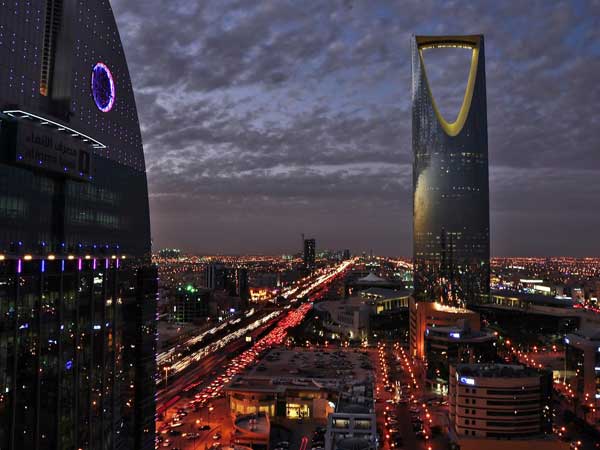
Saudi resort to host zero-carbon 5G network

Saudi Arabian service provider Zain and Red Sea Global (RSG), a multi-project developer, have unveiled what they call the world’s first zero-carbon 5G network at the Six Senses Southern Dunes resort at The Red Sea Project on the west coast of Saudi Arabia.

The Red Sea, as the project is known, is a vast land and property project focusing on luxury and ecotourism to attract visitors to the Red Sea coast. It is expected to be completed by 2030. Six Senses Southern Dunes is set to open during the first phase of development of The Red Sea, which is on track to be completed by the end of 2023.

The zero-carbon 5G network, designed exclusively for The Red Sea, will bring guests the highest speeds for 5G connectivity in the region and be powered by 100% renewable energy from over 760,000 solar panels that Red Sea Global has built to power the entire 28,000 square kilometre destination.

Designed using innovative 3D printing technology, the project will achieve three primary goals: preserving the environment, reducing emissions by utilizing renewable energy, and mitigating visual distortion. In addition the towers have been built to blend harmoniously with the landscape.

The creation of the 5G network aligns with Vision 2030’s goals of elevating clean energy reliance, curbing carbon emissions, and safeguarding the environment. Vision 2030 is a government programme that aims to increased economic diversification.

Due to open its doors to its first guests later this year, The Red Sea will consist of 50 resorts, offering up to 8,000 hotel rooms and more than 1,000 residential properties across 22 islands and six inland sites once completed. The destination will also include luxury marinas, golf courses, entertainment, F&B, and leisure facilities.

Red Sea Global is a closed joint-stock company wholly owned by the Public Investment Fund (PIF) of Saudi Arabia.


MORE ARTICLES YOU MAY BE INTERESTED IN…

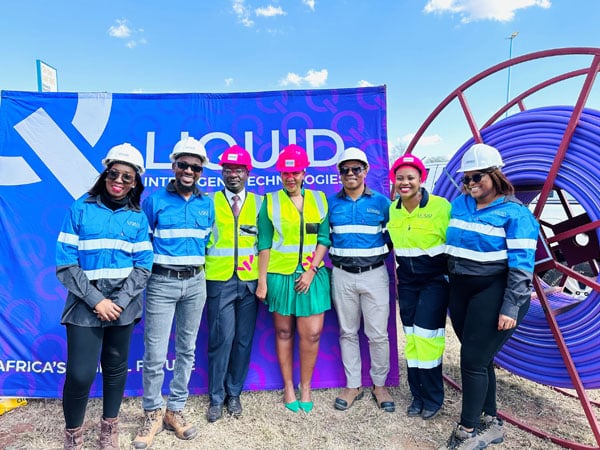
Liquid Intelligent Technologies launches the Gaborone Metro Ring

Liquid Intelligent Technologies has launched the Gaborone Metro Ring, a high-capacity, high-speed, and secure telecommunication network that will empower local businesses to deliver a huge boost to Botswana’s economic growth.

The Metro Ring is being rolled out in two phases and aims to benefit hundreds of businesses in its initial phase, with further connections planned for phase two. “The launch of the first phase will reduce tariffs for local and international data products, making it more accessible to small and medium businesses that have previously been disadvantaged as compared to the larger enterprises,” says Odirile Tamajobe, Managing Director of Liquid Intelligent Technologies Botswana.

Increased access to high-speed fibre connectivity is critical to improving telecommunication services for businesses and individuals, and will also bring about substantial social and economic benefits. By providing an extensive and efficient telecommunication network, this project plays a vital role in the growth and expansion plan of the region.

It will also generate employment opportunities and contribute to the overall development and expansion of the national economy. Specifically targeting high-density areas of Gaborone, this project is set to revolutionise telecommunications and support the surging demand for high-speed internet as an increasing number of local businesses continue their digital transformation journeys. 

“This project is a major milestone in Botswana realising its potential as one of Africa’s growing economic hubs. The completion of the first phase reinforces Liquid’s commitment to meeting the growing demand for connectivity and aligns with our vision of a digitally connected Botswana in which no one is left behind,” states Tamajobe.

The project also supports the government’s strategic plan, Botswana Vision 2036, to elevate the country’s economic status from upper-middle-income to high-income within the next 13 years. The Metro Ring represents a significant achievement in Gaborone’s telecommunications infrastructure, showcasing the successful collaboration between the public and private sectors to advance technology for the benefit of Botswana.

MORE ARTICLES YOU MAY BE INTERESTED IN…