Microsoft pledges US$50bn by 2030 to expand AI access across the Global South

Microsoft said it remains on track to invest US$50 billion by 2030 to expand access to artificial intelligence across emerging markets in the Global South, framing the move as part of a broader effort to narrow what it calls the growing “AI divide”.

The US technology giant made the announcement at the India AI Impact Summit, arguing that AI must be distributed more widely if developing economies are to fully benefit from the technology. It said that when adopted by young and rapidly growing populations, AI presents a significant opportunity for emerging markets to accelerate productivity and close economic gaps with advanced economies, describing it as one of the defining growth opportunities of the 21st century.

According to data from Microsoft, the Global North uses AI two times more than the Global South.

Microsoft said that as of November it had reached 117 million people in Africa with AI-enabled technologies through partnerships with companies including Cassava Technologies and Mawingu. These initiatives focus in part on extending last-mile connectivity to rural and underserved urban communities. The company said it is working towards reaching 250 million people globally through similar programmes.

Alongside infrastructure expansion, Microsoft highlighted increasing demand in emerging markets for greater sovereign control over data. Governments are seeking more options spanning public cloud, private sovereign offerings and deeper collaboration with national partners, reflecting a broader push for digital sovereignty.

In its most recent fiscal year, Microsoft said it invested more than US$2 billion in programmes aimed at building AI skills across the Global South. This funding includes financial grants, technology donations, training initiatives and discounted access to products and services.

The announcement comes as concerns grow over a widening global AI gap – with advanced economies rapidly scaling compute and infrastructure, while many developing nations risk being left behind without targeted investment in connectivity, skills and localised cloud capacity. Microsoft said acting with urgency is critical to ensure that AI development is inclusive rather than concentrated in a handful of markets.

Unified platform may accelerate product launches for African banks

Cloud-native banking platform 10x Banking has announced a strategic partnership with HassemPrag, a leading African digital banking and orchestration platform, targeting African banks.

The partnership will combine 10x Banking’s core banking platform with HassemPrag’s integration capabilities and regional expertise to deliver a unified, complete banking solution to replace legacy core banking technology.

This, the partners say, will enable African banks to modernise without risk, and increase the speed and scalability with which they can bring new products to market.

10x Banking explains that banks across the African continent are facing a combination of pressures, with evolving local regulations, rising fintech competition, and spiralling costs of maintaining legacy technology. Core infrastructure investments are rising across the region.

10x and HassemPrag claim that their proposition helps address these issues by delivering cloud-native infrastructure that enables the deployment of new products in months with lower operational overheads.

Jayesh Prag, CEO at HassemPrag, explins: “Banks need a de-risked path to transformation, and a partner that truly understands the market they operate in. Together with 10x, we’re going to offer that. In turn, African banks will now be able to slash the time to market for new products that improve how individuals and businesses across this high-growth region manage their money.”

10x Banking’s cloud-native core banking technology is proven by trusted financial institutions, like Old Mutual and Chase UK, to deliver at speed and massive scale. By combining this with HassemPrag’s deep regional expertise, excellence in integration, and flexible banking offering, says 10x, financial institutions across Africa will benefit from real-time processing to support instant payments and dynamic customer engagement.

The unified digital banking platform will feature a modular architecture, allowing banks to upgrade incrementally, without a risky ‘rip-and-replace’ of their existing core, taking out the uncertainty that comes with traditional core banking transformations.

With access to this technology, say 10x and HassemPrag, more banks can launch new digital services in weeks rather than years, reduce complexity, and unlock a wave of growth.

Telkom Indonesia explores US$1.5bn stake sale in NeutraDC

Telkom Indonesia is reportedly considering the sale of a significant stake in its data centre arm NeutraDC, in a move that could raise around US$1.5 billion.

According to Bloomberg, the operator has appointed financial advisers and is in the early stages of discussions with potential buyers. The potential divestment comes amid surging demand for AI-driven computing, which has driven up the value of data centre capacity and related infrastructure.

NeutraDC operates 34 data centres across Indonesia and Singapore. The company has previously said it is building two additional hyperscale facilities, adding to an existing hyperscale site in Jakarta, as it seeks to capitalise on growing demand for cloud and AI workloads.

The possible stake sale would mark Telkom Indonesia’s latest portfolio reshuffle. In October last year, the operator divested its wholesale fibre connectivity unit, Telekom Infrastruktur Indonesia, for IDR35.8 billion (US$2.1 billion), as it continues to optimise assets and unlock value from its infrastructure business.

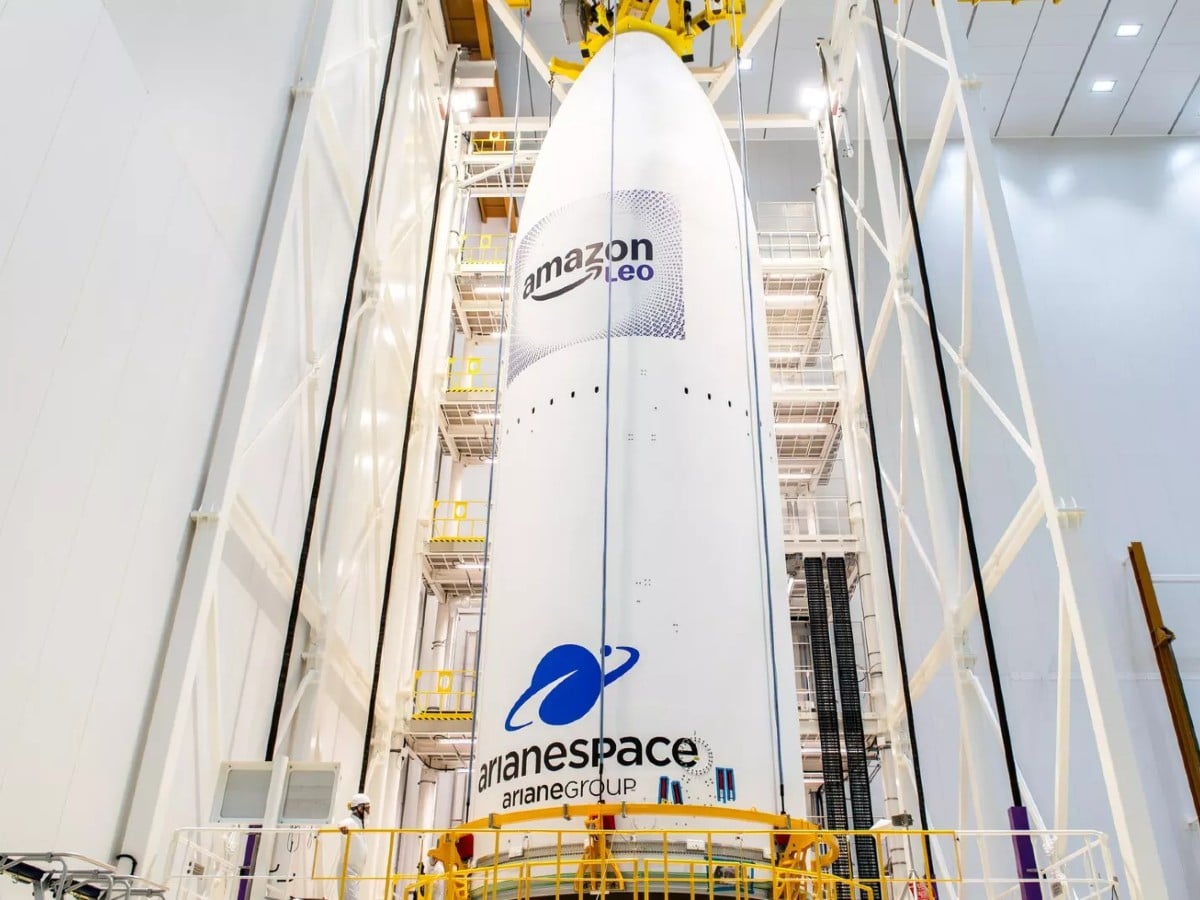
Amazon’s LEO unit deploys largest payload yet, lifts satellite count to 200

Amazon’s satellite connectivity arm Leo has launched its largest payload to date, expanding its low-Earth orbit (LEO) constellation to 200 satellites as it ramps up competition with SpaceX’s Starlink.

In a statement, Amazon said Leo – formerly known as Project Kuiper – completed its first heavy-lift mission, defined as payloads exceeding 20,000kg, aboard Arianespace’s Ariane 5 rocket on February 12. The launch took place at Europe’s Spaceport in French Guiana. Satellite deployment began around 90 minutes into the mission, with them being released sequentially over a 25-minute window.

Arianespace CEO David Cavaillolès said the mission marks the start of a planned series of 18 launches to strengthen Leo’s constellation. The first mission has been designated Leo Europe 01 (LE-01).

Rajeev Badyal, Vice President of Amazon Leo, described the launch as the company’s first of 2026 and its inaugural mission with Arianespace under an 18-launch agreement. He added that the use of heavy-lift vehicles will allow more satellites to be deployed per mission, accelerating the rollout of services to customers.

Russia blocks access to WhatsApp and further restricts Telegram

Russia’s government has blocked access to WhatsApp.

As reported by BBC News, Kremlin spokesman Dmitry Peskov claimed that the decision was taken « due to [WhatsApp owner Meta’s] unwillingness to comply with the norms and the letter of Russian law ». Peskov added that the ban could be lifted if Meta complied with the law and engaged with Russia’s government.

Meta criticised the ban as a government bid to “isolate over 100 million users from private and secure communication” by pushing them towards the state-owned messaging app Max, which it described as a “surveillance app” since it lacks end-to-end encryption. Meta argued that adopting Max would be a step backwards for users in terms of security.

Russian regulator Roskomnadzor this week also stated that it will further restrict access to the encrypted messaging app Telegram due to security concerns. The app is used widely in Russia, particularly by the country’s military forces, and the restrictions have been met with criticism by proponents of Russia’s invasion of Ukraine, arguing that it has restricted communications on the ground.

Russia’s government has attempted to justify its actions on legal grounds, arguing that WhatsApp and Telegram have failed to comply with Russian law by refusing to store domestic user data locally. It has also denied suggestions that Max could be used for surveillance, with Peskov describing it as simply an “available alternative” for WhatsApp’s 100 million Russian users.

The Max platform is part of Russia’s efforts to create a domestic alternative internet, which were already underway prior to the country’s 2022 invasion of Ukraine. The state-backed platform is being heavily pushed within Russia through media, advertising, and government endorsements. Last year, Russian authorities ordered that all devices sold in the country should have Max pre-installed, and the BBC reports that public sector workers including teachers are increasingly obliged to use the app for their work.

Earlier this year, Russia’s state-run news agency Tass reported that WhatsApp faced a permanent ban in the market before the end of 2026. In 2022, parent firm Meta was designated an “extremist” organisation by Russian authorities, and its services Facebook and Instagram have since been removed from the country’s list of functional domain names, meaning they cannot be accessed in the market without a VPN (virtual private network).

Could olive waste power a Croatian data centre?

Could the olive-growing industry be of benefit to data centre development? That’s a question that a new biomass-powered data centre planned in Croatia may be able to answer.

Croatian engineering solutions firm Inovapro says it is planning to develop a green AI data centre in Čaporice near Trilj, some 48 kilometres) northeast of Split, the coastal city that is the second largest in Croatia after the capital Zagreb.

The US$23.8 million project will total around 3MW. Construction work will begin soon and is due to be completed in the first half of 2027.

However, that alone isn’t what makes this facility newsworthy. After all the country has some 16 facilities from 13 operators, according to the Data Center Map website.

This facility, however, will be located at an energy park that will generate biomass power from waste from the olive industry, as well as waste from the tourist and hospitality industries.

As the Data Centre Dynamics news service explains, the agro-energy park in Čaporice would use waste material from olive growing. This is pomace, the pulpy residue remaining after fruit has been crushed in order to extract its juice. Most of the olive fruit is wasted after oil production and can be difficult to deal with due to acidity and toxicity.

There’s even a circular element to this, as heat from the data centre would be re-used by the energy park to dry out much of the olive pomace. Designed for a capacity of 12,900 tons of bio-waste per year, the plant is being built on a five-hectare site.

The news service Bioenergy Insight says that Inovapro, which specialises in rooftop solar systems, HVAC installations and other energy-related projects, is seeking co-financing from European Union funds to support the development.

It adds that the project reflects a broader trend of repurposing agricultural waste to meet the substantial energy demands of data centres, which require significant cooling and power infrastructure.

Cassava clears key hurdle for STANLIB stake in Africa Data Centres

Cassava Technologies has cleared another regulatory milestone in South Africa for the sale of shares in its Africa Data Centres (ADC) unit to STANLIB Asset Management, a private equity firm backed by Standard Bank and Liberty Global.

South Africa’s Competition Tribunal said it has “unconditionally approved” STANLIB’s acquisition of a stake in Cassava Africa Data Centres South Africa. Following the transaction, STANLIB will hold joint control of the business, with the option to acquire sole control at a later stage.

The decision follows approval granted by the Competition Commission in January, which concluded the transaction was unlikely to substantially lessen or prevent competition in any market and raised no significant public interest concerns.

ADC, a subsidiary of Cassava Technologies, operates nine data centres across six African countries, serving around 400 enterprise and hyperscale customers.

STANLIB made an undisclosed investment in ADC in October, aimed at accelerating the expansion of the operator’s South African footprint to meet growing demand for digital infrastructure in the country.

Musk dismisses reports of Starlink smartphone plans

Elon Musk has played down reports that Starlink is developing its own smartphone, pushing back on claims the satellite operator is seeking new revenue streams through a proprietary handset.

Reuters had reported that Starlink was exploring the idea of selling a phone with unique connectivity features designed to tap directly into its low-Earth orbit satellite network. Sources said details such as the device’s design and specifications were unclear, though the company had internally discussed the concept for several years.

Musk had previously fuelled speculation. Responding to questions on X about a potential “Starlink phone” in earlier comments, he said such a device was “not out of the question at some point,” adding it could be differentiated from existing smartphones by being “optimised purely for running max performance/watt neural nets,” a nod to AI-focused hardware efficiency.

However, Musk moved quickly to dismiss the latest report, posting on X that “we are not developing a phone,” casting doubt on whether the concept has progressed beyond early-stage discussions.

Rather than entering the crowded handset market, Starlink has focused on partnerships with mobile operators to deliver direct-to-device connectivity, allowing standard smartphones to connect to satellites without specialised hardware.

Beyond connectivity, Starlink’s parent company SpaceX continues to explore adjacent opportunities, including expanded direct-to-device services and a space-tracking offering, as it looks to monetise its growing satellite infrastructure without venturing into consumer device manufacturing.

Maxis brings AWS workloads in Singapore home to Malaysia

Malaysian telco Maxis revealed on Thursday it has migrated its mission-critical workloads – including those for all of its digital services – from the Amazon Web Services’ (AWS) Singapore Region to the AWS Malaysia Region.

Maxis said that hosting workloads locally reduces latency for its digital services, including its Maxis and Hotlink apps, which means faster response times and a smoother experience for customers. 

The telco also said the move – which was carried out by its internal cloud engineering team – also drives operational efficiency and a more cost-effective operating model by eliminating cross-region data traffic, enabling Maxis to focus on value creation.

“By bringing our mission-critical workloads home, we are securing our data within Malaysia’s borders while improving efficiency to better serve our customers,” said Maxis CIO Ng May Ching in a statement. “This ensures our infrastructure is resilient and future-ready to support the nation’s digital agenda.”

Maxis’ chief enterprise business officer Prateek Pashine noted that bringing its cloud operations local reinforces the telco’s ability to help Malaysian businesses do the same. 

“We are well-positioned to help customers address data sovereignty requirements while delivering the fast, reliable, and secure connectivity they need for responsive performance,” he said.

« By building on the AWS Malaysia Region, Maxis’ successful migration demonstrates what’s achievable, and positions them to guide other Malaysian enterprises through their own cloud transformations,” added AWS Malaysia country manager Hussein Mohd Ali.

Maxis is an AWS Advanced Tier Services Partner and AWS Direct Connect Partner in Malaysia. AWS launched its Malaysia Region in August 2024.