

A few interesting items from around the world at midweek: … [visit site to read more]

A few interesting items from around the world at midweek: … [visit site to read more]

Madagascar’s three mobile money operators – MVola, Orange Money and Airtel Money – have denounced plans by the government’s Directorate General for Taxes (DGI) to tax mobile money transactions, which they say will discourage financial inclusion and harm the economy.
The DGI announced last Thursday it is looking to introduce a 0.5% tax on all mobile money transactions above MGA150,000 (a little over US$32.00), which it said will generate MGA143 billion in tax revenue per year.
According to a joint statement from MVola, Orange Money and Airtel Money published on the Ecofin news agency website, the actual tax revenue would be far less, as it would actually reduce usage of mobile money services.
MVola, Orange Money and Airtel Money said families would see fees for money transfers increase by up to 5x, and while fees for merchant payments would increase by much as 10x. That would cause the number of active mobile money users to drop 30% immediately, and decrease the value of transactions 60% within six months, they said. There are currently around 23 million mobile money users in Madagascar.
Reduced usage of mobile money services would also impact the 164,000 distribution agents (cash points) operating in the country, the operators said.
In essence, mobile money operators claim the tax would encourage people to switch back to cash, which goes against the financial inclusion efforts promoted by the Central Bank of Madagascar, as well as the government’s own digitalisation initiatives.
Among other things, taxing mobile money would slow down digitization of the economy, increase security risks, reduce the traceability of transactions (which would also make it more complicated to collect tax revenue), reduce foreign exchange inflows and discourage local and international investment, the operators said.
MVola, Orange Money and Airtel Money also noted that similar tax schemes in other countries such as Tanzania, Ghana, Cameroon and Central African Republic that have seen similar results.
Mobile money operators said that if the government wants to increase tax revenues, it should accelerate large-scale adoption of mobile money services. The resulting boost in total transaction volumes and value of merchant payments would in turn accelerate digitalization and boost the digital economy.
“This digitization will contribute to the formalization of the economy and generate increased tax revenues, of the order of MGA100 billion,” the operator statement said.

 We try to stay out of politics here and that’s not going to change today. But the telecommunications and internet infrastructure sector in the US will soon see a shift in regulatory leadership. Brendan Carr has been named by the incoming administration as the next FCC Chairman. … [visit site to read more]

5G connected cars are expected to be an increasingly hot item for India’s smart-device consumers next year as new models include 5G IoT connectivity and onboard GenAI as default technologies, says a new research report.
According to Techarc’s India Connected Consumer Report 2025, Indian consumers are still buying smart devices such as smart home appliances and smart speakers, but they aren’t using them much. On average 27% of respondents have stopped or reduced using at least one of the smart devices they own, usually due to poor user experience or perceived lack of value for money.
The study found that consumers are interested in spending money on devices that offer a better value proposition in terms of features, quality and experience, and one category currently generating the most interest is connected cars.
Around 55% of respondents said that they have come across news or information about smart/connected cars in recent times, while 73% said that smart/connecvity features will be either an “extremely important” or “important influence on their next car purchase, the report said.
According to Techarc, all of the 22 automobile OEMs in India have centred their core strategies around connected cars. Starting next year, passenger cars launched in India will offer 5G IoT connectivity, onboard GenAI, cloud connectivity and multiple displays across different price segments. Most cars priced INR2 million (around US$23,700) and above will feature 5G connectivity and GenAI by default.
Techarc expects telematics, vehicle maintenance, audio/video conferencing and infotainment apps to be the big early use cases for connected cars in India.
“With connectivity and the technologies it brings to the cars, the future of automobile sector will be fundamentally determined by the auto-technologies that will influence the overall experience, performance, comfort, safety and entertainment available to the drivers as well as the passengers,” said Techarc auto-tech sector analyst Sadat Ahanger. “So far, such features were seen as luxury or high-end experiences. But starting 2025, many of these will become mainstream for cars in India.”
The Techarc report also said India’s connected car segment could turn the country into the largest 5G IoT market in the world in next two to three years, as the local automotive sector is leapfrogging 4G in favor of 5G, which is available in most populated areas across the country.
The report is promising news for telcos looking for new 5G monetisation opportunies, including connected cars. Last month, Bharti Airtel’s B2B arm Airtel Business launched a partnership with automaker Kia India to provide IoT connectivity solutions for its next-gen connected-car platform, Kia Connect 2.0.

A new subsea cable, a subsea and terrestrial speed trial, and a FTTH upgrade: … [visit site to read more]
Keep up-to-date with all the latest news, articles, event and product updates posted on Developing Telecoms.
Subscribe to our FREE weekly email newsletters for the latest telecom info in developing and emerging markets globally.

Three data center projects and one FTTH award: … [visit site to read more]

This Industry Viewpoint was authored by Iain Wham
Data sovereignty, the ability of a country to exercise authority over data within its borders, is rapidly transforming the business landscape. … [visit site to read more]
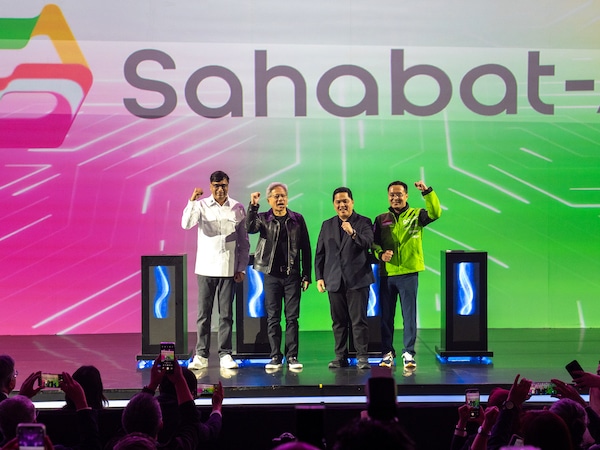
Indosat Ooredoo Hutchison and Indonesian tech firm GoTo Gojek Tokopedia said on Thursday they have begun work on Sahabat-AI, an open-source large language model (LLM) ecosystem specifically designed for Bahasa Indonesia and other local languages.
Indosat said Sahabat-AI will enable Indonesians to build AI-based services and applications in Bahasa Indonesia and various local languages, which will preserve essential cultural and linguistic nuances and understanding local context, which global AI models don’t support.
“By operating in Bahasa Indonesia, Sahabat-AI addresses critical context and cultural reference gaps left by the global large language models,” said GoTo CEO Patrick Walujo.
The Sahabat-AI model has been trained by AI Singapore and Tech Mahindra using Nvidia’s full-stack AI platform. In its first phase of development, Sahabat-AI will launch with 8-billion and 9-billion parameter LLMs.
Indosat – which signed a collaboration MoU with Nvidia earlier this year – said it will support ongoing development of Sahabat-AI’s family of models using Lintasarta’s recently launched GPU Merdeka sovereign AI cloud service, which features Nvidia Hopper-based accelerated computing.
Adoption of Sahabat-AI will focus initially on chatbots, which present the most obvious and immediate use cases for local-language AI models.
For example, Indosat said Sahabat-AI will enable its existing AI chatbot to answer queries in the Indonesian language for various citizen and resident services. That chatbot is also part of a broader citizen services platform that Tech Mahindra and Insodat are developing as part of the Indonesian government’s sovereign AI initiative.
GoTo said it’s adopting and enhancing the Sahabat-AI models to integrate with its AI voice assistant “Dira”, which helps customers book rides, order food deliveries, transfer money and pay bills.
Indosat said it is also collaborating with Accenture to develop applications based on Sahabat-AI for industry-specific use cases such as financial services and energy under a partnership announced in September.
Indosat and GoTo said they plan to develop Sahabat-AI as an open ecosystem comprising research institutes, universities, media organizations, government agencies, and other partners to bring local and international expertise to the project. University of Indonesia, Gadjah Mada University, Bandung Institute of Technology, and Bogor Institute of Agriculture are already onboard, as well as media groups Republika and Kompas Group.
Healthcare AI company Hippocratic AI, which has developed a healthcare-focused LLM for digital chatbot agents, will incorporate the new Sahabat-AI models into its services for Indonesia residents.
Indosat president director and CEO Vikram Sinha described Sahabat-AI as a necessary step to make AI more widely accessible to everyone in Indonesia. “By creating an AI model that speaks our language and reflects our culture, we empower every Indonesian to harness advanced technology’s potential.”
GoTo’s Walujo added that an ecosystem approach was the only way to fulfil that vision is with the support of others. “This is why we are inviting stakeholders from all sectors to join the development of this important open-source LLM ecosystem as we aim to drive the country forward together.”

Keep up-to-date with all the latest news, articles, event and product updates posted on Developing Telecoms.
Subscribe to our FREE weekly email newsletters for the latest telecom info in developing and emerging markets globally.