AI is crucial for achieving Net Zero goals

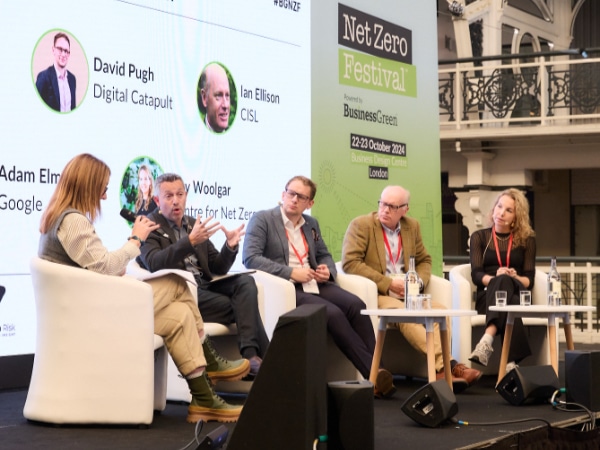
At the recent Net Zero Festival in London, the role of AI in the transition towards net zero was the subject of a panel discussion that brought together key thinkers in the sector.

Adam Elman, Head of Sustainability for EMEA at Google, joined Ian Ellison, Associate Director of the Cambridge Institute for Sustainability Leadership, and Izzy Woolgar, Director of External Affairs at the Centre for Net Zero, to discuss how AI is helping enable the switch to more sustainable energy.

Elman explained that AI is a transformational technology that has the ability to bring huge benefits to people and to society, but noted that it is not actually ‘new’, noting: “At Google, we’ve been integrating AI into products and tools for the last decade – if you were using Google Search five years ago, or Google Translate or Google Maps, you’ve been using AI.” However, he noted that the technology has evolved in ways that will allow it to have an impact on climate action. Acknowledging that there are concerns over how AI is used and how it will affect society, Elman argued that AI represents huge opportunities from both a business and a climate change perspective.

Ellison agreed, claiming that AI’s role in the net zero transition will be absolutely critical. “If you look at Net Zero, the SDGs, we’re far behind the curve. AI brings the tools to the table that allows us to close some of the gap thoughtfully, carefully and recognizing risks.” He noted that AI can provide better access to data and deliver faster education, allowing better dissemination of messaging around sustainability concerns across business.

Woolgar noted that AI has a significant track record in delivering innovation in the field of science, which underlines its potential for the net zero transition. “AI’s optimisation capability is really important. We are transitioning from an energy system that was quite top down and static to one that’s very dynamic and decentralised, and that requires optimisation so that we know where the sun’s going to be shining or the wind’s going to be blowing, and we can compare accordingly on the supply side but also on the demand side. What happens when lots of people adopt electric vehicles or heat pumps? How can we plan accordingly? Keeping that supply and demand in balance is absolutely critical.”

Acknowledging that AI is putting constraints on energy systems, Woolgar said that a wider perspective is essential, citing the International Energy Agency’s recently published World Energy Outlook which details what will happen in terms of electricity demand between now and 2030. This forecasts how much energy the adoption of various technologies – such as heat pumps and electric vehicles – will account for, and she noted that data centres represent a very small share of this. There are constraint issues on a local network basis, such as when data centres are clustered together, which they often are, so grids will need to be built out to facilitate supply, but more importantly, grids and data centres must operate with greater flexibility. She noted that Google aligns its compute loads to periods with an excess of solar or wind, allowing the data centre to “soak up” the renewable power which would otherwise be wasted by running their systems at a more optimal time.

When pressed on the negative effects of AI, Elman conceded that Google’s carbon emissions have increased by 20% within five years as a result of AI adoption, and that this must be mitigated to ensure sustainable growth. He noted that Google is committed to a Net Zero target of 2030, and that its emissions growth slowed last year, but agreed that there is still work to do. He argued that Google had long acknowledged that emissions would increase in the short term around AI adoption, but this would be offset by the long-term reductions. He conceded that trusting tech companies on such pledges was a tall order, but argued that the investments Google is making in its infrastructure and solutions will help it to reach its targets. Elman stated that by 2030, Google aims to have achieved a massive 50% reduction in emissions, with the remaining 50% mitigated via “high quality carbon removals”.

Pressed on the increasingly stringent requirements for ESG reporting, Elman agreed that corporate reporting must be traceable, and that while AI could reduce the administrative burden of this, ultimately it would still require a manual effort as AI reporting would not be robust enough. “There’s a raft of AI solutions and platforms that are being built to help with… the macro level reporting, but then there’s more granular opportunities.” One example is deforestation regulation – using cloud and geospatial capabilities, AI can deliver real time, granular location-based information to companies, enabling smoother forest management to help them track and manage their goals and commodities around areas such as sustainable farming.

Ultimately, Elman was upbeat about the prospects for the green AI landscape, noting that in addition to mitigation, AI presents huge opportunities for adaption and resiliency in the face of climate change. With the right policies in place, AI will be able to play a huge role in advancing net zero.
MORE ARTICLES YOU MAY BE INTERESTED IN…

LMT President warns of potential price rises following merger with Tet

Latvian mobile operator LMT’s President, Dr Juris Binde (pictured, second from right), has stated that price increases will be inevitable if a merger with fixed broadband provider Tet goes ahead—a move that has faced strong opposition from rivals concerned about its impact on market competition.

Speaking to Developing Telecoms at the 5G Techritory conference in Riga, Binde confirmed that “definitely there will be price increases because it will be the dominant operator” if the merger materialises. He justified the likely rise in costs, citing the need to manage rising energy expenses and attract top talent to “develop new solutions and services for continued growth.”

Binde also clarified that the integration of LMT and Tet would slow development plans temporarily, explaining, “A merger doesn’t mean you simply combine two companies and everything carries on smoothly. It’s a complex and costly process, which would slow down the economy of both companies, and impact the national economy too.”

Opposition to the Merger

Aruns Mickevics, Director-General of rival operator Bite Latvia, voiced strong criticism of the proposed merger last month, warning it could create a “monopolised giant” with “super dominance” in the market, according to Baltic News Network. Should the merger go ahead, Mickevics has called for the new entity to be separate from the state, with critical infrastructure divested from Tet and made accessible to all market players.

In response, Binde acknowledged that “some reshaping of the market” may be necessary to secure approval, addressing Mickevics’s suggestion of separating Tet’s fibre-optic network and data centres from its main business, noting, “these are strategic discussions for the state.”

Another potential option under consideration is for LMT to take on Tet’s customers in “overlapping” services, such as connectivity, television, IT, and smart home solutions.

Despite these hurdles, Binde remains optimistic, seeing the merger as ultimately beneficial for the Latvian telecoms sector. “The future is mobile only. Therefore, LMT is the leading company and must remain the leader,” he added.

Future Plans

Binde stressed that market consolidation is only worthwhile if it supports a growth strategy beyond traditional telecoms, pointing out that declining revenues from core services are a global trend in oversaturated markets. He argued that operators must pursue a “broader landscape of services and innovations based on telecom services.”

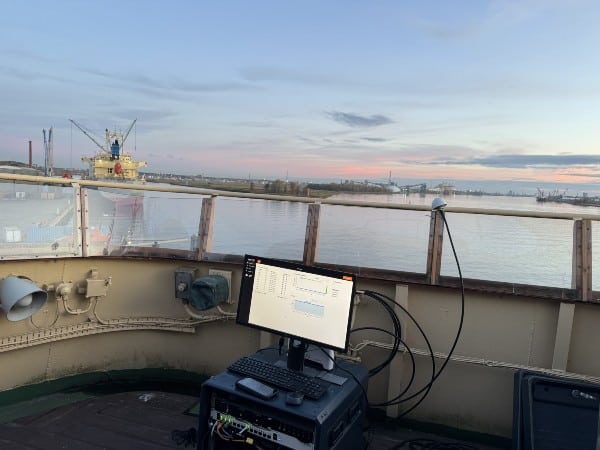
In line with this vision, LMT invested €24.4 million over the last nine months – a 22% year-on-year increase – in developing new services and expanding its 5G network. One innovation in progress is Seamless 5G Connectivity (pictured below) in the Baltic Sea, which includes providing 5G to the Port of Riga by installing base stations on ships and deploying aerial and aquatic drones to improve communication between vessels and port staff.

Seamless 5G Connectivity LMT

MORE ARTICLES YOU MAY BE INTERESTED IN…

Omantel and Equinix open data centre in Salalah

Digital infrastructure company Equinix has officially opened what it describes as its state-of-the-art data centre in Salalah, Oman, built in cooperation with integrated telecommunications services provider Omantel.

The facility, called SN1, is commercially and operationally managed in full by Equinix as a carrier neutral and open access Equinix International Business Exchange (IBX) data centre.

This is the second Equinix carrier-neutral data centre to be built in Oman, following MC1 in Muscat, and Equinix’s sixth facility in the Middle East, complementing its existing operations in Dubai and Abu Dhabi.

SN1’s location in the coastal city of Salalah optimises the routes of several highly strategic connections, offering a more direct and cost-effective reachability for businesses and service providers across four continents.

Indeed, Equinix claims that SN1 will “significantly reshape traffic flows across the Middle East and beyond”, reducing latency and improving the resilience of global networks. The facility will also feature direct fibre connectivity to Equinix’s MC1 data centre in Muscat, providing carriers, hyperscalers, content providers and cloud service providers the ability to co-locate their critical infrastructure and further enhance regional operations.

As Talal Al Mamari, CEO of Omantel, explains: « The launch of the SN1 data centre is a cornerstone of our strategy to create a global connectivity hub in Salalah. We are committed to attracting the world’s leading content providers and hyperscalers to the region, and this state-of-the-art data centre is a key part of this vision. By next year, we plan to land multiple subsea cables in Salalah, solidifying its status as one of the most connected hubs in the region due to its location at the crossroads of major international routes between Asia, Europe, Africa and all the way to Australia.”

MORE ARTICLES YOU MAY BE INTERESTED IN…

Injunction filed against Mozambique telcos over mobile internet curfews

Several civil society organisations in Mozambique have reportedly filed an injunction against mobile operators TMcel, Vodacom and Movitel over ongoing mobile internet shutdowns and blocked access to social media and messaging sites.

Last week, Internet monitoring website Netblocks confirmed that Meta-owned apps Facebook (including Messenger), Instagram and WhatsApp were blocked in Mozambique, following disruptions in mobile data services the previous week as protesters prepared to hit the streets over disputed election results.

Since then, according to Netblocks updates posted this week, the social media/messaging blockade has been expanded to include TikTok, YouTube and Telegram. Meanwhile, the government has imposed a series of mobile internet “curfews” in which mobile data connectivity has been cut off from evening until the following morning.

VPN provider Surfshark said in an email on Wednesday that it is seeing the same activity on its internet shutdown tracker. Both Netblocks and Surfshark confirmed that all blacklisted social media/messaging sites remain blocked, while the mobile internet curfews were still being imposed as of Wednesday.

According to a report on Tuesday from national news agency Agência de Informação de Moçambique (AIM), three civil society groups – the Centre for Public Integrity, the Centre for Democracy and Human Rights, and the Civil Society Learning and Training Centre – have filed an injunction against TMcel, Vodacom and Movitel, demanding that they “immediately re-establish full access to the internet.”

In a statement, the groups said the internet shutdowns not only violate the country’s constitution that guarantees the right to information, as well as telecoms laws that require telcos to provide uninterrupted services, but also impact economic livelihoods, academic work and even attempts by people to contact family members at a time of social unrest.

“In a period of high tension, the restrictions imposed have worsened insecurity, by limiting access to truthful and up-to-date information on national and international events”, the organisations said in a statement.

The injunction asks the court to “ensure the immediate re-establishment of access to the Internet, and that the service providers refrain from any blocking that limits this essential right,” the AIM report said.

However, it’s unclear to what extent TMcel, Vodacom and Movite have a choice in the matter. The Mozambique government has not officially claimed responsibility for the social media blockades and internet curfews, but all three telcos have notified customers that mobile internet services are “temporarily restricted for reasons beyond our control”.

Mobile internet disruptions in Mozambique have been ongoing since October 25, a day after Daniel Chapo of the ruling Frelimo party was declared the winner of the presidential election. His opponent, Venâncio Mondlane – who fled to neighbouring South Africa after two of his aides were shot dead on October 19 – has been posting videos on Facebook urging supporters to protest the results.

The resulting protests have escalated into clashes with police. Human Rights Watch researcher Zenaida Machado told Reuters on Wednesday that she had verified 18 deaths so far but said that the tally is likely to be higher. A march on the capital Maputo is scheduled for Thursday.

Reuters also reports that South Africa has closed its main border crossing with Mozambique in Lebombo after receiving reports of vehicles being torched on the Mozambican side.

As we reported in August, restricting or completely shuttering internet access has become a “common tactic” used by government to supress dissent, according to the World Economic Forum. Digital rights watchdog Access Now logged 283 shutdowns in 39 countries in 2023, compared to 201 blackouts in 40 countries the previous year.

“Internet restrictions in Mozambique reflect a growing trend of governments limiting access during political unrest, impacting safety and essential information flow, » commented Surfshark VPN product manager Justas Pukys. « These shutdowns disrupt daily life, from business to education, and pose a significant threat to open internet and free speech in the region. »

MORE ARTICLES YOU MAY BE INTERESTED IN…

GDS acquires land from Amata for its US$1b data centre in Thailand

Following this week’s news that GDS International received approval to build a hyperscale data centre in Thailand, GDS officially announced on Tuesday it will invest up to US$1 billion over the next five years in the project, and has signed a partnership deal with real estate developer Amata for the site in Chonburi.

Last Friday, Thailand’s Board of Investment (BOI) approved 66.2 billion baht (US$1.96 billion) worth of investments for two new hyperscale data centre projects in Chonburi – one from Quartz Computing, a subsidiary of Google’s parent company Alphabet, and the other from Digitalland Services, a local subsidiary of GDS IDC Services.

During a meeting on Tuesday with Thai Prime Minister Paetongtarn Shinawatra in Bangkok, GDS International announced it had signed a comprehensive partnership agreement with Southeast Asian industrial real estate developer and operator Amata to acquire land at the Amata City Chonburi Industrial Estate, which also provides access to renewable energy such as floating solar power.

GDS CEO Jamie Khoo said the site is ideal for data centre development due to the presence of available zones, proximity to subsea cable landing stations, and secure location outside floodplains.

“We selected Amata as our strategic partner for its impressive scale – hosting around 800 factories and commercial outlets – and its reliable, comprehensive utilities and infrastructure that support diverse needs,” she said.

BOI secretary general Narit Therdsteerasukdi added that the Thai government is dedicated to advancing key areas, including the development of clean energy mechanisms.

“We are currently establishing a Direct Power Purchase Agreement (Direct PPA), specifically designed for data centers, and refining digital regulations to support advancements in AI technology,” he said.

Also at the PM meeting, GDS International chairman William Huang confirmed the company’s commitment to the project, saying the US$1 billion investment over five years represents a strategic expansion of its data centre portfolio across Asia-Pacific.

« Our investment in Thailand aligns with our vision of advancing the digital economy across Asia,” Huang said. “Our goal is to build a cutting-edge data centre park that not only meets Thailand’s cloud and AI infrastructure needs but also fosters a thriving data centre ecosystem.”

Khoo added that the US$1 billion investment would also create employment opportunities and support skill development.

“By collaborating with local industry players and educational institutions, we aim to equip the Thai workforce with essential digital skills for the future,” she said.

GDS has not yet revealed how much IT capacity the Chonburi data centre will offer. The company currently has 480MW of data centre capacity in service and under construction in Singapore, Malaysia, Indonesia, Hong Kong, and Japan, with an additional 590MW held for future development.

MORE ARTICLES YOU MAY BE INTERESTED IN…

Mastercard expands reach of digital wallets with Pay Local service

Mastercard announced on Tuesday it has launched Mastercard Pay Local, a new global service that enables digital wallet users in Asia-Pacific, Latin America, Eastern Europe, and the Middle East and Africa to pay locally when they travel.

The service enables international travellers to link their credit or debit cards to their digital wallet and immediately shop at any participating merchant that accepts digital wallet payments, without needing to set up or top up a prepaid account.

Announcing the service ahead of this week’s Singapore FinTech Festival, Mastercard namechecked wallets such as DANA in Indonesia, Touch ‘n Go in Malaysia, Bakong in Cambodia, and LankaPay in Sri Lanka, all of which will use Mastercard Pay Local to facilitate payments for consumers at the more than 35 million merchants in Asia-Pacific that accept these wallets.

Mastercard said the service enables residents and travellers alike to pay micro, small and medium enterprises (MSMEs) that don’t accept traditional card payments, which in turn gives those MSMEs more reach. Meanwhile, digital wallet service providers can extend their customer base to people who primarily use cards, while card issuers can provide more points of acceptance for their customers.

« Locals benefit from new payment options while tourists can use their cards as they do at home, making travel infinitely easier, with one less thing to worry about while on the road,” said Sandeep Malhotra, EVP of Products and Innovation, Asia Pacific, at Mastercard.

Mastercard added that the service builds on its existing collaborations with wallet providers such as Alipay and Weixin Pay in China, GrabPay in Southeast Asia, Maya in the Philippines, ShopBack in Singapore and TrueMoney in Thailand.

MORE ARTICLES YOU MAY BE INTERESTED IN…