

Four bits of news from the metro and last mile to keep up with as we start the week: … [visit site to read more]

Four bits of news from the metro and last mile to keep up with as we start the week: … [visit site to read more]
Keep up-to-date with all the latest news, articles, event and product updates posted on Developing Telecoms.
Subscribe to our FREE weekly email newsletters for the latest telecom info in developing and emerging markets globally.

This Industry Viewpoint was authored by Faisal Ishaq, Client Partner, EPAM Systems, Inc.
Telcos face several unique challenges that can jeopardize their ability to stay competitive in today’s fierce markets. For starters, connectivity has become essential to the average person living in the developed world, and telcos must deliver seamless services and new experiences to these modern customers. … [visit site to read more]
Bangladesh telcos Grameenphone and Robi Axiata have reportedly secured another 20 MHz of spectrum each in the 2.6 GHz band, after two years of haggling over the price per MHz.
According to the Daily Star, the Bangladesh Telecommunication Regulatory Commission granted Grameenphone and Robi 15-year contracts for the spectrum at a price of BDT11.6 billion (US$98.6 million). Grameenphone and Robi said the extra spectrum will help them boost quality of service for their subscribers.
« Sufficient spectrum is key for serving customers with quality services, but it involves massive investment from operators, » said Shahed Alam, chief corporate and regulatory officer of Robi Axiata.
The 40 MHz of spectrum in question was left over from the BTRC’s spectrum auction in April 2022. In that auction, 160 MHz of spectrum from the 2.6 GHz band was up for grabs. Grameenphone and Robi each got 60 MHz, while broadband wireless access provider Internet Exchange Limited (IEL) won the remaining 40 GHz.
However, in July 2022, the BTRC cancelled IEL’s allocation and decided the spectrum would go to mobile operators, the report said.
The sticking point has been the price, which was originally set at US$6.5 million per MHz, or BDT560 million according to the exchange rate in play at the time. However, as the taka weakened against the US dollar, the price per MHz shot up to BDT715 million, which Grameenphone and Robi argued was too expensive.
After some back and forth exchanges, the BTRC agreed to accept the operators’ proposed price of BDT580 million per MHz after the Ministry for Posts, Telecommunications, and Information Technology gave its approval, the report said.
In May, the BTRC decided to let mobile operators pay spectrum fees in taka rather than US dollars because of the foreign currency exchange rate issue.
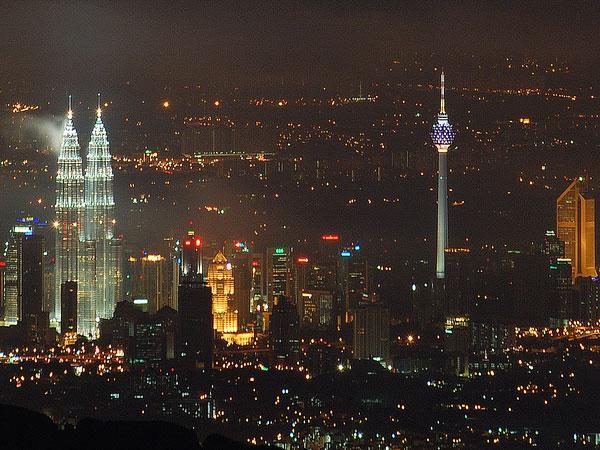
Four out of Malaysia’s five mobile operators are officially in the running for the country’s second 5G network after submitting their bids to the Malaysian Communications and Multimedia Commission (MCMC).
According to the official Bernama news agency, Communications Minister Fahmi Fadzil confirmed that CelcomDigi, Maxis, Telekom Malaysia and U Mobile have all submitted tenders for to participate in the second 5G network. Only YTL Communications has yet to submit a bid, although it still has time to do so.
The Malaysian government has been planning to launch a second 5G wholesale network to compete with existing 5G operator Digital Nasional Berhad (DNB) since May 2023. CelcomDigi, Maxis, U Mobile and YTL ) completed a deal to buy stakes in DNB via share subscription agreements (SSAs) in June, while Telekom Malaysia’s SSA is expected to finalised next week.
The SSAs come with an option that allows each telco to sell their DNB stake in order to take a stake in the second 5G network. They are not allowed to own stakes in both.
CelcomDigi went public with its official bid at the start of this month, while U Mobile has been signing a flurry of agreements to bolster its qualifications to lead buildout of the second 5G network, including a financing deal with AmBank Group, a fibre backhaul deal with Time dotCom, tower-related deals with EdgePoint Towers and Edotco, and partnerships with eight state-backed network facility provider companies from the PPIT Consortium to streamline the 5G rollout process.
Speaking at the Huawei Malaysia Supplier Ecosystem Convention 2024 on Thursday, Fahmi said it’s up to the MCMC who wins the tender.
« We expect a decision soon. I have not yet received any updates from the MCMC,” he said. “Let the process proceed, and we hope to finalise and announce it within the year.”
Keep up-to-date with all the latest news, articles, event and product updates posted on Developing Telecoms.
Subscribe to our FREE weekly email newsletters for the latest telecom info in developing and emerging markets globally.

A data center business, some FTTH interconnection, and some datacenter/fiber collaboration: … [visit site to read more]

The first phase of OADC Texaf Digital, a joint venture between African data centre company Open Access Data Centres (OADC) and TEXAF, a major long-term investor in the economy of the Democratic Republic of Congo, is now live in Kinshasa in the DRC.
The 2MW-capable facility is described as the DRC’s first live open-access, carrier-neutral and Uptime Institute Tier III-certified data centre, with ISO27001 post live certification on track for Q3 2024.
Clients are reportedly already establishing and installing in the facility and all major fibre network providers are present to provide vibrant interconnect to tenants.
The facility offers integrated core digital infrastructure solutions comprising tailored colocation services together with a wide range of reliable connectivity and peering options. Power to the data centre is fed from utility sourced from hydro generation, ensuring environmentally sustainable power generation in tandem with low Power Utilisation Effectiveness (PUE).
OADC Texaf Digital, located within TEXAF’s Silikin Village digital hub, is operated by the WIOCC Group company OADC. Configured with 1,500 square metres of IT white space to accommodate more than 550 racks, it delivers colocation, interconnect and peering services to support the colocation needs of enterprise clients, content distribution networks, and local and international cloud providers.
Underlining a message highlighted by the project partners, Mohammed Bouhelal, Managing Director of OADC Texaf DRC, says: « OADC Texaf Digital is central to boosting many sectors of the DRC’s economy, creating rich and vibrant digital ecosystems, and providing content distribution networks and cloud content providers with access to a quality peering location in the country. »
Over 12 leading national and international carriers connected with the banking sector are said to be among the leading adopters of OADC Texaf solutions.
The new facility does appear to have been launched a little later than originally hoped. We reported in February last year that the initial phase of OADC Kinshasa was expected to go live in Q2 2023.

Four regional infrastructure projects of note at midweek: … [visit site to read more]
Keep up-to-date with all the latest news, articles, event and product updates posted on Developing Telecoms.
Subscribe to our FREE weekly email newsletters for the latest telecom info in developing and emerging markets globally.