For two consecutive years, Huawei has been recognized among notable vendors in the zero trust edge field


Viewpoint

[Beijing, China, December 16, 2024] Huawei announced today that Forrester, an international authoritative organization, recently released The Zero Trust Edge Solutions Landscape, Q4 2024 (hereinafter referred to as the “Report”), which provides an overview of zero trust edge solutions (secure access service edge or SASE technologies like SD-WAN, ZTNA, SWG) of 25 vendors. This report provides an authoritative definition and overview of the zero trust edge market. Huawei has been named among notable vendors for two consecutive years.

The report analyzes the business value of SASE and covers the market maturity, technologies, and application scenarios of SASE solutions provided by different vendors. The report allows readers to identify potential partners who are the right fit for their organizations to implement a zero trust edge security model.

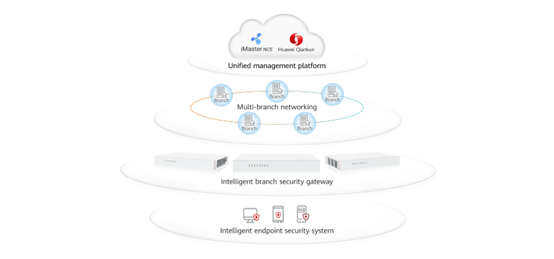
Huawei Xinghe Intelligent SASE Solution Building an Intelligent Security Protection System for Enterprises

In an increasingly complex network security environment, zero trust architecture has become the key for enterprises to ensure business continuity and cope with uncertainty. Huawei is one of the world’s first mainstream vendors to develop SASE solutions and has won multiple international security awards.

As more services are moved to clouds and more people are opting for hybrid working, enterprise branch networks face tremendous security challenges, and network security incidents occur one after another around the world. To address these challenges, Huawei’s Xinghe Intelligent SASE Solution provides a network security system featuring intelligent detection, collaboration, and integration by leveraging the cloud-network-edge-endpoint integrated architecture.

Intelligent detection: Huawei has made a breakthrough in the lightweight file emulator technology, which can unpack files in milliseconds. The lightweight Site AI model on the local gateway and 18 small AI models on the cloud are used to detect unknown threats, improving the detection rate to 95%.

Intelligent collaboration: Huawei’s HiSec Endpoint uses the innovative threat source tracing graph engine to accurately identify ransomware, achieving a 100% ransomware detection rate. With endpoint-network-storage collaboration, once ransomware is detected on one node, the information is synchronized to all network and storage devices for them to take protective measures.

Intelligent integration: Huawei’s unified security analysis platform has over 8000 inference rules and automatically delivers matching rules to automatically handle 99% of security events on the entire network in seconds. Branches do not need to assign dedicated maintenance personnel, improving operation efficiency by 100 times.

Huawei’s Xinghe Intelligent SASE Solution has been recognized by governments and enterprises in the finance, energy, transportation, education, healthcare, and other sectors around the world, helping them deploy zero trust architecture and build a next-generation security system for future business development.

Looking ahead, Huawei will continue to invest in the research and development of new technologies based on customer needs and help customers build a secure zero-trust network environment in the intelligent era.

Swisscom gets green light on €8bn Vodafone Italia Acquisition from Italian authorities 


News 

The acquisition was first announced back in March

Swisscom has officially received the green light for its acquisition of Vodafone Italia, following approval from both the Italian Competition Authority and the Ministry of Enterprises and Made in Italy (MIMIT). With regulatory hurdles cleared, Swisscom is now set to complete the deal by the first quarter of 2025. 

Last week, the Italian Competition Authority approved the transaction, accepting a series of behavioural commitments proposed by Swisscom. These include continuing to provide wholesale services to interested operators in line with Fastweb’s current practices, as well as sharing relevant information in any public tenders where Fastweb or Vodafone Italia is the supplier. An independent trustee will oversee the implementation of these commitments for the next three years. 

MIMIT granted unconditional approval for the deal on 19 December 2024, confirming the change of control over Vodafone Italia’s spectrum licenses. This followed positive assessments from the Italian Authority for Communications and the Italian Competition Authority. 

The merger of Fastweb and Vodafone Italia is expected to deliver substantial benefits to Italian consumers and businesses by combining their strong fixed and mobile infrastructures and expanding their range of services. The merger will create Italy’s second-largest fixed-line broadband operator behind Telecom Italia (TIM). This, they said, will create around €600 million in savings through increased scale and a more efficient cost structure. As part of the transaction, Vodafone will provide some service to Swisscom for the next five years. 

With regulatory approvals now in place, Swisscom anticipates that the acquisition will be finalised in early 2025, marking a new phase for the company in the Italian telecom market. 

Keep up to date with the latest international telecoms news by subscribing to the Total Telecom daily newsletter  

Also in the news:
Equinix to buy BT’s Irish data centre business for €59m
World’s first 5G-A region in Mobile AI Era launched
Part 1: Some US broadband industry predictions as we approach 2025

Part 2: More US broadband predictions as we approach 2025


Viewpoints

With the recent election behind us, there’s a noticeable shift in broadband industry sentiment.

By: Jason Malmquist, EVP, Head of Software and IT Services Business at CHR Solutions

To read the first part of this viewpoint series, click here.

Following the election, industry stakeholders are cautiously optimistic now about potential improvements in financing conditions, strategic network expansion, and the evolving competitive landscape. As we look to 2025, several key trends and challenges are emerging in the broadband industry; here are my top predictions.

1. Interest rates and cost of capital could stabilize

With political uncertainty temporarily out of the way, there’s hope for a more stable economic environment. We could see a reduction in interest rates and cost of capital. This would encourage providers to think more strategically about network investments. With financing a significant constraint over the past few years, any decrease in these costs could empower broadband companies to invest more confidently in their infrastructure.

2. Renewed focus on operational efficiency

During 2024, there were slower network buildouts and a shift toward operationalizing existing networks. Providers turned their attention to converting network passings to paying customers, a trend that’s likely to continue in 2025. While some new builds may resume, the frenetic pace of 2023 will not return. Instead, ISPs are looking at ways to optimize customer acquisition and improve ROI on existing networks. Expect to see targeted buildouts where demand is highest and a continued emphasis on streamlining operations.

3. Consolidation in the broadband space

A significant buzzword for 2025 is consolidation. Industry players and analysts are predicting that we’ll see more mergers and acquisitions this year because the convergence of high infrastructure costs and increased competition is driving many smaller providers to consider alliances or acquisitions as a way to stay competitive. Interestingly, even some co-ops—historically resistant to merging—are discussing consolidation. While co-op mergers may still be unlikely, this growing dialogue indicates that the landscape could shift as companies look for ways to scale efficiently and meet demand.

4. Starlink’s growing influence

In a surprising turn, Starlink’s influence on the broadband sector is growing. Providers are voicing more concern about the competitive threat posed by Starlink’s satellite internet service, especially with recent reports indicating that Starlink wasn’t significantly included in many broadband plans but may soon become a viable part of the ecosystem. While it’s not poised to replace traditional ISPs, Starlink’s coverage and appeal in underserved areas has made it a real competitor. In light of this, ISPs may need to reconsider their strategies, especially in rural regions where Starlink can offer a viable alternative.

5. Increased automation in service delivery

Indications are that during 2025, we will likely see a push toward greater automation in service delivery. From order processing to scheduling, the demand for seamless customer experiences is fueling automation across the board. Providers want to streamline the entire sales and onboarding process—from self-order systems to door-to-door sales tracking, shortening timelines and improving service reliability. The belief is that enhanced automation will enable ISPs to handle higher customer volumes more efficiently, driving both cost savings and customer satisfaction.

6. Rising cybersecurity threats for ISPs

Cybersecurity is no longer just a concern—it’s a critical risk that ISPs must address. Today’s cyber threats are sophisticated and coordinated, often executed by criminal organizations with ample resources and expertise. Smaller ISPs, especially in rural or underserved areas, are particularly vulnerable, as they may lack the IT infrastructure and security staff to defend against targeted attacks. These risks are significant: a security breach can lead to prolonged service outages, loss of customer data, and lasting damage to a company’s reputation. Therefore, ISPs need to prioritize cybersecurity, incorporating more advanced defenses and, ideally, dedicated teams or partnerships to mitigate these threats.

Left to right: Bob Bartz, VP of Engineering and Jason Malmquist, EVP, Head of Software and IT Services Business at CHR Solutions.

Left to right: Bob Bartz, VP of Engineering and Jason Malmquist, EVP, Head of Software and IT Services Business at CHR Solutions.

In summary …

The broadband industry will be defined by strategic expansions, a focus on efficiency, competitive pressure from satellite providers, and the urgent need for cybersecurity in 2025. It’s a complex environment, but with the right mix of innovation, automation, and strategic planning, providers can capitalize on opportunities and address the emerging challenges. By staying adaptable and vigilant, ISPs can navigate the evolving landscape and continue to deliver essential connectivity to their customers.

Click here to read Part 1: Some broadband industry predictions as we approach 2025 by Bob Bartz, VP of engineering at CHR Solutions.

To get content like this delivered to your inbox, subscribe to the Broadband Communities newsletter.

Equinix to buy BT’s Irish data centre business for €59m


News 

The transaction is expected to close in the first half of 2025, subject to regulatory approval

Equinix has announced it will acquire BT Group’s datacentre business in Ireland for €59 million. The deal includes two datacentres in Dublin, located in CityWest and Ballycoolin, covering a total of 150,000 square feet.

This acquisition follows BT’s strategic review of its international operations and is part of the company’s shift toward an asset-light model. By stepping away from owning and operating datacentres, BT aims to focus more on its core strengths in cloud, networking, and security, while partnering with global companies like Equinix to deliver scalable datacentre services to its customers.   

Shay Walsh, Managing Director of BT Ireland, explained that this deal marks an exciting new phase for the company’s datacentre business in Ireland. “This announcement with Equinix marks an exciting new chapter for our datacentre business in Ireland. The deal builds on our existing successful partnership with Equinix and ensures that customers will benefit from top-tier datacentre services nationally and globally, allowing BT to specialise in our core strengths in cloud, networking, and security,” he said in a press release. 

Equinix a digital infrastructure company, has a long-established presence in Ireland. With this acquisition, Equinix will strengthen its position in the Irish market, offering customers more robust interconnection services through its vast global platform.  

“This acquisition of assets from our existing facility enables us to continue to offer exceptional interconnection services from our unique global platform, augmenting the €35 million annual contribution to national economic output arising from Equinix’s direct and indirect spend, measured in 2022,” added Peter Lantry, Managing Director of Equinix Ireland. 

In the coming months, Equinix will work closely with BT to ensure a smooth transition of the datacentres, with minimal disruption for customers. The two facilities will soon be fully integrated into Equinix’s global network. 

Keep up to date with the latest international telecoms news direct to your inbox from Total Telecom 

Also in the news:
Part 1: Some US broadband industry predictions as we approach 2025
Part 2: More US broadband predictions as we approach 2025
Europe is the top target for hacktivists, Orange Cyberdefense report reveals 

World’s first 5G-A region in Mobile AI Era launched 


Contributed Article 

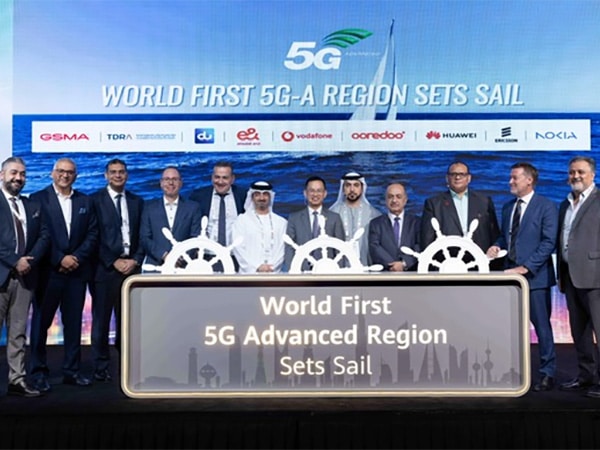
This month, at the Telecom Review Leaders’ Summit 18th edition in Dubai, the world’s first 5G-A region in the mobile AI era was launched. Under the theme ‘Global. Regional. Digital.’ the Telecom Review Leaders’ Summit spotlit the industry’s main trends, including 5G, cloud, data centers, and digitilisation

The launch followed a panel discussion, in which a group of ten industry professionals gathered to discuss the challenges and opportunities in advancing 5G technology in the Middle East. Key points included the need for cross-industry collaboration, open APIs, and spectrum utilisation.  

The panelists included: 

Fayez Abu Awad, Policy Director, MENA, GSMA 

Khalid Al Awadi, Manager, Broadcasting and Space Services, TDRA UAE 

Hasan Alshemeili, Head of Technology Planning, du 

Dr. Ayman Elnashar, VP of Technology Strategy, Architecture & Innovation, e& 

Ramy Boctor, Chief Technology Officer, Vodafone Qatar 

Stelios Savvides, Chief Technology Officer, Vodafone Oman 

Hicham Siblini, Chief Technology and Infrastructure Officer, Ooredoo Qatar 

Allen Tang, President of ICT Marketing & Solution Sales Dept, Huawei MECA 

Zoran Lazarevic, Chief Technology Officer, Ericsson MEA 

Mohamed Samir, VP Middle East Market, Nokia 

Etisalat and du highlighted their 5G network coverage and speed achievements, with Etisalat covering 99% outdoor populated areas. The discussion emphasised the importance of AI in network management and the potential for 5G to enhance digital transformation across different sectors. 

“We believe that 5G advanced influence in the Middle East will help accelerate digital transformations by enhancing connectivity across different sectors like healthcare, manufacturing, and transportation,” said Hasan Alshemeili, Head of Technology Planning at du. 

“When moving to 5G Advanced, we are more in need of cross industry collaboration, an aspect which the GSMA is actively working on,” said Fayez Abu Awad, Policy Director, MENA at the GSMA. 

5G Advanced, also known as 5.5G, is the next evolution of 5G technology, designed to enhance current networks while paving the way for 6G. This upgrade will deliver even faster speeds, lower latency, and improved coverage, making it ideal for applications like connected vehicles, industrial automation, and immersive technologies such as AR and VR. By integrating AI, 5G Advanced networks will be smarter and more efficient, capable of handling more devices and optimising performance in real time. 

The Middle East is already becoming a world leader in 5G-A, having become a global leader in 5G already. According to the GSMA, 5G networks now cover 75% or more of the population in the GCC states, whilst also increasing investment in 5G standalone (SA) and 5G-Advanced use cases. 

For example, earlier this month, UAE-based operator du launched its 5G-Advanced Commercial Innovation Centre in Dubai, aimed at exploring how the capabilities of 5G-A can create innovative new services.  

The Innovation Centre will work to develop new services in the consumer, home, and enterprise segments, leveraging 5G-A’s improved capabilities over traditional 5G, including speeds of up to 5Gbps, lower latency, and greater capacities. 

The event finished with the launch ceremony celebrating the joint efforts of regulators, operators, and vendors, and in positioning the Middle East as a global leader in 5G-Advanced technology. 

The launch “symbolises a new era of connectivity and innovation. Everyone here’s presence underscores the collaboration and technological strides that have made this milestone possible.” 

Looking ahead, the launch of the world’s first 5G-A region marks a major step forward in next-generation connectivity. With the Middle East leading the way, the focus will now be on expanding 5G-Advanced applications, from smart cities to immersive digital experiences. 

The milestone highlights the power of collaboration between regulators, operators, and vendors. As investments and innovation continue to grow, the region is set to play a key role in shaping the future of mobile AI and advanced connectivity worldwide. 


Part 1: Some US broadband industry predictions as we approach 2025


Viewpoints

The broadband industry is poised for significant change as we move forward into 2025

By: Bob Bartz, VP of Engineering at CHR Solutions

To read the Part 2 of this viewpoint series, click here.

New technologies and evolving challenges are driving innovation and adaptation with respect to how we expand connectivity, especially in rural and underserved areas. As a result, and based on my three decades of experience in telecommunications and broadband engineering, I thought I’d share some key predictions for the year ahead — from the rise of satellite solutions like Starlink to advancements in engineering tools and the ongoing challenges of permitting.

1. Starlink’s expanding influence on wireline broadband

We’re seeing Starlink make more of an impact on the broadband landscape than initially expected, particularly in rural and remote areas. The company’s constellation of low-earth orbit satellites has become a viable alternative to traditional wireline builds, which have become cost-prohibitive. Starlink’s reach into underserved regions will not only change the way we think about connectivity but also how federal funding is allocated.

The implications here are profound. As Starlink continues to evolve, government agencies may begin re-evaluating their funding priorities to better support a hybrid broadband model. By blending satellite and wireline solutions, broadband needs can be addressed in a more balanced way, focusing resources where they’re most effective. I anticipate that in 2025, federal funding will increasingly accommodate this hybrid approach, thus reshaping the landscape of rural broadband builds.

2. Enhanced imagery: The next frontier in broadband engineering

The role of imagery in broadband engineering is evolving, with enhanced and high-resolution imagery becoming a crucial tool for efficient project planning and risk mitigation. In the past, we relied on imagery mainly for initial assessments and mapping, but I see it becoming indispensable for real-time decision-making.

Drone technology, in particular, is a game-changer – even in this space. Drones provide high-resolution aerial images that allow engineers to capture data about terrain and vegetation with exceptional precision. With the ability to conduct aerial surveys over hard-to-access or expansive areas, drones eliminate the need for time-intensive, costly ground inspections, speeding up the design process and minimizing risks from changing environmental factors.

This combination of enhanced imagery and drone technology allows us to address challenges more efficiently, as it reduces the need for repeat site visits and cuts down on project costs, all of which accelerates the deployment of broadband infrastructure. In 2025, I anticipate that drones and high-quality imagery needs to be standard tools in broadband engineering, helping us streamline projects and build networks that are resilient to environmental changes.

3. The permitting process: A rising challenge

In my view, permitting is now the second biggest roadblock to broadband deployment, right behind funding. Submitting a permit application is usually just the start of a long, complex process. The real challenges come with tracking its status, adjusting designs to accommodate permit requirements, and managing communications with permitting authorities—all of which can drive up costs for providers.

This ongoing permitting process also adds significant overhead, particularly for projects where multiple layers of bureaucracy can lead to delays. In 2025, I believe we’ll see a renewed push to simplify permitting processes at local, state, and federal levels. However, until those reforms take effect, providers should prepare for the increased time and costs associated with permit management and compliance.

Left to right: By: Bob Bartz, VP of Engineering and By: Jason Malmquist, EVP, Head of Software and IT Services Business at CHR Solutions.

Left to right: By: Bob Bartz, VP of Engineering and By: Jason Malmquist, EVP, Head of Software and IT Services Business at CHR Solutions.

Moving forward

The broadband industry is on the brink of transformative change. Starlink’s expanding role, the rise of enhanced imagery in engineering, and the complex permitting landscape each bring their own challenges and opportunities.

By leveraging these insights, broadband providers can make informed decisions, overcome obstacles, and help bridge the digital divide. We’re on a path toward broader, more accessible connectivity, and 2025 promises to be a year where we see meaningful strides in that direction.

Click here to read the Part 2 of this viewpoint series, by Jason Malmquist, EVP and head of software and IT services business at CHR Solutions.

Join the conversation about connectivity in North America. Click here to learn more about Broadband Communities Summit 2025.

The Evolving Landscape of Mobile Trust: A Four-Year Perspective

The Evolving Landscape of Mobile Trust: A Four-Year Perspective

This Industry Viewpoint was authored by Nicholas Rossman, Mobile Ecosystem Forum (MEF)

Trust in the mobile sector could be a lot better. The Mobile Ecosystem Forum’s (MEF’s) 2024 Consumer Trust Study reveals the Global Trust Index, at 55%, to be down one percentage point in like-for-like markets. While this might seem moderate, it underscores a concerning reality: for nearly half of mobile users worldwide, trust in data sharing is fragile. … [visit site to read more]

Mexico to launch 5G contest in late January

The IFT-12 tender, in which spectrum will be made available for 5G networks in Mexico, will begin on 27 January when an invitation to would-be buyers to express their interest begins, according to an announcement from regulator the Federal Institute of Telecommunications (IFT).

The IFT-12 tender aims to allocate 2,223 radio spectrum blocks for the provision of wireless access services in different frequency bands. This seems to be mainly for 5G, although some news outlets suggest that some spectrum might be used to support or expand LTE.

In addition, according to Statista, as of September 2024 two 5G networks were actually deployed in Mexico, owned by AT&T and Telcel’s Radiomovil Dipsa. At the same time, says the global data and business intelligence platform, there were also five LTE networks in Mexico, each owned by a different operator. 

The bidding mechanism for this tender is called the multiple round ascending simultaneous type. The IFT version will involve a maximum of three competitions in which spectrum acquisition limits will increase in each contest based on demand in the previous contest and spectrum available.

The IFT explains that it is imposing limits seek to prevent levels of spectrum accumulation that may harm free competition and economic competition, as well as avoid the establishment of barriers to entry. In addition, it seeks to encourage the entry of new participants or strengthen the ability to compete of those already established and promote the efficient use of the spectrum.

The IFT has also incorporated incentives to participation, designed to promote competition and the provision of services at competitive prices for end users. Blocks will be available in the 600MHz band, the L-band, the 800MHz band, the AWS band, the PCS band and the 2.5GHz band, for national and other sorts of coverage.

There are some coverage obligations included in the national blocks of the 600MHz band and in the 2.5GHz band, to support less well-served areas. More information is available on the IFT website.

The long-awaited IFT-12 may the last tender carried out by the IFT before its final disappearance in 2025.

MORE ARTICLES YOU MAY BE INTERESTED IN…

ZTE and MiFibra enhance CPE support in Peru

Keep up-to-date with all the latest news, articles, event and product updates posted on Developing Telecoms.
Subscribe to our FREE weekly email newsletters for the latest telecom info in developing and emerging markets globally.

Sending occasional e-mail from 3rd parties about industry white papers, online and live events relevant to subscribers helps us fund this website and free weekly newsletter. We never sell your personal data. Click here to view our privacy policy.

Working together to fulfil the promise of 5G-A in the Middle East

Toni Eid, founder of Telecom Review Group, was undoubtedly right when he said: “5G-Advanced has seen remarkable progress in the Middle East.” He was speaking at the recent 18th Telecom Review Leaders’ Summit 2024 in Dubai where he was delivering the opening speech prior to a panel entitled World’s First 5G-A Region Sets Sail.

The backdrop to this event is 5G-Advanced networks moving from testing to commercial deployment – notably in the Middle East. Which is why a panel of industry associations, regulators, operators and vendors were being asked to describe how far 5G-A had come in the region – and where it could be going next.

Moderator Issam Eid, CMO Africa, Levant, KSA & Qatar, Telecom Review Group, asked the panel about the challenges currently within the 5G-Advanced ecosystem. How, he asked, can industry organisations and government agencies overcome these challenges, drive collaboration and foster a more mature industry value chain?

Fayez Abu Awad, Policy Director, MENA, GSMA, warned: “When considering the next stage of evolution of 5G we have to be mindful of the fact that ARPU has been stagnant for quite a while. We need to make sure that we have the use cases monetised properly in 5G-A.”

His answer (and a regular theme of the panel) was cross-industry collaboration. The GSMA is working on opening access to the capabilities of the network – and advocates for an open API approach.

Dr. Khalid Al Awadi, Manager, Broadcasting and Space Services, of UAE regulator TDRA UAE, focused first of all on spectrum utilisation – notably the adoption of new spectrum frequency allocations for IMT or mobile services.

The integration of non-terrestrial networks – a characteristic of 5G-Advanced – is also a challenge. Will more bands be needed?

More important, perhaps, is the future of private 5G. As he said: “We’re talking about different industries utilising data communication. We have a big challenge with regards to knowledge and understanding.”

Finally can costs be brought down? Regulators, he suggested, need to focus on a framework for spectrum sharing or RAN sharing.

The operator members of the panel then addressed the question of the current status of 5G-Advanced development – and what influence will 5G-Advanced technology evolution and network deployment will have on the Middle East.

Hasan Alshemeili, Head of Technology Planning of Emirates-based operator du, was able to describe a success story in his market where 5G outdoor coverage is almost universal and 5G-Advanced use cases have been demonstrated, notably band aggregation to achieve extraordinary Gigabit speeds.

du was also the first regional operator to deploy 5G-Advanced over DAS using Huawei LampSite X. 5G-Advanced coverage he said, is now 20% of the nation “and our strategy is to increase our footprint to 40% by next year”.

As for applications, he said that 5G-Advanced will help to accelerate digital transformation by enhancing connectivity across different sectors such as healthcare, manufacturing, transportation (V2X for example) and smart cities.

Dr. Ayman Elnashar, VP of Technology Strategy, Architecture & Innovation, e&, highlighted his market’s achievement: the fastest 5G speeds of any nation globally. He also noted that e& is planning for private 5G thanks to a partnership with oil and gas giant ADNOC to deploy the biggest private network in the world.

Of course 5G-Advanced is still being standardised – with enhancements likely to continue for some while. The recent 3GPP Release 18 will enhance the uplink while Reduced Capability (RedCap) New Radio is helping to expand the NR device ecosystem. Artificial intelligence (AI) and machine learning (ML) will play increasingly important roles in 5G-Advanced.

Release 19 promises to expand the addressable market for 5G massive IoT. Base station intelligence, energy-saving ambient IoT, improved power consumption for base stations and devices and continuing enhancements to RedCap will help to address sustainability and energy efficiency. Further ahead, Release 20 will address 6G and AI-focused network design.

Stelios Savvides, Chief Technology Officer, Vodafone Oman, agreed that the GCC area is very advanced in 5G-A but asked: What are the use cases and network scenarios that are helping to drive investments?

One answer comes from Oman itself during Salalah’s tourist season. “We’ve been looking at advanced scheduling, in terms of uplink improvements, to drive throughput and of course some features around sensing interference – how we can drive the network to give a much better experience.”

Segmentation – differentiated quality of services for certain customers – has potential and gaming is an undoubted 5G-A opportunity, he said, as are lowering costs with RedCap and controlling capacity and access on the network, IoT, super low latency, mobile private networks, live feeds and more.

Ramy Boctor, Chief Technology Officer, Vodafone Qatar reminded his audience that “5G SA is a big piece in a bigger puzzle… the nature of traffic is changing now.”

Video on demand, live video streaming, gaming and virtual reality are all video services, but the latency and bandwidth requirements of these are different. What’s going to shape 5G demand soon could be more the application than the end user, he argued. Content providers therefore need open APIs.

“It’s not a matter of getting a connection to the content it’s how you get this connection. How fast do you get it? What’s the nature of this bandwidth?” New features are important, he noted, but 5G is also there to provide premium connectivity.

And new features are coming under 5G-Advanced: enhanced connectivity, uplink, download, latency, power efficiency and sustainability. AI-led automation will enhance site creation and network optimisation. Among applications, 5G-Advanced-led healthcare, smart cities, traffic management, safety, and urban management are part of a constantly lengthening list.

Equipment vendors were then asked about the role equipment vendors can play in application and businesses model explorations when collaborating with operators.

Allen Tang, President of ICT Marketing & Solution Sales Dept, Huawei MECA was very upbeat. Joint innovation has been key: terminal manufacturers, operators, regulators and standard organisations working together will accelerate the maturity of the 5G-A ecosystem, he argued.

New spectrum is becoming available. 3CC aggregation is already influencing deployment – and 3CC smartphones are on the way. New technologies like 5QI with SQL technology will allow new business models (like experience monetisation) for operators. And suppliers like Huawei can do a lot of innovation with operators to solve any issues during the journey to mobile AI, and the transformation from NSA to SA architecture.

Khalid Al Awadi, TDRA, added: “The most important issue that we need to take into consideration to adopt and progress 5G implementation is the collaboration of different stakeholders in the industry.”

Talking about 5G-A monetisation, Zoran Lazarevic, Chief Technology Officer, Ericsson MEA, asked how we can connect every killer application with each and every operator globally. How is it going to be maintained and, where necessary, upgraded? What about contract agreements and monetisation? Ericsson and some of the biggest operator globally are trying to address this with a global network API platform to offer connectivity to developers.

One-size fits all networks may not work with 5G-Advanced capabilities like slicing, low latency and performance-based business models, he suggested. Developing the applications to manage this means collaboration.

Mohamed Samir, VP Middle East Market, Nokia, again noted that 5G-Advanced is an evolution of the promises of 5G, including real-life applications to meet different demands. But while the vendor can supply the technology to enable that, collaboration means different operators can build the right business models to serve different consumers. “It’s all about bringing value at the end to the whole ecosystem,” he said.

Fayez Abu Awad of the GSMA added: “We have here representatives of the supply side economic equation. What we’re missing is the demand side.”

The modern mobile industry will extend to multiple sectors, and, he said: “We will never be experts in aviation, tourism or government. However, the experts within these sectors need to understand the capabilities that we can offer as an ecosystem and start dreaming of their own applications.” And the GSMA open gateway API initiative can help, supporting standardisation that makes a service, no matter where it’s developed, easily and rapidly deployable on your own network.

Another question for vendors was: Can AI can be leveraged to create synergies with 5G? It certainly supported network performance during the Qatar World Cup but with 5G-Advanced embedding AI functionalities in the OSS system this combination is becoming exponentially more powerful. Indeed, the complexity of 5G-A mobile networks cannot be managed by human beings alone; you have to have support from the AI, gen AI and LLMs.

Allen Tang reminded us of the fundamental importance of building for the cloud, of training to support AI, of ongoing telco-to-techco transformation and of the need to address monetising AI in a way that will enhance the customer experience and allow differentiation.

Dr. Ayman Elnashar, of e& also reminded us of the role of AI in solving network problems via automation, managing performance and energy and more. And collaboration, which will extend to the likes of Azure, AWS and Oracle for help building cloud infrastructure and hosting LLMs. With appropriate alliances, he added, operators can take a lead with AI.

The overall message of the day? Well, this panel revealed many fascinating and varied perspectives on 5G-A its role and future, but there was undoubtedly one clear overall message: collaboration will help 5G-A to fulfil its potential.


MORE ARTICLES YOU MAY BE INTERESTED IN…