

Alianza has made an inorganic move to expand its range of communications software capabilities. The cloud communications platform company has signed a definitive agreement to acquire Metaswitch from Microsoft. … [visit site to read more]

Alianza has made an inorganic move to expand its range of communications software capabilities. The cloud communications platform company has signed a definitive agreement to acquire Metaswitch from Microsoft. … [visit site to read more]

Jakarta, December 11, 2024 — Indosat Ooredoo Hutchison (Indosat or IOH) proudly announces its recognition as the winner of the Best Digital Transformation Award at the prestigious World Communication Awards 2024. This accolade underscores the company’s groundbreaking efforts in redefining its role from a traditional telecommunications provider to an AI-driven technology leader in Indonesia’s digital landscape. The award was received by Steve Saerang, Senior Vice President – Head of Corporate Communications Indosat Ooredoo Hutchison, during the award ceremony held in London.
The World Communication Awards, regarded as a benchmark of excellence in the global telecommunications industry, celebrate outstanding achievements and innovations that drive progress in the sector. Indosat’s digital transformation journey stood out among top global contenders for its visionary strategies, seamless technological integration, and dedication to customer excellence.
Vikram Sinha, President Director and Chief Executive Officer of Indosat Ooredoo Hutchison, stated, “This recognition is a testament to the relentless efforts and innovative spirit of the entire Indosat team. Our journey from a telco to a techco is driven by a singular focus on delivering a ‘Marvelous Experience’ to our customers. This award reflects our commitment to empowering Indonesia through cutting-edge technology and customer-centric solutions. As we look to the future, we remain dedicated to pushing the boundaries of innovation and contributing to the digital transformation of Indonesia.”
Rob Chambers, Managing Director at Terrapinn, praised Indosat Ooredoo Hutchison for its exceptional transformation journey, “Indosat Ooredoo Hutchison’s transition into a tech-driven powerhouse showcases a bold vision executed with precision. Their customer-centric strategy has yielded remarkable results, setting a new benchmark for the industry. IOH’s journey is an inspiration to the global telecom sector.”
This recognition at the World Communication Awards 2024 reaffirms Indosat’s commitment to innovation, excellence, and customer satisfaction. Indosat is determined to build on this success by introducing transformative solutions and setting new industry standards.
The transformation taken by Indosat is part of a bold move that aimed to integrate the network infrastructure and its operations. This transformation was not only about achieving quality targets but also about redefining the company’s position from a traditional telecommunications provider to a technology-driven enterprise. Leveraging autonomous transformation as the backbone of its strategy, Indosat successfully laid the foundation for what it terms a “Marvelous Experience,” ensuring a stable and consistent platform for innovation and growth while elevating customer service standards.
A cornerstone of this transformation was the creation of a central data repository, or a big data lake, designed to serve as a single source of truth for decision-making. Indosat implemented advanced technologies to streamline operations, significantly reducing service quality alarms and expediting problem identification and resolution. These technological advancements have redefined operational efficiency and paved the way for unparalleled service reliability.
Indosat’s transformation was deeply rooted in its commitment to its customers, encapsulated in the concept of “Marvelous Experience.” This holistic approach interwove improvements across various touchpoints, enhancing not only customer interactions but also the experiences of employees, partners, and the brand itself. By adopting AI-powered tools to analyse Quality of Experience (QoE) and customer satisfaction (CSAT), Indosat enabled proactive measures to safeguard and enrich the end-user experience. This approach resulted in a ground-breaking and a noticeable uplift in customer satisfaction, setting new benchmarks in service delivery across the industry.
Operational excellence was another pillar of Indosat’s transformation. The unification of its Network Operations Center (NOC) and Service Operations Center (SOC) marked a significant milestone in process optimization and automation. By harnessing the power of AI and data analytics, Indosat ensured that its operations were not only efficient but also aligned with its overarching mission to deliver seamless, innovative services to its customers.
As Indosat Ooredoo Hutchison continues to push boundaries in digital transformation, it remains steadfast in its vision to lead the industry with groundbreaking solutions that empower lives, drive economic progress, and ensure a sustainable digital future.

Held last night at The Marriott, Grosvenor Square, in London, the 26th World Communication Awards were a huge success!
On behalf of the judges, we would like to congratulate all of the incredible winners.
AI Excellence Award
Amdocs – Amdocs amAIz
amAIz is a Gen-AI platform specifically designed for telco operations, combining LLMs from multiple providers to offer embedded copilots, GenAI agents, and numerous telco-specific use cases. This includes TelcoGPT, a natural language processing model trained on telco-specific data, helping support both network operations an customer-facing applications.
Best Digital Transformation Programme
Indosat Ooredoo Hutchison – Network Operation Autonomous Transformation
Following the merger of Ooredoo and Hutchison 3 Indonesia in 2022, Indosat Ooredoo Hutchison has been on a mission to transform from a telco to a techco. Leveraging AI, big data, and automation, IOH has delivered a network providing faster, more reliable connectivity for customers across the country.
Best Network Transformation Initiative
Orange Wholesale – Orange Disaggregated Open Switch
The introduction of Orange’s Disaggregated Open Switch has seen the company move from closed hardware to open software, marking a significant step in the company’s network virtualization evolution. With major gains in efficiency, flexibility, and control, the shift is already having a major impact for wholesale and B2B customers.
Best Operator in a Growth Market
Jazz
Operating in Pakistan, the world’s fifth most populous country, Jazz has taken a holistic approach to both expanding the availability of high-quality connectivity and supporting customers on their digital journey. Most prominently, this includes operating the country’s largest mobile banking platform and a microfinance bank to support small businesses, as well as various initiatives to promote digital equality.
Best Wholesale Operator
Bayobab Group
Bayobab Group has swiftly emerged as Africa’s premier wholesale operator over the past 18 months, rapidly diversifying and expanding its service portfolio across the nine African markets in which it operates. Demonstrating impressive growth and expanding across borders at a massive scale, Bayobab is having a major impact on the African continent’s digital transformation.
CEO of the Year
Timotheus Höttges, CEO of Deutsche Telekom
A telecoms superstar, Deutsche Telekom’s Tim Höttges needs little introduction. Under Höttges leadership over the past decade, Telekom has become world leader in telecoms innovation, expanded further into numerous international markets, and provided high-quality connectivity and customer service for millions of people. Höttges has proven himself time and time again to be an exceptional leader highly worthy of recognition.
Connected Communities Award
HFCL Ltd.
HFCL is having a major impact on rural Indian communities through the deployment of public Wi-Fi networks as part of the Prime Minister’s WiFi Access Network Interface scheme. These networks are helping to bridge the digital divide, boosting local economies, and reducing reliance on urban centres.
Deployments so far have demonstrated profound user adoption and community engagement, providing a framework for even more widespread rollouts of public Wi-Fi.
Crisis Response Award
VEON and Kyivstar
In the wake of the ongoing Russian invasion of Ukraine, Kyivstar have had to deal with many challenges over the past year – not least reinforcing their network’s shattered energy supply and dealing with an enormous cyberattack. Despite this, the operator continues to support customers at scale both at home and abroad, as well as announcing a $1 billion investment plan to support Ukraine’s digital future.
Enterprise Service of the Year
Telstra & Ericsson – Telstra Dedicated Networks – Industrial (TDN-I)
Telstra’s Dedicated Network – Industrial (TDN-I) service utilises Telstra’s existing Ericsson-based public 4G and 5G radio network, coupled with Ericsson’s Private 5G core to provide managed private network services. This offers enterprise customers a more flexible deployment option with lower TCO, and is already finding huge success in sectors including mining, utilities, ports, a healthcare.
People & Culture Award
Telkomsel – Polaris
Telkomsel’s Polaris programme encourages employees to ‘Explore, Connect, and Make Impact’ within their organization, promoting internal collaboration and discussion through numerous platforms, including Polaris IdeaSpark, Polaris Talks, and Polaris Academy. Combined, these projects have created a framework for developing innovative ideas into viable commercial opportunities.
The 5G Award
Jio Platforms
Jio’s highly impressive rollout of 5G Standalone covered over 8,000 cities with the new technology in less than 150 days, immediately giving customers access to higher speeds, lower latency, and greater capacity. The deployment, which uses a wide range of homegrown technology, has immediately put India among the 5G technology frontrunners on the global stage.
The Access Innovation Award
Cohere Technologies & Vodafone
Cohere Technologies’ transformative Universal Spectrum Multiplier (USM), a MU-MIMO software solution doubles the utilization of spectrum resources across 4G and 5G networks without any changes to handsets, radios, or antennas. Working with Vodafone, Cohere has shown its Open RAN USM to improve congested FDD bands (low band) by over 50%.
The Beyond Connectivity Award
PLDT & Smart
PLDT and Smart are supporting the Philippines’ agricultural sector and micro, small, and medium-sized enterprises (MSMEs) – sectors of the economy that have long suffered from the digital divide. Their ‘eBizNovation’ project has trained 21,704 MSMEs trained on digital entrepreneurship and e-commerce, while their FarmSmart platform has supported 15,990 farmers supported through digital trainings and access to market.
The Cloud Award
Rakuten Symphony – Rakuten Cloud
Rakuten Cloud by Rakuten Symphony continues to go from strength to strength, offering a unified solution for the complexities of 5G and Edge deployments, providing intelligent infrastructure and automation. The platform allows provisioning time to be reduced from days to less than an hour, with capex and opex savings of up to 30%.
The Cyber Security Award
Ericsson Enterprise Wireless Solutions – NetCloud SASE
Ericsson Enterprise Wireless Solutions NetCloud SASE enhances the simplicity of enterprise-class network security by integrating cellular, SD-WAN, and security in a unified platform. The platform offers a zero-trust foundation capable of being provisioned in just six minutes.
The Future Award
SK Telecom, NTT, NTT DOCOMO & Nokia – AI-native Air Interface
The companies have closely collaborated to develop and test an AI-AI, an interface that will give radios the ability to learn from one another and their environments. Results showed that AI-based pilotless transmission can achieve an average throughput gain of up to around 30% compared to a conventional 5G system.
The Platform Award
Singtel – Singtel Paragon
Singtel’s Paragon Platform brings together multiple silos of systems, including 5G, edge computing, IT/BOSS, and cloud, in a single unified platform. This dynamic orchestration is helping customers to develop and manage a wide variety of 5G use cases, from drones to augmented reality.
The Satellite Telecoms Award
Telefonica Global Solutions
Telefonica Global Solutions have shown a wealth of satellite innovation in the last 12 months, from combining LEO and GEO solutions in the Galapagos to integrating Lynk’s Sat2Phone technology in Argentina. The company continues to exhibit strong growth, backed by impactful partnerships with Starlink and OneWeb.
The Social Contribution Award
Hormuud Telecom
Operating in an extremely challenging environment impacted by drought and humanitarian crises, Hormuud Telecom continues to go above and beyond for its customers in Somalia. Hormuud has pioneered numerous projects supporting humanitarian efforts and local communities, including education initiatives and financial literacy programmes, all while continuing the expand the availability of high-quality mobile infrastructure.
Startup of the Year
DC Smarter – DC Vision
After a competitive pitching competition by ten shortlisted startups, DC Smarter emerged victorious in the Startup of the Year category. Their DC Vision solution leverages augmented reality and digital twin technology, allowing staff to visually take inventory of data centre assets, access asset details, and receive real-time training.
The Sustainability Award
Ericsson – RAN Deep Sleep (DS) Automation
Ericsson’s RAN Deep Sleep (DS) Automation allows 5G radios to be turned off or run in low-power mode when not in use, optimising energy consumption for the network. This innovation, already live in over 80,000 cell sites in numerous markets, can result in energy savings of 70–80% per site, resulting in significantly lower carbon emissions and cost savings for operators.
Total Experience Award
e&
e&’s prioritization of customer experience has been obvious this year, establishing a Customer Experience Department and creating the ‘CX Change Factory’ to ensure escalated customer concerns are resolved. This CX Change Factory systematically catalogues and addresses the root of every customer concern, resulting in a total reduction of recorded complaints by 60% over 12 months.
Woman in Telecoms Award
Josephine Sarouk, Bayobab Group
Josephine Sarouk, the Managing Director of Bayobab Nigeria has been instrumental in acquiring critical operating licenses, commissioning the largest fibre optic project in Nigeria, and significantly enhancing connectivity for various stakeholders. Her leadership and focus on the personal growth of her team were highly praised by the judges, describing her as ‘an inspiration for women aspiring to a career in telecoms’.
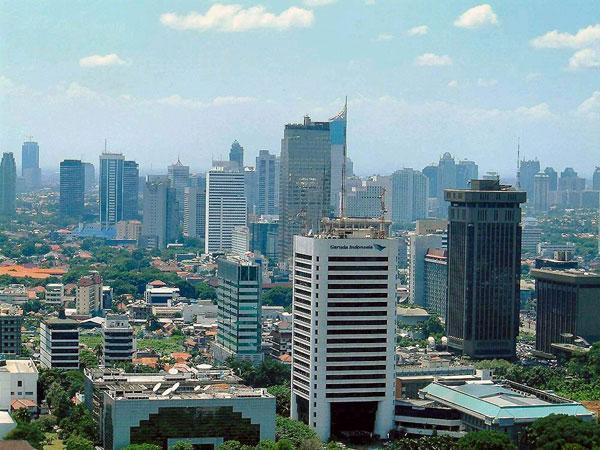
Indonesian telcos XL Axiata and Smartfren Telecom announced on Wednesday they have finally agreed to merge their operations in a deal valued at IDR104 trillion (US$6.5 billion) after years of rumours and negotiations.
Under the merger plan, Smartfren and its subsidiary SmartTel will be dissolved into XL Axiata. The resulting new company, XLSmart (full name: PT XLSmart Telecom Sejahtera Tbk), will be jointly controlled by parent companies Axiata Group and Sinar Mas, who will each hold a 34.8% stake.
The stated US$6.5 billion figure represents the combined pre-synergy enterprise value of the transaction.
Once the transaction closes, the shareholding equalisation will result in Axiata receiving up to US$400 million, plus an additional US$75 million at the end of the first year (subject to conditions).
The merger plan has been approved by the boards of XL Axiata, Smartfren, and SmartTel but remains subject to the usual regulatory and shareholder approvals, as well as customary closing conditions. Assuming that all goes smoothly, the merger is expected to be completed within the first half of 2025.
In a joint statement, Axiata Group and Sinar Mas said that XLSmart will create “a new telecommunications powerhouse” in Indonesia that will drive innovation, improve service quality, and enhance digital connectivity.
They also said the new company will be on firm financial ground. With a combined mobile subscriber base of approximately 94.5 million and a market share of 27%, XLSmart is expected to generate pro forma revenues of more than IDR 45.4 trillion and an EBITDA of over IDR 22.4 trillion.
Meanwhile, the merger will enable XLSmart to cut costs by integrating the two networks and optimising resources. Dian Siswarini, president director and CEO of XL Axiata, said XLSmart will be able to realise estimated annual run-rate pre-tax synergies between US$300 million and $400 million post-integration after the merger is completed.
“By combining our resources, expertise, and market positions, we will enhance our competitive edge, drive innovation, and unlock new growth opportunities to build a better future together,” she said.
Axiata Group CEO Vivek Sood said that XLSmart will have the scale, financial strength, and expertise to drive investments in digital infrastructure, expand service coverage, and spur innovation for customers while contributing to a healthier and more competitive market.
“[The merger] will allow us to cater to the unique infrastructure demands of the Indonesian archipelago by providing a scalable platform that will enhance service coverage, product offering and quality of network experience,” he said. “Synergies derived from merger will improve shareholder value and will be partly reinvested in future growth opportunities.”
“Bringing these businesses together will build on our joint, long-term commitment to Indonesia, giving us the strength and scale to contribute to the country’s digital ambitions meaningfully,” said Merza Fachys, president director of Smartfren.
The merger of XL Axiata and Smartfren has been a long time coming, with rumours of a merger going back as far as 2021. Axiata and Sinar Mas returned to the table to discuss a merger in September 2023, and asked telecoms regulator KemKominfo for permission to carry out the merger in May 2024.
Third-ranked XL Axiata and fourth-ranked Smartfren are the two smallest operators in Indonesia. While XLSmart won’t overtake Telkom Indonesia’s Telkomsel and Indosat Ooredoo Hutchison in terms of subscriber numbers, it will likely be a stronger competitor.
In December 2023, Axiata Group announced plans to make XL Axiata a stronger player in Indonesia’s growing fixed broadband and fixed mobile convergence (FMC) sectors. Under that plan, Axiata’s fixed broadband subsidiary Link Net agreed to transfer its business to XL Axiata and continue as a wholesale fibre company. The deal will make XL Axiata the second largest fixed broadband operator in Indonesia behind Telkomsel’s IndiHome.
NetIX, a global internet exchange platform under the Neterra Group, has achieved a new record, reaching 4.02 Tbps of traffic through its network.
At the start of 2024, NetIX had surpassed the 2 Tbps threshold. Within five months, its clients increased their traffic by an additional 1 Tbps, placing it 13th among the largest Internet Exchange Platforms (IXPs) globally by traffic. With its new record of 4 Tbps, NetIX now ranks within the prestigious top 10 global IXPs.
NetIX continues solidifying its position as a key player by consistently expanding its network and welcoming new members. To date, the company’s network connects over 220 data centers across more than 100 cities, aggregating and combining traffic from over 50 other Internet exchange platforms through its Global Internet Exchange (GIX) service.
“We are proud to announce this record-breaking achievement of 4 Tbps traffic on our platform,” said Deian Belev, Senior Product Manager of Connectivity and NetIX at Neterra. “This milestone reflects the trust and collaboration of our members and our unwavering commitment to delivering high-quality connectivity and value to our customers.”
The rapid growth of NetIX demonstrates the increasing global demand for efficient, innovative, and scalable connectivity solutions. For years, Neterra’s platform has provided its members with faster connections, improved performance, reduced latency, and significant cost optimization for global connectivity.

Four bits of interesting infrastructure news from across the Atlantic: … [visit site to read more]
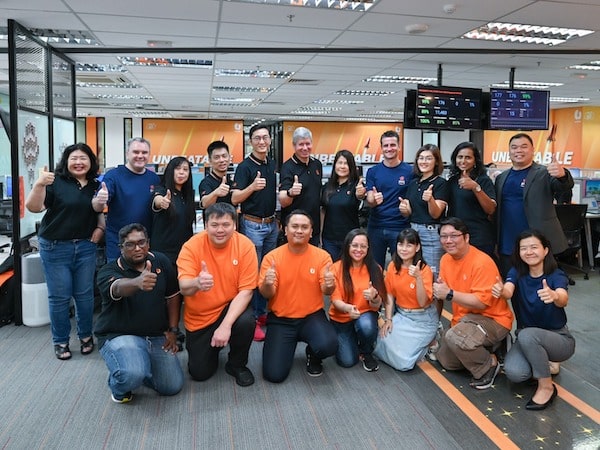
Malaysian telco U Mobile said on Monday it will deploy contact centre solutions from Amazon Web Services (AWS) based on generative AI in its contact centre after running a successful proof-of-concept (PoC) for the past six months.
The PoC – which commenced in July 2024 – integrates AWS’ generative AI Contact Centre Intelligence Post Call Analytics and Live Call Agent Assist into U Mobile’s contact centre operations. U Mobile has been using the solutions – which leverage Amazon SageMaker and Amazon Bedrock – to improve contact centre agent productivity, as well as the quality of their customer interactions.
U Mobile said the PoC has shown significant operational improvements in its contact centre, with agents achieving faster resolution times through AI-powered information retrieval, resulting in greater operational efficiency.
Agents have also been able to use AI-generated responses curated from U Mobile’s comprehensive knowledge bases to make customer interactions more precise and reliable, U Mobile said.
Other benefits demonstrated in the PoC include agents being able to use the time gains to prioritise high-value customers and target them with strategic promotions. Meanwhile, the solutions’ automated post-call analytics have not only provided U Mobile with deeper, actionable insights into customer behaviour and preferences, but also expedited quality management by delivering real-time, supervisor-grade feedback to agents.
The two companies plan to deploy the Contact Centre Intelligence solutions across U Mobile’s contact centre infrastructure starting in the first quarter of 2025.
U Mobile CIO Neil Tomkinson said in a statement that the end-to-end PoC is the first of its kind in the ASEAN region, and that “the positive results achieved only highlights the immense potential that AI solutions have in transforming the way we work.”
U Mobile said the successful PoC also marks the start of a long-term strategic collaboration with AWS to explore other opportunities in areas such as “talent upskilling and reskilling, operational efficiency enhancements across functions, as well as multi-stakeholder digital transformation collaborations.”
“At AWS, we’re constantly evolving and innovating in the field of generative AI, and collaborations like this help us better understand how our solutions can enhance customer experience,” said Peter Murray, Malaysia country manager for AWS.

A few items, three domestic and one international: … [visit site to read more]

IBM and Samsung are set to secure a £895m contract to deliver user services for the UK’s new Emergency Services Network (ESN), leaving BT and its Italian partner Leonardo out of the deal, according to a recent Telegraph report.
The Home Office’s decision marks a key step in the long-delayed and over-budget ESN project to modernise communication systems for police, fire, and ambulance services in the UK.
BT had been considered a frontrunner for the contract, which includes managing emergency responder accounts, supplying devices, and developing “push-to-talk” functionality. However, industry sources suggest concerns over awarding multiple contracts to BT may have influenced the decision.
Just last week, the UK incumbent won a £1.29 billion contract to provide the ESN’s network infrastructure.
The ESN project has faced significant challenges, including Motorola’s controversial departure in 2022 after a clash with regulators over alleged overcharging. Since then, the Home Office has struggled to replace the user services provider, which has led to delays and escalating costs.
IBM’s selection brings fresh momentum to the ESN but raises questions about whether it can navigate the programme’s long-standing technical and operational challenges. These include integrating commercial mobile networks with the bespoke ‘push-to-talk’ functionality critical for first responders. With delays and cost overruns already eroding confidence in the programme, the spotlight is on IBM to deliver where others have struggled. The company’s ability to manage these hurdles effectively will be critical to restoring faith in the ESN’s vision of a modern, cost-efficient emergency services network John Black, the ESN’s programme director, is notably a former IBM executive, and will be in charge of overseeing the transition to the new providers.
“All commercial contracts are procured in line with government rules which are designed to ensure the best value for taxpayers and fair competition, said a Home Office spokesperson.
Both BT and IBM have declined to comment.
Also in the news:
New European Commissioners set sights on bloc’s international competitiveness
Namibia halts Starlink operations amid licensing dispute
Deutsche Telekom replaces Huawei kit in new Nokia deal

Keep up-to-date with all the latest news, articles, event and product updates posted on Developing Telecoms.
Subscribe to our FREE weekly email newsletters for the latest telecom info in developing and emerging markets globally.