India’s DoT slashes spectrum auction target

Keep up-to-date with all the latest news, articles, event and product updates posted on Developing Telecoms.
Subscribe to our FREE weekly email newsletters for the latest telecom info in developing and emerging markets globally.

Sending occasional e-mail from 3rd parties about industry white papers, online and live events relevant to subscribers helps us fund this website and free weekly newsletter. We never sell your personal data. Click here to view our privacy policy.

Tigo Colombia in deal to sell and lease back towers

Millicom, a leading provider of fixed and mobile telecommunications services in Latin America, has announced that its subsidiary, the operator Tigo Colombia, has agreed to sell approximately 1100 wireless communications towers to affiliates of investment funds managed by KKR, a leading global investment firm.

KKR plans to work in partnership with NEXO LatAm, a digital infrastructure platform that supports the implementation of KKR’s infrastructure strategy throughout Latin America.

As is increasingly the case in recent years, the sale has a lease component that allows the seller to go on using some of the towers without the expense of managing them.

Thus, as part of the transaction, Tigo Colombia and KKR have entered into a long-term agreement whereby KKR will lease wireless communications towers to Tigo Colombia to support its wireless networks, although how many has not yet been revealed.

The exact number of towers will be determined once the various closings have taken place, which are subject to customary closing conditions.

For Millicom this is clearly an important strategic decision. Mauricio Ramos, CEO and Chairman of the Board of Millicom, explains: “This transaction with KKR, a leading digital infrastructure franchise with deep sector expertise and commitment to the region, is another step towards crystallising the value of our tower sites across Latin America, simplifying our business, and allowing us to focus on servicing our customers.”

He continues: “This transaction enhances our operational and capital efficiency in Colombia, with long-term lease obligations denominated in Colombian pesos, consistent with our objective of increasing our proportion of financing in local currency.”

MORE ARTICLES YOU MAY BE INTERESTED IN…

Millicom offloads 1,100 Colombian towers to KKR


News

The sale-and-leaseback deal was agreed for an undisclosed sum

This week, Millicom’s subsidiary Tigo Colombia has agreed to sell around 1,100 of its mobile towers to US investment firm KKR.

The towers will be managed by KKR in partnership with NEXO LatAm, the digital infrastructure platform that manages KKR’s fibre investments throughout Latin America.

Tigo itself will continue to make use of the divested towers for its mobile network via a long-term leasing agreement with KKR.

The financial details of the deal were not revealed.

“This transaction enhances our operational and capital efficiency in Colombia, with long-term lease obligations denominated in Colombian pesos, consistent with our objective of increasing our proportion of financing in local currency,” said Millicom’s CEO Mauricio Ramos.

KKR already owns significant infrastructure assets in Latin America, primarily in partnership with Spanish telecoms giant Telefonica, with whom it jointly owns fibre networks in Colombia, Brazil, Peru, and Chile.

“KKR seeks to develop the telecommunications industry in Latin America through best-in-class mission-critical assets such as fiber, towers and small cells. This acquisition – along with KKR’s fiber investments in Chile, Colombia and Peru – underscores KKR’s commitment to its digital infrastructure platform in LatAm. This important agreement with Tigo is in line with our strategy of long-term partnerships with leading companies in the region,” said Waldemar Szlezak, a partner on KKR’s Infrastructure team.

In fact, KKR’s interest in telecoms infrastructure extends far beyond Latin America. The company is currently in the process of purchasing Italian incumbent operator TIM’s spun-off fixed network assets for roughly €22 billion. The deal, which had been in discussion for over a year, finally received approval from the Italian government earlier this month.

The deal is subject to typical regulatory approvals.

Keep up with all the latest telecoms news from around the world with Total Telecom’s daily newsletter

Also in the news

South Korean president backs semiconductor mega cluster investment
Malaysia to launch second 5G network alongside DNB
BT signs connectivity deal with Iraqi gas firm


Nigerian regulator gives Globacom more time to settle interconnect issues

The somewhat confusing saga of debts that may be owed by Nigeria’s second-biggest operator to its biggest has taken a new twist as Globacom has been granted an additional 21 days to pay the interconnect fees owed to rival operator MTN.

If it does not, it could face a network disconnection scheduled by the Nigerian Communications Commission (NCC).

As online news source Connecting Africa explains, this extension, starting from 17 January, is apparently because, according to an NCC announcement “the parties have now reached an agreement to resolve all outstanding issues between them ».

In fact the Commission expects MTN and Globacom to resolve all outstanding issues within the 21 days offered.

If correct, this may imply a change of heart from Globacom, given our report earlier this month that a company representative suggested it did not owe MTN interconnection fees estimated at the equivalent of US$1.8 million. 

The NCC clearly didn’t agree with this argument and issued a disconnection notice to Globacom.  This would have meant that Globacom customers could not call users on the MTN network, although they would still be able to receive MTN calls – and calls between Globacom’s own subscribers would not have been affected.

However, this isn’t the first interconnection charges issue involving Globacom. As Connecting Africa points out, in 2019 MTN partially disconnected Globacom subscribers over an estimated US$5 million worth of unpaid interconnection fees. Globacom partially repaid these and committed to pay the rest.

In the same year, according to Nigeria’s Premium Times news service, NCC granted number three operator Airtel an approval to partially disconnect Globacom from its network, again because of Globacom’s alleged failure to settle interconnect debts.

MORE ARTICLES YOU MAY BE INTERESTED IN…

Huawei and Dongfeng sign Chinese EV partnership 


News 

The partnership is Huawei’s latest attempt to enter further into the EV market 

This week, telecoms equipment giant Huawei and Chinese state-owned vehicle manufacture Dongfeng Motor Group have signed a partnership to collaborate on Dongfeng’s Voyah brand of “new energy” vehicles.  

Dongfeng is one of China’s ‘Big 4’ car manufacturers, alongside FAW Group, SAIC Motors, and Changan. 

The partnership, which was announced on Monday, will see Dongfeng Motors include various Huawei technologies in its vehicles, including autonomous driving and infotainment software. The press release notes that “both parties will jointly create the ultimate intelligent travel experience based on user needs. Through collaborative exploration and innovation in various fields, they aim to accelerate the large-scale commercialization of intelligent technologies.”  

Little else about the partnership was released, although it is expected that Voyah will adopt “Huawei Inside”, the company’s autonomous driving system that combines the Harmony operating system with the HiCar solution, and is capable of level-3 of autonomous driving. This indicates the vehicle can perform most driving tasks but human override may still be required in some circumstances. 

Voyah, who delivered 50,000 vehicles last year, aim to double their production in the coming year, according to their partner meeting yesterday. 

Huawei has been striving to grow its presence in China’s automobile industry for a number of years now, having invested $1 billion in the industry since 2021.The country has the one of the world’s fastest growing electric vehicle (EV) markets, with penetration expected to reach 40% of the country’s automobile industry this year. For Huawei, this represents a massive opportunity, one which the company is increasingly dedicated to pursuing as international sanctions stymie its traditional telecoms business in many Western markets. 

Back in November, Huawei announced a joint venture (JV) with state-run automobile firm Changan Auto, another of the so-called Big 4. Huawei said it will move its core technologies and resources in its smart car unit to the newly created JV, in which Changan will take a stake of up to 40%. The JV will focus on areas that are already covered by Huawei’s Intelligent Automotive Solution (IAS) business unit, such as intelligent driving software and digital cockpit systems. 

Keep up to date with the latest telecoms news by subscribing to the Total Telecom daily newsletter 

Also in the news:
South Korean president backs semiconductor mega cluster investment
Malaysia to launch second 5G network alongside DNB
BT signs connectivity deal with Iraqi gas firm

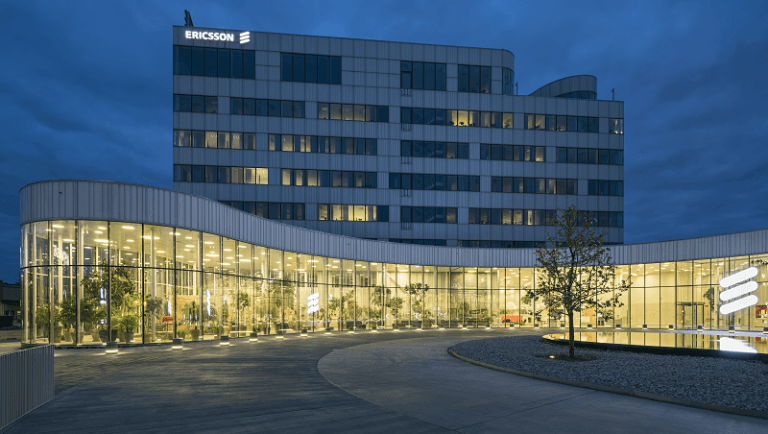
Ericsson gloomy on 2024 prospects as global spending slows 


News 

The vendor expects the decline in 5G demand will continue from last year 

Sweden’s Ericsson says it expects a further decline in 5G equipment sales to mobile operators in the coming year, despite the company beating its Q4 profit expectations this week. 

Sales are slowing in both the US and India – a concerning trend given the latter is typically classed as a high growth market and still has a long way to go with its 5G rollout. 

In Q4, revenues dropped 16% year-on-year to SEK 71.9 billion ($6.9 billion), compared to a 5% drop in Q3. Net income fell 30.5% to SEK3.4 billion ($323.7 million). 

“As we look to 2024, we expect the market outside China to further decline, with similar uncertainties as experienced in 2023,” said President and CEO Börje Ekholm in the results’ press release. 

“We expect a… a further decline of the RAN [Radio Access Network] market outside China as our customers remain cautious and the investment pace is normalizing in India,” continued the press release. 

“5G only being in the early stages of build-out will require additional network investments. In our view, the current investment levels are unsustainably low for many operators.” 

To combat the decline in revenues, Ericsson has confirmed that it will continue to focus on cost efficiency and operational efficiency in the coming year, which could include layoffs, reports Reuters. The company already announced that 8,500 job will be cut between the middle of 2023 and end of 2024. 

Despite the forecast decline, Ericsson is expected to get a boost from the $14 billion from its deal with AT&T in the second half of this year. This deal was signed back in December and will see Ericsson supply the Open RAN equipment to the US telecoms giant, which hopes the open technology will carry 70% of its wireless traffic by the end of 2026. 

In a separate press release today, the company announced that it has appointed Lars Sandström as Chief Financial Officer, replacing Carl Mellander, who announced his departure in April. 

Want to keep up with all of the latest telecoms news from around the world? Sign up to receive Total Telecom’s daily newsletter

South Korean president backs semiconductor mega cluster investment
Malaysia to launch second 5G network alongside DNB
BT signs connectivity deal with Iraqi gas firm

Is Cellnex going to reduce its assets in Poland?

Keep up-to-date with all the latest news, articles, event and product updates posted on Developing Telecoms.
Subscribe to our FREE weekly email newsletters for the latest telecom info in developing and emerging markets globally.

Sending occasional e-mail from 3rd parties about industry white papers, online and live events relevant to subscribers helps us fund this website and free weekly newsletter. We never sell your personal data. Click here to view our privacy policy.