

One of the bigger infrastructure deals of the year has officially closed, and six familiar brands have been replaced by just one. Following BAI Communications’ purchase of ZenFi, the company has rolled ZenFi, Mobilitie, BAI Communications, Signal Point Systems, Transit Wireless, and Vilicom together under the single banner of Boldyn Networks. … [visit site to read more]
29
Juin, 2023

Partnership delivers broadband connectivity to Africa’s tallest building
DZS and Summit Technology Solutions have partnered to deliver hyper-fast fibre optic broadband connectivity to Africa’s tallest building.
DZS, a specialist in access, optical and cloud-controlled software defined solutions, has announced that its integration partner Summit Technology Solutions (STS), an information technology and business solutions provider serving the Middle East, North Africa, and Asia, will leverage DZS Access and Subscriber EDGE technology over fibre as the security and smart network (SSN) infrastructure for the Iconic Tower and Crescent Tower projects in Egypt’s New Administrative Capital, which is being developed by Administrative Capital Urban Development (ACUD).
With a total height of 400 metres and 77 floors scheduled for multi-use occupancy in 2024, including the ultra-luxury Raffles hotel, the Iconic Tower is the tallest building in Africa.
The Crescent Tower will stand at the heart of the Central Business District in the New Administrative Capital and house the luxury Fairmont Cairo New Capital City hotel.
The SSN infrastructure consists of hyper-fast next generation fibre optic broadband connectivity, security cameras, gates and other access systems, and smart sensors and various Internet of Things (IoT) applications, both within and connecting the towers.
The New Administrative Capital, also known as the New Cairo Capital City, is a planned urban community located 35 kilometres east of Cairo that will be the first smart, connected city in Africa. It will house Egypt’s central government offices, the presidential palace, foreign embassies, financial headquarters and numerous businesses and educational institutions, and will be home to approximately seven million residents.
DZS has been involved in delivering hyper-fast connectivity to the New Administrative Capital since 2021.
MORE ARTICLES YOU MAY BE INTERESTED IN…
28
Juin, 2023

What’s in a name? Trials and tribulations of being an altnet
News
UK alternative network providers (altnets) are experiencing mixed fortunes. On the positive side, the likes of Gigaclear and CityFibre continue to bullishly celebrate their continued expansion, whilst others are falling foul of tough economic conditions – most recently Broadway Partners who went into administration at the end of May.
The situation isn’t eased by the consumer concerns over whether they can trust an altnet.
New research published by comparison website Uswitch found that only 15% of broadband customers answered positively when asked “Do you know what a broadband alternative network altnet is?” and only one-in-three consumers said they would consider using a new or unfamiliar provider.
Ernest Doku, telecoms expert at Uswitch.com, commented “The main challenge altnets face is that no one knows who they are. So, when they offer lower prices with incredible advertised speeds, consumers understandably may find it hard to be sure if they can trust them over the big names who have been around for decades.”
The irony of the situation will not be lost on the altnets. Most broadband customers (61%) would like to see more variety and choice in terms of broadband providers in their local area and altnets are well positioned for the current economic climate, generally offering consumers better value for money (up to three times more performance per £ according to Uswitch) – but still consumers are wary.
Today Chancellor Jeremy Hunt meets with economic regulators to discuss how to protect consumers from the impact of high inflation, so maybe this is the moment for altnets to shine? Certainly, this is the view of YouFibre’s CEO, Jeremy Chelot, who commented “Alternative networks like YouFibre and Hyperoptic are working hard to offer consumers ultrafast internet at fair prices and it’s time for them to make their voices heard.”
To hear more from the altnets, make sure you attend Connected Britain this September…
Regional Bytes: Veea, Lightpath, Conterra, Proximity
Multiple items with a regional focus to catch up with from the infrastructure space: … [visit site to read more]
27
Juin, 2023

Venezuela lays out plans for 2G shutdown and fibre growth by 2025
Keep up-to-date with all the latest news, articles, event and product updates posted on Developing Telecoms.
Subscribe to our FREE weekly email newsletters for the latest telecom info in developing and emerging markets globally.
Sending occasional e-mail from 3rd parties about industry white papers, online and live events relevant to subscribers helps us fund this website and free weekly newsletter. We never sell your personal data. Click here to view our privacy policy.
Int’l Bytes: Colt, EdgeConneX, DE-CIX
Several international infrastructure moves to catch up with: … [visit site to read more]
27
Juin, 2023
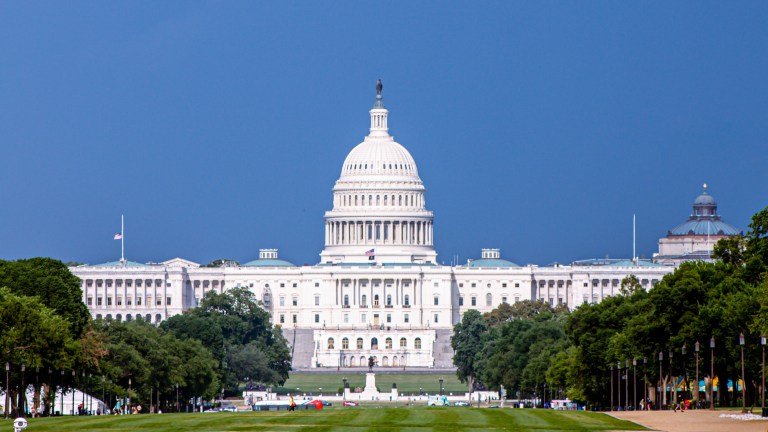
White House announces state BEAD allocations
NEWS
President Joe Biden and Vice President Kamala Harris have announced how the $42.5 billion Broadband Equity, Access and Deployment (BEAD) funds will be divided among U.S. states and territories
President Biden, Vice President Harris and Secretary of Commerce Gina Raimondo announced the allocations at the White House on Monday June 26. “What this announcement means for people across the country is that if you don’t have access to quality, affordable high-speed Internet service now – you will, thanks to President Biden and his commitment to investing in America,” Raimondo said. Mitch Landrieu, Senior Advisor to the President and White House Infrastructure Coordinator said, “simply put, high-speed Internet is a necessity in today’s society” and emphasized that the Biden-Harris administration is “committed to leaving no community behind”.
Drawing comparisons to President Franklin Roosevelt’s 1936 Rural Electrification Act, the Biden administration acknowledged that the goal of providing high-speed internet to all Americans is “bold” but by no means impossible. The BEAD program is part of President Biden’s sweeping Infrastructure Investment and Jobs Act (IIJA) and aims to close the digital divide.
The money allocated to each state was determined by the Federal Communications Commission’s (FCC) national broadband availability maps. An initial version of the map was published in November and was followed by a challenge process. States, internet service providers, and other parties were able to officially challenge the accuracy of the FCC’s data. The second version of the map was released May 30 and the NTIA used this to determine how to divide BEAD funds.
A senior administration official reported that the maps show that 8.5 million locations in the U.S. and its territories – about 7% of the country – do not have access to high-speed internet. Once states receive formal notice of their allocation on June 30, they will have six months to submit initial proposals for how they will spend the funds.
State governments will coordinate with county and local governments to formulate spending plans and correct any additional errors in availability data. After the NTIA approves states’ initial plans, state authorities can access 20% of their allocated funds. The remaining 80% will be available after states submit their final plans in spring 2025.
Tyler Cooper, editor-in-chief of BroadbandNow, said that “there weren’t any shockers” in terms of allocation amounts. Texas won the largest allocation at $3.31 billion – unsurprising given the vast scale of the state and the number of rural areas outside of the main urban hubs. California is set to receive $1.86 billion, closely followed by Missouri ($1.74 billion), Michigan ($1.56 billion), and North Carolina ($1.53 billion). All 50 states, along with Washington D.C. and Puerto Rico, will receive at least $100 million.
President Biden also stressed that the BEAD program will create new jobs for Americans as there are requirements for construction materials to be American-made. While the Build America, Buy America Act, part of IIJA, aims to stimulate the U.S. economy and create jobs, there are concerns that the requirement could delay broadband deployment efforts. Paul Atkinson, CEO of Optical Network Business at STL wrote on Telecoms.com that, as admirable as the intentions are behind Build America, Buy America, putting limitations on the production and supply of equipment will slow the rollout of American broadband networks, especially in the case of fiber optic networks.
You can hear more about investment in US broadband at next year’s Connected America which is being held in Dallas on March 12 & 13 2024 – secure your place here!
27
Juin, 2023

Vodafone Idea still keen to launch 5G despite funding issues
Indian operator Vodafone Idea (aka Vi) says it is in advanced talks with various network vendors for finalisation of its 5G rollout strategy and has concluded device testing of all major OEMs on its upcoming next-generation mobile broadband network.
According to comments in its latest annual report, Vodafone Idea says it remains committed to ramping up 4G coverage and introducing 5G services “once funding is in place”.
The company has pointed to 5G clusters in Delhi and Pune where it has partnered with various OEMs to test the compatibility of available 5G handsets.
As India’s Economic Times points out, rival operators Bharti Airtel and Reliance Jio have been expanding their 5G coverage since last October with both now looking to launch next-generation services nationally by December 2023.
By contrast, Vodafone Idea has yet to announce its 5G launch timeline, most likely due to the ongoing fundraising issues mentioned in the report. It has been trying, with limited success, to raise around 200 billion rupees via a mix of debt and equity for over a year. That’s about US$2.44 billion, though gross debt is more than ten times that figure at about $25.5 billion.
In the report, Vodafone Idea’s chairman Ravinder Takkar cited another problem: that telecom tariffs remain unsustainable, and need to increase significantly to generate reasonable returns for operators to promote investments.
Also, of course, the company still has some creditors to appease. For example, another story in the Indian press says that tower company Indus Towers has said Vodafone Idea is now paying 100% of its current monthly charges but won’t be able to clear outstanding dues without its pending fundraising.
Vodafone Idea accounts for around 40% of Indus’s revenue. Its total dues to Indus are estimated at around 70 billion rupees (about US$854 million).
MORE ARTICLES YOU MAY BE INTERESTED IN…
26
Juin, 2023

China’s big three join GSMA Open Gateway initiative
News
The GSMA have announced the addition of China Mobile, China Telecom and China Unicom to the Open Gateway initiative, a global network of operators using Application Programmable Interfaces (APIs) to provide universal access to operator networks.
The aim is to help developers and cloud providers enhance and deploy services more quickly across operator networks via single points of access. Early test programmes have centred on areas including online financial crime and more immersive gaming experiences.
Mats Granryd, Director General of the GSMA said “This will help unlock further value from 5G connectivity which will flow into the global economy and strengthen future investments, bringing transformational benefits of connectivity to all,”
Li Jun, EVP, China Telecom, said “We believe collaboration and common frameworks between mobile operators, developers and cloud providers will create new opportunities and drive forward new industries and experiences.”
Whilst Gao Tongqing, EVP, China Mobile, said they were “committed to opening up network capabilities and driving positive contributions to promoting the development of the digital economy.”
Launched earlier this year, there are now 29 signatories to the MoU including America Movil, AT&T, Axiata, Bharti Airtel, BT Group, China Mobile, China Telecom, China Unicom, Deutsche Telekom, Du, e& Group, KDDI, KPN, KT, Liberty Global, MTN, Omantel, Orange, Singtel, Swisscom, STC, Telecom Argentina, Telefónica, Telenor, Telstra, TIM, Veon, Verizon and Vodafone.
26
Juin, 2023

Monday Roundup: Telehouse, DF&I, Empire
One bit of M&A and two fiber expansion projects to catch up with: … [visit site to read more]