

Two metro fiber/WiFi deals, one regional densification project, and some transatlantic connectivity: … [visit site to read more]

Two metro fiber/WiFi deals, one regional densification project, and some transatlantic connectivity: … [visit site to read more]

Keep up-to-date with all the latest news, articles, event and product updates posted on Developing Telecoms.
Subscribe to our FREE weekly email newsletters for the latest telecom info in developing and emerging markets globally.
This week, the UK government announced its new Wireless Infrastructure Strategy, promoting the use of the latest technology to turn the UK into a “digital superpower”. But, looming in the background of all this talk of 5G innovation and 6G progression, is the stark reality that connectivity is far from a given for many in the UK. The digital divide is very real and, according to new analysis from Uswitch.com, appears to largely mirror the North–South economic divide.
Using a composite ‘digital divide’ score derived from broadband speed and accessibility data combined with home working statistics, Uswitch’s latest analysis explores the digital divide as it relates to UK councils.
Perhaps unsurprisingly, the best performing councils – with the lowest digital divide score – are largely from the South of the UK, with Rugby council the only (arguably) Northern local authority to make it into the top 10.
Table 1: The ten councils with the smallest digital divide (smallest to greatest)
|
Council |
Work from home (any) |
Median download speed (Mbps) |
Full fibre (% premises FTTP) |
Digital divide score |
|
Lambeth |
53.8% |
58.6 |
64.0% |
6.6% |
|
Hackney |
53.2% |
72.6 |
44.7% |
6.7% |
|
Wandsworth |
52.4% |
61.8 |
68.2% |
6.7% |
|
Thanet |
53.3% |
50.6 |
69.8% |
7.8% |
|
Cambridge |
48.5% |
78.9 |
69.4% |
8.2% |
|
St Albans |
63.1% |
65.2 |
59.8% |
8.9% |
|
Kensington and Chelsea |
49.5% |
74.5 |
61.2% |
9.3% |
|
Three Rivers |
47.7% |
72.1 |
70.10% |
9.6% |
|
Spelthorne |
48.2% |
58.2 |
68.40% |
9.9% |
|
Rugby |
52.5% |
69.5 |
48.70% |
10.2% |
By contrast, the ten highest scoring ‘digital divide’ councils are primarily from the North, Scotland, and Wales. Indeed, of the 25 most digitally divided regions recorded, 12 were in Scotland and Wales.
The city of Edinburgh (15.6%) and the Vale of Glamorgan (17.3%) were the only councils from Scotland and Wales, respectively, to make it into the top 25 least digitally divided regions.
The ten councils with the greatest digital divide (greatest to smallest)
|
Council |
Work from home (any) |
Median download speed (Mbps) |
Full fibre (% premises FTTP) |
Digital divide score |
|
Argyll and Bute |
18.0% |
26.7 |
5.8% |
97.9% |
|
Highland |
23.5% |
29.7 |
31.9% |
92.9% |
|
Copeland |
24.3% |
27.8 |
3.4% |
92.6% |
|
Dumfries and Galloway |
24.2% |
30.1 |
24.4% |
92.1% |
|
Allerdale |
25.0% |
34.8 |
6.9% |
91.7% |
|
West Lindsey |
23.8% |
37.7 |
31.4% |
89.9% |
|
Moray |
22.0% |
35.8 |
47.3% |
89.6% |
|
Stirling |
22.2% |
26.7 |
55.4% |
89.5% |
|
Rochdale |
20.0% |
37.1 |
17.3% |
87.2% |
|
Neath Port Talbot |
22.3% |
38.0 |
17.6% |
87.2% |
The severity of the digital divide for some of these councils should not be underestimated. For the poorest performing council, Argyll and Bute, only 5.8% of premises have access to full fibre, the median download speed is 26.7Mbps, and less than a fifth (18%) of people work from home.
“Our digital divide report shows that regions with a poorer internet connection have less access to digital technology overall, with lower work from home rates and less reliable connections to the internet. Meanwhile, British councils with the smallest digital divide have higher percentages of their workforce able to work remotely,” said Uswitch.com fibre broadband expert Max Beckett.
“With the UK government recently committing £3.5 billion towards their ambition of becoming a scientific and technological superpower, including ‘levelling up’ more areas of the UK to foster better paid jobs and opportunities in these sectors, it is important to ensure people of all backgrounds will benefit from this investment in digital tech.
That the digital divide should closely correlate to the economic disparities in the UK should come as no surprise to anyone. Nonetheless, this analysis serves as a timely reminder that, even as major progress continues to be made in 5G and fibre, there are many parts of the country that are still woefully lacking quality connectivity.
Is the government doing enough to tackle the digital divide in the North of the UK? Join the connectivity industry in discussion live in Manchester next week at Connected North
Also in the news:
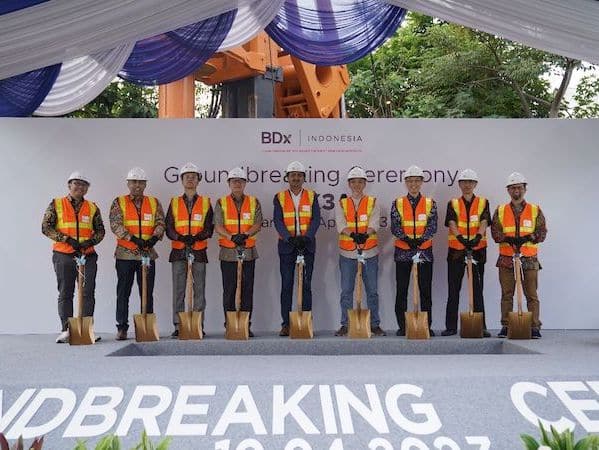
Telkomsel to merge with Indonesia’s largest fixed broadband operator
French operators head to court seeking compensation for forced Huawei removal
US wireless operators move to allay 5G aviation fears

This Industry Viewpoint was authored by J. Drew Mullin, Partner, ATLANTIC-ACM
Investment in US Telecom companies has been red-hot for 15 years and remains strong despite broader economic concerns. Infrastructure asset M&A is highly active, and multiples that were once 10-20 times EBITDA have risen to 20-30 times EBITDA. MetroConnect and PTC, two of the larger investment tradeshows in the telecom space, have grown significantly over the last 15 years to reach record attendance in 2023. 2022 saw declines in … [visit site to read more]
Meanwhile, the pandemic has sped up digitalization in Asia Pacific. Since the gradual opening up, major countries in the region are expected to maintain good recovery momentum in 2023, with GDP growth forecasts over 4%, leading to an upgrade in telecom consumption.
The communications industry is expanding at an incredible pace in the Asia-Pacific. The need for connectivity in ICT infrastructure is growing rapidly as businesses and industries advance their digital transformation initiatives and millions of devices become connected thanks to 5G. While this change has given businesses many new opportunities, it has also presented several challenges.
In certain 5G areas, where breakthroughs and deployments are showcasing increasingly fascinating application scenarios and metaverse applications, 5G development is gaining even greater traction. With the advent of 5G, telcos will have a tremendous opportunity to fully realize the promise of technologies like the Internet of Things (IoT) and Edge and develop new sources of revenue.
It becomes imperative that 5G networks continue to advance and evolve in order to meet this challenge because rapid development also places increasing demands on the network’s capabilities. Here, based on region-specific 5G network deployment stages, global telco solution supplier Huawei has been closely collaborating with the sector and assisting Asia-Pacific telcos in getting ready for a new era of connectivity.
Diverse deployments
The features offered by 5G enhance the secure remote execution of mission-critical communications (such as industrial automation and remote healthcare), high-speed video streaming and connecting a vast number of sensors. However, the challenge for telcos is all regions of Asia Pacific are at different stages of 5G deployments.
While some are working to increase 4G speeds and services, others have jumped into 5G deployments to expand coverage. There are many who, while waiting for favourable government policies and rising customer demand to build the 5G infrastructure, nevertheless wish to enhance 4G LTE capabilities.
“The challenge for the industry, is that various countries are at different stages of 5G deployment; some are further along than others. Some nations are still utilizing 4G technology and are working to increase the network’s capability. Although 5G is popular, operators must contend with varying levels of device penetration,” says Abel Deng, President, Carrier Business Group – Asia Pacific Region, Huawei. He was speaking in conversation as part of a roundtable at Mobile World Congress 2023.
Deng continues by stating that there are three ways to the 5G installations. Massive base station deployments for 5G are part of it, and other nations are still building 5G-ready networks and LTE, respectively.
Development of 5G and 5.5G
It is essential that 5G networks continue to develop and advance if they are to completely realize their potential and satisfy the continuously expanding connectivity needs of users. To completely improve network connectivity, switch from connectivity-based development to full-service enablement, and working with industry partners to transition to an intelligent society, Huawei has been actively working on the concept of 5.5G Core, which may significantly boost new application scenarios and services.
” broadband speed acceleration and latency reduction are one of the important features of 5.5G. 5G and 5.5G will enable the industries digitalization. For example, to get the automation going, low latency is important, which need 5G or even 5.5G to get higher precise manufacturing; M2M requires high uploading rates, which 5.5G can perfectly meet this demand;” Deng says.
The evolution to 5.5G, which will be characterized by improvements in enhanced Mobile Broadband (eMBB), ultra-reliable low-latency communication (URLLC), and Massive Machine-Type Communications (MMTC), as well as new capabilities for sensing, passive IoT, positioning, and intelligence, is being driven by emerging 2C and 2B applications, which call for further advancements in 5G capabilities.
But is 5.5 G a whole new network? “The idea is to upgrade the existing network but will need to be done on a case-by-case basis,” Deng clarifies.
Improving the infrastructure for connectivity
Several cutting-edge products and services have been offered by Huawei (H) to the Asia Pacific region. It sets aside over 25.1% of its 2022 annual income for R&D. The company’s market-leading technologies, such as Blade AAU and META AAU, which have been used by some of its most significant clients, may increase customer satisfaction and capacity while reducing energy usage by up to 30%.
It is helping APAC telcos gradually evolve from traditional networks to “autonomous networks” to achieve high-quality 5G development and intelligent O&M (NSOC O&M Mode).
Huawei, one of the few in the market to offer a full suite of ICT solutions with ‘cloud-pipe-device’ synergy, combining the physical and digital worlds, has established more than 160 Smart Cities in more than 100 nations and regions. Particularly in the Asia Pacific, its solutions have assisted Pattaya in reducing traffic bottlenecks by more than 30%, increasing travellers by more than 10%, and boosting operators’ profits through high-value connections.
Another example for Asia-Pacific is its collaboration with SCG, a leading conglomerate that runs its operations in accordance with ESG criteria to create autonomous driving systems using 5G technology. The self-driving capability has helped SCG reduce energy consumption by more than 50% and improves transportation efficiency by 8%.
Deng asserts that utilizing digital technologies, especially 5G, is expanding prospects. The industry must always consider how things will be in ten years, and Huawei is taking steps to modernize our networks and embrace the chances. “We are working with various carriers to build amazing 5G application cases. ” says Deng.
Keep up-to-date with all the latest news, articles, event and product updates posted on Developing Telecoms.
Subscribe to our FREE weekly email newsletters for the latest telecom info in developing and emerging markets globally.

Three regional fiber projects to catch up with: … [visit site to read more]

Might we have a pan-Arctic submarine cable system in just a few years? Far North Fiber has taken the next step toward making its proposed project reality by kicking off the cable route study, which would be followed by a marine survey. … [visit site to read more]
Commercial 5G launches rebounded in the second half of 2022 as operators in developing markets – and notably Africa – turned on their networks. That’s one of the key findings of 5G Tracker, a report from Kagan, a part of S&P Global Market Intelligence.
5G Tracker lists at least 238 mobile operators serving 94 markets worldwide that had launched commercial 5G services as of year-end 2022.
Developing markets, especially in Africa, were in the spotlight for recent commercial 5G launches, the report found, as operators in many developed regions had already launched 5G in previous years. The switch from non-standalone to standalone 5G is slowly picking up, it added, but the lack of demand for 5G itself has caused some operators to be tentative about making the switch.
5G Tracker also said that Ericsson and Nokia remained the leading 5G infrastructure vendors in terms of total customers and associated network deployments, while China’s Huawei Technologies was still the leading vendor in terms of total 5G small cell unit shipments and related deployments, thanks to its massive home market, where more than 2.31 million 5G small cells were active at the end of December 2022.
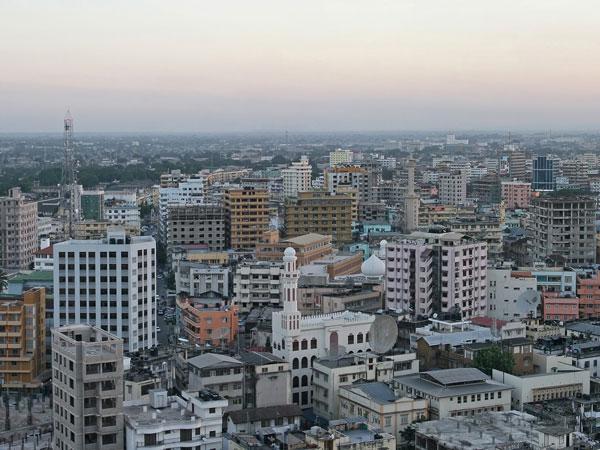
Twenty-four new operators were added to the list of 5G launches in the second half of 2022. Africa had nine new launches in this period, the most since Kagan began tracking 5G launches in 2018. These included Orange SA in Botswana, Safaricom PLC in Kenya, Société Française de Radiotéléphone (SFR) SA in Réunion, MTN Group in Nigeria and Zambia, Telkom SA SOC Ltd. in South Africa, Vodacom Group in Tanzania and Unitel SA in Angola.
As most operators in developed markets have already deployed commercial 5G services, Kagan expects launches in the succeeding months to come from developing markets in Africa, Asia-Pacific, Eastern Europe and Latin America.
More details on these findings are available on the 5G Tracker page.

The FTTH space is one of the most dynamic in the infrastructure world right now, with providers of all types investing resources in residential connectivity around the country. Last year we talked to Consolidated Communications here for an Industry Spotlight about their Fidium buildout plans. Now, one year later where are they? With us today to talk about the company’s buildout status and where they are putting their efforts going forward is Gabe Waggoner, Executive Vice President of Operations at Consolidated Communications. … [visit site to read more]