This Industry Viewpoint was authored by Michael Reid, CEO at Megaport
AI has moved decisively into the enterprise mainstream; what was once an emerging capability now plays a foundational role in how organizations operate, compete, and respond to shifting market forces. While the world has been focused on the “brain” of AI – the LLMs and the massive GPU clusters that train them – we have overlooked its “nervous system,” the network infrastructure required to keep AI alive. … [visit site to read more]
International network services provider RETN announced on Thursday it has launched a new end-to-end backbone route through Romania that links the Balkans to Moldova and Ukraine.
The route links the Romanian cities of Drobeta, Bucharest and Iași to Chișinău in Moldova as a single continuous backbone path that connects with RETN’s existing Balkans corridor linking Budapest, Timișoara and Sofia.
RETN said this not only provides a new physical connectivity option across Romania into Moldova, but also creates an alternative to established regional IP transit corridors in Eastern Europe.
RETN added that the new backbone enables alternative routing to Ukraine via Moldova and into the Balkans via Bulgaria, providing additional options for regional and international traffic flows.
The route forms part of RETN’s broader strategy to strengthen its optical network across Central and Eastern Europe, said business development director Olena Lutsenko.
“Bucharest and Iași are rapidly developing hubs for business, education and technology, and demand for resilient, high-capacity infrastructure is rising fast,” Lutsenko said. “By delivering a direct route from Timișoara to Bucharest and onward to Chișinău, we are enabling faster, more scalable access to the region from the Balkans, Ukraine and Central and Eastern Europe in general – for operators, ISPs, enterprises and international customers.”
Lutsenko added that the expansion comes at a time of rapid fibre growth and infrastructure modernisation across Romania and Eastern Europe.
According to the National Authority for Management and Regulation in Communications of Romania (ANCOM), Romania is among the region’s fibre leaders, with 6.9 million fixed broadband connections in mid‑2025 – 37% of which are gigabit-capable – and fixed broadband average traffic per capita on the rise.
Ooredoo Group today announced a partnership with du, the leading telecom and digital services provider, to land the Fibre in the Gulf (FIG) subsea cable system in the UAE, marking further progress in the development of a high-capacity international connectivity platform designed to support the region’s growing data and digital infrastructure requirements.
FIG is the largest subsea cable system ever built in the GCC, designed to deliver an unprecedented capacity of up to 720Tbps across 24 fibre pairs. The system is being developed to meet sustained demand from hyperscalers, cloud providers, AI platforms and data centre operators, enabling efficient, low-latency data flows across Qatar, the UAE, Bahrain, Saudi Arabia, Kuwait, Iraq and Oman.
The project is led by Ooredoo Fibre Networks (OFN), a recently established independent entity created to manage and scale Ooredoo Group’s international connectivity and subsea infrastructure investments, under the leadership of its CEO, Khalid Al Hamadi.
The UAE landing at du’s cable station adds further depth to the system’s architecture, supporting more diversified data routing and strengthening the overall efficiency of regional and intercontinental connectivity between the Middle East, Europe and Asia.
Aziz Aluthman Fakhroo, Group CEO, Ooredoo, said: “FIG reflects our continued focus on building high-capacity, resilient connectivity infrastructure aligned with how demand is evolving. This partnership with du marks another step in the execution of the project. Combined with the progress already made across other landing points, it reinforces the role of international connectivity in supporting the region’s long-term digital growth.”
FIG introduces greater route diversity and redundancy, providing alternative data pathways that strengthen connectivity resilience and support uninterrupted international data flows.
Fahad Al Hassawi, CEO, du said: “Landing the FIG subsea cable in the UAE strengthens our international connectivity capabilities and reinfources the UAE’s position as a leading global hub for data, cloud and AI. Our partnership with Ooredoo enables the scale, resillience and performance required to support hyperscalers, enterprises and digital ecosystems as demand for advanced connectivity continues to grow. This initiative aligns with the UAE’s digital transformation and economic agenda, supporting the nation’s vision to build a globally competitive, knowledge-based digital economy.”
FIG will support the next phase of digital infrastructure development across the region, providing scalable, high-capacity routes for cross-border data exchange and enabling continued growth in cloud, AI and digital services.
The submarine cable industry is evolving rapidly. Join the discussion at Submarine Networks EMEA, the world’s most important subsea cable event
Every major release tells a story about where a platform is headed. With v8, the story is about integration, openness and connectivity.
More CRM systems working in parallel, more AI providers deployable without extra infrastructure, real-time call events feeding directly into the automation tools your customers already use, and a unified codebase bringing gloCOM Desktop and Web closer together than ever before.
v8 touches many layers of the platform: how CRM data flows across departments and devices, how contact center capabilities reach customers who never needed a full CC migration, how AI moves from a conversation topic into something partners can actually deploy and bill for.
Over twenty years, PBXware has grown from a voice PBX into a communication and collaboration platform. v8 is the release where that growth becomes most visible, not because of one breakthrough, but because of how many things now work better together.
In this post, we walk through the pillars of v8 and what they mean for partners building and growing their UC business.
AI That Works The Way You Do
The Voice Of The Future – The AI Voice Agent
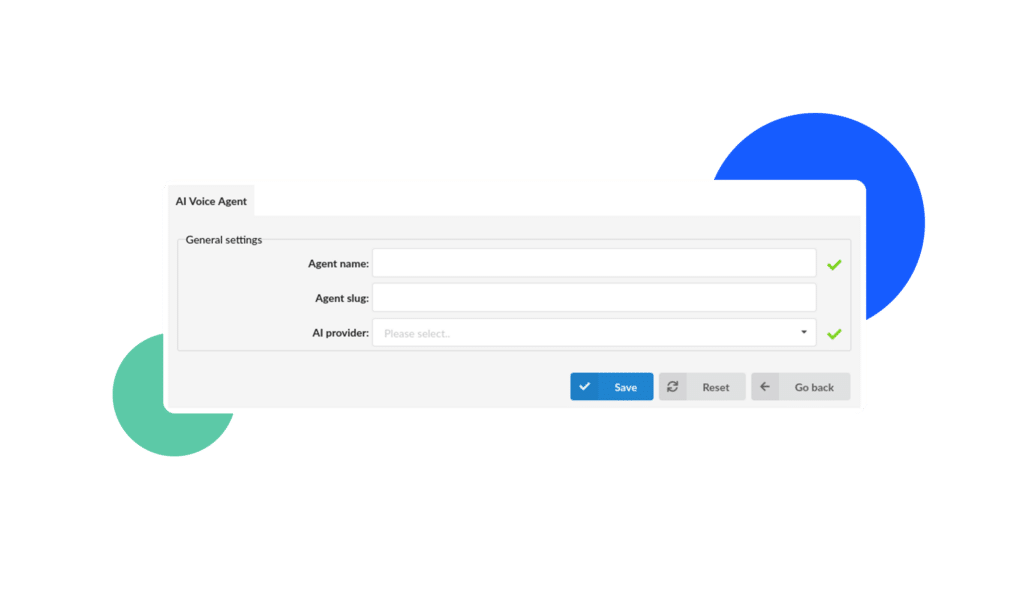
One of the standout features of v8 is the AI Voice Agent. It allows for a customer-oriented, AI-driven experience, delivered in a consistent tone (configured by the administrator in the back) that can help guide callers through a conversation by answering questions it was designed to, transfer the call to a more qualified department depending on the nature of the issue, and even end calls when a conversation completes successfully.
In addition, the AI voice agent can be given access to an MCP server which connects the AI Agent to external services, expanding its utility even further.
In order to track the efficiency of the AI Agent, we’ve also ensured that their calls are logged just like any other agent’s would and have made them distinguishable from human agents on the CDR page.
AI Agents used in business environments provide numerous benefits: from automating the menial tasks in order to divert the company workforce and its resources toward more complex initiatives, to improving overall customer satisfaction and achieving the ultimate goal – supporting a wide range of use cases across various industries and verticals.
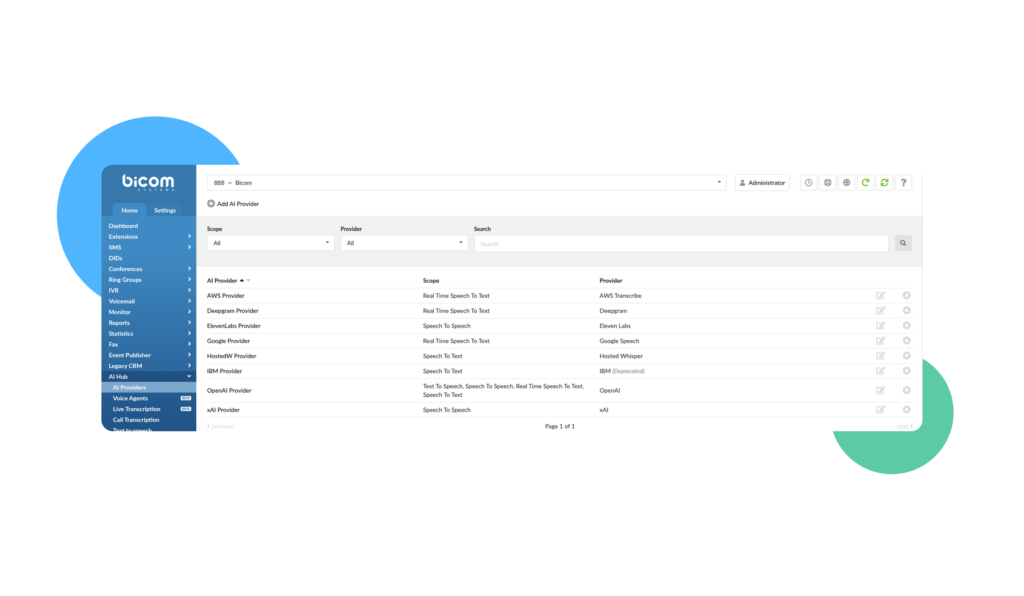
The Home For All AI features – The AI Hub
In previous editions, we’ve introduced our first suite of AI features: Call Recording Transcription and AI Voice Greeting Generation but the issue was trying to find them amidst everything else that the Bicom Platform had to offer.
With v8, we are consolidating them all under a new tab, the AI Hub, alongside the new AI Agent feature, as well as the AI Providers setting to make it easier to find, configure, and interact with our newest AI tools.
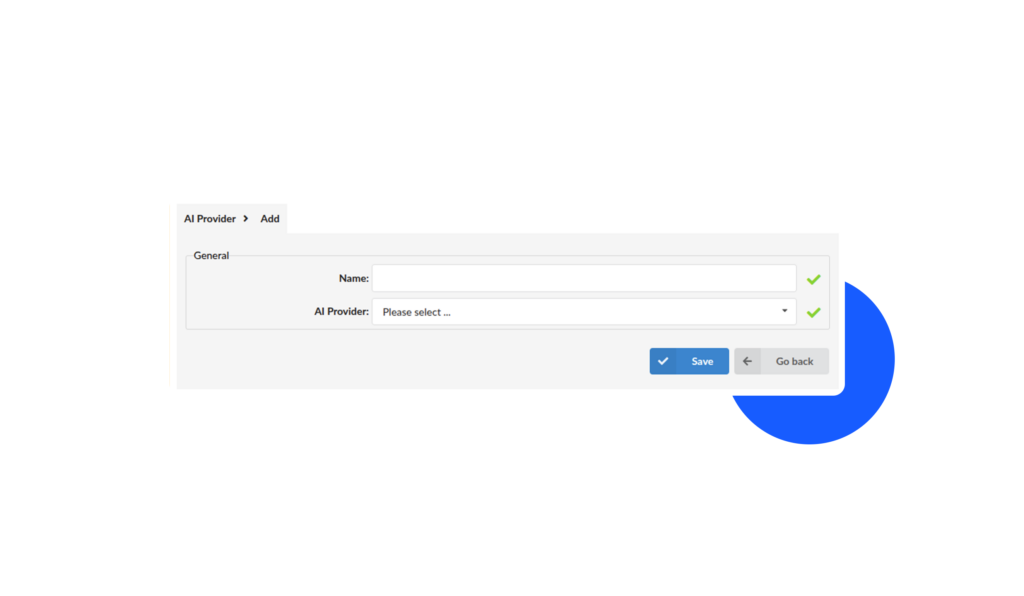
Per Tenant AI Providers
Another significant advancement introduced with v8 to PBXware is the change from per feature to per tenant AI providers.
This setup enables you to have both billing and advanced usage statistics per tenant (on the AI side) by using a different API key per tenant, ensuring better operational insights and more accurate billing.
Live Call Transcription
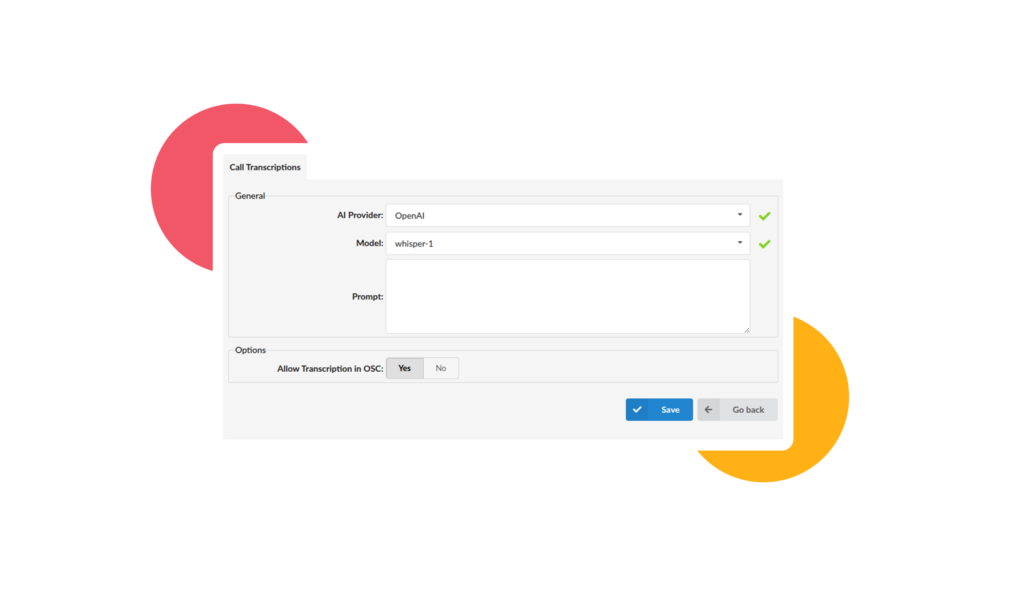
Provide more accessibility to calls with Live Transcription, enabling real-time speech-to-text for calls routed through an extension, ERG or Queue.
When enabled, PBXware captures live call audio and streams it to supported AI transcription services (AWS Transcribe, Deepgram, Google Speech, or OpenAI). Transcription results are generated continuously during the call and forwarded in real time to a configured WebSocket callback endpoint, ensuring instant availability of live text data.
This enables users to follow conversations as they happen, improving accessibility, monitoring, and integration across business workflows.
Event Publisher
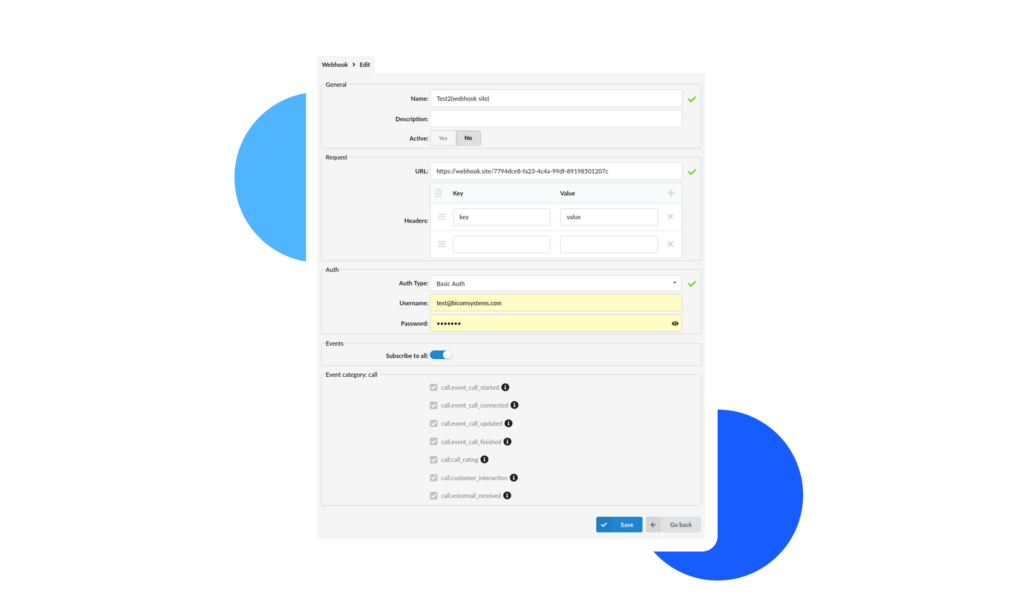
v8 introduces Event Publisher, a standout new feature of this release. It allows users to integrate their own backend server and handle call event data exactly as needed, giving them full control over how information is processed.
With real-time event delivery, any change in call flow creates an event instantly, eliminating the need for custom workarounds, polling, or delays, and enabling faster and cleaner integrations as well as a more responsive call architecture.
Works with tools you already use, connecting with popular low-code and no-code automation platforms.
Your PBX is no longer just recording activity. It’s driving it.
CC Lite
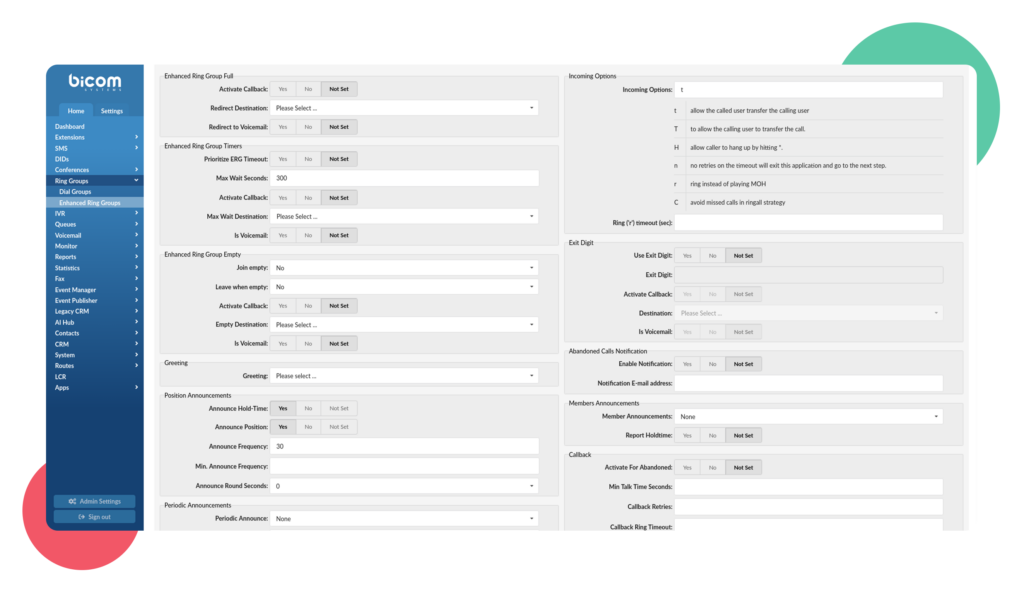
Gain access to Contact Center’s enhanced monitoring and reporting capabilities across all editions, with main focus on PBXware MT and Business, through CC lite.
https://www.youtube.com/watch?v=UsI8GzFmLpoIt enables non-CC users to experience some of CC edition’s best features like: Wallboards and additional ERG dashboards (gloCOM web & Desktop), Scheduled Reports for ERG and Extension statistics, and the ERG callback feature.
This allows you to upsell key Contact Center capabilities on a per-tenant basis without migrating entire customer bases to the CC edition, helping you protect margins by avoiding additional licensing and infrastructure costs. Additionally, you can retain customers in a multi-tenant environment while effectively supporting small and growing contact centers that need greater visibility without added complexity.
A New CRM Integration Module
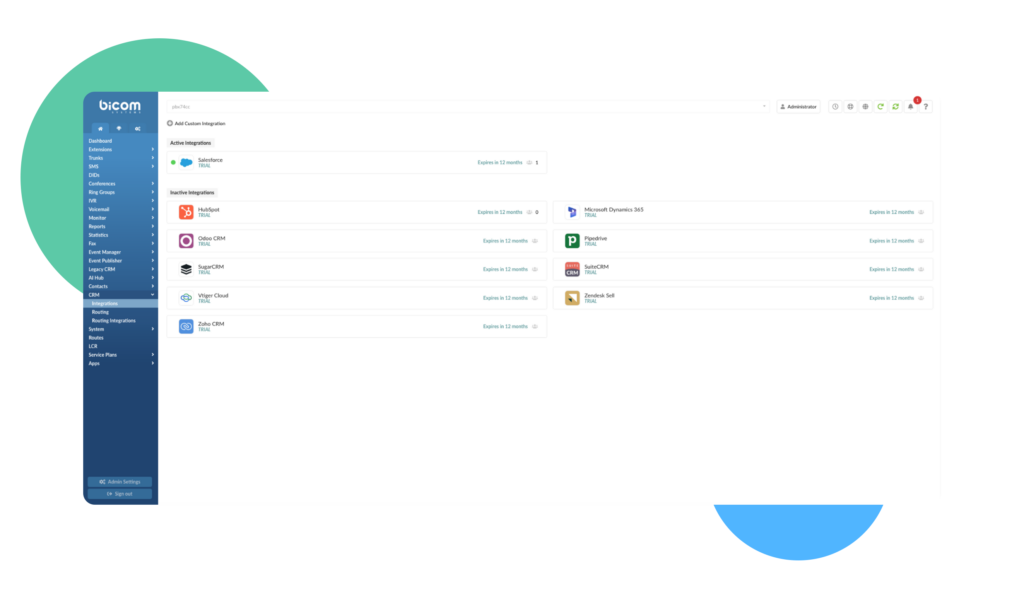
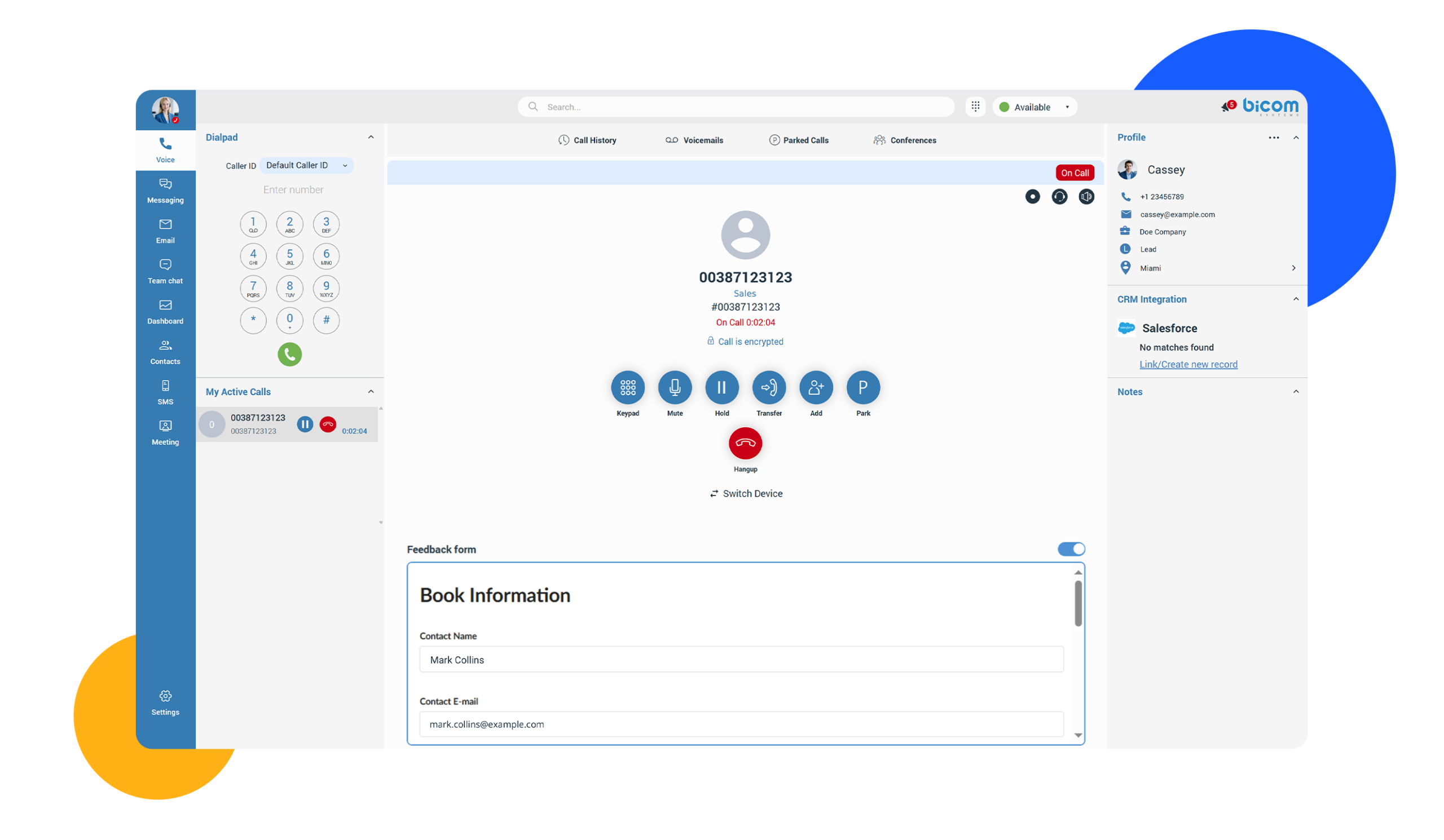
v8 also introduces a new, completely redesigned CRM Module, available in gloCOM Web and the new gloCOM v8 Desktop app.
What this solves for you and your customers:
No more choosing one CRM for all departments
No more shared CRM credentials or permission conflicts
No more missed conversation logs, or customer history
No more custom workarounds for multi-CRM environments
It comes with a few key improvements like: supporting multiple CRM integrations per tenant and per system depending on edition, flexible authentication methods, permission groups, automatic conversation logging for both Voice and Messaging channels, a unified CRM widget and a configurable CRM data model.
It is intended to provide improved flexibility, stability and UX across the board and to exist alongside the legacy CRM integration module to ensure full backwards compatibility.
CRM Routing
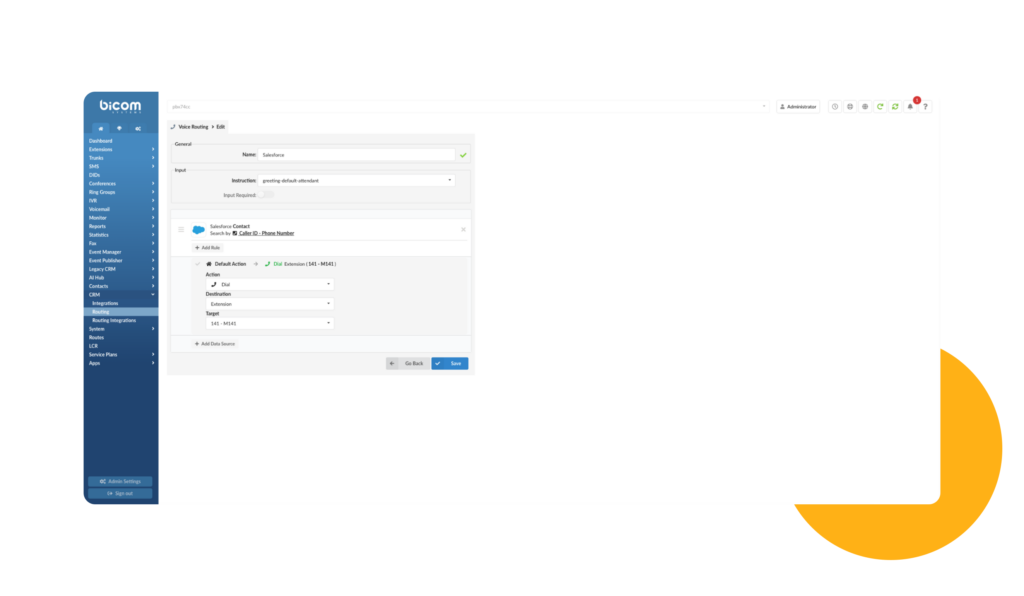
Another improvement coming to CRMs is CRM Routing which introduces inbound call routing dependent on real CRM data instead of static IVR logic, and allows incoming calls to be automatically directed based on customer information stored in connected CRM systems.
Admins have full flexibility in rule configuration when defining what happens when a recognized customer calls within PBXware.
Additionally, the feature works consistently across all supported CRM integrations.
This eliminates the need to standardize on a single CRM across departments, removes reliance on shared credentials, and ensures complete, accurate conversation histories without missed logs. All of this while also doing away with custom workarounds previously required to support multi-CRM environments, ensuring faster CRM deployments and less support tickets to manage.
Stereo Call Recordings
With v8, the Stereo Call Recordings Feature is out of Beta and is available to everyone, allowing them to record each side of the conversation on separate audio channels which helps greatly enhance AI transcription accuracy, general training and improves CRM integration.
Taking the next step forward with gloCOM NEXT
Version 8.0 has also focused on big changes with the Web & Desktop versions for the new gloCOM App, giving them a modern touch-up. Now, you can keep everything within reach with a unified codebase and CC features available on both platforms.
It also features the new ‘Unified Contacts’ functionality which replaces the legacy Central Phonebook and introduces a more structured visibility model for more robust contact management alongside the aforementioned CRM integration module.
gloCOM NEXT also allows you to fully brand your desktop app with your own colors with changes visible in real-time through the BRM, helping improve your white-label offerings and shortening go-to-market cycles.
Keeping Up To Speed With Regulations – Custom Middleware Enablement For Dispatchable Locations
Like with every release, the Bicom Platform has also been updated to comply with the latest regulatory requirements – Ray Baum’s act in particular.
By introducing support for custom middleware apps in the “Dispatchable locations” setup process, partners can now seamlessly integrate with providers that require location data to be registered and validated on their platforms.
This approach enables synchronization of dispatchable location information between PBXware and trunk providers, even with each of them using a different API, ensuring consistency and resulting in a more adaptable, user-friendly solution.
And More…
These are only some of the more standout changes that have been introduced with the release of 8.0. Here are a few more notable inclusions:
The ability to automatically log out the plugin on gloCOM for Teams when the Teams desktop app is closed to stop the user from receiving calls(disabled by default).
The Call Parking enhancement on gloCOM GO (iOS and Android), which allows users to park active calls directly from the call screen without having to dial an extension code.
The addition of Concurrent Archiving which utilizes multiple workers (configurable at any given time on the admin side) in order to process call recordings as they’re offloaded.
As always, plenty of other bug fixes, quality of life changes and feature updates have also been implemented to ensure smoother workflows and less tedium during app interaction.
These changes should further enhance your experience with the Bicom product suite as a whole, as well as make your work easier going forward.
We look forward to seeing your feedback on these new additions and hope that the changes in v8 have increased your overall enjoyment of our products. If you have any extra questions, feel free to Contact Us.
The Netherlands is seeing renewed subsea cable activity. Since January, IOEMA B.V. has established itself in the Netherlands, bringing a new submarine cable company into the Dutch digital infrastructure ecosystem. Its planned 1,600-kilometre fibre-optic system is designed to connect five Northern European markets and is expected to come ashore at both Eemshaven and near Scheveningen/The Hague, with Greenhouse Datacenters selected as an additional Dutch landing partner alongside Eurofiber. This reflects renewed interest in the Netherlands as a location for next-generation digital infrastructure.
For the Dutch Subsea Cable Coalition*, developments like these underline exactly why international collaboration and practical support for new cable landings matter. Regular visitors to Submarine Networks EMEA may have come across the coalition, either at our stand or in conversations throughout the event. The coalition brings together companies, public organisations and knowledge institutions in the Netherlands with a shared goal: strengthening the country’s position as a digital hub by supporting and attracting new subsea cable landings. In this article, we highlight several recent developments in the Netherlands that are relevant to the international subsea cable community. More information about the coalition and how we work can be found at the end of the article.
Maintaining a leading digital hub
For many years, the Netherlands has been recognized as one of the world’s leading digital infrastructure hubs. Its early investment in connectivity, internet exchanges and data centres helped create a dense, hyperconnected, and internationally competitive digital ecosystem.
But this success also brought new challenges. Due to the Netherlands’ early development as a digital infrastructure hub and its high density of data centers, the country was among the first to face constraints related to power availability and physical space for new digital infrastructure. Members of our coalition still recall a TeleGeography presentation in 2019 in which the Netherlands was described as “closed for business” for new digital infrastructure. It was a sharp characterization of the growing pressure around power availability, space and permitting at the time.
Today, these issues are no longer unique to the Netherlands: power availability, grid congestion and spatial constraints have become defining challenges for digital infrastructure markets around the world. In the Netherlands, they have also contributed to renewed political focus on digital infrastructure. Following the innovation and investment agenda developed under the leadership of former ASML CEO Peter Wennink, digital infrastructure has now been explicitly recognized as a political priority.
The Netherlands also continues to show strong fundamentals. In TeleGeography’s connectivity ranking, the country scores strongly on the metric of “power”, outperforming several other leading digital hubs. The large-scale development of offshore wind in the North Sea further underlines the country’s long-term ambition. While these investments will not solve today’s power constraints overnight, they do strengthen the longer-term outlook for a cleaner and more resilient energy base for digital infrastructure.
Together, these elements – a strong existing ecosystem, renewed political attention and long-term investment in energy infrastructure – are becoming visible in concrete developments across the Dutch digital infrastructure landscape.
Growing demand and new cable initiatives
One example is the continued demand for large-scale digital infrastructure, reflected in recently granted permits for seven hyperscale data centers and the awarding of funding for an AI Factory in the northern part of the Netherlands. This AI Factory, centered around an AI supercomputer and connected to the EuroHPC ecosystem, will provide access for both the private sector and academia to experiment with, train and develop AI applications. Its open-access approach is expected to further strengthen the Dutch digital ecosystem.
IOEMA and new routes through the North Sea
As mentioned earlier, IOEMA is one example of renewed subsea cable activity in the Netherlands. The planned system would add a new North Sea route connecting the Netherlands with Germany, the United Kingdom, Denmark and Norway, strengthening route diversity in Northern Europe. Its planned Dutch landings at Eemshaven and near Scheveningen/The Hague are both close to major internet exchange ecosystems, with NL-IX and AMS-IX both listed among the world’s ten largest internet exchanges.
IOEMA Holding also includes PACS Southern Route, an entity involved in the Pan-Arctic Cable System, which aims to connect Europe and Asia via a northern route rather than through the Middle East. Both initiatives align with areas identified by the European Commission in its Submarine Cable Security Toolkit and Cable Projects of European Interest framework. This fits within a broader European context in which subsea cable security, route diversity and resilience have moved higher on the policy agenda.
Making Dutch cable landing easier to navigate
In parallel, the coalition is working to make cable landings on the Dutch coast easier to navigate by identifying preferred landing locations. For these locations, we are gathering survey data, information on available power infrastructure and backhaul partners, and possible seabed routes. This is done in consultation with relevant government organizations, taking into account the many competing uses of the busy North Sea.
Taken together, these developments underline the Netherlands’ continued relevance to Europe’s digital infrastructure. With a strong ecosystem, renewed political attention, growing demand for AI and cloud infrastructure, preferred landing locations and initiatives such as IOEMA, the country is well positioned to support the next generation of subsea cable systems. At Submarine Networks EMEA, the Dutch Subsea Cable Coalition looks forward to discussing these opportunities with partners across the international subsea community.
Meet the Dutch Subsea Cable Coalition at Submarine Networks EMEA 2026 Representatives of the Dutch Subsea Cable Coalition, including ambassador Martin Prins and coalition strategist Aldert de Jongste, will be present at Submarine Networks EMEA in London this May. Together with other coalition members, they look forward to connecting with the international subsea cable community and discussing the opportunities the Netherlands can offer for future cable landings.
Visit us at stand 13 to learn more about recent Dutch developments, preferred landing locations and the practical support available for parties exploring new routes to the Netherlands.
Aldert de Jongste is a political scientist, goldsmith, and strategic advisor at ECP, a Netherlands-based foundation that brings together public and private stakeholders around the responsible development of the digital society. At ECP, he works on issues at the intersection of digitalisation, infrastructure, the economy and societal values. Through the Dutch Subsea Cable Coalition, Aldert is committed to strengthening the Netherlands’ position as a digital hub and to positioning subsea cables as critical infrastructure for the economy, innovation, security and digital autonomy.
The Dutch Subsea Cable Coalition: One central point of contact The Dutch Subsea Cable Coalition is a public-private partnership that brings together companies, infrastructure providers, data centre operators, wholesale end users, knowledge institutions and different levels of government. Its shared goal is to strengthen the Netherlands’ position as a digital hub by supporting and attracting new subsea cable landings.
The coalition acts as a central point of contact for international cable developers and investors exploring opportunities in the Netherlands. It supports new cable initiatives by sharing knowledge about the Dutch digital ecosystem, connecting landing parties with relevant stakeholders and helping them navigate the regulatory and licensing landscape.
By combining public and private expertise, the coalition aims to make the Dutch landscape more accessible for parties looking to land a subsea cable on the Dutch coast: from first orientation to a successful landing.
Stay informed: Webinar on 29 October The Dutch Subsea Cable Coalition will host its annual webinar on 29 October, providing an update on subsea cable landings and related developments in the Netherlands. The session will highlight the opportunities the Netherlands offers for new cable initiatives, as well as the support available through the coalition. The full program will follow soon. You can register here.
*The Dutch Subsea Cable Coalition is a collaboration of: AMS-IX, Digital Realty, Dutch Datacenter Association (DDA), Equinix, Eurofiber, Fiber Carrier Association (FCA), KPN, the Ministry of Economic Affairs, i3D.net,, Netherlands Foreign Investment Agency (NFIA), NL-IX, Relined, Rijkswaterstaat, Stichting DiNL, SURF and WorldStream.
Veon’s Ukrainian telco Kyivstar announced on Wednesday it has expanded its collaboration with LEO satellite player Starlink with a new agreement to resell Starlink’s broadband services and hardware for businesses and public sector institutions.
The deal enables Ukrainian businesses, as well as public schools, universities, hospitals, and community clinics, to purchase Starlink Kits and high-speed internet services from Starlink directly through Kyivstar using local currency.
Kyivstar CEO Oleksandr Komarov said that adding Starlink to its portfolio enables it to offer businesses a fully integrated, multi-layer connectivity stack, which promises to close coverage gaps in remote or infrastructure-constrained environments where reliable high-speed internet is both scarce and commercially valuable.
“This strengthens the resilience and efficiency of Ukrainian companies,” he said in a statement. “In addition, we plan to develop joint offerings that combine Starlink’s satellite services with Kyivstar’s core telecom services, providing businesses comprehensive solutions backed by high reliability and support.”
The deal builds on Kyivstar’s existing cooperation with Starlink Mobile to provide direct-to-cell (D2C) satellite connectivity for Kyivstar’s 4G customers. Kyivstar commercially launched that service at the end of November 2025.
“With combined Starlink and terrestrial network services available, Kyivstar is creating differentiated offerings that enhance business resilience and operational continuity, which are strategic priorities that drive long-term value for all stakeholders,” said Veon CEO Kaan Terzioglu.
Veon also aims to launch Starlink Mobile in Bangladesh and Kazakhstan via its operators Banglalink and Beeline Kazakhstan.
Telenor is establishing a new Norwegian sovereign cloud company designed for organisations with the most stringent requirements for security, resilience and regulatory compliance
The company will be named Telenor Sovereign Cloud and was announced in connection with a visit from Norway’s Minister of Digitalisation, Karianne Tung.
“Norwegian organisations need modern, scalable cloud services that at the same time provide full national control. We see a clear and growing need in both the private and public sectors. With Telenor Sovereign Cloud, we aim to deliver a solution that combines scalable cloud technology with Norwegian governance, operations and security”, says Jannicke Hilland, Executive Vice President and Head of Telenor Infrastructure.
“In a more uncertain world, control over one’s own data and digital infrastructure is critical. Initiatives like this help strengthen Norway’s digital sovereignty and resilience, and are fully aligned with the government’s plan for Norway”, says Minister of Digitalisation Karianne Tung.
Building a sovereign cloud platform in Norway The platform will be operated from nationally controlled data centres in Norway and developed to be isolated from commercial, global cloud solutions. All data will be stored, processed and managed under Norwegian jurisdiction. The service is being developed to meet strict requirements for security legislation, operational independence and the handling of highly sensitive data.
The initiative is part of Telenor’s Nordic ambition within secure and resilient digital infrastructure. In the initial phase, the solution will be established in Norway, partly due to national regulatory requirements and the need for local control, with the possibility of further development across the Nordics over time.
The solution will be built in collaboration with selected technology partners, while Telenor will retain control over architecture, operations and security. The company will also test and use the services internally, alongside work with external customers.
“We are now building a dedicated professional environment with specialist expertise in security, cloud and infrastructure. Recruitment is already under way, and over time the initiative is expected to involve around 50 people. We are starting small and will grow in line with demand and the development of the service”, says Hilland.
In the initial phase, the initiative will target public sector actors and larger enterprises with critical societal functions, with particular focus on the energy and healthcare sectors. Telenor will work with selected customers to test the concept, with the aim of deciding on a commercial launch based on experience from the pilot phase. Telenor Sovereign Cloud will be established as a standalone company under the Telenor Infrastructure business area.
“The pilot phase will provide valuable insight into how the solution performs in practice – from technology and security requirements to regulatory aspects and commercial potential. These experiences will form the basis for further scaling and commercial launch”, says Hilland.
The initiative will be developed in stages, where market demand will determine the pace and scale of future investment.
With this establishment, Telenor strengthens its position as a provider of critical societal infrastructure. With local presence, strong security expertise and a modern cloud platform, the company will be a strategic partner for organisations with stringent requirements for data protection, digital sovereignty and operational resilience.
“This initiative marks an important step in strengthening Norway’s digital sovereignty”, concludes Hilland.
MTN Nigeria’s margins reportedly face a potential US$87.5 million hit as diesel prices rise, a situation that may have been exacerbated by the war in Iran, although the removal of fuel subsidies in 2023 has also played a part.
Now, according to ITWeb Africa, the operator is intensifying its transition to gas-powered infrastructure to protect network operations from Nigeria’s deepening energy challenges.
Estimates suggest that MTN Nigeria consumes more than 40 million litres of diesel yearly to power thousands of base stations, data centres and switching facilities nationwide; in fact diesel accounted for a little over 58% of the company’s total energy consumption in 2025.
Power from gas (about 23.6%) and the grid (about 18%) made up most of the rest. Renewable energy contributed only 0.05%. In fact energy can take up nearly 40% of telecom operating costs in Nigeria but fuel price volatility and weak grid infrastructure are ongoing issues.
Beyond Nigeria, according to a report from the AP news service, diesel powers the majority of Africa’s estimated 500,000 telecommunications towers, but fuel prices and other challenges such as transport logistics, theft and maintenance are forcing a rethink, especially in off-grid areas where energy can account for up to 60% of operating costs for telecom towers.
Thus, says AP, across the continent, mobile network operators are increasingly adopting hybrid systems that combine solar panels, battery storage and limited diesel backup. Some, it suggests, are aiming for fully solar-powered sites over time, particularly in rural and off-grid areas; investments in alternative energy systems may even be accelerating as early results show significant savings. And of course solar-powered towers are less vulnerable to fuel shortages and generator failures.
This does beg the question of why the switch to renewables is not yet more advanced. However, if there is one upside to the Iran conflict, it may be to underline the fact that using renewable energy systems for towers means fuel price volatility is less of a problem.
Such systems could even enable faster and more cost-effective expansion into underserved areas, and, of course, if they are more reliable, renewable-powered towers could also improve service stability.
We use cookies to personalise content and ads, to provide social media features and to analyse our traffic. We also share information about your use of our site with our social media, advertising and analytics partners. View more
Cookies settings
Accept
Privacy & Cookie policy
Privacy & Cookies policy
Cookies list
Cookie name
Active
Conditions légales
Introduction et qui nous sommes
118812.fr met en relation des spécialistes du monde entier par le biais d'événements, de renseignements et d'éditions savantes. Nous sommes une société du FTSE 100 et notre réseau de marques internationalement respectées aide les gens à travailler plus intelligemment, à prendre de meilleures décisions et à se développer sur des milliers de marchés spécialisés. Les données et les informations sont au cœur des activités de 118812.fr, et nous prenons au sérieux les questions de confidentialité des données. Nous respectons nos relations avec les clients, les visiteurs, les sponsors, les exposants, les fournisseurs et les collègues, ainsi que la confiance qu'ils nous accordent pour la conservation de leurs données personnelles.
Contrôleurs de données de 118812.fr
Cette politique de confidentialité explique comment les membres du groupe 118812.fr collectent, utilisent et protègent les informations personnelles à travers nos marques. Les références à "nous", "notre" ou "nos" renvoient au contrôleur 118812.fr concerné qui traite vos informations personnelles.
118812.fr est structuré en cinq divisions opérationnelles :
Au sein de ces divisions, il existe des entreprises sectorielles et des marques de produits, d'événements et de services. En général, lorsque nous interagissons avec vous, c'est par le biais de l'une de ces marques. L'entité juridique du groupe 118812.fr responsable des données personnelles (désignée comme le contrôleur des données dans l'UE et désignée comme le contrôleur 118812.fr dans la présente politique de confidentialité) sera l'entité indiquée sur les formulaires de réservation, les formulaires Web et les contrats ou les factures. Différentes entités juridiques de 118812.fr sont responsables de différents événements et produits. Pour mettre à jour vos informations personnelles ou vos préférences en matière de marketing, contactez les équipes de marketing de nos divisions énumérées ci-dessous. Pour toute question ou plainte concernant la confidentialité des données, vous pouvez vous adresser à l'équipe 118812.fr Privacy via notre formulaire en ligne.
Couverture internationale et variations
118812.fr opère dans plus de 20 pays, qui ont chacun des lois différentes sur la protection des données. La présente politique de confidentialité s'applique à toutes les activités de 118812.fr dans le monde, sauf dans la mesure où il existe une exigence spécifique à un pays qui la complète, comme indiqué dans le menu de gauche.
Ce que nous recueillons
Cette section vous indique quelles informations personnelles nous pouvons recueillir lorsque vous utilisez nos produits et services, et quelles autres informations personnelles nous pouvons recevoir d'autres sources. Dans la présente politique de confidentialité, les informations personnelles désignent les types de 118812.frtions personnelles qui peuvent être collectées et utilisées, notamment : Les coordonnées, telles que le nom, l'adresse électronique, l'adresse postale et le numéro de téléphone.Informations sur l'éducation, la nationalité et la professionles noms d'utilisateur et les mots de passeCommentaires, réactions, messages et autres contenus soumis, y compris les informations relatives aux enquêtes.Intérêts et préférences de communication, y compris les autorisations de marketing, le cas échéant.Informations de localisation, telles que celles fournies par une application mobileInformations de vérification de l'identité, telles que les détails du passeport, afin de se conformer aux obligations légales dans certains pays et de fournir des lettres d'invitation de visa, le cas échéant.Informations sur l'utilisation du site web et des communications, telles que la correspondance et les détails de votre utilisation de notre site web et de nos services obtenus par le biais de cookies ou d'autres technologies de suivi.
Ces informations personnelles concernent les catégories de personnes suivantes :
Prospects, contacts clients, abonnés et utilisateurs en ce qui concerne nos services et produits ;Visiteurs, sponsors, exposants et conférenciers lors de nos événements ;Les professionnels figurant dans les produits numériques et imprimés, tels que les détails des cadres supérieurs mis à disposition par les produits de renseignement, les recherches et les publications.les auteurs, éditeurs et réviseurs de nos publications.les contacts de nos prestataires de services et partenaires commerciaux.Informations personnelles sensibles



 This Industry Viewpoint was authored by Michael Reid, CEO at Megaport