ADN unleashes new momentum for networks with intelligence


Viewpoint

[Bangkok, Thailand, November 5, 2024] TM Forum, a leading authority in the ICT industry, successfully hosted the Innovate Asia 2024. There, Dr. Philip (Xiaodi) Song, Chief Marketing Officer for Huawei Carrier Business, delivered a keynote speech titled “ADN Unleashes New Momentum for Networks with Intelligence.” He shared details about Huawei’s innovative AI Copilot and Agent applications, designed to help communications service providers (CSPs) evolve towards Autonomous Networks (AN) Level 4.
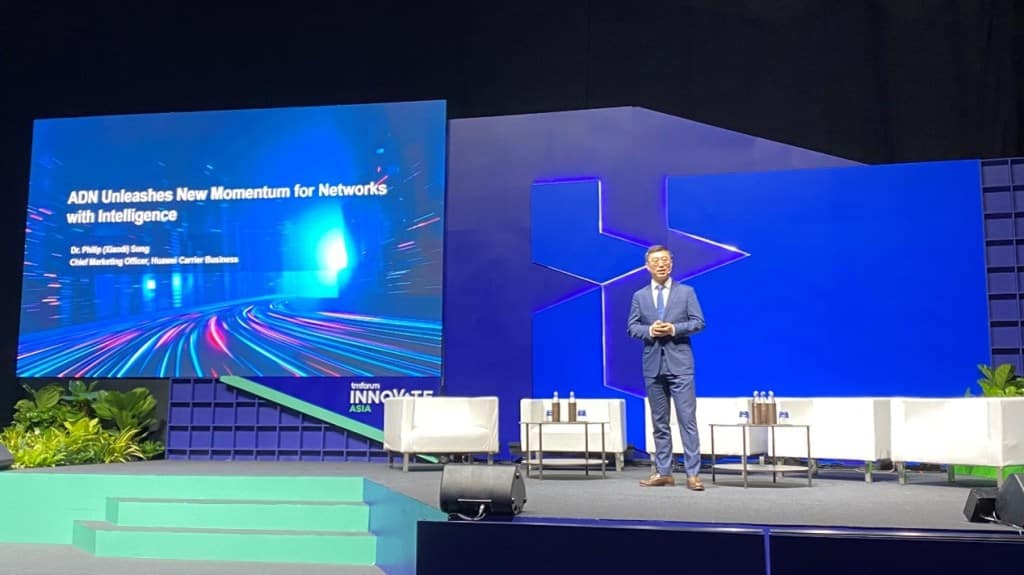
Over the past few decades, technological advancements have improved network productivity and customer experience helping to revitalize the communications industry. However, the advent of the intelligent era has raised the requirements for telecom network latency and bandwidth, significantly increasing operational expenditure (OPEX). To simplify network operations, many CSPs around the world have incorporated AN into their strategies and deployed Huawei’s Autonomous Driving Network (ADN) solution. This is helping them achieve AN Level 3 and actively evolve toward Level 4. Against this backdrop, AI foundation models are a crucial stepping stone for automating repetitive and to simplify complex O&M challenges in telecom operations scenarios.

Dr. Philip explained, “Telecom networks have transitioned from the era of small AI models developed based on expertise to the era of AI foundation models. Foundation models overcome the constraints of logic, rules, and scenarios, enabling comprehensive efficiency improvements in the ICT field. Built on their Telecom Foundation Model, Huawei provides a set of role-based Copilot and scenario-specific Agent applications, significantly enhancing network O&M efficiency and delivering excellent customer experiences in high-value scenarios.”

Dr. Philip also elaborated on Huawei’s Copilot and Agent solutions customized for intelligent O&M, network optimization, and experience operations, as well as their implementation achievements. This will help CSPs evolve value scenarios from AN Level 3 to Level 4.

  • For intelligent O&M, Huawei offers two innovative agents: CompSpirit (complaint handling agent) and AssurSpirit (fault handling agent). They use the Telecom Foundation Model for intelligent diagnosis of complaints and faults, achieving E2E automatic troubleshooting, reducing skill requirements for telecom personnel, and significantly enhancing the automation rate of alarm analysis and troubleshooting efficiency.
  • For network optimization, Huawei’s OptimSpirit (network optimization agent) detects poor-QoE incidents in milliseconds and uses the Telecom Foundation Model to generate and implement optimization policies automatically. This reduces the optimization time from hours to minutes and significantly improves network traffic usage.
  • For experience operations, Huawei offers HCEMate (home connection engineer copilot) that works with AssurSpirit and OptimSpirit to provide E2E home broadband user experience assurance, from service deployment and troubleshooting to user experience optimization. This solution significantly enhances the marketing success of home broadband services and reduces user complaint rates.

In closing, Dr. Philip called on telecom industry partners to collaborate on further AI applications across the industry and evolve toward AN Level 4.

VMO2 launches UK’s first 5G standalone small cells in Birmingham 


News 

The installments will boost connectivity for the city’s residents 

Virgin Media O2 (VMO2) has introduced the UK’s first 5G standalone (SA) small cells in Birmingham, boosting mobile connectivity in some of the city’s busiest areas, it claimed in a press release this week. These new 5G small cells, installed on street furniture around Broad Street and Fleet Street, are designed to improve mobile capacity where demand is highest. 

Initial performance data suggests that the new 5G SA cells provide a smoother mobile experience, helping customers with activities like browsing and streaming.  

Unlike large cell towers, the small units can be fitted onto existing structures to bring focused coverage improvements in urban spaces. This latest installation adds to Virgin Media O2’s ongoing rollout of small cells across the country.  

The 5G standalone network, launched by Virgin Media O2 earlier this year, now covers over 300 towns and cities. Unlike older 4G and 5G networks, standalone 5G offers faster speeds and lower delay times, giving O2 customers better,faster and more reliable connections at no extra cost. 

Partnering with Ontix and Alpha Wireless, VMO2 has also introduced MIMO (Multiple Input Multiple Output) technology, which allows speeds of up to 300Mbps in Birmingham’s city centre. 

MIMO works by using multiple antennas at both the transmitter (in this case, the small cells) and receiver (such as a user’s smartphone), allowing for simultaneous data streams. This technique maximises the efficient use of available spectrum, meaning more data can be transmitted at once, leading to higher speeds and lower latency. 

“Small cells are playing a vital part in our mission to bring reliable mobile coverage to all customers and improve services in the busiest areas,” said VMO2 CTO Jeanie York. 

“Having already turned on our cutting-edge 5G standalone network in more than 300 towns and cities, available to customers at no extra cost, we’re working hard to ensure all our customers consistently receive an exceptional network experience wherever they are and even at the busiest times,” she continued. 

Keep up to date with the latest international telecoms news by subscribing to the Total Telecom daily newsletter      

Also in the news:
Mobily and Telecom Egypt to deploy Red Sea submarine cable 
CMA set to approve Vodafone–Three merger
SK Telecom announces “AI Infrastructure Superhighway”

BT says Labour’s budget will cost company £100m 


News 

Chancellor Rachel Reeves’ recently announced budget is set to hike up BT’s costs as a result of national insurance payment increases  

BT released its financial results for the half year ending on 30 September 2024 this week, which showed a mixed bag of developments in a challenging economic landscape.  

The UK incumbent reported a 3% decline in revenue, primarily driven by issues in non-UK operations and a competitive retail environment. Reported profit before tax sits at £1 billion, down 10%. This was “primarily due to lower revenue, higher specific costs and higher net finance expenses,” the company explained. 

A significant highlight in BT’s recent performance is the speed of its fibre rollout, which has now reached over 16 million premises. Openreach passed 2.1 million premises with fibre-to-the-home (FTTH) in the last six months and has set an ambitious target to reach 4.2 million premises for FY25. The company has reported 446,000 new active connections on this network, raising its total to 5.5 million. 

Additionally, BT’s 5G network expansion continues to lead the market, covering 80% of the UK population, more than any other operator. 

I addition to its rollout updates, BT also confirmed that its workforce has been cut by 2,000, or 4% year-on-year, to 118,000, which saved the £433 million in annual costs in the first half alone. 

However, the latest UK budget posed new hurdles for the operator. The government’s decision to hike employers’ National Insurance contributions could cost BT an additional £100 million annually. In response, CEO Allison Kirkby outlined several measures to mitigate this impact, including potentially passing costs on to mobile and broadband customers. She also said that cost-cutting initiatives through automation and AI would be accelerated.  

“We are confirming our EBITDA, capex and cash flow guidance for FY25, albeit on lower revenue guidance. We remain firmly on track to meet our long-term cost savings and cash flow targets, and today announce an interim dividend of 2.40pps. The accelerated modernisation of our operations, combined with a focus on connecting the UK, puts us in a strong position to generate significant value for all our stakeholders,” said Kirkby in the announcement. 

Despite these financial pressures, BT remains ‘committed to its strategic priorities’, particularly its full fibre and 5G rollout plans. The company is also exploring options for its international arm, BT Global, which may include a sale or restructuring to better optimise its operations. 

Back in May, the company said it had hit its target to save £3 billion by 2025 a year early, with much of this total being driven by the company’s ongoing job cutting programme that will see 55,000 jobs eliminated by the end of the decade.  

Kirkby now says it will aim to repeat this, cutting a further £3 billion in costs by 2029.  

Keep up to date with the latest international telecoms news by subscribing to the Total Telecom daily newsletter  

Also in the news:
Mobily and Telecom Egypt to deploy Red Sea submarine cable 
CMA set to approve Vodafone–Three merger
SK Telecom announces “AI Infrastructure Superhighway” 


LMT President warns of potential price rises following merger with Tet

Latvian mobile operator LMT’s President, Dr Juris Binde (pictured, second from right), has stated that price increases will be inevitable if a merger with fixed broadband provider Tet goes ahead—a move that has faced strong opposition from rivals concerned about its impact on market competition.

Speaking to Developing Telecoms at the 5G Techritory conference in Riga, Binde confirmed that “definitely there will be price increases because it will be the dominant operator” if the merger materialises. He justified the likely rise in costs, citing the need to manage rising energy expenses and attract top talent to “develop new solutions and services for continued growth.”

Binde also clarified that the integration of LMT and Tet would slow development plans temporarily, explaining, “A merger doesn’t mean you simply combine two companies and everything carries on smoothly. It’s a complex and costly process, which would slow down the economy of both companies, and impact the national economy too.”

Opposition to the Merger

Aruns Mickevics, Director-General of rival operator Bite Latvia, voiced strong criticism of the proposed merger last month, warning it could create a “monopolised giant” with “super dominance” in the market, according to Baltic News Network. Should the merger go ahead, Mickevics has called for the new entity to be separate from the state, with critical infrastructure divested from Tet and made accessible to all market players.

In response, Binde acknowledged that “some reshaping of the market” may be necessary to secure approval, addressing Mickevics’s suggestion of separating Tet’s fibre-optic network and data centres from its main business, noting, “these are strategic discussions for the state.”

Another potential option under consideration is for LMT to take on Tet’s customers in “overlapping” services, such as connectivity, television, IT, and smart home solutions.

Despite these hurdles, Binde remains optimistic, seeing the merger as ultimately beneficial for the Latvian telecoms sector. “The future is mobile only. Therefore, LMT is the leading company and must remain the leader,” he added.

Future Plans

Binde stressed that market consolidation is only worthwhile if it supports a growth strategy beyond traditional telecoms, pointing out that declining revenues from core services are a global trend in oversaturated markets. He argued that operators must pursue a “broader landscape of services and innovations based on telecom services.”

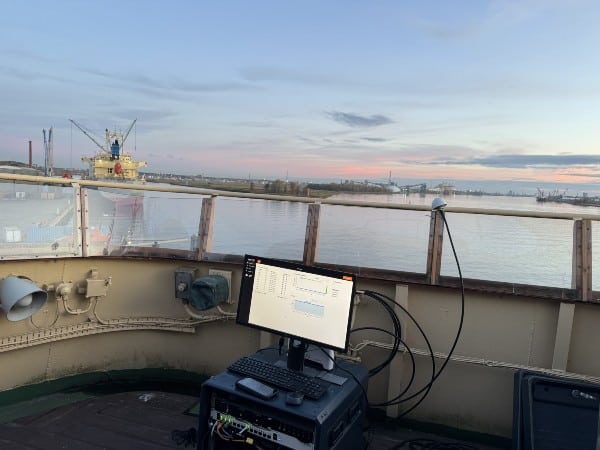
In line with this vision, LMT invested €24.4 million over the last nine months – a 22% year-on-year increase – in developing new services and expanding its 5G network. One innovation in progress is Seamless 5G Connectivity (pictured below) in the Baltic Sea, which includes providing 5G to the Port of Riga by installing base stations on ships and deploying aerial and aquatic drones to improve communication between vessels and port staff.

Seamless 5G Connectivity LMT

MORE ARTICLES YOU MAY BE INTERESTED IN…

Omantel and Equinix open data centre in Salalah

Digital infrastructure company Equinix has officially opened what it describes as its state-of-the-art data centre in Salalah, Oman, built in cooperation with integrated telecommunications services provider Omantel.

The facility, called SN1, is commercially and operationally managed in full by Equinix as a carrier neutral and open access Equinix International Business Exchange (IBX) data centre.

This is the second Equinix carrier-neutral data centre to be built in Oman, following MC1 in Muscat, and Equinix’s sixth facility in the Middle East, complementing its existing operations in Dubai and Abu Dhabi.

SN1’s location in the coastal city of Salalah optimises the routes of several highly strategic connections, offering a more direct and cost-effective reachability for businesses and service providers across four continents.

Indeed, Equinix claims that SN1 will “significantly reshape traffic flows across the Middle East and beyond”, reducing latency and improving the resilience of global networks. The facility will also feature direct fibre connectivity to Equinix’s MC1 data centre in Muscat, providing carriers, hyperscalers, content providers and cloud service providers the ability to co-locate their critical infrastructure and further enhance regional operations.

As Talal Al Mamari, CEO of Omantel, explains: « The launch of the SN1 data centre is a cornerstone of our strategy to create a global connectivity hub in Salalah. We are committed to attracting the world’s leading content providers and hyperscalers to the region, and this state-of-the-art data centre is a key part of this vision. By next year, we plan to land multiple subsea cables in Salalah, solidifying its status as one of the most connected hubs in the region due to its location at the crossroads of major international routes between Asia, Europe, Africa and all the way to Australia.”

MORE ARTICLES YOU MAY BE INTERESTED IN…

Vodafone Spain and Telefonica complete FibreCo deal 


News 

The plan was first announced back in July, two months after Zegona  acquired Vodafone Spain for €5 billion 

Zegona Communications, owner of Vodafone Spain, has announced it has signed a binding contract with Telefonica to launch a new Spanish fibre company. 

The new FibreCo will cover 3.6 million premises across the country, and provide fibre access for 1.4 million Vodafone and Telefonica customers. It will be majority owned by Telefonica (63%) and 37% by Vodafone Spain. 

“Entering into this FibreCo partnership with Telefonica demonstrates our commitment to transform Vodafone Spain’s fixed line strategy. This transaction gives our business guaranteed access to a future-proof all fibre network with attractive economic terms. Creating and monetising this FibreCo is expected to deliver significant capital returns to Zegona creating value for all stakeholders,” said Eamonn O’Hare, Chairman and CEO of Zegona in a press release. 

The transaction is subject to regulatory approval. Completion of the deal, along with the incorporation of a third-party investor is expected in the first half of next year. 

As well as this deal, Zegona has also announced the signing of a five-year binding deal between Vodafone Spain, Telefonica and fibre company Bluevia Fibra for fibre wholesale in Spain. Telefonica owns a controlling stake (55%) of Bluevia Fibra.  

Earlier this year, Zegona communicated that it has signed non-binding agreements with FibreCos with Telefonica and MasOrange, as well has a non-binding wholesale agreement for a wholesale deal with Telefonica. 

“This new contract complements the Telefonica FibreCo which was also signed today. Both contracts cement our long term partnership with Telefonica, deliver significant economic benefits and represent key milestones in our journey to transform Vodafone Spain,” said O’Hare in the separate announcement. 

Keep up to date with the latest international telecoms news by subscribing to the Total Telecom daily newsletter 

Also in the news: 

AT&T and lamppost EV charging start-up are bringing curb side charging to Detroit


News

This article was originally published by Grace Dawes for Movemnt 

Telecoms service giant AT&T has partnered with lamppost electric vehicle (EV) charging start-up Voltpost to provide IoT connectivity to EV charging posts across Michigan and the Metro-Detroit area.

Voltpost operates by retrofitting lampposts into a modular EV charging platform, providing connected charging infrastructure in cities and companies as well as scalable curbside and parking lot charging.

Use and deployment of curb side charging is rare in the States yet helpful for those incapable of charging EVs at home.

The collaboration with AT&T reportedly aims to “enhance charger uptime and help ensure reliable charging access for drivers”.

“We are dedicated to fostering innovation and supporting emerging tech that will shape the transportation sector. As cities move toward a more sustainable future, enabling cities to scale their charging networks with existing infrastructure and advanced connectivity is a game-changer,” said Joe Mosele, Vice President, AT&T Connected Solutions. 

Voltpost has reported a pipeline of upcoming deployments, with chargers to be installed at several sites across Michigan, New York, and Illinois.

[embedded content]

AT&T recently announced its gigaton goal to help businesses reduce 1 billion metric tons of CO2 by 2035 through connectivity backed solutions such as fibre, 5G and IoT.

Injunction filed against Mozambique telcos over mobile internet curfews

Several civil society organisations in Mozambique have reportedly filed an injunction against mobile operators TMcel, Vodacom and Movitel over ongoing mobile internet shutdowns and blocked access to social media and messaging sites.

Last week, Internet monitoring website Netblocks confirmed that Meta-owned apps Facebook (including Messenger), Instagram and WhatsApp were blocked in Mozambique, following disruptions in mobile data services the previous week as protesters prepared to hit the streets over disputed election results.

Since then, according to Netblocks updates posted this week, the social media/messaging blockade has been expanded to include TikTok, YouTube and Telegram. Meanwhile, the government has imposed a series of mobile internet “curfews” in which mobile data connectivity has been cut off from evening until the following morning.

VPN provider Surfshark said in an email on Wednesday that it is seeing the same activity on its internet shutdown tracker. Both Netblocks and Surfshark confirmed that all blacklisted social media/messaging sites remain blocked, while the mobile internet curfews were still being imposed as of Wednesday.

According to a report on Tuesday from national news agency Agência de Informação de Moçambique (AIM), three civil society groups – the Centre for Public Integrity, the Centre for Democracy and Human Rights, and the Civil Society Learning and Training Centre – have filed an injunction against TMcel, Vodacom and Movitel, demanding that they “immediately re-establish full access to the internet.”

In a statement, the groups said the internet shutdowns not only violate the country’s constitution that guarantees the right to information, as well as telecoms laws that require telcos to provide uninterrupted services, but also impact economic livelihoods, academic work and even attempts by people to contact family members at a time of social unrest.

“In a period of high tension, the restrictions imposed have worsened insecurity, by limiting access to truthful and up-to-date information on national and international events”, the organisations said in a statement.

The injunction asks the court to “ensure the immediate re-establishment of access to the Internet, and that the service providers refrain from any blocking that limits this essential right,” the AIM report said.

However, it’s unclear to what extent TMcel, Vodacom and Movite have a choice in the matter. The Mozambique government has not officially claimed responsibility for the social media blockades and internet curfews, but all three telcos have notified customers that mobile internet services are “temporarily restricted for reasons beyond our control”.

Mobile internet disruptions in Mozambique have been ongoing since October 25, a day after Daniel Chapo of the ruling Frelimo party was declared the winner of the presidential election. His opponent, Venâncio Mondlane – who fled to neighbouring South Africa after two of his aides were shot dead on October 19 – has been posting videos on Facebook urging supporters to protest the results.

The resulting protests have escalated into clashes with police. Human Rights Watch researcher Zenaida Machado told Reuters on Wednesday that she had verified 18 deaths so far but said that the tally is likely to be higher. A march on the capital Maputo is scheduled for Thursday.

Reuters also reports that South Africa has closed its main border crossing with Mozambique in Lebombo after receiving reports of vehicles being torched on the Mozambican side.

As we reported in August, restricting or completely shuttering internet access has become a “common tactic” used by government to supress dissent, according to the World Economic Forum. Digital rights watchdog Access Now logged 283 shutdowns in 39 countries in 2023, compared to 201 blackouts in 40 countries the previous year.

“Internet restrictions in Mozambique reflect a growing trend of governments limiting access during political unrest, impacting safety and essential information flow, » commented Surfshark VPN product manager Justas Pukys. « These shutdowns disrupt daily life, from business to education, and pose a significant threat to open internet and free speech in the region. »

MORE ARTICLES YOU MAY BE INTERESTED IN…