Nokia slashes over 2,000 jobs in China and Europe 


News 

The job cuts are wider restructuring to cut up to 14,000 roles by 2026 

Nokia has laid off nearly 2,000 employees in China, about 20% of its workforce in the country, with plans to cut an additional 350 jobs in Europe, according to a Reuters report citing two sources familiar with the matter.  

Speaking to Reuters, a Nokia spokesperson confirmed that discussions are underway regarding the European layoffs but declined to comment on the situation in China. 

As of December 2023, Nokia employed 10,400 people in Greater China and 37,400 in Europe, according to its annual report 

The reduction in these workforces are part of a previously announced plan to cut up to 14,000 jobs globally by 2026, aiming to save between €800 million and €1.2 billion. By 2026, Nokia plans to have reduced its workforce from around 86,000 employees to between 72,000 and 77,000. 

This job cutting process has already begun in a number of key markets, with hundreds of job losses announced earlier this year in the company’s home market of Finland, as well as the US and other markets.  

 “Resetting the cost base is a necessary step to adjust to market uncertainty and to secure our long-term profitability and competitiveness,” said Nokia’s CEO, Pekka Lundmark in Q3 last year. 

Nokia’s sales in China have declined since Western countries began banning Huawei in 2019, leading to reduced contracts for both Nokia and rival Ericsson. Sales in China, which was once Nokia’s second-largest market, have dropped from 27% of the company’s net sales in 2019 to less than 6% in the latest quarter. 

Despite this, Nokia still has offices in Beijing, Shanghai, Hong Kong, and Taiwan, and serves major clients like China Mobile. 

On Thursday, Nokia reported a 9% rise in its Q3 operating profit, primarily due to cost-cutting measures. However, its net sales fell short of expectations, causing a 4% drop in share value.  

Lundmark has stated that the cost-cutting measures will not impact Nokia’s research and development, and the company is slightly ahead of its savings schedule.  

Want to keep up to date with all of the latest international telecoms news? Sign up for Total Telecom’s daily newsletter    

Also in the news:
Addressing the growth imperative: Pressure building on EMEA telcos
KT announces restructuring, cuts jobs 
Vodafone Idea’s long awaited 5G launch targeted for March 2025

Hormuud bolsters mobile money platform with bank partnerships

Hormuud Telecom strengthened its EVC Plus mobile money platform by making it interoperable with MyBank and Agro Bank, with plans to onboard more banks in 2025.

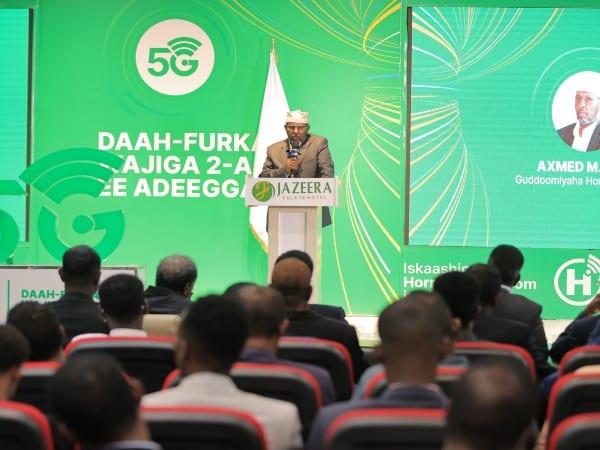
Responding to questions from Developing Telecoms, Hormuud Telecom CEO Ahmed Yusef (pictured) described this deal as the first of many towards achieving full interoperability between financial platforms and institutions in Somalia.

“For full interoperability, we need to ensure that every mobile money platform and banking system allows for seamless transactions,” said Yusef.

The partnerships represent a “critical step” in building trust between citizens and financial institutions, promoting financial stability. Somalia, having suffered decades of civil war that decimated its economy, saw a rise in mistrust toward institutions.

EVC Plus customers will now be able to perform banking functions with MyBank and Agro Bank directly from their mobile devices.

The Somalian Central Bank launched the National Payment System in 2021, laying the necessary groundwork for integration between banks and mobile money providers.

According to the Central Bank, 70% of Somalians use mobile money, while only 15% have a traditional bank account. Hormuud reports that around 90% of Somalis now use mobile money platforms.

Hormuud Telecom is also working with the GSMA to extend its mobile services to remote areas in Somalia, connecting the last segment of unbanked Somalis.

Hormuud’s CEO Yusef stated that making EVC Plus compatible with formal banking services enhances financial inclusion. “Small businesses can access credit, aid beneficiaries can build financial histories, and cross-border transactions become easier for everyone. This is a significant step toward a fully interconnected financial system in Somalia,” Yusef said.

Hormuud Telecom currently has four million customers on its EVC Plus mobile money platform.

MORE ARTICLES YOU MAY BE INTERESTED IN…

HGC launches DCI clusters to offer data centre connectivity across SEA

Hong Kong-based HGC Global Communications (HGC) says it has officially launched data centre interconnect (DCI) clusters in key data hubs across Asia to position itself as a major regional provider of in-country and inter-country data centre connectivity.

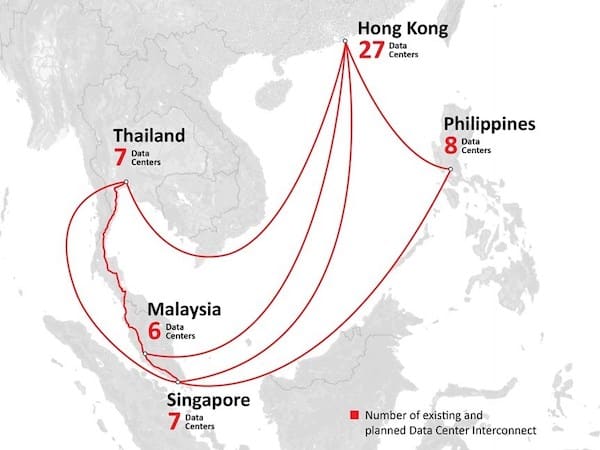
Having launched DCI solutions in Malaysia, the Philippines and (most recently) Thailand, HGC aims to combine those DCI clusters with mature DCI hubs in Hong Kong and Singapore to offer an extensive DCI infrastructure connecting major data centres across Southeast Asia.

The DCI clusters currently comprise existing and planned six data centres in Malaysia, seven in Thailand and Singapore (each), and six in Malaysia, as well as 27 in Hong Kong.

Earlier this week, HGC beefed up its data centre PoP in the Philippines by joining PLDT Enterprise’s Vitro Partner Network (VPN), which enabled it to expand its footprint to the new Vitro Sta. Rosa data centre.

HGC plans to leverage its DCI infrastructure to enable in-country and inter-country connectivity for enterprise solutions customers from Africa, the Americas, Europe and the Middle East looking to enter the region.

The DCI clusters will be offered to its carriers partners, who will be able to integrate them with their own networks and DCI infrastructure.

HGC said the clusters will also enable it to offer customized low-latency cross-border connectivity, ICT services, and cybersecurity solutions to its own customers. Such services include IP-related services, AMS-IX’s internet exchange solution, and HGC’s “Eyeball-as-a-Service” (a platform that leverages 5G edge computing to enable OTT players, content providers and e-commerce companies to expand their geographical footprints quickly).

“Our unique strengths in Asia, combined with our global reputation and network, position this solution to effectively address the challenges of shifting the emerging economies to modernize inclusively in the rapidly digitalising era,” said Ravindran Mahalingam, SVP of HGC’s international business in a statement.

MORE ARTICLES YOU MAY BE INTERESTED IN…

Intelsat claims major milestone with Nigerian backhaul service launch

Keep up-to-date with all the latest news, articles, event and product updates posted on Developing Telecoms.
Subscribe to our FREE weekly email newsletters for the latest telecom info in developing and emerging markets globally.

Sending occasional e-mail from 3rd parties about industry white papers, online and live events relevant to subscribers helps us fund this website and free weekly newsletter. We never sell your personal data. Click here to view our privacy policy.

KT announces restructuring, cuts jobs 


News 

The move is part of a new strategic direction devised by the company’s new CEO, Kim Young-seop, who has been in the role since August 

South Korean telco Korea Telecom (KT) has announced a major restructuring programme as part of an increased focus on AI and cloud services.  

This strategic shift involves the establishment of two new subsidiaries and significant changes to the company’s workforce. 

According to the newspaper Business Korea, the company will create two new subsidiaries – “tentatively” named KT OSP and KT P&M – and implement a large-scale voluntary retirement scheme for employees with over 10 years of service or those nearing retirement. 

A board meeting was held this week to decide on the final details of the subsidiaries, which are set to be properly established in January next year.  

KT OSP will reportedly focus on field operations and network management, with an initial capital investment of 71 billion won ($52.7 million), while KT P&M will focus on customer service, with a smaller capital base of 10 billion won ($7.4 million). Nearly 3,800 employees will be transferred to these new businesses, which are set to begin operations on January 1, 2025.The reallocation of affected employees is expected to begin as early as this month. 

Alongside this restructuring, KT says that its voluntary retirement scheme will begin from next month. Exactly how many jobs are expected to be cut was not specified, but the total number of employees affected by the reallocation and voluntary retirement could reach “up to 5,700”, suggesting that around 2,000 jobs could be eliminated.
As part of its broader strategy, KT is investing heavily in AI and cloud sectors. The company has partnered with Microsoft to co-develop AI models and data center infrastructures, with a joint investment of 2.4 trillion won over the next five years. This move aligns KT with industry trends, as other telecom companies like SK Telecom are also investing in AI and offering early retirement programs. 

In related news, this week KT and Samsung have been chosen by the Korean Navy to deploy a private 5G network as part of its ‘Smart Naval Port’ project. The project, which is the first of its kind at a Korean naval base, began this summer with the goal to complete deployment by the end of next year.  

“The companies will build a more intelligent and fully independent network infrastructure to provide seamless coverage and enhanced connectivity for the Republic of Korea Navy 2nd Fleet,” the press release stated. 

The new ICT network will have use cases including intelligent security monitoring and battleship operation management.   

Keep up to date with the latest international telecoms news by subscribing to the Total Telecom daily newsletter   

Also in the news:
Singtel becomes latest telco to launch AI cloud services
South Korean telcos accused of collusion, may face fines of $4bn
Hexatronic: Innovation will be needed to reach rural customers 

Huawei and e& aim for transformation of voice services

Keep up-to-date with all the latest news, articles, event and product updates posted on Developing Telecoms.
Subscribe to our FREE weekly email newsletters for the latest telecom info in developing and emerging markets globally.

Sending occasional e-mail from 3rd parties about industry white papers, online and live events relevant to subscribers helps us fund this website and free weekly newsletter. We never sell your personal data. Click here to view our privacy policy.

AWS and e& ink $1bn cloud deal 


News 

The deal is set to drive cloud innovation across the Middle East 

UAE based operator e& has announced a $1 billion strategic partnership with Amazon Web Services (AWS) to drive cloud innovation across the Middle East. The collaboration follows AWS’s launch of its second Middle East cloud region in 2022, which was backed by a $5 billion investment.

The partnership combines AWS’s sovereign cloud infrastructure with e&’s network, catering to the public sector and regulated industries such as healthcare, finance, and oil and gas. The goal is to deliver cloud solutions that align with regional regulations, addressing the demand for secure and scalable infrastructure. There is an increased demand for cloud infrastructure services in the region, an issue that this partnership will directly address. 

The agreement between the two companies will see them accelerate digital transformation in the region, providing services like AI, cybersecurity, and networking. This will benefit both large enterprises and small businesses, with access to AWS’s services and marketplace helping companies modernise their operations. 

To do this, e& will use AWS’s technology to enhance its platforms, such as the streaming service Starzplay Arabia and the multi-service app Careem. e& also plans to expand its AI capabilities and smart home services, offering more customer-focused innovations. 

“This initiative aligns with the UAE’s Vision 2031, aimed at positioning the nation as a global economic hub while driving digital transformation across key sectors,” said Tanuja Randery, Vice President of EMEA at AWS in the press release. 

“Our investment in developing the skills of UAE nationals will have a positive impact on the region’s economic growth and technological leadership,” he continued. 

“Our partnership with AWS is a game-changer for our customers. By combining AWS’s advanced cloud capabilities with e&’s local expertise, we will empower businesses across the region with the tools and infrastructure to accelerate their digital transformation and become more agile to scale as they innovate faster,” echoed Salvador Anglada, CEO of e& enterprise. 

Keep up to date with the latest international telecoms news by subscribing to the Total Telecom daily newsletter  

Also in the news:
Singtel becomes latest telco to launch AI cloud services
South Korean telcos accused of collusion, may face fines of $4bn
Hexatronic: Innovation will be needed to reach rural customers