Xavier Niel increases bid for Millicom

Keep up-to-date with all the latest news, articles, event and product updates posted on Developing Telecoms.
Subscribe to our FREE weekly email newsletters for the latest telecom info in developing and emerging markets globally.

Sending occasional e-mail from 3rd parties about industry white papers, online and live events relevant to subscribers helps us fund this website and free weekly newsletter. We never sell your personal data. Click here to view our privacy policy.

Intel cuts 15,000 jobs as it seeks $10bn cost savings


News

Punishing financial results are forcing the company to take “bold action”

Intel has this week revealed that it is laying off over 15,000 workers, saying it will cut 15% of its workforce in efforts to streamline the business.

The company says the cuts are part of a drive to save $10 billion in costs by 2025, which will be achieved through various streamlining measures and spending reductions. R&D and marketing spend will be cut by more than a billion dollars through to 2026, while capex this year will be reduced by 20%.

Announcing the cuts alongside the company’s latest financial results, Intel CEO Pat Gelsinger described the decision as “incredibly hard”, saying the company is “making some of the most consequential changes in our company’s history”.

“Simply put, we must align our cost structure with our new operating model and fundamentally change the way we operate. Our revenues have not grown as expected – and we’ve yet to fully benefit from powerful trends, like AI. Our costs are too high, our margins are too low. We need bolder actions to address both – particularly given our financial results and outlook for the second half of 2024, which is tougher than previously expected,” read the memo.

Intel has been struggling to compete with rivals in the AI chip space, such as AMD and Nvidia, while also losing ground to the likes of Qualcomm and Apple, which rely on chips from Arm.

In its most recent quarterly results, Intel recorded a loss of $1.6 billion, compounding the $437 million it lost in the quarter before that. The losses can primarily be attributed to the company’s chipmaking Foundry business.

“Weaker spending across consumer and enterprise markets, especially in China, and continued focus on AI server investments in the cloud have reduced our [total addressable market] expectations for 2024,” explained CFO David Zinsner, adding that “customer inventory levels are elevated”.

Intel’s own foray into AI chips, Lunar Lake, is set to be released this September.

Keep up to date with all the latest telecoms news from around the world with Total Telecom’s daily newsletter

Also in the news:
Australian Government and AWS Collaborate to Strengthen country’s Cybersecurity
Solving congestion challenges in FTTP deployment
Vodafone Invests £120m in AI Chatbot ‘SuperTOBi’

MTN reshuffles executive team

Keep up-to-date with all the latest news, articles, event and product updates posted on Developing Telecoms.
Subscribe to our FREE weekly email newsletters for the latest telecom info in developing and emerging markets globally.

Sending occasional e-mail from 3rd parties about industry white papers, online and live events relevant to subscribers helps us fund this website and free weekly newsletter. We never sell your personal data. Click here to view our privacy policy.

Building Tomorrow’s Infrastructure: Trends Shaping the Future of Data Center Construction

Building Tomorrow’s Infrastructure: Trends Shaping the Future of Data Center Construction

This Industry Viewpoint was authored by Robert Bianco, Chief Commercial Officer of HYLAN

The data center construction landscape is shifting at an unprecedented pace, driven by the integration of artificial intelligence (AI) and its profound implications. AI integration is fundamentally reshaping the industry; necessitating expanded infrastructure and advanced design specifications to meet growing computational needs. … [visit site to read more]

Infosys faces big tax bill in India. Will more major names follow?

Indian authorities have hit leading IT outsourcer Infosys with a US$3.9 billion tax demand – and some news reports suggest the pursuit of alleged unpaid taxes will soon target other big names.

According to the UK’s Financial Times the demand came as the Indian IT industry was showing early signs of recovery following a worldwide tech spending slowdown. Indeed, Infosys and other relevant players, like Tata Consultancy Services, posted buoyant quarterly earnings earlier in July. 

Infosys has apparently been issued notices for payment of goods and services tax (GST) by agencies in its home state of Karnataka and from the national Directorate General of GST Intelligence for the period of July 2017 to March 2022.

The tax demand relates to “expenses incurred by overseas branch offices”, says Infosys, whose headquarters, like those of a number of IT companies, are in the Karnataka capital Bengaluru. It does not agree that GST applies on these expenses.

Reuters, however, suggests Indian authorities may soon issue notices to more major IT services firms in an investigation of alleged tax evasion related to work done by their overseas offices. Reuters says these overseas offices carry out projects for Indian IT firms and provide services to international clients, among other functions.

This isn’t just about IT, however. In the last year, India’s GST department has sent more than 1,000 notices to companies, including Life Insurance Corporation of India, Dr Reddy’s Laboratories and Ultratech Cement.

Tax authorities have also issued notices to online gaming companies demanding a total of about 1 trillion rupees (about US$12 billion) in taxes that they have allegedly evaded. Many companies have challenged these demands in tribunals and courts.

This isn’t the first backdated tax claim from Indian officials, as Vodafone, a company that has successfully fought retrospective taxes, might point out.

As we reported at the end of the 14-year dispute, the Indian government decided to nullify its own tax demands against Vodafone, apparently to improve perceptions of its stance on taxation in order to encourage foreign investment into the market. But could the recent drive to pursue alleged unpaid taxes undermine this effort?

MORE ARTICLES YOU MAY BE INTERESTED IN…

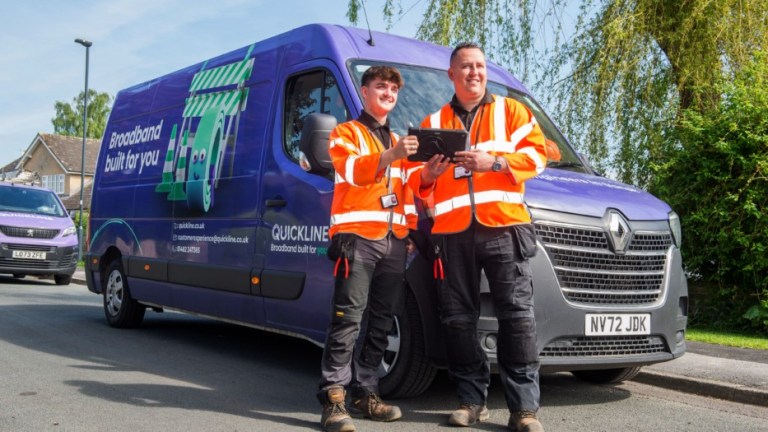
UKIB backs altnet Quickline for £250m


News

The Yorkshire and Lincolnshire-based altnet says the investment will allow them to expand their full fibre network to a further 190,000 homes and businesses

Today, the UK Infrastructure Bank (UKIB) has announced a £250 million debt package for full fibre network provider Quickline Communications.

The funding, which takes the form of a £125 million term loan, a £100 million debt guarantee, and a £25 million term loan provided by NatWest, will reportedly allow Quickline to expand its network to 190,000 additional locations.

“This financial backing marks a significant endorsement of Quickline’s robust business model, our mission to connect the unconnected and to help regenerate our northern rural communities. Furthermore, it demonstrates UKIB’s confidence in our strategic vision and operational capabilities. It also reflects a broader investor interest in tackling the digital divide that exists today and supporting sustainable and impactful business initiatives,” said Sean Royce, CEO at Quickline.

“This partnership will support our deployment of vital connectivity infrastructure, bringing essential digital services to even more rural communities in dire need of improved broadband and kickstart economic growth across rural Yorkshire and Lincolnshire.”

Quickline has already won four Project Gigabit contracts from the UK government, which combined will see it cover 170,000 homes and businesses with full fibre.

The altnet is currently aiming to expand its network to 500,000 premises across Yorkshire and Lincolnshire by 2025.

This investment marks the latest in a string of altnet investments from the UKIB over the past month, having also committed £35 million to Cornish altnet Wildanet and £150 million to Hyperoptic.

Join the operators in discussion at this year’s Connected Britain, the UK’s largest digital economy event

Also in the news:
Australian Government and AWS Collaborate to Strengthen country’s Cybersecurity
Solving congestion challenges in FTTP deployment
Vodafone Invests £120m in AI Chatbot ‘SuperTOBi’

Malaysian and Indonesian data centres promote AI-ready designs

ArtificiaI intelligence (AI)-ready data centres are in the news this week, with Malaysia and Indonesia playing host to new or planned facilities.

Asia Pacific and Japan hyperscale data centre specialist AirTrunk says it has commenced operations in Malaysia, following the official opening of its flagship Malaysian 150 megawatt (MW) hyperscale data centre in Johor Bahru.

Named AirTrunk JHB1, the initial phases of the new data centre will provide over 50MW of capacity for its large technology customers.

Spanning over 10.3 hectares, JHB1 is strategically located in Johor Bahru at the southern tip of the Malay Peninsula. Servicing a major cloud availability zone, the data centre offers strong domestic and international connection to regional technology hubs including neighbouring Singapore, with an end-to-end cross-border connection strategy.

Along with a power usage effectiveness (PUE) of 1.15, making it one of the most efficient data centres in the country, the new facility features an AI-ready design with AirTrunk’s first deployment of direct-to-chip liquid cooling technology alongside traditional indirect evaporative cooling (IEC) and high-density racks. This pioneering approach, says AirTrunk, reduces energy consumption by up to 23%. 

JHB1 is also equipped with a solar-ready roof, able to provide over 1MW of power for this phase, making it one of the largest onsite solar deployments for a data centre in Southeast Asia.

Also name-checking AI is BDx Indonesia, a joint venture of BDx Data Centers, Indosat Ooredoo Hutchison, and Lintasarta, which has announced the Phase-1 completion of its AI campus CGK4 in Jatiluhur, Indonesia. The CGK4 campus is Indonesia’s first renewable-powered AI data centre park scalable up to 500MW.

The facility offers high power density of up to 120 kW per rack, innovative liquid cooling technologies and high-speed connectivity that, it is claimed, enable it to meet the demands of Generative AI workloads. The dedicated AI data centre is supported by an integrated 24/7 on-site team within the campus and offers eight layers of security, reinforced by industry-leading certifications.

Mayank Srivastava, CEO of BDx Data Centers, explains: “BDx Indonesia is committed to enable Indonesia to become an AI-first nation. We are the only data centre provider in the country offering up to 700MW of development potential spread across Indonesia. This sustainable and interconnected mesh of digital infrastructure is engineered to support training workloads at central sites, and inference workloads across multiple locations nationwide.”

It’s  no surprise perhaps that both initiatives are stressing energy efficiency. The vast amount of energy required by data centres as AI adoption grows is a controversial subject already, one discussed in more detail in a major Developing Telecoms feature published today.

MORE ARTICLES YOU MAY BE INTERESTED IN…

Vodafone: 5G-powered public buildings could save UK £580m a year


News

The operator says incorporating 5G tech could generate huge cost and energy savings for the public sector

According to a new ‘Connected Spaces’ report, written by WPI Strategy on behalf of Vodafone UK, installing 5G-enabled technology like digital twins, IoT, and smart sensors to public buildings could save the UK £580 million.

The report models the current energy spend of various public sector buildings and estimates how much money could be saved via the integration of new technology. These technologies, says the report, provide a wealth of additional information about the buildings’ energy consumption, helping to drive efficiencies and limit energy use.

In total, the report found that digital twins, IoT, and smart sensors could generate an average 17% reduction in public building energy consumption, saving the average 40,000-person town up to £350,000 a year. Extrapolating this data across the UK leads us to the figure of £580 million per year.

Perhaps unsurprisingly, the biggest savings could be made my incorporating these technologies in council/civil service buildings and hospitals, which could save on average £85,000 and £153,612, respectively.

Of course, installing these new technologies in the buildings in question would not be cheap, but the study estimates that their deployment would pay for themselves in 2–3 years.

Beyond pure cost savings, the new technology would also save roughly 1.43 million tonnes of CO2 emissions, helping the UK meet it sustainability goals.

Vodafone’s argument is that all of these new technologies will need standalone 5G (SA 5G) to function effectively.

“We believe that a best-in-class 5G network would provide a much-needed economic boost to the public purse, saving £580 million of taxpayer money, while also helping to decarbonise the public estate,” said Andrea Dona, Chief Network Officer of Vodafone UK.

“Public buildings are critical to communities, and we want to propel them into the future – which is why, as part of our proposed combination with Three UK, we have committed to rolling out 5G Standalone to every school and hospital across the nation by 2030.”

That these technologies can only be delivered with SA 5G is not strictly true – 4G and other alternative wireless technologies would likely be suitable for at least some of these deployments. Nonetheless, SA 5G would undoubtedly provide the best performance, delivering faster speeds and far greater capacities, able to handle thousands of devices and sensors operating simultaneously.

As has become tradition for Vodafone publications over the past year, the company took this announcement as an opportunity to promote the company’s planned merger with Three UK, with the report concluding that the tie-up would “create necessary market conditions to secure a nationwide standalone 5G network”.

It also reiterated that the combined company would invest £11 billion into its network over the next decade, if the merger is allowed to proceed.

“The combined network will reach more than 99% population coverage with 5G standalone by 2034, and over 95% population coverage by 2030, as well as ensuring coverage in every school and hospital across the country helping to deliver on Labour’s manifesto commitment to reach national 5G coverage by 2030,” reads the report. “The combined business will invest over £6 billion in the first five years, and more than £11 billion for the overall ten-year plan, to create the UK’s biggest 5G network, bringing significant emissions and productivity savings to businesses and buildings across the country; safeguarding the lifeblood of communities for future generations.”

The merger is currently under investigation by the UK’s Competition and Markets Authority (CMA), which is exploring if the deal will result in a significant loss of competition and drive-up prices for consumers.

It is surely no coincidence that the timing of this study’s publication coincides with an article in The Guardian this week, in which Vodafone CEO Margherita Della Valle argues that the new Labour government must approve the company’s merger with Three for the good of the nation.

The CMA is set to announce its decision on October 12.

How is the UK telecoms landscape changing in 2024? Join the discussion at Connected Britain 2024, the UK’s largest digital economy event

Also in the news:
AST SpaceMobile prepares to launch first commercial satellites
nexfibre passes almost 1.3m homes with full fibre
Telstra joins UNESCO’s Business Council to promote ethical AI


Networks will shape the future of Artificial Intelligence

Networks will shape the future of Artificial Intelligence

This Industry Viewpoint was authored by Brian Lavallée, Senior Director, Solutions Marketing at Ciena

Although there’s a significant amount of hype related to Artificial Intelligence (AI), there’s no debate that AI is real and is already significantly reshaping a wide range of industries, driving innovation and efficiencies to previously unimaginable levels. However, similar to any disruptive technology introduction, like steam engines, electricity, and the internet, AI will come with unique challenges and opportunities. … [visit site to read more]