MS3 joins Zen’s Fibre Hub at Connected Britain


Press Release

At Connected Britain, Zen Internet, the UK’s largest B Corp certified telecommunications and network connectivity provider, has announced a new strategic partnership with MS3 Networks, the award-winning alternative network operator serving Hull, North Lincolnshire and East Yorkshire.

During his keynote presentation at Connected Britain, Richard Tang, CEO of Zen Internet, revealed details of the agreement which will see Zen make MS3’s full fibre footprint of 212,500 properties ready for service. These will become available to both residential and business customers, as well as to Zen’s channel partners via The Fibre Hub further strengthening its ambition to become the UK’s alt-net aggregator of choice.

MS3’s network spans Hull, Scunthorpe, Grimsby, Immingham and Mexborough, bringing competition and choice to some of those areas that have historically been dominated by a single provider. With packages ranging from 100 Mbps to gigabit speeds and ethernet services, the partnership extends the choice for affordable, reliable connectivity for households and businesses across the region.

Richard Tang, founder and CEO of Zen Internet, commented: “At Zen we want to give customers and partners the widest possible choice of full fibre networks, wherever they are in the UK. Partnering with MS3 is another major step towards that goal and it will now be full steam ahead to get the network and systems integrated. Its strong regional presence, commitment to customer service and community values makes MS3 a natural fit for Zen. Together, we’ll give people and businesses in Hull, North Lincolnshire and East Yorkshire a real alternative – great service, fair prices and future-proof connectivity.”

Guy Miller, CEO of MS3 Networks, added: “Zen is a partner we’ve admired for a long time. It’s an amazing brand with such great history with a retail route, as well as a successful channel model. Its reputation for excellent service and its B Corp commitment aligns perfectly with our own values. By joining forces, we’re making it easier for customers who have previously been under served to access the high-quality fibre services they deserve, with a focus on simplicity, value and reliability.”


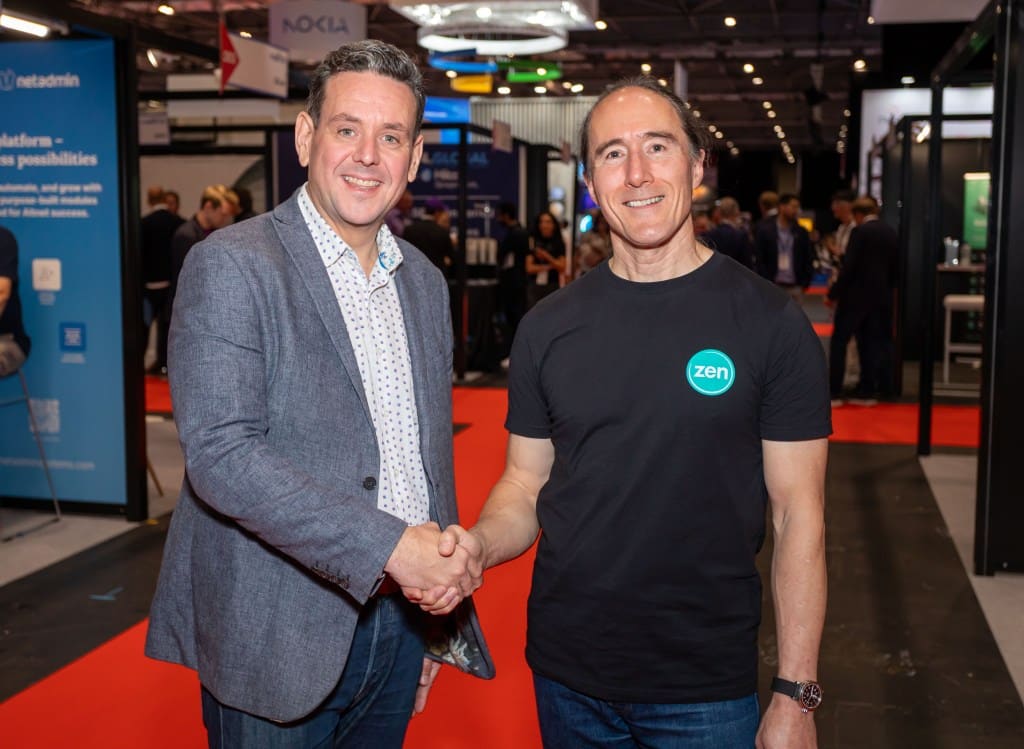
MS3 Networks CEO Guy Miller (left) and Zen Internet CEO Richard Tang (right)

The partnership will also benefit Zen’s channel partners via The Fibre Hub – the one-stop portal launched earlier this year to aggregate multiple alt-net footprints. With MS3 now on board, alongside Openreach, CityFibre, Freedom Fibre, ITS, Sky Business Wholesale and Trooli, Zen is on track to offer partners the widest geographic reach and most competitive choice of full fibre services from a single supplier.

MS3 was recognised as Overall Fibre Provider of the Year at the UK Fibre Awards for two consecutive years and has also won Best ISP Partnership and Best Altnet at the Comms National Awards. The company maintains an “Excellent” Trustpilot score of 4.8 and invests heavily in local community initiatives – values that mirror Zen’s own people-first approach.

This collaboration is the latest in a series of partnerships that cement Zen’s role as the UK’s leading independent telecommunications and network connectivity provider and aggregator, giving customers and partners access to more networks, more choice and better value.

Connected Britain Award winners 2025 announced!


The Connected Britain Awards winners have been announced, following a highly successful Connected Britain conference

With a record-breaking number of entries this year, the Connected Britain Awards 2025 showcased the most innovative and exciting elements of Britain’s ever-growing and rapidly evolving digital economy. This year’s shortlist included a fantastic array of diverse organisations and individuals, all of whom were highly deserving of praise. 

A big thanks to all our award presenters and to our expert panel of judges for lending us their expertise in selecting the winners.


B2B Service Provider of the Year

The B2B Service Provider of the Year award recognises a company going above and beyond to serve business customers, not just through connectivity, but through outstanding operational delivery.

This year’s winner stood out for their hands-on support of major industry players, their consistent investment in service excellence, and a strong track record of results that speaks for itself.

Winner: Nets International Group


Digital Skills Award

The Digital Skills Award celebrates projects that tackle skills gaps and broaden access to digital learning.

This year’s winner stood out for directly addressing digital exclusion, reaching thousands of children and educators, and embedding digital confidence across the education sector. The judges praised the initiative as a scalable, inclusive model with truly impressive results.

Winner: Three UK – Three Discovery – Empowering in Education

Highly commended: Liverpool City Region Combined Authority – Digital Inclusion Initiative


Broadband Provider of the Year

The Broadband Provider of the Year award recognises a broadband provider that truly puts its customers and communities at the heart of everything it does.

With industry-leading retention, outstanding customer feedback, and strong partnerships across housing and local organisations, this winner sets a benchmark for service, innovation, and trust in the broadband space.

Winner: Lightning Fibre


The Access Innovation Award

The Access Innovation Award recognises breakthrough initiatives that deliver connectivity where it was once thought impossible.

This year’s winner impressed the judges with an ambitious engineering project in one of the UK’s most remote communities, deploying subsea fibre and innovative network design to overcome extreme challenges. The result is reliable, high-quality broadband that respects the local environment and transforms life for residents – a powerful example of access innovation at its best.

Winner: Openreach – Baltasound, Isle of Unst, Shetland

Highly commended: Dorset Council


The Smart Places Award

The Smart Places Award celebrates the transformative use of connectivity, data, and technology to improve lives and communities.

This year’s winner stood out for tackling both rural and urban challenges head-on, deploying cutting-edge 5G OpenRAN networks and smart infrastructure to deliver tangible benefits. The judges praised it as a bold and forward-looking model for what a smart place can achieve.

Winner: Cambridgeshire Open RAN Ecosystem (CORE HDD) Consortium – Cambridgeshire County Council, AWTG, Benetel, Ontix, Gooi, Wolfram, University of Surrey & University of Cambridge              


The Industrial Innovation Award

The industrial Innovation Award shines a light on how digital transformation is reshaping the backbone of industry.

This year’s winner took a sector that had long relied on traditional methods and injected it with the power of private 5G, revolutionising productivity, improving quality, and delivering huge efficiency gains. Judges described it as a remarkable demonstration of what happens when cutting-edge connectivity meets real-world manufacturing, setting a new benchmark for industrial innovation in the UK.

Winner: Ayrshire 5GIR Project and Anderson Stewart Castings          


The Barrier Removal Award

The Barrier Removal award celebrates initiatives that have broken down the toughest obstacles to connectivity rollout.

This year’s winner impressed the judges with a unique industry-wide collaboration that removed long-standing commercial barriers, transformed rural coverage, and delivered results ahead of schedule. By tackling partial not-spots on a national scale, the project is ensuring more communities can benefit from equitable access to mobile connectivity.””

Winner: Mova, on behalf of EE, Three, VMO2 and Vodafone for their work on the Shared Rural Network programme      

Highly commended: Glasgow City Council


The Startup Award

Winner: NodeQ

Highly commended: Unified Telecoms Supplier


The Sustainability Award

The Sustainability Award recognises projects that put environmental responsibility at the heart of telecoms.

This year’s winner impressed the judges with a practical, large-scale initiative to cut emissions, consolidate infrastructure, and embed sustainability into everyday operations. With clear evidence of energy efficiency gains, a strong commitment to the circular economy, and real social impact, it demonstrates how major players in our industry can lead by example.

Winner: BT Group – Networks Data Centre Optimisation Programme


Digital Council of the Year

The Digital Council of the Year award highlights councils that have embraced digital transformation.

This year’s winner has embraced digitalisation with purpose and clarity, delivering real improvements in public services, from smarter infrastructure and sustainable transport to enhanced care and connectivity. Their collaborative, tech-forward approach is helping redefine what local government can achieve in the digital age.

Winner: Coventry City Council

Highly commended: Fylde Council


The Wireless Innovation Award

Wireless innovation is unlocking opportunity across the UK and this year’s winner is proving just how powerful fixed wireless access can be.

By targeting hard-to-reach areas with faster, more reliable services, they’re transforming connectivity for rural homes and businesses. The judges applauded their ambition, their smart use of international learnings, and the impressive performance gains already being delivered.

Winner: Airband Community Internet  

Project Rollout Award

The Project Rollout award honours exceptional achievement in accelerating gigabit-capable broadband delivery.

This year’s winner was praised for rolling out fibre at scale and speed, reaching tens of thousands of premises on time and on budget while pioneering innovative engineering techniques to reduce risk. Judges highlighted the project’s strong community engagement and its role in boosting connectivity and economic prospects in one of the UK’s most challenging regions.

Winner: Fibrus

Highly commended: CityFibre


The Enterprise Solution Award

The Enterprise Solution Award recognises innovation that transforms the way enterprises connect and operate.

This year’s winner delivered a breakthrough in indoor mobile coverage, combining all UK operators into a single small cell solution. Judges praised its impact on productivity, energy efficiency, and user experience, a clear example of enterprise innovation with measurable results.

Winner: Freshwave’s Omni Network on the ANDREW RP5000 

The Rising Star Award

One of the most exciting awards of the evening, the Rising Star Award celebrates emerging talent making a lasting mark on the connectivity sector.

This year’s winner was praised for their leadership in digital inclusion, building partnerships across sectors, and delivering measurable social impact. Judges highlighted their deep community engagement and innovative approach, recognising not just a promising career, but a rising star already changing lives and shaping a more inclusive digital future.

Winner: Will Plant –  Cambridgeshire County Council


The Community Improvement Award

Our final award was one of the most hotly contested of the evening. It attracted the largest number of entries, and the judges’ scores were incredibly close across the shortlist.

This year’s winner stood out for its scale, longevity, and ability to reach hundreds of thousands of people since its launch. Judges praised its commitment to bridging the digital divide, empowering vulnerable groups through skills training, and showing how a major organisation can use its resources to create meaningful social change.

Winner: Three UK – Three Discovery – Free skills training UK-wide to help bridge the digital divide    

Netomnia announces ‘powerful and ambitious’ rebrand ahead of Connected Britain


News

Netomnia has unveiled a new rebrand to better reflect the scale and longevity of its full fibre ambitions

The rebrand follows the company’s 2024 merger with brsk, which saw the company become the second-largest altnet in the UK, after CityFibre. Netomnia currently has 2.8 million premises serviceable and 400,000 customers connected as of September 2025, with the stated goal of passing five million premises passed by 2027.

To achieve this, Netomnia is backed by around £1.6 billion in funding, the last £300 million of which was secured earlier this month.

According to the altnet, the rebrand places greater emphasises on its role as a future-ready fibre network built to enable tomorrow’s innovations. In a press release, the company explained its new logo:

“‘Net’ represents the inclusive network built for everyone, while ‘Omnia’ (Latin for ‘all things’) conveys readiness to power whatever innovations come next. The refreshed circular abstract element symbolises both ‘the right connection’ and ‘the potential’, forming a complete circle that suggests connectivity and continuous progress. Modern typography and a vibrant colour palette – bold red-pink paired with deep blues and contrast black – project dynamism, confidence, and innovation, ensuring Netomnia stands out with clarity and strength.”

“This is more than a design change. It’s a signal of the company we’ve become – powerful, ambitious, and building the UK’s third fibre infrastructure. Where the most powerful internet lives is both our idea and our promise,” said Jeremy Chelot, Group CEO of Netomnia, YouFibre and brsk.

The rebrand will see its first public outing at this year’s Connected Britain conference taking place on Wednesday 24th September and featuring a keynote address from Group CEO Jeremy Chelot.

For more information, visit Netomnia at booth 247

Tickets for Connected Britain are still available! Get yours today.

VodafoneThree drops Samsung, relies on Nokia and Ericsson for £2bn network upgrade


Press Release

Just a few months after its creation, VodafoneThree has today announced the next major milestone in building the UK’s best network, with the appointment of strategic build partners to support the delivery of one of Europe and the UK’s largest, privately-funded infrastructure projects, totalling contracts worth more than £2 billion. 

Global communications technology leaders Ericsson and Nokia will deliver part of the unprecedented £11 billion network investment plan. By providing world-class connectivity to all corners of the UK, this investment will boost the UK economy by up to £102 billion (between 2025 and 2035). In turn, delivering the infrastructure needed by all sectors to power Britain’s digital future, including energy, financial services, manufacturing, security and technology. The deal will span an eight-year period and uses the latest technology and R&D to make sure that VodafoneThree’s network will deliver world-leading 5G technology over the course of the decade. 

VodafoneThree’s fully funded and regulated plan to build the network at pace will bring jobs to every region of the UK, creating as many as 13,000 jobs in the engineering, construction and maintenance of telecom towers, fibre optics, and base stations over the entire eight-year build period. 

The majority (74%) of roles created will be outside of London and the South East, bringing employment opportunities to people in towns and communities across the four nations. This reinforces VodafoneThree’s commitment to supporting national growth through digital transformation, while equipping today and tomorrow’s talent with the skills they need for the future. 

VodafoneThree’s plan is front loaded. In year one, nearly three-quarters of the population will have access to VodafoneThree’s fastest 5G speeds, increasing to 90% of the population with access to 5G SA in year three. The network build will transform connectivity across the country, bringing 5G Standalone (5G SA) to 99.95% population by 2034. 

Max Taylor, CEO, VodafoneThree, said: “We said we would deliver at pace and, just a few months in, we are delighted to announce our strategic partners, Ericsson and Nokia, that will work with us to deliver our ambition of building the UK’s best network. They bring the scale and expertise needed to accelerate the delivery of a resilient, secure, world-class and future-ready network, and together, we are laying the foundations for the UK’s digital future.” 

Börje Ekholm, President and CEO, Ericsson, said: “We are proud to partner with VodafoneThree as their primary vendor to power them with the most advanced programmable network products, software and solutions in the world. Trusted high-performing programmable networks are critical to success for the UK’s digital economy. AI, automation and virtual/augmented reality won’t reach their potential without them.” 

Justin Hotard, President and CEO at Nokia said: “Today’s networks need new levels of performance, trust, and resilience. We are pleased that VodafoneThree has chosen our industry-leading network solutions to build a future-proof 5G Standalone network across the UK to meet the needs of customers today and as the AI supercycle accelerates.” 

As part of the agreement, Ericsson will deploy its next generation, high-performing Radio Access Network (RAN) and core network solutions across the UK. In addition to modernising existing 4G and 5G infrastructure, the deployment of Ericsson RAN over 10,000 sites in the UK will underpin VodafoneThree’s population-wide rollout of 5G SA connectivity by 2034. 

Nokia will supply equipment from its ultra-performance Radio Access Network portfolio to approximately 7,000 sites across the UK. Nokia will also modernise part of VodafoneThree’s voice core. This will deliver premium connectivity to VodafoneThree’s customers nationwide with improved speeds, coverage, capacity and a smooth transition to 5G Standalone networks. 

The two partners make up the majority, but not the entirety, of VodafoneThree’s network build which will culminate in a greater number of sites. 

Four British based site-build partners with extensive experience – Beacon Communication Services Limited, Circet Wireless Limited, M Group Limited and WHP Telecoms Limited – will accompany the technology partners, delivering vital work to enable the build across the UK. 

How is the UK connectivity market changing in 2025? Join the discussion at Connected Britain, taking place this week! Free tickets still available

Data centre operators face infrastructure reckoning as AI drives 10x power demand growth


Press Release

A comprehensive new analysis warns that data centre operators and telecom infrastructure providers face their most challenging decade yet, as AI workloads create unprecedented demands on power, water, and regulatory systems that threaten traditional operating models.

The strategic report “From Infrastructure to Intelligence” by StrategyARX Managing Director Roland da Silva argues that AI workloads now represent 20-25% of data centre capacity and are growing at 300% annually, demanding GPU-dense architectures that consume 10x more power per rack than traditional enterprise workloads.

Infrastructure Bottlenecks Reshape Market Dynamics
The analysis identifies critical infrastructure constraints now defining market entry strategies:

  • Grid Access Crisis: New facilities facing 2-7 year lead times for grid connections and water access, with Northern Virginia experiencing particular strain
  • Water Resource Scarcity: Water consumption has increased 3-5x for AI-optimized facilities, triggering regulatory pushback in water-stressed regions
  • Regulatory Timeline Extensions: Development timelines in developed markets have extended to 5-7 years due to planning processes, environmental reviews, and community resistance

Competitive Landscape Transformation
The report projects significant market consolidation, with the top 10 players controlling 80-85% market by 2030. However, new entrants including utilities, sovereign wealth funds, and government entities are disrupting traditional competitive dynamics through superior resource access and regulatory relationships.

Utility companies particularly pose a strategic threat, offering 22% lower power costs through direct generation integration and average 18-month approval timeline vs. 42 months for traditional operators.

Geographic Arbitrage Opportunities
The analysis highlights emerging regulatory arbitrage opportunities, with jurisdictions like Estonia offering 6-month approval process versus Ireland’s 7-year moratorium. This regulatory fragmentation creates what da Silva terms “generational wealth transfer” opportunities for operators willing to target Tier 2 and Tier 3 markets.

Technology Investment Strategy Framework
The report recommends a three-horizon technology investment approach:

  • Horizon 1 (70%): Proven systems including current-generation cooling and power infrastructure
  • Horizon 2 (20%): Emerging technologies such as advanced immersion cooling and small modular reactor partnerships
  • Horizon 3 (10%): Breakthrough options including quantum-ready infrastructure and direct air capture integration

Financial Impact and Investment Requirements
Market entry investment requirements vary significantly by tier:

  • Tier 1 Markets: $500M-$2B+ with 4-15% IRR expectations
  • Tier 2 Markets: $200M-$1B with 8-18% IRR potential
  • Tier 3 Markets: $100M-$500M targeting 10-25% returns

The report emphasizes that development timeline and utilization rate have 2x greater impact on returns than power costs, contradicting industry focus on energy efficiency optimization.

Strategic Framework for Market Leadership
Da Silva proposes a new success equation: Intelligence × (Power + Water + Permission) × Social License = Market Leadership, emphasizing that future market leaders must excel across technology capability, resource access, regulatory approval, and community acceptance.
“The winners will not be those who predict the future most accurately,” states da Silva, “but those who build adaptive capabilities that perform well across multiple possible futures.”
Industry Implications

For telecom infrastructure providers and data centre operators, the analysis suggests:

  •  Immediate Action Required: 3-year window for first-mover advantages in emerging markets
  • Partnership Strategy: Utility partnerships and government relationships becoming strategic necessities
  • Technology Hedging: Balanced approach between proven systems and innovation pilots
  • Community Engagement: Social license to operate now critical for long-term viability

The full report “From Infrastructure to Intelligence: Strategic Pathways for Data Centres in the Age of AI, Energy Scarcity, Water Constraints, and Digital Sovereignty” is available from StrategyARX Advisory.

About StrategyARX Advisory
StrategyARX Advisory is a boutique strategy consulting firm specializing in telecommunications and technology

Gigaclear becomes the first retail fibre provider to harness Vyntelligence AI technology


Press Release

Gigaclear becomes the first retail fibre provider to harness Vyntelligence AI technology, transforming rural broadband installations. This makes Gigaclear the first retail fibre provider to adopt Vyntelligence’s Agentic AI-powered Vyn® platform, setting a new benchmark for innovation in the UK fibre industry. 

Since launching the initiative, Gigaclear has already seen impressive results. To date, over 1,100 customer submissions have prevented nearly 200 avoidable site visits, saving time, improving first-time installation success rates, and minimising disruption for customers in some of the UK’s hardest-to-reach areas. 

In fact, the partnership has been so successful that the technology will now be rolled out to all Gigaclear customers.  

The technology enables Gigaclear customers to capture short guided videos of their homes and preferred installation routes using just their smartphones. Vyntelligence’s Agentic AI then analyses the footage, summarising key information and automatically assessing installation complexity. As a result, Gigaclear engineers and contractors can prepare more effectively, cutting down unnecessary visits, reducing costs, and ensuring smoother, faster connections for rural households and businesses. 

Ben Woods, Chief Operating Officer at Gigaclear, said: “As the UK’s largest rural-focused full fibre provider, we’re committed to removing barriers to connectivity. Partnering with Vyntelligence puts customers in control of their installation journey while helping our teams deliver a faster, more reliable service.  

“Being the first retail fibre company to adopt this technology underlines Gigaclear’s commitment to innovation and to bridging the digital divide in rural communities.” 

The collaboration also supports Gigaclear’s sustainability goals. By reducing the number of unnecessary callouts, the partnership cuts vehicle journeys, helping to lower carbon emissions and lessen the environmental impact of fibre rollout. 

Vyntelligence, which has delivered similar solutions in utilities, renewable energy, mobile & fixed networks, and retail, is excited to extend its award-winning platform into retail fibre for the first time. 

Vyntelligence CEO, Kapil Singhal, commented: “We are excited to welcome Gigaclear as a ‘game changer’ partner committed to improving experience for its customers. Our purpose is to make everyday customer and field processes simpler, smarter, and more sustainable. By deploying Agentic Video Intelligence into Gigaclear’s customer journey, we’re proud to support both efficiency and sustainability, while enhancing the experience for rural communities that have traditionally been underserved.” 

This partnership will be showcased at Connected Britain 2025, where Gigaclear CEO Nathan Rundle will join a panel on rural connectivity, highlighting how innovation can unlock greater broadband adoption across the UK’s countryside. 

With a network that already covers over 600,000 premises across 26 counties, Gigaclear continues to lead the way in connecting rural Britain – now with the added advantage of AI-powered customer journeys that make installation simpler, faster, and greener. 

To find out more about Gigaclear, visit www.gigaclear.com. 

Meet us at Connected Britain – Booth 328

Register for a Connected Britain ticket here 

Building the UK’s digital future: Why fibre quality and longevity matter


Contributed Article

By Richard Moyes, Digital Solutions Business Director at Prysmian

With universal broadband access now recognised as a vital enabler of economic growth, some challenging targets remain.

At present, 86% of homes can connect to gigabit-capable broadband, but the remaining 14%—largely rural and remote properties—remain underserved. By 2032, the target is for 99% of premises to be connected.

Achieving this will require thousands of kilometres of new fibre, but equally significant is the need for upgrades to existing networks to meet rising demand.

Rising demand, shrinking copper

Households are now full-time bandwidth hubs, with simultaneous gaming, streaming, video calls, and online schooling. The copper switch-off by 2027 will transition legacy phone lines to digital solutions such as VOIP, further increasing reliance on broadband networks. In 2023 alone, UK broadband use rose by 10.5%.

This growth places increasing pressure on existing fibre infrastructure. Inferior fibre that cannot support higher bandwidths may soon face obsolescence, driving the need for network upgrades.

Smaller, more efficient cables are key to these improvements: they allow operators to retrofit new high-performance fibre into already congested ducts through a process known as overblowing, saving time and cost.

Prysmian’s Sirocco Extreme 864f microduct cable, for example, packs 864 fibres into just 9.8mm, achieving a record density of 11.5 fibres per square millimetre. This makes it possible to install in ducts as small as 12mm, unlocking greater network flexibility without disruptive civil works.

Beyond traditional fibre: The promise of hollow-core

The next frontier in broadband performance lies in hollow-core fibre technology. Unlike traditional glass-core fibres, hollow core features an air-filled core supported by precision-engineered anti-resonant structures.

This groundbreaking design creates a near-perfect mirror effect, enabling data transmission at transmission speeds nearly 50% faster and distances extended by 1.5 times. That means lower latency and connectivity stretching from 60km up to 90km. Prysmian, in partnership with Relativity Networks, is at the forefront of this development.

The economics of longevity

While innovation promises exciting future capacity, the durability of today’s fibre infrastructure is just as critical. Longevity is important because of the serious consequence of cable failure.

Cable replacement can be expensive: up to 60% of the total investment cost of a fibre optic network, particularly one in a congested urban environment, can be attributable to cable installation. As a comparison, the capital cost of the cable itself and connectivity hardware is about a fifth of that, at around 12% of the total investment.

Installing inferior quality fibre could result in some ISPs facing expensive rebuilds sooner than anticipated, rather than undertaking simple equipment upgrades. Where cable replacement is needed, innovative installation techniques, such as overblowing, will allow for retrofitting cable in existing ductwork without the need for extensive ground works.

Prysmian’s high-quality Sirocco fibre has been designed to be overblown. It has been tested for a 50-year field lifespan, giving ISPs confidence in its resilience.

For investors, longevity is equally important. As the UK broadband sector consolidates, Alt-nets with inferior quality networks risk devaluation, while robust networks built with premium fibre offer stronger long-term value.

Building for tomorrow

Quality is the foundation of longevity. Using high-grade materials and ensuring system compatibility between cables and connectivity components minimises faults and maximises efficiency. Prysmian, as one of the few manufacturers able to deliver complete solutions, provides operators with not just the products, but also the technical expertise to future-proof networks.

The UK’s broadband ambitions rest on more than just hitting coverage targets—they depend on building networks that can withstand decades of growth, demand, and technological change. With the right fibre, Britain can create an inclusive, resilient digital infrastructure fit for the next half-century.


Want to learn more about Prysmian and the networks for tomorrow? Join them on Stand 141 at Connected Britain 2025 taking place next week! Free tickets are available 

Private 5G Market Nears Mainstream With $5 Billion Surge, Says SNS Telecom & IT

Private LTE networks are a well-established market and have been around for more than a decade, albeit as a niche segment of the wider cellular infrastructure sector.  However, private cellular networks or NPNs (Non-Public Networks) based on 3GPP-defined 5G specifications are just on the cusp of becoming a mainstream technology, with a market potential exceeding that of private LTE. Over the last 12 months, there has been a noticeable increase in production-grade deployments of private 5G networks by household names and industrial giants such as Airbus, Aker BP, Boliden, CIL (Coal India Limited), Equinor, Etihad, Ford, Hutchison Ports, Hyundai, Jaguar Land Rover, John Deere, LG Electronics, Lufthansa, Newmont, POSCO, Tesla, Toyota, and Walmart, paving the way for Industry 4.0 and advanced application scenarios.

Compared to LTE technology, private 5G networks can address far more demanding performance requirements in terms of throughput, latency, reliability, availability, and connection density. In particular, 5G’s URLLC (Ultra-Reliable, Low-Latency Communications) and mMTC (Massive Machine-Type Communications) capabilities, along with a future-proof transition path to 6G networks in the 2030s, have positioned it as a viable alternative to physically wired connections for industrial-grade communications between machines, robots, and control systems. Furthermore, 5G’s wider coverage radius per radio node, scalability, determinism, security features, and mobility support have stirred strong interest in its potential as a replacement for interference-prone unlicensed wireless technologies in IIoT (Industrial IoT) environments, where the number of connected sensors and other endpoints is expected to increase significantly over the coming years.

As end user organizations in the United States, Canada, Germany, United Kingdom, France, China, Japan, South Korea, Taiwan, Australia, Brazil, and other countries ramp up their digitization and automation initiatives, private 5G installations have progressed to a stage where practical and tangible benefits – particularly efficiency gains, cost savings, and worker safety – are becoming increasingly evident. For instance, Tesla, LG Electronics, and Hyundai have eliminated connection-related stoppages since migrating AGV (Automated Guided Vehicle) and AMR (Autonomous Mobile Robot) communications from unlicensed Wi-Fi systems to private 5G networks at their production facilities in the United States and South Korea. The French city of Istres has reduced video surveillance camera installation costs from $34,000 to less than $6,000 per unit by replacing fiber-based connections with a private 5G network. Among other examples, China Huaneng Group relies on a tri-band (700 MHz, 2.6 GHz & 4.9 GHz) 5G-Advanced network to safely coordinate a fleet of 100 unmanned electric mining trucks at its Yimin open pit coal mine in Inner Mongolia, China.

SNS Telecom & IT’s  “Private 5G Market: 2025 – 2030” report projects that annual investments in private 5G networks for vertical industries will grow at a CAGR of approximately 41% between 2025 and 2028, eventually surpassing $5 billion by the end of 2028. Although much of this growth will initially be driven by highly localized 5G networks covering geographically limited areas for Industry 4.0 applications in manufacturing and process industries, sub-1 GHz wide area critical communications networks for public safety, utility, and railway communications are anticipated to accelerate their transition from LTE, GSM-R, and other legacy narrowband technologies to 5G towards the latter half of the forecast period. For more information, please visit: https://www.snstelecom.com/private5g

OpenAI and NVIDIA to leverage new AI growth zone in North East England

Press Release

An AI Growth Zone in the North East is set to unlock more than 5,000 new jobs and bring in £30 billion in investment as the region becomes a hub for AI development.

This will build on the region’s work to upskill local residents in AI and create opportunities for people to take up long term careers in the sector – including the technology’s development and use of AI in public services like healthcare.

Announced today, it will solidify the region’s ambition to become one of the largest data centre hubs anywhere in Europe – made up of sites in Blyth and Cobalt Park near Newcastle – helping to boost economic growth and create new high skilled jobs, putting more money in people’s pockets.

By boosting the rollout of AI in the area, this new AI Growth Zone will:

  • Create thousands of jobs across the region, including in construction through to data engineering, AI research and development, and AI safety.
  • Put newly trained AI experts from local universities including Newcastle University, Durham University, Sunderland University and Northumbria University, within touching distance of the UK’s newest emerging tech hub.
  • Drive local economic growth and increase productivity of businesses in sectors including manufacturing, healthcare, energy and finance by enabling them to more easily adopt AI and compete globally.
  • See new breakthroughs in our understanding of drug discovery, climate change and safer technology by giving researchers, scientists, start ups and academics access to AI power.

The AI Growth Zone will generate growth opportunities across the region, capitalising on access to the UK’s largest source of low carbon and renewable energy, world class universities and the regions emerging tech ecosystem in areas including advanced manufacturing, robotics and space.

Blackstone has already committed £10 billion into the Blyth site – with the new designation of an AI Growth Zone providing the potential for an additional £20 billion in investment from future partners.

Separate from the Blackstone investment, British firm Nscale, and leading American companies OpenAI and NVIDIA partner up to establish Stargate UK to deliver new AI infrastructure in the UK, developing a platform designed to deploy OpenAI’s technology on sovereign infrastructure in the UK.

The first phase will see OpenAI take up to 8,000 GPUs – computer chips which are the building blocks of AI technology, able to carry out a huge number of calculations in a split second – to support AI adoption across the UK early next year, with the possibility to expand to approximately 31,000 GPUs overtime.

Stargate UK is expected be based across a number of sites in the UK, including in Cobalt Park, which will form part of the newly designated AI Growth Zone in the North East.

The partnership between these firms will help boost AI infrastructure and adoption in the UK – transforming public services and growing the economy to support the government’s Plan for Change. It comes as Prime Minister and President Trump ink a new deal to unlock investment and collaboration in AI, Quantum, and Nuclear technologies – driving economic growth and boosting jobs.

Technology Secretary Liz Kendall said:

“This is great news for the North East and the people who live there. This investment will create thousands of high-quality jobs, boost skills and inspire the creation of new firms.

“The North East’s industrial legacy is evolving into a future of innovation – unlocking a potential £30 billion and powering communities with the skills and careers to lead the UK’s next industrial revolution.”

North East Mayor Kim McGuinness said:

“Today’s announcement of an AI Growth Zone places the North East at the forefront of the next technology revolution and will lead to billions of pounds of new investment in our region, thousands of better jobs and new opportunities for local people.

“I want kids in school here today to see their place in an AI-driven future. We know AI will be transformative for our economy, but this is how we make sure it also provides a new future for our young people, by working with business to create training and apprenticeship routes into this fast growing sector on a whole new scale.

“Our region boasts computing power that are among the best in Europe with Cobalt Park Data Centres already established in Wallsend and the QTS Cambois Data Centre Campus in Blyth due to open in 2028. We have the skills and brainpower in our tech sector and universities, and now we can match that with the new investment this Growth Zone will bring to the North East from around the world.”

Founder and CEO of NVIDIA Jensen Huang said:

“Today marks a historic chapter in U.S.–United Kingdom technology collaboration.

“We are at the Big Bang of the AI era — and the United Kingdom stands in a Goldilocks position, where world-class talent, research and industry converge.

“By building state-of-the-art AI infrastructure and investing in British startups, we are unlocking the power of AI for the U.K. — fuelling breakthroughs, creating jobs, and igniting the next industrial revolution.”

Nscale CEO Josh Payne said:

“We’re delighted to announce Nscale’s commitment to UK AI infrastructure today, including through Stargate UK and building the most powerful supercomputer in the country with Microsoft.

“As a UK-based company, we’re showing how we can be makers, not takers, of the most important technology of our time.”

At Cobalt Park, within the AI Growth Zone, thousands of cutting-edge computer chips are expected to be rolled out by NScale, with Open AI poised to be the first company to then harness their abilities.

The AI Growth Zone as a whole, with a new data centre in Blyth, will increase its energy capacity to 1.1GW in the next 6 years – making it one of the biggest data centres in Europe and creating thousands of new jobs.

Sam Altman, CEO of OpenAI said:

“The UK has been a longstanding pioneer of AI, and is now home to world-class researchers, millions of ChatGPT users, and a government that quickly recognized the potential of this technology. Stargate UK builds on this foundation to help accelerate scientific breakthroughs, improve productivity, and drive economic growth. This partnership reflects our shared vision that with the right infrastructure in place, AI can expand opportunity for people and businesses across the UK.”

This is a key part of the government’s vision for AI Growth Zones is using more clean energy which is abundant in the North East with its existing wind farm infrastructure, plans to develop solar energy sources and greater battery storage capacity.

Universities across the region are already driving research in AI, from better patient care to new ways to speed up mortgage approvals and detect fraud.  Newcastle’s National Innovation Centre for Data is also developing an AI curriculum to upskill local residents on the use of AI through to training data scientists – making the region a prime location to capitalise on local infrastructure and a pipeline of talent.

The £30 billion potential investment includes £10bn already committed by Blackstone – with work underway to develop the site which will establish the region as a hub for AI development and a key driver of the government’s Plan for Change.


The North has the potential to supercharge the UK economy. Join the discussion on the North’s digital future at Connected North 2026

Chris Newall Joins Ontix as Chief Executive Officer

London, UK, 15th September 2025 – Ontix, the next-generation infrastructure-as-a-service provider, announces the appointment of Chris Newall as Chief Executive Officer (CEO) in a new chapter for the company. With over 30 years’ experience in the telecommunications industry, Chris joins Ontix from Clarke Telecom, where he was Sales & Strategy Director, following his role as Chief Commercial Officer at Indigo Telecom Group.

Chris’s goal as the incoming CEO is to steer the business toward creating lasting value for its customers and to reinforce Ontix’s role as a leading provider of connectivity for all communities across the UK. Chris has a track record of securing transformational customer wins and enabling significant, sustained growth for the businesses he has led across hardware, software, and professional services. 

Chris Newall, CEO at Ontix, said: “I’m joining Ontix at a pivotal moment, as reliable mobile coverage becomes ever more essential. The growing demand for higher data capacity and truly ubiquitous 5G coverage, both indoors and outdoors, across public and private networks, brings complex challenges. Ontix has proven it can address these challenges, designing and deploying advanced infrastructure quickly and cost-effectively. I’m excited to get started with the Ontix team and our customers to accelerate the rollout of the next-generation mobile infrastructure the UK needs.”

Thor Johnsen, Managing Partner at Digital Gravity Infrastructure Partners and Ontix Board Chair, added: “The Ontix Board is delighted that Chris is joining to lead the team and the business through the next stage of growth. His proven experience as a commercial leader will ensure focus and delivery of Ontix’s advanced wireless solutions to our growing customer base.”

-ENDS-


About Ontix

Ontix is a next-generation infrastructure-as-a-service provider, disrupting the business model for delivering lightning-fast connectivity wherever it is needed. Ontix makes it cheaper, easier and quicker for mobile operators and wireless network providers to add next-generation wireless networks through its turnkey solutions. Ontix is transforming the entire process for wireless network densification by investing in shared small cell infrastructure – including connectivity – and licensing this to operators.