

A bit of FTTH, some nextgen wireless tech, and some cloud marketplace news: … [visit site to read more]

A bit of FTTH, some nextgen wireless tech, and some cloud marketplace news: … [visit site to read more]

Sri Lankan telco Dialog Axiata says it has released a new mobile app that serves as a single remote control point for its suite of smart-home devices.
The new Smart Home App serves as a centralised platform, allowing users to manage and monitor all of Dialog Axiata’s smart devices, as well as smart devices from Chinese AI/IoT company Tuya Smart, from their phone. Dialog and Tuya have been co-developing smart devices under a partnership arrangement since 2020.
Dialog Axiata currently offers a range of smart-home devices, including security cameras, smart wall plugs, smart wall sockets, smart switches and smart extension cords, as well as Wi-Fi mesh and an Alexa-powered smart speaker.
The app enables users to view live camera feeds, activate and deactivate devices, and receive notifications from each connected device.
Dialog Axiata also says the Smart Home App has voice control capabilities that can be seamlessly integrated with popular smart home assistants such as Amazon Alexa and Google Assistant.
“This app aims to redefine smart living, making it effortless for everyone to experience the true potential of their smart-home devices, regardless of their location,” said Dialog Axiata Group CMO Lasantha Theverapperuma in a statement.
According to figures from Statista, Sri Lanka’s smart-home market is still in the fledgling stage, with just 5.7% household penetration projected for this year. That’s forecast to grow to 9.5% household penetration by 2028.
In terms of monetisation, the smart-home market in Sri Lanka is projected to generate US$133.1 million this year, growing at an annual rate of 11.38% to US$204.8 million by 2028.

A variety of product supply issues are having a marked effect on fibre rollouts in the UK. At the same time, there is a need to significantly reduce the time and cost involved in developing and deploying fibre networks… Aginode would like to share some insights into overcoming obstacles and ensuring continuity of the supply chain – and suggest where we can help.
A closer look at the main developments
A global shortage of fibre optic cables, components, and accessories is affecting shipments to Europe from China and India. Furthermore, long transit times and multiple handling points increase the risk to the FTTH product supply chain. Importing technology products often involves navigating complex customs regulations and compliance requirements and can be subject to anti-dumping legislation. An anti-dumping law is any domestic law designed to prevent a country’s trading partners from “dumping” goods into domestic markets at any price that is less than fair. That means goods could have additional costs applied to them by governments at any time as we have recently seen. Furthermore, geopolitical tensions and conflicts can severely disrupt supply chains.
The crisis in the Red Sea and Suez Canal is significantly impacting shipping and the delivery of goods to the UK. The situation, characterized by attacks on commercial shipping vessels has led to a marked decrease in shipping through the Red Sea as ships are forced to go around the cape. At the time of writing, 80% of shipping coming through the Suez Canal is being turned around. This has had a cascading effect on global trade, including the UK.
Major consequences are the significant increase in shipping times and costs. Long-distance shipping can introduce real vulnerabilities. Extended transit times, caused by rerouting and global trade bottlenecks, can lead to significant delays in the delivery of FTTH products. This is affecting project timelines for broadband infrastructure deployment. At the moment there’s no clear indication of how long the current situation with Suez and China – and other mounting global tensions – will last. Once an issue settled, something else may crop up.
What should you expect from a supplier – and how we can help
Numerous issues can be avoided by not shipping materials from affected regions, and by avoiding the Suez Canal. Furthermore, supply chains need to be monitored and managed very closely. As a Western European manufacturer with ample experience in the UK and EU markets gives us distinct advantages in helping solve this. We have EU based manufacturing plants such as Opticable (Belgium), Moenchengladbach (Germany), Fumay (Northern France), Lamia (Greece), and Nouaceur (Morocco) – meaning we are not dependent on shipping from overseas. Being able to deliver faster than other manufacturers/suppliers impacted by the situation helps safeguard your business planning, investments, and essential time-to-revenue.
Today’s FTTH projects have more diverse product requirements than ever, due the enormous variety in technology choices, legacy installations, and business models. But if you want to get a non-standard product made in Asia, for example, shipping may take 3 or 4 months. However, we can manufacture and ship something bespoke in a couple of weeks. Shipping from Belgium is as fast as shipping within the UK.
Longer shipping routes not only increase fuel consumption but also raise environmental concerns. This might be particularly relevant for companies aiming to maintain sustainable supply chains and comply with CSRD (the new EU Corporate Sustainability Reporting Directive). There’s obviously a huge carbon footprint benefit if distances to be travelled are shorter. What’s more, CSRD requires you to report and audit your whole supply chain. How many overseas suppliers – either private or state-owned – have a fully transparent supply chain and documentation to match? How many are easily accessible and can be visited rapidly and cost-effectively? The supply chain does not stop at the point where the distributor has sold you your goods. When CSRD supply chain audits take place, more is examined than your carbon footprint alone. With Aginode, you know you’re safe. Equality of working and anti-slavery practices, for example, are well-documented as part of our own supply chain processes.
If a distributor receives a shipment of faulty goods, you won’t want to receive replacement items from the same batch. If these goods came from far away, you’ll have to wait for a shipment of newly manufactured goods – which can take months. Time-saving options such as sending emergency replacements by air often wouldn’t be feasible. Should you need something sooner rather than later, we have a very quick turnaround in manufacturing. You raise a PO, and we can produce and send goods to the UK to meet your requirements.
Benefits of customer proximity
In FTTH projects, customer proximity is key. This makes it possible to better understand the specific needs, preferences, and challenges of each local market. This insight can guide the customization of products and solutions to meet the unique requirements of different regions, enhancing customer satisfaction and product relevance. It’s also possible to quickly adapt to changing market conditions, regulatory environments, and technological advancements, and offer quicker, more efficient support and maintenance services. Geographical proximity to the project site helps optimise the supply chain and reduce transportation times and costs, ensure timely delivery of equipment and materials, and minimise the risk of project delays.
That’s why we go above and beyond. Customers are always welcome to visit our factories and work with our engineers to customise products and tailor them to their needs. We operate in different countries and have had great historical successes with different approaches, so we can bring skills and knowledge from many different real-world projects, some of which are ahead of the curve compared to many UK builds. We can discuss different network build options openly, understand or predict issues and suggest new, smarter ways of working.
If you have questions or (urgent) issues, you definitely won’t want to speak to a third party who then must contact the manufacturer – possibly on another continent – and wait for a reply. Should there ever be an issue, you can get hold of us right away and we can be on site within 24 hours. We have local facilities and service staff on the ground in different countries, so we can visit customer locations and projects, at any time, and offer tailor-made advice based on technology preferences and business cases.
Faster, more flexible deliveries with guaranteed quality and reliability
Being close to customers – figuratively and literally – is essential for FTTH equipment manufacturers suppliers and providers as it enhances understanding of local needs, improves service and support, optimizes supply chain operations, fosters strong relationships, and helps market agility and compliance with local regulations.
As a western European manufacturer, we can not only overcome many of the supply chain obstacles facing many of our international competitors, but also provide a customer focussed experience to ensure you get the right solutions tailored to your needs when you need them.
Author:
Mr. Barrie Powell – Senior sales manager Aginode UK
About the author:
Barrie Powell joined Aginode, formerly Nexans in 2015 as the Sales Manager for Telecoms Markets in the UK. He started in Telecoms in 1997 gaining experience in copper and optical solutions and holds a diploma in Telecommunications Infrastructure.
Today he continues his role as the Senior Sales Manager in the UK, supporting our continual growth plans.
To find out more about Aginode, please click here: www.aginode.net
A new data center campus, a new wholesale fiber unit, some last mile fiber, and a network upgrade: … [visit site to read more]
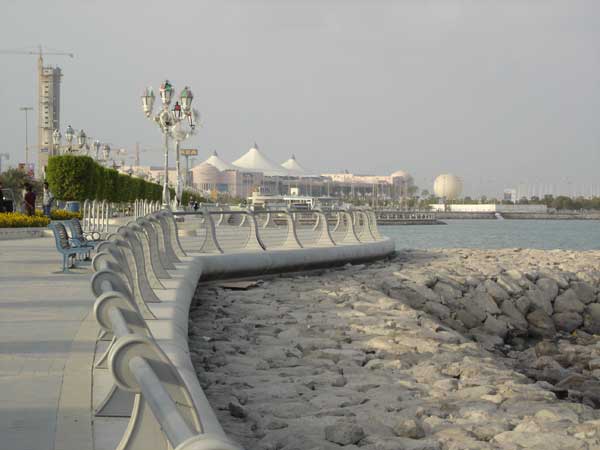
Abu Dhabi’s Advanced Technology Research Council (ATRC) has unveiled what it calls a pioneering initiative aimed at facilitating global access to cutting-edge technology solutions: the ATRC Global Tech R&D Platform.
The platform, it says, serves as a channel for countries worldwide to tap into the UAE’s technological expertise to address their unique challenges, seeking to bridge technology gaps experienced by nations worldwide by offering tailored solutions to their pressing needs.
To initiate applications through the platform, ATRC is allocating US$200 million in funding to accelerate innovation, particularly for emerging and developing nations. By committing to absorb resource and research costs, the funding facilitates the development of sophisticated technology solutions, empowering these nations to keep pace with the latest advancements.
The ATRC Global Tech R&D Platform invites applications from governments, organisations, and eligible stakeholders all over the world, prioritising collaboration and inclusivity. Through a rigorous evaluation process, initiatives aligned with the platform’s mission will receive support in six priority sectors: aerospace and space; food and agriculture; healthcare; safety and security; sustainability, environment, and energy; and transport.
Over the span of almost four years, ATRC says it has developed a robust R&D ecosystem, with over 850 researchers from more than 70 countries and has built an entire ecosystem that systematically supports every critical stage of a technology’s development journey.
ATRC offers a spectrum of capabilities spanning quantum and AI, autonomous robotics, and cryptography, as well as advanced materials, propulsion, and space – guiding technology needs, as ATRC puts it, from ideation to innovation.
In May last year, CK Hutchison announced it was carving out the fixed and mobile assets of its Italian operator Wind Tre, aiming to sell 60% of the newly formed company to Swedish infrastructure fund EQT.
The deal, valuing the business at €3.4 billion, was seen as the latest step of Wind Tre’s ‘asset light’ strategy, at a time when the highly competitive Italian market was leading to slim returns for the entire industry.
Now, however, the sale has been cancelled, with EQT issuing only a brief statement by way of explanation.
“EQT Infrastructure and CK Hutchison, Wind Tre’s current owner, have decided to terminate the transaction owing to conditions precedent to closing not being satisfied by an agreed longstop date of 12 February 2024,” read and EQT press release.
While no specifics have been given for the deal’s failure, the result should not come as a huge surprise to those following proceedings closely.
By November last year, it was already becoming apparent that completing the sale would be a troublesome process, with issues surfacing related to existing network sharing agreements with Wind Tre’s rivals, Iliad and Fastweb.
Iliad and Wind Tre partnered for a 50:50 joint venture (JV) at the start of last year, creating a new 5G wholesaler focussed on providing 5G coverage for rural parts of the country. According to sources, this deal included clauses triggered by a change of ownership, leading to an impasse between the two parent companies.
Wind Tre also has a 5G network sharing agreement with Fastweb that would be impacted by the deal, though it appeared at the time that this situation would be resolved quickly.
Ongoing negotiations to resolve these issues saw the deal between CK Hutchison and EQT repeatedly delayed, with a final deadline of February to close the deal ultimately agreed.
Now, with that deadline having come and gone, both companies have seemingly thrown in the towel – at least for now.
In EQT’s statement, the fund noted that it would continue to look for new deals in this area, without precluding taking a new approach to a deal for Wind Tre’s infrastructure spin-off.
“EQT Infrastructure will continue to explore alternative infrastructure transactions, including with CK Hutchison should the appropriate opportunity arise,” said the company.
In related news, Wind Tre itself is having a busy month, having agreed to acquire Italian fixed wireless access specialist OpNet a week ago for €485 million. The purchase will see OpNet’s more than 3,000 base stations integrated with Wind Tre’s existing infrastructure, as well as bolstering the operator’s 3.5 GHz spectrum holdings.
Want to keep up with all of the latest telecoms news from around the world? Click here to receive Total Telecom’s daily newsletter
Also in the news:
Bell Canada announces plans to cut almost 5,000 jobs
EE to invest £6 million in retail stores
Mexican president calls for dissolution of telecoms regulator
A new data center, a new partnership, some FTTH, and a new PoP: … [visit site to read more]

Ciena announced on Monday that Telia Lithuania is using its coherent optics gear to launch the first 800G wavelength service between major cities in the country as part of a nationwide upgrade of its fibre-optic network.
Telia Lithuania is using Ciena’s WaveLogic 5 Extreme (WL5e) solution, sas well as its network management solutions, to upgrade its countrywide network to support 400G and higher services.
Ciena says the solution enables the telco’s fibre-optic network to deliver more flexible, higher-capacity, and cost-effective, power efficient transport services.
Virginie Hollebecque, VP of EMEA at Ciena, said in a statement that the solution will make Telia Lithuania’s network more resilient, with faster wavelength restoration, quicker issue resolution and improved timing distribution for applications requiring highly reliable synchronization.
“Network resiliency is of great importance for all networks in the Baltic region, considering the region’s heavy reliance on digital technologies,” she said. “Telia Lithuania has a resilient network foundation that can instantly bounce back from any disruptions, minimizing downtime, ensuring service continuity, and safeguarding its communication infrastructure.”
Andrius Šemeškevičius, head of technology at Telia Lithuania, said the network upgrade is essential to support 5G, IoT and other bandwidth-intensive applications.
Šemeškevičius said Ciena’s solution “allows us to reliably and efficiently meet our customers’ varied transport requirements – whether for access, metro, long haul, or enterprise data centre interconnect.”

According to a report from Bloomberg, numerous major players are lining up to bid for Altice Group’s 50.1% stake in XpFibre, France’s largest alterative fibre-to-the-home (FTTH) wholesaler.
Potential suitors for the stake include KKR & Co., Macquarie Group, CDPQ, and Global Infrastructure Partners, according to anonymous sources.
No financial details behind the potential bids have been revealed.
The news comes just months after billionaire Patrick Drahi announced that numerous Altice Group assets were being put up for sale, including a minority stake in Altice France, to tackle the Group’s $60 billion debt pile.
However, it has quickly became apparent that a stake in mobile operator Altice France (SFR) is in fact far less appealing than that of FTTH unit XpFibre, which currently covers more than 5 million premises across France.
XpFibre was created from the spin off of Altic France’s FTTH unit back in 2018, with Allianz Capital Partners (ACP), AXA Investment Managers, and Canadian investment firm Omers Infrastructure investing in the venture to jointly acquire a 49.9% stake in the business for €1.7 billion.
Stakes in Altice France and XpFibre are not the only assets from Altice to be put on the chopping block. In December, Altice Portugal received a €6 billion takeover offer from Warburg Pincus, with additional companies such as stc and Iliad potentially also looking to make a bid for the business.
Altice also recently spun off its data centre assets into a separate business, selling a 70% stake in the new entity to Morgan Stanley Infrastructure Partners for just over half a billion euros last month.
Keep up to date with all the latest telecoms news from around the world with Total Telecom’s daily newsletter
Also in the news:
Bell Canada announces plans to cut almost 5,000 jobs
EE to invest £6 million in retail stores
Mexican president calls for dissolution of telecoms regulator
Two optical upgrades, some software, and some M&A chatter: … [visit site to read more]