
House votes to modernize NTIA for first time in over 30 years


News

US House of Representatives passed bipartisan bill to reauthorize NTIA and modernize its role

On Wednesday 15 May, the US House of Representatives overwhelmingly passed legislation to reauthorize the National Telecommunications and Information Administration (NTIA) for the first time since 1992.

The goal of the bill is to “update the mission and functions of the agency” due to the extensive evolution of the NTIA since its last reauthorization. New Street Research analyst Blair Levin said that the bill “reflects that in this moment in time, NTIA has become a much more important player in telecom issues.”

The bill was originally spearheaded by House Energy and Commerce Committee Chair Cathy McMorris Rodgers (R-WA) and Communications and Technology Subcommittee Chair Bob Latta (R-OH) in July 2023 as the agency’s “duties have changed since it was last reauthorized.” Rodgers and Latta stated that they “look forward to considering several bipartisan solutions to reauthorize NTIA and help ensure that the agency is adapting to meet the needs of a dynamic communications sector.”

Having passed by a vote of 374-36, the legislation extends the NTIA’s mandate through the fiscal year 2025 and introduces several key changes to the agency.

Significantly, the head of the NTIA will be elevated to the rank of Under Secretary of the Department of Commerce. The bill codifies a number of NTIA’s current responsibilities and grants statutory authority for two NTIA offices which focus on public safety communications and international telecommunications policy.

The bill also grants statutory authority to NTIA Office of Spectrum Management and imposes new procedures for disclosing federal concerns. The NTIA must also enhance spectrum resource efficiency.

Crucially, the legislation includes the Plan for Broadband Act, which requires the NTIA to develop a strategy to close the digital divide. The agency must also implement a new process to assess the national security implications of foreign ownership in telecommunications.

Earlier this week, NTIA Administrator Alan Davidson remarked that the NTIA was last reauthorized in 1992, “before Google existed, before the web was popular.” The latest reauthorization seeks to provide clarity about NTIA’s responsibilities in a quickly-changing telecommunications landscape, addressing emerging technologies like artificial intelligence and open radio access networks (O-RAN).

The passing of the bill is supported by industry groups, including the Competitive Carriers Association (CCA), USTelecom, and WISPA.

Also in the news:
UK government conditionally approves £15bn Vodafone–Three merger
Nokia and Vodafone trial Open RAN with Arm and HPE
T-Mobile and Verizon to buy US Cellular, reports say


KPN inks Eneco deal to install solar panels on windfarm  


News

Both KPN’s fixed and mobile networks have been using green energy since 2011 

Dutch telco KPN has announced the signing of a 15-year deal to source green energy from Eneco.  

Eneco is currently deploying around 88,000 solar panels at its existing windfarm in Kabeljauwbeek.  

From 2025, this solar–wind farm will provide renewable electricity to KPN’s fixed and mobile networks. 

Every year, KPN will purchase over 47 GWh (gigawatt hours) of electricity from the solar farm, as well as 200 GWh of additional electricity from the upcoming Ecowende wind farm once this is completed in 2027.  

By combining wind and solar energy collection at the same site, Eneco is seeking to create one of Europe’s most efficient renewable energy generating locations. Combining these two renewable sources, the company says, will ensure that the energy generated matches consumption as closely as possible, reducing the need for other energy sources.  

The move forms part of KPN’s efforts to make the Netherlands’ electricity production more sustainable. By 2030, KPN wants to reduce its total energy consumption by 20%. 

Solar panels have been installed on 40 of KPN’s technical buildings in recent years, meaning that once this deal is once the solar farm is up and running, two thirds of the KPN’s electricity consumption will be renewable by 2027. 

“In three years’ time, almost all our customers will be using the internet via a sustainable and efficient network that we feed with the right power at the right time, via energy from the sun and wind,” said KPN CEO Joost Farwerck in a press release. 

Keep up to date with the latest international telecoms news by subscribing to the Total Telecom daily newsletter 

Also in the news:
UK government conditionally approves £15bn Vodafone–Three merger
Nokia and Vodafone trial Open RAN with Arm and HPE
T-Mobile and Verizon to buy US Cellular, reports say
How Will Data Center Networks Hold Up Under an Avalanche of AI Workloads?

This Industry Viewpoint was authored by Aniket Khosla, Spirent’s Vice President of Wireline Product Management

For a technology limited to sci-fi movies just a few years ago, artificial intelligence (AI) is suddenly everywhere. In a McKinsey survey conducted in April 2024, less than a year after ChatGPT and other first-generation tools debuted, 55% of respondents said they were already using AI. More than two thirds reported that they were planning to increase AI investments. … [visit site to read more]

MEASAT and Mudah launch telehealth kiosks for rural Malaysia

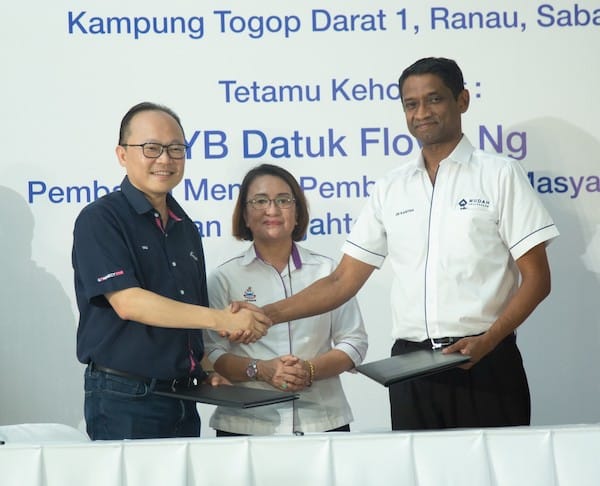
Malaysian satellite operator MEASAT announced on Thursday that it has signed a Memorandum of Understanding (MoU) with local healthcare tech company Mudah Healthtech to bring telehealth services to remote communities.

Under the MoU, Mudah Healthtech will use around 4,000 of MEASAT’s “CONNECTme NOW” satellite broadband hotspots in rural Malaysia to provide Mudah’s Sihat Xpress digital healthcare services for up to 1 million people in unserved and underserved rural and remote communities.

MEASAT and Mudah have also agreed to digitalise clinics in those areas with telehealth capabilities, enabling at least 1,000 doctors to support up to 2,000 Sihat Xpress rural telehealth kiosks to be rolled out at CONNECTme NOW sites within the next two years.

Sihat Xpress telehealth kiosks enable villagers to not only consult a doctor online about various non-emergency medical issues, such as minor illnesses and general health inquiries, but also conduct self- checks for things like oxygen levels, blood pressure and body temperature. In future, the kiosks may also support other services such as blood glucose testing, MEASAT said.

MEASAT chief operating officer Yau Chyong Lim said that by enabling people to do their own basic health screening, the telehealth kiosks could serve as a long-term viable solution for mitigating overcrowding and long wait times at healthcare facilities. They can also potentially improve health literacy in rural communities and limit the spread of non-communicable diseases, he added.

“Through digital healthcare, we aim to help reduce the healthcare delivery gap in remote communities, empowering rural residents to proactively monitor their health via routine checks and online consultations without spending time and money travelling long distances to a healthcare facility,” he said.

The first rural Sihat Xpress site in Malaysia has been established at Kg Togop Darat 1 in Ranau, which MEASAT said will serve as a proof-of-concept to show the potential of telehealth as a cost-effective method to address gaps in high-quality healthcare delivery between urban and rural areas.

Dr Kantha Rasalingam, CEO of Mudah Healthtech, added that the Sihat Xpress initiative in rural areas is aligned with the government’s goals to digitalise all healthcare facilities by 2030.

“Our mission is to make healthcare more accessible, convenient and personalised for everyone, regardless of their location or socioeconomic status,” he said. “We aim to bridge the gap between healthcare providers and patients, offering seamless and integrated platforms that facilitate communication, collaboration and care delivery.”

Flovia Ng, Assistant Minister of Community Development and People’s Wellbeing for Sabah, said telehealth services address the lack of medical professionals in remote areas and can help residents obtain medical advice more easily.

« This is in line with our own efforts to send mobile laboratories to remote districts to conduct medical check-ups and our encouragement of integration and collaboration between the government, private sector and the public to increase awareness on healthcare and improve wellbeing, » she said.

MORE ARTICLES YOU MAY BE INTERESTED IN…

Telecoms shutdown making Sudan’s humanitarian crisis worse: NGOs

A coalition of humanitarian NGOs in Sudan has warned that the shutdown of telecoms services in the midst of the country’s civil war is making a massive humanitarian crisis even worse, and urged all stakeholders – including Starlink – to restore services as soon as possible.

A nationwide telecoms shutdown in February left almost 30 million Sudanese without access to the internet or telephone calls for more than a month. While some levels of services have since been restored in the east part of Sudan, large parts of the country – including the Darfur region, and parts of Khartoum and the Kordofans – remain disconnected from network providers such as Zain, MTN and Sudani, according to an open letter from the Norwegian Refugee Council (NRC) released earlier this week.

In some areas, the only available service has been via satellite connectivity services like Starlink. The NRC letter said that civilians and local responders, such as emergency response rooms (ERRs), often connect through informal Starlink internet cafes.

However, Starlink is not licenced to operate in Sudan, and the military government has ordered people not to use the service, in part because the paramilitary Rapid Support Force (RSF) has reportedly been using Starlink terminals to communicate.

Last month, Starlink said it would halt roaming services to countries where it doesn’t have an operating licence effective April 30, although various media outlets have reported that Starlink remains accessible in Sudan.

The NRC letter said that services like Starlink remain critical for international humanitarian organizations and local responders to remain operational in unconnected parts of Sudan. The letter warned that shutting down Starlink “would have a disproportionate impact on civilians and the aid organizations who are trying to reach them.”

The NRC letter also said military attacks on telecoms infrastructure, as well as government-ordered shutdowns, have “severely affected civilians’ ability to cope with the effects of the war, as well as aid workers’ capacity to deliver essential services, with local responders most severely impacted.”

In the midst of the fighting, civilians need internet access to not only share and receive critical and lifesaving information, including safe areas and routes, but also access cash and bank transfers so they can purchase basic necessities like food and water, the NRC said.

Meanwhile, local aid groups, who have been the first and main responders in most conflict-affected parts of the country, rely heavily on telecoms to reach vulnerable communities and receive funding for their activities. Humanitarian organizations also need connectivity to coordinate and deliver relief efforts safely, particularly to provide cash assistance into the most remote areas.

“Any shutdown of telecoms services is a violation of human rights and may be considered to be a collective punishment that will not only isolate individuals from their support networks but also exacerbate the already dire economic situation facing millions,” the NRC said.

The letter – which was signed by 94 humanitarian, civil society, human rights organizations and members of the #KeepItOn coalition – calls for all stakeholders to ensure the uninterrupted provision of telecoms services in Sudan, as well as for parties on both sides of the conflict to stop attacking, destroying, damaging or shutting down telecoms infrastructure, and allow repairs to be made.

The letter also said restrictions on satellite services and importation of satellite internet devices should be lifted.

The NRC letter also said service providers need to ensure connectivity by “diversifying the means to access the internet, such as solutions based on satellite (including, though not limited to, Starlink) and WiMAX technology, or the use of e-SIMs near the country’s borders. »

Meanwhile, development donors and financial institutions should support long-term development of the telecoms sector by promoting decentralized infrastructure and reducing barriers for smaller businesses to enter the telecoms market, the letter said.

Finally, the NRC also called on the UN to increase emergency telecoms capacity in Darfur and the Kordofans through the Emergency Telecommunications Cluster.

The NRC said that over a year of relentless warfare and indiscriminate violence has led to Sudan becoming the world’s worst displacement crisis and is on the brink of becoming the world’s worst hunger crisis. In total, nearly 25 million people – more than half of Sudan’s population – need humanitarian aid.

MORE ARTICLES YOU MAY BE INTERESTED IN…

Veon reveals revenue increase

Keep up-to-date with all the latest news, articles, event and product updates posted on Developing Telecoms.
Subscribe to our FREE weekly email newsletters for the latest telecom info in developing and emerging markets globally.

Sending occasional e-mail from 3rd parties about industry white papers, online and live events relevant to subscribers helps us fund this website and free weekly newsletter. We never sell your personal data. Click here to view our privacy policy.

AT&T and AST SpaceMobile ink direct-to-device satellite deal


News

The partners claim the deal paves the way for the elimination of not-spots across the US

This week, AT&T and AST SpaceMobile have signed a definitive commercial deal to work together in bringing direct-to-mobile satellite communication to AT&T customers.

The agreement, which builds on a previous Memorandum of Understanding signed in 2018, extends until 2030

As part of the MoU, AT&T will invest $500,000 into the satellite firm, with AT&T’s Head of Network, Chris Sambar, taking a seat on AST’s board of directors.

In a LinkedIn post, Sambar said the deal brings the company “one step closer” to effectively combining satellite and terrestrial mobile connectivity, in efforts to ensure customers are never without access to connectivity.

“Working together with AT&T has paved the way to unlock the potential of space-based cellular broadband directly to everyday smartphones. We are thrilled to solidify our collaboration through this landmark agreement,” said Abel Avellan, AST SpaceMobile’s Founder, Chairman, and CEO. “We aim to bring seamless, reliable service to consumers and businesses across the continental U.S., transforming the way people connect and access information.”

Currently, AST SpaceMobile has just one test satellite in orbit, which it used to conduct successful voice call, text, and video calls to an unmodified smartphone last year.

Now, the company has five ‘Block 1’ satellites planned for launch in July or August in this year, enabling the launch of commercial services. These five satellites have been delayed for over a year due to supply chain issues related to satellite production.

Once in orbit, these five satellites will allow for non-continuous nationwide service in the US, with additional Block 1 satellites set to be launched to enhance services at a later date.

AST’s larger and more advanced ‘Block 2’ satellites will begin launching between December 2024 to March 2025.

Keep up to date with all the latest telecoms news from around the world with Total Telecom’s daily newsletter 

Also in the news:
Investors shorting BT for $300m in twelve-year record
4G now covers all stations on the Elizabeth Line
EXA Infrastructure continues expansion in North America with new route between Ashburn and Atlanta

STT GDC teams with VNG to enter Vietnam’s data centre market

ST Telemedia Global Data Centres (STT GDC) announced on Wednesday it is expanding into Vietnam via a joint venture with Vietnamese tech firm VNG Corporation to build and operate data centres in Ho Chi Minh City.

The JV partnership includes VNG’s existing data centre in in the Tan Thuan area, which has been rebranded as STT VNG Ho Chi Minh City 1. The two companies will build a second facility, STT VNG Ho Chi Minh City 2, 1.5 kilometres away within the same Tan Thuan cluster.

Billed as Ho Chi Minh City’s first carrier-neutral connectivity hub when it was opened by VNG at the end of 2022, STT VNG Ho Chi Minh City 1 is an Tier-3 rated facility offering a total IT load capacity of 9.6 megawatts. It provides network coverage from major local telecoms operators and services including cloud access to providers, local leased lines and disaster recovery workspace. Customers can also establish direct peering connections to VNGGames and VNG Cloud.

The new STT VNG Ho Chi Minh City 2 will be connected to the original data centre, and is planned to offer a development potential of up to 60 megawatts of IT load capacity.

STT GDC says the new data centre facility is expected to be operational in the first half of 2026.

Lionel Yeo, CEO for Southeast Asia at STT GDC, said the JV will leverage VNG’s deep local market knowledge, carrier neutrality and extensive customer and partner network to capitalise on Vietnam’s growing ambitions to become a digital powerhouse in Southeast Asia.

“Vietnam is at the cusp of significant growth in the data centre market, and we firmly believe that the combined strengths of both partners will enable us to serve the local market with agility and pace,” he said in a statement.

VNG Founder and CEO Le Hong Minh said the JV would set new service standards worldwide for Vietnam’s data centre industry as well as introduce VNG’s products and services to international markets.

“Together, we are advancing the AI Cloud movement to support both regional and local businesses, in line with key trends in the digital economy,” he said.

MORE ARTICLES YOU MAY BE INTERESTED IN…

LATAM Telecommunications and Puerto Rico Telephone Company will each pay a $1 million civil penalty and enter into a compliance plan.


Press Release

News provided by: FCC Office of Media Relations

This piece was originally published by our sister company Broadband Communities

The FCC’s Enforcement Bureau today resolved two investigations into the América Móvil Submarine Cable System, which connects the United States to two additional cable landing stations located in Colombia and Costa Rica, respectively, without the Committee for the Assessment of Foreign Participation in the United States Telecommunications Services Sector’s (commonly known as Team Telecom) review or the required FCC approval.  In addition to admitting the violations, LATAM Telecommunications and Puerto Rico Telephone Company will each pay a $1 million civil penalty and enter into a compliance plan.

An undersea cable licensee’s failure to obtain prior FCC authorization before connecting and operating new international subsea cable landing stations circumvents Team Telecom’s ability to conduct a review for national security concerns as required by federal law and regulations.

“Undersea cables keep us globally connected and are essential part of the digital economy.  But they can pose real security risks if the FCC and its national security partners aren’t properly given the chance to review where new cables may be installed,” said FCC Chairwoman Jessica Rosenworcel.  “Across the board the agency has been focused on network security, and careful oversight of undersea cables is a critical part of this effort.”

“As recently described in the Bulk Sensitive Personal Data Executive Order 14117, international submarine cables that connect the United States to other countries are a key piece of technology that facilitates the voluminous transfer and use of sensitive personal and U.S. government information,” said FCC Enforcement Chief Loyaan A. Egal, who also serves as head of the FCC’s Privacy and Data Protection Task Force.  “We will also work closely with our national security partners and the Commission’s Office of International Affairs to identify and address unauthorized and non-notified transactions that implicate FCC licenses and U.S. national security interests.”

“Team Telecom is designed to review and address national security threats to our critical telecommunications infrastructure,” said Assistant Attorney General Matthew G. Olsen of the Justice Department’s National Security Division.  “When that process is bypassed, it puts the American people, their communications, and their data at risk. Today’s enforcement action makes clear that the Department of Justice, as Chair of Team Telecom, will continue to work closely with the FCC to ensure that applicants and licensees play by the rules.”

The FCC investigation found that construction began on a cable landing station in Isla San Andrés, Colombia, in March 2020, which went into operation in September 2021, and a cable landing station in Puerto Limón, Costa Rica, in May 2021, which began operation in November 2022, with both connecting to the América Móvil Submarine Cable System.  Neither company sought FCC authorization until 2023, thus evading vital national security reviews and assessments, among other concerns, that the FCC, in collaboration with the Team Telecom Committee, considers when reviewing new undersea cable landing license applications, as well as requests to modify existing licenses.

Reflecting the increased emphasis on data security issues in the national security sphere, the financial penalties associated with today’s settlements are significantly larger than prior enforcement actions for undersea cable rule violations.

In addition to critical infrastructure voice and data services, undersea cables also facilitate emerging technologies that are key to the digital economy such as artificial intelligence, machine learning, and cloud computing.  The Enforcement Bureau will continue to prioritize investigations that concern U.S. national security interests involving telecommunications and information and communications technology networks.

How is the international submarine cable ecosystem evolving in 2024? Join the submarine networks community in discussion at this year’s Submarine Networks EMEA conference

Also in the news:
Spanish regulators clear Zegona’s acquisition of Vodafone Spain
UK’s fastest supercomputer switched on
EXA Infrastructure continues expansion in North America with new route between Ashburn and Atlanta