
From humble beginnings: The amazing journey of Hormuud Telecom CEO Ahmed Mohamud Yusuf


Interview

We spoke to Ahmed Mohamud Yusuf, CEO of Hormuud Telecom and winner of the CEO of the Year Award at the World Communication Awards 2023, to discuss his extraordinary career journey and plans for the future

Your journey from the son of a camel herder to the CEO of the largest business in Somalia is fascinating. Can you tell us a little more about your upbringing and how it has shaped you as a leader?

Raised in rural Somalia, my life has been influenced by community values and the spirit of entrepreneurialism. My father’s hard work ethic enabled me to attend boarding school, which led to my first job as a door-to-door salesman. This experience allowed me to understand the diverse communities of Somalia, enriching my appreciation of our vibrant social fabric.

I eventually took the leap of opening my own shop, rapidly growing it into an import/export business, connecting Somali entrepreneurs with the world, so I could continue my studies at the National University of Somalia.When the civil war forced me to leave my homeland in the 1990s, I had to relocate my business, which showed me how true entrepreneurs are those that can adapt in the face of hardship. When in the early 2000s I was able to return home, my mission was crystal clear: help get Somalia through its time of hardship, and rebuild it, so once again communities can connect with each other and the world.

I joined Hormuud Telecom in 2002. Now as a leader of Somalia’s largest business, I’m driven by three core values: resilience, ambition, and empathy. These principles keep me grounded, and reinforce my faith in our team, mission, and the future of Somalia.

What motivated you to return to Somalia after you were displaced by the civil war? Did you always plan on returning?

I always believed in Somalia’s potential, even during its most turbulent times. When the civil war saw the destruction of financial and telecommunications infrastructure, I saw an opportunity to make a difference and I am grateful every day that I embarked on this journey.

Despite facing numerous challenges, Somalia’s economy has displayed remarkable resilience, largely driven by the dynamism of its private sector. I take immense pride in knowing that Hormuud Telecom is not just driving economic growth but is transforming the accessibility of digital services for ordinary Somalis. I remain dedicated to putting communities at centre of everything I do – for me, not returning was not an option.

What were the biggest challenges you faced when launching a telecoms company in Somalia? 

Restoring confidence in Somalia and its businesses has been a challenge, but to rise to this I’ve learnt to hold Hormuud Telecom to the highest standards and ensure that from necessity comes invention.

For example, when I returned to Somalia, the country was almost devoid of infrastructure and 98% of the Somali Shilling was counterfeit. Hormuud not only rebuilt infrastructure – from telephone masts to basic GSM services and fibre optic cables – we introduced mobile money to the country. Free at the point of use, this ensured that people had a reliable means to transact.

Now, with over 80% of people using mobile money every day, we stand on the cusp of being the world’s first cashless economy. Our mobile money platform, EVC Plus, reaching its 13-year anniversary was one of the proudest moments in my career. It proved how you can turn a challenge into an opportunity that can benefit millions.

One of Hormuud Telecoms’ biggest goals is to extend 4G connectivity throughout the country. Why is this so important for Somalia as a nation?  

The fourth industrial revolution is transforming the world at scale – not least in Africa, which is home to a fast growing, data hungry population. In Somalia, this story is no different. For us, 4G is laying the track to digital transformation, we now need the low-cost handsets to achieve it.

We have one of the youngest, digitally savvy populations in the world, and some of the cheapest internet in Africa. With 4G coverage throughout the country, digital education and healthcare possibilities in last mile communities can be unlocked; our pre-eminent industries like agriculture and fishing can become more efficient; and with EAC admission, we see a future where Somalia is a telecommunications hub for the Horn.

We’re already well on our way. Roughly 70% of Somalia’s population is covered by 4G internet. This expansion isn’t just about convenience; it’s a pivotal step towards Somalia becoming a cashless economy, that fosters inclusive and sustainable economic growth. High-speed internet access is a basic human right. We’re dedicated to bridging the digital divide, even in the hardest-to-reach areas of our country.

Hormuud Telecom played a vital role in supporting the country during the coronavirus pandemic and, indeed, has many charitable initiatives to support the country’s most vulnerable people. Are there any projects you’re most proud of?

During the COVID19 pandemic Hormuud built the first oxygen plant in the country. We also developed a telephone emergency announcement system, which has since been used as part of the El Nino climate disaster response. I’m proud of the instrumental role we play in guiding our country through tough times.

In the fallout of the pandemic, Somalia was on the brink of famine. We needed a way to reach the 1.4 million people displaced by the drought, yet INGOs did not have the capacity to reach them with physical aid. With many internally displaced people already using EVC Plus, we also developed a portal for INGOs to transfer up $1 million through mobile money to 10,000 people each time.

Running on both smart and basic phones, mothers can now purchase food and water to keep their families alive — it has completely transformed aid delivery in Somalia, whilst getting aid money moving through the economy. There’s nothing I am prouder of than that.

What does winning the CEO of the Year Award at the World Communications Award mean to you?

Winning this award is a massive honour, and I’m grateful for the recognition. It means a lot more than just a trophy, as it indicates the future is bright for Somali telecommunications, and that Hormuud is leading our sector’s return to the world stage. I hope this paves the way to exciting collaborations and opportunities around digitalisation.

 What’s next for Hormuud Telecom in 2024? 

2024 is set to be another big year for Hormuud, we’ve got several infrastructure projects and products set to come to fruition, which will further pave the way to a cashless and digitally enabled economy. Watch this space.
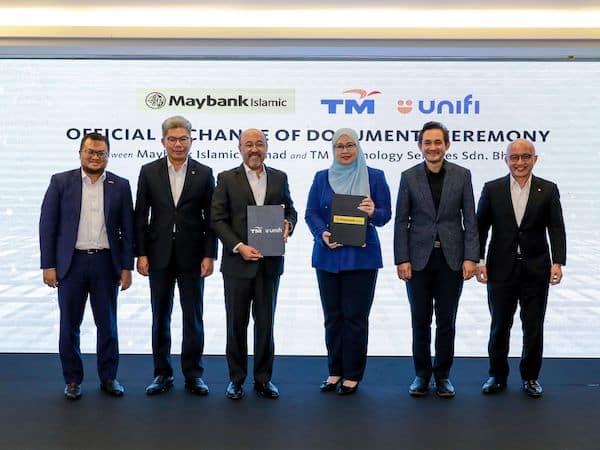

TM and Maybank Islamic launch 5G-powered banking-as-a-service

Telekom Malaysia (TM) and Maybank Islamic announced on Thursday that they have partnered to create what they’re billing as Malaysia’s first Islamic banking-as-a-service (BaaS) solution powered by 5G.

Targeted at both consumers and micro, small and medium enterprises (MSMEs), the partnership aims to bundle Maybank Islamic’s financial services with TM’s Uni5G Postpaid Biz service.

“While the technology originates from the BaaS concept, what makes it unique is its adherence to Islamic principles, making it the pioneering example of its kind in Malaysia,” said Maybank Islamic CEO Dato’Mohamed Rafique Merican in a statement. “It combines modern technology with the ethical requirements of Islamic finance, providing innovative and faith-based financial services.”

The first offering out of the gate is ‘Go Niaga’, a mobile business banking bundle designed to help MSMEs manage finances, improve incomes and offer digital payment options. Banking services include accounts and credit facilities tailored for MSMEs, as well as payment acceptance facilities through Maybank Islamic’s QRPay Biz, and Tap2Phone, which enables cloud POS via mobile devices to facilitate digital/card payments.

The Go Niaga bundle includes any of Unifi’s three Uni5G Postpaid Biz packages, along with free 5G mobile devices, which TM says will ensures secure access to financial services, as well as bring 5G capabilities to more communities.

Shanti Jusnita Johari, chief commercial officer for Consumer Strategy & Business at Unifi said the bundle – which is being offered via its digital business solutions arm, Unifi Business – will address current market gaps among the MSME segment, and enable businesses to better leverage e-commerce and expand their customer reach.

“MSMEs are a key growth engine for the nation’s economy. At present, this segment accounts for nearly 38% of Malaysia’s GDP, yet their potential is often dimmed by limited access to digital tools and financial services,” she said in a statement. “This is even more apparent among underserved segments, micro and small businesses who face the most challenges in accessing financial services and digital innovations that are necessary to elevate their lives and livelihoods.”

Maybank Islamic’s Rafique also described the partnership as a significant step forward in financial inclusion.

“By embedding Maybank Islamic’s BaaS solutions within Unifi Business’ platforms, previously unbanked or underbanked individuals and businesses will gain access to Maybank’s essential financial services and 5G mobile connectivity through TM’s cutting-edge technologies,” he said.

MORE ARTICLES YOU MAY BE INTERESTED IN…

Growing data consumption demands policy rethink in Europe


Viewpoint

The recent anti-dumping measures against the fiber optic cable exporters may delay the fiber deployment in the region even as data consumption continues to rise and businesses must accelerate digitalization to remain competitive

Key takeaways:

  • Fiber deployment is crucial for Europe to address the growing data demand by enabling it to provide high-quality and affordable broadband connectivity.
  • The imposition of antidumping measures by the EU against exporters negatively impacts the cost economics of fiber deployment and may lead to delays in building Fiber-to-the-Home (FTTH) infrastructure in the region.
  • The import of optical fiber cables has played a critical role in providing cost-effective and quality connectivity solutions to EU citizens.

The telecommunication networks in Europe are witnessing a consistent increase in data consumption. A recent report forecasts that Europe’s mobile data consumption per user will grow five times from 15 GB per month in 2022 to 75 GB per month by 2030, indicating an annual growth rate of 25%. On the other hand, the fixed data consumption per household will increase from 225 GB per month in 2022 to 900 GB per month by 2030, an annual growth rate of 20%. [1]

The ever-increasing popularity of video-based content, along with the use of social networks, are the key reasons for the growing data consumption in the region. This consumption is only likely to increase with the emergence of high-definition 4K and 8K videos, high-definition video and the growing use of Augmented Reality (AR) and Virtual Reality (VR) based use cases. In addition, the Artificial Intelligence (AI)-generated content and the increased use of short-form video on social networks is only going to fuel the data consumption.

The outbreak of the COVID-19 pandemic widened the gap between the connected and unconnected as people used the digital infrastructure to execute their professional and personal tasks. It was no longer enough to be just connected as high-speed quality digital infrastructure became the differentiating factor. Efficient digital infrastructure emerged as a crucial factor during the pandemic. The countries/regions with superior digital infrastructure were able to better respond to the pandemic while others struggled to maintain economic continuity.

As the digital economy continues to become all-pervasive, the state of the digital infrastructure is becoming an important differentiating factor for the economic growth of a nation. It forms the bedrock of the digital transformation of the industries. It is not possible to take advantage of digital transformation for businesses from different industry verticals without investing in digital infrastructure. In addition, high-quality and, more importantly, accessible digital infrastructure is crucial for ensuring widespread digital connectivity, fostering inclusive growth and accelerating economic growth

Growing relevance of affordable fiber deployment in Europe

Fiber deployment is critical for the service providers to not just address the ever-increasing data consumption but to build a formidable foundation of the digital economy for years to come. A critical aspect of fiber, when compared with legacy broadband technologies, is that it offers a considerable price advantage without compromising on quality. This makes it central to ensuring inclusive growth.

The deployment of fiber is also vital for meeting sustainability targets. Fiber-based networks are known to consume less electricity than legacy technologies. This is crucial for Europe as electricity costs have skyrocketed post Ukraine-Russia war.

Just like how railways emerged as vehicles of economic growth in the last century, fiber deployment is known to provide an unprecedented boost to economic and social growth. Optical fiber cables offer unmatched resilience, capacity and cost economics when compared to copper or microwave.

European Union (EU) Commission is well aware of the vast benefits of fiber deployment, and this is the prime reason why it introduced the Gigabit Society Policy in 2016 to stimulate capacity networks required for a burgeoning digital economy. The strategy is focused on three pillars of 5G coverage in all urban areas, access to 1Gbps for all socio-economic drivers and access to 100Mbps for all households. [2]

The European Union is striving to meet the connectivity goals for the year 2025. These include providing all European households with 100 Mbps networks, with the flexibility to upgrade to even higher speeds, as and when required. Additionally, ensuring gigabit connectivity for all socio-economic entities such as schools, universities, research centers, transport hubs, hospitals, public administrations, and digital technology-dependent enterprises.

The plan outlines the objective of providing uninterrupted 5G coverage in all urban areas and major terrestrial transport routes to facilitate connectivity for both individuals and objects. Furthermore, the EU aims to ensure access to mobile data connectivity in all areas where people live, work, travel, and gather, emphasizing comprehensive coverage across various settings.

EU’s goal for Europe is to be the most connected continent by 2030. It has also come up with a Digital Decade program, which seeks to provide high-speed internet coverage by 2025 and gigabit connectivity by 2030. [3]

Even as Europe’s digital infrastructure continues to grow, it still has a lot of ground to cover. Only 59% of rural households had access to a broadband connection of 30Mbps. In addition, the coverage of households with high capacity networks reached only 20% of the total households and only 18% were covered by Fiber to the Premises. This prevents the rural communities from accessing growth opportunities, thus hampering their growth. It also puts them in a disadvantageous position by not allowing them to access online learning and telemedicine, among other services. [4]

Recent anti-dumping investigation initiated on OFC Imported by EU

In this context, the potential issue of imposition of antidumping measures by the EU against exporters may be counterproductive. This not only impacts the cost economics of the fiber deployment in the region but will also have repercussions on the deployment of 5G and Fiber-to-the-Home (FTTH) infrastructure in Europe. The import of optical fiber cables has played a crucial role in providing cost-effective connectivity solutions to EU citizens.

Any potential antidumping measures taken by the EU Commission may end up increasing the cost of broadband services for the end user, thus failing the very purpose of deploying fiber-based infrastructure in the first place. The increased cost may prevent the customers from benefiting from the transformative impact of fiber connectivity and thus may end up widening the digital divide.

Policy decisions, like a potential imposition of anti-dumping duty on optic fiber manufacturers imported by the EU, can have a far-reaching impact on the timelines as well as the quality of optic fiber networks being set up in the region. Fiber-based digital infrastructure is critical to not only address the growing data demands of the region but also to build a robust digital ecosystem, stimulating innovation and ensuring inclusive growth. Hence, a broader outlook by the EU may benefit the region and have far-reaching positive consequences while achieving the objectives of the policy.

[1] https://www.adlittle.com/en/insights/report/evolution-data-growth-europe

[2] https://eur-lex.europa.eu/legal-content/EN/TXT/PDF/?uri=CELEX:52016DC0587&from=de

[3] https://digital-strategy.ec.europa.eu/en/policies/connectivity

[4] https://digital-strategy.ec.europa.eu/en/library/connectivity-european-gigabit-society-brochure

Introducing 7.1: Laying The Foundation For The Future

We here at Bicom Systems always strive to offer your clients the latest and most innovative technologies while ensuring that they are adapted for more intuitive use.

7.1 enforces that standard as we pave the way for Omnichannel, which enables seamless customer interaction across all communication channels.

But, fret not as our teams have been hard at work developing a suite of other features across all our products aimed at improving overall employee quality of life and increasing workplace efficiency.

SEE WHAT’S NEW IN 7.1 FIRSTHAND

Here is what our 7.1 release has in store.

Improving Security Measures With 2-Factor Authentication

Security always remains a prime concern for us here at Bicom Systems, so we wanted to further reinforce our existing security measures by providing your clients with a much needed security feature, 2-Factor Authentication.

It forms an extra layer of defense against potential security breaches through compromised accounts, helping mitigate the chances of such occurrences through the use of an external authenticator app.

This feature is available on both OSC portals and gloCOM.

Empowering Real-life Safety Through Ray Baum’s Act

While data safety is important, so too is client safety which is why PBXware has been made compliant with Ray Baum’s act, allowing end users to utilize the PBX platform to dial emergency numbers and automatically provide them with a selected dispatchable location that needs to be set up prior, ensuring optimal emergency services response times.

We have even made sure to cover users on the move by enabling them to enter a list of their location options (approved by admins) and choose the appropriate one should the need arise.

Preventing Fraud And Ensuring Effective Call Routing With E.164 Format

To support safety and efficient communication for UK clients, PBXware has introduced the “Force E.164 Caller ID” option, minimizing the risk of calls from potentially fraudulent numbers and keeping all numbers uniform to one format for more efficient routing.

It also ensures compliance with UK regulatory requirements, allowing the product to retain its footprint on the UK market.

Drive Space Preservation

We are aware that a lot of clients tend to exchange a lot of messages and files over gloCOM, all of which gets stored locally.

But, over time, the amount of stored data piles up and becomes increasingly difficult to manage for both the gloCOM and the chosen platform to manage due to increasing client sync times and drive space issues.

To ease the load on client systems, we have implemented the ability to archive and delete gloCOM chat history over set time periods.

The feature focus of our newest release, Contact Center has seen the most changes in order to incorporate features that we believe are going to pave the way for a brighter future for telecommunications, Omnichannel.

Omnichannel

Undoubtedly the biggest star of 7.1, the Omnichannel solution in Contact Center provides clients with the ability to manage customer interaction through all available communication channels, be it email, voice, SMS or Live Chat effortlessly, unifying them all into a seamless customer experience.

To accommodate this change, we have introduced new features and have done updates on existing ones.

Updating The Agent Interface

The first thing that needed to be done was a new look for the existing agent interface to make room for all the new toys coming with the introduction of Omnichannel while still keeping it instinctive and easy to maneuver.

Now, the panel features tabs for every new communication channel: Live Chat, SMS, email and voice calls, all in one easy-to-access place, allowing for seamless transition between them.

Supervisors have also received additions on the Agent panel with the introduction of the ‘Dashboard’ and ‘Conversations’ tabs so they can have the option to operate from the agent panel rather than having to switch to Supervisor should they so choose.

Improved Queue Management With Chatbots

A feature aimed at improving routing speed and accuracy, Chatbots are here to stay and we are certain that agents across the world will be thankful for having to perform less conversation transfers.

Modernizing Queue Assignment Strategies

Chatbots are not the only new way we have improved queue efficiency as we have implemented new queue assignment methods too with the auto-assignment strategy being the focal point.

It utilizes an algorithm that takes several crucial factors into consideration like: agent capacity per channel, their availability, total workload and total unserved time, as well as checking if a request is coming from a returning customer.

With those parameters, it determines the most appropriate agent for an individual customer query and applies it to every single one, resulting in a vastly more efficient workload assignment strategy than before with equitable workload distribution and optimal customer satisfaction.

Improving Statistics With Blended Reporting

With an abundance of new features, especially one as robust as omnichannel, we needed to implement ways of tracking all these new statistics, which we have thanks to blended reporting.

With both Agent and Queue Statistics taken into account, we have introduced blended reports that offer a comprehensive view of metrics per channel that provide key insights into agent, queue and channel performance.

The generation and delivery of these reports to specific users can also be automated thanks to Scheduled Reporting.

More Robust Security Measures

A new Security page has been introduced in order to allow users to better manage security measures and to take on a more active role in threat prevention.

We empower them by enabling them to issue manual bans out to potential malicious actors detected by the system and to receive threat notifications over Alert Email to specified individuals.

Improved License Handling

License assignment and release has seen touchups with the introduction of multiple channels thanks to the addition of the Licenses page and the overall streamlining of the entire process in order to improve resource allocation across the board.

Both gloCOM and gloCOM GO have seen improvements in user security and overall interaction which should enhance the overall user experience.

Improving Interaction With Message Reactions

In order to reduce message congestion in group chats while still retaining a more light-hearted atmosphere in a professional setting, we have introduced Message Reactions, allowing users to express their emotions toward messages sent in by their colleagues.

It also helps reduce that tedium of having to send out a confirmation message for event planning and can now be done with a click of a button and a Thumbs Up.

Keeping Security Up-to-par With 2-Factor Authentication

As mentioned earlier in PBXware, gloCOM has also received the benefits of 2FA, placing that extra layer of protection for user accounts to further assist in security breach prevention in case of an accidental lapse in security protocol within businesses.

Compliance With Ray Baum’s Act For US Compliance

Also mentioned within PBXware, Ray Baum’s Act compliance extends to gloCOM and gloCOM GO as well with gloCOM reflecting the capabilities of this feature from PBXware while gloCOM GO users only have access to the key feature of getting their emergency call redirected to a native phone dialer.

SSL Certificate Confirmation

Another safety measure to help alert users that they may be joining an unsecured server is SSL Certificate Confirmation, acting as a reminder when attempting to join a server without a valid or suspicious SSL certificate which could leave user accounts compromised should they accept the join invitation.

gloCOM Meeting has received a few quality of life updates which should help streamline the overall meeting process.

Clipboard Sharing With Meeting Participants

The most impactful of the three changes that facilitate all of this is the Clipboard Sharing feature that allows presenters to give select users the ability to paste clipboard text on the presenter’s side to actively provide more insight on the topic at hand and allow the presenter to focus on the presentation.

Meeting Recording Reminder And Meeting Pre-expiry Notification

The other two changes are reminders that can assist with overall meeting organization. Doing exactly what their names imply, the Meeting Recording Reminder helps remind users to record meetings so that important information can be recorded and played back at a later date if need be.

The Meeting Pre-expiry notification, on the other hand, pops up near the end of a meeting’s allotted time depending on Meeting license, notifying users that they either need to wrap the meeting up, or plan for scheduling a secondary meeting to finish up with everything.

And Much More…

These are only some of the more major changes that our teams have valiantly worked on to deliver in the 7.1 release.

There are still several others that will help boost the overall usefulness of the entire Bicom Systems product suite with some of the more notable ones being:

• Bringing the option to empty out media storage on iOS instances of gloCOM GO

• The ability to add contacts to a local phone book directly from an SMS conversation on gloCOM GO

• Expanding gloCOM GO’s presence options with the ‘Ringing’ and ‘On Call’ statuses

• Simplifying Live Chat widget setup for Contact Center

• The setup of Out-of-hours messages so businesses can better designate contact center operating hours

• First Response and Chatbot Timeout options for Contact Center that help streamline the customer queue process and conserve resources

While seemingly minor, these changes all serve to improve everyone’s overall experience with our products and we hope that it reflects as such.

In the meantime, we will continue our work on delivering new, beneficial features to your clients while we eagerly await to see everyone’s experiences with the features that have arrived with the release of 7.1.

Until our next major release, we hope that we have met your expectations and that both you and your clients remain satisfied.

To find out more, we’re a click of a button away!

CONTACT US

Dialog Axiata launches app to control smart-home devices

Sri Lankan telco Dialog Axiata says it has released a new mobile app that serves as a single remote control point for its suite of smart-home devices.

The new Smart Home App serves as a centralised platform, allowing users to manage and monitor all of Dialog Axiata’s smart devices, as well as smart devices from Chinese AI/IoT company Tuya Smart, from their phone. Dialog and Tuya have been co-developing smart devices under a partnership arrangement since 2020.

Dialog Axiata currently offers a range of smart-home devices, including security cameras, smart wall plugs, smart wall sockets, smart switches and smart extension cords, as well as Wi-Fi mesh and an Alexa-powered smart speaker.

The app enables users to view live camera feeds, activate and deactivate devices, and receive notifications from each connected device.

Dialog Axiata also says the Smart Home App has voice control capabilities that can be seamlessly integrated with popular smart home assistants such as Amazon Alexa and Google Assistant.

“This app aims to redefine smart living, making it effortless for everyone to experience the true potential of their smart-home devices, regardless of their location,” said Dialog Axiata Group CMO Lasantha Theverapperuma in a statement.

According to figures from Statista, Sri Lanka’s smart-home market is still in the fledgling stage, with just 5.7% household penetration projected for this year. That’s forecast to grow to 9.5% household penetration by 2028.

In terms of monetisation, the smart-home market in Sri Lanka is projected to generate US$133.1 million this year, growing at an annual rate of 11.38% to US$204.8 million by 2028.

MORE ARTICLES YOU MAY BE INTERESTED IN…

Dealing with today’s FTTH material shortages in the UK


VIEWPOINT

A variety of product supply issues are having a marked effect on fibre rollouts in the UK. At the same time, there is a need to significantly reduce the time and cost involved in developing and deploying fibre networks… Aginode would like to share some insights into overcoming obstacles and ensuring continuity of the supply chain – and suggest where we can help.

A closer look at the main developments

A global shortage of fibre optic cables, components, and accessories is affecting shipments to Europe from China and India. Furthermore, long transit times and multiple handling points increase the risk to the FTTH product supply chain. Importing technology products often involves navigating complex customs regulations and compliance requirements and can be subject to anti-dumping legislation. An anti-dumping law is any domestic law designed to prevent a country’s trading partners from “dumping” goods into domestic markets at any price that is less than fair. That means goods could have additional costs applied to them by governments at any time as we have recently seen. Furthermore, geopolitical tensions and conflicts can severely disrupt supply chains.

The crisis in the Red Sea and Suez Canal is significantly impacting shipping and the delivery of goods to the UK. The situation, characterized by attacks on commercial shipping vessels has led to a marked decrease in shipping through the Red Sea as ships are forced to go around the cape. At the time of writing, 80% of shipping coming through the Suez Canal is being turned around. This has had a cascading effect on global trade, including the UK.

 Major consequences are the significant increase in shipping times and costs. Long-distance shipping can introduce real vulnerabilities. Extended transit times, caused by rerouting and global trade bottlenecks, can lead to significant delays in the delivery of FTTH products. This is affecting project timelines for broadband infrastructure deployment. At the moment there’s no clear indication of how long the current situation with Suez and China – and other mounting global tensions – will last. Once an issue settled, something else may crop up.

What should you expect from a supplier – and how we can help

Numerous issues can be avoided by not shipping materials from affected regions, and by avoiding the Suez Canal. Furthermore, supply chains need to be monitored and managed very closely. As a Western European manufacturer with ample experience in the UK and EU markets gives us distinct advantages in helping solve this.  We have EU based manufacturing plants such as Opticable (Belgium), Moenchengladbach (Germany), Fumay (Northern France), Lamia (Greece), and Nouaceur (Morocco) – meaning we are not dependent on shipping from overseas. Being able to deliver faster than other manufacturers/suppliers impacted by the situation helps safeguard your business planning, investments, and essential time-to-revenue.

 Today’s FTTH projects have more diverse product requirements than ever, due the enormous variety in technology choices, legacy installations, and business models. But if you want to get a non-standard product made in Asia, for example, shipping may take 3 or 4 months. However, we can manufacture and ship something bespoke in a couple of weeks. Shipping from Belgium is as fast as shipping within the UK.

Longer shipping routes not only increase fuel consumption but also raise environmental concerns. This might be particularly relevant for companies aiming to maintain sustainable supply chains and comply with CSRD (the new EU Corporate Sustainability Reporting Directive). There’s obviously a huge carbon footprint benefit if distances to be travelled are shorter. What’s more, CSRD requires you to report and audit your whole supply chain. How many overseas suppliers – either private or state-owned – have a fully transparent supply chain and documentation to match? How many are easily accessible and can be visited rapidly and cost-effectively? The supply chain does not stop at the point where the distributor has sold you your goods. When CSRD supply chain audits take place, more is examined than your carbon footprint alone. With Aginode, you know you’re safe. Equality of working and anti-slavery practices, for example, are well-documented as part of our own supply chain processes.

If a distributor receives a shipment of faulty goods, you won’t want to receive replacement items from the same batch. If these goods came from far away, you’ll have to wait for a shipment of newly manufactured goods – which can take months. Time-saving options such as sending emergency replacements by air often wouldn’t be feasible. Should you need something sooner rather than later, we have a very quick turnaround in manufacturing. You raise a PO, and we can produce and send goods to the UK to meet your requirements.

Benefits of customer proximity

In FTTH projects, customer proximity is key. This makes it possible to better understand the specific needs, preferences, and challenges of each local market. This insight can guide the customization of products and solutions to meet the unique requirements of different regions, enhancing customer satisfaction and product relevance. It’s also possible to quickly adapt to changing market conditions, regulatory environments, and technological advancements, and offer quicker, more efficient support and maintenance services. Geographical proximity to the project site helps optimise the supply chain and reduce transportation times and costs, ensure timely delivery of equipment and materials, and minimise the risk of project delays.

 That’s why we go above and beyond. Customers are always welcome to visit our factories and work with our engineers to customise products and tailor them to their needs. We operate in different countries and have had great historical successes with different approaches, so we can bring skills and knowledge from many different real-world projects, some of which are ahead of the curve compared to many UK builds. We can discuss different network build options openly, understand or predict issues and suggest new, smarter ways of working.

If you have questions or (urgent) issues, you definitely won’t want to speak to a third party who then must contact the manufacturer – possibly on another continent – and wait for a reply. Should there ever be an issue, you can get hold of us right away and we can be on site within 24 hours.  We have local facilities and service staff on the ground in different countries, so we can visit customer locations and projects, at any time, and offer tailor-made advice based on technology preferences and business cases.

Faster, more flexible deliveries with guaranteed quality and reliability

Being close to customers – figuratively and literally – is essential for FTTH equipment manufacturers suppliers and providers as it enhances understanding of local needs, improves service and support, optimizes supply chain operations, fosters strong relationships, and helps market agility and compliance with local regulations.

As a western European manufacturer, we can not only overcome many of the supply chain obstacles facing many of our international competitors, but also provide a customer focussed experience to ensure you get the right solutions tailored to your needs when you need them.

Author:

Mr. Barrie Powell – Senior sales manager Aginode UK

About the author:

Barrie Powell joined Aginode, formerly Nexans in 2015 as the Sales Manager for Telecoms Markets in the UK. He started in Telecoms in 1997 gaining experience in copper and optical solutions and holds a diploma in Telecommunications Infrastructure.

Today he continues his role as the Senior Sales Manager in the UK, supporting our continual growth plans.

To find out more about Aginode, please click here: www.aginode.net

UAE’s ATRC launches R&D platform to support developing nations

Abu Dhabi’s Advanced Technology Research Council (ATRC) has unveiled what it calls  a pioneering initiative aimed at facilitating global access to cutting-edge technology solutions: the ATRC Global Tech R&D Platform.

The platform, it says, serves as a channel for countries worldwide to tap into the UAE’s technological expertise to address their unique challenges, seeking to bridge technology gaps experienced by nations worldwide by offering tailored solutions to their pressing needs.

To initiate applications through the platform, ATRC is allocating US$200 million in funding to accelerate innovation, particularly for emerging and developing nations. By committing to absorb resource and research costs, the funding facilitates the development of sophisticated technology solutions, empowering these nations to keep pace with the latest advancements.

The ATRC Global Tech R&D Platform invites applications from governments, organisations, and eligible stakeholders all over the world, prioritising collaboration and inclusivity. Through a rigorous evaluation process, initiatives aligned with the platform’s mission will receive support in six priority sectors: aerospace and space; food and agriculture; healthcare; safety and security; sustainability, environment, and energy; and transport.

Over the span of almost four years, ATRC says it has developed a robust R&D ecosystem, with over 850 researchers from more than 70 countries and has built an entire ecosystem that systematically supports every critical stage of a technology’s development journey.

ATRC offers a spectrum of capabilities spanning quantum and AI, autonomous robotics, and cryptography, as well as advanced materials, propulsion, and space – guiding technology needs, as ATRC puts it, from ideation to innovation.

MORE ARTICLES YOU MAY BE INTERESTED IN…