CK Hutchison and EQT scrap Wind Tre network infra deal


News

The €3.4 billion deal has been complicated by 5G-related third-party agreements with Wind Tre’s rivals

In May last year, CK Hutchison announced it was carving out the fixed and mobile assets of its Italian operator Wind Tre, aiming to sell 60% of the newly formed company to Swedish infrastructure fund EQT.

The deal, valuing the business at €3.4 billion, was seen as the latest step of Wind Tre’s ‘asset light’ strategy, at a time when the highly competitive Italian market was leading to slim returns for the entire industry.

Now, however, the sale has been cancelled, with EQT issuing only a brief statement by way of explanation.

“EQT Infrastructure and CK Hutchison, Wind Tre’s current owner, have decided to terminate the transaction owing to conditions precedent to closing not being satisfied by an agreed longstop date of 12 February 2024,” read and EQT press release.

While no specifics have been given for the deal’s failure, the result should not come as a huge surprise to those following proceedings closely.

By November last year, it was already becoming apparent that completing the sale would be a troublesome process, with issues surfacing related to existing network sharing agreements with Wind Tre’s rivals, Iliad and Fastweb.

Iliad and Wind Tre partnered for a 50:50 joint venture (JV) at the start of last year, creating a new 5G wholesaler focussed on providing 5G coverage for rural parts of the country. According to sources, this deal included clauses triggered by a change of ownership, leading to an impasse between the two parent companies.

Wind Tre also has a 5G network sharing agreement with Fastweb that would be impacted by the deal, though it appeared at the time that this situation would be resolved quickly.

Ongoing negotiations to resolve these issues saw the deal between CK Hutchison and EQT repeatedly delayed, with a final deadline of February to close the deal ultimately agreed.

Now, with that deadline having come and gone, both companies have seemingly thrown in the towel – at least for now.

In EQT’s statement, the fund noted that it would continue to look for new deals in this area, without precluding taking a new approach to a deal for Wind Tre’s infrastructure spin-off.

“EQT Infrastructure will continue to explore alternative infrastructure transactions, including with CK Hutchison should the appropriate opportunity arise,” said the company.

In related news, Wind Tre itself is having a busy month, having agreed to acquire Italian fixed wireless access specialist OpNet a week ago for €485 million. The purchase will see OpNet’s more than 3,000 base stations integrated with Wind Tre’s existing infrastructure, as well as bolstering the operator’s 3.5 GHz spectrum holdings.

Want to keep up with all of the latest telecoms news from around the world? Click here to receive Total Telecom’s daily newsletter

Also in the news:
Bell Canada announces plans to cut almost 5,000 jobs
EE to invest £6 million in retail stores
Mexican president calls for dissolution of telecoms regulator

Telia Lithuania taps Ciena to launch 800G service

Ciena announced on Monday that Telia Lithuania is using its coherent optics gear to launch the first 800G wavelength service between major cities in the country as part of a nationwide upgrade of its fibre-optic network.

Telia Lithuania is using Ciena’s WaveLogic 5 Extreme (WL5e) solution, sas well as its network management solutions, to upgrade its countrywide network to support 400G and higher services.

Ciena says the solution enables the telco’s fibre-optic network to deliver more flexible, higher-capacity, and cost-effective, power efficient transport services.

Virginie Hollebecque, VP of EMEA at Ciena, said in a statement that the solution will make Telia Lithuania’s network more resilient, with faster wavelength restoration, quicker issue resolution and improved timing distribution for applications requiring highly reliable synchronization.

“Network resiliency is of great importance for all networks in the Baltic region, considering the region’s heavy reliance on digital technologies,” she said. “Telia Lithuania has a resilient network foundation that can instantly bounce back from any disruptions, minimizing downtime, ensuring service continuity, and safeguarding its communication infrastructure.”

Andrius Šemeškevičius, head of technology at Telia Lithuania, said the network upgrade is essential to support 5G, IoT and other bandwidth-intensive applications.

Šemeškevičius said Ciena’s solution “allows us to reliably and efficiently meet our customers’ varied transport requirements – whether for access, metro, long haul, or enterprise data centre interconnect.”

MORE ARTICLES YOU MAY BE INTERESTED IN…

Investors lining up to bid for Altice France’s fibre biz


News

Shortlisted bidders include KKR, Macquarie, Caisse de Depot et Placement du Quebec (CDPQ), and Global Infrastructure Partners

According to a report from Bloomberg, numerous major players are lining up to bid for Altice Group’s 50.1% stake in XpFibre, France’s largest alterative fibre-to-the-home (FTTH) wholesaler.

Potential suitors for the stake include KKR & Co., Macquarie Group, CDPQ, and Global Infrastructure Partners, according to anonymous sources.

No financial details behind the potential bids have been revealed.

The news comes just months after billionaire Patrick Drahi announced that numerous Altice Group assets were being put up for sale, including a minority stake in Altice France, to tackle the Group’s $60 billion debt pile.

However, it has quickly became apparent that a stake in mobile operator Altice France (SFR) is in fact far less appealing than that of FTTH unit XpFibre, which currently covers more than 5 million premises across France.

XpFibre was created from the spin off of Altic France’s FTTH unit back in 2018, with Allianz Capital Partners (ACP), AXA Investment Managers, and Canadian investment firm Omers Infrastructure investing in the venture to jointly acquire a 49.9% stake in the business for €1.7 billion.

Stakes in Altice France and XpFibre are not the only assets from Altice to be put on the chopping block. In December, Altice Portugal received a €6 billion takeover offer from Warburg Pincus, with additional companies such as stc and Iliad potentially also looking to make a bid for the business.

Altice also recently spun off its data centre assets into a separate business, selling a 70% stake in the new entity to Morgan Stanley Infrastructure Partners for just over half a billion euros last month.

Keep up to date with all the latest telecoms news from around the world with Total Telecom’s daily newsletter

Also in the news:
Bell Canada announces plans to cut almost 5,000 jobs
EE to invest £6 million in retail stores
Mexican president calls for dissolution of telecoms regulator

Bell Canada announces plans to cut almost 5,000 jobs


News

The move is the company’s largest restructuring in thirty years 

Bell Canada Enterprises (BCE), the owner of Canadian telco Bell Canada, has announced this week that it will cut 4,800 job to cut costs, with the company reporting “declining legacy phone and news business”. 

The job cuts will see roughly 9% of the company’s 44,610 employees laid off at all levels.  

The announcement was made in conjunction with its fourth quarter and 2023 full year financial results.  

Alongside its financial performance, the company said it was compelled to make the cuts due to the “increasingly unsupportive federal government and regulatory decisions, legacy business declines and a macroeconomic environment with higher interest rates and continued inflation”. 

“Today’s changes are difficult, but necessary to respond to evolving external drivers, accelerate our transformation and ensure Bell’s future health and longevity so that we can continue to advance our purpose to advance how Canadians connect with each other and the world,” stated Mirko Bibic, President and CEO of BCE and Bell Canada in a press release of the company’s financials. 

The company estimates that the job cuts will bring in “in-year cost savings” of between CAN$150 million ($111 million) and $200 million ($148 million) and will put the company in a better position for future success. 

Bell Media is also set to sell 45 of its radio stations – over half of its total – which are no longer deemed viable, according to BCE’s legal chief Robert Malcolmson. 

Back in November, Bell announced its intention to cut back on capital expenditure by over $1 billion in 2024–2025 year due to a regulatory decision by the Canadian Radio-television and Telecommunications Commission (CRTC) to open up the fibre networks run by large operators and set the price that operators can charge for access, in a bid to increase market competition.  

“The CRTC decision to unrelentingly pursue wholesale access at the expense of critical network investment [has lead to these cuts],” the company said in November. 

Keep up to date with the latest telecoms news by subscribing to the Total Telecom daily newsletter

Also in the news:
EU telcos join forces against Gigabit Infrastructure Act
Jio releases ‘Jio Brain’ AI platform
Ofcom issues further crackdown on spoof phonecalls

EE to invest £6 million in retail stores 


News 

EE has announced that it will invest £6 million in its UK store portfolio over the next year 

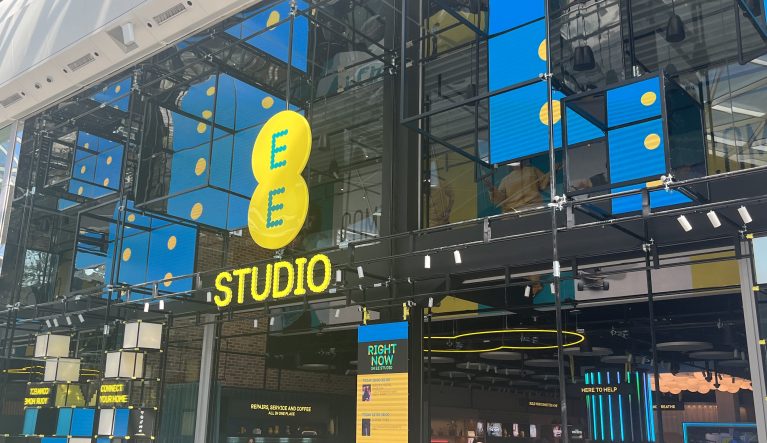
The news comes as the company unveils its new Experience store in Gateshead today, which will be the first of “more than ten” EE Experience stores that will open over the next year. 

The new type of retail store was announced last year at the launch of the White City Westfield London store. It is the UK’s largest telco retail space, which aims to reinvent the role of retail in the telco industry, “putting innovation, personal experience, and community front and centre”, as per the EE press release 

The store features numerous new areas, including ‘immersive digital spas’ and gaming areas, which EE believes will demonstrate why physical retail stores are still vital for the experience of the EE customer, despite our increasingly digital world. 

The stores aim to “create standout experiences that reflect the changing needs of our customers and the increasingly connected lives they lead,” said Bridget Lea, Managing Director of Commercial at EE.  

“As part of our ambition to become the most personal, customer-focused brand in the UK, we are proud to be offering our customers the chance to get up close and personal with the latest innovations and game changing technology that is right for them,” she continued. 

In October last year, EE underwent a huge rebrand, launching their new era of connectivity ‘New EE’, which encompassed new broadband and mobile packages (including the company’s most advanced broadband offering, EE Full Fibre 1.6Gbps), and an “everything app”, a new integrated platform offering a range of services from device sales and subscription management, available to everyone. 

The move follows an announcement last April, when BT announced EE would gradually become the “flagship brand for consumer customers”, while BT would become the main brand for the Enterprise and Global units. 

Keep up to date with the latest telecoms news by subscribing to the Total Telecom daily newsletter

Also in the news:
EU telcos join forces against Gigabit Infrastructure Act
Jio releases ‘Jio Brain’ AI platform
Ofcom issues further crackdown on spoof phonecalls

Ofcom probes Virgin Media over landline migration


News

The regulator says it wants to ensure that vulnerable customers are being treated fairly and that access to emergency services is not being jeopardised during the switch

Across the UK – and, indeed, across many parts of the world – steps are being taken to migrate customers away from traditional analogue landlines to IP-based digital landline services.

While for the vast majority of customers this process will cause little disruption, for a number of vulnerable customers who rely more heavily on the older system, the switch could be more problematic. Perhaps the largest issue is related to IP-based services reliance on a consistent power supply; if power supply is disrupted, such as during a storm, this can leave customers unable to contact emergency services.

Concerns related to these issues saw Ofcom call on operators to pause their landline migration process back in December last year, asking the operators to review their processes.

Today, Ofcom has gone one step further, launching an investigation into Virgin Media to examine whether they have been treating vulnerable customers appropriately.

“This investigation relates to concerns about Virgin Media’s compliance with two areas,” explained the regulator in a statement. “First, our rules require that Virgin Media must take all necessary measures to ensure uninterrupted access to emergency organisations. Second, our rules also require that Virgin Media establish and comply with effective policies and procedures for the fair and appropriate treatment of vulnerable consumers.”

Virgin Media defended itself, saying it has been working with Ofcom and the government to ensure the switch-over takes place smoothly and are following best practices.

“Last December we signed a Government-led charter and have paused all landline migrations, carried out an end-to-end review and will make further improvements to the measures we already have in place before switchovers restart,” said the company in a statement. “While telecoms companies like us have a crucial role to play in this switchover activity, it’s essential that telecare companies and local authorities also step up and meet their responsibilities to ensure everyone receives the support they need. We’re cooperating fully with the regulator’s investigation and will continue to work closely with the rest of the industry and other parties.”

Want to keep up with all the latest news from the UK telecoms sector? Join the ecosystem in discussion at this year’s Connected North conference live in Manchester

Also in the news:
EU telcos join forces against Gigabit Infrastructure Act
Jio releases ‘Jio Brain’ AI platform
Ofcom issues further crackdown on spoof phonecalls

Cost savings – not social pressure – are driving telcos towards green energy

The telecoms sector has an indisputable impact on the environment. Operating a reliable network requires vast amounts of power, the manufacture of network equipment and personal devices produces significant carbon emissions, and the swift obsolescence of these devices generates a constant stream of e-waste.

With access to telecommunications increasingly viewed as a human right, the expansion of networks and proliferation of devices has raised awareness of the sector’s environmental impact, placing companies under increasing pressure to show leadership in achieving sustainability goals and adopting greener solutions.

While this trend has been gaining traction for years, there has been a pronounced shift towards sustainable solutions in recent years – and the main driving factor has not been social pressure, but cost savings. Companies are increasingly finding that it is not merely financially viable to adopt greener solutions, but attractively cheaper.

This is particularly the case with regards to energy. Enrique Dans, a Senior Fellow at the Centre for European Policy Analysis (CEPA), told us: “From my perspective, the most important factor here is cost. We are witnessing a huge decrease in the cost of renewable energy.”

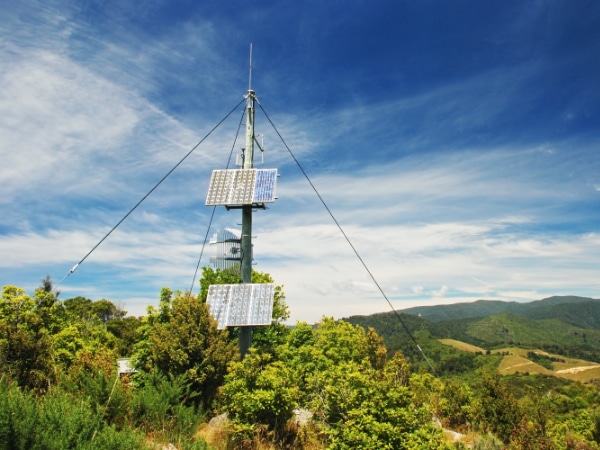
Dans highlights that the key technologies for solar energy – panels and batteries – have both plummeted in terms of overall cost, with solar panels now 99% cheaper than 40 years ago, and batteries 97% cheaper. The efficiency of both technologies has also increased substantially, meaning that it’s now feasible for an operator to power several antennas at an isolated location with just a few solar panels and a battery.

He adds that this is a particularly attractive option in emerging markets as it facilitates the construction of self-sufficient, off-grid sites to enable reliable rural connectivity, and notes that operators in these regions are often able to obtain public funds or even grants from international agencies for deploying sustainable infrastructure projects.

Installation is now the most expensive element of a deployment – formerly, it was materials such as solar panels. This means solar energy is now viable on a widespread industrial scale, which in turn makes it feasible to extend technologies that typically require more reliable energy supplies to areas without grid power. Dans notes that 5G consumes a lot of energy in areas where there is a constant stream of connections, but in an isolated area the base station can remain idle a lot of the time, meaning that it consumes less energy.

Simay Akar, IEEE senior member and the CEO & Founder at AK Energy Consulting, notes that there are still significant challenges in the way of achieving sustainability goals, particularly in emerging markets. She highlights companies needing to integrate renewable energy systems into their infrastructure, noting that investment in these systems will facilitate on-site power generation, reducing dependence on grid power.

The benefits that this can be deliver will be amplified by coordinated collaboration: “It is not an individual effort – they need to follow the policies to collaborate for Power Purchase Agreements…long-term to have more efficient, stable and cost-efficient electricity for their supply and needs. It’s also integrated to their grid – not every company has distributed systems, they’re mostly connected to grids. If they have a distributed generation, they need to make sure they are focusing on their green grid infrastructure. That requires a lot of investment in the green modernization, and they need to focus on smart grid integration in their systems.”

Akar states that it’s not enough for operators to merely invest in renewable energy resources – they must also optimise their network efficiency by upgrading their infrastructure with digital tools including artificial intelligence management systems, cloud technologies, and software defined networks. She notes that by combining these technologies with cooling systems, the physical hardware’s power consumption can be dramatically reduced, but adds that intelligent use of energy storage systems is also essential.

“It’s important to integrate energy storage solutions if using renewable energy resources, because it’s not [just] about the sustainable power we generate – this is also the business, they cannot have power outages.” Outages are not merely a matter of network availability – they are also a threat to data security, so it’s crucial for operators to understand the importance of energy stability and integrate these systems into their turnkey solutions – although Akar underlines the importance of selecting solutions that are suitable for both requirements and location.

“It’s harder and more challenging in emerging markets than developed markets, because you need to know your investment in this area for sustainability will be profitable”, says Akar. “When you have government support incentives, this clean energy transition is always more straightforward, but for emerging markets there are also considerations of what we could do, and what are the opportunities.”

Akar observes that green financing is a promising area, noting that there is sustainable funding available in the form of green bonds, public private partnerships, and private equity. While there are few incentives around this, so it cannot make up for support for a green transition from the sector, she says that these resources are made possible via international collaboration and are typically targeted at emerging markets, so could be instrumental in enabling a transition to cleaner energy in the sector.

As more companies become able to generate power via mini-grids and off-grid solutions, they frequently have surplus to their requirements. With intelligent use of storage systems, Akar explains that they can sell this back to the grid, or alternatively simply store the energy and use it as required to address infrastructure gaps. Even if there are no supportive mechanisms in their local area, through this kind of collaboration it becomes possible for companies to have access to cost efficient energy resources.

“Even if it looks more challenging for emerging markets, there are more opportunities for the future … because implementing these steps can [help] reach sustainability goals and energy sustainability while reducing their operational costs”, explains Akar. “When we talk about all these initiatives, it sounds like we’re investing a lot, but [whether] long term or short term, it’s not really. And overall, by reaching these sustainability goals, they’re also reducing their operational costs – this is important to see the opportunities, improve their energy supply, and make it more stable for their main business.”

The pressure is on – but the opportunities for real change are now viable. Dans observes that initial efforts around sustainability in telecoms amounted to little more than ‘greenwashing’, but underlines that the COP28 UN Climate Change Conference in Dubai, UAE delivered commitments that businesses are no longer able to skirt around. “Everyone was expecting a very low-profile conference, but in the end, the final documents are pretty stringent. They don’t say stop fossil fuels – of course, that was predictable. But the commitments for increasing renewable energy are huge, they’re really important. And they demand a lot of investment.”


MORE ARTICLES YOU MAY BE INTERESTED IN…

Telecel Global Services to receive funding to boost African operations

Telecel Group, an Africa-focused provider of digital and communications services, has announced a major investment in its wholly owned subsidiary Telecel Global Services (TGS), a leading telecommunication service provider for operators and enterprise clients globally with a particular focus on Africa.

Telecel Group and Africa Credit Opportunities Fund (ACOF), a sector-agnostic debt fund that invests in a range of credit opportunities in sub-Saharan Africa, have entered into a strategic partnership to invest US$20 million debt in TGS, to improve connectivity, digitalisation and e-commerce in West Africa and across the continent.

TGS provides a number of services, including cloud, firewall solutions, cybersecurity and data centres,  to more than 350 telecom operators through its hubs in New York, London and South Africa.

Details of how the partership will effect its aims have yet to be shared but it is no secret that Telecel Group has ambitions to expand in Africa, to develop digital and mobile offerings, or to buy all or part of operators on the continent, via its subsidiaries TGS, Telecel Mobile and Telecel Play.

The company made headlines last year in Ghana, where it obtained the green light in January 2023 to acquire 70% of Vodafone Ghana. The Telecel Group is now gearing up to fully rebrand Vodafone Ghana to Telecel by the end of February 2024. The rebranding will cover Vodafone Ghana and its three subsidiaries, Vodafone Wholesale, Vodafone Cash and Vodafone Ghana Foundation.

MORE ARTICLES YOU MAY BE INTERESTED IN…