Huawei betting big on telecoms’ Agentic AI revolution 

The Chinese tech giant says AI agents will not only help telcos become more efficient, but will open crucial new revenue streams 

For many years now, the global telecommunications industry has been racing to achieve the somewhat amorphous goal of ‘digital transformation’, focused on replacing hardware with software, shift workloads to the cloud, and incorporate digital technologies. Today, in the age of AI, this digital transformation has become a mere stepping stone to a far more paradigmatic shift for telcos: the move towards comprehensive digital intelligence, incorporating AI and automation throughout operations. 

For Huawei, this is less a change in direction than it is the natural next step of digital strategy. Digitalisation of telco functions offered the industry a huge wealth of data, as well as the operational agility to begin using it effectively.Huawei first introduced a formal AI strategy back in 2018, aiming to use AI as a catalyst for this data boom across the telco sector. At that time,  AI served primarily as a reporting or analytical tool, offering insights and limited automation.   

Fast forward to 2025, and rapid advances in AI technology have seen the development of AI agents, fully collaborative operational partners capable of making data-driven decisions and acting upon them fully autonomously. The agentic AI revolution is already underway and, according to Huawei, telcos cannot afford to be left behind.   

Digital twins and Agentic AI combine for intelligent networks 

Huawei’s core AI strategy in the agentic AI erais built upon the powerful, synergistic convergence of two key technologies:digital twinsandagentic AI.   

This fusion establishes a new operational paradigm where human expertise works in close collaboration with specialised, multi-layered AI agents. The digital twin acts as a virtual, real-time, and highly accurate replica of the physical network, creating a risk-free environment for experimentation.   

This virtual playground allows AI to explore complex scenarios, model failures, and test automated decisions without ever impacting live services. The AIthen uses this simulation capability to move beyond simply reactive fault resolution, instead becoming a fully autonomous, intelligent system capable of accurately predicting faults, self-healing, and self-optimising in real time.  

This powerful combination, creating a new operating model for telcos, was at the heart of Huawei’s demonstrations at this year’s MWC Barcelona, including breakthroughs for both fixed and 5G networks.  

Amulti-agent framework for O&M 

Operations and maintenance (O&M)is an area where this combination is particularly effective, with Huawei leveraging this dual strategy to achieve unprecedented levels of automation. The company’s approach is predicated on an AI multi-agent framework, where specialised intelligent agents operate and communicate across different network domains (e.g., transport, core, and RAN). These agents are tasked with specific functions, such as fault detection in a single domain or performance optimisation, but collaborate closely, using the predictive and simulation capabilities of the digital twin to contextualise their actions and resolve cross-domain issues. 

This collaborative structure enables a complete closed-loop automation chain, which Huawei describes as ‘perception–analysis–decision–execution. The agents work in real time to intelligently detect subtle anomalies, rapidly demarcate complex cross-domain faults, precisely localise the root cause of issues, and initiate automated closed-loop handling.  

For operators, the benefits are significant. Faults can be identified and resolved in seconds rather than minutes, resulting in a much improved experience for customers. One customer reported consumer churn was reduced by 57% after incorporating these agents. 

AI with OSS/BSS 

The benefits of AI agents extend far beyond network management. AI agents can also be tailored for critical Business Support Systems (BSS) and Operational Support Systems (OSS) roles, driving up efficiencies and even generating new revenue streams.   

Huawei’s work in this area is built on itsunified LLM Engine agent platform, which hosts numerous specialised agents. Human engineers can use simple language to present a problem to the agents on this platform and built-in Retrieval-Augmented Generation (RAG) capabilities ensure that the agents answer the prompt using predefined data sets. This not only ensures the answers generated represent best practice, but also ensures data security, providing greater control over the data these agents interact with.   

Alongside lightweight analytics models, these agents can assist in complex, mission-critical decision-making processes. They transform cumbersome, multi-step business workflows into streamlined, intelligent interactions. 

New revenue streams with business agents 

Leveraging a comprehensive AI-Native strategy, agents in the BSS domain can also see AI agents deployed across a range of revenue-generating contexts. For example:  

  • Customer Relationship Management (CRM): agents predict churn risk, and suggest hyper-personalised product bundles, moving marketing from mass campaigns to precise, data-driven targeting.In addition, in the B2B business domain, agents help account managers gain insights into lead opportunities, prepare materials for high-level visits, generate solutions, forecast profitability, and review contract risks, significantly improving business processing efficiency and accelerating business growth. 
  • Convergent Billing System (CBS):  offering Design Agents can reduce the time to market for packages, significantly accelerating operators’ business innovation and revenue realisation. Throughout the billing process, Huawei CBS enables Intelligent Bill Run Management, Intelligent Invoice Agent, Intelligent Dispute Resolution, and Intelligent Dunning and Payment. CBS deeply integrates AI into the entire billing and business operations process this creates a zero-confusion billing experience for end-users, solidifying the foundation for sustainable business growth driven by superior customer experience. 
  • Artificial Intelligence Contact Center (AICC):  AI is available for agents to help drive higher productivity and an enhanced employee experience, AI performs two broad functions, real-time call guidance and robotic process automation, through capabilities like post-call summarisation, suggest scripts to agents for targeted response, support agents with the right information through knowledge recommendations, AI-powered voice/chat/video bots for outbound marketing and leverages AI-powered insights about customers’ product and channel preferences to provide personalised marketing messages. 
  • Mobile Money: agents assist in fraud detection and complex transaction monitoring, assuring security while streamlining customer enrolment and service usage. 

Ultimately, we are seeing AI used to streamline core business processes, reduce the time-to-market for new services, and drive substantial new revenue streams through more precise commercial execution. For Huawei, agentic AI will form the foundation of a new telco operating and business model, one in which autonomous intelligence drives efficiency, resilience, and, crucially, sustainable growth in an increasingly competitive market. 

A benchmark for digital intelligence transformation in telecoms 

Huawei’s recent recognition at the World Communication Awards reinforces that its vision for digital intelligence is already taking shape with global operators. The company secured the Silver Award for Total Experience, demonstrating how intelligent agents can transform enterprise engagement and service assurance. By reducing business processing time and speeding up repair cycles, these agents enable faster, more responsive interactions for enterprise customers.    

The second Silver Award, in the Best Digital Transformation Programme category, points to structural change within network operations. By combining automated diagnostics with closed-loop execution, operators are cutting manual workloads and accelerating fault resolution, while strengthening the commercial foundations for new digital services.  

Together, the wins underline how far Huawei has come since first introducing its AI strategy in 2018. What began with analytics and automation has evolved into collaborative AI agents that elevate customer experience, reshape O&M, and drive commercial outcomes. For operators pursuing digital intelligence, these awards signal a mature and scalable model for AI adoption, and a glimpse of the new operating model the industry is moving toward. 

Beginning to look a lot like Christmas? Why “homes passed” is no longer enough


Viewpoint

At this year’s Connected Germany, Dr. Frederic Ufer launched the conference with a loud and-clear message: We must shift our focus from simply building networks—to activating them. This idea permeated every session and underscores a new path forward for the broadband industry.

We have long measured success by evaluating “homes passed.” But the reality is this: Just building a network doesn’t guarantee demand or value—and it certainly doesn’t generate recurring monthly revenues for the network operator or ISP.

Instead, activation, quality of experience, and genuine customer proximity determine whether investments pay off and whether fiber truly becomes part of people’s everyday lives.

That set the stage for my session, and the main question I would ask: How do modern network architectures enable exactly this kind of activation—technically, operationally, and economically?

Three Major Challenges From Old Architectures and How They Block Activation

In many European markets, active point-to-point (PtP) technologies and historically grown structures still dominate. Yet they bring three major challenges:

  1. Unmanaged customer demarcation points
  2. High ongoing costs due to many (often smaller) active outdoor cabinets
  3. Complexity caused by multi-vendor environments and siloed BNG architectures

The problem: Such networks are difficult to automate—and even harder to translate into exceptional customer experiences.

The Shift Begins With XGS-PON: Less Complexity, More Activation

The operators we work with—in Germany and internationally—have made a clear decision: New regions, as well as existing active PtP networks, are built or migrated exclusively to XGS-PON.

Why? Because PON immediately removes barriers:

  • Passive cabinets instead of costly active sites
  • Higher customer density per aggregation point
  • Controlled demarcation at the customer premises
  • End-to-end service quality
  • Lower susceptibility to faults
  • Measurably lower OPEX

In short: PON creates a simplified network that can be cleanly controlled and scaled. And that is the prerequisite for any serious activation strategy.

The Next Step: Consolidation Onto a Unified Software Platform

While Germany is still heavily focused on the technology transition, operators in other regions have already reached the next level: The traditional BNG is replaced by a disaggregated, software-based platform.

This platform consolidates everything within a single software platform:

  • Routing
  • BNG functions
  • Subscriber management
  • Provisioning
  • Local or centralized OLT management

The result:

  • One end-to-end workflow
  • Fewer systems, fewer errors
  • Easier technician training
  • Seamless upgrades, including future technologies like 50G-PON

Less infrastructure, more control. Less complexity, more activation.

Then Comes Robotics… Proof of Why Activation Matters Now

The keynote provided an example that brought everything together: The upcoming use of humanoid robotics requires millisecond-level latency—a technical requirement that neither DSL nor cable could ever meet.

The message was clear: Only activated fiber connections provide the foundation for AI, robotics, industry, healthcare, and everyday digital services.

If networks are built but not used, the entire economy loses.

Automation Is a Necessity, Not a “Nice-to-Have” (If You Want to Move From Reactivityto Proactivity)

In my session, I showed how operators are already working proactively today, rather than
waiting for fault reports.

With solutions such as Calix Operations Cloud, network operators can:

  • Detect “dying” optics early
  • Automatically monitor ports
  • Analyze patterns
  • Drastically reduce costly field technician deployments
  • Prevent customer tickets before they occur

Activation does not happen at the point of sale. It happens in operations.

Conclusion: If You Want Activation, You Must Simplify

“Homes passed” is an important foundation, but “homes activated” is what truly matters. Activation is only possible with architecture that enables automation, efficiency, and experience.

The path forward leads through:

  • XGS-PON
  • Consolidation onto a software platform
  • Automated operating models
  • Clear customer experiences instead of a technology-first mindset

With XGS-PON and automation, networks are not just built—but used, experienced, and
deployed to create real value.

This viewpoint was provided by Udo Abt of Calix who were sponsors of Connected Germany 2025. You will also be able to meet Calix at Connected Britain 2026, find out more here.

El Salvador selects Liberty Networks for first subsea cable

El Salvador’s telecommunications regulator, SIGET, has selected Liberty Networks to construct and deploy the country’s first subsea cable, in a move aimed at expanding international connectivity capacity and meeting rising demand.

In a statement, Liberty Networks said El Salvador currently relies entirely on terrestrial connectivity links with neighbouring countries and has no direct connection to international subsea cable systems, leaving its 6.8 million citizens dependent on cross-border infrastructure.

The 1,800km subsea cable is scheduled to become operational in the second half of 2028. Liberty Networks said it will announce a technology partner for the project in the coming months.

Ray Collins, Liberty Latin America’s SVP of infrastructure and corporate strategy, said the investment would provide a platform for long-term economic and digital development.

“This investment goes beyond building critical infrastructure; it lays the foundation for economic growth, innovation and opportunity for all Salvadorans,” he said.

“Liberty Networks has a long track record of managing complex subsea systems with exceptional reliability and performance, expertise that will ensure the successful deployment and long-term operation of El Salvador’s new subsea cable.”

UK plans to curb freeholder obstruction of fibre to flats rollout


News

The UK government has launched a consultation around the persistent challenges in deploying gigabit-capable broadband to certain property types and particularly to flats.

Despite the UK making significant strides towards its goal of delivering nationwide gigabit coverage by 2032 – currently reaching 89% of premises – deployment to flats, particularly those with leasehold tenure, continues to lag. Gigabit-capable broadband is seen as essential for economic growth, productivity, and international competitiveness, with the sector itself valued at £50 billion.

Analysis of data from May 2025 shows 86.1% of all residential premises have access to a gigabit-capable connection, but this drops to just 79.6% for flats. It is estimated 1.2 million flats in England and Wales lack gigabit access.

The existing legal framework is provided by the Electronic Communications Code (the Code), which is intended to facilitate consensual agreements between network operators and landowners. The Telecommunications Infrastructure (Leasehold Property) Act (TILPA) 2021 was introduced to specifically address MDU issues, providing a fast-track court route when landowners fail to respond to repeated requests for access.

However key barriers to rollout remain, including, identifying the correct party to negotiate Code rights with and a lack of incentives for freeholders to address deployment requests from network operators.

The proposed policy aims to directly address these barriers by strengthening the leaseholders’ ability to initiate deployment requests. The core proposal is to:

> Imply a new right into an existing lease, allowing a residential leaseholder to request a gigabit-capable connection from their relevant freeholder.
> Impose a corresponding duty on the freeholder not to unreasonably refuse such a request.

This new mechanism is intended to be complementary to the Code, acting as a “nudge measure” to ensure the appropriate freeholder engages with a network operator and negotiations commence promptly.

The proposed policy would apply to any residential leaseholder in a building with two or more dwellings and covers any connection capable of delivering broadband access services at speeds of at least 1,000 Megabits per second (Mbps).

The consultation on these proposals runs until February 2026.

Connected Britain 2026 returns to the UK next September. Confirm your involvement early. Visit the website for more information: https://totaltele.com/connectedbritain

Total Telecom are testing AI tools to aid content creation – let us know if you spot any errors

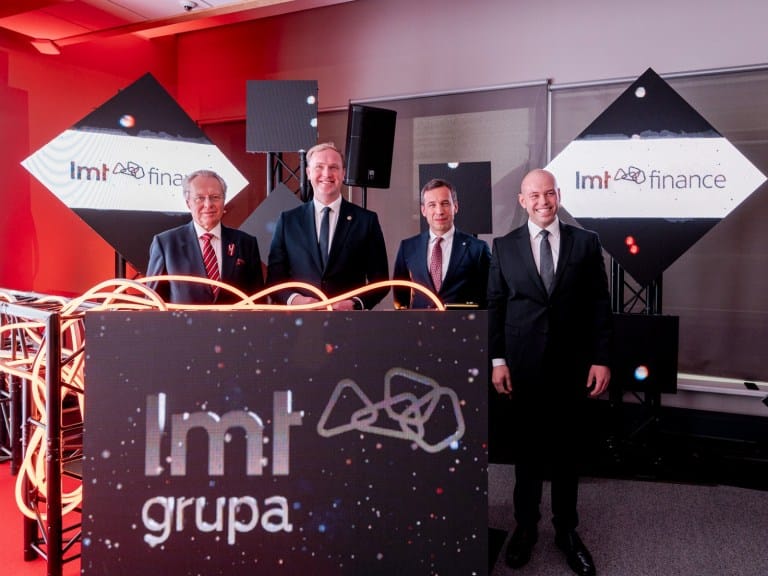
LMT Group completes strategic pivot, transforming from telco operator to technology company

LMT has long ceased to be just a mobile network operator, but rather an ICT company that offers exportable solutions. Now, LMT is purposefully shifting into a multi-sector technology company ecosystem – the LMT Group. The Group comprises several companies and branches, including LMT IoT, LMT Defence, LMT Systems, LMT Retail & Logistics, LMT Finance, LMT Innovations, and Santa Monica Networks.

LMT Group’s strategic diversification is firmly rooted in its historical engineering DNA, which originated with the founding team from Latvia’s largest and oldest radio electronics company. This capability led the company to launch innovation projects across verticals like defense, IoT, and mobility. The result of this proactive strategy is a substantial change to the company’s portfolio – communications now accounts for 50% of total business volume, with the other half generated by these new strategic directions.

“Being a telecommunications operator in a relatively small European market limits the number of customers available. Thus, LMT’s growth depends on diversification. A seminal moment was the introduction of 5G. There were significant industrial promises about its capabilities, yet no one had actually seen it deployed. This gap became the biggest driver of our innovation strategy. Today, we find ourselves moving beyond ‘soft’ services and IT integrations toward physical products. We repeatedly encounter critical unmet market needs that force us to build the solutions ourselves. This was the exact challenge that led to our IoT shortcut,” says Ingmārs Pūķis, VP & Member of the Management Board at LMT.

The latest LMT Group product – the recently launched IoT Shortcut – is the smallest mobile data module in the world for sensor equipment, offering universal connectivity options for any manufacturer’s IoT devices worldwide. IoT Shortcut enables quick integration of a mobile data connection across a wide range of sensor equipment. A significant added value is the software created by the LMT Group, which automates data processing, integration, and connectivity, and provides cloud data services with a customizable customer platform and application. The module also features very low energy consumption, ensuring the sensor device’s battery lasts up to 10 years.

The module is currently being tested, and confirmed partners include the wireless sensor manufacturer SAF Tehnika, the bark beetle activity monitoring software Spruceful, and the construction monitoring specialist Adventum Tech.

The IoT Shortcut team is also in negotiations with Europe’s largest chip manufacturer, German concern Infineon Technologies AG. Planned cooperation involves integrating the LMT module into Infineon Edge AI solutions. This technology will allow local, on-device AI data processing, which will significantly reduce data transmission volume, improve reaction speed, and extend battery life for IoT sensor devices.

About LMT Group

LMT Group has evolved from Latvia’s leading mobile communication operator, LMT, into a technology innovation leader and a multi-sector technology company ecosystem. As a market leader in Latvia, LMT offers a full spectrum of high-quality telecommunication services for diverse market segments, including civilian, business, academia, and military. It transforms the 5G network into advanced solutions, focusing on defence and national security technologies, smart cities, IoT platforms, sensors, and mobility. The LMT Group unites companies such as Latvian Mobile Telephone (LMT), LMT Retail & Logistics, LMT Finance (Latvia’s first TechFin company), and the IT solutions company Santa Monica Networks.

World Communication Award Winners 2025


World Communication Awards

Total Telecom is thrilled to unveil the exceptional winners of the 2025 World Communication Awards (WCAs)

For over two decades, the WCAs has been the definitive global benchmark for technological excellence and industry leadership. With a rigorous, independent review panel of over 80 judges, the WCAs ensure that every award recognises genuine, real-world impact and future-defining innovation that is transforming the global telecom ecosystem.

This year’s Award winners celebrate companies, big and small, from all around the world, that are going above and beyond for their customers.

A huge congratulations to all of our worthy winners, all of which can be found below:

5G Award

Winner: Singtel, in partnership with Ericsson, for Singtel 5G+

This year’s 5G Award category saw an incredibly strong field, showing 5G finally coming of age.

The Singtel successfully redefined network value by utilising slicing, including integrating a Security-as-a-Slice feature that is actively blocking over 6.6 million threats monthly for its customers.

The judges said the entry showed “the democratization of consumer network slicing, turning a technical capability into everyday customer value.”

(Silver Award: KT, AICT Company)


Access Innovation

Winner: Ericsson and Telstra for the world’s first 5G triple-band FDD Massive MIMO

The Access Innovation category represents the pinnacle of engineering ingenuity, showcasing innovation in the competitive race to build next-generation networks.

The winning solution from Ericsson, used by Telstra, replaces multiple legacy radios with a single unit, dramatically boosting capacity while simplifying network deployment and reducing power consumption.

The judges described the technical innovation as “exceptionally strong” and noted its importance as a foundation for future RAN intelligence.

(Silver Award: Rakuten Symphony, Rakuten Site Management’s Fiber Manager)


AI Innovation

Winner: Jio Platforms for JioBrain

The AI Innovation category showcases the cutting edge of network intelligence, recognising the transformative impact AI is having on the telecoms industry.

The JioBrain was a standout entry. Built entirely in-house, the solution is already processing a massive 350 billion data points daily across Jio’s operations. The scale of its results was highly impressive, delivering 40% fewer outages, 30% lower OPEX, and 20% higher ARPU across 200+ million 5G users.

(Silver Award: Chunghwa Telecom)


Best Digital Transformation Programme

Winner: Ericsson and IOH for their Digital Monetization Platform

This Award celebrates projects that tackle complexity head-on, delivering profound and measurable improvements to both operations and customer experience.

Ericsson and Indosat Ooredoo Hutchison successfully unified a highly fragmented BSS landscape, migrating over 88 million subscribers to a single, end-to-end digital monetisation platform.

This solution not only improved service innovation and process agility but also opened up vital new revenue streams for IOH.

(Silver Award: Jazz and Huawei)


Best Network Evolution Initiative

Winner: Colt Technology Services for their global Optical network

This category celebrates vision and ambition when it comes to network design. Colt demonstrated a highly innovative, multi-faceted approach to network evolution, leading trials on quantum-safe network security while also delivering Terabit-scale capacity at a global scale.

The judges praised this comprehensive approach, suggesting the company is leading the way with their preparation for a post-quantum world.

(Silver Award: Telefónica Global Solutions)


Best operator in a Growth Market

Winner: Lumitel

The Best Operator in a Growth Market category celebrates operators who successfully navigate the myriads of unique challenges presented by developing markets.

According to one judge, Lumitel presented “an extraordinary example of how a telecom operator can transform one of the world’s most challenging markets [Burundi] into a digitally connected society”, adding that the operator had “not only met but exceeded its objectives, proving that connectivity can be a lifeline for national progress.”

(Silver Awards: Smart Axiata)


Best Wholesale Operator

Winner: Orange Wholesale

This was a highly competitive category, bringing together network giants from around the world.

Orange Wholesale showed remarkable agility in handling their customers’ evolving needs, building unique solutions leveraging technologies from eSIM to satellite. This is a global leader that has evolved its business model through a strong blend of customer-led innovation, technology deployment, and collaborative partnerships.

(Silver Award: Colt Technology Services, Wholesale SIP) 


Beyond Connectivity Award

Winner: VEON for JazzCash

This category celebrates companies that go above and beyond for their customers, delivering value and support far outside the scope of their traditional business.

The JazzCash mobile money platform is doing just that, playing a key role in the lives of 48 million people in Pakistan, supporting financial inclusion and driving the national economy. The judges praised the solution’s broad impact, calling it a “great case of going beyond connectivity to deliver systemic change” and building a solution of national importance.

(Silver Award: PT Telkomsel)


Cloud Award

Winner: Jio Platforms for its Cloud Platforms and Private MEC

According to one of the judges, Jio Platforms entry for this category showed the company had “raised the bar in telco cloud innovation, offering a unique solution that is as wide-reaching as it is specialised”.

With a combination of sovereign design, massive real-world deployment, measurable business and customer outcomes, and proven sustainability, this entry was the clear winner in this category.

(Silver Award: Rakuten Symphony for Rakuten Cloud) 


Connected Communities Award

Winner: Airband for its next generation Fixed Wireless Access

This category celebrates agile providers who use cutting-edge technology to connect communities left behind by traditional infrastructure rollout.

Airband has showed impressive progress in this regard, with its upgraded Fixed Wireless Access solution offering a ten-fold improvement on its previous iteration. The judges were highly impressed by the “genuine technological innovation” on show and the scale of the impact being achieved for underserved communities.

(Silver Award: Fibrus)


Crisis Response Award

Winner: Palestine Telecommunications Company – Jawwal

This category celebrates those companies that continue to support their customers in exceptionally difficult circumstances.

This Jawwal  has showed incredible resilience and operational agility in keeping connectivity available for customers despite 80% of its network being damaged and 2 million people being displaced. From the deployment of FWA to the reuse of copper networks, this organisation continues to demonstrate significant technical skill and flexibility in keeping its customers online.

(Silver Award: Prima Limited, ICN1 Earthquake crisis response in Vanuatu)


Cyber Security Award

Winner: Jio Platforms for its Quantum-Safe Security Suite

This award recognises the critical importance of future-proofing digital infrastructure by addressing both current and imminent threats.

The Jio Platforms’ Quantum-Safe Security Suite demonstrated both a deep understanding of the current cybersecurity landscape and the huge challenges on the horizon. Judges said the entry’s “foresight, R&D excellence, and rapid execution has set a new industry benchmark – and placed India at the forefront of global cyber resilience”.

(Silver Award: Bridge Alliance and Aeris Communications, Aeris IoT WatchtowerTM)


Enterprise Service of the Year

Winner: China Broadcasting Network & AsiaInfo Technologies for their Smart Wind Farm private 5G network

Considered a “standout submission” by the judges, this category’s winner combines bespoke engineering with AI-driven interference management and a unique network architecture, to deliver impressive results at a Smart Wind Farm.

One judge commented that this was the “benchmark case of how CSP-enabled private networks can unlock new efficiencies, safety standards, and economic benefits for enterprise businesses”.

(Silver Award: Singtel, Singtel 5G+ Priority and Enterprise Mobile Protect) 


Future Award

Winner: Singtel for its Quantum-Safe Network

From innovative solutions to novel business models, the future award celebrates companies looking to capture the opportunities that are only just emerging.

Singtel’s Quantum-Safe Network blends technical refinement with commercial availability, providing a solution to one of the biggest challenges on the horizon for telcos: building future-ready cyber resilience at scale.

(Silver Award: Cohere Technologies)


People and Culture Award

Winner: Viettel Group

This category looks to highlight organisations that place employee well-being and a culture of continuous learning at the core of their strategy, driving both sustainable growth and technological excellence.

With a comprehensive 360° care model focused on employees’ physical, mental, social, and spiritual well-being, Viettel showed incredible dedication to staff, prioritizing reskilling and upskilling over layoffs.

(Silver Award: Deutsche Telekom – Europe Segment, DT Europe Talent Powerhouse)


Platform Award

Winner: Singtel for the Paragon Platform

Singtel’s Paragon Platform aims to help telecoms providers augment their service offerings and create new revenue streams beyond connectivity. With impressive results so far, this top-notch platform sets the standard for 5G orchestration and business model transformation.

(Silver Award: Rakuten Symphony, Rakuten Cloud-Native Platform)


Satellite Telecoms Award

Winner: Telefonica Global Solutions

Telefonica Global Solutions successfully combines GEO, MEO, and LEO satellite capabilities into a single service model, providing customers with a self-managed, cloud-style orchestration interface for real-time control across orbits.

The judges were highly impressed by the commercial results, noting the solution demonstrates that “satellite can scale like cloud, serve like fibre, and impact lives far beyond the reach of terrestrial networks.”

(Silver Award: VEON and Kyivstar, Kyivstar/Starlink)


Social Contribution Award

Winner: Helium

In a category all about giving back to the community you serve, Helium impressed by flipping the traditional telecom model, empowering individuals to become network builders and expand connectivity access from the ground up.

The judges praised the company’s disruptive business model, stating that it “stands out for reimagining connectivity as a shared resource rather than a corporate commodity, creatively redistributing both the responsibility and the rewards of building digital inclusion.”

(Silver Award: Moldcell Foundation)


Submarine Networks Award

Winner: EllaLink

A new category this year, aimed at shining a light on some of the world’s most critical and often underappreciated infrastructure.

EllaLink has not only been working hard to expand and upgrade its network, but also to introduce new sensing technology to support marine researchers. This unique combination of market impact, engineering excellence, and societal contribution set the winner apart.

(Silver Award: Telin)


Sustainability Award

Winner: Vodafone & Closing the Loop, One for One  

Sustainability is a huge topic at the World Communication Awards, attracting many entries from across the industry. Vodafone’s partnership with Closing the Loop showed major impact with their focus on e-waste – a significant challenge across the sector.

With very impressive results, the judges said this entry was an excellent example of an operator embedding sustainability directly into its core customer offering.

(Silver Award: KT, AI-based ES Orchestrator)


Total Experience Award

Winner: Sparkle

The competition in the Total Experience Award category was exceptionally strong this year, underscoring the vital importance of customer-centric strategies in today’s market.

Sparkle provided a truly holistic approach, integrating AI-based automation and real-time digital tools with a uniquely personalized, human-centered service model. For this company, CX is a company-wide mission, driving measurable outcomes and long-term loyalty.

(Silver Award: China Mobile (Guangdong) & Huawei, AI+BOSS)


Next Gen Award

Winner: Chiago Akpata – Senior Manager, Regulatory Affairs at Bayobab

This category is dedicated to the future leaders of the telecoms sector, highlighting those whose impact far exceeds their years.

Chiago Akpata has showed incredible skill in navigating the complex intersection of telecommunications, digital infrastructure, and public policy, having a lasting and transformative effect on the business.

(Silver Award: Sam Sham, RETN)


Startup of the Year Award

Winner: nodeQ

This category is all about the potential to do something special and impact the telecoms industry at scale.

nodeQ showcased their potential to do just that, developing cutting edge technology to better map telcos shifting security needs and prepare for an uncertain future.

Judges described this company as providing “world-class deep-tech with a significant first-mover advantage.”

(Silver Award: A5G Networks)

Ofcom clears the way for satellite-to-smartphone services


News

Ofcom has given the green light for mobile network operators to deliver ‘direct-to-device’ (D2D) satellite services to ordinary smartphones, clearing the regulatory pathway for calls, texts and data to be delivered from space across the UK.

The regulator’s final decisions authorise the use of mobile spectrum below 3 GHz for D2D links, with safety guards in place to prevent harmful interference with radar and air traffic control systems.

The regulator confirmed that individual consumers will not need a separate licence to receive satellite signals, a move designed to encourage mass-market adoption and help eliminate the UK’s patchwork of mobile notspots. Ofcom said the change could provide lifeline connectivity in remote areas without terrestrial coverage, and backup connectvity if traditional mobile networks suffer an outage.

Operators must, however, apply for a change to their existing licences before offering D2D services, and the framework includes technical and operational safeguards to limit cross-border interference with neighbouring countries’ networks. The framework aims to balance rapid deployment with protections for aviation and national-spectrum users.

Commercial partnerships focussed on D2D services are already well underway. Virgin Media O2 has signed with SpaceX’s Starlink as part of plans to begin rolling out messaging and data services by early 2026, while Vodafone has partnered with AST and has already demonstrated a satellite video call from an area without terrestrial coverage.

Exactly how these D2D partnerships will be monetised remains to be seen.

Ofcom’s group director for spectrum, David Willis, framed the initiative as opening new opportunities for rural communities and economic growth.

“Mobile operators are already pressing ahead to make the UK the first nation in Western Europe to have widespread access to this technology, which will see remote and rural areas be better connected than ever before, unlocking opportunities for communities, businesses and economic growth,” he said.

Keep up to date with all the latest telecoms news with the Total Telecom newsletter

Also in the news
Connected Britain Award winners 2025 announced!
Netomnia announces ‘powerful and ambitious’ rebrand ahead of Connected Britain
VodafoneThree drops Samsung, relies on Nokia and Ericsson for £2bn network upgrade

Sparkle Strengthens Its Presence in Chile with a New Point of Presence in Santiago

Rome, 4 December 2025

Sparkle, the first international service provider in Italy and among the top global operators, announces the expansion of its network in Chile with the opening of a new Point of Presence (PoP) in Santiago. With this infrastructure, adding to the existing nodes in Santiago and Valparaiso, Sparkle provides greater diversification and redundancy for local customers and further enhances connectivity across South America.

Located at Ascenty, a cutting-edge and rapidly expanding hub, the new node – equipped with a 400GBE-enabled router for IP Transit services – is fully integrated with Sparkle’s global Tier-1 IP backbone Seabone (AS6762), enabling secure and scalable access to the Big Internet.

In addition, thanks to the Curie submarine cable, which directly connects Chile to California, Sparkle can offer ultra-high-speed, low-latency links to the United States. Combined with other terrestrial and submarine networks – such as the “digital highways” Monet, Seabras-1, and soon Manta in the Atlantic – this ensures diversified routes between South and North America for full redundancy.

At the new PoP, network operators, ISPs, OTTs, content delivery networks, and content and application providers can access capacity and IP transit services, as well as advanced solutions including DDoS Protection – to safeguard networks against cyberattacks – and Virtual NAP, enabling virtual access to leading Internet Exchange Points (IXPs) without the need to invest in proprietary infrastructure.

With this expansion – bringing the total number of Points of Presence in the Americas to 54, distributed across Argentina, Brazil, Chile, Colombia, Mexico, Panama, Peru, Puerto Rico, the United States, and Venezuela – Sparkle strengthens its leadership in Latin America, offering a robust and secure global network ready to support the growing demand for international connectivity.


About Sparkle

Sparkle is TIM Group’s global operator, first international service provider in Italy and among the top worldwide, offering a full range of infrastructure and global connectivity services – capacity, IP, SD-WAN, colocation, IoT connectivity, roaming and voice – to national and international Carriers, OTTs, ISPs, Media/Content Providers, and multinational enterprises. As a leading player in the submarine cable industry, Sparkle owns and manages a network of more than 600,000 km of fiber stretching across Europe, Africa, the Middle East, the Americas, and Asia. Sparkle’s sales team has a global presence, with representatives in 32 countries.

Find out more about Sparkle following its X and LinkedIn profiles or visiting the website tisparkle.com


Media Contacts:

sparkle.communication@tisparkle.com

X: @TISparkle

Intracom Telecom and Geolinks Demonstrate Multi-Gigabit Performance in Landmark U.S. Trial

Intracom Telecom, a global telecommunication systems and solutions vendor, and GeoLinks, a leader in next-generation fixed wireless, successfully completed and unveiled the results of a breakthrough joint field trial in Las Vegas during WISPAPALOOZA 2025, the flagship conference for Wireless Internet Service Providers (WISPs). The trial achieved multi-gigabit performance on Intracom Telecom’s Fixed Wireless Access platform and confirmed the commercial and operational readiness of GeoLinks Local Multipoint Distribution Service (LMDS) spectrum. As the largest LMDS license holder, GeoLinks is now empowering WISPs nationwide to deliver fiber-like, multi-gigabit services over long distances.

This successful trial advances GeoLinks commercial use of its licensed spectrum within its own footprint and empowers WISPs across 1,300 U.S. counties to expand service delivery using FCC-licensed LMDS spectrum, known for its superior speed, reliability, and security. GeoLinks licensed spectrum portfolio is now fully available to WISPs, and additional details are at GeoLinks.com/LMDS.

Demonstrated Live at WISPAPALOOZA

The platform showcased exceptional capabilities by connecting to terminal devices across Las Vegas, achieving 1.6 Gbps aggregate throughput at a range of 5 miles in the 29/31 GHz spectrum. This demonstration proves that licensed mmWave FWA creates a secure, interference-free, and fiber-like network experience.

Watch the video news release here: Fiber-Like Speeds Anywhere | Intracom Telecom & GeoLinks

“GeoLinks is redefining what’s possible in fixed wireless,” said GeoLinks CEO Kevin Hetrick. “Coming out of WISPAPALOOZA, the message is clear: The technology and spectrum are available right now for WISPs to accelerate deployment, eliminate interference, unlock new revenue opportunities, and deliver fiber-like, enterprise-grade service to the communities they serve.”

“We are excited and honored to join forces with GeoLinks in bringing licensed spectrum access to WISPs,” said Kyriakos Vergos, CEO of Intracom Telecom USA. “Our WiBAS G5 Smart Base Station, combined with GeoLinks spectrum, will help deliver reliable, multi-gigabit performance over great distances, providing fiber-grade connectivity to markets that do not have immediate or cost-effective access to fiber.”

Intracom Telecom’s WiBAS™ G5 Smart Base Station features a unique, hybrid-massive-beamforming design, with advanced algorithms that dynamically allocate capacity, maximize concurrent subscriber connections, and simplify installation and provisioning. Its robust, easily deployable design ensures reliability even in challenging environments, enabling service providers to scale quickly and efficiently. With GeoLinks licensed spectrum assets and WiBAS™ G5 now available to WISPs nationwide, high-speed connectivity and digital inclusion for all move closer to reality.

NTT DATA Announces Six New AI-Powered Cyber Defense Centers to Strengthen Cyber Resilience and Counter an Evolving Threat Landscape

LONDON – Dec 3, 2025 – NTT DATA, a global leader in AI, digital business and technology services, today announced the launch of four next-generation autonomous Cyber Defense Centers powered by AI technologies in Bengaluru, Hyderabad, Noida and Mumbai, with two additional centers set to open in Birmingham (UK) in Dec 2025 and Dallas (USA) by Jan 2026.

These purpose-built Cyber Defense Centers reinforce NTT DATA’s strategic focus on modernizing cybersecurity for the AI era. They represent a shift from traditional centralized security operations to a distributed, AI-driven, hyper-automated model that learns from past incidents and human expertise to automate, triage and prioritize alerts, accelerate investigations and incident response, contain threats faster and support regional data privacy and cybersecurity regulations.

According to Omdia, autonomous Security Operations Centers (SOCs) will become the industry standard within two years, positioning NTT DATA as a leading example of how the industry is evolving toward autonomous cyber resilience.

Next-generation technology meets global and local expertise

The next-generation Cyber Defense Centers combine human security experts and AI agents to defend against evolving cyber threats. AI agents autonomously triage, analyze and hunt potential incidents, reducing investigation time by up to 60%, enabling teams to contain threats earlier in the kill chain. By automating high-volume, repetitive tasks, these capabilities free security analysts to focus on higher-value work such as digital forensics, containment and recovery.

Each center is purpose-built with cutting-edge technology. Key features include:

  • Autonomous agent-based cyberdefense and AI-driven threat orchestration to accelerate detection and response cycles.
  • Real-time global threat intelligence and localized threat hunting tailored to each region’s unique threat landscape.
  • A comprehensive portfolio of offerings, including Managed Detection & Response (MDR), Incident Response, Threat Intelligence, Compliance & Regulatory Advisory and Cloud & OT Security Services.
  • Proactive identification of new and emerging threats, along with a clear view of cyber risks and recommendations for reducing them. • Significant risk reduction & operational efficiency improvements, including up to 90% alert reduction and 60% faster mean time to detect and respond.
  • Powered by industry-leading technology platforms that leverage NTT DATA’s strategic partnerships.

“Our clients’ innovation and growth are driven by rapid adoption of cloud and AI technologies that must be secured at speed and scale,” said Charlie Li, Head of Cloud and Security Services, NTT DATA, Inc. “Our expanding footprint of next-generation Cyber Defense Centers enables us to meet the rising demand for AI-powered cybersecurity services, defend against AI-enabled threats and help our clients advance their edge-to-cloud digital transformation journeys.”

Global network with local expertise

The four Cyber Defense Centers in Bengaluru, Hyderabad, Noida and Mumbai, expand NTT DATA’s global cybersecurity footprint across five continents, supported by more than 40 delivery centers and SOCs in over 50 countries.

Together, these centers enhance coverage for more than 1,200 global clients by combining regional expertise with agentic AI, advanced automation and next-generation technologies.

The centers provide 24×7 unified threat monitoring, detection, response and incident management and are fully integrated with NTT DATA’s SecOps global network, delivering AI-driven insights and threat intelligence through a single dashboard for identification, detection, protection and recovery.

Additional Cyber Defense Centers will launch in Birmingham (UK, Dec 2025) and Dallas (USA, Jan 2026) further strengthening regional capabilities across NTT DATA’s global network.

These “glocal” Cyber Defense Centers operate in collaboration with regional Computer Emergency Response Teams (CERTs), National Cyber Security Centres (NCSCs) and government agencies to help clients meet local data privacy and AI-regulation requirements.

“Today’s threat environment demands intelligent, adaptive defenses that combine global insight with local expertise to help organizations continuously reduce risks and build resilience,” said Sheetal Mehta, Head of Cybersecurity, NTT DATA, Inc. “With the addition of these AI-powered Cyber Defense Centers, we are advancing our vision of a globally interconnected cyberdefense network that combines cutting-edge technology, strategic partnerships and world-class talent.”

Benefits for clients

  • Next-generation AI-powered cyberdefense: As adversaries adopt AI and autonomous tactics, AI-enabled platforms help clients confidently address threats, navigate change confidently and build long-term digital trust. 
  • Enhanced regional coverage with global intelligence: Global enterprises receive world-class unified detection and response services with local and global capabilities, bringing global threat intelligence closer to business operations and ensuring compliance with regional data privacy and regulatory requirements.
  • Expanded talent pool: Increased capacity of global and local cybersecurity professionals delivered through these new centers allows NTT DATA to scale human expertise alongside intelligent automation.
  • Secure digital transformation and growth: Clients can accelerate edge-to-cloud transformation while continuously protecting their expanding digital ecosystems.

More information can be found here Agentic AI for SecOps | NTT DATA.

About NTT DATA

NTT DATA is a $30+ billion trusted global innovator of business and technology services. We serve 75% of the Fortune Global 100 and are committed to helping clients innovate, optimize and transform for long-term success. As a Global Top Employer, we have experts in more than 50 countries and a robust partner ecosystem of established and start-up companies. Our services include business and technology consulting, data and artificial intelligence, industry solutions, as well as the development, implementation and management of applications, infrastructure and connectivity. We are also one of the leading providers of digital and AI infrastructure in the world. NTT DATA is part of NTT Group, which invests over $3.6 billion each year in R&D to help organizations and society move confidently and sustainably into the digital future.

Visit us at nttdata.com