
Telin launches network API-based authentication for enterprises

Telkom Indonesia’s intermational arm Telin announed on Thursday it is partnering with IPification to commercialize its Mobile Network Verification (MNV) solution, which leverages Telkom’s network APIs to authenticate users without the need for OTPs.

The MNV solution, which based on IPification’s mobile identity technology, has already been launched commercially by Telkom’s mobile unit Telkomsel, and is now available across more than 40 mobile networks worldwide.

Telin said its global network reach and operator relationships enables enterprises to authenticate users with a single user tap in which they consent to the use of the network data.

Network API-based authentication has been touted as a more secure and convenient alternative to SMS OTPs, which are vulnerable to phishing scams, SIM swaps, and bot attacks.

« Digital identity works best when it’s built into the infrastructure users already rely on, » said IPification CEO Stefan Kostic. « Together with Telin, we’re enabling authentication that happens at the network level – removing unnecessary friction while giving enterprises a more secure and reliable way to verify users. »

Telin said the MNV service enables organisations in areas like finance, e-commerce, gaming, OTT platforms and public services make authentication easier for users, as well as protect themselves from phishing and account takeovers. It also gives mobile operators a potential new revenue stream by turning network intelligence into high-value API services.

“This is an important development for the OTT developer community and mobile network operators, as it enhances authentication options while complementing existing SMS-based authentication revenue,” said John Tolton, SVP for messaging mobile identity and voice at Telin.

Telkomsel has been a member of the GSMA Open Gateway initiative for standardised network APIs since February 2024. The same month, it launched Number Verification, SIM Swap and Device Location services based on CAMARA Open Gateway APIs. Telkomsel formed an alliance with rivals (and fellow Open Gateway members) Indosat Ooredoo Hutchison and XLSmart in September 2025 to adopt a unified telco API protocol based on the CAMARA standard.

Finnfund and CREI support sustainable energy for telecoms in South Sudan

Finnfund, the Finnish development financier and impact investor, says it has made a follow-on investment in a company called Communication & Renewable Energy Infrastructure (CREI) to scale up sustainable telecom energy infrastructure in South Sudan.

CREI is an established asset management company holding a portfolio of telecom tower and renewable power assets across Africa and Asia. It specialises in deploying hybrid energy solutions for mobile network operators.

Finnfund explains that its financing supports the modernisation and expansion of solar-hybrid energy systems for MTN South Sudan’s 499 telecom sites under a ten-year energy as a service (ESCO) contract.

Indeed, Finnfund says the project has already modernised 490 sites and reaches over four million customers, exceeding initial targets. The telecom stations are not only operational but consistently powered, allowing anyone with a mobile device to make a call, browse the internet, or access digital services.

The overall network coverage has expanded from 69% to 80% of the population over the past three years, reflecting the broader market effect of CREI’s infrastructure upgrades.

The US$5 million investment is backed by the European Fund for Sustainable Development Plus under the Africa Connected programme, which aims to accelerate digital inclusion and climate resilience. In total, Finnfund says it has now invested US$10 million dollars in CREI.

By modernising telecom infrastructure with solar-hybrid energy systems, not only is CREI enabling mobile networks to reach previously underserved communities, but the shift from diesel generators to solar-hybrid systems has led to a 43% reduction in carbon emissions and a significant drop in noise and local air pollution. The renewable energy ratio has risen from 11% to 42%, and, with further modernisation underway, even greater sustainability gains are expected.

CREI also invests in community development, including solarised maternity wards that previously operated without reliable access to electricity, providing clean energy to essential healthcare facilities and enhancing maternal and neonatal health services.

CREI has also launched a gender action plan aimed at increasing female representation across technical and engineering roles, enhancing workplace benefits, and ensuring equitable access to training and leadership, and career advancement opportunities.

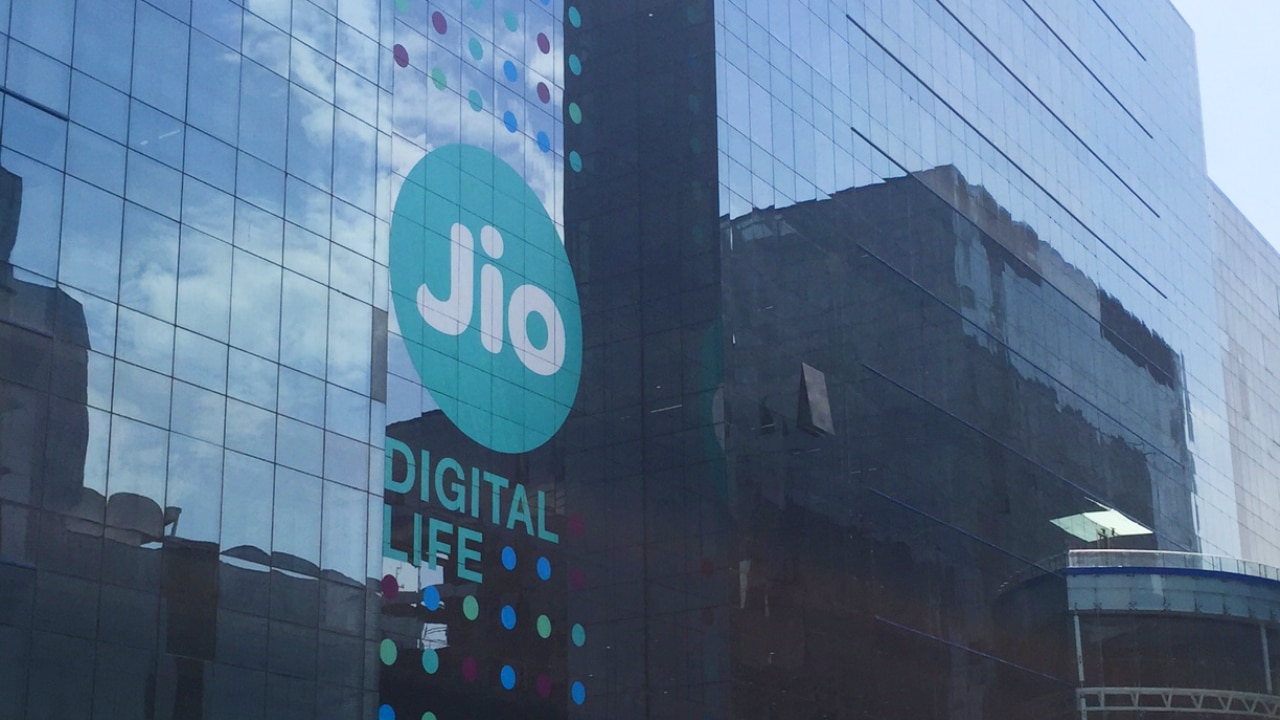
‘Nation building’: Reliance Jio to invest $110bn in AI data centres

News

The move comes as the company pledges “to embed AI across manufacturing, logistics, energy, finance, retail, agriculture and healthcare” throughout India

Reliance Industries, owner of India’s biggest telco Reliance Jio, has announced plans to invest $109.8 billion over the next seven years to expand India’s AI data centre footprint.

Speaking at the AI Impact Summit in New Delhi today, Reliance owner and Asia’s richest man, Mukesh Ambani, said that the investments would see the conglomerate deploy sovereign gigawatt (GW)-scale data centres to handle the country’s growing demand for AI.

“I would like to announce that Jio will play an even bigger role in India’s AI transformation,” said Ambani. “This is not a speculative investment. It is not for chasing valuation. This is patient, disciplined, nation-building capital, designed to create durable economic value and strategic resilience for six decades to come.”

During his speech, Ambani said the biggest bottleneck for AI in India was the limited availability of compute infrastructure, which risked driving up costs for consumers. By rapidly expanding the availability of this infrastructure, Reliance hopes to make AI affordable across the country.

“India cannot afford to rent intelligence. Therefore, we will reduce the cost of intelligence dramatically as we did the cost of data,” Ambani said.

Reliance Jio is already building a massive data centre campus in Jamnagar, ultimately aiming for 3 GW of total capacity. The first 120 MW are expected to come online in the second half of 2026, according to Ambani.

In addition to expanding its data centre footprint, Reliance’s investment strategy also focusses on building more localised compute infrastructure (i.e., edge computing facilities). By processing data closer to the edge, customers will be able to leverage AI with lower latency.

Of course, all this new AI infrastructure will require an immense amount of power. For this, Reliance says it is leveraging its 10 GW of renewable energy from solar farms in Gujarat and the Andhra Pradesh. This, Ambani says, is not only makes the project sustainable, but also cheaper for Indian customers.

It is worth noting, however, that Reliance is not alone in aiming to become India’s leading domestic data centre player. Earlier this week, Adani Enterprises – owned by India’s second-richest man Gautam Adani – said it would invest $100 billion to build renewable energy-powered AI-ready data centres by 2035.

The battle for AI data centre dominance in India is only just beginning.

Keep up to date with all the latest telecoms news with the Total Telecom newsletter

Also in the news
World Communication Award Winners 2025
Ofcom clears the way for satellite-to-smartphone services
LG Uplus’s AI voice call app glitch leaks user data

Boldyn puts pedal to the metal with Silverstone’s 5G network

Press Release

Boldyn Networks (Boldyn) today announced that it is delivering a major connectivity upgrade at Silverstone, one of the world’s most iconic motorsport venues and home to the Formula 1 British Grand Prix. Boldyn will deploy a new, permanent high-capacity 5G mobile network that will provide fans, race teams, and broadcasters with seamless connectivity all year round.

The new network, capable of supporting all UK mobile network operators, is designed to provide a faster, smoother and more reliable mobile experience across the venue. It uses advanced connectivity technology to handle the huge amount of sharing, streaming and real‑time engagement. This ensures fans can stay connected, capture every moment, and enjoy the day without frustrating signal drop‑outs.

Once live, the new network will deliver high-quality 5G mobile coverage across Silverstone not only on a race weekend, but also year-round. Visitors enjoying the brand-new karting facility, staying overnight at Escapade or visiting the Wing for a conference or dinner will all enjoy reliable high-speed connectivity.

Stuart Pringle OBE, Chief Executive Officer of Silverstone, said: “With more than 1.5 million visitors each year, reliable mobile connectivity is essential to the customer experience at Silverstone. This new network delivers the performance and resilience we need to support fans, customers and partners and allows us to share information and unforgettable iconic moments that will enhance their visit.  We’re delighted to be working with Boldyn to bring world-class connectivity to everyone who comes through our gates.”

In the past, Silverstone has relied on temporary mobile infrastructure deployed for just a few months each racing season. These short-term solutions were not designed for big crowds and often meant that connectivity was constrained by tens of thousands of people connecting simultaneously to the network.

To address these challenges, Boldyn will deploy its state-of-the-art hybrid active Distributed Antenna System (DAS). By replacing the previously deployed temporary systems with a permanent, high‑capacity network, Silverstone will also benefit from improved operational efficiency, reducing setup time, minimising seasonal engineering work, and ensuring consistent performance for every event throughout the year.

The technology will be rolled out across 25 locations around the circuit, and the architecture features 57 high-capacity sectors across 87 DAS zones, ensuring reliable connectivity even during peak attendance. The 2025 Formula 1 British Grand Prix welcomed 164,000 spectators on raceday alone, with total attendance reaching 500,000 across the full four-day weekend.

Brendan O’Reilly, Chief Executive Officer UK & Ireland, Boldyn Networks, said: “As the legendary home of the British Grand Prix, and the venue for the first Formula 1 World Championship over 75 years ago, Silverstone is a place where excitement and expectations are at their highest every race weekend. Boldyn is very proud to be supporting this iconic venue with connectivity infrastructure built to match its world-famous reputation. The deployment will provide Silverstone with a future-ready mobile network designed to continue pleasing fans, teams and broadcasters for years to come.”

The network will also support Silverstone’s future needs, both during race weekends and outside of busy event periods. It marks a significant step forward in improving the circuit’s digital capabilities, providing a robust foundation for Silverstone to continue delivering world-class motorsport races and events.

Keep up to date with all the latest telecoms news with the Total Telecom newsletter

Also in the news
World Communication Award Winners 2025
Ofcom clears the way for satellite-to-smartphone services
LG Uplus’s AI voice call app glitch leaks user data

Microsoft pledges US$50bn by 2030 to expand AI access across the Global South

Microsoft said it remains on track to invest US$50 billion by 2030 to expand access to artificial intelligence across emerging markets in the Global South, framing the move as part of a broader effort to narrow what it calls the growing “AI divide”.

The US technology giant made the announcement at the India AI Impact Summit, arguing that AI must be distributed more widely if developing economies are to fully benefit from the technology. It said that when adopted by young and rapidly growing populations, AI presents a significant opportunity for emerging markets to accelerate productivity and close economic gaps with advanced economies, describing it as one of the defining growth opportunities of the 21st century.

According to data from Microsoft, the Global North uses AI two times more than the Global South.

Microsoft said that as of November it had reached 117 million people in Africa with AI-enabled technologies through partnerships with companies including Cassava Technologies and Mawingu. These initiatives focus in part on extending last-mile connectivity to rural and underserved urban communities. The company said it is working towards reaching 250 million people globally through similar programmes.

Alongside infrastructure expansion, Microsoft highlighted increasing demand in emerging markets for greater sovereign control over data. Governments are seeking more options spanning public cloud, private sovereign offerings and deeper collaboration with national partners, reflecting a broader push for digital sovereignty.

In its most recent fiscal year, Microsoft said it invested more than US$2 billion in programmes aimed at building AI skills across the Global South. This funding includes financial grants, technology donations, training initiatives and discounted access to products and services.

The announcement comes as concerns grow over a widening global AI gap – with advanced economies rapidly scaling compute and infrastructure, while many developing nations risk being left behind without targeted investment in connectivity, skills and localised cloud capacity. Microsoft said acting with urgency is critical to ensure that AI development is inclusive rather than concentrated in a handful of markets.

Unified platform may accelerate product launches for African banks

Cloud-native banking platform 10x Banking has announced a strategic partnership with HassemPrag, a leading African digital banking and orchestration platform, targeting African banks.

The partnership will combine 10x Banking’s core banking platform with HassemPrag’s integration capabilities and regional expertise to deliver a unified, complete banking solution to replace legacy core banking technology.

This, the partners say, will enable African banks to modernise without risk, and increase the speed and scalability with which they can bring new products to market.

10x Banking explains that banks across the African continent are facing a combination of pressures, with evolving local regulations, rising fintech competition, and spiralling costs of maintaining legacy technology. Core infrastructure investments are rising across the region.

10x and HassemPrag claim that their proposition helps address these issues by delivering cloud-native infrastructure that enables the deployment of new products in months with lower operational overheads.

Jayesh Prag, CEO at HassemPrag, explins: “Banks need a de-risked path to transformation, and a partner that truly understands the market they operate in. Together with 10x, we’re going to offer that. In turn, African banks will now be able to slash the time to market for new products that improve how individuals and businesses across this high-growth region manage their money.”

10x Banking’s cloud-native core banking technology is proven by trusted financial institutions, like Old Mutual and Chase UK, to deliver at speed and massive scale. By combining this with HassemPrag’s deep regional expertise, excellence in integration, and flexible banking offering, says 10x, financial institutions across Africa will benefit from real-time processing to support instant payments and dynamic customer engagement.

The unified digital banking platform will feature a modular architecture, allowing banks to upgrade incrementally, without a risky ‘rip-and-replace’ of their existing core, taking out the uncertainty that comes with traditional core banking transformations.

With access to this technology, say 10x and HassemPrag, more banks can launch new digital services in weeks rather than years, reduce complexity, and unlock a wave of growth.

Telkom Indonesia explores US$1.5bn stake sale in NeutraDC

Telkom Indonesia is reportedly considering the sale of a significant stake in its data centre arm NeutraDC, in a move that could raise around US$1.5 billion.

According to Bloomberg, the operator has appointed financial advisers and is in the early stages of discussions with potential buyers. The potential divestment comes amid surging demand for AI-driven computing, which has driven up the value of data centre capacity and related infrastructure.

NeutraDC operates 34 data centres across Indonesia and Singapore. The company has previously said it is building two additional hyperscale facilities, adding to an existing hyperscale site in Jakarta, as it seeks to capitalise on growing demand for cloud and AI workloads.

The possible stake sale would mark Telkom Indonesia’s latest portfolio reshuffle. In October last year, the operator divested its wholesale fibre connectivity unit, Telekom Infrastruktur Indonesia, for IDR35.8 billion (US$2.1 billion), as it continues to optimise assets and unlock value from its infrastructure business.

Hackers pose as IT department to break into Odido’s systems

News

The breach, which was reported earlier this month, jeopardised the data of 6.2 million customers

On Thursday, Dutch mobile operator Odido notified customers that the company had been hacked and their personal data may have been leaked.

The incident, which took place earlier in the month, saw data from 6.2 million customers compromised, according to an Odido spokesperson.

Both Odido’s direct customers and those of its mobile virtual network operator (MVNO) Ben NL were affected.

Customers’ names, addresses, phone numbers, and bank account numbers were among the data points leaked.

Odido emphasised that no passwords, call records, or billing data had been accessed, but urged customers to be vigilant about suspicious calls and texts.

In a statement, the operator said that an investigation into the incident was ongoing and it had reported the breach to the Dutch Data Protection Authority.

“The unauthorised access to the system was ended as quickly as possible,” said the Odido statement. “In addition, Odido has brought in cybersecurity experts to implement additional security measures in response to this incident.”

While Odido did not explicitly explain how the hackers had gained access to their systems, reporting from Dutch public broadcaster NOS suggests it may have been a case of social engineering.

According to anonymous sources speaking to the news agency, the hackers gained access to Odido’s systems by attempting to log into the accounts of customer service representatives that had fallen for phishing emails. The hackers then contacted these employees by phone, posing as Odido’s IT department, and manipulated them into approving a fraudulent login attempt.

The report suggests that the staff targeted may have been external call centre workers based outside the Netherlands.

Keep up to date with all the latest telecoms news with the Total Telecom newsletter

Also in the news
World Communication Award Winners 2025
Ofcom clears the way for satellite-to-smartphone services
LG Uplus’s AI voice call app glitch leaks user data