

Four interesting network upgrade projects: … [visit site to read more]

Four interesting network upgrade projects: … [visit site to read more]

For almost 30 years, the World Communication Awards (WCAs) has celebrated excellence throughout the global telecoms industry. From innovative technological breakthroughs to passionate community support, the WCAs shines a light on the organisations and individuals building our digital future.
The WCAs 2026 shortlist below represents a selection of some of the telecoms sector’s most exciting developments this year. Congratulations to all shortlisted companies.
The winners of the WCAs will be revealed at the World Communication Awards Ceremony on the 25 November at the Grand Connaught Rooms, London.
Book your place to attend the black-tie gala dinner and join the finalists here
Airtel and Ericsson, Cloud-Native 5G SA Charging & Policy Platform
Deutsche Telekom and Mavenir, Energy efficient 5G Core
Jio Platforms Ltd., JPLs TelOS AI Suite and JioAirFiber
KT, Evolution of public safety communications through 5G SA
Spark and Ericsson, 5G+ in New Zealand
AIS Thailand and Huawei, AIdriven-intelligent operations solution
Amdocs
AsiaInfo Technologies, AISWare Ontology Platform
China Mobile & Huawei, ICNMaster
Jio Platforms Ltd., JioBrain
Mobileum VoiceShield
Netcracker Technology
Rakuten Symphony, Rakuten AI for Telecom
Telenor AI Factory powered by Red Hat OpenShift AI
VOX Solutions, CLARA AI
Airtel and Ericsson, Cloud-Native 5G SA Charging & Policy Platform
China Mobile (Shandong) & Huawei, Agentic BSS
KT, KT W-SDN
Netcracker Technology
Rakuten Symphony, Rakuten Site Management 2.0
Singtel, Nestlé partnership
Vodafone Portugal and Celfocus, OneX
Airtel and Ericsson, Fastest Nationwide Multi-Technology RAN Software Upgrade Program
China Mobile and Huawei, Intelligence OTDR and FME mate
Deutsche Telekom, Horizontal TelCo
Netcracker Technology, Reinventing Network Operations for the Fiber Era
TURKCELL, Next-Generation Super C+L Backbone
vHive, vHive’s TowerAI for MNOs
ZTE and China Mobile, GigaMIMO
Cellfie Mobile
PLDT and Smart
Turknet
Viettel Burundi (Lumitel), Powering Burundi’s Digital Rise in a Growth Market
Sponsored by MDS Global
Colt
e&
RETN
Telin
Virgin Media Business Wholesale
China Mobile (Henan) and Huawei, The network productization solution
Moldcell, Moldcell Money and Moldcell VISA Card
O2 Telefónica Germany & Whalebone
PT. Telkomsel, Sight Sense by Telkomsel Enterprise
Singtel, Multi-domestic connectivity
Skylo
China Mobile & Huawei, TICC (Telco Intelligent Converged Cloud)
Orange Business and Red Hat
Rakuten Symphony, Rakuten Cloud
Virgin Media O2, Telco Cloud Innovation
Wind River, Wind River Cloud Platform
DigitalC, Canopy
HFCL, Solar-Powered Public Wi-Fi Solution for Nigeria
TAIWAN MOBILE CO., LTD., 5G Smart Firefighting Rescue Assistance System
Telkomsel and Ericsson, Long-haul Microwave and Far Edge Core Solution – Nias
Viettel Solutions, Viettel Intelligent Transportation System
Airties and Turknet
Moldcell
Sparkle
Telefónica, Telefónica Customer Portal (EYE)
TM Research & Development and Group Network Technology, AI-Powered Intelligent Fulfilment Platform
True and Ericsson, AI Based Customer Experience Analysis and Insights
Aeris IoT Watchtower™
Jio Platforms Ltd., JPL’s Cybersecurity Suite
SK Telecom Co., Ltd., Q-HSM: Quantum Hardware Security Module
Whalebone Aura
Aquablue
Comviva, NGAGE for enterprises
Freshwave and Ericsson, 5G on Omni
Singtel 5G+ Mobile Workspace
Cohere Technologies, Pulsone Multi-G for Mission Critical ISAC
KT, Building the Foundation for AI-Native 6G Networks with AI-RAN
Singtel, Singtel Hybrid Quantum-safe Network
SK Telecom, AI Routing
Chunghwa Telecom Co., Ltd., International All-Photonics Network (APN) Infrastructure
Intellian Technologies
Malaysian Communications and Multimedia Commission (MCMC), Wi Fi@Higher Education Institutions (Wi Fi@HEIs) National Initiative
MOX Networks
Orange Wholesale
Singtel Digital InfraCo
stc Bahrain, 2Africa Pearls Submarine Cable
Sterlite Technologies Ltd., STL Neuralis
Freemove Alliance
Moldcell
PT. Telkomsel, Polaris
TurkNet, Transformation programme
Amdocs, Amdocs BRAND/ON
Circles.co, Circles
Jio Platforms Ltd., TelOS AI Suite Platform
Rakuten Symphony, Rakuten Intelligent Operations
Singtel Digital InfraCo, Paragon
Vox Solutions
Mavenir, Full-Stack NTN Platform
Orange Wholesale
Space42, Thuraya
StarEdge, StarEdge Horizon
Telefónica Satellite Global Services
DigitalC
Ericsson and Vodafone Idea, Robotsav Project
Moldcell, Moldcell Foundation
Palestine Telecommunications Company – Jawwal
PLDT and Smart, #KONEKTEDFORLIVELIHOODS
Smart Communications and Ericsson, Connect to Learn
Viettel Burundi (Lumitel), Lumitel Digital for Life
Viettel Group, School Internet Programme
VodafoneThree, Discovery: Setting a New Standard for Digital Inclusion
Zong 5G
Indigo Telecom Group
Singtel, Powering the Singapore-Johor-Batam AI and Data Centre Corridor
Sparkle
Telin
Airtel and Ericsson, Automated Software-Driven Carbon Reduction Program
Cohere Technologies, ECHO
Deutsche Telekom, Full Stack Energy Efficiency on Telco Cloud
SK Telecom and Intel Corporation, AI-Driven VRAN Resource Pooling
stc & Huawei, Intelligent Green Cloud Energy Saving Solution
AsiaInfo and China Telecom, Cloud Network Ontology Platform
Blue Planet, Blue Planet Intelligent Automation Portfolio
MTN, Data & AI transformation in CVM
PT. Telkomsel, Intelligent Data Quality & Operations Excellence (DQE) Framework
RADCOM, Neura AI Agent Suite
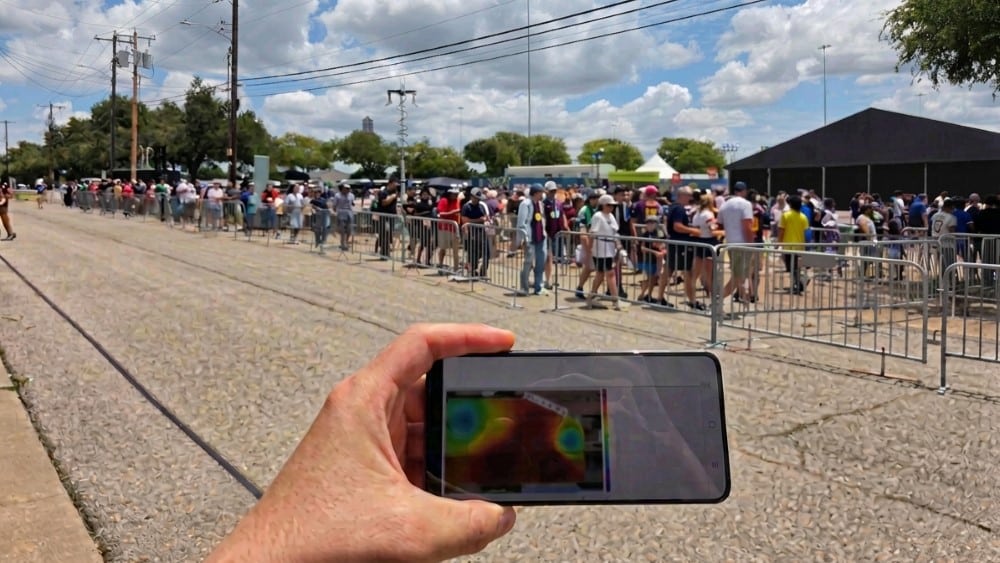
Samsung Electronics and Verizon have successfully completed an Integrated Sensing and Communication (ISAC) trial at a major international soccer fan event in Dallas, Texas, enabling real-time sensing-driven intelligence across a virtualized network. This landmark milestone represents one of the industry’s first practical implementations of a key technology for 6G, signaling how operators are leveraging software-driven network architectures to create infrastructure that actively perceives, understands, and responds to their environment — moving beyond connectivity.
The groundbreaking field trial reinforces the value of the strategic partnership between Samsung and Verizon. Operating one of the world’s largest commercial virtualized networks, Verizon has led the charge in deploying a software-driven, AI-powered virtualized RAN (vRAN). This laid the foundation for a 6G-ready platform necessary to bring experimental use cases from concept to real-world validation — highlighting the flexibility of Samsung’s adaptable vRAN, which enables operators to introduce new capabilities like ISAC from day one by leveraging the commercial network they already run.
In the ISAC trial, Samsung integrated commercial AI-powered vRAN and vCore with an ISAC application, deploying them on its Network in a Server (NIS) — an end-to-end software-driven edge-AI platform that consolidates all network functions and accelerated compute into a single server. This allowed the ISAC trial to leverage connectivity from a 5G network without the need for any additional equipment.
Acting as a sensing receiver, a CBRS radio unit using 40 MHz of spectrum mounted on a Verizon Cell-On-Wheels (COW) captured channel variations in transmissions from a commercial 5G device. Samsung’s NIS then analyzed this real-time data, utilizing the accelerated compute to extract actionable insights that are visualized as a crowd density heatmap that changes in near-real time to reflect people’s movements.
Operating live at the event, the ISAC system used wireless signals as a sensing basis to automatically identify crowded areas within the venue, proving how sensing capabilities can enhance event management and the visitor experience across multiple stakeholder groups:
The achievement reflects the synergy between Samsung’s commercial technologies and its advanced research in accelerating the path to 6G. The company’s efforts include its commercially proven vRAN software on the edge-AI platform NIS, and Samsung Research America’s (SRA) cutting-edge AI-driven ISAC solution.
“Verizon’s strategy has always been focused on building an intelligent, AI-native network that translates into meaningful real-world value for our customers,” said Yago Tenorio, Chief Technology Officer and Senior Vice President of Technology Development at Verizon. “Our early investments in flexible, software-driven vRAN architecture are paying off today, giving us the agility to engineer and trial groundbreaking 6G concepts like ISAC over our existing infrastructure. This field trial with Samsung proves that the network of the future will do far more than just transfer data — it will actively perceive and interact with its environment to transform venue management and public safety.”
“This successful ISAC trial underscores how Verizon’s decision to adopt a software-driven, AI-powered vRAN early on laid a solid foundation, positioning the company at the forefront of the 6G journey,” said Ji-Yun Seol, Executive Vice President and Head of Product Strategy, Networks Business at Samsung Electronics. “With this approach, forward-thinking operators like Verizon are unlocking untapped potential, spearheading the shift toward a new era where unprecedented services, devices, and use cases converge on next-generation networks.”
“This ISAC trial marks a significant leap forward in integrating AI-driven sensing capabilities into network infrastructure, showcasing the transformative potential of 6G technologies,” said Charlie Zhang, Executive Vice President at Samsung Research America. “By combining Verizon’s innovative approach with Samsung’s advanced vRAN solutions, we’ve demonstrated the practical application of ISAC in a real-world scenario to enhance safety, efficiency, and user experience. This collaboration reinforces our commitment to pushing the boundaries of what’s possible in next-generation wireless networks.”
As a founding member of the Verizon 6G Innovation Forum, Samsung is exploring new use cases to advance innovation, research initiatives, and the overall charter of the consortium. The company continues to work alongside visionary partners to deliver transformative technologies and drive the transition to 6G.
Samsung Networks has pioneered the successful delivery of 5G end-to-end solutions, including chipsets, radios, and cores. Through ongoing research and development, Samsung is driving the industry to advance 5G networks and paving the way for 6G and beyond with its market-leading product portfolio, from purpose-built RAN, vRAN, Open RAN, AI RAN, and cloud-native core to private network solutions and AI-powered automation tools (CognitiV NOS). The company currently provides innovative network solutions to mobile operators that deliver boundless connectivity to hundreds of millions of users worldwide.
Also in the news
Shared Rural Network rollout extends to UK national parks with over 150 4G masts live
Vodafone touts latest attempt to bridge the UK’s digital divide
Virgin Media O2 cuts 5,200 tonnes of carbon dioxide emissions

A new data center project, a new IX, and some rural broadband expansion: … [visit site to read more]

Space42, the UAE-based AI-powered SpaceTech company, and satcoms giant Viasat have signed a binding agreement to co-found Equatys, creating the first shared space and ground infrastructure platform for global direct-to-device and advanced MSS connectivity.
Equatys will offer a platform that will support the extension of mobile coverage and overlay in the places terrestrial networks cannot serve, including in coverage gaps in populated metro areas.
The agreement was signed at World Space Business Week, a gathering for space and satellite business leaders taking place this week in Paris. Upon the formation of Equatys, Space42 and Viasat will commit to an initial equity contribution of up to US$1 billion.
This is the latest stage in a process that has been going on for some while. In fact the announcement of Equatys as a joint venture took place this time last year.
The company is being established as global demand for satellite-enabled mobile connectivity accelerates. Together, Viasat and Space42 say they bring unmatched global reach through commercial relationships with more than 400 mobile operators worldwide and access to the largest amount (more than 100MHz) of globally coordinated MSS spectrum available for D2D deployment, creating a uniquely scalable foundation for growth.
Equatys is designed to support the connection of smartphones, IoT devices, and other devices and terminals directly to satellites, giving mobile operators a way to offer voice, text, and data where cellular networks are otherwise unavailable or have low density.
The agreement builds on work by Space42 and Viasat on the technical design and manufacture of the satellites, along with ecosystem progress in seamless terrestrial network integration, interoperability standards and feedback from a number of mobile network operators and ecosystem participants.
Equatys will provide a neutral, shared layer of both satellites and ground infrastructure; by sharing infrastructure rather than duplicating it, ecosystem participants can reduce capital requirements, accelerate deployment, increase service availability, and maintain customer and commercial independence.
Participating operating licensees sharing infrastructure can realise greater cost efficiency than is likely to be possible within their own geographic coverage area and/or spectrum authorisations. Multiple operators can use the same platform while maintaining their own spectrum licensing rights, customers, and commercial relationships.
The business model is open by design, so additional spectrum licensees and satellite operators can use the constellation, which supports high levels of spectrum aggregation, coordination and cooperation.
The initial constellation is the first phase of an architecture designed to scale to 2,800 satellites across 60 orbital planes and three altitude layers, enabling densification without redesign as demand grows.
Space42 holds coordinated L-band spectrum rights across more than 160 markets and mobile operator relationships that extend the platform’s commercial reach. Viasat is expected to serve as prime technology contractor, and holds coordinated MSS spectrum rights in the L-band globally and in the S-band in Europe.
Together, Space42 and Viasat hold commercial agreements with more than 400 mobile operators worldwide and technical capability and access to operate across over 100 MHz of globally coordinated MSS spectrum for advanced MSS services and NTN D2D services.

Liberty Business has partnered with Amazon Web Services (AWS) to provide Jamaican businesses and organisations with access to cloud services supported by local expertise and managed services.
The partnership is part of a wider five-year strategic collaboration between Liberty Latin America (LLA), the parent company of Liberty Caribbean, and AWS. Liberty Caribbean operates Flow, Liberty Business and BTC in the Bahamas.
Under the agreement, Liberty Business customers will have access to cloud advisory and migration services, managed cloud operations, hybrid cloud solutions and disaster recovery. The partnership also includes local billing and support through a single provider.
Liberty Business said the offering is intended to help organisations modernise their IT operations and improve resilience, with target sectors including government, financial services, tourism and hospitality, healthcare and business process outsourcing.
Charles Manus, senior director at Liberty Business, said the partnership would help Jamaican companies move beyond connectivity and use cloud and AI services to improve competitiveness.
The deal gives Liberty Business a broader cloud services portfolio as demand for cloud infrastructure and digital services grows among Jamaican organisations.

Vodafone Idea has secured about US$3.5 billion in debt financing from a consortium led by State Bank of India (SBI), providing the Indian operator with funding to rebuild its network and compete with rivals Reliance Jio and Bharti Airtel.
The consortium also includes Union Bank of India and the National Bank for Financing Infrastructure and Development, according to people familiar with the matter cited by Bloomberg. The lenders have agreed to provide the financing over a period of nearly 10 years.
Conditions attached to the funding reportedly include Kumar Mangalam Birla remaining chairman of Vodafone Idea throughout the loan tenure, as well as guarantees covering repayment in the event of default.
Vodafone Idea, India’s third-largest mobile operator by subscribers, has been seeking debt financing to strengthen its financial position and fund network investment. The company reported a loss of INR37.5 billion in the quarter ended June, although this was narrower than expected.
The financing comes after the Indian government took steps to ease Vodafone Idea’s financial burden. Authorities capped the company’s past spectrum payments earlier this year, while the government converted about INR370 billion of outstanding dues into equity in 2025, increasing its stake in the operator to 48.99%.
Bloomberg reported that Vodafone Idea’s shares have risen by almost 40% this year, giving the company a market capitalisation of around INR1.6 trillion.

This Industry Viewpoint was authored by Tom Traugott, SVP of Emerging Technologies at EdgeCore Digital Infrastructure
For most of the AI boom, the limiting question was who could secure the most advanced chips. In August of this year, NVIDIA signaled that the challenge has moved beyond silicon. It announced memorandums of understanding with Apollo, BlackRock, Blackstone, Brookfield, Goldman Sachs, and KKR intended to mobilize more than $500 billion of third-party capital for AI infrastructure over time. The goal is to finance not just accelerators, but the broader systems required to turn them into usable compute. … [visit site to read more]

Ethio Telecom revealed on Thursday it has held a stakeholders’ workshop with Djibouti Telecom and Sudatel Group to push their planned Horizon Cross-Border Terrestrial Fiber Initiative into the pre-commercialisation phase.
The Horizon Fiber initiative – first announced by all three telcos in December 2024 and formalised this past February – aims to link subsea cable landing stations in Djibouti and Port Sudan via Ethiopia.
The goal is to create a scalable terrestrial route that enhances regional and international connectivity to support next-generation workloads like cloud computing, AI, fintech, e-commerce, and digital content delivery.
The Horizon Fiber initiative is also pitched as offering global carriers and hyperscalers a reliable, low-latency alternative route for subsea cable traffic across the Red Sea, which has been susceptible to frequent disruptions due to subsea cable cuts in recent years.
According to a LinkedIn post from Ethio Telecom, the workshop in Addis Ababa focused on the commercial and technical requirements to develop the terrestrial fibre corridor across the region with a fully protected, redundant architecture. Ethio Telecom said representatives from Ciena, Nokia and BringCom participated in those discussions.
Other participants in the workshop sessions included Google, Meta (via HIPConsult), Microsoft, Airtel Africa, Bayobab, WIOCC, center3, Saudi Vision, and China Mobile International.
Ethio Telecom said participating partners and global operators “expressed strong interest in leveraging and monetizing the multi-terabit capabilities of the Horizon Fiber corridor.”

Mongolian broadband provider Mobinet is deploying Plume Design’s Plume Platform to power its mobihome broadband service.
The agreement will provide Mobinet customers with access to AI-optimised Wi-Fi, advanced cybersecurity protection, parental controls and real-time home network management through an intuitive mobile app. The Plume Platform continuously learns and adapts to each household, helping deliver stronger Wi-Fi coverage, more reliable connectivity and a safer online experience.
Bat-Erdene Tuvd, Chief Technology Officer of Mobinet, said that the deal would provide its customers with “better Wi-Fi, stronger security and greater control” of their online activities, as well as “faster support and a better overall customer experience without increasing costs.”
As part of its commitment to customer satisfaction, Mobinet is introducing these advanced capabilities to subscribers without additional monthly charges. The Plume Platform enables faster and more proactive customer support via greater visibility into home network performance, allowing Mobinet to identify and resolve many issues remotely, reducing service interruptions, minimizing technician visits and ensuring smoother complaint handling.
“Mobinet understands that customer experience is the true differentiator in today’s broadband market,” said Chris Griffiths, Chief Technology Officer of Plume. “Mobinet selected the Plume Platform because of its unique ability to deliver smarter, safer and more reliable connectivity to households across Mongolia in a single unified solution.”