

APTelecom joins USTDA-backed Stavian Digital Park study in Vietnam

APTelecom said on Thursday it is joining real estate services firm Cushman & Wakefield and the US Trade and Development Agency (USTDA) to conduct a feasibility study for a proposed new hyperscale data centre campus in Vietnam.

Cushman & Wakefield will serve as the prime contractor for the feasibility study for Stavian Digital Park (SDP), with APTelecom supporting the programme as a specialist subcontractor.

The USTDA signed an agreement with Vietnamese technology company Stavian Hightech Infrastructure JSC last week to fund a feasibility study for the development of the data centre campus.

At the time, Stavian said it had selected Cushman & Wakefield to conduct the study, which will include the full suite of ancillary infrastructure the project requires, including power supply, cooling and connectivity.

Cushman & Wakefield will develop a procurement framework, financial model, and master plan for the campus. It will also establish criteria requiring customers to use secure equipment.

APTelecom will contribute its telecoms and connectivity expertise to the broader feasibility study, including international connectivity, subsea cable systems and integration, carrier engagement and strategy, commercialisation and digital infrastructure considerations.

“Connectivity is an increasingly important part of the data centre development equation, particularly as campuses scale to support hyperscale, cloud and AI requirements. As digital infrastructure developments become larger and more complex, the ability to align data centre planning with resilient connectivity infrastructure becomes increasingly important,” said Andrew Green, head of Cushman & Wakefield’s Asia Pacific data centre group.

“Stavian Digital Park is a great opportunity for us to demonstrate how our combined capabilities can create greater value for clients across the digital infrastructure market,” added Eric Handa, co-founder and CEO of APTelecom.

According to the USTDA, Stavian Digital Park – which will be located in Ho Chi Minh City – is designed to attract hyperscale cloud and AI infrastructure operators as the first major customers, especially US-based firms, although the USTDA said the park will be open to “any trusted telecommunications provider.”

Tony Dinh, chairman and CEO of Stavian Group, said the park would be one of the largest planned data centre campuses in Southeast Asia, and will equip Vietnam with next-generation infrastructure required by modern AI computing systems require, as well as significantly expand the country’s data centre capacity.

“Through Stavian Digital Park, we aim to help Vietnam attract more international technology investment and become a regional hub for AI and cloud computing,” he said in a statement.

The project is the second one in the last few weeks to receive USTDA funding for a feasibility study with APTelecom’s involvement.

In September, the USTDA said it was funding a feasibility study for a new subsea cable system linking Thailand with the US via Vietnam, Singapore, the Philippines, Malaysia and Indonesia. Thailand’s state-owned National Telecom (NT) selected APTelecom to conduct the study.

Safaricom teams with Pesapal to expand M-Pesa payment features

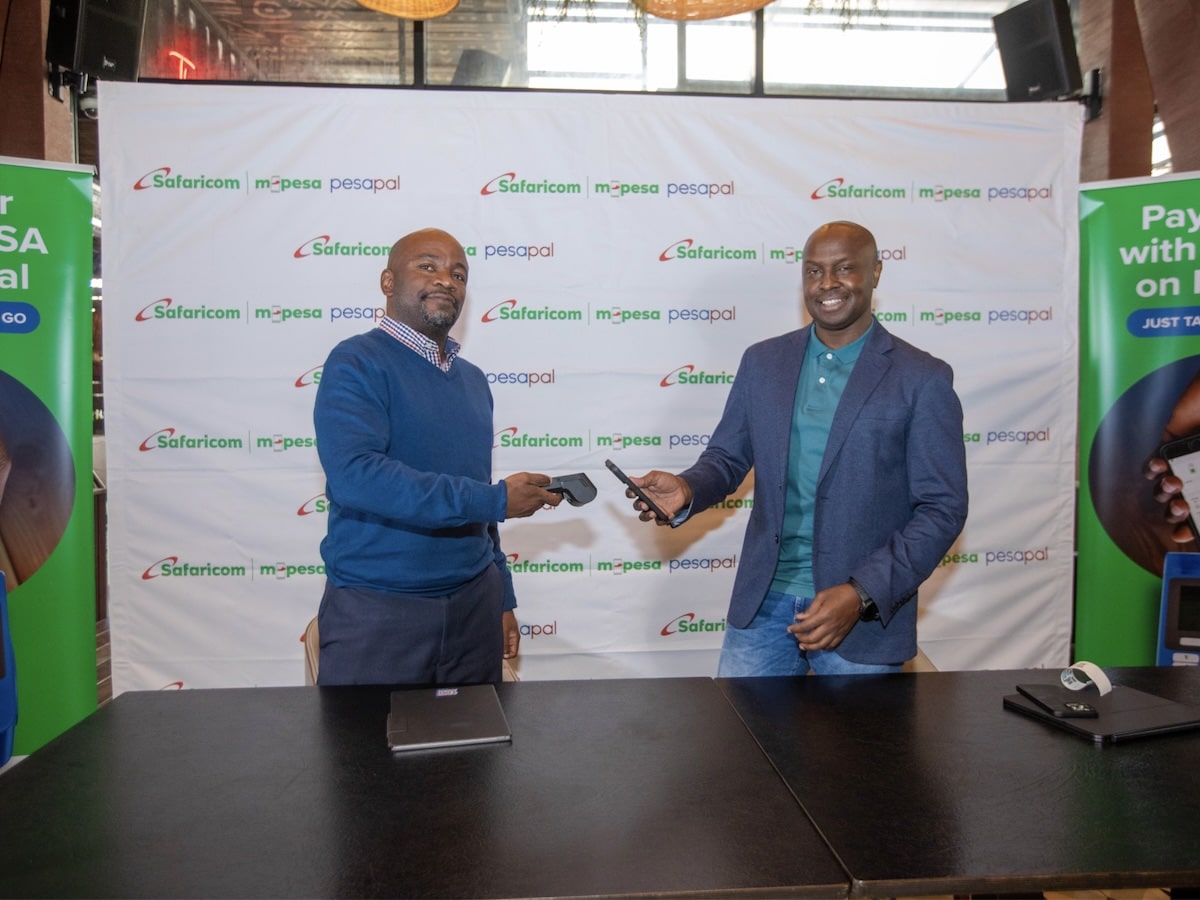
Safaricom and payment gateway provider Pesapal announced on Thursday they are rolling out new payment features for M-Pesa across Kenya, including dynamic scan-to-pay, tap-to-pay and “AI pay”.

Dynamic scan-to-pay builds on Safaricom’s existing scan-to-pay service – in which customers scan a QR code linked directly to a merchant’s M-Pesa Till Number – by using Pesapal’s merchant payment infrastructure to enable such transactions to be extended the physical point of sale.

Tap-to-pay enables customers with NFC-enabled smartphones to tap their device on a Pesapal POS, verify the transaction details and complete the payment.

Meanwhile, AI Pay enables customers to scan any receipt, printed or handwritten, to automatically identify and fill out Till or PayBill details as well as the payment amount, reducing the need for manual entry.

“As the way Kenyans shop and transact continues to evolve, we are focused on ensuring that M-Pesa evolves with them. This means moving beyond simply enabling payments to reimagining the payment experience itself,” said Safaricom group CTO James Maitai. “Our partnership with Pesapal is an important part of that journey, bringing together our respective capabilities to shape the next generation of everyday payments.”

Pesapal founder Agosta Liko said bringing Tap-to-Pay and Scan-to-Pay on the Pesapal POS represents the biggest leap in Kenya’s checkout experience in years.

“Thousands of businesses trust our platform, and by teaming up with Safaricom, we are delivering the faster, error-free transactions their customers expect,” he said.

ICEYE taps Nokia to deveop satellite comms systems

Press Release

ICEYE, the European leader in sovereign intelligence from space, and Nokia, a global leader in connectivity infrastructure, today announced a partnership to develop secure, sovereign and high-performance broadband low Earth orbit (LEO) satellite communications systems for governments, supporting missions from defense and border security to emergency services and disaster response. Built on trusted European technology, the jointly developed satellite communications systems will give nations ownership and control of the satellites, ground segment and terminals. The first communications satellites are expected to be launched in 2028.

When terrestrial networks are disrupted or compromised, defense forces, first responders and civil authorities risk losing access to the information and command systems they depend on. Governments therefore need resilient communications infrastructure that remains available under the most demanding conditions, and that they can fully own and control.

The jointly developed sovereign systems will deliver targeted, high-throughput, low-latency connectivity over priority mission areas. Designed to complement military and commercial networks rather than replace them, it will add reach, resilience and capacity, helping governments and defense organizations maintain critical connections wherever operations take place.

The partnership brings together ICEYE’s track record delivering sovereign satellite missions with Nokia’s extensive experience in secure networking technologies and growing defense portfolio. Together, the companies will integrate satellites, ground infrastructure and ruggedized end-user terminals to extend ICEYE’s sovereign intelligence from space business model to satellite communications.

“Together with Nokia, we are building on our proven space intelligence expertise and delivering sovereign, high-performance satellite communications. Nations must be able to fully own and control their communications, without dependency on a foreign commercial operator’s terms of service. We delivered Poland its own radar satellite system in under a year. Partnering with Nokia lets us move at a similar speed for satellite communications, on the timelines nations need,” said Rafal Modrzewski, CEO and Co-founder of ICEYE.

“Sovereign operations depend on the ability to sense, decide and act in real time. Physical AI makes that possible, but only with secure, resilient connectivity across land, sea, air and space. By bringing together Nokia’s trusted networks with ICEYE’s proven sovereign space capabilities, we will deliver a satellite communications capability—complementing existing terrestrial networks, and giving nations the situational awareness, connectivity, and control they need to operate with confidence in contested environments across all domains,” said Justin Hotard, President and CEO of Nokia.

Edotco Bangladesh announces scheme to repurpose old telecom batteries

Digital infrastructure services provider Edotco Bangladesh, has partnered with Tiger New Energy, a pioneer in sustainable transportation, to give used telecom batteries a second life by repurposing them into Instant Power Supply (IPS) systems, providing backup power when the main utility grid fails.

Under Edotco’s flagship Tower to Power corporate social responsibility initiative, the programme retrieves technically viable cells from retired batteries and repurposes them into backup power solutions. These systems will be deployed in selected rural schools, educational institutions, and other locations with limited access to reliable electricity, helping to improve education and community well-being.

Al Batuni Mohammad Sayed Ahmed, Country Managing Director of Edotco Bangladesh, explains: “At Edotco, sustainability means creating lasting value for both communities and the environment. Through our Tower to Power initiative, this partnership will give retired telecom batteries a second life ― helping to reduce electronic waste while expanding access to reliable backup power in underserved areas. It is a practical example of how responsible innovation can address real community needs and create meaningful impact.”

The initiative builds on the success of the Tower to Power platform, which, the parters say, has already positively impacted over 100,000 lives in Bangladesh. It aligns with Edotco broader environmental, social and governance (ESG) commitments and supports key United Nations Sustainable Development Goals, including Affordable and Clean Energy, Responsible Consumption and Production, and Climate Action.

By combining expertise in digital infrastructure and innovative resource management, Edotco Bangladesh and Tiger New Energy say they are demonstrating how retired telecom assets can be transformed into practical, environmentally friendly solutions that empower communities and create sustainable shared value.

In July last year the companies signed a memorandum of understanding (MoU) to deploy sustainable power systems that drive greener connectivity and extend clean energy access to communities across Bangladesh.

SoftBank completes $3.1bn purchase of DigitalBridge

News

The Japanese conglomerate views the company as a piece of its rapidly expanding AI data centre strategy

Today, SoftBank has completed the acquisition of digital infrastructure asset manager, DigitalBridge.

The $3.1 billion deal, first announced in December 2025, makes DigitalBridge a fully owned subsidiary of SoftBank and is aimed at boosting SoftBank’s ability to “originate, finance, operate, and scale digital infrastructure opportunities worldwide”.

DigitalBridge will continue operating independently and will continue to be led by the company’s existing CEO, Marc Ganzi.

“As AI transforms industries worldwide, we need more compute, connectivity, power, and scalable infrastructure,” said SoftBank Group Chairman and CEO, Masayoshi Son. “DigitalBridge is a leader in digital infrastructure, and this acquisition will strengthen the foundation for next-generation AI data centres, advance our vision to become a leading ASI platform provider, and help unlock breakthroughs that move humanity forward.”

DigitalBridge has around $108 billion in digital infrastructure assets under management, including data centres, fibre networks, mobile towers, wireless infrastructure, and edge facilities.

These data centres are of particular interest to SoftBank, which is pursuing an aggressive AI strategy based around building its own vertically integrated AI infrastructure platform.

The company is securing power, land, and data-centre capacity, partnering with OpenAI through the Stargate project to supply large-scale compute, and increasingly moving toward operating the compute itself through SB Neo, its planned US neocloud business.

While Stargate has moved slower than hoped – notably shelving its plans in the UK, for example – Son and SoftBank have continued to drive forwards. The company has raised around $11 billion this year in order to invest $30 billion into OpenAI, with Son notably calling talk of an AI bubble ‘blasphemy’ earlier this year.

SoftBank has said it intends to use external financing to limit its own capital burden while continuing to support its growth in the AI data centre sector.

Keep up to date with all the latest telecoms news from around the world with the Total Telecom newsletter

Also in the news
Shared Rural Network rollout extends to UK national parks with over 150 4G masts live
Vodafone touts latest attempt to bridge the UK’s digital divide
Virgin Media O2 cuts 5,200 tonnes of carbon dioxide emissions