

Some fiber, some AI, some nextgen gear, and some interconnection: … [visit site to read more]

Some fiber, some AI, some nextgen gear, and some interconnection: … [visit site to read more]

Claro Dominicana has added Amazon Web Services (AWS) to its cloud infrastructure portfolio, expanding the cloud services it offers to business customers in the Dominican Republic.
The operator said the addition will allow companies to access AWS cloud services through Claro, alongside its existing Claro Cloud Enterprise and Microsoft Azure offerings.
AWS provides cloud infrastructure and services including storage, databases, networking, security, artificial intelligence and data analytics. Its pay-as-you-go model allows businesses to scale resources according to demand without investing in their own physical infrastructure.
Claro Dominicana will provide support across the cloud adoption process, including solution design, implementation, management and ongoing optimisation.
The operator said the AWS addition will support businesses migrating workloads to the cloud, modernising applications and scaling technology resources as demand changes.
Marcelo Garcia, director of Cloud Solutions Management and Development and Managed Services at Claro Dominicana, said the partnership expands the company’s cloud portfolio and gives customers access to AWS alongside its existing services.
Claro Dominicana said the move forms part of its wider strategy to combine connectivity, infrastructure, cloud and managed services for enterprise customers.

Boon Chee Loo (pictured) joined Bridge Alliance in 2020, just as the Covid-19 pandemic reached Asia. He became CEO in April 2026, after helping the alliance broaden its work from roaming coordination into regional platforms for IoT, communications services and network APIs.
In this interview, Loo discusses how Bridge Alliance helps operators serve multinational businesses, the rapid growth in connected vehicle data, and the practical challenges of making services work across different markets. Sean Gowran, Aeris’ APAC sales VP, also joined the conversation, as Loo explains the alliance’s approach to APIs, security and AI – and why he sees roaming continuing to complement local connectivity.
Developing Telecoms: You joined Bridge Alliance in 2020, just as Covid-19 hit Asia. What attracted you to the organisation?
Boon Chee Loo: I had spent close to 30 years in telecoms, working across consumer, enterprise and digital businesses. I was excited by the opportunity to apply that experience to help operators at a regional level.
Bridge Alliance was originally focused on roaming and the frameworks that help operators work together. Under the previous CEO, Geok Chwee Ong, the organisation began to pivot towards becoming a regional product house: building platforms that help member operators compete more effectively in their markets. The organisation needed someone familiar with productisation and developing regional products, and that was a good fit with my background.
The IoT journey had already begun, and I helped establish the CPaaS platform and, more recently, the Telco API Exchange.
Developing Telecoms: What are the alliance’s main areas of activity today?
Loo: Roaming is where Bridge Alliance started. We created frameworks to help operators work together, deliver a good experience to consumers and develop effective cost structures.
As the alliance grew, we also saw an opportunity in group sourcing. For items that are not highly differentiated from one market to another – such as fibre cable, IPX bandwidth and testing tools – members can negotiate collectively and seek savings.
Over the past decade, we have also built platforms to help operators compete in the enterprise market. That includes IoT, CPaaS and APIs. Those are the five pillars we have today.
AI is now a major topic, although we are still working out what the alliance can do collectively. We can look at AI capabilities that sit on top of our existing services, and at whether members have common needs that could benefit from group sourcing.
Developing Telecoms: Where can cooperation between operators make the biggest practical difference for businesses?
Loo: IoT is a good example. Historically, many IoT solutions were deployed within one country. Each operator had its own platforms, systems and processes. But manufacturers increasingly want to offer products regionally.
Consider a car manufacturer that wants connectivity embedded in vehicles before they are delivered to Singapore, Malaysia or Thailand. The connectivity may support telemetry or software updates, and the customer wants to arrange it at the point of manufacture. As vehicles become more connected – and potentially more autonomous – the demand for connectivity and bandwidth will grow.
The commercial model has to be simple: the customer should be able to subscribe and get connectivity. The technical implementation must also be straightforward. If a customer has to deal separately with every operator’s systems, platforms and processes, it becomes daunting. We need to provide a single point of coordination and an orchestration layer that hides much of that complexity.
Regulation differs between countries, too. Local operators bring knowledge of their own markets, helping customers navigate requirements that may not always be easy to understand from outside.
Developing Telecoms: How do you measure whether this regional coordination is working?
Loo: One indicator is the number of regional deals we enable. We also look at the connections and bandwidth usage associated with those deals, including year-on-year growth in SIM connections.
For the period from August 2025 to August 2026, we reported 40% year-on-year growth in regional IoT SIM connections.
Sean Gowran: Data usage alsogrew by 65% over the same period.
Developing Telecoms: What is driving that growth?
Gowran: Automotive is a major driver, particularly the growth in electric vehicles. An internal-combustion car might use around 100 megabytes of data a month, while an electric vehicle can use around two gigabytes. Some models reach seven or eight gigabytes a month.
Loo: The way vehicles use connectivity is changing. At first, it was mainly for telemetry and software updates. There is now interest in using connectivity for in-car entertainment, which could increase data consumption further. Autonomous vehicles would require still more.
Developing Telecoms: Are networks across Asia Pacific ready for autonomous vehicles?
Loo: Autonomous vehicles are still at an early stage, so there is time for networks to develop. They will require low latency so that a vehicle can get a response quickly when it encounters a problem. Not every country is ready, but networks are progressing, including through the deployment of 5G standalone.
There is also a commercial question: how to support high data usage per SIM when the traditional business model may have been designed for much lower usage.
Developing Telecoms: What have you learned about managing the growth in connected vehicles?
Loo: One lesson is that software updates need coordination. A car manufacturer might decide to update 100,000 vehicles at once. But if that happens during peak network hours, it could affect the update and other customers using the network.
We have learned to coordinate updates and, where appropriate, stagger them so they happen outside peak periods. Sean mentioned that the software can often be downloaded over a longer period without affecting when it is installed. Throttling the update traffic can help prevent sudden spikes in network demand.
Developing Telecoms: Turning to network APIs, what can enterprises do through the Bridge Alliance API Exchange?
Loo: Our approach to APIs has changed as we have learned what customers need. Traditionally, we have aimed to have one leading operator in each market as a member, so that it can compete and differentiate locally.
But that is not always enough for APIs. An enterprise changing its app or workflow wants broad market coverage. A bank is unlikely to make a major change if the service only reaches 30% of its customers.
So, for APIs, we have shifted to working with all operators in each country we target. We currently have operators in Thailand, Taiwan, Malaysia and Indonesia on the API Exchange. We have made Number Verify and SIM Swap APIs available because these are capabilities many operators can provide in a standard form, using specifications defined by CAMARA.
The enterprise can integrate once and use the API across the markets covered. We plan to add more markets, including Singapore, India, Japan, Vietnam and Australia. If everything goes well, our aim is to cover at least 10 Asian markets by April.
Developing Telecoms: What needs to happen for network APIs to become a meaningful source of revenue for operators?
Loo: First, operators need to be organised and harmonised. If the service is not consistent, enterprises will not use it at scale. We need enough markets and operators participating. That is a major focus for the first two years.
Second, customers need to know the APIs are available and understand how they can help their businesses – for example, by improving productivity or customer experience.
There is also a commercial challenge with Number Verify. It is often compared with SMS one-time passwords, which businesses already pay for. If they switch to an API, they may expect the price to be similar, so there can be price pressure.
Other APIs may create more value. In developing markets, for example, financial institutions may want additional signals when assessing people who have little or no traditional credit history. Telco data could potentially provide useful indicators, such as patterns of bill payment or account balance. That could give a financial institution a different kind of information to consider when assessing a loan.
Developing Telecoms: Beyond the technology, how does Bridge Alliance organise operators to support multinational IoT deals?
Loo: We have a framework for handling regional requirements, including a “lead operator” and “supporting operator” model. If a member comes across a deal that needs coverage in several countries, there are already agreed rules, capabilities and platforms to support it.
The alliance pieces these elements together for operators and ecosystem partners. Customers get a more consistent way to access services, with much of the complexity handled behind the scenes.
Developing Telecoms: Automotive is a major IoT driver. Which other industries could contribute to growth?
Loo: We believe more and more objects will be connected. China is an important source of manufacturing, so we are speaking with chipset and module makers. If connectivity is embedded in a module, it can be built into many different products.
That could mean more connected appliances, cameras and home devices. We are also seeing more autonomous objects, from vehicles to robots. Anything autonomous will require connectivity, so we want to work with the companies making those products.
Developing Telecoms: Does this shift towards local connectivity mean roaming will become less important?
Loo: Roaming and local connectivity complement each other. Local connectivity is our preference where it is available, because it can provide good coverage, experience and service. But not every market can immediately support a local arrangement. Roaming can serve those markets and remains an important capability.
Developing Telecoms: What role can an alliance play in closing the connectivity gap in emerging markets?
Loo: We leave infrastructure investment to individual operators. Our members are leading operators in their markets, and they are responsible for maintaining and developing their networks.
Bridge Alliance focuses on the orchestration layer: making it easier for enterprise customers to consume connectivity across markets. We also work with partners to ensure our platforms keep pace with the technical capabilities available in each market, including 5G standalone and, in future, 6G.
Developing Telecoms: How are you approaching cybersecurity and fraud prevention?
Loo: Operators have their own cybersecurity programmes. For IoT, our partner Aeris has launched IoT Watchtower, which adds security capabilities to the IoT connectivity we provide.
Developing Telecoms: What opportunities do you see for AI, and where can Bridge Alliance contribute?
Loo: Our members are individually exploring AI for areas such as autonomous networks, workflow optimisation and personalisation. Network autonomy is still developing; I do not think networks are fully autonomous at this stage.
For the alliance, there are a few possible areas. We can help make AI capabilities available alongside our existing pillars. For example, AI voice bots or chatbots could be integrated with our CPaaS platform for operators to offer to enterprise customers. AI applications that use the APIs available through the exchange could also be supported.
A further possibility is a kind of token exchange that could bring together different large language models and find an appropriate route and cost for an AI application. That work is still in progress; we have not yet determined exactly what it should look like.
Developing Telecoms: Does the potential risk of AI make operators cautious about deploying it?
Loo: It makes members more careful about selecting and governing AI tools. Operators are licensed businesses, so a deployment that causes disruption could put their licences at stake.
When we consider adding AI applications to CPaaS, for example, there are processes and checklists to follow. The aim is to enable implementation while making sure there is a clear process to govern it.

Three expansion projects and an upgrade from around the world: … [visit site to read more]
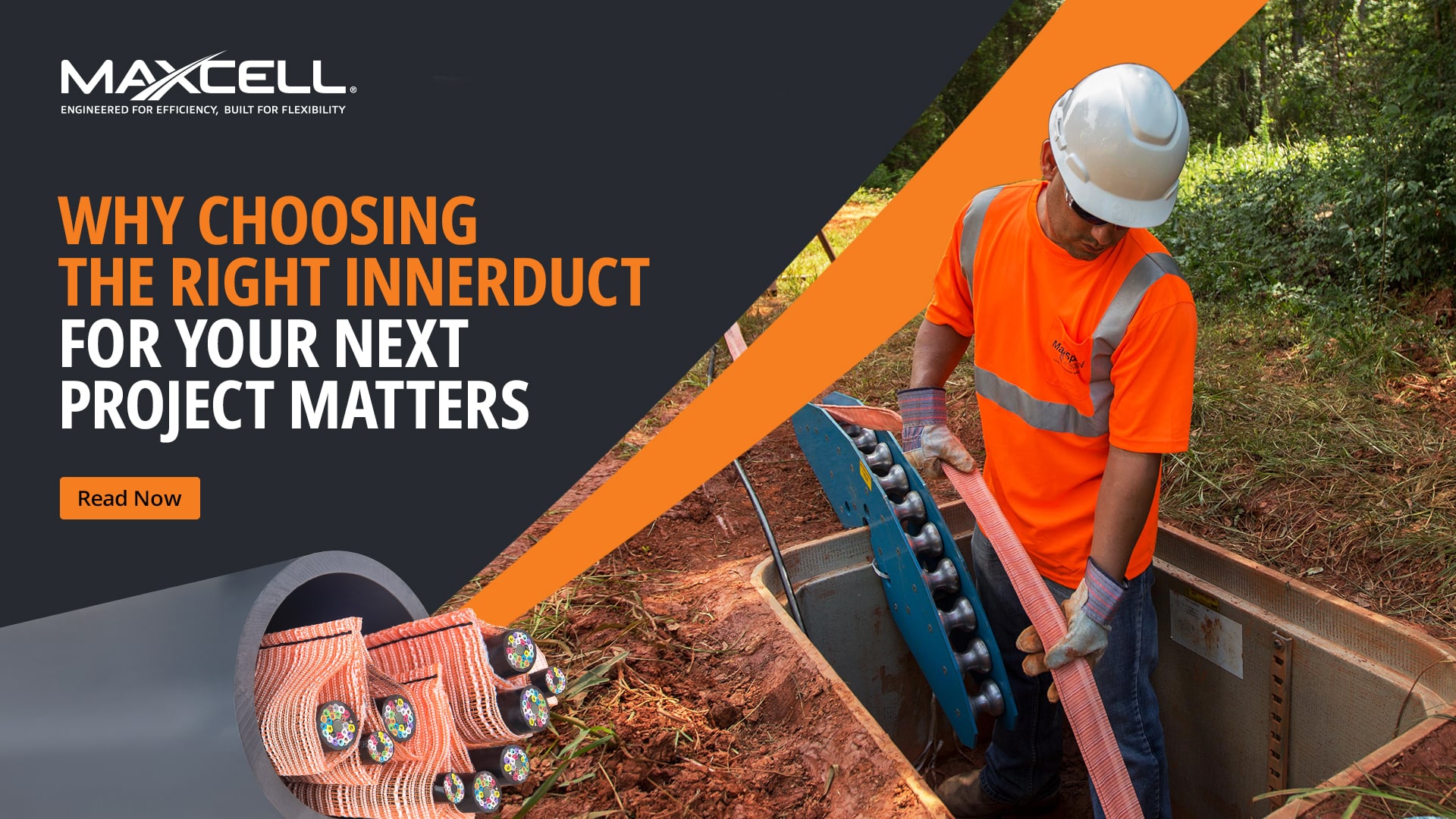
As demand for faster, more reliable connectivity continues to grow, network infrastructure is under increasing pressure to deliver greater capacity, flexibility, and resilience. From broadband and telecoms networks to data centres, utilities, transport infrastructure, and connected communities, the pathways that house and protect communication cables play a critical role in keeping data moving.
Yet choosing the right innerduct is not simply a matter of selecting a product that fits inside a conduit. Network construction projects involve a range of considerations, from space availability and installation requirements to environmental conditions, costs, maintenance and future expansion. Getting those decisions right can have a lasting impact on the performance, scalability, and longevity of network infrastructure.
MaxCell’s ‘How to Choose the Right Innerduct’ whitepaper explores key considerations related to innerduct choice.
The nuance of innerduct selection
Among the key themes explored in the white paper is understanding that different deployments will have deeply different requirements. Network requirements rarely stand still, and infrastructure needs to accommodate changing technologies, increasing bandwidth demands, and additional cables over time. Understanding how innerduct can support future scalability is therefore integral to network design.
There are also major differences between indoor and outdoor applications to consider. Inside plant (ISP) environments can present tight spaces, corners and building constraints, while outside plant (OSP) deployments can expose infrastructure to corrosion, temperature fluctuations and other environmental challenges. Projects involving bridges, highways, railways, congested ducts, and other pathway obstacles can introduce even further constraints, making manoeuvrability and weight additionally important factors.
These different applications create distinct requirements that need to be considered during project planning.
Balancing performance, cost, and installation
Of course, alongside technical requirements, network operators must also consider cost. Product pricing is only one part of this equation, with labour, shipping, storage, and the practicalities of installation all impacting a project’s economics. The ease with which an innerduct solution can be installed, maintained, and adapted will also have significant implications for long-term returns.
Making the right choice for the network ahead
Innerduct selection is ultimately about looking beyond the immediate installation. Factors including application, available space, environmental conditions, installation requirements, total project cost and future network expansion can all influence the long-term performance, flexibility and economics of an infrastructure deployment.
MaxCell’s ‘How to Choose the Right Innerduct’ whitepaper provides a practical guide to these considerations across different network environments. For operators, contractors and infrastructure owners planning new deployments or upgrading existing pathways, it offers a useful framework for evaluating the options and making informed innerduct decisions.
Read the full white paper, How to Choose the Right Innerduct, to explore the key considerations, applications and solutions in greater detail.
Also in the news
Shared Rural Network rollout extends to UK national parks with over 150 4G masts live
Vodafone touts latest attempt to bridge the UK’s digital divide
Virgin Media O2 cuts 5,200 tonnes of carbon dioxide emissions

Tigo is now officially a mobile operator brand in Ecuador. On 1 October the telecommunications brand owned by Millicom replaced Movistar and Tuenti, after Tigo completed its acquisition of Telefonica’s operations in the country.
Millicom International Cellular announced the successful completion of its US$380 million acquisition of Telefónica’s telecommunications operations in Ecuador in October last year.
Local press reports indicate that, as far as customers are concerned, the transition will be mainly brand-related and does not involve performing procedures, changing a phone number, replacing the chip or signing a new contract.
The application that previously worked as Mi Movistar is now Mi Tigo Ecuador. Customers do not necessarily have to download another application. The website, social networks and other channels have adopted the new identity.
Tigo Ecuador currently has more than five million customers and has a presence in all of the country’s 24 provinces.
However, one significant change involves a new investment plan. Tigo has announced investment of more than US$460 million for the next four years, aimed at modernising the network, expanding coverage and improving service.
This comes on top of the US$450 million already invested, a total commitment of more than US$900 million to date.
The company has apparently said it is working on the expansion and modernisation of more than 2,000 network sites with 4G LTE technology. In addition, it has deployed more than 150 new sites in 18 provinces. Roberto Andino, CEO of Tigo Ecuador, quoted in a number of outlets, has reportedly said that the company plans at least 500 new network sites.
It also incorporated spectrum in the 700MHz band, which is expected to improve coverage, notably indoors.
This transaction is part of Millicom’s strategy to deepen its presence in Latin America. Its operations now span eleven countries.

Three data center bytes and one bit of fiber M&A news: … [visit site to read more]

There’s a new arrival in the African data centre market as Continent 8 Technologies, a provider of managed technology solutions designed for the global iGaming and online sports betting industry, announces its expansion into Africa with the launch of a new data centre in South Africa.
The company says the deployment, in Johannesburg extends its full portfolio of managed technology, connectivity, cloud and cybersecurity solutions into the region, supported by its purpose-built private global network and world-class digital infrastructure.
The Johannesburg facility marks Continent 8’s first deployment on the African continent and will enable operators, platform providers and content suppliers to deliver faster, more consistent digital experiences to South African players while remaining seamlessly connected with their wider international operations and partners. It will be live in Q4 2026.
As the company explains, South Africa is one of the world’s highest-volume regulated betting markets, and therefore requires infrastructure capable of supporting substantial transaction volumes with low latency and high resilience.
Located close to market and directly connected to Continent 8’s private global backbone, the new facility will enable customers to leverage the same highly resilient infrastructure used across more than 100 connected locations worldwide.
The Johannesburg data centre will provide Tier III infrastructure within an ISO 27001-certified environment and deliver Continent 8’s full portfolio of managed technology services, including colocation, managed infrastructure, cloud connectivity, content delivery, DDoS protection and managed cybersecurity.
Customers will also gain access to Continent 8’s private global network, and benefit from direct connectivity to leading hyperscale cloud providers including AWS, Google Cloud and Microsoft Azure.

Today, BT has announced the purchase of TalkTalk’s consumer and wholesale divisions on a debt-free basis.
The deal will see BT will absorb TalkTalk’s roughly 1.5 million retails customers and 1 million wholesale customers. Service for these customers will continue uninterrupted and will likely only change once BT begins migrating them to its own systems.
Clive Selley, the current CEO of BT International and previously the CEO of Openreach until March this year, is set to ‘lead the stabilisation and integration planning of the acquisition’, according to the company press release.
Martijn Blanken will take Selley’s place as CEO of BT International.
TalkTalk had been formally seeking buyers for its consumer unit and its wholesale unit (PXC) since the start of the year, having struggled financially for years. In recent months, excusive talks were being held with both Opus Broadband and Octopus Investments for the consumer business and PXC, respectively, but no deals materialised.
The company was due to enter administration today.
“This is a genuinely unprecedented situation, where millions of citizens and businesses were at risk if TalkTalk had collapsed. BT is the digital backbone of the country, with a presence in every postcode. We have been connecting the nation for generations, stepping up in the moments that matter, and BT acquiring TalkTalk is now the only viable option to keep millions of customers connected and supported,” said Allison Kirkby, Chief Executive of BT Group.
“Our immediate priority is to stabilise the business and provide a safety net for the households and businesses who rely on TalkTalk. Once the regulatory process has been concluded, TalkTalk’s customers will benefit from access to the UK’s best network, and the full range of market-leading products and services that BT offers. And, over a period of time, the transaction will create value for all our stakeholders – customers, colleagues, the country, and our owners.”
BT’s late interest in buying the units was reported by the Financial Times last week, with BT reportedly checking for potential anti-trust pitfalls. Further reports suggested that BT’s initial approach had been rejected, leading to a higher offer being made on Sunday.
While financial details of the agreement were not revealed, BT said it estimates a roughly £400 million hit to its finances for the 2027 financial year as a result of the deal.
Naturally, a deal of this magnitude has already drawn attention from regulators, who will be concerned that the deal further entrenches BT’s dominant position in the market.
Following the deal’s announcement, the Secretary of State for the Department for Digital, Culture, Media and Sport (DCMS) has issued a Public Interest Intervention Notice (PIIN), obligating the Competition and Markets Authority (CMA) to investigate the deal.
For DCMS, the primary concern is the continuity of vital connectivity services and the “genuine risk to life and public services – including to hospitals, schools and emergency care”.
In a responding statement, BT said it welcomed the PIIN announcement, saying it would “work constructively with the Government and the CMA during their review”. Indeed, the company has pointed to ensuring continuity of service as a key driver of the deal, arguing that the acquisition was in the public interest.
The CMA is expected to report its findings on October 19.
Keep up to date with all the latest telecoms news from around the world with the Total Telecom newsletter
Also in the news
Shared Rural Network rollout extends to UK national parks with over 150 4G masts live
Vodafone touts latest attempt to bridge the UK’s digital divide
Virgin Media O2 cuts 5,200 tonnes of carbon dioxide emissions

State-owned operator Nepal Telecom suffered around NPR88 million (US$5.8 million) in damage after extreme flooding affected parts of South and Southeast Asia.
The Nepali government said the floods damaged Nepal Telecom’s mobile and backbone transmission networks in Rasuwa, Nuwakot and Dhading districts, where more than 1,400 people were killed and 5,000 were reported missing.
Economic Times reported, Information and Communications Minister Bikram Timilsina told the House of Representatives that 83 of Nepal Telecom’s 120 sites were affected, with around 70% of the operator’s sites taken offline.
Three sites were completely destroyed, while service has been restored at the remaining affected sites. The restored sites are supporting customers in areas around the damaged towers.
Timilsina said 37.9km of Nepal Telecom’s 65.3km fibre network in the affected districts had been damaged, with 27.4km already repaired.
Three optical line terminals in Rasuwa and Nuwakot were also completely destroyed.