

Three expansion projects and an upgrade from around the world: … [visit site to read more]

Three expansion projects and an upgrade from around the world: … [visit site to read more]
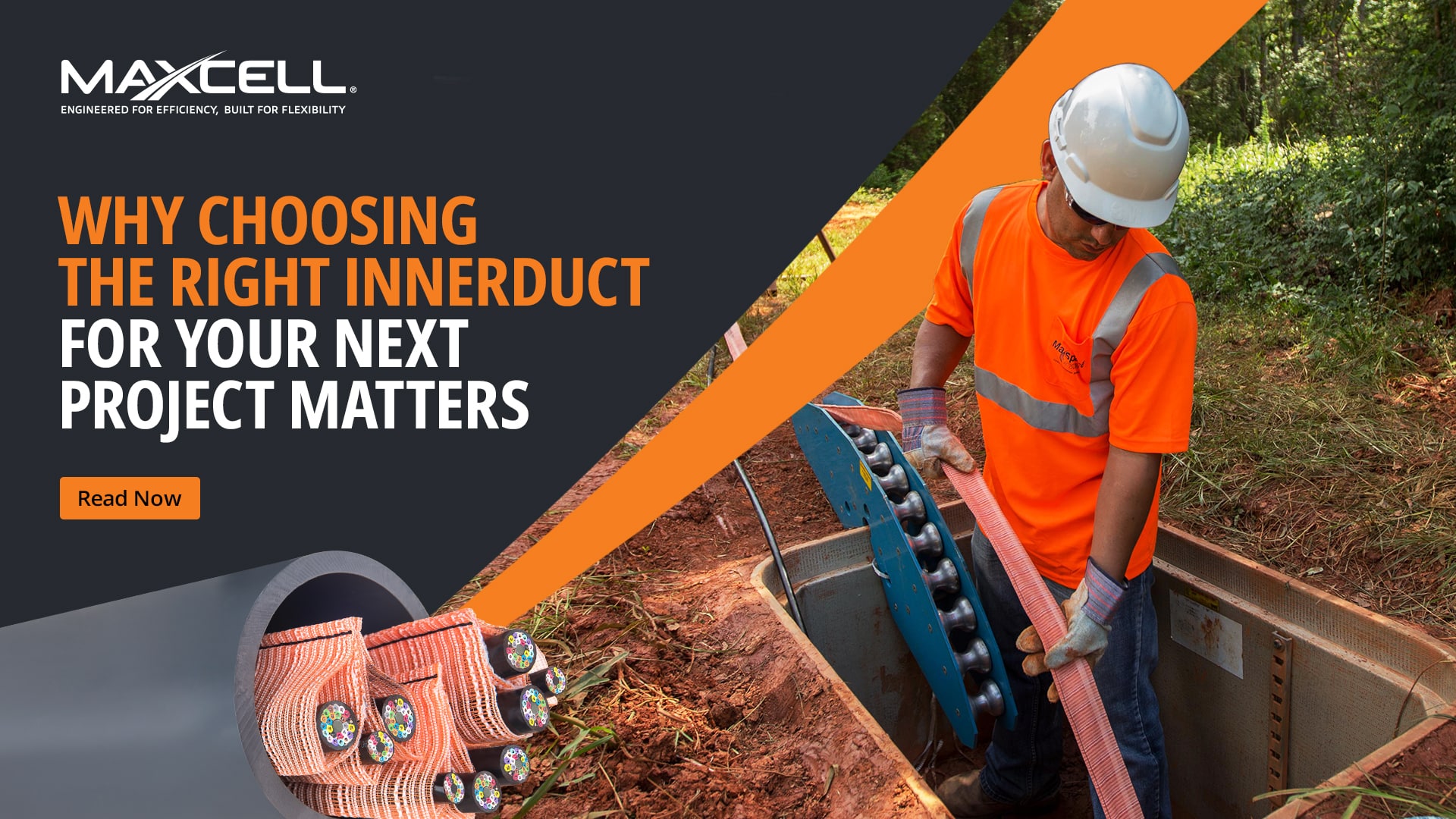
As demand for faster, more reliable connectivity continues to grow, network infrastructure is under increasing pressure to deliver greater capacity, flexibility, and resilience. From broadband and telecoms networks to data centres, utilities, transport infrastructure, and connected communities, the pathways that house and protect communication cables play a critical role in keeping data moving.
Yet choosing the right innerduct is not simply a matter of selecting a product that fits inside a conduit. Network construction projects involve a range of considerations, from space availability and installation requirements to environmental conditions, costs, maintenance and future expansion. Getting those decisions right can have a lasting impact on the performance, scalability, and longevity of network infrastructure.
MaxCell’s ‘How to Choose the Right Innerduct’ whitepaper explores key considerations related to innerduct choice.
The nuance of innerduct selection
Among the key themes explored in the white paper is understanding that different deployments will have deeply different requirements. Network requirements rarely stand still, and infrastructure needs to accommodate changing technologies, increasing bandwidth demands, and additional cables over time. Understanding how innerduct can support future scalability is therefore integral to network design.
There are also major differences between indoor and outdoor applications to consider. Inside plant (ISP) environments can present tight spaces, corners and building constraints, while outside plant (OSP) deployments can expose infrastructure to corrosion, temperature fluctuations and other environmental challenges. Projects involving bridges, highways, railways, congested ducts, and other pathway obstacles can introduce even further constraints, making manoeuvrability and weight additionally important factors.
These different applications create distinct requirements that need to be considered during project planning.
Balancing performance, cost, and installation
Of course, alongside technical requirements, network operators must also consider cost. Product pricing is only one part of this equation, with labour, shipping, storage, and the practicalities of installation all impacting a project’s economics. The ease with which an innerduct solution can be installed, maintained, and adapted will also have significant implications for long-term returns.
Making the right choice for the network ahead
Innerduct selection is ultimately about looking beyond the immediate installation. Factors including application, available space, environmental conditions, installation requirements, total project cost and future network expansion can all influence the long-term performance, flexibility and economics of an infrastructure deployment.
MaxCell’s ‘How to Choose the Right Innerduct’ whitepaper provides a practical guide to these considerations across different network environments. For operators, contractors and infrastructure owners planning new deployments or upgrading existing pathways, it offers a useful framework for evaluating the options and making informed innerduct decisions.
Read the full white paper, How to Choose the Right Innerduct, to explore the key considerations, applications and solutions in greater detail.
Also in the news
Shared Rural Network rollout extends to UK national parks with over 150 4G masts live
Vodafone touts latest attempt to bridge the UK’s digital divide
Virgin Media O2 cuts 5,200 tonnes of carbon dioxide emissions

Tigo is now officially a mobile operator brand in Ecuador. On 1 October the telecommunications brand owned by Millicom replaced Movistar and Tuenti, after Tigo completed its acquisition of Telefonica’s operations in the country.
Millicom International Cellular announced the successful completion of its US$380 million acquisition of Telefónica’s telecommunications operations in Ecuador in October last year.
Local press reports indicate that, as far as customers are concerned, the transition will be mainly brand-related and does not involve performing procedures, changing a phone number, replacing the chip or signing a new contract.
The application that previously worked as Mi Movistar is now Mi Tigo Ecuador. Customers do not necessarily have to download another application. The website, social networks and other channels have adopted the new identity.
Tigo Ecuador currently has more than five million customers and has a presence in all of the country’s 24 provinces.
However, one significant change involves a new investment plan. Tigo has announced investment of more than US$460 million for the next four years, aimed at modernising the network, expanding coverage and improving service.
This comes on top of the US$450 million already invested, a total commitment of more than US$900 million to date.
The company has apparently said it is working on the expansion and modernisation of more than 2,000 network sites with 4G LTE technology. In addition, it has deployed more than 150 new sites in 18 provinces. Roberto Andino, CEO of Tigo Ecuador, quoted in a number of outlets, has reportedly said that the company plans at least 500 new network sites.
It also incorporated spectrum in the 700MHz band, which is expected to improve coverage, notably indoors.
This transaction is part of Millicom’s strategy to deepen its presence in Latin America. Its operations now span eleven countries.

Three data center bytes and one bit of fiber M&A news: … [visit site to read more]

There’s a new arrival in the African data centre market as Continent 8 Technologies, a provider of managed technology solutions designed for the global iGaming and online sports betting industry, announces its expansion into Africa with the launch of a new data centre in South Africa.
The company says the deployment, in Johannesburg extends its full portfolio of managed technology, connectivity, cloud and cybersecurity solutions into the region, supported by its purpose-built private global network and world-class digital infrastructure.
The Johannesburg facility marks Continent 8’s first deployment on the African continent and will enable operators, platform providers and content suppliers to deliver faster, more consistent digital experiences to South African players while remaining seamlessly connected with their wider international operations and partners. It will be live in Q4 2026.
As the company explains, South Africa is one of the world’s highest-volume regulated betting markets, and therefore requires infrastructure capable of supporting substantial transaction volumes with low latency and high resilience.
Located close to market and directly connected to Continent 8’s private global backbone, the new facility will enable customers to leverage the same highly resilient infrastructure used across more than 100 connected locations worldwide.
The Johannesburg data centre will provide Tier III infrastructure within an ISO 27001-certified environment and deliver Continent 8’s full portfolio of managed technology services, including colocation, managed infrastructure, cloud connectivity, content delivery, DDoS protection and managed cybersecurity.
Customers will also gain access to Continent 8’s private global network, and benefit from direct connectivity to leading hyperscale cloud providers including AWS, Google Cloud and Microsoft Azure.
Today, BT has announced the purchase of TalkTalk’s consumer and wholesale divisions on a debt-free basis.
The deal will see BT will absorb TalkTalk’s roughly 1.5 million retails customers and 1 million wholesale customers. Service for these customers will continue uninterrupted and will likely only change once BT begins migrating them to its own systems.
Clive Selley, the current CEO of BT International and previously the CEO of Openreach until March this year, is set to ‘lead the stabilisation and integration planning of the acquisition’, according to the company press release.
Martijn Blanken will take Selley’s place as CEO of BT International.
TalkTalk had been formally seeking buyers for its consumer unit and its wholesale unit (PXC) since the start of the year, having struggled financially for years. In recent months, excusive talks were being held with both Opus Broadband and Octopus Investments for the consumer business and PXC, respectively, but no deals materialised.
The company was due to enter administration today.
“This is a genuinely unprecedented situation, where millions of citizens and businesses were at risk if TalkTalk had collapsed. BT is the digital backbone of the country, with a presence in every postcode. We have been connecting the nation for generations, stepping up in the moments that matter, and BT acquiring TalkTalk is now the only viable option to keep millions of customers connected and supported,” said Allison Kirkby, Chief Executive of BT Group.
“Our immediate priority is to stabilise the business and provide a safety net for the households and businesses who rely on TalkTalk. Once the regulatory process has been concluded, TalkTalk’s customers will benefit from access to the UK’s best network, and the full range of market-leading products and services that BT offers. And, over a period of time, the transaction will create value for all our stakeholders – customers, colleagues, the country, and our owners.”
BT’s late interest in buying the units was reported by the Financial Times last week, with BT reportedly checking for potential anti-trust pitfalls. Further reports suggested that BT’s initial approach had been rejected, leading to a higher offer being made on Sunday.
While financial details of the agreement were not revealed, BT said it estimates a roughly £400 million hit to its finances for the 2027 financial year as a result of the deal.
Naturally, a deal of this magnitude has already drawn attention from regulators, who will be concerned that the deal further entrenches BT’s dominant position in the market.
Following the deal’s announcement, the Secretary of State for the Department for Digital, Culture, Media and Sport (DCMS) has issued a Public Interest Intervention Notice (PIIN), obligating the Competition and Markets Authority (CMA) to investigate the deal.
For DCMS, the primary concern is the continuity of vital connectivity services and the “genuine risk to life and public services – including to hospitals, schools and emergency care”.
In a responding statement, BT said it welcomed the PIIN announcement, saying it would “work constructively with the Government and the CMA during their review”. Indeed, the company has pointed to ensuring continuity of service as a key driver of the deal, arguing that the acquisition was in the public interest.
The CMA is expected to report its findings on October 19.
Keep up to date with all the latest telecoms news from around the world with the Total Telecom newsletter
Also in the news
Shared Rural Network rollout extends to UK national parks with over 150 4G masts live
Vodafone touts latest attempt to bridge the UK’s digital divide
Virgin Media O2 cuts 5,200 tonnes of carbon dioxide emissions

State-owned operator Nepal Telecom suffered around NPR88 million (US$5.8 million) in damage after extreme flooding affected parts of South and Southeast Asia.
The Nepali government said the floods damaged Nepal Telecom’s mobile and backbone transmission networks in Rasuwa, Nuwakot and Dhading districts, where more than 1,400 people were killed and 5,000 were reported missing.
Economic Times reported, Information and Communications Minister Bikram Timilsina told the House of Representatives that 83 of Nepal Telecom’s 120 sites were affected, with around 70% of the operator’s sites taken offline.
Three sites were completely destroyed, while service has been restored at the remaining affected sites. The restored sites are supporting customers in areas around the damaged towers.
Timilsina said 37.9km of Nepal Telecom’s 65.3km fibre network in the affected districts had been damaged, with 27.4km already repaired.
Three optical line terminals in Rasuwa and Nuwakot were also completely destroyed.

APTelecom said on Thursday it is joining real estate services firm Cushman & Wakefield and the US Trade and Development Agency (USTDA) to conduct a feasibility study for a proposed new hyperscale data centre campus in Vietnam.
Cushman & Wakefield will serve as the prime contractor for the feasibility study for Stavian Digital Park (SDP), with APTelecom supporting the programme as a specialist subcontractor.
The USTDA signed an agreement with Vietnamese technology company Stavian Hightech Infrastructure JSC last week to fund a feasibility study for the development of the data centre campus.
At the time, Stavian said it had selected Cushman & Wakefield to conduct the study, which will include the full suite of ancillary infrastructure the project requires, including power supply, cooling and connectivity.
Cushman & Wakefield will develop a procurement framework, financial model, and master plan for the campus. It will also establish criteria requiring customers to use secure equipment.
APTelecom will contribute its telecoms and connectivity expertise to the broader feasibility study, including international connectivity, subsea cable systems and integration, carrier engagement and strategy, commercialisation and digital infrastructure considerations.
“Connectivity is an increasingly important part of the data centre development equation, particularly as campuses scale to support hyperscale, cloud and AI requirements. As digital infrastructure developments become larger and more complex, the ability to align data centre planning with resilient connectivity infrastructure becomes increasingly important,” said Andrew Green, head of Cushman & Wakefield’s Asia Pacific data centre group.
“Stavian Digital Park is a great opportunity for us to demonstrate how our combined capabilities can create greater value for clients across the digital infrastructure market,” added Eric Handa, co-founder and CEO of APTelecom.
According to the USTDA, Stavian Digital Park – which will be located in Ho Chi Minh City – is designed to attract hyperscale cloud and AI infrastructure operators as the first major customers, especially US-based firms, although the USTDA said the park will be open to “any trusted telecommunications provider.”
Tony Dinh, chairman and CEO of Stavian Group, said the park would be one of the largest planned data centre campuses in Southeast Asia, and will equip Vietnam with next-generation infrastructure required by modern AI computing systems require, as well as significantly expand the country’s data centre capacity.
“Through Stavian Digital Park, we aim to help Vietnam attract more international technology investment and become a regional hub for AI and cloud computing,” he said in a statement.
The project is the second one in the last few weeks to receive USTDA funding for a feasibility study with APTelecom’s involvement.
In September, the USTDA said it was funding a feasibility study for a new subsea cable system linking Thailand with the US via Vietnam, Singapore, the Philippines, Malaysia and Indonesia. Thailand’s state-owned National Telecom (NT) selected APTelecom to conduct the study.
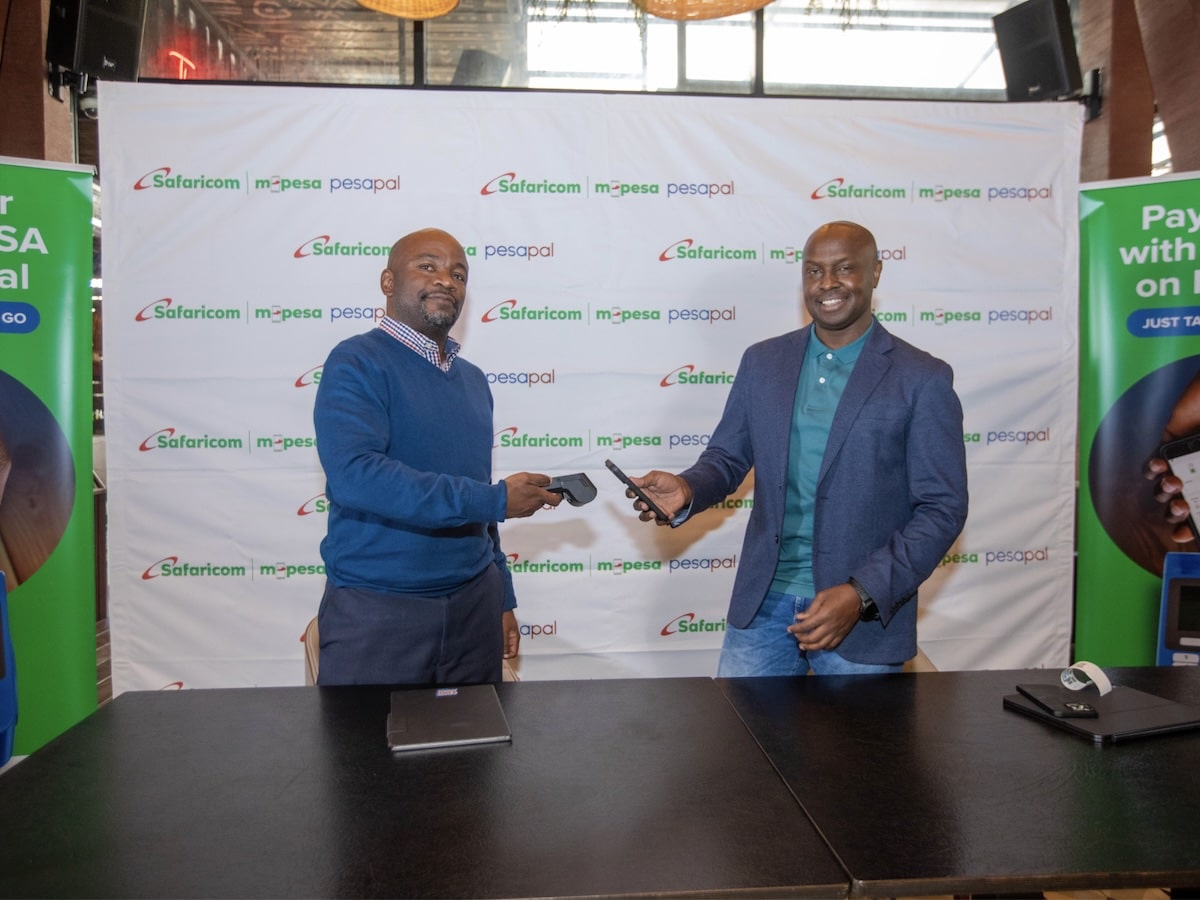
Safaricom and payment gateway provider Pesapal announced on Thursday they are rolling out new payment features for M-Pesa across Kenya, including dynamic scan-to-pay, tap-to-pay and “AI pay”.
Dynamic scan-to-pay builds on Safaricom’s existing scan-to-pay service – in which customers scan a QR code linked directly to a merchant’s M-Pesa Till Number – by using Pesapal’s merchant payment infrastructure to enable such transactions to be extended the physical point of sale.
Tap-to-pay enables customers with NFC-enabled smartphones to tap their device on a Pesapal POS, verify the transaction details and complete the payment.
Meanwhile, AI Pay enables customers to scan any receipt, printed or handwritten, to automatically identify and fill out Till or PayBill details as well as the payment amount, reducing the need for manual entry.
“As the way Kenyans shop and transact continues to evolve, we are focused on ensuring that M-Pesa evolves with them. This means moving beyond simply enabling payments to reimagining the payment experience itself,” said Safaricom group CTO James Maitai. “Our partnership with Pesapal is an important part of that journey, bringing together our respective capabilities to shape the next generation of everyday payments.”
Pesapal founder Agosta Liko said bringing Tap-to-Pay and Scan-to-Pay on the Pesapal POS represents the biggest leap in Kenya’s checkout experience in years.
“Thousands of businesses trust our platform, and by teaming up with Safaricom, we are delivering the faster, error-free transactions their customers expect,” he said.

ICEYE, the European leader in sovereign intelligence from space, and Nokia, a global leader in connectivity infrastructure, today announced a partnership to develop secure, sovereign and high-performance broadband low Earth orbit (LEO) satellite communications systems for governments, supporting missions from defense and border security to emergency services and disaster response. Built on trusted European technology, the jointly developed satellite communications systems will give nations ownership and control of the satellites, ground segment and terminals. The first communications satellites are expected to be launched in 2028.
When terrestrial networks are disrupted or compromised, defense forces, first responders and civil authorities risk losing access to the information and command systems they depend on. Governments therefore need resilient communications infrastructure that remains available under the most demanding conditions, and that they can fully own and control.
The jointly developed sovereign systems will deliver targeted, high-throughput, low-latency connectivity over priority mission areas. Designed to complement military and commercial networks rather than replace them, it will add reach, resilience and capacity, helping governments and defense organizations maintain critical connections wherever operations take place.
The partnership brings together ICEYE’s track record delivering sovereign satellite missions with Nokia’s extensive experience in secure networking technologies and growing defense portfolio. Together, the companies will integrate satellites, ground infrastructure and ruggedized end-user terminals to extend ICEYE’s sovereign intelligence from space business model to satellite communications.
“Together with Nokia, we are building on our proven space intelligence expertise and delivering sovereign, high-performance satellite communications. Nations must be able to fully own and control their communications, without dependency on a foreign commercial operator’s terms of service. We delivered Poland its own radar satellite system in under a year. Partnering with Nokia lets us move at a similar speed for satellite communications, on the timelines nations need,” said Rafal Modrzewski, CEO and Co-founder of ICEYE.
“Sovereign operations depend on the ability to sense, decide and act in real time. Physical AI makes that possible, but only with secure, resilient connectivity across land, sea, air and space. By bringing together Nokia’s trusted networks with ICEYE’s proven sovereign space capabilities, we will deliver a satellite communications capability—complementing existing terrestrial networks, and giving nations the situational awareness, connectivity, and control they need to operate with confidence in contested environments across all domains,” said Justin Hotard, President and CEO of Nokia.