

Edotco Bangladesh announces scheme to repurpose old telecom batteries

Digital infrastructure services provider Edotco Bangladesh, has partnered with Tiger New Energy, a pioneer in sustainable transportation, to give used telecom batteries a second life by repurposing them into Instant Power Supply (IPS) systems, providing backup power when the main utility grid fails.

Under Edotco’s flagship Tower to Power corporate social responsibility initiative, the programme retrieves technically viable cells from retired batteries and repurposes them into backup power solutions. These systems will be deployed in selected rural schools, educational institutions, and other locations with limited access to reliable electricity, helping to improve education and community well-being.

Al Batuni Mohammad Sayed Ahmed, Country Managing Director of Edotco Bangladesh, explains: “At Edotco, sustainability means creating lasting value for both communities and the environment. Through our Tower to Power initiative, this partnership will give retired telecom batteries a second life ― helping to reduce electronic waste while expanding access to reliable backup power in underserved areas. It is a practical example of how responsible innovation can address real community needs and create meaningful impact.”

The initiative builds on the success of the Tower to Power platform, which, the parters say, has already positively impacted over 100,000 lives in Bangladesh. It aligns with Edotco broader environmental, social and governance (ESG) commitments and supports key United Nations Sustainable Development Goals, including Affordable and Clean Energy, Responsible Consumption and Production, and Climate Action.

By combining expertise in digital infrastructure and innovative resource management, Edotco Bangladesh and Tiger New Energy say they are demonstrating how retired telecom assets can be transformed into practical, environmentally friendly solutions that empower communities and create sustainable shared value.

In July last year the companies signed a memorandum of understanding (MoU) to deploy sustainable power systems that drive greener connectivity and extend clean energy access to communities across Bangladesh.

SoftBank completes $3.1bn purchase of DigitalBridge

News

The Japanese conglomerate views the company as a piece of its rapidly expanding AI data centre strategy

Today, SoftBank has completed the acquisition of digital infrastructure asset manager, DigitalBridge.

The $3.1 billion deal, first announced in December 2025, makes DigitalBridge a fully owned subsidiary of SoftBank and is aimed at boosting SoftBank’s ability to “originate, finance, operate, and scale digital infrastructure opportunities worldwide”.

DigitalBridge will continue operating independently and will continue to be led by the company’s existing CEO, Marc Ganzi.

“As AI transforms industries worldwide, we need more compute, connectivity, power, and scalable infrastructure,” said SoftBank Group Chairman and CEO, Masayoshi Son. “DigitalBridge is a leader in digital infrastructure, and this acquisition will strengthen the foundation for next-generation AI data centres, advance our vision to become a leading ASI platform provider, and help unlock breakthroughs that move humanity forward.”

DigitalBridge has around $108 billion in digital infrastructure assets under management, including data centres, fibre networks, mobile towers, wireless infrastructure, and edge facilities.

These data centres are of particular interest to SoftBank, which is pursuing an aggressive AI strategy based around building its own vertically integrated AI infrastructure platform.

The company is securing power, land, and data-centre capacity, partnering with OpenAI through the Stargate project to supply large-scale compute, and increasingly moving toward operating the compute itself through SB Neo, its planned US neocloud business.

While Stargate has moved slower than hoped – notably shelving its plans in the UK, for example – Son and SoftBank have continued to drive forwards. The company has raised around $11 billion this year in order to invest $30 billion into OpenAI, with Son notably calling talk of an AI bubble ‘blasphemy’ earlier this year.

SoftBank has said it intends to use external financing to limit its own capital burden while continuing to support its growth in the AI data centre sector.

Keep up to date with all the latest telecoms news from around the world with the Total Telecom newsletter

Also in the news
Shared Rural Network rollout extends to UK national parks with over 150 4G masts live
Vodafone touts latest attempt to bridge the UK’s digital divide
Virgin Media O2 cuts 5,200 tonnes of carbon dioxide emissions

Battery deal targets telecom infrastructure in India

Battery energy storage system (BESS) solutions are again in the news following a memorandum of understanding (MoU) between a leading name on the field and Indus Towers, one of India’s leading telecom infrastructure companies.

Replus Engitech, an integrated energy storage and clean energy company (and a subsidiary of advanced battery materials business HEG Advanced Materials), and Indus Towers have signed an MoU outlining their intent to explore collaboration on BESS solutions for telecom infrastructure in India.

Under the MoU, Replus intends to make available dedicated BESS production capacity of 1.5 GWh over a two-year period to support the evolving energy requirements of telecom infrastructure.

Replus also plans to expand its portfolio of telecom energy storage solutions, including higher-capacity battery systems, while exploring emerging technologies such as sodium-ion batteries that can enhance reliability, energy efficiency and lifecycle performance across telecom applications.

There is also a local manufacturing angle to this deal. Riju Jhunjhunwala, Chairman, Managing Director and CEO, HEG Advanced Materials Limited, explains: “This initiative reflects the opportunity we see in building a strong, made-in-India energy storage ecosystem for critical infrastructure. Through Replus, we are building the manufacturing scale, technology capabilities and innovation platform required to address these evolving requirements and contribute meaningfully to India’s energy transition.”

Replus says it has deployed over 1 GWh of energy storage capacity across BESS, electric mobility, telecom power solutions, and hybrid energy applications, serving customers across diverse sectors in India.

Angola Cables upgrades transatlantic capacity with Ciena technology

Angola Cables is upgrading capacity across its MONET and South Atlantic Cable System (SACS) submarine networks with technology from Ciena, including support for 800Gbps services on the route linking the US, Brazil and Angola.

MONET connects the US and Brazil over 10,556km, while SACS links Brazil and Angola over 6,165km. Together, the systems provide a direct route between the US and Angola with a round-trip delay of around 130 milliseconds.

The upgrade is intended to meet growing demand for bandwidth from hyperscalers, cloud providers and AI applications, while giving Angola Cables greater flexibility to allocate capacity across its subsea network.

Angola Cables will deploy Ciena’s Waveserver platform with WaveLogic 6 Extreme coherent optics, alongside its 6500 Reconfigurable Line System and Navigator Network Control Suite. The technology will enable 800Gbps client interfaces on MONET and provide connectivity options ranging from 100Gbps services through to capacity across a full fibre pair.

The operator said the upgrade will allow it to offer more diverse and resilient routes to wholesale, content, enterprise and cloud customers, while making better use of its existing fibre assets.

The move also strengthens the role of Angola Cables’ subsea infrastructure as a connectivity link between Africa and the Americas. The company operates SACS as well as the MONET system, giving it a route into the US from Angola through Brazil without relying on connectivity through Europe.

The upgrade comes as cloud and AI workloads increase demand for high-capacity international connectivity. For Angola Cables, higher-capacity optical technology allows it to increase the amount of traffic carried over existing subsea infrastructure rather than relying solely on new cable deployments.

The company has previously deployed Ciena technology across its submarine network and said the latest upgrade will increase the scalability and flexibility of services offered across the systems.

Helios Towers partners with UNICEF to support children across Africa

Press Release

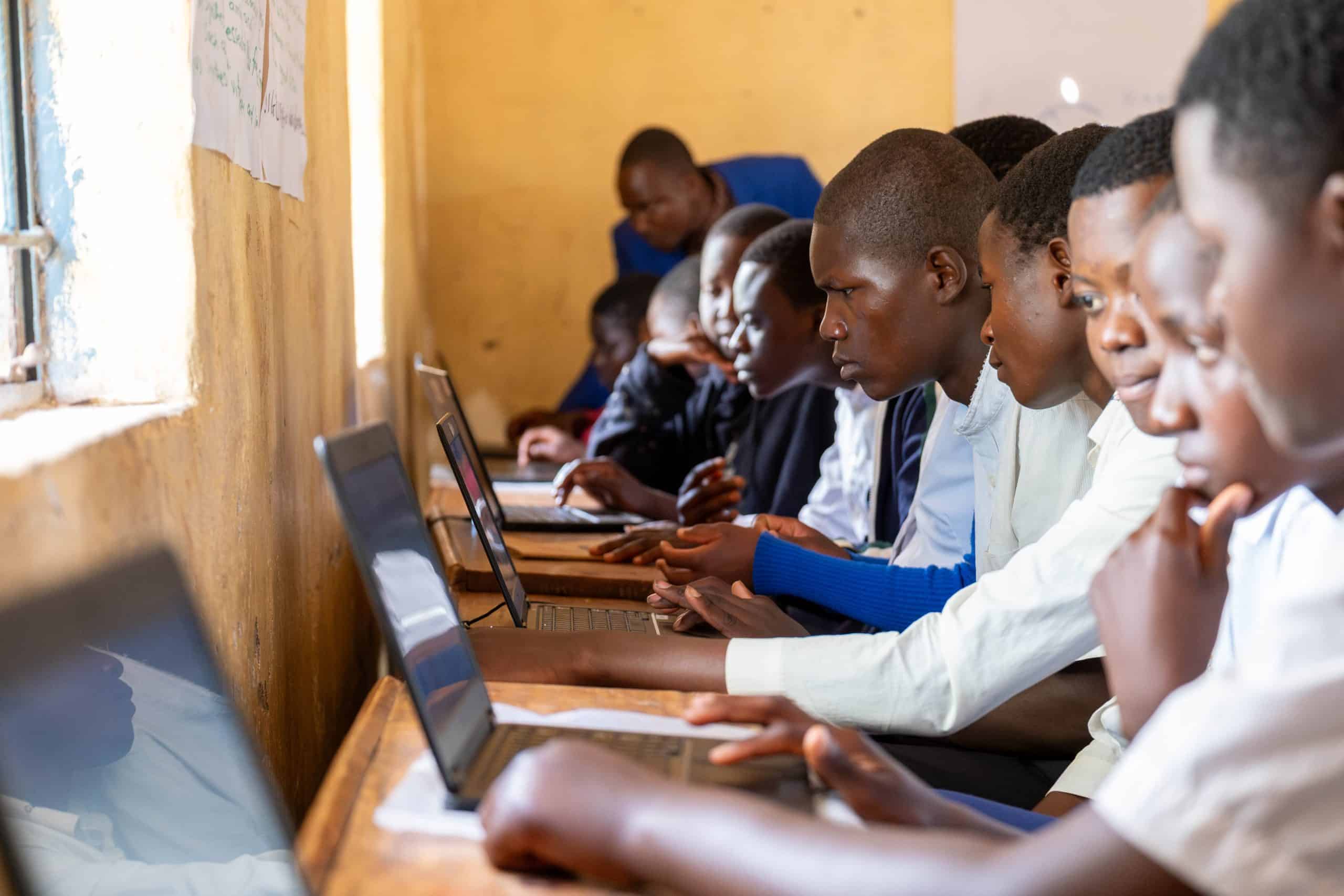
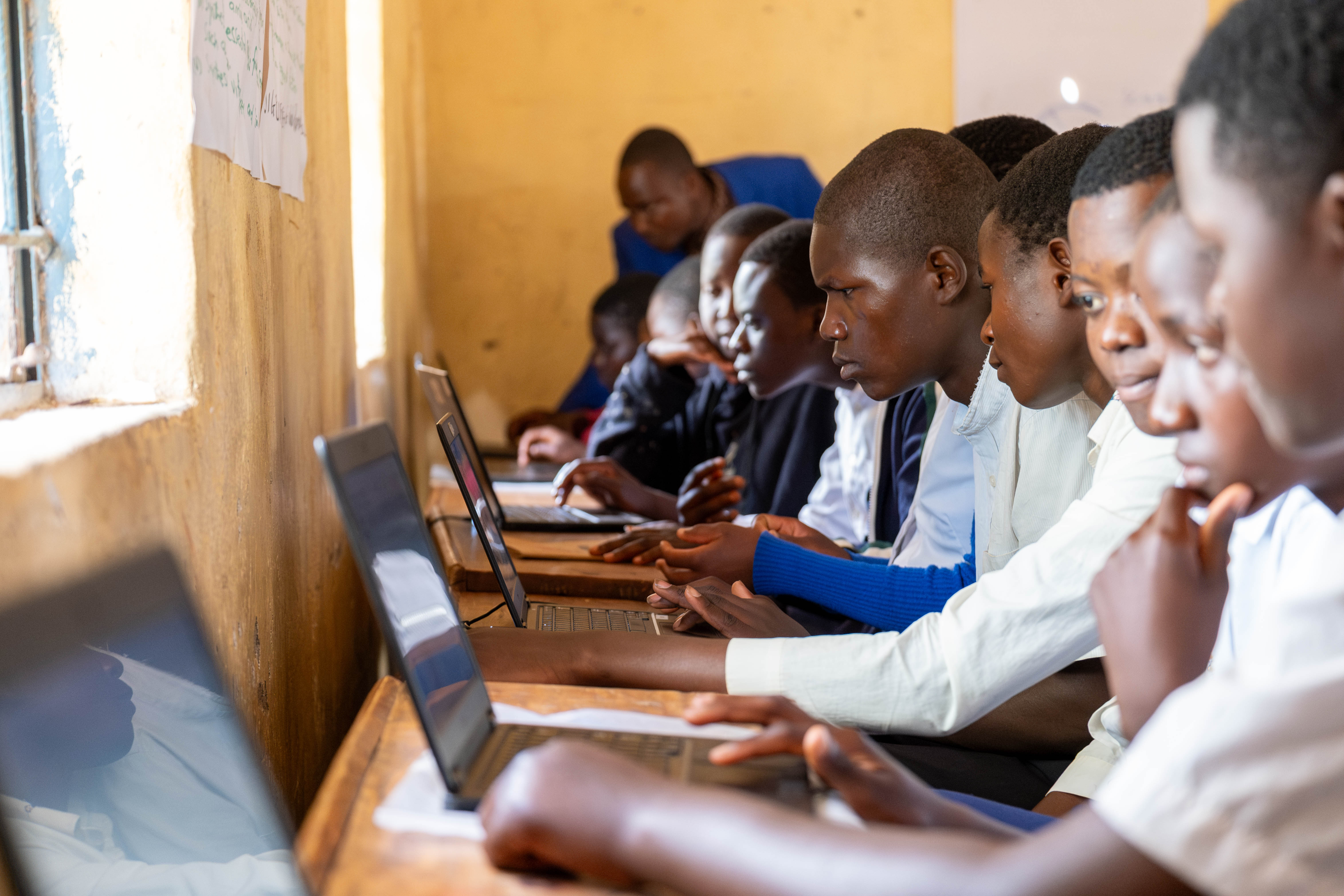
Helios Towers and UNICEF have announced a multi-year partnership to expand internet connectivity and digital learning access for children and young people across Africa, supporting two flagship UNICEF initiatives – Giga and Learning Passport.

The partnership will combine Helios Towers’ telecommunications infrastructure expertise with UNICEF’s global leadership in digital inclusion to help connect schools and expand access to quality education in underserved communities.

Through the collaboration, Helios Towers will support efforts to advance school connectivity mapping and infrastructure development through Giga – the joint UNICEF and International Telecommunication Union initiative that aims to support governments in connecting every school to the internet by 2030.

The company will also support expanded access to Learning Passport, a UNICEF programme that delivers high-quality, flexible and portable digital learning that enables children and young people to continue learning anywhere, at any time, both online and offline.

The partnership will initially focus on the Democratic Republic of Congo, Malawi and Tanzania, with additional support planned for another country in West Africa, where Helios Towers’ established in-market presence and engineering capability will help extend connectivity to communities where access remains limited.

Africa is home to the world’s youngest and fastest-growing population, with an estimated eight out of ten people expected to be born on the continent this century. Expanding reliable internet connectivity for schools is critical to ensuring children and young people can access education, develop digital skills and participate fully in future economies.

Helios Towers’ investment strategy focuses on underserved and high-growth markets, supporting connectivity infrastructure where need and potential impact are greatest. By contributing technical expertise, local operational knowledge and long-term market presence, the company will help strengthen scalable models for digital transformation across Africa.

“Connectivity is a core enabler of education, social inclusion and long-term economic growth. As a mobile tower company operating across Africa and the Middle East, we see first-hand how access to reliable connectivity can transform communities. Our partnership with UNICEF reflects our commitment to expanding digital inclusion and helping connect the next generation to learning, skills and opportunity,” said Tom Greenwood, Chief Executive Officer of Helios Towers. 

“Digital connectivity is increasingly essential for learning, opportunity and helping children reach their full potential,” said Philip Goodwin, Chief Executive Officer of UNICEF UK. “Through partnerships like this, UNICEF is working with governments, communities and the private sector to remove barriers to education and build systems that enable children to learn, grow and thrive. We are grateful to Helios Towers for its commitment to expanding connectivity where the need is greatest, helping bring quality learning opportunities to children and young people in underserved communities and supporting our shared ambition to make childhood unstoppable.”

Keep up to date with all the latest telecoms news from around the world with the Total Telecom newsletter

Also in the news
Shared Rural Network rollout extends to UK national parks with over 150 4G masts live
Vodafone touts latest attempt to bridge the UK’s digital divide
Virgin Media O2 cuts 5,200 tonnes of carbon dioxide emissions

FLAG invests in Indian, Asian, and Trans-Pacific subsea cable routes

Press Release

Investments in MIST, I2SEA and ECHO in line with its Vision 2030 strategy to provide multiple paths for resilient connectivity
FLAG, one of the world’s largest privately owned subsea cable operators, today announced a series of strategic network investments spanning India, Asia and key Trans-Pacific corridors, further strengthening connectivity between these regions and the United States.
The investments include participation in the MIST and I2SEA cable systems, building on FLAG’s previous investment in a Fibre Pair on the ECHO Trans-Pacific system. These form part of FLAG’s Vision 2030 strategy to expand critical fibre infrastructure, increase capacity and provide customers with more resilient connectivity options across key international markets.
As enterprise, cloud and AI-driven data traffic continues to grow, organisations increasingly require multiple network paths to support uptime, redundancy and business continuity. FLAG is investing in strategically important markets where geopolitical, regulatory and infrastructure factors can make connectivity more complex. This series of investments gives customers access to more geographically diverse, reliable routes into hard-to-reach regions, reducing reliance on legacy corridors.
Paul Abfalter, CEO of FLAG, commented: “Through our Vision 2030 strategy and future investment plans, we are focused on expanding our network reach and becoming the provider of choice for customers requiring long haul connectivity in the Indo-Pacific region. Following on from the success of our existing India-Singapore India Asia Express investment, these new investments will provide 4 diverse paths to Mumbai. The I2SEA investment is a great example of FLAG ramping up our investments in new subsea builds and in unique long haul terrestrial capability. Stay tuned for further investment announcements next quarter.”
Through an agreement with Orient Lines (OLL), owner of the MIST cable system, FLAG will add capacity between Mumbai and Singapore. The system has been operational since 2024, with FLAG services to be available from October 2026.
FLAG has also contracted with Lightstorm to participate in the I2SEA cable system, in a fibre pair which will connect Machilipatnam, Chennai and Singapore. As part of the project, the company is investing in the terrestrial segments between Mumbai and Chennai, further strengthening its infrastructure footprint in India. The system is expected to enter service in 2029.
More information about FLAG’s global network and connectivity solutions is available at www.flagtel.com.

Telesur taps Cerillion for AI-powered promotions suite

Suriname market leader Telesur has completed an overhaul of its BSS/OSS systems, upgrading to the latest version of Cerillion’s suite.

The transition gives Telesur access to a broad range of new capabilities powered by Cerillion’s Promotions Engine, enabling it to design, configure and launch new offers much more quickly. The 26.1 release also provides AI-powered agents to support greater automation and operational efficiency, along with an expanded range of TM Forum Open APIs which simplify integration.

Updates to CRM Plus provide Telesur’s teams with a real-time view of customer data, aggregating data from across systems to provide more informed interactions and simplify user training. The next phase of the programme will see Telesur roll out Cerillion’s new composable Self Service, enabling more flexible digital journeys and supporting eKYC for customer onboarding.

Doric Ramlakhan, CEO at Telesur, said: “We now have some exciting new capabilities at our fingertips, from launching promotions much more quickly to harnessing AI and making better use of customer data. We have made this significant step forward with minimal disruption to the business.”