China Mobile Ningbo leads the way in building 5G infrastructure for business growth


Viewpoint Article

A crucial economic hub south of the Yangtze River Delta, Ningbo is successfully transitioning from an industrial hub to an intelligent and smart manufacturing center

Ningbo is a thriving economic hub with 83 manufacturing championships and 283 Specialized, Refined, Differential and Innovative (SRDI) enterprises. As many as 20 advanced 5G capabilities were first put into commercial use at Ningbo. The city created history when China’s first 5G fully conected factory corps was set up in Ningbo earlier this year. This was the culmination of several steps being taken by the city over the last few years to take leadership in providing the manufacturers with the best possible 5G-enabled digital infrastructure.

“China Mobile Ningbo has two key aspects of digital intelligence. First, by connecting information highway pipelines and, secondly, by boosting data-reality synergy. It focuses on six aspects, including preparing the subgrade, paving roads, widening lanes, building a hub, installing fast chargers and providing services to ensure stable and efficient information transmission. This approach helps in stimulating the industry, which in turn helps in boosting the digitalization of the industry,” says Wang Ying, General Manager of the Government and Enterprise Customer Department, China Mobile Ningbo.

Taking the leadership position

China Mobile Ningbo is now scaling up the 5G industrial internet to connect information highway pipelines and boost digital intelligent synergy. The city is fast moving from the trial stage to the large-scale implementation of 5G. It has already deployed 625 5G private networks and has put 20 advanced 5G capabilities into commercial use.

China Mobile Ningbo is constructing a high-performance all-optical network to provide a simplified, trustworthy and autonomous network to businesses and manufacturers. It is also building a superior Gigabit 5G network that provides wide coverage and ensures best-in-class network performance and user experience. China Mobile Ningbo’s efforts were acknowledged and it was awarded excellent carriers in four scenarios across the country.

Building 5G-based digital infrastructure for businesses of all sizes

China Mobile Ningbo has adopted a multi-pronged approach to ensure that different types of enterprises are able to leverage the vast potential of 5G to grow their business. For instance, more than 20 manufacturers have opted for on-premise private networks, which ensures data remains on-premise while providing uninterrupted services to grow production and operational efficiency.

On the other hand, more than 500 small and medium enterprises favour lightweight private networks, which are affordable and plug-and-play networks. Power grid areas require dedicated resources and security isolation, which is possible with slide-based private networks.

China Mobile Ningbo has created digital infrastructure to help Ningbo emerge as a global information hub and deliver dual-domain services across the intranet and extranet. International infrastructure enables easy on-demand access in both domestic and international environments. There are 225 Points of Presence (POPs) outside China, covering 87 countries and regions. It also offers secure, reliable dual-domain private network support to more than 30,000 customers for easy switchover between the intranet and extranet.

China Mobile Ningbo has built a comprehensive system from pre-sales, in-sales to post-sales to provide the required support across all stages to drive the growth of 5G adoption in the city. The telco has built a flexible, scalable and secure system for the enterprises to benefit from the growing 5G ecosystem.

“We are providing customizable networking solutions to ensure flexibility. China Mobile Ningbo is also committed to providing open network data services and intrinsic security protection systems. In addition, cloud-based deployment means that the services are provided on the nearest nodes, so as network adjustment upon service changes and coordinated computing-network upgrade.” elaborates Wang Ying of China Mobile, Ningbo.

Several enterprises are leveraging the benefits of 5G in Ningbo. Take the case of Ningbo Port Wharf and Zhenhai Refining and Chemical Company, which are using 5G-enabled use cases across production, management and decision-making to gain operational efficiencies. From quality control, logistics, security management, predictive analysis, HR management, intelligent supply chain, intelligent knowledge management, and finance management to maintenance, 5G-based processes are helping the company improve efficiency across the organization. On the other hand, IKD boasts of as many as 15 5G application scenarios to enhance cost reduction and improve efficiency leading to the overall growth of the company.

Over the last three-to-four years, China Mobile Ningbo has formed partnerships to develop the 5G ecosystem in Ningbo for the overall growth and development of the industry. These partnerships have helped it to build a vibrant and thriving digital infrastructure to provide best-in-class 5G applications and services to enterprises and manufacturers in Ningbo.

China Mobile Ningbo has successfully created a 5G-powered digital infrastructure that fosters innovation and business growth. The success of China Mobile Ningbo effectively demonstrates that 5G technology is having a transformative impact on growing the production and efficiency of enterprises. The onus is then on the telcos to use 5G technology to provide best-in-class infrastructure to the enterprises for the overall economic growth of the country.

In future, China Mobile Ningbo endeavours to work closely with different industry verticals to understand their challenges and then introduce relevant 5G-powered solutions to help them address the pain points and grow.

The service providers in other regions can learn from the success of China Mobile Ningbo and use the 5G technology to empower businesses to improve production and efficiency while enhancing their contribution to the economic growth of their country.


“Talent rebalance”: BT to shrink presence at iconic Adastral Park


News

Around a third of the site’s 2,900 staff will see their jobs cut or be relocated

Today, BT has reportedly informed staff at its Adastral Park site in Ipswich that it intends to reduce the site’s workforce by roughly 1,100 over the next two years.

The site, which spans over 100 acres and includes BT Labs, currently employs around 2,900 people in various roles, from research and development to core network operations.

Some members of staff will face redundancy, with the operator offering staff the chance chance to relocate to other BT locations in the UK “wherever possible”.

Back in May, BT announced that it will aim to cut roughly 55,000 jobs – around 40% of its current workforce – by the end of the decade, citing the need for more streamlined operations and digitalisation in today’s tough economic climate. The company has been trying to generate significant cost-savings for years, last year increasing its target to £3 billion in cost-reductions by 2025, of which job cuts will play a key role.

However, today’s announcements surrounding staffing at Adastral Park are seemingly not part of these wider cost-saving measures, but are rather taking place as a result of the company’s Better Workplace Programme, which aims to consolidate staff in fewer and more modern buildings.

“We’re consolidating into a smaller number of buildings around the UK that provide cutting edge technology and great working environments for our people,” explained BT in a statement. “As part of these activities, we’re proposing to reduce the size of our presence at Adastral Park and move some roles to other BT Group locations over the next two years.”

Nonetheless, the operator says it remains “committed to Adastral Park for the long-term” and will continue to invest in the site in future, nothing that the location requires “significant investment to modernise”.

The operator said that it currently has no plans to sell the land or any of the roughly 100 buildings it owns at Adastral Park, but it will be consolidating staff into a smaller number of offices and other spaces on-site.

What do the latest job cuts mean the UK telecoms sector? Join the operators in discussion at the UK’s largest digital economy event Connected Britain

Also in the news:
SK Telecom overhauls AI service ‘A.’ using ChatGPT
Leveraging 5G to develop new value and unlock digital dividends
SKT invests $100m in flying taxi company Joby Aviation

Tele2 fined over €1m for GDPR infringements


News

Swedish telecommunications company Tele2 has been fined SEK 12 million (€1.01m) by the Swedish Authority for Privacy Protection (IMY) for breaching GDPR regulations with its use of Google Analytics

Following 101 complaints from non-profit organisation None of Your Business (NOYB) of unlawful data transfers from the EU to the US, the IMY found that Tele2 and three other Swedish companies (CDON, Coop and Dagens Industri) had unlawfully transferred data between the EU and USA.

The illegal data transfers reportedly took place as a result of the company’s use of Google Analytics following a ruling by the European Courts of Justice (CJEU) in August 2020 that prohibited the transfer of personal data to the US.

The European data security code GDPR stipulates that the transfer of personal data to third party countries – those outside of the EU/EEA – may only take place if the European Commission decides that they have an “adequate level of protection for personal data”. In the Schrens II ruling in 2020, the CJEU deemed that the US does not meet these criteria, and therefore the actions of Tele2 were unlawful.

In its investigation, IMY noted that the data shared to the US through Google Analytics is considered personal because the data can be linked with other unique data that is transferred.

Audits by the IMY also showed that additional security measures taken by Tele2 to mitigate this security risk when transferring data to the US were insufficient by EU standards. The security measures used by Tele2 and CDON were not as extensive as those implemented by Coop and Dagens Industri, hence the former companies were fined while the latter companies were not.

Tele2 has recently halted its use of Google Analytics independently, and the other three companies have been ordered to stop by IMY.

Keep up to date with all of the latest telecoms news with Total Telecom’s daily newsletter

Also in the news:
Ericsson to consolidate Estonian operations with new €155m tech hub
Nokia and Tele2 team up for private 5G in Sweden
EU fines Meta €1.2bn over transfer of data to US

Jio targets customers languishing on 2G with launch of budget 4G phone


News

The company will target the roughly 20% of Indian mobile subscribers still using 2G feature phones

This week, Reliance Industries, parent company of Indian mobile operator Reliance Jio, has announced the launch of a 4G-enabled phone costing just Rs 999 ($12).

The new 4G phone, named Jio Bharat, runs on Reliance Jio’s proprietary operating system and comes with a suite of home-grown applications, including the video streaming app JioCinema, music app JioSaavn, and mobile finance app JioPay.

Jio says Jio Bharat is the cheapest 4G-enabled phone in the country, a fact which they hope will entice some of the roughly 250 million Indian customers currently only capable of using 2G connectivity to make the purchase.

“There are still 250mn mobile phone users in India who remain ‘trapped’ in the 2G era, unable to tap into basic features of the internet at a time when the world stands at the cusp of a 5G revolution,” said Reliance Jio chair Mukesh Ambani.

“Six years ago, when Jio was launched, we made it clear that Jio will leave no stone unturned to democratize internet and pass the benefits of technology to every Indian. Technology will no longer remain a privilege for a select few,” he added.

Jio’s initial beta trial is the sale of one million devices – no small feat, but still only a tiny dent in market that contains nearly 1.5 billion people. Nonetheless, if successful, the move could further consolidate Jio’s position as the frontrunner of the Indian mobile market and pile pressure onto its rivals, particularly the struggling Vodafone Idea (Vi).

Some analysts suggest that the introduction of the new phone model with its accompanying cheap data plans could represent a significant threat the competitiveness of Jio’s rival Bharti Airtel, which has been vying for the country’s top spot for over a year now.

“We believe with this phone Jio can take market share at the lower end of the market. This also puts Bharti at risk as it can see increased churn from its recent 2G price action of increasing the Rs 99 plan to Rs 155 plan,” said JP Morgan in a note. “We believe this is negative for Bharti as any hopes of a tariff hike should be diluted over the next 12–18 months.”

Others, however, say Airtel could be less concerned. Brokerage firm BNP Paribas argues that the customers Jio is targeting with this new phone already had a chance to jump to Jio’s now discontinued smartphone, Jio Phone, in previous years and refused to do so. Airtel argues that Jio Phone had numerous additional features and advantages compared Jio Bharat, and could even be attained for a cheaper price, but this was not enough to lure customers away.

The exact impact of Jio Bharat’s launch remains to be seen but, given Jio’s intense track record when it comes to aggressive marketing strategies, this latest entrance into the mobile phone market has every reason to turn heads.

Will the launch of Jio Bharat help Jio to extend its subscriber lead over its rivals? Join the operators in discussion around market disruption at this year’s Total Telecom Congress

Also in the news:
SK Telecom overhauls AI service ‘A.’ using ChatGPT
Leveraging 5G to develop new value and unlock digital dividends
SKT invests $100m in flying taxi company Joby Aviation

Construction begins on Medusa submarine cable system


Press Release

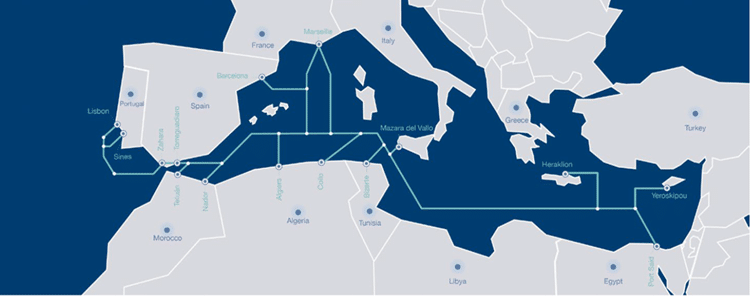
Alcatel Submarine Networks (ASN), Elettra Tlc, Medusa and Orange are pleased to announce the coming into force of the construction contract for the Medusa Submarine Cable System. This milestone marks the start of an ambitious project that will boost connectivity across the Mediterranean.

Medusa will establish crucial connections between Morocco, Portugal, Spain, France, Algeria, Tunisia, Italy, Greece, Cyprus and Egypt. The subsystem named Via Tunisia, part of the Medusa Cable, linking France and Tunisia, is cofunded by the European Union under the Connecting Europe Facility (CEF) program, as already announced by Orange.When complete, Medusa will span an impressive distance of over 8,700 kilometers, making it the longest cable in the Mediterranean Sea and providing enhanced North-South and East-West connectivity.

The construction has been awarded to industry leaders ASN and Elettra Tlc. The Medusa system is built on stateof-the-art 24-pair fiber optic Open Cable technology to meet increasing broadband requirements in the region, with 20Tb/s minimum capacity per fiber pair.

Elettra Tlc will promptly engage survey operations, while equipment manufacturing and installation are planned to span over 2024 and 2025. Orange will provide landing infrastructures in France, Tunisia and Morocco.

By connecting North Africa and Southern Europe, as well as several of the Mediterranean islands to the mainland, including Sicily, Crete and Cyprus, the Medusa submarine cable system will create unprecedented opportunities for collaboration, innovation and economic development. It will also provide an effective bridge between the Mediterranean and Atlantic regions, facilitating increased communication and cooperation across all these areas.

Medusa is committed to reducing the digital divide and this construction is an important step towards achieving this goal.

The construction of Medusa is funded by AFR-IX Telecom, Orange and the European Union though CEF (Connecting Europe Facilities) grants.

This collaboration highlights the commitment of industry leaders and governmental organizations to contribute to a more connected and prosperous future for the Mediterranean region.

Norman Albi, CEO of Medusa, highlights the strategic value of Medusa to improve connectivity in the Mediterranean: “We have been working for more than 3 years to reach this point and we are tremendously grateful to all those who, from early stages, supported Medusa: collaborating companies and European institutions. Thanks to the support of North African Operators, financial institutions and leading companies such as ASN, Elettra Tlc, Orange and AFR-IX Telecom, Medusa will be in service the 4th quarter of 2025”

Paul Gabla, Chief Sales and Marketing Officer of ASN said “The Medusa submarine cable system marks a major step forward in telecommunications infrastructure. ASN is honored to be at the forefront of this ambitious project, which will bring high-speed Internet connectivity and seamless communication to the region, unlocking a world of opportunities for businesses, communities and individuals throughout the Mediterranean region.”

Didier Dillard, President and CEO of Elettra Tlc said “We are very happy to be in charge of the marine works for the first phase of the MEDUSA project, the marine survey and the installation. Elettra Tlc is a true Mediterranean company that has installed and repaired a very large number of cables in this area, and we are excited to contribute to the construction of this future telecommunications backbone of the Mediterranean Sea.”

“Orange is delighted to put its leadership and industry expertise in the construction of this new system that will foster digital exchanges between Europe and North Africa and to welcome Medusa into its carrier neutral infrastructures in Marseille” said Aurélien Vigano, Vice President International Transmission Networks at Orange.

The submarine cable ecosystem is evolving. Join the cable operators and the wider connectivity industry in discussion at Submarine Networks EMEA 2024

Also in the news:
SK Telecom overhauls AI service ‘A.’ using ChatGPT
Leveraging 5G to develop new value and unlock digital dividends
SKT invests $100m in flying taxi company Joby Aviation

SK Telecom overhauls AI service ‘A.’ using ChatGPT


Press Release

SK Telecom today announced that it has released a major UX overhaul of its AI service ‘A.’ (pronounced A dot) to enhance customers to enjoy various content based on personal tastes and preferences. The reorganisation includes enhancements to several features such as the addition of new AI agents that are capable of taking on diverse personas.

SKT has improved the UX of the main screen of ‘A.’ so that various content can be viewed on one screen at once according to the user’s unique preferences.

The company has also added a chatroom in ‘A.’ where users can have conversations with an AI character. Through these conversations, users can share information about their daily life like they are talking to a close friend.

In addition, SKT has added ‘Chat T’ to ‘A.’, using the ChatGPT model of Microsoft’s Azure OpenAI service. By asking ‘Chat T’ questions, users can receive rich and informative responses beyond simple answers.

SKT also upgraded its own Large Language Model (LLM) to enable users to engage in a multi-turn dialogue. The model can understand the context of a conversation and grasp complex intentions, thereby creating a more logical and useful conversation.

Furthermore, through a joint development project with Scatter Lab, an AI startup known for the Lee Lu-da chatbot, SKT has introduced its new AI agents named ‘A. friends’ to bring colourful personas to its improved ‘A.’

‘A. friends’ are applied with conversational AI technology that enables emotional and human-like conversations. By engaging in conversations with ‘A. friends’, users can receive counselling and advice on a wide variety of topics. The feature is available on Android with the iOS version coming at the end of July.

In addition, to enable more customers to experience generative AI, SKT eased the age limit for signing up for ‘A.’ so that those under 14 years of age can join the service.

“With the massive overhaul of ‘A.’, we expect more customers to feel comfortable and enjoy using our conversational AI,” said Kim Yong-hun, Vice President and Head of AI Service Business Office. “We will continue to evolve ‘A.’ into a service that can help customers in their daily lives in all kinds of ways.”

How is the AI changing the telecoms world? Join the operators in discussion at this year’s Total Telecom Congress live in Amsterdam

Also in the news:
What’s in a name? Trials and tribulations of being an altnet
Orange-MásMóvil merger may reduce competition in Spain, says European Commission
White House announces state BEAD allocations

Leveraging 5G to Develop New Value and Unlock Digital Dividends


VIEWPOINT

The global digital industry, enabled by 5G, continues to move from strength to strength. In the last four years, 5G has not only gained one billion users across the world but is also playing a crucial role in the digitalization of all industries.

“All stakeholders from across the industry will need to work together, exploring innovative ways to connect people, homes, industries, machines, and vehicles. We will have to create new value with 5G to unleash digital dividends as it delivers higher traffic, more extensive connectivity, more reliable latency, and ubiquitous cloud services and intelligent applications,” says Li Peng, Corporate Senior Vice President, President of the Carrier BG at Huawei. He was delivering address, Creating New Value with 5G to unleash Digital Dividends at Mobile World Congress Shanghai 2023.

Modernizing networks to meet evolving consumer demands

A key reason for the growing 5G adoption is the ever-growing demand for new experiences in the consumer market. This is fostering innovation in this segment leading to the development of new forms of content and application, which are expected to drive future growth.

“To meet these high demands, the Chinese carriers have been promoting new applications like New Calling, cloud phones, and naked-eye 3D. New Calling helps carriers better connect consumers using video-based calls. The application facilitates communication in both personal and professional settings, making remote work easier. A single New Calling user can generate over 1 GB of data per week,” explains Li Peng.

On the other hand, cloud phones are being used in China to support cloud gaming, mobile office and more. Naked-eye 3D helps users enjoy higher-definition content from more perspectives. This application’s value chain is rapidly maturing, and the traffic generated by naked-eye 3D content will see a three-to-ten-fold increase compared with 2D videos.

However, for service providers to deliver these innovative applications requires them to upgrade their networks to deliver 10Gbps connectivity.

“Spectrum resources will have a big role to play in this network upgrade. The industry needs access to new frequency bands, including the 6 GHz and mmWave bands, as well as sub-100 GHz spectrum for 5G New Radio,” says Li Peng. Huawei has conducted field tests to demonstrate that a 10Gbps downlink speed can be achieved on the 6GHz band with the help of Extremely Large Aperture Arrays (ELAA). Even so, the growing digital ecosystem means that the demand for new 5G frequency bands will continue to grow as new applications emerge.

“There needs to be more 5G chips, IoT modules, and devices that support new spectrum bands. More efforts will be needed to pilot new applications around the world,” he adds.

This ever-increasing demand for improved experiences in the home segment means that the telcos would need to improve user experience.

“We believe the smart home market will develop rapidly in the next decade. To help carriers maximize the potential of this market, we launched 5G FWA Square solutions. We have FWA Pro for ultrafast connectivity, FWA Lite for cost-effective connectivity, and FWA Biz for the highly reliable connectivity required in industrial scenarios,” elaborated Li Peng.

Huawei is also working with carriers to explore FTTR [Fiber-to-the-Room] innovation and drive technology and business upgrade. This enables carriers to provide gigabit Wi-Fi connections to all parts of the premises without impacting the quality, paving the way for the telcos to adopt an innovative business model. “Early adopters of FTTR have already seen more than 30% increase in the ARPU of their home broadband services as well as a huge drop in their churn rate,” explains Li Peng.

Accelerating digital transformation of the enterprises with 5G

Unlike the previous technologies, 5G is helping enterprises accelerate digitalization and use it to grow production and efficiency. Huawei has helped conduct a trial of the industry’s first 5.5 G-enabled production line. The trial demonstrated that the 5.5G deterministic network guaranteed ultra-high reliability and reduced latency to 4 milliseconds in a high-concurrency environment.

Growing importance of 5.5G

“Customers will require new services and experiences in new scenarios, so carriers will need to upgrade their networks to 5.5G, in order to support 10 Gbps downlink, 1 Gbps uplink, and 100 billion IoT connections. 5.5G will open up unlimited opportunities for carriers,” says Li Peng. The industry is moving towards this with the 3GPP’s Release 18, the first standard for 5.5G to be released in the first half of 2024.

All the industry stakeholders will need to work together to drive the adoption of 5.5G to spur innovation in this segment and to be able to maximize the revenue potential of this technology.

SKT invests $100m in flying taxi company Joby Aviation


News

The South Korean operator is deepening its existing partnership with the air mobility specialist, aim to become a key player in country’s emerging Urban Air Mobility (UAM) market

Today, South Korea’s largest mobile operator, SK Telekom (SKT), has announced it will take a roughly 2% stake in UAM specialist Joby Aviation for $100 million.

Joby is currently developing an electric vertical take-off and landing (eVTOL) aircraft, with which it aims to ultimately provide commercial urban air travel. The aircraft will reportedly have a range of 241km and will be able to reach speeds of up 322km/h.

Joby is aiming to launch the vehicle in the US – the company’s home market – in 2024.

SKT first partnered with Joby in February last year, with the operator pledging to provide the prospective aerial taxis with connectivity and its nationwide ride-sharing app TMAP. By September, the SKT had announced a pilot programme on Jeju Island with the K-UAM Dream Team Consortium, which also included defence and IT specialist Hanwha Systems, the Korea Meteorological Institute, and Korea Airports Corporation (KAC), the national airport authority.

This consortium aims to participate in the South Korean government’s K-UAM Grand Challenge, a competition created to demonstrate the safety of UAM flight and find the country’s first official UAM operator.

With this direct investment in Joby, SKT is demonstrating its further commitment to this goal, hoping to leverage its national network and ridesharing experience.

“We will do our utmost to promote the demonstration and commercialization of urban air mobility in Korea, based on our partnership with Joby Aviation,” said Ryu Young-sang, CEO of SKT. “This technology promises to greatly reduce customers’ travel time and we look forward to turning Korea into a mobility powerhouse.”

“Our partnership with SKT places Joby in the best possible position to capitalize on the opportunity presented by the Korean market, where we continue to see a strong drive from the government to realize aerial ridesharing,” added JoeBen Bevirt, founder and CEO of Joby Aviation. “We’re grateful for SKT’s commitment to Joby and look forward to working with them as we develop a transformational air taxi service for Korea.”

SKT is targeting the launch of commercial flying taxis by 2025.

From autonomous driving to flying taxis, what role will mobile connectivity play in the transport infrastructure of the future? Join the operators in discussion at this year’s Total Telecom Congress live in Amsterdam

Also in the news:
What’s in a name? Trials and tribulations of being an altnet
Orange-MásMóvil merger may reduce competition in Spain, says European Commission
White House announces state BEAD allocations

T-Mobile to use 5G and C-V2X tech to reduce traffic accidents


Press Release

Today, the City of Bellevue, recognized as one of the top cities in the nation for digital innovation, and T-Mobile (NASDAQ: TMUS) announced the launch of a joint project that uses network-based Cellular Vehicle-to-Everything (C-V2X) technology and T-Mobile 5G to provide near real-time communications between cars, traffic infrastructure and vulnerable road users ― including pedestrians and cyclists.

This is all in support of Bellevue’s Vision Zero initiative, which aims to eliminate road-related fatalities and serious injuries by 2030. To help achieve this goal, T-Mobile will provide cellular connectivity, C-V2X equipment, Internet of Things (IoT) solutions, technical integration and end-to-end testing. The City of Bellevue will utilize these assets to implement and evaluate various C-V2X use cases designed to detect and protect individuals on the road.

The project will leverage T-Mobile’s award-winning 5G network to establish reliable and low-latency connections, enabling vehicles and traffic infrastructure to exchange information and notifications about pedestrians and cyclists in near real-time ― even in situations that are beyond visual line of sight. The City of Bellevue and T-Mobile will also make a mobile app available for Bellevue road users to download. This app will provide drivers with early visual and audible warnings about potentially harmful road interactions, contributing to increased safety and awareness on the road. At launch, C-V2X will be used in scenarios involving reduced speed zones, school zone flashing beacons, mid-block pedestrian crossings and signalized intersections.

“We are continually looking for ways technology can improve the daily lives of our Bellevue residents, workers and visitors,” said Bellevue Mayor Lynne Robinson. “Moving people safely from place to place using intelligent transportation systems is critical as we work toward achieving our ultimate goal of zero deaths and serious injuries on city streets. T-Mobile has been a valuable partner for the Bellevue community, helping us push the possibilities. We’re thrilled to roll out this C-V2X technology pilot and to continue making strides in safety for all users.”

“We are in a fortunate position that empowers us to help make cities safer, starting right within our own community,” said John Saw, EVP and Chief Technology Officer, T-Mobile. “With our advanced network technology, valuable intellectual property and strong partner ecosystem, we have the extraordinary capacity to enhance the safety and well-being of our fellow citizens. And our vision extends beyond Bellevue as we aspire to positively impact our country and contribute to a safer world.”

Moreover, as a testament to this proactive endeavor, T-Mobile embraces and supports the U.S. Department of Transportation National Roadway Safety Strategy Allies in Action campaign in partnership with the City of Bellevue. This collaborative effort showcases a shared commitment to bridging public and private sectors to help reduce fatalities and severe injuries on America’s roadways.

These C-V2X solutions and early prototyping were developed at T-Mobile’s innovation center, the 5G Hub, located in Bellevue’s Spring District. It’s here that T-Mobile works with partners and developers to create new solutions leveraging the latest in wireless technologies.

T-Mobile is the leader in 5G, delivering the country’s largest, fastest and most awarded 5G network. The Un-carrier’s 5G network covers 326 million people across 2 million square miles – more than AT&T and Verizon combined. 275 million people nationwide are covered by T-Mobile’s super-fast Ultra Capacity 5G, and the Un-carrier plans to reach 300 million people with Ultra Capacity – nearly everyone in the country – this year.

What role will 5G play in the advent of connected vehicles and autonomous driving? Join the operators in discussion at Connected America

Also in the news:
What’s in a name? Trials and tribulations of being an altnet
Orange-MásMóvil merger may reduce competition in Spain, says European Commission
White House announces state BEAD allocations

What’s in a name? Trials and tribulations of being an altnet


News

UK alternative network providers (altnets) are experiencing mixed fortunes. On the positive side, the likes of Gigaclear and CityFibre continue to bullishly celebrate their continued expansion, whilst others are falling foul of tough economic conditions – most recently Broadway Partners who went into administration at the end of May.

The situation isn’t eased by the consumer concerns over whether they can trust an altnet.

New research published by comparison website Uswitch found that only 15% of broadband customers answered positively when asked “Do you know what a broadband alternative network altnet is?” and only one-in-three consumers said they would consider using a new or unfamiliar provider.

Ernest Doku, telecoms expert at Uswitch.com, commented “The main challenge altnets face is that no one knows who they are. So, when they offer lower prices with incredible advertised speeds, consumers understandably may find it hard to be sure if they can trust them over the big names who have been around for decades.”

The irony of the situation will not be lost on the altnets. Most broadband customers (61%) would like to see more variety and choice in terms of broadband providers in their local area and altnets are well positioned for the current economic climate, generally offering consumers better value for money (up to three times more performance per £ according to Uswitch) – but still consumers are wary.

Today Chancellor Jeremy Hunt meets with economic regulators to discuss how to protect consumers from the impact of high inflation, so maybe this is the moment for altnets to shine? Certainly, this is the view of YouFibre’s CEO, Jeremy Chelot, who commented “Alternative networks like YouFibre and Hyperoptic are working hard to offer consumers ultrafast internet at fair prices and it’s time for them to make their voices heard.”

To hear more from the altnets, make sure you attend Connected Britain this September…