White House announces state BEAD allocations


NEWS

President Joe Biden and Vice President Kamala Harris have announced how the $42.5 billion Broadband Equity, Access and Deployment (BEAD) funds will be divided among U.S. states and territories

President Biden, Vice President Harris and Secretary of Commerce Gina Raimondo announced the allocations at the White House on Monday June 26. “What this announcement means for people across the country is that if you don’t have access to quality, affordable high-speed Internet service now – you will, thanks to President Biden and his commitment to investing in America,” Raimondo said. Mitch Landrieu, Senior Advisor to the President and White House Infrastructure Coordinator said, “simply put, high-speed Internet is a necessity in today’s society” and emphasized that the Biden-Harris administration is “committed to leaving no community behind”.

Drawing comparisons to President Franklin Roosevelt’s 1936 Rural Electrification Act, the Biden administration acknowledged that the goal of providing high-speed internet to all Americans is “bold” but by no means impossible. The BEAD program is part of President Biden’s sweeping Infrastructure Investment and Jobs Act (IIJA) and aims to close the digital divide.

The money allocated to each state was determined by the Federal Communications Commission’s (FCC) national broadband availability maps. An initial version of the map was published in November and was followed by a challenge process. States, internet service providers, and other parties were able to officially challenge the accuracy of the FCC’s data. The second version of the map was released May 30 and the NTIA used this to determine how to divide BEAD funds.

A senior administration official reported that the maps show that 8.5 million locations in the U.S. and its territories – about 7% of the country – do not have access to high-speed internet. Once states receive formal notice of their allocation on June 30, they will have six months to submit initial proposals for how they will spend the funds.

State governments will coordinate with county and local governments to formulate spending plans and correct any additional errors in availability data. After the NTIA approves states’ initial plans, state authorities can access 20% of their allocated funds. The remaining 80% will be available after states submit their final plans in spring 2025.

Tyler Cooper, editor-in-chief of BroadbandNow, said that “there weren’t any shockers” in terms of allocation amounts. Texas won the largest allocation at $3.31 billion – unsurprising given the vast scale of the state and the number of rural areas outside of the main urban hubs. California is set to receive $1.86 billion, closely followed by Missouri ($1.74 billion), Michigan ($1.56 billion), and North Carolina ($1.53 billion). All 50 states, along with Washington D.C. and Puerto Rico, will receive at least $100 million.

President Biden also stressed that the BEAD program will create new jobs for Americans as there are requirements for construction materials to be American-made. While the Build America, Buy America Act, part of IIJA, aims to stimulate the U.S. economy and create jobs, there are concerns that the requirement could delay broadband deployment efforts. Paul Atkinson, CEO of Optical Network Business at STL wrote on Telecoms.com that, as admirable as the intentions are behind Build America, Buy America, putting limitations on the production and supply of equipment will slow the rollout of American broadband networks, especially in the case of fiber optic networks.

You can hear more about investment in US broadband at next year’s Connected America which is being held in Dallas on March 12 & 13 2024 – secure your place here!

China’s big three join GSMA Open Gateway initiative


News

The GSMA have announced the addition of China Mobile, China Telecom and China Unicom to the Open Gateway initiative, a global network of operators using Application Programmable Interfaces (APIs) to provide universal access to operator networks.

The aim is to help developers and cloud providers enhance and deploy services more quickly across operator networks via single points of access. Early test programmes have centred on areas including online financial crime and more immersive gaming experiences.

Mats Granryd, Director General of the GSMA said “This will help unlock further value from 5G connectivity which will flow into the global economy and strengthen future investments, bringing transformational benefits of connectivity to all,”

Li Jun, EVP, China Telecom, said “We believe collaboration and common frameworks between mobile operators, developers and cloud providers will create new opportunities and drive forward new industries and experiences.”

Whilst Gao Tongqing, EVP, China Mobile, said they were “committed to opening up network capabilities and driving positive contributions to promoting the development of the digital economy.”

Launched earlier this year, there are now 29 signatories to the MoU including America Movil, AT&T, Axiata, Bharti Airtel, BT Group, China Mobile, China Telecom, China Unicom, Deutsche Telekom, Du, e& Group, KDDI, KPN, KT, Liberty Global, MTN, Omantel, Orange, Singtel, Swisscom, STC, Telecom Argentina, Telefónica, Telenor, Telstra, TIM, Veon, Verizon and Vodafone.

ADI talks energy efficiency as it expands investment in European HQ


News

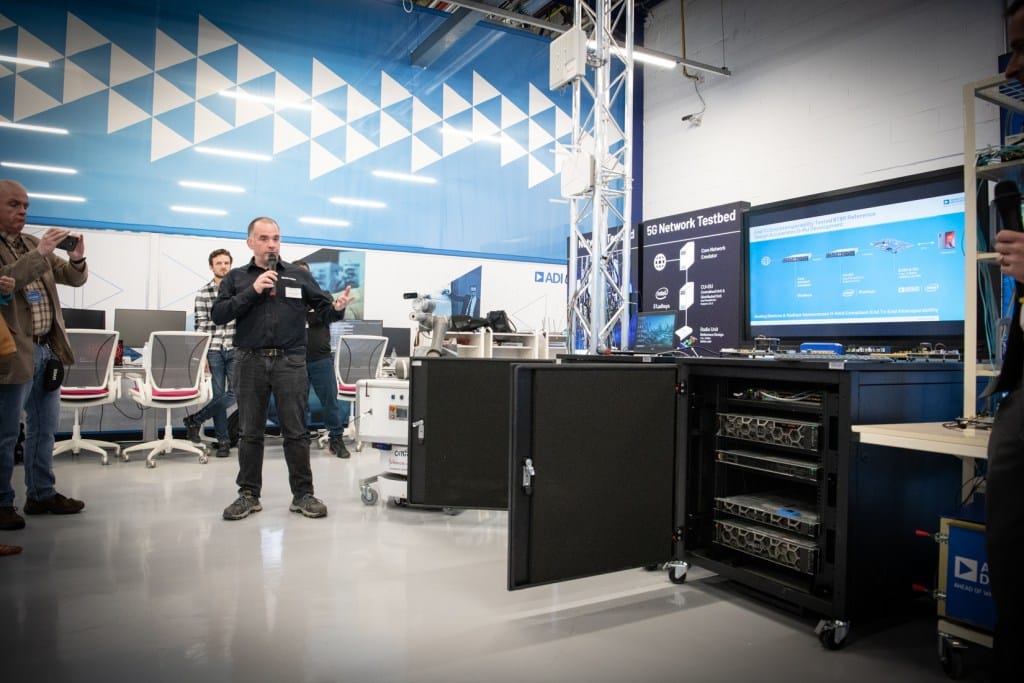
At a press tour of Analog Devices (ADI)’s Catalyst facility in Limerick, Ireland, the semiconductor specialist walked visitors through numerous tech demonstrations, from telco innovations to connected cars

Geopolitics and the semiconductor subsidy boom

Last month, semiconductor specialist ADI announced it would be investing €630 million to expand its operations in its European HQ in Limerick, Ireland. The influx of funding is set to triple the site’s fabrication capacity over the coming two years, as well as expanding the site’s workforce by around 600 people.

The funding comes as part of the European Union’s Important Projects of Common European Interest on Microelectronics and Communication Technologies (IPCEI ME/CT) initiative, one of a number of funding schemes designed to help develop Europe’s domestic chip industry. Undoubtedly the most significant of these schemes is the European Chips Act, which pledges to deliver over €43 billion of project-driven investment until 2030, with the ultimate goal of increasing Europe’s semiconductor production capacity to 20% of the global market.

This surge in European investment has led to a boom in European semiconductor projects, drawing interest from major players like TSMC, Samsung, and Intel. Indeed, just earlier this week, Intel announced a $32 billion investment to open two chip fabs in Germany, as well as another $4.6 billion to build a fab in Poland – all of which are being subsidised with EU and government funding.

But for ADI’s head of Systems & Technology, Cloud & Communications, Joe Barry, this geopolitical focus on chip technology and the resulting funding is no reason to change strategy.

“We were one of the first companies to secure some of the funding really targeted at building up wafer fabrication in Europe. This is definitely driven by the desire to have more resilience and control,” explained Barry. “But while the funding is nice, this doesn’t really affect our strategy. We operate on a hybrid manufacturing model, where we have our own manufacturing but outsource certain pieces. We’ll continue to do this as we continue to scale to meet rising demand.”

ADI’s Catalyst Centre shows the scope of cross-industry innovation

Following the announcement of ADI’s new investment in Limerick, journalists were last week invited to take a tour of the adjoining ADI Catalyst Centre – a €100 million ‘collaboration accelerator’ launched last year as a focal point for customers, business partners, and suppliers to co-create new solutions with the semiconductor specialist.

The tour shone light the enormous breadth industries impacted by ADI’s technology, including telecoms solutions, automotive advances, wearables/extended reality consumer devices, and smart factory tech.

In the telecoms space, key demonstrations included an open radio unit (O-RU) reference design platform, including ADI’s fifth generation 8T8R RadioVerse® System on Chip (SoC), which offers customers an end-to-end solution that allows for hardware and software customisation for macro and small cell RUs.

ADI suggests that this comprehensive reference design will help accelerate the development of Open RAN solutions and promote the evolution of Open RAN ecosystem.

The company also had its chip technology on show in the context of 5G Massive MIMO (multiple input multiple output). Working alongside Marvell Technology, the latest MIMO solution demonstrated power savings of 40% versus competing solutions, not only making the solution more sustainable, but also considerably lighter, allowing for faster deployment.

Key to these energy savings was the solution’s microsleep capabilities. According to ADI, 20% of telco base stations carry 80% of network traffic at any one time, meaning large portions of the network are consuming power while unused. By rapidly switching these elements of the RU on and off as needed, as well as optimising scheduling, sites can ultimately reduce their power consumption significantly.

With the RAN consuming between 70% and 80% of the network’s total power usage, its clear to see how widespread adoption of this technology could lead to significant cost savings for operators.

Conquering the energy challenge

Joe Barry, VP of Systems & Technology, Cloud & Communications at ADI

Following the demonstrations, Barry explained why reducing energy consumption was such a critical focus for the company.  

“Our customers’ customers are ultimately operators and whatever challenges they face are ones we face – that means energy consumption. In recent years, energy consumption has grown very significantly as an operating cost, so [the operators] are looking for ways to control that,” he said. “5G was a major step forward in terms of picojoules per bit, but when you’re facing an exponential growth curve these things catch up with you very quickly.”

Reducing power consumption is a major challenge for the semiconductor industry itself. Moore’s Law – a long-held tenant of the industry that the number of transistors in integrated circuits will double every two years as they become more complex – remains broadly accurate and these more powerful chips are typically more energy hungry.

This can be combatted in a number of ways, with Barry pointing to two areas of focus: static and dynamic power usage.

The static power consumed by the chips can be somewhat countered architecturally and algorithmically – essentially helping to optimise the power usage of the chip itself. But perhaps more important here is the dynamic savings, throttling energy usage in intelligent ways so that the device only consumes a high amount of energy when it really needs to.

“Both static and dynamic power savings are a technical challenge. Bringing down the static power requires a lot of innovation in terms of the algorithm and linearising power amplifiers to get more efficiency. Meanwhile, saving power dynamically requires turning things on and off very quickly – and high-power circuits don’t like being turned on and off very quickly! – so there’s a challenge here too in terms of efficiency and not degrading components,” he explained.

Looking to the future, these energy challenges are only going to grow as the user demand for connectivity continues to increase and we move forward towards the 6G era.

“In theory, 6G radio will potentially quadruple the number of antennas and the bandwidth used to meet the demand. If we stay on this trajectory, we’ll be looking at two-times or three-times the power consumption, which simply isn’t viable,” said Barry. “We need to innovate even more and that is an industry-wide effort. This is race we can win, but it has to be done through collaboration.”

Is the telecoms industry doing enough when it comes to building sustainable networks? Join the operators in discussion at this year’s Total Telecom Congress live in Amsterdam

Also in the news:
Hyperoptic announces plans to cut 110 jobs
U.S. Huawei ban: A Pyrrhic victory spurring digital decolonisation
New advertising guidelines push for clarity over contract price hikes

Satellite spectrum struggles: Elon Musk’s Starlink urges India to ditch airwave auction


News

Elon Musk insists that SpaceX’s Starlink satellite services could be a connectivity game changer for India’s rural regions, but the company’s path to commercial services remains clouded by doubt over the government’s spectrum policy

Earlier this week, billionaire Elon Musk met with Indian Prime Minister Narendra Modi during the latter’s diplomatic visit to the USA. According to reports, the discussion largely centred around Musk’s potential business ventures within India, with Musk outlining plans to potentially build a Tesla manufacturing base in India.

According to Musk, this could be just one of a number of “significant investments in India”, including launching SpaceX’s commercial LEO satellite service, Starlink, in the country.

But bringing Starlink to India is set to be a contentious process, not least because of SpaceX’s current clash over spectrum policy with India’s existing mobile operators.

The Indian government is currently planning to launch an auction for satellite-suitable spectrum in the near future, handling the spectrum in the same manner they would for 4G and 5G suitable bandwidths.

SpaceX, however, is currently lobbying the government to reconsider this strategy, arguing that the spectrum should simply be allocated to suitable companies in an equitable manner. The company said the auction process would drive up costs and impose geographical restrictions, therefore limiting the service’s reach and economic viability.

Reliance Jio disagrees, saying that foreign satellite companies like SpaceX could offer voice and data services to consumers and therefore directly compete with the rest of the telecoms sector. Thus, an auction is necessary to ensure a level playing field for the market.

Musk had previously tried to launch Starlink in India in 2021, with the company beginning to take preorders for the services prior to receiving regulatory approval to offer services. The Indian government ultimately cracked down on this practise, ordering SpaceX to return pre-order deposits and await full regulatory approval.

Starlink is still awaiting clearance from Indian National Space Promotion and Authorisation Centre (IN-SPACe) and Department of Telecommunications (DoT).

The communications satellite space race in India is beginning to heat up in recent years, with Jio Platforms forming its own low Earth orbit (LEO) satellite business, Jio Satellite Communications, late last year. Earlier that same year, the company had partnered with satellite specialist SES for a joint venture called Jio Space Technology Limited, aiming to provide broadband services using a combination of geostationary orbit (GEO) satellites and middle Earth orbit (MEO) satellites.

India’s second largest mobile player, Bharti Airtel, meanwhile, already owns a significant stake in the UK government-backed LEO satellite operator, OneWeb.

Rumours also suggest that Nelco, a local satellite company owned by Tata, and Canada’s Telesat are interested in launching satellite services in India and will seek spectrum licences.

Finally, Amazon’s long-awaited LEO sat project, Project Kuiper, is also expecting to launch its first satellites next year, indicating that India will be a key market for the service’s growth.

How is the emergence of LEO satellite constellations changing the telecoms ecosystem? Join the operators in discussion at this year’s Total Telecom Congress live in Amsterdam

Also in the news:
Hyperoptic announces plans to cut 110 jobs
U.S. Huawei ban: A Pyrrhic victory spurring digital decolonisation
New advertising guidelines push for clarity over contract price hikes

UK telcos pledge support for women in telecoms


News

The UK communications regulator Ofcom and seven of the country’s largest telecoms firms have today jointly committed to better supporting women in the industry to attain senior leadership positions

The gender imbalance in the telecoms industry is well established, with a stark disparity in the number of men and women in senior tech positions. Promoting gender equality has risen up the agenda for telecoms organisations in recent years, with various initiatives being put in place across the country, but progress remains in desperate need of acceleration.

Now, Ofcom and seven of the country’s largest telecoms operators – BT, Sky, TalkTalk, Openreach, Three, Virgin Media O2 (VMO2), Vodafone – have signed a pledge to improve this situation, committing to supporting the career development of more women within the sector.

Here is the pledge in full:

  • We are committed to increasing the senior representation of women in technology-based roles in the telecoms sector over the next three years; and to increase the overall representation of women in our sector.
  • We will invest our efforts in attracting and retaining women in our organisations, creating inclusive environments for them to excel and be their best.
  • As an industry we will come together annually to share good practice and showcase, to the outside world, our talented women in technology in the telecoms sector.
  • We will publish information on the impact our initiatives have made on our collective ambitions as well as against the diversity and inclusion strategies of our respective organisations. We aim to publish information on our initiatives, so we may inspire others in the sector.

As you can see, these commitments are fairly vague – it would have been nice to see some more concrete targets agreed for the end of the three-year period, for example. Nonetheless, this represents a step in the right direction, encouraging collaboration to solve one of the telecoms industry’s biggest social challenges.

“Having a diverse workforce is crucial to the success of any organisation. It drives creativity, innovation and ensures we as employers attract the skills we need from the widest possible pool. But for too many women, climbing that career ladder in a male-dominated industry can be a real challenge,” said Dame Melanie Dawes, Ofcom Chief Executive.

“We want the telecoms industry, including us at Ofcom, to lead the way in changing that. So it’s great to see so many companies getting behind this pledge, and committing to helping more women launch long-lasting and rewarding technology careers. We look forward to working together to achieve this.”

As you might imagine, most of the companies signing this pledge took the opportunity to highlight their individual successes and goals in this area. Sky pointed out that they had doubled female representation in their technology team since 2017, TalkTalk noted the creation of the North West Women in Tech awards; VMO2 highlighted its involvement in various projects to encourage women into STEM careers, while Three said it had already committed to a 50/50 gender split in leadership roles by 2030.

Ofcom invites other telecoms companies from across the sector to take the pledge and support the initiative.

How can we improve female representation throughout the UK telecoms sector? Join the telecoms ecosystem in discussion at this year’s Connected Britian conference

Also in the news:
Hyperoptic announces plans to cut 110 jobs
U.S. Huawei ban: A Pyrrhic victory spurring digital decolonisation
New advertising guidelines push for clarity over contract price hikes

Nokia and Proximus team up for Europe’s first hybrid quantum encryption key trial


Press Release

Nokia and its partners have announced the successful completion of Europe’s first live hybrid quantum encryption key trial with Proximus. Using technology from Nokia, ID Quantique and evolutionQ, Proximus was able to establish a quantum-safe optical network connection using quantum key distribution (QKD) to successfully encrypt and transmit data between two datacenters located in Brussels and Mechelen, Belgium. The live demonstration represents a significant milestone in the development of quantum key technologies and highlights the future of network security in the era of quantum computing.

Quantum computers are expected to usher in a new world of possibilities with the power to solve currently unsolvable problems. However, they can also pose a significant risk to online security, capable of breaking some of today’s most widely used security protocols in a matter of seconds. To prepare for Q-day – the eventual day when quantum computers are capable of performing sophisticated computations that can break asymmetric, mathematical based encryption schemes – enterprises, operators and governments will need to ensure their data and networks are safe from quantum attacks. Quantum cryptography allows operators to use the principals of quantum mechanics to encrypt and send messages securely.

The trial with Proximus highlights how quantum cryptography can be implemented in a live network to help protect against malicious hacks or attacks from future quantum computers. Using Nokia’s Quantum-Safe Networks solution alongside hardware and software from ID Quantique and evolutionQ which create, distribute and manage the quantum keys, Proximus was able to encrypt data running over its live optical network and use photonic properties to ensure the safety of the data transmitted. Adding an additional layer of security, Nokia’s SMS (Security Management Server), a quantum-safe key generator and orchestrator, provided classic quantum-safe encryption using symmetric key distribution in instances where the stability of data using QKD were compromised or altered.

Geert StandaertChief Technology Officer at Proximus, said: “Network security is not just a vital business priority; it’s the bedrock upon which our digital operations thrive. In an increasingly interconnected world, where data breaches and cyber threats loom large, protecting our networks is paramount. To prepare for Q-day, we need to take the proactive steps to safeguard our critical systems from quantum threats and this live trial is the first step. Working with Nokia and its partners, we’re confident that we’ll be able to continue to safeguard our critical systems and successfully navigate the ever-evolving threat landscape in the quantum computing world.”

James Watt, President Optical Networks Division at Nokia, said: “The trial we did with Proximus and our partners represents a groundbreaking leap forward in securing our digital future. We’re excited to demonstrate the industry’s only hybrid quantum key distribution system which we believe will be essential to unlocking a safer and more resilient digital landscape.  By combining the inherent properties of quantum mechanics with symmetrical cryptography, operators can safeguard their networks today against current and future Q-day threats such as store now, decrypt later activities.”

Rudy Hoebeke, Vice President of Product Management, IP Networks Division at Nokia, said: “Today’s trial with Proximus is an industry milestone in network security. With the industry’s only hybrid quantum encryption key solution, we’re able to provide Proximus with an unprecedented level of data security and resilience against existing and future threats stemming from the inevitability of Q-day. It also opens the door to new quantum-safe services for customers seeking to safeguard intellectual property or critical sensitive data against sophisticated quantum based cyber-attacks.”

Are operators doing enough to protect their customers’ sensitive data? Just how big of a threat is quantum computing to network security? Join the operators in discussion at this year’s Total Telecom Congress live in Amsterdam

Also in the news:
Hyperoptic announces plans to cut 110 jobs
U.S. Huawei ban: A Pyrrhic victory spurring digital decolonisation
New advertising guidelines push for clarity over contract price hikes

Former Vodafone CEO Nick Read finds new home at EXA Infrastructure


News

Read will serve as EXA’s new chairman, aiming to deliver significant growth for the business and expand its global infrastructure portfolio

Today, global fibre infrastructure firm EXA Infrastructure has announced that ex-Vodafone CEO Nick Read will be taking on the role of company chairman.

EXA currently owns 125,000km of fibre network across 34 countries, as well as a number of major submarine cable systems, including a trio of transatlantic cables. Since its formation from the backbone assets of GTT bac in 2021 by I Squared Capital, the company has been expanding rapidly, making numerous acquisitions and strategic partnerships around the world to bolster its global portfolio.

This rapid growth environment will be something of a stark contrast for Read, who resigned from his position as CEO of Vodafone at the end of last year after facing increasing pressure from investors to improve the Group’s sluggish performance. He had served in the role for four years, during which time he championed consolidation in the company’s most competitive markets, the majority of which did not ultimately materialise.

At the time of his resignation, Vodafone’s share prices had almost halved.

In this new position, however, Read should find growth comes much easier – at least for now.

“It is a privilege to be appointed Chair of EXA Infrastructure, particularly at a pivotal time for the telecoms industry where we are seeing significant investment in digital infrastructure and market growth,” said Read. “I look forward to working with the EXA leadership team who have a clear focus and commitment to customers, network excellence and continual investment to provide the most compelling experiences to clients and end users.”

EXA’s management was jubilant at the appointment, saying that Read would help lead the company’s “strategic network expansion plans, commercial growth and ongoing operational excellence efforts”

“Nick is a titan in our industry and I am convinced that his extensive leadership and technology experience will be invaluable to execute our ambitious growth strategy,” said EXA Infrastructure, Chief Executive Officer, Martijn Blanken. “His track record in business performance and transformation will be a welcome addition to guide EXA’s executive team. I am delighted to see Nick join us and I look forward to working closely with him.”

In related news, last week EXA Infrastructure announced they had acquired Croatian telco Unitel, expanding their existing infrastructure footprint in the Balkans. Unitel owns a 515km fibre backbone network that spans the country, including border crossings to Serbia and Bosnia and Herzegovina.

How is Europe’s data centre ecosystem evolving in 2023? Join the operators in discussion at this year’s Total Telecom Congress live from Amsterdam

Also in the news:
Hyperoptic announces plans to cut 110 jobs
U.S. Huawei ban: A Pyrrhic victory spurring digital decolonisation
New advertising guidelines push for clarity over contract price hikes

Telenor and Hafslund to launch new Norwegian data centre company

Press Release

The newly formed company will launch a trio of data centres in the capital region, helping to ensure sensitive data is stored and delivered safely on Norwegian soil

The criteria for security and sustainability are tightening at the same time as Norway is digitising at a historic rate. Together with partners, Telenor and Hafslund are establishing a company that will build secure and energy-efficient data centres in the Oslo area.

“Data centres are, in many ways, the digital heart of any business. This is where the data flows to and from, which involves high quality, security and energy efficiency requirements. Together with Hafslund and partners, we will now establish Norway’s most secure commercial data centre operator, with a strong focus on sustainable solutions”, says Sigve Brekke, CEO of Telenor.

While Telenor has a unique position as the country’s leading telecoms operator, Hafslund is one of Norway’s largest energy and infrastructure groups. HitecVision invests in developing energy companies in Norway and Europe, and Analysys Mason is a leading consulting agency in telecom, media and technology. This partnership offers concrete solutions to customers who demand a safe and energy-efficient location to store data critical to society.

“Backed by Norwegian-managed capital, this partnership will help resolve a significant issue in an increasingly digital society. Norwegian security authorities have requested the establishment of data centres and cloud services for sensitive information, functions and infrastructure of importance to national security interests in Norway. By creating this company, we are facilitating that sensitive data across sectors is stored and delivered safely on Norwegian soil,” says Brekke.

The investment will contribute to establishing more Norwegian data centers and thus increase the possibility that digital services can be produced within the country’s borders, which gives a greater degree of national control and better safeguarding of functions critical to society. The new company is part-owned by Telenor (31.7%), Hafslund (31.7%), HitecVision (31.7%) and Analysys Mason in Norway (5.0%).

Three new datacentres

Together with its partners, Telenor and Hafslund aim for the new company to be a leading player within colocation data centres. This entails the supply of servers and other hardware from private and public businesses with high security and efficient energy consumption requirements.

The new company’s ambition is to build three data centres, with a total capacity of 40 MW, in the capital region. The data centres will be colocation facilities for several tenants. Telenor Norway will deploy its own infrastructure, with associated strict security requirements. The development of the first data centre in Oslo will start towards the end of 2023.

Safe and sustainable

The new company will build and operate safe, energy-efficient data centres with solid and secure owners. Instead of leaving servers tucked away in basements, the new company makes it possible for businesses to move servers and critical IT infrastructure inside state-of-the-art data centres. This aids businesses and society from unnecessarily high electricity consumption and lays the foundation for more efficient and responsible operations. Together with Norway’s largest district heating supplier, Hafslund Oslo Celsio, the company has ambitions to design data centres with efficient solutions for reusing excess heat. The data centres, therefore, become a valuable contributor to a circular economy in Oslo municipality.

“Establishing these data centres will be an important contribution to enabling Norway’s green transformation and digitalisation. With solutions to reuse excess heat, the data centres will free up power consumption for heating and thus provide energy-efficient solutions necessary to reach Oslo’s and Norway’s climate goals”, says Finn Bjørn Ruyter, CEO of Hafslund.

How is Europe’s data centre ecosystem evolving in 2023? Join the operators in discussion at this year’s Total Telecom Congress live from Amsterdam

Also in the news:
Hyperoptic announces plans to cut 110 jobs
U.S. Huawei ban: A Pyrrhic victory spurring digital decolonisation
New advertising guidelines push for clarity over contract price hikes

The EU’s stance on Chinese 5G vendors exposes internal fractures


VIEWPOINT

The declaration of Chinese telecommunications giants Huawei and ZTE as high-risk vendors (HRV) is revealing a split between EU member states. Thierry Breton, European Commissioner for Internal Markets made the announcement at a recent news conference on 15 June. Several telecom executives and government ministers in Germany and Austria are questioning the EU’s conclusions regarding cybersecurity risks and have publicly voiced their opposition to the restrictions. This could have far reaching implications for the future of 5G development and international relations.

Huawei, in its official statement, “strongly opposes and disagrees” with the European Commission’s decision, asserting the move lacks a “verified, transparent, objective and technical assessment of 5G networks.” The tech giant warns that such restrictions could “pose serious economic and social risks,” possibly stifling innovation and distorting the EU market. Huawei also argued that the ‘High-Risk Vendor’ designation goes against free trade principles. They cite an Oxford Economics report that suggests excluding Huawei could inflate 5G investment costs by billions of euros, an expense that they say will end up being borne by European consumers.

Huawei says cybersecurity is a top priority and to assuage concerns about its products, once again invited customers and independent third-party testing organizations to its Cyber Security Transparency Centre in Brussels. Here customers and government standards bodies can perform security tests on all its equipment and code for verification against industry-recognized cyber security standards and best practices.

While the European Commission’s decision resonates with some, others have publicly rejected the security concerns raised about Huawei. Stephan Broszio, a spokesperson for Deutsche Telekom, asserts that China can’t shut down the 5G network, refuting the claim that manufacturers have remote access. Broszio states that “no update will be installed in live systems that have not previously been extensively tested for functionality and security.” He clarified that “The systems for network management are completely separated from the Internet and Deutsche Telekom’s office communication networks in their own high-security network. Access to this network is only available to a few specially checked employees, remote access for manufacturers is not possible.”

Research by Denmark’s Strand Consult showed that as much as 50% of 4G and 5G equipment in Germany is supplied by Huawei. This could run to as many as 46,000 sites across the country. According to a research note prepared by Barclays and seen by Lightreading, Deutsche Telekom could face a bill of around $1.2 billion, with Telefonica and Vodafone having to spend at least $750,000 each to remove their network equipment supplied by Huawei.

Similar support came from Austria, where Klaus M. Steinmaurer, the Managing Director of the Austrian Regulatory Authority for Broadcasting and Telecommunications (RTR), expressed no security concerns regarding Chinese telecom firms. He sees “no reason for this (naming them as high-risk vendors).”

Austrian Digitization State Secretary Florian Tursky also confirmed that EU network security guidelines had already been implemented in the country, but since there is still no formal ban network operators are still free to use components from Huawei or ZTE for 5G network expansion.

It’s not just industry insiders; Chinese officials too have thrown their weight behind Huawei. The Chinese Ministry of Foreign Affairs refuted the European Commission’s claims of security risks, urging the EU to abide by “international economic and trade rules.” Ambassador Fu Cong, Head of the Chinese Mission to the EU, echoed these sentiments, stating that the ban violates WTO rules and could seriously impact the business communities in both regions.

While the European Commission is trying to shut Chinese vendors out of European markets, China appears to be moving in the opposite direction. European network operators Nokia and Ericsson were recently awarded around 16 percent of a large China Mobile contract. This is double the previous market share held by European telecoms operators in China.

The future of 5G development in Europe hangs in the balance, as does the EU’s trade and political relations with China. It’s a scenario that stakeholders around the world will be monitoring closely.

Hyperoptic announces plans to cut 110 jobs


News

The full fibre operator is the latest in a string of telecoms firms to announce job cuts against the backdrop of the UK’s struggling economy

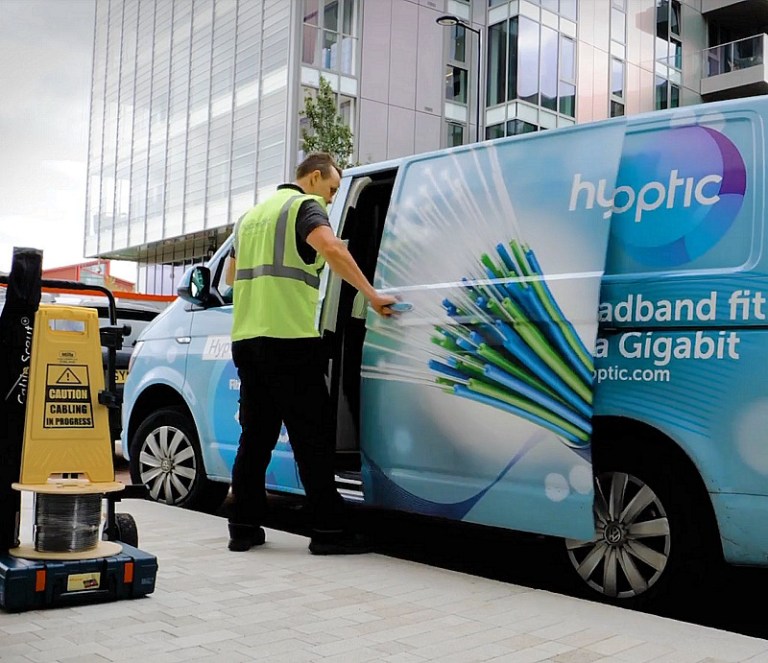
Today, one of the UK’s leading fibre altnets, Hyperoptic, has revealed that it plans to lay off over 100 members of staff.

The majority of affected staff will be network engineers working in Scotland and North West England, regions in which Hyperoptic’s network build is largely complete.

Around 40 network build engineers could be redeployed to customer build and customer connections teams.

The operator will also remove a layer of management from its infrastructure division.

“In support of our continued growth at Hyperoptic, we have refocused around 40 employees on customer-facing engineering roles, and are proposing to make around 110 redundancies in the UK as we increase our focus on areas that offer us the greatest customer reach,” said CEO Dana Tobak. “Where necessary for the customer-centric roles, we will provide support and training to help keep our people in Hyperoptic – building on their skills, experience and expertise. For those employees that do move on from Hyperoptic, we will ensure the support they receive reflects the great work they have delivered for this company.”

Hyperoptic is not alone in the telecoms sector when it comes to announcing job cuts this year. Rival altnets Zzoomm and CitFibre have both revealed plans to lay off hundreds of workers, citing macroeconomic pressures. BT, meanwhile, says it plans to shrink its workforce by 40% – around 55,000 jobs – by the end of the decade, suggesting that many existing roles could be ultimately be performed AI.

In recent years, the UK’s fibre market has been flush with investment, creating a vibrant community of altnets battling with incumbent operator Openreach to deploy full fibre throughout the country. However, with Openreach’s rollout advancing faster than initially expected and the UK’s challenging economic environment over the last year, the bubble is beginning to burst and altnets are clearly beginning to feel the squeeze.

It appears consolidation will soon become unavoidable, but who, when, where, and how remains to be determined.

How is the UK’s altnet ecosystem evolving in 2023? Join the operators in discussion at this year’s Connected Britain event

Also in the news:
Final bids for TIM’s fibre network expected tomorrow
Let’s talk about the symbiotic relationship between data centers and submarine cables
Mexico’s high 5G spectrum price could see Telcel the only bidder in latest auction