


Global tech giants combine to create Trusted Tech Alliance

News

The participating companies pledge to follow the same standards of transparency, security, and data protection

Fifteen international tech giants have joined forces to launch the Trusted Tech Alliance, an initiative aimed at promoting transparency and trust across the tech sector.

The founding members – which includes the likes of Anthropic, Google, and Ericsson – are pledging to adhere to a set of shared principles to help foster a more open and reliable tech industry.

The initiative’s five founding principles, according to its website, are as follows:

  • Transparent Corporate Governance and Ethical Conduct
  • Operational Transparency, Secure Development, and Independent Assessment
  • Robust Supply Chain and Security Oversight
  • Open, Cooperative, Inclusive, and Resilient Digital Ecosystem
  • Respect for the Rule of Law and Data Protection

These principles, the members say, will help ease cross-border collaboration at a time when geopolitical tensions are eroding international trust.

Tech companies are under increasing scrutiny over their origin and political independence, while governments are increasingly pushing for technological self-sufficiency and digital sovereignty.

“This is a period of time when many governments and countries are feeling pressure to create stronger technology borders, to focus more on their own digital sovereignty,” said Microsoft President Brad Smith in an interview with Reuters. “Our companies are working together to set this high standard to really make clear what the definition of trust is.”

The members will self-assess their compliance with these ‘high standards’, though Smith notes that provisions are also included for independent assessment.

The other founding members are Amazon Web Services, Cassava Technologies, Cohere, Hanwha, Jio Platforms, Microsoft, Nokia, Nscale, NTT, Rapidus, Saab, and SAP.

Keep up to date with all the latest telecoms news with the Total Telecom newsletter

Also in the news
World Communication Award Winners 2025
Ofcom clears the way for satellite-to-smartphone services
LG Uplus’s AI voice call app glitch leaks user data


FCC clears Amazon Leo to launch 4,500 more satellites

(Image credit: Amazon)

News

The approvals bring Amazon’s planned constellation to 7,700 satellites

This week, the Federal Communications Commission (FCC) has given Amazon Leo the green light to launch a second tranche of low Earth orbit (LEO) communications satellites.

The approval will allow the company to launch 4,504 additional satellites, bringing the burgeoning constellation’s full complement to 7,727 devices.

Of the newly approved satellites, 3,212 are the more advanced Gen 2 satellites, while 1,292 are Gen 1 satellites aimed at expanding coverage to polar regions, including the northernmost parts of North America and Europe.

Under the approval, Amazon Leo must launch half of the approved satellites by February 10, 2032, and the remaining half by February 10, 2035.

Amazon Leo (previously known as Amazon’s Project Kuiper) has been in development since 2019, aiming to challenge meteoric rise of SpaceX’s Starlink.

Starlink already has around 9,000 satellites in orbit, and recently secured approval to increase this number to 15,000.

As such, Amazon Leo has a lot of catching up to do – a fact made more daunting by its slow deployment rate since it began launching satellites in April last year.

Amazon’s initial FCC clearance required the company to launch half of its 3,232 Gen 1 satellites by July 30, 2026; however, last month the company filed a request for an extension, citing launch vehicle limitations. Amazon is asking that the deadline be extended to July 2028 or even waived entirely.

Amazon Leo has currently launched just 180 of the 1,616 satellites required. (Thirty-two additional satellites are set to be sent into orbit later today, delivered by Arianespace’s latest Ariane 6 launch vehicle.)

Despite this, the company still reportedly aims to begin providing commercial services later this year.

In related news, this week maritime connectivity reseller MTN has announced it will be the first to offer the sector access to Amazon Leo.

According to MTN’s website, the company’s existing partnership with Starlink is ‘the core of [the company’s] strategy’, but it also notes other satellite partners including OneWeb an GEO (geostationary) satellite operators.

“But Starlink is only part of the solution. MTN combines LEO networks like Starlink and OneWeb with GEO satellites, wireless, and near-shore RF to deliver a hybrid model that consistently outperforms legacy connectivity.”

Keep up to date with all the latest telecoms news with the Total Telecom newsletter

Also in the news
World Communication Award Winners 2025
Ofcom clears the way for satellite-to-smartphone services
LG Uplus’s AI voice call app glitch leaks user data

Navigating the multilayer wholesale era

Whitepaper

For years, the telco wholesale model was a predictable, linear affair. It was a world of minutes and megabytes, defined by simple value chains where connectivity was the sole currency. But as the global industry evolves, MDS Global is highlighting a shift toward something far more intricate: the value network.

In this new “Wholesale Plus” era, the boundaries between operators, mobile virtual network operators (MVNOs), hyperscalers, and enterprises are dissolving. As CCS Insight explores in their latest report with MDS Global, communication service providers (CSPs) are becoming the essential platform for a massive ecosystem of digital services. From real-time network APIs to Open Gateway’s “Quality on Demand” API, the revenue opportunities are vast, but they bring a level of billing complexity that legacy systems simply cannot handle.

Ryan O’Hanlon, VP of Global Sales at MDS Global, joined the Beyond the Cable podcast in 2025 to discuss this transition towards sophisticated charging metric combinations. As Ryan noted, whether it is supporting a short-term quality boost for a specific event or managing application service plans, the billing engine must be a revenue catalyst, not a bottleneck. It requires a system that can orchestrate settlements across multilayer hierarchies, often involving four or five different partners in a single transaction.

In a market where technical agility is the true differentiator, agility is the only true competitive edge. To attract the most innovative partners, CSPs must move beyond the “one-size-fits-all” approach and embrace a platform that allows for rapid pivots and complex, real time settlement.

To find out how your organisation can unlock these new revenue streams and master the multilayer wholesale world, you can download the full CCS Insight whitepaper and listen to the latest industry discussion via the links below.

Unlock New Revenue: Download the Whitepaper


MDS Global will be showcasing these solutions at MWC Barcelona. You can find the team at the Lumine, Hall 2, Stand 2G11.

Telefonica makes $1.2bn exit from Chile

News

The sale to NJJ and Millicom marks the latest step in Telefonica’s Latin American retreat

This week, Telefonica has announced it has sold its Chilean mobile unit to Millicom and NJJ, a pair of companies both owned by French billionaire Xavier Niel.

The deal, valued at $1.2 billion, will see NJJ take a 51% of the business and Millicom a 49% stake. Despite holding the smaller stake, Millicom will operate the business on a day-to-day basis.

“This gives NJJ and Millicom operational control from day one and the ability to capture long-term growth potential at an attractive valuation, without compromising our financial strength,” Millicom Chief Executive Officer Marcelo Benítez said in the statement.

Telefonica will receive an initial payment of $50 million, with $340 million deferred. Telefonica canTelefonica makes $1.2bn exit from Chile also earn up to a further $150 million based on the unit’s future performance.

Both Millicom and NJJ will also have the right to purchase the other’s stake after five and six years have passed, with Millicom’s option taking priority.

Telefonica has been divesting of its Latin American businesses since 2019, when the company changed its strategy to focus on its core markets of Spain, Germany, Brazil, and the UK.

The sale of these units has accelerated under CEO Marc Murtra, who took over the role at the start of January and quickly oversaw exits from  Argentina, Peru, and Colombia.

Discussions over Telefonica’s Chilean unit had been underway since at least in May last year, with America Movil, WOM, and Entel also displaying interest in the business.

Millicom, on the other hand, is expanding its regional footprint and has already proven a keen buyer of Telefonica’s struggling businesses.

In the past two years, Millicom has snapped up Telefonica’s operations in Colombia, Ecuador, and Uruguay for a combined total of over $1 billion.

Keep up to date with all the latest telecoms news with the Total Telecom newsletter

Also in the news
World Communication Award Winners 2025
Ofcom clears the way for satellite-to-smartphone services
LG Uplus’s AI voice call app glitch leaks user data
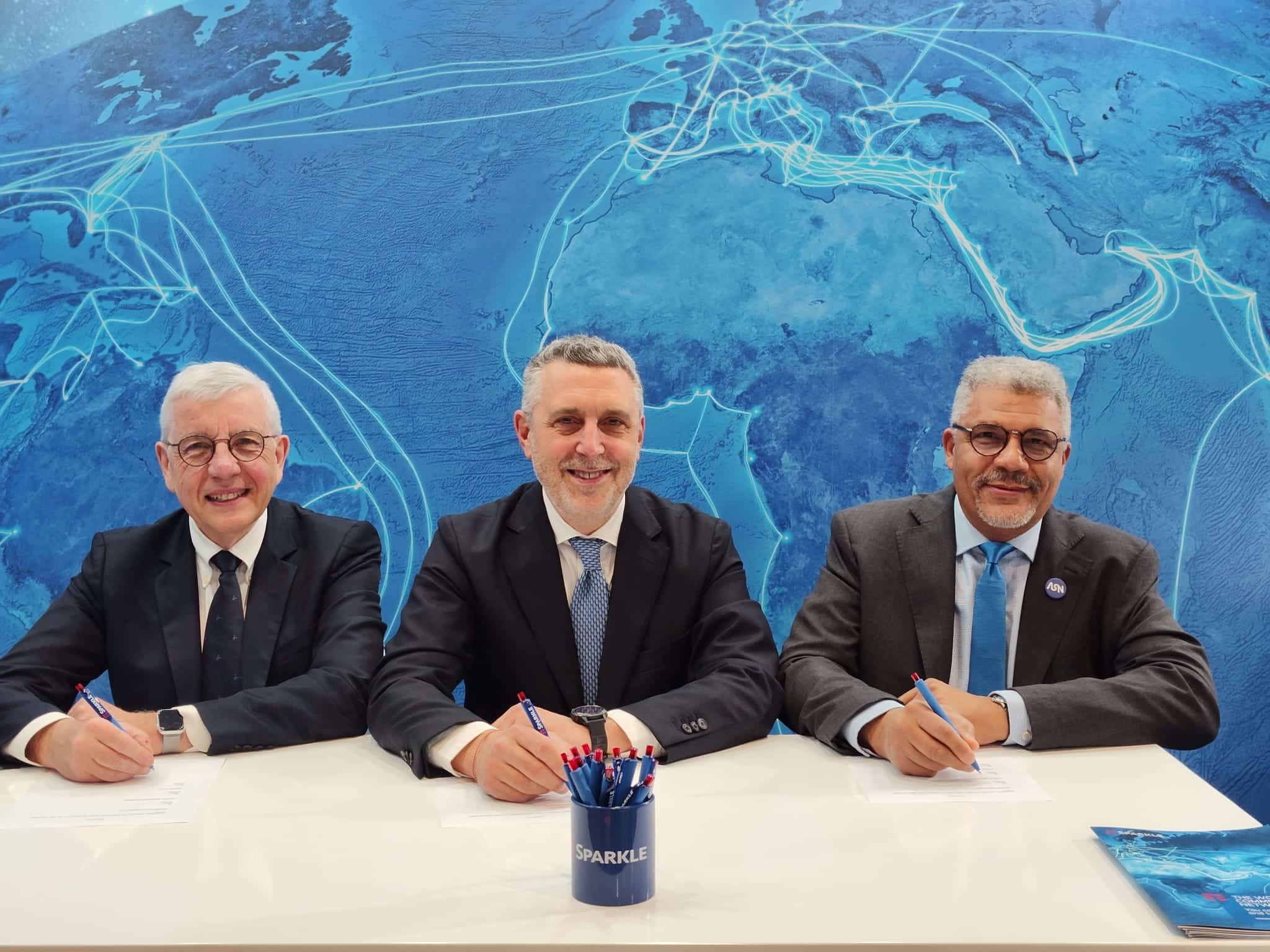
Sparkle, ASN and Elettra to build GreenMed subsea cable in the Mediterranean

Press Release

Sparkle, the first international service provider in Italy and among the top global operators, announces the construction of GreenMed, a next-generation subsea cable system designed to enhance route diversity, resilience and low-latency connectivity between Europe and the Middle East. The system will be engineered and manufactured by Alcatel Submarine Networks (ASN), a major player in the submarine cable industry, and installed by Elettra Tlc, a company dedicated to the marine survey, installation and repairs of telecommunication cables.

GreenMed East will cross the Adriatic Sea, providing diverse optical fiber connectivity between Levant countries and the rich digital ecosystem of the Milan area; the route will touch the strategic gateways of Crete and Sicily and connect, along its path, the Balkan countries, thus supporting the growing demand driven by cloud adoption, content delivery, enterprise digitalization and emerging AI-era traffic patterns. The new system will be fully integrated into Sparkle’s broader backbone and landing-hub strategy, delivering secure and diversified international connectivity services to carriers, cloud and content players, as well as multinational enterprises.

GreenMed builds on Sparkle’s experience with BlueMed – the company’s flagship project in the Tyrrhenian Sea – and its pioneering open architecture approach. In this context, GreenMed further strengthens the open cable model allowing each fiber-pair tenant to select its preferred optical illumination architecture and vendor, in line with system design and operational requirements.

The contract between Sparkle, ASN and Elettra Tlc, executed today during Capacity Middle East 2026 in Dubai, will be in force by end of February 2026, with the first segments of the system expected to be in service by late 2028. Under the agreement ASN will be responsible for system design and manufacturing of the subsea optical infrastructure including wet plant components and associated equipment, while Elettra Tlc will carry out marine operations, including route surveys and cable installation/laying activities.

“GreenMed represents another concrete step in Sparkle’s strategy to strengthen the Mediterranean basin as a key digital gateway and to reinforce Italy’s role as a primary international connectivity hub,” said Enrico Maria Bagnasco, CEO of Sparkle. “With GreenMed in the Adriatic and BlueMed in the Tyrrhenian, Sparkle offers two highly innovative routes between Europe and the Middle East for maximum diversification and resilience.”

“ASN is proud to bring its end-to-end subsea expertise and advanced system design capabilities to GreenMed,” added Alain Biston, CEO of ASN. “This project will showcase next-generation wet plant technology, scalable capacity design and industrial quality, enabling a future-proof infrastructure that supports the most demanding applications and evolving traffic patterns.”

“Elettra is honored to be entrusted with the marine operations for GreenMed,” commented Didier Dillard, President & CEO of Elettra Tlc. “Our teams will deliver the survey and installation phases with a strong focus on safety, precision and environmental responsibility, leveraging deep experience in Mediterranean cable operations to ensure an efficient and reliable deployment.”

How is Europe’s submarine cable ecosystem changing in 2026? Join the experts in discussion at Submarine Networks EMEA, the world’s largest subsea cable event

Also in the news
World Communication Award Winners 2025
Ofcom clears the way for satellite-to-smartphone services
LG Uplus’s AI voice call app glitch leaks user data

Let third-party AI assistants access WhatsApp, EU tells Meta

News

The European Commission’s ‘preliminary view’ is that Meta is stifling competition by blocking competitors’ AI assistants from WhatsApp

The European Commission has sent a Statement of Objections to Meta, presenting its preliminary view that Meta breached EU antitrust rules by excluding third party AI assistants from accessing and interacting with users on WhatsApp.

The statement says that Meta is likely to be abusing its dominant position in the consumer communication application market, potentially stifling future competition.

Meta made the policy changes to effectively ban third-party AI assistants from WhatsApp in October last year. The Commission began investigating the matter in December the same year.

“Artificial intelligence is bringing incredible innovations to consumers, and one of these is the emerging market of AI assistants. We must protect effective competition in this vibrant field, which means we cannot allow dominant tech companies to illegally leverage their dominance to give themselves an unfair advantage,” said EU Commissioner for Competition and Executive Vice-President for Clean, Just and Competitive Transition, Teresa Ribera, in a statement.

In addition, the EU is considering implementing interim measures to ensure these AI assistants can retain access to WhatsApp while the investigation is ongoing.

“AI markets are developing at rapid pace, so we also need to be swift in our action. That is why we are considering quickly imposing interim measures on Meta, to preserve access for competitors to WhatsApp while the investigation is ongoing, and avoid Meta’s new policy irreparably harming competition in Europe,” Ribera explained.

Meta rejects the assertion that their policy is anticompetitive.

“The facts are that there is no reason for the EU to intervene in the WhatsApp Business API,” a Meta spokesperson said.

“There are many AI options and people can use them from app stores, operating systems, devices, websites, and industry partnerships. The Commission’s logic incorrectly assumes the WhatsApp Business API is a key distribution channel for these chatbots,” the company added.

Meta has a fractious history with EU regulations, with a long history of clashing with the bloc’s stringent data privacy, competition, and artificial intelligence laws.

In the past three years, the EU has fine Meta over €2 billion for various antitrust and GDPR infractions.

It is worth noting, however, that not every EU decision has gone against the tech giant. Indeed, this week a ruling from the European Court of Justice (ECJ) has given the green light for WhatsApp to continue contesting a €225 million fine delivered by the Irish data regulator back in 2021.

“The Court refers the case back to the General Court for it to rule on the merits, including on whether WhatsApp infringed the relevant provisions of the GDPR,” the ECJ said in a statement.

Investigations into WhatsApp’s Data Protection Regulation (GDPR) compliance first began in 2018. Three years later, in 2021 the Irish Data Protection Commission fined WhatsApp €225 million for failing to inform its users how their data would be shared with its parent company, Meta (then Facebook).

WhatsApp immediately challenged the decision, which has seen them embroiled in a legal tussle for the past five years.

Keep up to date with all the latest telecoms news with the Total Telecom newsletter

Also in the news
World Communication Award Winners 2025
Ofcom clears the way for satellite-to-smartphone services
LG Uplus’s AI voice call app glitch leaks user data
BT Group shuffles exec team at Openreach and BT International

Press Release

BT Group today announces leadership succession within Openreach and BT International.

Katie Milligan, currently Deputy CEO of Openreach, will become CEO, Openreach on 01 April 2026. She succeeds Clive Selley, who will become CEO of BT International. He succeeds Bas Burger who has decided the time is right for him to leave BT after 18 years of service, including nine years on the Executive Committee, also on 01 April 2026.

Allison Kirkby, BT Group Chief Executive, said:

“Openreach is a critical national asset – the digital backbone of the UK – and a key driver of BT Group’s long‑term value. Its talented team, disciplined execution and customer focus continues to strengthen our position as the UK’s most trusted connector. Katie has helped shape that success. Her deep industry experience, strong people leadership and sharp operational instincts make her the right leader to take Openreach forward.”

“Clive’s contribution at the helm of Openreach has been exceptional. His leadership – particularly the scale, pace and quality of the full fibre broadband build, has set new standards for our industry. We are deeply grateful for the commitment, expertise and integrity he has brought to the role. Clive’s lasting legacy is a world-class digital infrastructure that will serve the UK for generations to come.”

“Clive is also the best person to lead BT International forward as a next generation, global telco platform business. No one has more experience building complex modern day infrastructure and supporting customers at scale in their digital transition. I’m delighted he’s staying within BT Group and look forward to working together with him in his new role.”

“I’d like to thank Bas for all that he’s done for us over the past 18 years, including leading Global, BT Business and, most recently, successfully carving out BT International as a standalone unit. He has laid the foundations and strategy for a more focussed, responsive platform business for our customers outside of the UK, ready to scale and grow with the help of next generation technologies.”

“Together these changes strengthen BT Group’s leadership for the next chapter – giving Openreach continued commercial and customer momentum in the UK, and speeding up the transformation of BT International.”

Keep up to date with all the latest telecoms news with the Total Telecom newsletter

Also in the news
World Communication Award Winners 2025
Ofcom clears the way for satellite-to-smartphone services
LG Uplus’s AI voice call app glitch leaks user data
The Silklink project: STC pledges to help reconnect war-torn Syria

News

The project includes the deployment thousands of kilometres of fibre cables as Syria looks to become a regional digital hub

This week, Saudi Arabian communication giant STC Group has announced it has won a roughly $800 million contract to lead Syria’s Silklink infrastructure project.

Silklink is a joint venture with the new Syrian government aimed at improving communication both regionally and internationally. It includes the deployment of around 4,500km of optical fibre, as well as the establishment of data centres and international submarine cable landing stations.

STC will hold a 75% stake in Silklink, with the remaining 25% stake held by the Syrian Sovereign Fund.

The new backbone network will be used to underpin Syria’s digital transformation, supporting digital applications, cloud services, the IoT, and advanced mobile services. It will also serve to make the county a key data transit route between Asia, the Middle East and Europe.

While no specific deadlines for the network’s deployment have been announced, Syria’s minister of communications and information technology, Abdulsalam Haykal, said the development would take place in two phases over the next 18–24 months.

For STC, the investment represents its latest efforts to improve cross-border connectivity in the Middle East, helping position Saudi Arabia as the region’s digital centre. STC is currently building a similar international backbone network in Oman with Ooredoo, as well as working to connect both the 2Africa and Saudi Vision Cable subsea networks to countries across the region.

The Silklink project was also announced alongside roughly $2 billion-worth of economic agreements between the Saudi Arabian and Syrian governments, highlighting the warming of a once frosty relationship. These investments notably include the creation of new low-cost airline, aimed at helping reconnect Syria to international travel after years of flight restrictions.

Keep up to date with all the latest telecoms news with the Total Telecom newsletter

Also in the news
World Communication Award Winners 2025
Ofcom clears the way for satellite-to-smartphone services
LG Uplus’s AI voice call app glitch leaks user data

Grid Telecom to build Artemis subsea cable connecting Crete to mainland Greece

Press Release

Grid Telecom, a wholesale telecommunications provider and subsidiary of IPTO, has announced the construction of ARTEMIS, an ultra-high-capacity subsea optical fiber cable system that will link Crete with mainland Greece.

As a new strategic digital corridor in the Eastern Mediterranean, ARTEMIS is set to strengthen decisively regional connectivity, enhance Greece’s geopolitical footprint, and accelerate the country’s ongoing digital transformation.

The ARTEMIS system will be equipped with subsea repeaters and will span approximately 280 kilometres, including its terrestrial segments linking the cable landing stations. Ιt will interconnect all landing stations and data centers in Crete and Attica region, enabling data transmission rates of up to 30 Tbps per fiber-pair. With a minimum of 24 fiber-pairs, ARTEMIS will deliver an overall design capacity of at least 720 Tbps, more than meeting all medium‑ and long‑term digital infrastructure needs.

Engineered to support the next generation of cutting‑edge technologies, ARTEMIS will take full advantage of the relatively short transmission distance and the capability to expand the optical spectrum. As a result, the system is poised to become the first petabit-class subsea cable in Greece and the Mediterranean, with a potential total capacity exceeding 1 petabit per second, pushing well beyond the performance limits of today’s subsea optical fiber systems, setting a new benchmark for regional and international digital connectivity.

Grid Telecom continues to invest in state‑of‑the‑art infrastructure with the goal of transforming Crete into a strategic digital hub, delivering network reliability, flexibility and diversity. Grid Telecom will leverage the synergies between the new ARTEMIS system and its existing Minoas East‑West and Apollo East‑West systems, which already connect the island to mainland Greece through four independent routes and a total of 96 fiber-pairs. The Minoas East‑West system links Chania to the Peloponnese, providing a low‑latency alternative route, while the Apollo East‑West system provides a direct connection between Heraklion and Attica, with no intermediate cable landing stations, adding another critical alternative path.

In line with its commitment to advancing next‑generation telecommunications services, Grid Telecom is proceeding with the immediate construction of new cable landing stations in Chania and Attica. These facilities will serve both as landing points for the ARTEMIS cable system and as critical gateways for international subsea fiber cables traversing the Eastern Mediterranean, linking Greece with the Middle East and Western Europe. ARTEMIS will incorporate Open Cable Interface Equipment (OCIE), enabling seamless integration with all international cable systems, eliminating the need for additional transmission terminal equipment and providing direct, cost‑efficient backhaul access to all data centers.

With these infrastructures in place, Grid Telecom as the premier neutral provider of wholesale telecom services in Greece, will deliver secure, open‑access landings and highly resilient connectivity through diversified fiber routes to both existing and emerging data centers in Crete, mainland Greece, and neighbouring countries. By fully leveraging its integrated terrestrial and subsea network assets, the company will ensure robust, scalable, and carrier‑grade connectivity across the region and provide comprehensive technical support and maintenance services at both infrastructure and operational levels.

Keep up to date with all the latest telecoms news with the Total Telecom newsletter

Also in the news
World Communication Award Winners 2025
Ofcom clears the way for satellite-to-smartphone services
LG Uplus’s AI voice call app glitch leaks user data

Openreach launches app to keep engineers safe from abuse

News

The app provides GPS location tracking and an SOS button to quickly contact the police

Today, Openreach has announced the launch of a new worker safety app aimed at tackling the rampant abuse its engineers face while on the job.

The app, created in partnership with Peoplesafe, includes various safety features designed to support staff in the field. These include an SOS button and fall alarm connecting to a 24/7 control centre, GPS tracking for accurate emergency response, two-way audio and direct police dispatch, and commute monitoring and critical event alerts.

The app will be installed on all devices carried by Openreach engineers and will be optional for office staff.

“Fall alarms are activated by sensors in the person’s mobile phone, while the SOS alarms can be set off with a simple press of the handset. Emergency services can be on their way within minutes which is just incredible,” said Adam Elsworth, Safety Director at Openreach. “While Peoplesafe will only be mandatory for our field teams (due to the nature of their work) we hope all of our people will use the app to have peace of mind and support if and when they need it.”

Openreach recorded 700 incidents of either physical or verbal abuse since April last year. These include “being spat at, pushed down stairs, threatened with dogs and knives, punched and kicked and even barricaded into homes and vans”.

The company also says it has seen an increase in racially motivated incidents.

“The Peoplesafe app gives our people an added layer of safety while on the job and particularly for many of our colleagues that work alone for long periods of the day. It also helps us to address an area we have less control: attacks by members of the public,” said Elsworth.

Keep up to date with all the latest telecoms news with the Total Telecom newsletter

Also in the news
World Communication Award Winners 2025
Ofcom clears the way for satellite-to-smartphone services
LG Uplus’s AI voice call app glitch leaks user data