BT scraps 2025 landline switchover deadline 


News

A new deadline of January 2027 has been set, allowing more time for vulnerable customers to prepare for the switch-off 

BT has confirmed today that it will delay the switch-off of all copper-based phone lines across the UK until 2027, two years later than originally planned. 

The news was hidden deep in the company’s full year financial results for 2023, but has been confirmed again in a separate press release this morning. 

The delay will apply to all customers, both business and consumer.  

The analogue networks are decades old and are increasingly difficult to service, with replacement parts  hard to source. 

The delay follows a wave of concern over the exposed vulnerability of predominantly elderly customers, who rely on landline-based medical and security alarms. While these systems can also work over digital landlines, they are vulnerable to power cuts or other outages, unlike legacy copper connectivity.  

Around 2 million people in the UK currently use these devices. 

Last December, companies including BT and Sky agreed to stop the forced switchover onto the digital lines after several incidents involving telecare devices were reported. In April this year, BT’s Consumer division started switching zero-use landline customers who have a broadband connection to its Digital Voice landline service. 

“The urgency for switching customers onto digital services grows by the day because the 40-year-old analogue landline technology is increasingly fragile. Managing customer migrations from analogue to digital as quickly and smoothly as possible, while making the necessary provisions for those customers with additional needs, including telecare users, is critically important,” said Howard Watson, Chief of Security and Networks at BT. 

“Our priority remains doing this safely and the work we’re doing with our peers, local authorities, telecare providers and key Government organisations is key. But more needs to be done and we need all local authorities and telecare providers to share with us the phone lines where they know there’s a telecare user,” he continued. 

All customers are expected to be moved off the analogue network by January 2027. 

Keep up to date with the latest international telecoms news by subscribing to the Total Telecom daily newsletter 

Also in the news:
UK government conditionally approves £15bn Vodafone–Three merger
Nokia and Vodafone trial Open RAN with Arm and HPE
T-Mobile and Verizon to buy US Cellular, reports say

SubCo to upgrade Australian subsea cable system 


News 

Australian subsea cable company SubCo has announced an upgrade to the capacity of its SMAP subsea cable system that connects Sydney, Melbourne, Adelaide, and Perth (S-M-A-P)

The cable spans roughly 5,000km, was supplied by Alcatel Submarine Networks, and was installed by Optic Marine Systems. 

SMAP was originally designed with twelve fibre pairs, but SubCo has now upgraded the system to a sixteen fibre pairs, increasing the total capacity of the system by 33%. 

“This increased investment in capacity is to ensure we are able to support Australia’s digital infrastructure needs both now, and in the future,” said SUBCO Co-CEO Bevan Slattery in a press release. 

“AI and Cloud are driving the accelerating expansion of hyperscale Data Centres throughout the region, which is driving an increase in demand for hyperscale connectivity. This upgrade will provide for an additional 100Tbps between Melbourne and Perth and 120Tbps between Sydney and Melbourne,” he continued. 

Once completed, SMAP is set to be the world’s first zero carbon long haul subsea cable system, which the SubCo says it will achieve by purchasing renewable infrastructure at every landing station and buying 100% renewable energy.  

Slattery said in a separate statement last August that once operational “SMAP will be the most advanced, secure and innovative submarine cable ever built in Australia.” 

The cable is expected to be ready for service by December next year.  

According to SubCo’s website, the cable is on day 274 of the build, and is 24% complete. 

Join us at this year’s Submarine Networks EMEA event in London, 29-30 May in London. Get tickets here! 

Also in the news:
UK government conditionally approves £15bn Vodafone–Three merger
Nokia and Vodafone trial Open RAN with Arm and HPE
T-Mobile and Verizon to buy US Cellular, reports say

House votes to modernize NTIA for first time in over 30 years


News

US House of Representatives passed bipartisan bill to reauthorize NTIA and modernize its role

On Wednesday 15 May, the US House of Representatives overwhelmingly passed legislation to reauthorize the National Telecommunications and Information Administration (NTIA) for the first time since 1992.

The goal of the bill is to “update the mission and functions of the agency” due to the extensive evolution of the NTIA since its last reauthorization. New Street Research analyst Blair Levin said that the bill “reflects that in this moment in time, NTIA has become a much more important player in telecom issues.”

The bill was originally spearheaded by House Energy and Commerce Committee Chair Cathy McMorris Rodgers (R-WA) and Communications and Technology Subcommittee Chair Bob Latta (R-OH) in July 2023 as the agency’s “duties have changed since it was last reauthorized.” Rodgers and Latta stated that they “look forward to considering several bipartisan solutions to reauthorize NTIA and help ensure that the agency is adapting to meet the needs of a dynamic communications sector.”

Having passed by a vote of 374-36, the legislation extends the NTIA’s mandate through the fiscal year 2025 and introduces several key changes to the agency.

Significantly, the head of the NTIA will be elevated to the rank of Under Secretary of the Department of Commerce. The bill codifies a number of NTIA’s current responsibilities and grants statutory authority for two NTIA offices which focus on public safety communications and international telecommunications policy.

The bill also grants statutory authority to NTIA Office of Spectrum Management and imposes new procedures for disclosing federal concerns. The NTIA must also enhance spectrum resource efficiency.

Crucially, the legislation includes the Plan for Broadband Act, which requires the NTIA to develop a strategy to close the digital divide. The agency must also implement a new process to assess the national security implications of foreign ownership in telecommunications.

Earlier this week, NTIA Administrator Alan Davidson remarked that the NTIA was last reauthorized in 1992, “before Google existed, before the web was popular.” The latest reauthorization seeks to provide clarity about NTIA’s responsibilities in a quickly-changing telecommunications landscape, addressing emerging technologies like artificial intelligence and open radio access networks (O-RAN).

The passing of the bill is supported by industry groups, including the Competitive Carriers Association (CCA), USTelecom, and WISPA.

Also in the news:
UK government conditionally approves £15bn Vodafone–Three merger
Nokia and Vodafone trial Open RAN with Arm and HPE
T-Mobile and Verizon to buy US Cellular, reports say

KPN inks Eneco deal to install solar panels on windfarm  


News

Both KPN’s fixed and mobile networks have been using green energy since 2011 

Dutch telco KPN has announced the signing of a 15-year deal to source green energy from Eneco.  

Eneco is currently deploying around 88,000 solar panels at its existing windfarm in Kabeljauwbeek.  

From 2025, this solar–wind farm will provide renewable electricity to KPN’s fixed and mobile networks. 

Every year, KPN will purchase over 47 GWh (gigawatt hours) of electricity from the solar farm, as well as 200 GWh of additional electricity from the upcoming Ecowende wind farm once this is completed in 2027.  

By combining wind and solar energy collection at the same site, Eneco is seeking to create one of Europe’s most efficient renewable energy generating locations. Combining these two renewable sources, the company says, will ensure that the energy generated matches consumption as closely as possible, reducing the need for other energy sources.  

The move forms part of KPN’s efforts to make the Netherlands’ electricity production more sustainable. By 2030, KPN wants to reduce its total energy consumption by 20%. 

Solar panels have been installed on 40 of KPN’s technical buildings in recent years, meaning that once this deal is once the solar farm is up and running, two thirds of the KPN’s electricity consumption will be renewable by 2027. 

“In three years’ time, almost all our customers will be using the internet via a sustainable and efficient network that we feed with the right power at the right time, via energy from the sun and wind,” said KPN CEO Joost Farwerck in a press release. 

Keep up to date with the latest international telecoms news by subscribing to the Total Telecom daily newsletter 

Also in the news:
UK government conditionally approves £15bn Vodafone–Three merger
Nokia and Vodafone trial Open RAN with Arm and HPE
T-Mobile and Verizon to buy US Cellular, reports say

AT&T and AST SpaceMobile ink direct-to-device satellite deal


News

The partners claim the deal paves the way for the elimination of not-spots across the US

This week, AT&T and AST SpaceMobile have signed a definitive commercial deal to work together in bringing direct-to-mobile satellite communication to AT&T customers.

The agreement, which builds on a previous Memorandum of Understanding signed in 2018, extends until 2030

As part of the MoU, AT&T will invest $500,000 into the satellite firm, with AT&T’s Head of Network, Chris Sambar, taking a seat on AST’s board of directors.

In a LinkedIn post, Sambar said the deal brings the company “one step closer” to effectively combining satellite and terrestrial mobile connectivity, in efforts to ensure customers are never without access to connectivity.

“Working together with AT&T has paved the way to unlock the potential of space-based cellular broadband directly to everyday smartphones. We are thrilled to solidify our collaboration through this landmark agreement,” said Abel Avellan, AST SpaceMobile’s Founder, Chairman, and CEO. “We aim to bring seamless, reliable service to consumers and businesses across the continental U.S., transforming the way people connect and access information.”

Currently, AST SpaceMobile has just one test satellite in orbit, which it used to conduct successful voice call, text, and video calls to an unmodified smartphone last year.

Now, the company has five ‘Block 1’ satellites planned for launch in July or August in this year, enabling the launch of commercial services. These five satellites have been delayed for over a year due to supply chain issues related to satellite production.

Once in orbit, these five satellites will allow for non-continuous nationwide service in the US, with additional Block 1 satellites set to be launched to enhance services at a later date.

AST’s larger and more advanced ‘Block 2’ satellites will begin launching between December 2024 to March 2025.

Keep up to date with all the latest telecoms news from around the world with Total Telecom’s daily newsletter 

Also in the news:
Investors shorting BT for $300m in twelve-year record
4G now covers all stations on the Elizabeth Line
EXA Infrastructure continues expansion in North America with new route between Ashburn and Atlanta

LATAM Telecommunications and Puerto Rico Telephone Company will each pay a $1 million civil penalty and enter into a compliance plan.


Press Release

News provided by: FCC Office of Media Relations

This piece was originally published by our sister company Broadband Communities

The FCC’s Enforcement Bureau today resolved two investigations into the América Móvil Submarine Cable System, which connects the United States to two additional cable landing stations located in Colombia and Costa Rica, respectively, without the Committee for the Assessment of Foreign Participation in the United States Telecommunications Services Sector’s (commonly known as Team Telecom) review or the required FCC approval.  In addition to admitting the violations, LATAM Telecommunications and Puerto Rico Telephone Company will each pay a $1 million civil penalty and enter into a compliance plan.

An undersea cable licensee’s failure to obtain prior FCC authorization before connecting and operating new international subsea cable landing stations circumvents Team Telecom’s ability to conduct a review for national security concerns as required by federal law and regulations.

“Undersea cables keep us globally connected and are essential part of the digital economy.  But they can pose real security risks if the FCC and its national security partners aren’t properly given the chance to review where new cables may be installed,” said FCC Chairwoman Jessica Rosenworcel.  “Across the board the agency has been focused on network security, and careful oversight of undersea cables is a critical part of this effort.”

“As recently described in the Bulk Sensitive Personal Data Executive Order 14117, international submarine cables that connect the United States to other countries are a key piece of technology that facilitates the voluminous transfer and use of sensitive personal and U.S. government information,” said FCC Enforcement Chief Loyaan A. Egal, who also serves as head of the FCC’s Privacy and Data Protection Task Force.  “We will also work closely with our national security partners and the Commission’s Office of International Affairs to identify and address unauthorized and non-notified transactions that implicate FCC licenses and U.S. national security interests.”

“Team Telecom is designed to review and address national security threats to our critical telecommunications infrastructure,” said Assistant Attorney General Matthew G. Olsen of the Justice Department’s National Security Division.  “When that process is bypassed, it puts the American people, their communications, and their data at risk. Today’s enforcement action makes clear that the Department of Justice, as Chair of Team Telecom, will continue to work closely with the FCC to ensure that applicants and licensees play by the rules.”

The FCC investigation found that construction began on a cable landing station in Isla San Andrés, Colombia, in March 2020, which went into operation in September 2021, and a cable landing station in Puerto Limón, Costa Rica, in May 2021, which began operation in November 2022, with both connecting to the América Móvil Submarine Cable System.  Neither company sought FCC authorization until 2023, thus evading vital national security reviews and assessments, among other concerns, that the FCC, in collaboration with the Team Telecom Committee, considers when reviewing new undersea cable landing license applications, as well as requests to modify existing licenses.

Reflecting the increased emphasis on data security issues in the national security sphere, the financial penalties associated with today’s settlements are significantly larger than prior enforcement actions for undersea cable rule violations.

In addition to critical infrastructure voice and data services, undersea cables also facilitate emerging technologies that are key to the digital economy such as artificial intelligence, machine learning, and cloud computing.  The Enforcement Bureau will continue to prioritize investigations that concern U.S. national security interests involving telecommunications and information and communications technology networks.

How is the international submarine cable ecosystem evolving in 2024? Join the submarine networks community in discussion at this year’s Submarine Networks EMEA conference

Also in the news:
Spanish regulators clear Zegona’s acquisition of Vodafone Spain
UK’s fastest supercomputer switched on
EXA Infrastructure continues expansion in North America with new route between Ashburn and Atlanta

Connexin joins prestigious roster of B Corp Certified Companies

Connexin joins prestigious roster of B Corp Certified Companies

UK-based smart technology and digital provider Connexin is pleased to announce it has earned B Corp Certification following a rigorous social and environmental impact evaluation, a rarity for technology and service-led providers. The certification places the business amongst some of the most respected B Corp brands globally, including Patagonia, Divine Chocolate, Octopus Energy and Innocent Smoothies.

Businesses certified by B Lab, a third-party non-profit, are leaders in the global movement for an inclusive, equitable, and regenerative economy. B Lab measures a company’s entire social and environmental impact and attaining B Corp Certification means a company meets high standards of social and environmental performance, accountability, and transparency.

“Becoming a B Corp is further validation of our sustainable practices and our ongoing commitment to create positive social impact,” says Furqan Alamgir, CEO at Connexin. “We have always lived by the principle that businesses should be a force for good, and we practice this belief through everything we do, from our business strategy, product sets, to our operational practices. We are honoured to be recognised for this and become part of a global community that is championing change.”

The B Corp Certification follows in line with Connexin’s commitment to become Net Zero by 2040 and achieving a 5-Star ESG rating awarded by the Global Real Estate Sustainability Benchmark (GRESB).

Founded in 2006, Connexin offers services across three areas: broadband, smart solutions and digital training. Its mission is to connect the real world to the digital world to improve the way people live. The commitment to use technology to create positive and long-lasting social impact is rooted firmly in the business’s DNA.

Connexin’s smart water metering services enable its utility customers including Essex and Suffolk Water, Yorkshire Water and Severn Trent Water to rapidly detect water leaks across the UK. This helps reduce water wastage and carbon emissions from manual meter readings. Working with city councils, Connexin’s Smart City solutions help to build more efficient, sustainable and better connected communities.

Its education and training division, Connexin Academy, consistently demonstrates its dedication to narrowing the growing gap in tech skills across the nation. By offering training bootcamps ranging from Cybersecurity, IT Skills, and Advanced Fibre Engineering, Connexin Academy upskills individuals and businesses with a constantly updated curriculum and new courses for emerging markets.

Through its Connexin Cares scheme, the company donates up to £20 to a local charity for each new customer that signs up to its fast full-fibre broadband deals.

Notes to editors:

Connexin is a UK-based digital service and smart technology provider with an industry-leading offer across three areas: broadband, smart solutions and digital training. 

From day one we’ve been on a mission to connect the digital world to the real world to improve the way we live. We’re passionate about ending the digital inequalities that exist within society which prevent people and businesses from accessing the benefits of technological advancement. 

By connecting people, places and things to smart technologies we’re changing lives and communities for the better. 

Connexin recently ranked 2nd in the Top 100 league table at the annualNorthern Tech Awards, a remarkable 14 place jump from 2023 (16th) and a staggering 28 places from 2022 (30th).

Earlier this year, Connexin was selected by Essex & Suffolk Water for the UK’s largest IoT advanced water metering infrastructure (AMI) framework contract, to manage the rollout of up to one million smart meters across the Essex and Suffolk supply regions. 

Connexin was also awarded £58.6 million in government funding by Building Digital UK,as part of Project Gigabit, to rollout lightning-fast fibre broadband to over 30,000 rural homes in Nottinghamshire and West Lincolnshire.

KDDI to deploy emergency response drones at 1,000 locations


News

The Japanese operator has reportedly invested $64 million in drone start-up Skydio as part of the deal

This week, Japan’s KDDI has announced a new partnership with US-based drone specialist Skydio aiming to create a network of drone stations across the country to aid in disaster response.

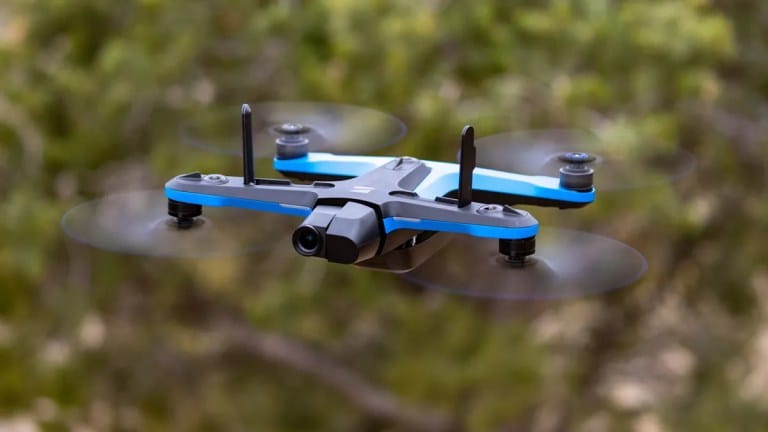
The deal, which reportedly involves an investment of $64 million, will see KDDI deploy Skydio’s X10 unmanned aerial vehicle (UAV) to around 1,000 locations. This will allow them to be launched rapidly in response to natural disasters like earthquakes and tsunamis, where they will help in search and rescue operations, as well as surveillance task and infrastructure inspections.

According to KDDI, the locations have been selected so that a drone can reach any location in the country within just 10 minutes.

The X10 drones are notably equipped with thermal imaging and night-vision capabilities, making them effective in any rescue scenario.

They will also use Skydio’s Visual Slam technology, onboard AI to enhance real-time spatial understanding and image processing. This will allow the drones to fly autonomously, automatically avoiding obstacles, even in the dark.

“The drones will be useful in finding survivors during disasters, as they can fly in the dark and are equipped with temperature sensors,” said Hiromichi Matsuda, KDDI’s managing executive officer.

Data gathered by the drones will be transmitted over KDDI’s infrastructure, including the company’s 5G network where possible, but also satellite.

Beyond disaster response, KDDI says they will also use the drones to support local governments and companies, helping to tackle issues like infrastructure inspection.

Keep up with all the latest telecoms news from around the world with Total Telecom’s daily newsletter

Also in the news:
UK government conditionally approves £15bn Vodafone–Three merger
Nokia and Vodafone trial Open RAN with Arm and HPE
T-Mobile and Verizon to buy US Cellular, reports say

T-Mobile and Verizon to buy US Cellular, reports say 

News 

The news follows T-Mobile’s acquisition of Mint Mobile just last month 

US mobile operators T-Mobile and Verizon are in discussions to separately buy parts of smaller rival US Cellular, according to a report from the Wall Street Journal. 

US Cellular serves over 4 million customers, predominately in rural areas. The company was put up for sale last year by its owners, TDS, in response to years of pressure from shareholders. 

According to the report, T-Mobile is seeking to purchase over $2 billion in assets, which include “some operations and wireless spectrum licenses.” 

This deal is close to being finalised and could be announced later this month, said people familiar with the matter.  

The deal with Verizon is less defined, with these discussions still in the early stages.  

Both Verizon and T-Mobile are seeking to acquire the spectrum from US Cellular as well as assets and customer base. 

US Cellular also has 4,000 mobile towers, though these are reportedly not part of either deal. 

The Wall Street Journal suggests part of the reason for the piecemeal sale is to stay under the radar of the US competition authorities. T-Mobile’s acquisition of Sprint in 2020 faced almost two years of scrutiny from federal regulators, as well as a lawsuit over potential harm to consumers. Critics essentially argued that the merger would reduce competition and create a player in the market whose market share was too dominant, which could easily be the case here should either Verizon or T-Mobile acquire the entirety of US Cellular. 

Indeed, T-Mobile has already grown via M&A activity this year. Just last month, T-Mobile finalised the acquisition to buy Ka’ena Corp, the owner of Mint Mobile, for up to $1.35 billion. The deal has been approved by the Federal Communications Commission after being first reported in January last year. 

Keep up to date with the latest international telecoms news by subscribing to the Total Telecom daily newsletter 

Also in the news: 
Verizon Business and Cummins deal combines private 5G and neutral host tech 
Samsung and Telefonica partner for German vRAN site 
AT&T sheds cybersecurity division to create LevelBlue 

UK government conditionally approves £15bn Vodafone–Three merger 


News

The merger is under ongoing investigation from the Competition and Markets Authority 

The UK government has this week released a “Publication of notice of Final Order” that provisionally approves the Vodafone–Three merger, subject to certain conditions. 

Following a “detailed national security assessment”, the cabinet office has approved the merger, providing that: 

– A National Security Committee is set up within the merged company to oversee any sensitive information that the company deals with that is related to the national security of the UK. It will be necessary for the company to provide regular updates to the government; 

– Within this group, a specific technical group is established that will deal with a specific list of topics (such as cyber, physical, and personnel security); 

– The MergeCo’s network migration planning is subject to review by a government approved external auditor;  

– The MergeCo will have specified arrangements for its governance. 

The government said in this statement that the above measures will mitigate national security risks in relation to UK networks and data “resulting from the merging of two large, complex organisations and their respective staffing, policies, processes and networks.” The government also says these measures will eliminate risks in relation to Vodafone’s role as a supplier of services to the government. 

“We strongly believe (the merger) will strengthen competition in the UK’s mobile sector and enable a significant step-up in the UK’s mobile network infrastructure,” said the two companies in a joint statement. 

The investigation by the Competition and Markets Authority (CMA) is separate and still ongoing. The investigation began its second phase last month, with results expected by September. 

Keep up to date with the latest international telecoms news by subscribing to the Total Telecom daily newsletter  

Also in the news:
Verizon Business and Cummins deal combines private 5G and neutral host tech
Samsung and Telefonica partner for German vRAN site
AT&T sheds cybersecurity division to create LevelBlue