BEAD funding: Challenges and opportunities with NCTA’s Rick Cimerman


Interview

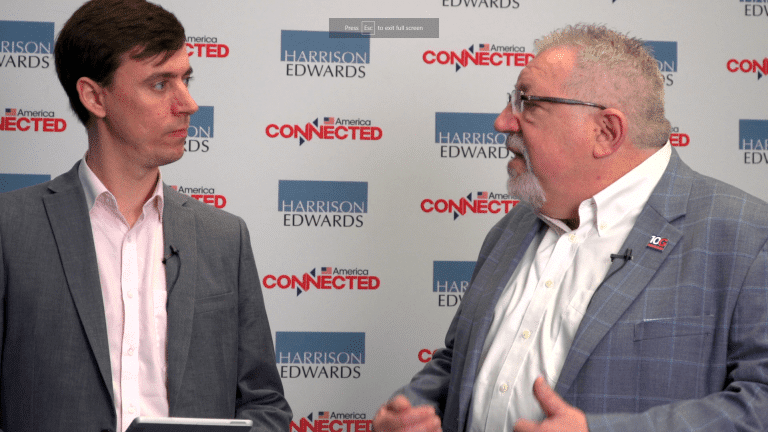
At Connected America 2024, we met with Rick Cimerman, VP, External & State Affairs Lead at NCTA – The Internet & Television Association, to discuss the pivotal role of federal funding in advancing broadband connectivity across the United States

Highlighting the implications of the Broadband Equity and Access and Deployment (BEAD) Act, Cimerman underscored the importance of targeted investment and strategic partnerships in addressing the nation’s connectivity gaps. Cimerman also stresses the need for efficient deployment, regulatory clarity, and workforce development to maximize the impact of these funds.  

Through collaboration between federal, state, and industry stakeholders, Cimerman outlines a pathway towards achieving comprehensive broadband access for all Americans. 

Highlights:   

  • State proposals for funding allocation are currently under review, with implementation expected to start by early 2025. 
  • It’s important to keep the focus on expanding to unserved areas before underserved areas.  
  • The best path forward is to partner with experienced cable broadband providers who have the experience and knowledge to deliver projects on time and on budget.  
  • Federal government agencies need to reduce deployment barriers while avoiding new regulatory burdens like net neutrality rules. 
  • It will be critical skill shortage through workforce development and training programs. 
  • Broadband expansion holds transformative potential for communities nationwide. 

Cimerman emphasised the urgency of getting broadband expansion right and the profound impact it can have on communities across the nation. Through strategic investment, regulatory clarity, and collaboration, stakeholders can bridge the digital divide and ensure equitable access to broadband for all Americans.  

You can watch our full interview with Rick from the link below:

What impact will BEAD funding have in creating a more connected America? Join the discussion with the cable operators at this year’s Broadband Communities Summit live in Houston, Texas


Telefonica trialling 5G RedCap in Germany


News

The new Reduced Capability (RedCap) technology could open the door for a greater integration of IoT devices with existing 5G networks

Telefonica Deutschland has revealed it has successfully trialled 5G RedCap devices in its commercial 5G network in Munich.

RedCap, a key part of standardisation body 3GPP’s Release 17, is aimed at supporting the IoT over mobile networks.

It has three major advantages over existing IoT connectivity technologies (such as 4G LTE or NB-IoT):

  • higher peak data rates, able to support data hungry IoT devices like video surveillance cameras or smart grid monitoring;
  • lower latency, perfect for IoT devices that need near-real-time data transmission;
  • and improving the battery life of devices thanks to improved efficiency and reduced complexity.

To access this benefits, IoT devices will need to be equipped with 5G RedCap-compatible radio module. The 5G network itself, on the other hand, will not need any modification – thought 5G standalone (SA) architecture will be required.

Telefonica itself launched 5G SA in Germany in October last year, saying the upgraded 5G network already covers 90% of the German population.

“5G RedCap can bring new momentum to the Internet of Things. The technology closes a gap between the previous 4G network and high-performance 5G applications in the IoT sector,” explained Mallik Rao, Chief Technology & Information Officer of Telefonica Deutschland.

“O2 Telefónica has successfully trialled the integration of 5G RedCap devices in the network. With our network, we are creating the technical prerequisites for connecting millions of devices efficiently and cost-effectively. It will be crucial to see how the market, the product world and digital applications develop.”

Telefonica says that it is already working with device and module manufacturers to help accelerate the development of the 5G RedCap-capable IoT device ecosystem. These devices are expected to be commercially available in 2025.

Will 5G RedCap prove a catalyst for growth in the German IoT industry? Join the operators in discussion at this year’s Connected Germany event live in Germany

Also in the news:
Digi Spain sells 6m FTTH accesses to Onivia
Vodafone’s 5G standalone network now connects around half the German population
Broadband poles no problem for Brits says new study

Entel: Building an 800G optical backbone network to enable digital Chile


Interview

We spoke with Luis Uribe, the CTO of Entel, to share his experience and insights on the latest optical transport technology and how is digitally transforming Chile in F5G (Fixed 5th Generation)-Advanced era

Watch the full interview from the link below.

When it comes to digital services, Entel is a highly diverse telecoms company, offering mobile, fixed broadband, and enterprise services to customers throughout Chile and Peru.

“Our optical transport network builds a solid foundation for mobile services, broadband services, and enterprise leased line services. It offers ultra-large bandwidth, ultra-low latency, and simplified architecture to meet business requirements for up to a decade. It is an essential part of Entel’s strategy,” said Uribe.

But as the demand for these digital services increases, so too does the pressure on the network to be faster, more resilient, and more powerful. Networks must evolve to meet these increased demands and, as such, last year ETSI released its F5G-Advanced standard, a shift that will take existing networks capable of 200G networks to 400G and even 800G.

In fact, Entel’s own backbone network in Chile is closely mirroring this evolution. Launching their 10G Wavelength Division Multiplexing (WDM) system back in 2005, Entel began upgrading the network to 100G nationwide in 2017, and 200G in the capital area in 2022. Now, they are launching the country’s first 800G optical network.

“In the future, we will not only build out the 400G/800G backbone network to cover the whole country,” said Uribe. “We believe a green all-optical architecture will help us to build the best fixed broadband and mobile broadband services in Chile.”

The deployment of this 800G network – known as the Galileo Project within Entel itself – will provide a solid foundation upon which Chile can develop as a digital economy, in line with the government’s 2035 Digital Strategy.

“This deployment will provide state-of-the-art network coverage in all major cities from Arica to Puerto Montt with capacities of up to Nx800 Gbps in 1+0, 1+1, 1+R, and 1+1+R redundant. It is prepared to deliver high-capacity with very high availability, up to 99.999%,” explained Uribe. “This will be present at the national level including extreme areas. Entel believes Chile’s 2035 digital transformation will rely on such high capacity, nation-wide coverage, and ultra-high reliability network.”

Also in the news:
Digi Spain sells 6m FTTH accesses to Onivia
Vodafone’s 5G standalone network now connects around half the German population
Broadband poles no problem for Brits says new study

Digi Spain sells 6m FTTH accesses to Onivia  


NEWS 

Onivia was established in 2019 as Spain’s first independent wholesale fibre network operator 

Digi Spain has announced that is has sold 6 million fibre-to-the-home (FTTH) accesses to wholesale fibre provider Onivia for €750 million. 

This acquisition marks a significant expansion for Onivia, which is owned by a consortium comprised of Macquarie Capital, Abrdn, and Arjun Infrastructure Partners, increasing the network operator’s FTTH coverage to approximately 10 million Spanish households, over a third of the market. 

Digi Spain’s network currently serves around 4.25 million homes, with plans for further expansion to cover an additional 1.75 million homes over the next three years. This expansion initiative is projected to extend the network’s reach to a total of 6 million homes, spanning across twelve provinces in key regions including Madrid, Segovia, Avila, Castilla-La Mancha, Comunidad Valenciana, and Murcia.  

As part of the agreement, Onivia has secured the option to acquire any future fibre rollouts from DIGI within these provinces. 

Digi Spain will retain access to the FTTH network as an anchor tenant and will continue to serve its current customer base.  Simultaneously, the network will be opened up to all other Onivia ISP customers, allowing for increased competition in the market.  

“With this acquisition, Onivia confirms its position as largest neutral and independent player, enhancing the value-added proposal for our telco customers, increasing coverage, and offering latest XGS-PON technology,” said Onivia’s CEO Jose Antonio Vázquez Blanco in a press release. 

The transaction is still subject to standard regulatory approval, which includes Foreign Direct Investment (FDI) clearances in Spain and European Commission merger control. 

Keep up to date with the latest international telecoms news by subscribing to the Total Telecom daily newsletter

Also in the news:
FCC rejects SpaceX’s request for spectrum
Amazon invests $2.75 billion in AI startup Anthropic
T-Mobile gets green light to appeal class action lawsuit

AXIAN Telecom appoints Vivek Badrinath as non-executive director


Press Release

AXIAN Telecom, one of the leading pan-African telecom groups, is pleased to announce the appointment of Mr. Vivek Badrinath to its Board of Directors as a Non-Executive Director (NED)

Before his new appointment, Mr. Badrinath spent three years at Vantage Towers AG where he was the Chief Executive Officer and Chairman of the Management Board. He led the establishment of the towers company in 2020, facilitated its IPO in 2021, and eventually its sale to Private Equity in 2023. Under his leadership, Vantage Towers effectively managed 88,000 telecom towers across eight European countries.

Mr. Badrinath has held extensive leadership roles within the telecommunications sector. In 2016, he assumed the position of CEO of Africa Middle East Asia Pacific at Vodafone, joining their Executive Committee. In this capacity, he provided oversight to Vodafone’s operations across various regions including the Vodacom Group, India, Australia, Egypt, Ghana, Kenya, and New Zealand. Additionally, he served as the Interim CEO of Vodafone Business during his tenure. Prior to his time at Vodafone, Mr. Badrinath held key positions at Orange, starting in 2004 as the CTO of Orange Mobile before advancing to the Group CTO. His journey at Orange culminated in his appointment as CEO of Orange Business Services and subsequently as Deputy CEO of Orange Group, where he spearheaded initiatives in Innovation, Marketing, and Technology.

He also served as the Deputy Chief Executive at the renowned international hospitality group Accor Hotels where he was responsible for overseeing marketing strategies, digital solutions, distribution channels, and information systems.

Hassanein Hiridjee, Chairman of the Board commented: “We are delighted to welcome Vivek Badrinath to the AXIAN Telecom Board. Badrinath’s leadership in managing telecom infrastructure and driving strategic growth aligns perfectly with AXIAN Telecom’s vision of responsible expansion across Africa. With his wealth of knowledge and commitment to excellence, we are confident that he will make significant contributions to our mission of enhancing connectivity and improving the lives of communities throughout the continent. On behalf of the Board, I extend our warmest welcome to Badrinath.”

 I’m thrilled and deeply honored to become a part of AXIAN Telecom. Drawing from my experience and expertise in the telecommunications sector, I am looking forward to playing a pivotal role in driving AXIAN Telecom to new heights in Africa. I firmly believe that together, we can make a substantial and noteworthy impact across the continent, said Mr. Badrinath about his appointment.

Mr Badrinath also previously served on many boards as a Non-Executive Director including Nokia, GSMA, Atos and Accor Group.

He is a recipient of the French Legion of Honor and the National Order of Merit.

Want to keep up to date with all the latest developments from the world of telecoms? Get Total Telecom’s daily newsletter direct to your inbox

Also in the news:
FCC rejects SpaceX’s request for spectrum
Amazon invests $2.75 billion in AI startup Anthropic
T-Mobile gets green light to appeal class action lawsuit

 Vodafone’s 5G standalone network now connects around half the German population


News

The telco has been hard at work upgrading its network to the new architecture since the start of the year 

This week, Vodafone Germany has announced its network construction update for the first quarter of this year. Within this time frame, Vodafone has made strides in bolstering mobile connectivity infrastructure across the country, completing over 1,200 construction projects.  

According to the company, this effort, which averaged 13 projects daily, underscores the company’s commitment to enhancing its LTE and 5G network capabilities. 

During this period, Vodafone commissioned 155 new base stations and upgraded almost 500 existing stations to 5G standalone (SA), which Vodafone calls 5G+. Nearly 170 measures were implemented to address LTE dead spots, ensuring more consistent coverage across the country. 

Deploying 5G SA constituted almost 40% of the total construction efforts. As a result, approximately half of Germany’s population now has access to Vodafone’s 5G+ network. 

Favourable weather conditions in March 2024 further expedited construction efforts, with over 550 locations seeing project completion. On average, three new mobile phone stations were activated daily during this period, contributing to the integration of 67 new locations into the Vodafone network. 

In related company news, last month Vodafone Germany announced that it will cut 2,000 jobs over the next two years as part wider company restructuring. It is hoped that the move will save the company €400 million. 

The cuts are part of cost-cutting measures announced by new Group CEO Margherita Della Valle in May last year, in which 11,000 jobs are expected to be cut globally over the next three years. 

 “Vodafone wants to make itself even simpler, faster, leaner and therefore more powerful in the next two years,” said Vodafone Germany CEO Philipp Roggein a speech to employees. 

Keep up to date with the latest international telecoms news by subscribing to the Total Telecom daily newsletter 

Also in the news:
FCC rejects SpaceX’s request for spectrum
Amazon invests $2.75 billion in AI startup Anthropic
T-Mobile gets green light to appeal class action lawsuit

How does the increased adoption of GenAI impact data security for telcos? 


Insight  

At MWC this year, we caught up with Ari Banerjee, Senior Vice President at Netcracker Technology, to discuss the importance of data security as telcos increasingly adopt Generative AI (GenAI) solutions 

Undoubtedly, the biggest topic at this year’s MWC was GenAI and the many ways telcos are looking to incorporate it into their businesses, both to increase efficiency as well as generating new revenues. But in order for telcos to fully embrace AI effectively, a successful digital transformation of the telcos themselves is paramount. 

“What we’re seeing with our customers is that first you need to really digitally transform yourself. You need to have the right data,” says Banerjee.  

“So, data transformation becomes a precursor to any AI ML (machine learning) strategy, because at the end of the day, if you have garbage data – duplicate data and old legacy data – it just doesn’t match up with services. You are not going to be able to use AI in the right way.” 

Even when a digital transformation has successfully been undertaken, the issue of data security still looms. As more and more companies adopt the use of GenAI, data security will become more of a problem. EY’s Global head of telecoms declared the issue the biggest risk in the entire telco sector for 2024, because the rise of GenAI is putting a strain on data governance. For example, much of the data fed into GenAI models is highly sensitive and cannot be shared to the public cloud. 

Netcracker are tackling this complexity through their GenAI Telco Solution, which was launched last September. Functioning alongside the telco GenAI models (such as large language models [LLMs]), GenAI users, and the telco BSS/OSS databases, this solution supplements the GenAI model with real-time instructions to elicit the most relevant responses, and protects sensitive customer data from public models. 

Thus, Netcracker are playing the key role of an integrator, allowing telcos to make use multiple LLMs and SLMs (small language models), each specialised for a specific purpose. 

“Somebody in the middle needs to be able to take the best parts of it and then interface that and use that with the information from the network information databases […] and provide the right contextual information, whether to the internal team who’s dealing with let’s say, BSS/OSS operations, or the external teams, which is your customer,” Banerjee explained. 

“This is one of the most exciting areas for this new technology,” said Banerjee. “Providing the right contextual offer to the customer through an automated channel.”   

You can check out our full interview with Ari Banerjee, Senior Vice President at Netcracker from the link below: [embedded content]

CMA launches Phase 2 investigation of Vodafone–Three merger


News

The UK’s antitrust watchdog said the operators had declined to offer remedies to the Authority’s competition concerns

Today, the Competition and Markets Authority (CMA) has announced that it will launch a Phase 2 investigation into the £15 billion merger between Vodafone UK and Three UK, a move that would shrink the number of mobile players in the market from four to three.

The regulator said last month that it was considering launching this full-blown investigation into the merger, saying that the companies had “made a number of claims about how their deal is good for competition and investment” without providing “sufficient evidence to date to back these claims”.

At the time, the CMA offered the operators five days to suggest remedies to assuage these concerns. Now, a little more than a week later, the regulator has announced the investigation will proceed, noting that both Vodafone and Three declined to propose concessions to ease the CMA’s competition fears.

In a joint statement, Vodafone and Three said that this decision by the CMA was expected and that they remained confident the merger was in the interest of UK customers.

“This was an expected next step in the process and is in line with the timeframe for completion that we set out from the outset,” said the statement. “Vodafone UK and Three UK remain confident that the transaction will drive stronger competition in the mobile sector and give customers and businesses a step-change in network quality, speed, and coverage from day one.”

Results from this new investigation are expected in September.

How would the Vodafone–Three merger impact the UK mobile market? Join the telecoms ecosystem in discussion on market dynamics at Connected North live in Manchester

Also in the news:
FCC rejects SpaceX’s request for spectrum
Amazon invests $2.75 billion in AI startup Anthropic
T-Mobile gets green light to appeal class action lawsuit

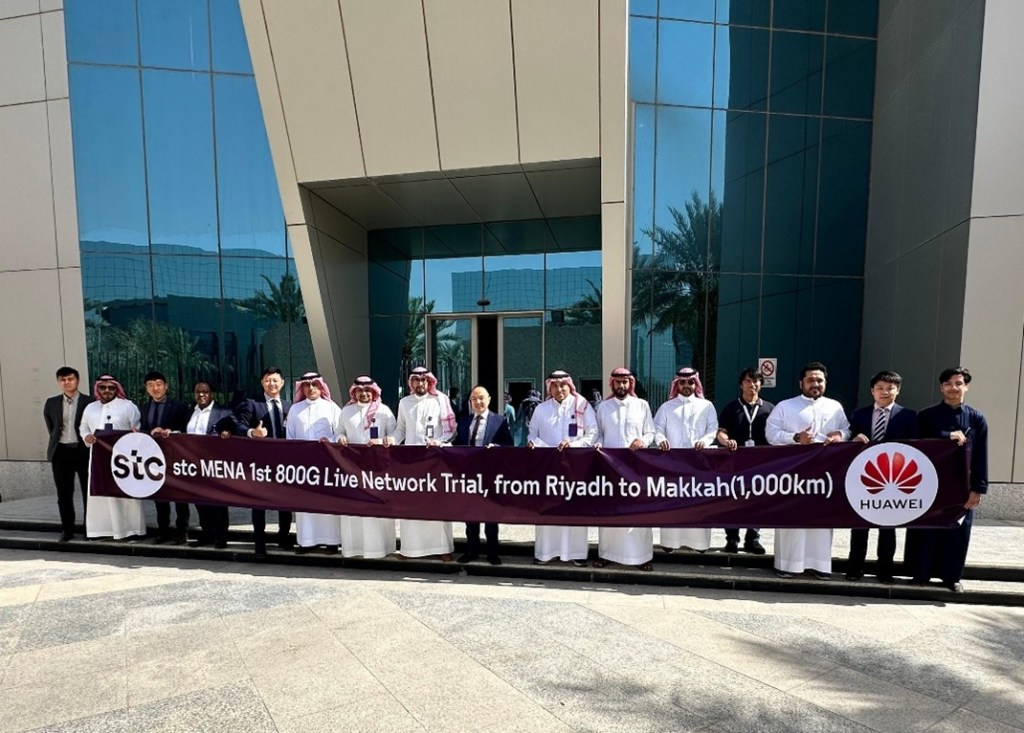
stc and Huawei completed the MENA region’s first-ever long-haul 800G live network trial


VIEWPOINT

[Riyadh, Saudi Arabia, March 28, 2024] stc Group, the leading operator in the Kingdom of Saudi Arabia, partnered with Huawei to complete the MENA region’s first-ever long-haul 800G/channel trial in its live optical network. This successful live network trial with connection over 1,000 kilometers, from Riyadh to Makkah, of state-of-the-art processing and transporting capacity proves the 800G solution is ready for scale deployment across Saudi Arabia, driving the Kingdom and the MENA region’s digital transformation.

stc Group and Huawei completed long-haul 800G/channel live trial in dense wavelength-division multiplexing (DWDM) network

As a result of this successful trial, stc Group networks can now transport more data throughput for every wavelength deployed and extend across longer distances without generation, reducing power and transport costs, and supporting efficiency standards across stc Group’s infrastructure.

The high-performance 800G/channel optical module, empowered by a built-in high baud bandwidth modulator and super 16QAM modulation with a Channel-Matched Shaping (CMS) 2.0 algorithm, established connection over 1,000 kilometers in a live Colorless-Directionless-Contentionless (CDC) network, proving the stc systems can monitor and sustain complex link environments in real-time, optimizing network transmission performance.

stc has been committed to offering excellent experience to all customers with state-of-the-art technologies and solutions. The 800G channel trial project is the result of stc’s focus on maximizing fiber capacity and optical network efficiency, making it possible to deliver up to 64Tbps single fiber capacity to meet ever-increasing bandwidth demand from all users, and reduce the per bit power consumption by more than 50% compared with 100G channel. The trial shows that stc is strengthening its partnership with Huawei in the ultra-high-speed optical transmission field.

On the importance of the trial’s milestone, Huawei’s President of Optical Transmission Domain, Victor Zhou, commented: “This long-haul 800G live trial in the stc network is a significant milestone in the ultra-high-speed optical industry. Huawei will continue to innovate and cooperate with stc in optical networks, providing leading and sustainable optical solutions for optimal user experiences.”

Keysight outbids Viavi on Spirent in dramatic move 


News 

US-based Keysight Technologies has out bid rival Viavi Solutions on the purchase of Spirent Communications, offering £1.16 billion for the company this week 

Earlier this month, US technology company Viavi Solutions made a £1 billion takeover bid for UK-based telecoms testing group Spirent Communications.  

At the time, Viavi CEO Oleg Khaykin said that the deal would “deliver enhanced product solutions and applications, accelerate growth in new markets and strengthen innovation through expanded engineering and design capabilities”. 

Now, however, facing a higher offer from Keysight, Spirent has withdrawn its non-binding agreement with Viavi. 

“Following my discussions with the Keysight management team, I am excited about the broader reach and expanded long-term prospects for Spirent arising from the combination with Keysight,” Spirent CEO Eric Updyke said in a statement to Reuters. 

Spirent is a leading provider of automated testing for networks, with a portfolio that includes 5G, cloud, and autonomous vehicle services. 

In a statement on the London Stock Exchange, Spirent directors said that “combining with the Keysight Group will allow the business to better serve customer needs, with increased resources and a broader product offering.”  

“The Spirent Directors also consider that the Acquisition provides an exciting opportunity to better deal with the complexity customers are seeing in today’s world with the Combined Group’s broader capabilities, operational and financial power, and investment in research and development,” the statement continued. 

“Our superior Offer recognizes the value of Spirent’s achievements to-date, and the exciting prospects of the combination of our complementary product portfolios to provide end-to-end solutions for customers across their lifecycle needs,” said Satish Dhanasekaran, President & Chief Executive Officer of Keysight in a press release. 

Keep up to date with the latest international telecoms news by subscribing to the Total Telecom daily newsletter  

Also in the news:
BT wins £26m contract to connect UK schools
Apple fined €1.8bn by European Commission over Spotify row
Japan to reduce regulatory pressure on incumbent NTT