Amazon invests $2.75 billion in AI startup Anthropic 


News 

Founded in 2021 by former Open AI executives, Anthropic is now one of the most well-funded AI firms in the world 

Amazon has announced an investment of $2.75 billion in San Francisco-based AI startup Anthropic, as it looks to compete with AI rivals such as Google and Microsoft through its AI chatbot Claude. 

The move is Amazon’s largest external investment since it was founded in 1994. 

As part of the deal, Anthropic will use Amazon Web Services (AWS) as its primary cloud provider, as well as using AWS’s Trainium and Inferentia chips to build, train, and deploy AI models. 

Back in September, Amazon announced that it would invest an initial $1.25 billion in Anthropic in exchange for a minority stake in the business, with the possibility that the investment could reach up to $4 billion. With this week’s investment, that  milestone has now been hit. 

“Generative AI is poised to be the most transformational technology of our time, and we believe our strategic collaboration with Anthropic will further improve our customers’ experiences, and look forward to what’s next,” said Dr. Swami Sivasubramanian, vice president of Data and AI at AWS in Amazon’s press release. 

Interest in Anthropic is growing at a meteoric pace, having received around $7.3 billion in funding over the past year alone. 

Part of this backing has come from South Korea’s SK Telecom (SKT), which invested $100 million in the company in an effort to develop a multilingual large language model (LLM) customised for global telcos.  

SKT currently has ambitions of becoming a world leader in AI, with Chief Financial Officer Kim Jin Won saying on an earnings call last year that the company was “stepping up efforts on all fronts to transform itself into an AI company”. 

In related news, this month AWS, Anthropic, and Accenture joined forces to help organisations in highly regulated industries – such as healthcare, banking and insurance – to adopt and scale generative AI solutions so that their organisations can improve innovation and productivity.  

“By combining Anthropic’s focus on model performance and safety, AWS’s approach to security and reliability, and Accenture’s deep domain expertise with technical know-how, we aim to build tailored solutions that enable key use cases,” said Anthropic’s CEO Dario Amodei in a statement. 

Keep up to date with the latest international telecoms news by subscribing to the Total Telecom daily newsletter 

Also in the news:
VEON exits Kyrgyzstan to focus on key markets
BT pledges to upgrade payphones nationwide
Spanish govt buys 3% stake in Telefonica, eyes 10%

T-Mobile gets green light to appeal class action lawsuit


News

A US judge ruled this week that T-Mobile can appeal a pending class action lawsuit that is seeking damages related to T-Mobile’s merger with Sprint

This week, Illinois U.S. District Judge Thomas Durkin has ruled that T-Mobile can proceed with an appeal of a class action lawsuit that could cost the company billions of dollars in compensation.

The class action lawsuit, which is being brough by seven subscribers of AT&T or Verizon, argues that the merger of Sprint and T-Mobile reduced competition in the wireless market to such an extent that it forced AT&T and Verizon to increase their prices. This, they say, saw tens to hundreds of millions of consumers paying more for their wireless services than they would have otherwise.

The plaintiffs are seeking monetary compensation as well as other remedies, which could even include the reversal of the Sprint–T-Mobile merger entirely.

Back in November, courts declined to dismiss the lawsuit at T-Mobile’s request, saying that AT&T and Verizon’s price increases could “plausibly” be linked to the merger.

T-Mobile immediately signalled their intention to appeal the decision, saying that the case’s “expansive conception of antitrust standing is unprecedented”.

The plaintiffs’ lawyers, on the other hand, argued that a length appeal process would delay potential compensation and could make dissolving the merger more difficult. They subsequently argued that the case should be put before a jury before an appeal was presented.

Now, Judge Durkin has confirmed that T-Mobile will be allowed to proceed with their appeal, with the operator arguing the plaintiffs’ have not sufficiently alleged antitrust standing.

Antitrust lawyers will be watching the proceedings of the case closely. Federal antitrust law allows consumers to bring private challenges against mergers and acquisitions, but cases arguing that a company’s M&A activity had negatively affected a rival’s customers are very rare.

If the case is ultimately allowed to proceed, it could significantly expand the scope of future antitrust proceedings.

Has the Sprint–T-Mobile merger negatively affected the US mobile landscape? Join the discussion live Houston, Texas, at this year’s Broadband Communities Summit

Also in the news:
VEON exits Kyrgyzstan to focus on key markets
BT pledges to upgrade payphones nationwide
Spanish govt buys 3% stake in Telefonica, eyes 10%

Telecommunications (security) Act (TSA): are VPNs the right solution for secure remote access?


Insight

By Rob Pocock, Technology Director, Red Helix

The initial deadline for the Telecommunications (Security) Act (TSA) 2021 is fast approaching. Drafted in response to our growing reliance on communications technology, and to help protect our networks from an expanding threat landscape, the Act is set to have a major impact on the UK’s approach to security and resilience in the telecoms industry.

The first of the deadlines requires all network operators in the tier 1 category (those with an annual turnover in excess of £1 billion) to action ‘the most straightforward and least resource intensive measures’ by March 31st, 2024. While there is no explicit guidance as to what this means, one of the easier measures to action is the implementation of secure remote access – a necessary measure which will help prevent unauthorised access to telecoms networks and systems.

There are a couple of different solutions that operators can put in place to try and achieve this. The traditional approach would be to use a VPN. In fact, as part of the code of practice, included with the guidance on regulation 4 ‘Protection of data and network functions’, there is a recommendation to use exactly that. Yet, while a VPN may address some of the requirements within the legislation, it is now quite outdated technology and could fall short of achieving others.

To avoid further work later down the line, and to benefit from far more robust network access control, operators ought to consider implementing a Zero-Trust Network Access (ZTNA) solution instead. It is widely recognised as the successor to VPN technology, offering increased security by working to the assumption that all requests have hostile intentions, and uses US military-grade AES-256 encryption to keep connections secure.

The shortcomings of a VPN

VPNs have been around for several years, and work by creating an encrypted tunnel between a user’s device and the network. This creates a point-to-point connection that, in theory, cannot be accessed by unauthorised users. They have, however, seen little change since they first came about in 1996, and their effectiveness in the context of modern cyber security threats is being increasingly questioned.

There are two key reasons for this. Firstly, authentication requirements for the VPN itself are often very basic, requiring little more than a username and password. Secondly, they can make it difficult to control or prevent any over-privileged lateral movement once inside the network. Therefore, if a cyber criminal were to bypass the authentication requirements, there is a chance they’ll be able to access systems and data across the entire organisation.

Of course, using a VPN is no doubt better than not having any access controls in place whatsoever, but it is far from the most secure choice. A VPN is also unlikely to help operators meet some other the more stringent security measures required in the TSA. For example, regulation 7 identifies measures needed to reduce supply chain risks, and regulation 8 outlines further details on the measures required for the ‘prevention of unauthorised access or interference’, both of which would be hard to achieve full compliance with using a VPN alone.

Additionally, there is a section included in the TSA code of practice that states providers should establish the principle of ‘assumed compromise’. This means assuming that network oversight functions are subject to high-end attacks that may not have been detected, and to ensure there are measures in place to make it difficult for the attacker. As lateral movement can be hard to prevent with a VPN, this is another area in which they are lacking.

Improved access control through ZTNA

In contrast, ZTNA has been designed with assumed compromise in mind, operating on the principle that the network is always hostile. Trust is never implicit, meaning users are only granted access to the specific applications and resources they need; with granular policies to determine what, where and when information can be accessed.

Not only does this meet with the requirements outlined in regulation 4 for which a VPN was recommended, but it can go a long way to complying with some of the other regulations as well. ZTNA’s comprehensive approach to network security ticks off most of the measures outlined in regulation 8, alongside many of those included in regulation 7 – by providing control over what third-party suppliers have access to, and limiting any potential damage should they be compromised.

ZTNA is also likely to become more of a significant factor in obtaining or maintaining cyber insurance. Owing to the rise in severity and frequency of cyber attacks, insurers have continued to increase the requirements needed to pass the risk assessment process. While the exact standards may vary between insurance providers, strong access control is one that appears to feature often, and the use of ZTNA will go a long way in demonstrating this.

Ultimately, ZTNA represents a more forward-looking approach to access control, aligning with the broader trend in cyber security of moving towards a more adaptive, dynamic, and user-centric security model. With its emphasis on continuous verification and granular access policies, it is a more robust solution that hits a number of the TSA regulations and will provide operators with stronger protection across their networks.

A future-proof solution

As the first deadline for the TSA approaches, network operators are faced with a choice. Either use traditional VPN technology to achieve secure remote access or to implement the more advanced ZTNA.

Despite their long-standing presence within the industry, VPNs fall short in addressing modern cyber security challenges, owing to their basic authentication processes and limitations in controlling internal network movements. ZTNA, on the other hand, offers a robust solution operating under the principle of ‘assumed compromise’, ensuring stringent access controls and aligning with several of the TSA’s requirements.

While continuing to use a VPN may seem like the most straightforward approach, and can help operators to meet the first ‘least resource intensive’ deadline, it is likely to be only a temporary solution. ZTNA is an easy to implement alternative that offers a more comprehensive, adaptable, and future-proof strategy – so why settle for something inferior when the option for better security is already present?


Report: Three quarters of wireless customers considering switching provider 


Insight

The latest global report from Salesforce sheds light on customer’s shifting priorities and why communication service providers (CSPs) must adapt to improve customer retention 

In 2024, it is easier than ever for customers to jump from service provider to service provider in search of the best deal and the best experience. In fact, the latest report from Salesforce suggests that constantly being on the lookout for a better offer is deeply ingrained in the CSP customer mindset, with 76% of wireless customers considering switching, while 78% of broadband customers said they were at least somewhat likely to use tech provider instead of their current provider, if available.  

To make matters worse, the report also notes that 50% of wireless customers and 47% of fixed broadband customers feel that threatening to switch providers is actually an effective way of ensuring that they get the best deals from their existing providers. 

So, why is customer loyalty seemingly so low in the telecoms sector? And how can CSPs and reduce churn? 

The answers, of course, are deeply nuanced. Customer expectations have increased enormously as their lives have grown increasingly digitalised. Not only do customers today demand greater speeds and reliability from their CSP, they also want a more seamless and flxible relationship with their provider.  

Automated interactions are becoming the norm, providing the CSPs with a huge boost in efficiency and potentially cost-reduction, but these automated services are often failing to deliver the excellent quality customers demand. The report suggests that only 22% of B2C customers would describe their provider’s automated services as ‘excellent’, while over half admitted to never having used their providers self-service.  

This is not solely an online issue either. In fact, expectations for excellent service are only increased when it comes to in-store interactions, with the report finding that less than a quarter of B2C customers would describe their experience as pleasing or efficient. 

Ultimately, this report reflects an industry in which customers remain sceptical of their provider’s ability to meet their needs and CSPs must work diligently to change their mindset when it comes to defining excellence in customer service.  

You can access the full Salesforce report, which surveyed 500 telecoms experts and 6,000 customers, here: Trends in the Communications Industry. 

This report is being published at a pertinent time for the UK connectivity market, with industry discussions beginning to move beyond infrastructure rollout and towards full fibre and 5G adoption. Indeed, the country’s fibre market, which at its peak contained more than one hundred altnets, is starting to consolidate, making customer experience and service differentiation more important than ever in ensuring a positive ROI. 

Against this backdrop, achieving excellence in customer service is expected to be at the forefront of next month’s Connected North conference live in Manchester, with specialists from throughout the telecoms industry coming together to discuss key issues and the shifting connectivity landscape.  

Get the full report here Trends in the Communications Industry and join the discussion at Connected North now.  

Also in the news:
BT wins £26m contract to connect UK schools
Apple fined €1.8bn by European Commission over Spotify row
Japan to reduce regulatory pressure on incumbent NTT

VX Fibre and Freedom fibre complete merger 


News 

Consolidation continues in the alnet market in the latest of a string of mergers 

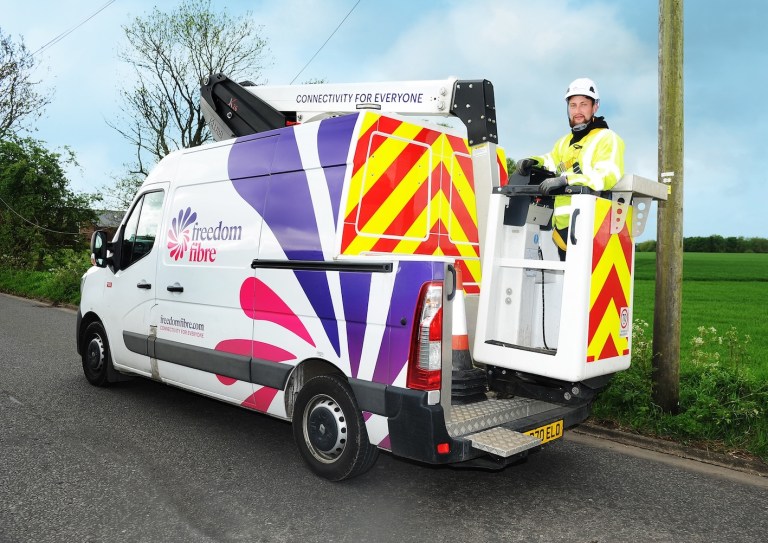
UK fibre altnets VX Fibre and Freedom Fibre have completed their merger which was announced last December, following regulatory approval. 

The newly combined group will operate as name Freedom Fibre under their CEO Neil McArthur and his management team, and will have a network of 300,000 (which is up from the figure of 285,000 given in December). 

“This strategic merger leverages the strengths of both Freedom Fibre and VX UK to create a larger, stronger, and more diverse business backed by two significant investors with ambitions for growth,” said Freedom Fibre’s CEO, Neil McArthur. We are delighted to be joining forces with the VX team and are hugely excited about the future potential of the newly combined business.”  

VX UK mainly operates in and around Stoke-on-Trent, but has fibre assets in Bristol and Colchester. Freedom Fibre, which was launched in 2020, offers wholesale-only services on its network, and had a long-term partnership with leading UK broadband provider TalkTalk.  

Speaking to the financial times in January, Greg Mesch, CEO of the UK’s largest altnet CityFibre, said it is aiming to make as many of five acquisitions over the next two years. “Investment is drying up but I think that’s creating the opportunity to consolidate the network,” Mesch said. According to the article, the company is already in exclusive talks with two other altnets. 

Catch Greg Mesch at this year’s Connected North event, 22-23 April in Manchester. Secure your tickets now! 

Also in the news:
VEON exits Kyrgyzstan to focus on key markets
BT pledges to upgrade payphones nationwide
Spanish govt buys 3% stake in Telefonica, eyes 10%

Vodafone Germany to cut 2,000 jobs 


News

The company says the move will save €400 million over the next two years 

Vodafone Germany has announced today that it will cut 2,000 jobs over the next two years as part wider company restructuring. 

The company, which currently employs 15,000 people within Germany, said that staff would be relocated where possible, though specific numbers were not provided.  

The job cuts are part of cost-cutting measures announced by new Group CEO Margherita Della Valle in May last year, in which 11,000 jobs are expected to be cut globally over the next three years. 

 “Vodafone wants to make itself even simpler, faster, leaner and therefore more powerful in the next two years,” said the press release from Vodafone Germany. “In addition to more efficient processes and optimised structures, the focus is on even better interaction options and simpler products and services for customers.”  

Vodafone has been reshaping its operations globally for some time in an attempt to combat debt and its relatively flat growth in highly competitive markets.  

In October last year, the company sold 100% of its Spanish unit to Zegona Communications for €5 billion and, just last week, Vodafone Italia was sold to Swisscom in its entirety in the latest step towards its “reshaped European footprint”.  

The company is also in the process of merging its operations in the UK with CK Hutchison’s Three. 

In a company announcement, Della Valle explained that “going forward, our businesses will be operating in growing telco markets – where we hold strong positions – enabling us to deliver predictable, stronger growth in Europe”. She also highlighted a major focus on the B2B sector, saying it held the “biggest opportunity” for revenue growth. 

In related news, Vodafone Germany announced earlier this month that Marcel de Groot, the company’s head of private customer business, would take over as CEO, replacing the outgoing Philippe Rogge. 

Keep up to date with the latest international telecoms news by subscribing to the Total Telecom daily newsletter 

Also in the news:
BT wins £26m contract to connect UK schools
Apple fined €1.8bn by European Commission over Spotify row
Japan to reduce regulatory pressure on incumbent NTT

Telefonica Tech inspecting traffic accidents using drones in Madrid


Press Release

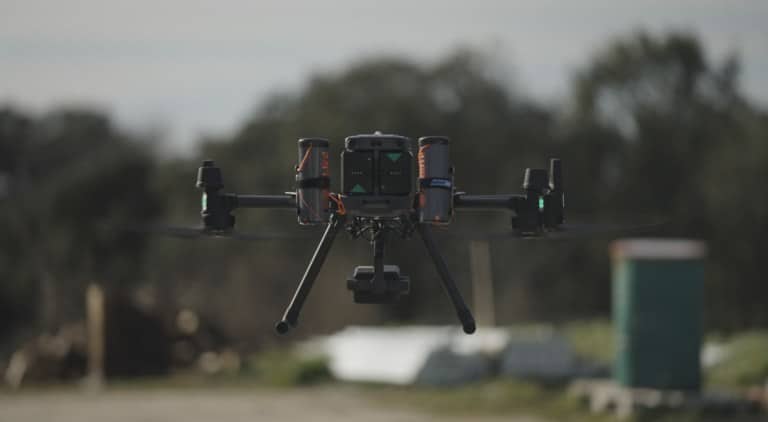
Serveo and Telefónica Tech have carried out an innovative pilot project for the Community of Madrid that allows the inspection of traffic accidents and the state of its roads with drones. This is a pioneering project that shows the potential of drone technology to promote safer, more efficient and sustainable mobility.

Both companies, together with the operator Navalair, have carried out a 4.6 kilometres drone flight out of visual range from the North Zone Road Maintenance Centre in La Cabrera (Madrid) to a simulated accident at kilometre point 1+300 of the M-631 road, with the aim of optimising the inspection of accidents and speeding up the response of the Serveo service in critical situations.

Drone technology will make it possible to quickly assess the scene of any incident that occurs on the roads, speed up the response of the conservation and emergency services and improve the care of the people involved in the accident. In addition, drones provide a complete aerial view of the accident scene, which can be particularly useful for further investigation in the case of complex accidents.

The pilot project has also simultaneously inspected 13 kilometres of the M-608 road with LiDAR technology using a drone piloted from a moving vehicle, with the aim of obtaining a cloud of points for subsequent processing and analysis by Serveo and the Directorate General of Roads, Department of Housing, Transport and Infrastructure of the Community of Madrid, which will allow the necessary actions to be planned to improve road safety on the infrastructure.

Cristina Aragón, head of innovation at Serveo, said: “This project demonstrates Serveo’s commitment to road safety and efficient infrastructure management, placing us at the forefront in the implementation of innovative solutions to promote safer and more sustainable transport.

Alfredo Serret, Global Head of IoT at Telefónica Tech, said: “We are very proud to carry out this innovative project with drones in the field of mobility that will improve road safety and speed up the response in case of accidents. It represents, without a doubt, an exciting step forward in the management of transport infrastructures and the prelude to being able to carry out this type of flights in the future with 5G technology”.

Pedro J. Capote, CEO of Operadora Navalair, said: “This project has been a great challenge for our company. We have been able to demonstrate once again that drone technology is a great tool when it comes to obtaining data and images, among other of its multiple uses, with the resounding success of the operation. It has been a great pleasure to work hand in hand with the Telefónica Tech and Serveo teams, two giants that undoubtedly work every day to improve services for all users”.

Keep up to date with the latest international telecoms news by subscribing to the Total Telecom newsletter 

Also in the news:
BT wins £26m contract to connect UK schools
Apple fined €1.8bn by European Commission over Spotify row
Japan to reduce regulatory pressure on incumbent NTT

CMA completes first investigation of Vodafone Three Merger


News 

The merger was agreed last year, with Vodafone taking a 52% in the new business and Three UK taking the remaining minority stake

This week, the UK competition and markets authority (CMA) have completed the first phase of its investigation into the merger which was put in place to identify whether the deal may lead to a ‘substantial lessening of competition’. 

The review, which began in January, concluded in short that the “CMA is concerned that combining these two businesses will reduce rivalry between mobile operators to win new customers.” 

The CMA have concluded that it has identified concerns significant enough to warrant further scrutiny in a Phase 2 investigation, in which an independent body will review the concerns raised in phase one in more depth. 

The high level of CMA intervention is necessary because, if the deal is given the greenlight, it will reduce the number of MNOs in the UK from four to three, with the newly merged company having a market share of 32.1%. Additionally, and perhaps rather obviously, the CMA found that “Vodafone UK and Three UK provide important alternatives for mobile customers”. 

Of particular concern to the CMA is the potential impact on smaller mobile virtual network operators (MVNOs), such as Sky Mobile, Lebara, and Lyca Mobile. These operators rely on access to larger network infrastructures to provide services to their customers. The merger could potentially limit their ability to negotiate favourable deals with fewer network operators available to host their services. 

Both Three and Vodafone have made significant investments in their networks in recent years, including rolling out 5G. Unsurprisingly, both companies are emphasising that the merger will allow them jointly invest £11 billion in services and next generation wireless infrastructure.  

According to the CMA, Vodafone UK and Three UK have five working days to respond with meaningful solutions to the CMA, otherwise the deal will be referred to a more in-depth Phase 2 investigation. 

Keep up to date with the latest telecoms news by subscribing to the Total Telecom daily newsletter 

Also in the news:
BT wins £26m contract to connect UK schools
Apple fined €1.8bn by European Commission over Spotify row
Japan to reduce regulatory pressure on incumbent NTT
 

Connected North 2024 returns to Manchester 


Press release 

Manchester, UK – Connected North, the North’s Dedicated Digital Economy Event is returning to Manchester Central for its third year 

Hosted by telecoms media and events specialist Total Telecom, the event builds on the success of the Connected North’s debut in 2022, which saw over a thousand stakeholders meet to discuss the industry’s hottest topics in the region.  

This year, the event will see an incredible speaker lineup of over 200 industry experts and network with 2,500 attendees. 

Post pandemic, the North of the UK is at a turning point, with the attention both locally and nationally to build back better by affording equal opportunity for previously underserved areas. 

The push for better connectivity in the North of the UK continues, as part of the government’s pledge to make gigabit capable networks available for 85% of the UK by the end of 2025. 

However, upgrading digital infrastructure across the region is about more than just hitting government targets. It’s about improving lives for local communities, creating opportunities for local businesses, and increasing the region’s global competitiveness. The entire ecosystem across public and private sectors need to collaborate to make this happen. 

Across two action-packed days, the event will delve into six key themes covering topics such as Fibre & 5G delivery, rural connectivity, regulation and investment context and The Levelling Up Fund. 

Key speakers at this year’s event include:

  • Martyn Taylor, Chief Commercial Officer, BDUK  
  • Daren Baythorpe, Chief Executive Officer, ITS 
  • Georgia Grimes, Director of Fibre Build, Openreach   
  • Conal Henry, Chair of Fibrus 
  • Brian Potterill, Director of Mobile Network Strategy, Ofcom   
  • Eamonn Boylan Chief Executive Officer of Greater Manchester Combined Authority 
  • Dr Aileen Jones, Executive Director – Investment and Delivery, Liverpool City Region Combined Authority   
  • Sean Royce, Chief Executive Officer of Quickline 

“We’re delighted to be returning to Manchester for the third year of Connected North,” said Dominic Beresford-Webb, the event’s Senior Conference Producer. “The event really is an essential dedicated forum to spotlight the way connectivity can drive social and economic growth in the region,” he continued. 

For more information or to register to attend Connected North 2024, visit: https://www.terrapinn.com/conference/connected-north/index.stm  

_________________________________________________________________________________

About Total Telecom
Since 1997, Total Telecom has provided the connection between the buyers and sellers in the global telecom market. We do this through high quality editorial content and events to facilitate discussion on industry issues, and recognise innovation and excellence by companies and individuals.  

Our community of 120,000+ telecom professionals rely on Total Telecom for daily news and regular in-depth insight, delivered through a number of channels including online, video, social media, and at our series of events. 

Our award-winning event portfolio includes, Broadband Communities Summit, the World Communication Awards, Connected North, Connected Germany, and the UK’s largest connectivity event Connected Britain 

Recent U.S. advisory warns of threats to critical infrastructure posed by Chinese cyber group


News

A cybersecurity advisory issued last month warns that “state sponsored actors” from the People’s Republic of China are compromising and maintaining persistent access to critical infrastructure in the United States, and several other nations

This article was originally released by our sister publication Broadband Communities

A February warning from three American agencies assesses that the Chinese government is sponsoring attempts to “pre-position themselves on IT networks” to have assets in place in case there is a conflict with the United States.

The Cybersecurity and Infrastructure Security Agency (CISA), the National Security Agency (NSA), and the Federal Bureau of Investigation (FBI) released the Feb. 7 cybersecurity warning, which the advisory said was prompted by observations from U.S. agencies tasked with responding to incidents that compromised critical-infrastructure organizations.

The advisory claimed that a state-sponsored cyber group, known as Volt Typhoon, is preparing for “destructive cyberattacks against U.S. critical infrastructure in the event of a major crisis or conflict with the United States.”

According to the advisory, agencies that have “confirmed that Volt Typhoon has compromised the IT environments of multiple critical infrastructure organizations,” including the U.S. Department of Energy, the U.S. Environmental Protection Agency, the U.S. Transportation Security Administration, along with other government cybersecurity agencies from Australia, Canada, the U.K., and New Zealand.

“The U.S. authoring agencies have confirmed that Volt Typhoon has compromised the IT environments of multiple critical infrastructure organizations—primarily in communications, energy, transportation systems, and water and wastewater systems sectors—in the continental and non-continental United States and its territories, including Guam,” the advisory read.

The advisory stated that American agencies “are concerned about the potential for these actors to use their network access for disruptive effects in the event of potential geopolitical tensions and/or military conflicts.”

While the risk to Canada’s critical infrastructure may be lower, according to the advisory, the nation would likely still be affected due to cross-border integration should the critical infrastructure of the U.S. become disrupted. The assessment said risks are also present for critical infrastructure in Australia and New Zealand, which “could be vulnerable.”

According to the warning, Volt Typhoon relies on valid online accounts and leverages strong operational security, which can allow for the group to develop a long-term undiscovered persistence.

Volt Typhoon actors have maintained access within some victimized IT environments for lengthy periods of time that can sometimes last years, the advisory stated.

“Volt Typhoon actors conduct extensive pre-exploitation reconnaissance to learn about the target organization and its environment; tailor their tactics, techniques, and procedures to the victim’s environment; and dedicate ongoing resources to maintaining persistence and understanding the target environment over time, even after initial compromise.”

The advisory urged critical-infrastructure organizations to apply mitigations and hunt for malicious activity, which, if discovered, should be reported to a relevant agency.

Click here to read the full advisory about Volt Typhoon’s alleged activities.

Reach Broadband Communities Editor Brad Randall at brad.randall@totaltele.com

Also in the news:
BT wins £26m contract to connect UK schools
Apple fined €1.8bn by European Commission over Spotify row
Japan to reduce regulatory pressure on incumbent NTT