Vodafone Germany accelerates railway 5G deployment 


News 

The operator is on track to become the first in the country to launch 5G standalone (SA) on a large scale on Germany’s intercity train routes 

Vodafone Germany has announced that it has activated its 5G SA network on over half of the country’s railway lines, or 15,000km of railway lines. 

In April last year, the operator partnered with Deutsche Bahn, Germany’s leading railway operator, to close any remaining gaps in Vodafone’s network on railway routes throughout the country. 

The goal of the collaboration is that that Vodafone will provide Deutsche Bahn’s busiest routes with large-scale SA 5G along routes connecting the country’s major cities by 2025. 

 So far, the partnership has delivered notable results. Over 1,800 of the country’s 3,250 train stations now have 5G coverage, including over 600 with indoor 5G coverage. 

Since the beginning of the year, the firm have also built 225 new mobile sites on railway lines to reinforce the long-distance train routes by closing the “dead spots” on the lines. 

“Especially on trains, it is notoriously difficult to provide good and reliable network coverage for passengers,” said Tanja Richter, Vodafone Germany’s Network Director in a statement. 

“Thanks to the new buildings and the numerous modernisation measures on the existing antennas, we were able to noticeably improve the mobile phone coverage for rail passengers and commuters.” 

Richter notes that there is still much work to be done before all the railway routes can be provided with a fast and stable connection. 

Join the German operators in conversation at this year’s Connected Germany – book your last-minute tickets now! 

Also in the news: 
Rogers prepares to lock out unionised workers ahead of strike
Verizon and AT&T subscribers draw up class action lawsuit against T-Mobile
Telecom Italia approves KKR’s €18.8 billion fixed infra acquisition

Verizon and AT&T subscribers draw up class action lawsuit against T-Mobile


News 

The subscribers argue that T-Mobile’s acquisition of Sprint drove up the prices of their wireless package 

This week, a federal judge has ordered T-Mobile US must face a lawsuit from Verizon and AT&T customers over price increases. 

More specifically, the customers (all seven of them) are claiming that T-Mobile’s $23 billion merger with Sprint back in April 2020 damaged competition in the market to such an extent that AT&T and Verizon were able drive up prices for their wireless services. 

Prior to the merger’s completion, there was significant worries that the merger would be anticompetitive. Democratic senators urged the Federal Communications Commission and the Justice Department to reject the merger proposal in 2019, emphasising that the merger was “likely to raise prices for consumers, harm workers, stifle competition, exacerbate the digital divide, and undermine innovation”.  

The lawsuit alleges that at least some of these fears have indeed become reality, with the court agreeing that the higher prices charged by AT&T and Verizon could “plausibly” be directly linked to the T-Mobile–Sprint merger.  

“The merger also eliminated the two “maverick” firms that were responsible for much of the price competition and innovation among the carriers. Before the merger, T-Mobile and Sprint aggressively competed with the bigger brands (AT&T and Verizon) through offering discounts and new plans,” read court documents seen by Reuters. 

“Sprint was financially viable and would have continued to compete vigorously absent the merge… Additionally, Plaintiffs allege that by making the newly merged T-Mobile’s scale and cost structure more like the other two big players, the merger curtailed its incentive to compete.” 

The subscribers in question are seeking monetary compensation and a range of additional penalties, even including the reversal of the merger entirely.  

“If plaintiffs are unhappy with Verizon and AT&T, there is a remedy available in the highly competitive market that wireless consumers enjoy today — they should switch to T-Mobile, not sue it,” lawyers for T-Mobile told the court. 

T-Mobile have yet to comment on the situation directly. 

Join the US operators in conversation at next year’s Connected America in Dallas, Texas 

Also in the news:
Unfair! UK customers decry mid-contract price rises in new survey
EU competition regulators give Vodafone–Three merger the thumbs up
Viasat to cut 10% of workforce 

EU competition regulators give Vodafone–Three merger the thumbs up

If the merger is approved, the new company would become the largest mobile operator in the UK 

News 

According to a Reuters report that cites a European Commission filing, the proposed merger of Vodafone and Three does not pose any competition concerns to EU antitrust regulators. 

The European Commission is overseeing the review process of the merger, with an official deadline of December 6th for its final decision. Although the process is still ongoing, this filing suggests the final decision will favour the merger. 

The two firms officially submitted their request for approval from the European Commission on 30th October.  

According to the report, the EU regulatory body is reviewing the potential merger with a “simplified procedure”, which is used when mergers are unlikely to raise competition concerns. 

While this approval is no doubt a positive sign for the two UK telcos, the deal is expected to face far greater scrutiny by the UK’s own competition regulators. The UK’s Competition and Markets Authority (CMA) announced last month that it was seeking views and comments from interested third parties on the deal, ahead of its formal investigation.  

“Millions of consumers and businesses in the UK rely on Vodafone’s and Three’s mobile networks to stay connected,” said Sarah Cardell, chief executive of the CMA, in a statement 

“We will be carefully considering how this deal may affect competition in the UK, which could affect the options and prices available to customers. We will also assess how it may affect incentives to invest in the quality of UK mobile networks. This is an opportunity for those with an interest in this merger to let us know their views before we launch a full investigation.” 

Those who expressed their concern over the merger included consumer group Which? who concluded that “there is a substantial risk that the merger could have negative outcomes for consumers in the short term, including less choice, lower quality and higher prices”. 

Vodafone and Three expect the deal to be completed by the end of next year, should it proceed without any significant issues. 

Keep up to date with the latest news of the merger by subscribing to the Total Telecom newsletter 

Also in the news:
Viasat to cut 10% of workforce
Port of Tyne switches on 4G/5G private network
Spanish govt considers stake in Telefónica to counter STC’s influence  

Unfair! UK customers decry mid-contract price rises in new survey


News 

Uswitch and Which? have both called on UK regulator Ofcom to end mid-contract price rises, with reports showing 85% of customers consider them ‘unfair’ 

In a survey of 2,000 broadband ISP and mobile customers commissioned by Uswitch, 85% of customers were found to view annual price rises as “unfair”, while 87% believe they should be allowed to leave their provider without penalty if prices are raised mid-contract. 

Broadband and mobile providers typically raise their prices each year nu up to 4%, plus an inflation-based metric such as CPI (Consumer Price Index) or RPI (Retail Price Index). These increases are often buried in the terms and conditions of the contracts, leaving customers broadly unaware of just how much their prices may increase. To make matters worse, operators typically apply penalty fees to customers attempting to end their contracts early, hence making it difficult for them to switch providers if their monthly bills increase unexpectedly.  

The survey found that a large part of the challenge here was consumers not realising how much their prices could increase, with 40% saying their biggest concern was being unable to anticipate the scale of a price increase. 

In addition, 62% of participants said they would seek to change providers at the next possible opportunity if prices were raised unexpectedly. 

In February, Ofcom launched a review to examine whether inflation-linked, mid-contract price rises give phone and broadband customers sufficient certainty and clarity about what they can expect to pay. Initial research showed that over one third of mobile and broadband customers were unsure if their provider could increase its prices.  

“Customers need certainty and clarity about what they will pay over the course of their contract. But inflation-linked price rises can be unclear and unpredictable. So we’re concerned that providers are making it difficult for customers to know what to expect,” said Ofcom Director of Telecoms Consumer Protection, Cristina Luna-Esteban in a statement. 

“We’re calling for an end to the practice of inflation-linked annual price rises in broadband and mobile contracts,” said Uswitch spokesperson and Head of Broadband and Mobiles Ernest Doku.  

Which? Also voiced a similar complaint, noting that on average, EE, Three and Vodafone customers could see increases of more than 8% in 2024, while O2 customers could see their bills increase by over 10%. 

“We’re taking a thorough look at these types of contract terms, to understand fully the extent to which customers truly know what they’re signing up to, and whether tougher protections are needed,” said Ofcom.

This year, the UK Committees of Advertising Practice have also provided new guidance about how operators and ISPs should communicate price rises to customers, which will be enforced at the end of the year. 

“In short, it is crucial that information about any future price increases are clear to consumers in the ad itself, to avoid creating a misleading impression that the initial stated price will remain the same throughout the contract period,” said the Advertising Standards Authority. 

Ofcom is expected to publish its consultation paper on the review in December. 

Keep up with latest regulatory guidance by subscribing to the Total Telecom newsletter 

Also in the news:
Viasat to cut 10% of workforce
Port of Tyne switches on 4G/5G private network
Spanish govt considers stake in Telefónica to counter STC’s influence  

Viasat to cut 10% of workforce 


News 

Viasat currently has around 6,800 employees, with offices in North America, Europe, and Asia 

Satellite firm Viasat has announced its intention to reduce its workforce by 10%, cutting 800 roles. 

The firm was acquired by Inmarsat earlier this year for $6.2 billion. As a result, the firm is undergoing a large-scale reorganisation to streamline its operations.  

The firm expects $100 million annual cost saving as a result of the cuts, starting in the fiscal year 2025., However, the business expects it will cost around $45 million to rationalise roles between the two merged businesses. 

Guru Gowrappan, president of Viasat, confirmed that the job cuts are “consistent with our goals to focus our spending toward our biggest growth opportunities and position Viasat for long-term success, while expanding margins and profitability”.  

Inmarsat expects that once Viasat’s assets are fully integrated, they will increase the pace and scope of innovations within in the satellite connectivity sector, which will allow for improved capabilities being presented to customers, addressing the constant issues of the ever-increasing speed, flexibility, reliability, coverage, and security. 

“Since we completed the acquisition of Inmarsat, our focus has been on accelerating our leading role in global mobile satellite communications by converging our technologies and organizational structures to deliver enhanced products and services to our customers. We will continue working to better unify our go-to-market approach, and maximize operational and capital productivity,” said  Gowrappan in a statement. 

“Our goal is to be the undisputed leader in satellite communications with a sharp focus on providing the best products and services for our customers,” he continued. 

“We are more than the sum of our parts. This combination broadens the global fixed and mobile services available to customers in an industry-defining moment. We intend to move quickly to bring the best from each company together in a way that creates much deeper value for our stakeholders and ensures we deliver on our synergy commitments.” 

Further details of this news are expected to be shared at Viasat’s Q2 earnings on November 8. 

It makes sense that Viasat are undertaking cost-cutting measures, in part because of the current technical problems on their recently launched satellites. The ViaSat-3 and Inmarsat (1-6) F2 have both faced major issues, undoubtedly causing the firm financial strain. 

Want to keep up to date with all of the latest UK telecoms news? Sign up for Total Telecom’s daily newsletter   

Also in the news:
Colt acquires Lumen EMEA for $1.8 billion
Port of Tyne switches on 4G/5G private network
Spanish govt considers stake in Telefónica to counter STC’s influence 

BT sees profit rise in half-year results 


News 

Upon the news, BT shares rose 6% in early trading 

BT, Britain’s largest broadband and mobile provider, has today published its half-year results, revealing revenues of £10.4 billion and profits of over £1 billion. 

Adjusted EBITDA rose 6% to £4.1 billion (up 4% on a pro forma basis), and profit before tax increased 29 % to £1.1 billion.

The results also revealed an acceleration in BT’s fibre rollout across the UK, as its fibre-to-the-premises (FTTP) build rate accelerated to 66,000 premises per week, reaching a quarter record of 860,000 premises passed. 

Openreach also saw strong customer demand for FTTP, with net additions of 364,000 in Q2, bringing take-up rate to 33%.

The news follows the launch of “new EE” in October, which comes after the UK incumbent announced in April last year that EE would gradually become the “flagship brand for consumer customers”, while BT would become the main brand for the Enterprise and Global units. 

“We’ve strengthened our competitive position with the launch of both New EE and our renewed strategy in Business, and Openreach has now built full fibre broadband to more than a third of the UK’s homes and businesses with a growing connection rate,” said Phillip Jansen, BT CEO. 

“Our transformation programme has now delivered £2.5bn in annualised savings, well on track to meet our £3bn savings target by FY25.” 

It is important to note that BT increased prices by 14.4% in March this year, and put a stronger focus on cost-cutting, announcing that it will aim to cut roughly 55,000 jobs – around 40% of its current workforce – by the end of the decade, citing the need for more streamlined operations and digitalisation in today’s tough economic climate.  

Jansen said that the growing role of AI would reduce the number of network engineers needed by around 10,000, with AI-related automation could replace an additional 10,000 jobs. 

This time last year, the firm also increased their savings target from £2.5 billion to £3 billion by 2025. 

“This was a decent set of results,” said Hargreaves Lansdown analyst Matt Britzman, speaking to Reuters. “Given the pressure shares have been under of late, investors should be relatively happy.” 

Jansen’s tenure at BT is almost at an end, being replaced by Allison Kirby early next year. “BT Group has a bright future and I’m pleased to be handing the baton to Allison Kirkby early in the new year,” he added. “She knows the sector, she knows the company and she’s the right person to lead BT Group from this position of operational strength,” said Jansen. 

Want to keep up to date with all of the latest UK telecoms news? Sign up for Total Telecom’s daily newsletter  

Also in the news:
Samsung and Telefónica partner for German Open RAN trial
Colt acquires Lumen EMEA for $1.8 billion
Port of Tyne switches on 4G/5G private network 

Port of Tyne switches on 4G/5G private network


Press Release

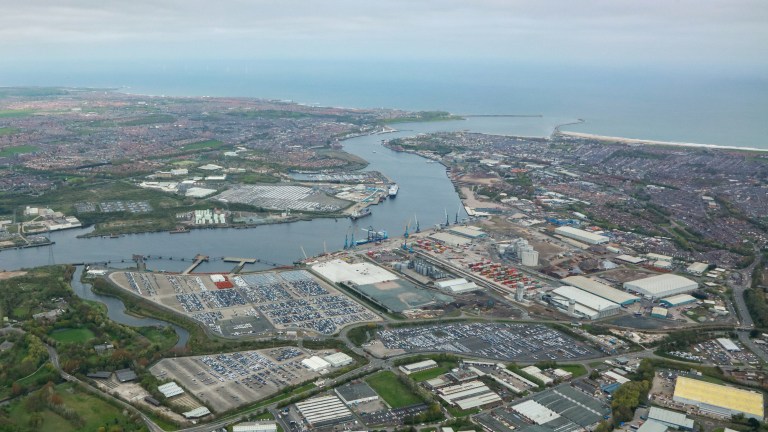
The Port of Tyne, one of the UK’s biggest and most important ports, has gone live with 4G and 5G private network connectivity, bringing together its vision to become a leading smart port that is a model of safety, efficiency and sustainability.

Together with partners BT and Ericsson, the Port has deployed a private network with coverage across the entire estate, making it the UK’s first site-wide deployment of 4G and 5G standalone connectivity for smart port applications. The infrastructure is built upon an Ericsson Private 5G solution and BT spectrum, whereby both 4G and 5G will operate simultaneously to support legacy devices as well as power new 5G applications in the port’s future transformation.

The first set of live use cases will begin in November, including video and sensors installed at each gate on the site to use automatic number plate recognition (ANPR) to securely manage and track vehicle access, as well as 5G-enabled cameras with a 360-degree view at the quayside combined with AI-driven software to provide automated container inspection and identification.

By deploying a private 5G wireless network, the port is positioning itself to integrate a series of future 5G applications and advanced technologies to support new customer requirements and enable the transition to a green smart port. These future applications include:

  • Autonomous Navigation Technology so that vehicles can move cargoes and equipment around the port
  • Remote crane operations that will enable operators to work from simulated cabs with precise location information, full HD+ video and sensory haptics
  • Connected drones at land and sea to autonomously inspect cranes, quayside, buoys and other physical infrastructure
  • Wearable technology and XR devices to be used for immersive training and remote maintenance engineers
  • A connected eco-system of AI sensors, video and data sources from inside and outside the port to generate new business intelligence and improve operational efficiency 

The Port of Tyne also has an ambitious vision to become a leader in 5G maritime innovation and provide an industry eco-system testbed to help build a future blueprint of 5G-enabled smart applications to automate manual tasks, improve decision-making and reduce CO2 emissions.

The future of maritime industry innovation will be further discussed by the Port of Tyne across three days from 7-9 November at Maritime Innovation Week 2023.

Matthew Beeton, Chief Executive Officer, Port of Tyne said: “I believe that 5G is going to play a crucial role in helping Port of Tyne achieve our goals. We can streamline our operations, improve safety and sustainability, and drive growth and innovation throughout the entire maritime industry and beyond. With seamless connectivity, we can link shipping companies, logistics providers, and regulatory bodies from around the world, enabling us to work together more effectively to address global challenges like climate change and cybersecurity threats.”

Ashish Gupta, MD, Corporate and Public Sector at BT, said: “What makes 5G so exciting is it allows innovative use cases which help businesses do things quicker, safer, smarter, better. At Port of Tyne, it’s about taking people out of harm’s way, where autonomous machines could instead be used in dangerous environments, and laying the digital foundations to introduce new technologies and improve efficiency at the port.”

Duncan Hawkins, VP Dedicated Networks & Enterprise Wireless Solutions, Ericsson, said: “Together with BT and the Port of Tyne we are turning the vision of a 5G port into a reality, and this deployment serves as a great model of maritime innovation for the UK and the world. 5G brings the essential characteristics such as coverage, speed and low latency to leverage new applications and use cases required to transform port operations, drive business efficiencies, and build a blueprint for sustainability success and future economic growth.”

Want to keep up to date with all of the latest international telecoms news? Get Total Telecom’s daily newsletter direct to your inbox

Also in the news:
Zegona agrees to buy Vodafone Spain for €5 billion
Ericsson launches 5G standalone software toolkit
Virgin Media O2 mulls tower sale

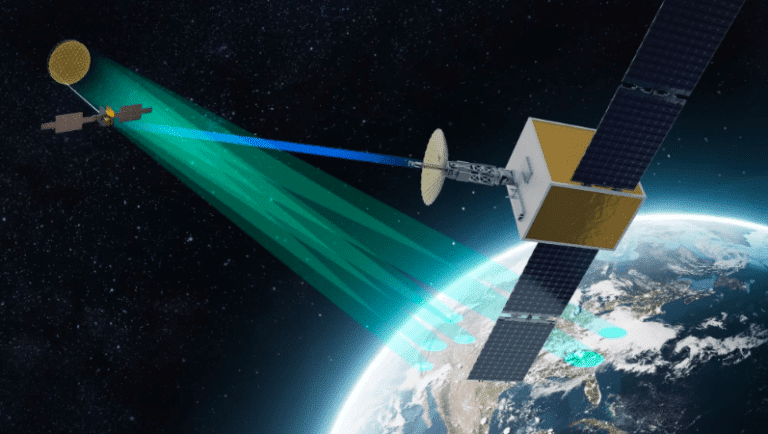
Reliance Jio launches satellite broadband services 


News 

According to Deloitte, India’s satellite broadband market is set to grow 36% a year to reach a value of $1.9 billion by 2030

Reliance Jio has announced the launch of its satellite broadband service, which promises to provide even the most remote areas of the country with gigabit speeds. 

The service, named JioSpaceFiber, was demonstrated by Jio last week at India Mobile Congress. In a related announcement, the company claimed that the service will “be available across the length and breadth of the country at highly affordable prices”. 

“With JioSpaceFiber, we expand our reach to cover the millions yet to be connected,” said Akash Ambani, Chairman Reliance Jio Infocomm Limited. “JioSpaceFiber will allow everyone, everywhere, to fully participate in the new digital society with gigabit access to online government, education, health, and entertainment services.” 

The service is delivered via medium Earth orbit (MEO) satellites owned by SES, which the firm claims is the “the only MEO constellation capable of delivering truly unique Gigabit, fibre-like services from space.” 

The project has been ongoing since February last year, when Jio Platforms (Jio’s network infrastructure division) formed a joint venture with SES named Jio Space Technology Limited. Jio has a 51% stake in the business, while SES holds the remaining 49%. 

“Together with Jio, we are honoured to support the Government of India’s Digital India initiative with a unique solution that aims at delivering multiple gigabits per second of throughput to any location in India,” said SES’ chief strategy officer John-Paul Hemingway.  

“Our first fibre-like services from space are already deployed today in parts of India, and we cannot wait to see how this will lead to digital transformation even in the most rural parts of the country. 

JioSpaceFiber could soon face competition from Elon Musks’ Starlink. Back in 2021, Starlink was found to have been taking pre-orders from Indian customers for its satellite services, without having first obtained a Global Mobile Personal Communication (GMPC) license from the Indian government. Starlink had sold around 5,000 pre-orders of “Dishy McFlatface“ Starlink terminals and was subsequently reprimanded by the government and ordered to return the deposits. 

SpaceX submitted an official license proposal for Starlink late last year.  

Keep up with the latest Artificial Intelligence new by subscribing to the Total Telecom daily newsletter  

Also in the news:
KKR invests $400m into subsea cable firm OMS
Ofcom revises UK net neutrality rules
BT data shows over 500 potential cyberattacks take place every second

Ofcom revises UK net neutrality rules


News 

The review of the established rules began in 2021, with a consultation being published last year 

UK regulator Ofcom has made revisions to its net neutrality rules, which will further ensure that all traffic carried across UK networks is treated identically. The adaptations, Ofcom say, will “allow for clarity in our guidance to enable ISPs to innovate and manage their networks more efficiently, to improve consumer outcomes.” 

The updated areas of policy will include: 

  1. ISPs will be able to offer premium quality retail offers to better meet consumer needs. For example, cheaper packages for internet browsing and streaming customers, but more expensive packages for gamers needing lower latency.
  2. ISPs can develop specialised services, such as virtual reality (VR) and driverless vehicles
  3. ISPs can manage their networks with traffic management, to ensure the best user experience for customers. The guidance clarifies when and how this can be used by the ISPs.
  4. Zero-rating offers will be allowed (in most cases). This is when data from some apps or websites does not count towards the overall data allowance of the customer.

The official Ofcom definition of net neutrality is as follows: 

“Net neutrality supports the ‘open internet’, ensuring that users of the internet (both consumers and those making and distributing content) are in control of what they see and do online – not the broadband or mobile providers (otherwise known as internet service providers or ISPs). The net neutrality rules make sure that the traffic carried across broadband and mobile networks is treated equally and particular content or services are not prioritised or slowed down in a way that favours some over others.” 

“These changes are welcome and important and will help us to manage our network in the short term,” said Howard Watson, Chief Security and Networks Officer at BT in a statement. 

“But they are the start of further reforms that are needed, so we can face into the future with confidence. Unless and until telecommunications companies have the necessary environment to negotiate on a level playing field with content providers, the challenges of meeting growing demand will remain reliant on telcos funding endless capacity upgrades.” 

Over in the US, there has also been some recent net neutrality progressions. Last week, the Federal Communications Commission (FCC) voted to advance a proposal to reinstate net neutrality rules, after the final seat of the commission was filled by Democrat Anna Gomez.  

These rules are heavily politically charged in the US, which were imposed by President Obama in November 2015, and were then rescinded by President Trump when he took office. Critics argue that charging different prices for different services disincentivises companies from innovation, while those in favour maintain that it will ensure equal access to the same internet, without ISP interference.  

For more insight into the net neutrality policies worldwide, subscribe to the Total Telecom daily newsletter 

Also in the news: 
Ofcom launches review into fixed wireless network links
BT data shows over 500 potential cyberattacks take place every second
Industry leaders applaud Biden’s ACP supplemental funding request 

BT data shows over 500 potential cyberattacks take place every second


Press Release

More than 46 million signals of potential cyber-attacks are seen on average every single day across the world, according to new data released by BT

The cybersecurity experts currently log more than 530 signals of potential attack per second as they guard their global networks against an army of malicious actors seeking to exploit vulnerabilities – targeting businesses and critical national infrastructure.

With businesses of every size going digital, the most targeted industries in the past 12 months are IT, defence, banking and insurance – 19.7% of malware sightings are directed towards these high-stakes targets. The retail, hospitality and education sectors are also at high risk, accounting for 14.9% of malware sightings in the past 12 months. Criminals often capitalise on seasonal sales and spikes in online traffic, which makes the festive period a particular worry for retailers.

Small businesses, start-ups and charities are also finding themselves in the firing line; approximately 785,000 cyber-crimes were found across UK charities in the last 12 months. This suggests that cyber criminals are going for organisations and sectors that are less ‘traditional’ targets – and may not have the security tools in place to protect them. The use of big data and connected tech is now so widespread that almost anyone can be a target.

The BT data shows that every 30 seconds cyber criminals scan any device connected to the internet looking for weaknesses, using automation and machine learning to identify vulnerabilities in business defences – the digital equivalent of a burglar looking for an open window. All of this means that the average business will have its network scanned and tested by cybercriminals over 3,000 times each day, so it’s critical to have the right tools in place to identify and prevent against attacks, and to review these regularly.

These figures become particularly concerning when well over half of businesses (61%) in the UK say that keeping up with cyber security measures is becoming increasingly difficult. This is compounded by the challenge of keeping the whole organisation aware of the threats, with one in four (26%) businesses saying that this is their biggest pain point.

As Cyber Security Awareness Month draws to a close, BT is answering this call, today launching a new podcast series explaining the remarkable true stories behind some of the world’s most harrowing cyber hacks. True Cybercrime Stories by BT, narrated by Adrian Lester, star of The Undeclared War, is designed to speak to the 43% of decision-makers that turn to podcasts for business-related content.

In a digital age where every click and connection present a risk, BT’s new series shines a light on invisible crimes. The cautionary tales are for anyone curious about the growing battleground of digital crime – from a casino broken into via a fish tank, schools and hospitals exploited, to the great Twitter heist.

Serving customers in more than 180 countries, BT manages cyber security for private and public sector organisations around the world, as well as critical national infrastructure. Its team of 3,000 cyber professionals defends against thousands of cyber-attacks a day.

Tris Morgan, Managing Director, Security at BT, comments: “The volume of cyberthreats in the UK is rising at an alarming rate, so it’s really concerning that so many businesses and public services are leaving themselves open to attack. The fabric of the modern business has changed, and there’s now more connected tech for hackers to exploit, more valuable data to target and a bigger prize at stake if they make it through.

“With more than a million business customers, BT is the first line of cyber defence for organisations across the world – and we’re proud of our long heritage of protecting people, businesses and critical national infrastructure. That’s why we’re launching the True Cybercrime Stories podcast: to shine a light on the shocking impact this crime epidemic can have, raise awareness of the risks and encourage everyone to think about what they could be doing to protect our businesses and essential services.”

Adrian Lester, actor and lead narrator of the True Cybercrime Stories podcast adds:  “Truth is so often stranger than fiction, and in the dark underbelly of cybercrime that adage certainly rings true. It’s fascinating when you scratch beneath the surface to see an invisible war going on. The podcast aims to shed light on some of those remarkable true stories. I’ve thoroughly enjoyed recreating these tales with BT, and while not every business will have a fish tank that can be hacked, I’m sure all listeners will take away some valuable lessons to stop them getting caught out.”

To follow along the journey through the shadowy underworld of cybercrime; tune in to True Cybercrime Stories by BT on all major streaming platforms and stay connected with BT on social media for updates, insights, and resources to keep your business safe in the digital world. 

Also in the news:
The power of hybrid workforces: The imperative of cloud communications and a mobile-first approach
Shared Rural Network facing two-year delay
Ice Norway doubles down on Mavenir with cloud-native IMS deal