UK government announces £88 million investment in connectivity R&D


News 

The investment will aid the UK’s aim to be a global leader in telecoms research and development 

The UK government has announced an £88 million investment in open 5G open network solutions across the country. 

The funding has been awarded to 19 successful projects through the Open Networks Ecosystem competition, which aims to find new solutions for the delivery of mobile phone data in densely populated places, such as tourist hotspots or sports stadiums. In areas such as these, the simultaneous use of many devices can create issues for mobile operators, as they are handling high levels of traffic. 

The 19 successful projects will demonstrate the reliability and usability of Open RAN technologies, highlighting how they can bring resilient connectivity to UK citizens and businesses.  

Instead of using only one company’s equipment, Open Radio Access Networks (Open RAN) allows different companies’ technology to work together, allowing for a better and more flexible network. 

“Whether you’re in a busy city centre or a rural village, a fast and reliable mobile connection is vital to staying in touch, accessing services and doing business,” said Sir John Whittingdale, Minister for Data and Digital Infrastructure. 

“In order to secure that, we need to embrace a diverse and secure range of technology that will underpin the network”

“The projects we’re backing today with £88 million in government research and development investment will use innovative Open RAN solutions to make our mobile networks more adaptable and resilient, with future-proofed technology to support bringing lightning-fast connections across the country for many years to come”. 

The successful projects will run until March 2025 in major urban areas such as London, Glasgow and Liverpool, large events venues such as Cardiff’s Principality Stadium, Sunderland’s Stadium of Light, and seaside resorts of Blackpool and Worthing.  

The four major mobile network operators in the UK: EE, Three, Virgin Media O2 and Vodafone, have all endorsed the UK’s Open RAN principles, which aims for 35% of the UK’s network traffic to pass through open and interoperable Radio Access Network (RAN) technologies by 2030, which has been affirmed by a Memorandum of Understanding. 

“The Government’s funding to tackle adoption barriers of open mobile networks is another significant contribution to the telecoms industry, and once again highlights the important role the sector plays in driving connectivity and economic growth in the UK,” said Nick Johnson, Head of UKTIN. 

“Building a diversified telecoms infrastructure in the UK is crucial to unlocking opportunities for growth and creating a prosperous future. The projects announced today, in support of that mission, will both deliver exciting innovations and consider how to overcome some of the tricky but important challenges to wide-scale deployments.” 

The full list of successful projects can be found here. 

Hear from Sir John Whittingdale, Minister for Data and Digital Infrastructure, at this year’s Connected Britain in his day one ministerial address. It’s not too late to get tickets – grab yours now!

Also in the news:
Connected Britain 2023: the keynote panel agenda
Intelsat reaches teleport network deal with Italy’s Telespazio
T-Mobile signs spectrum deal with Comcast worth up to $3.3 billion 

Ensuring RFT field Operations Through Computer Vision: Opportunities for UK Full Fibre Network Providers


Insight

Summary:

• RFT operations are fundamental for all operators building and running FTTP networks

• Computer vision is a game changing technology that can help operators enhance RFT operations

• Learn which are the immediate use cases that can benefit from computer vision

Market landscape

The race is on for UK FTTP operators to complete their network deployments, whilst juggling the challenges of build contractor shortages, network overbuild, rising cost bases and most recently consolidation, as market dynamics and insufficient scale proves unsustainable for some players.

Network deployments are often plagued with quality issues, leading to roll-out delays, additional costs and disruption for residents. In overbuild areas, delays lead to a detrimental impact on ROI when customers make the switch to full fibre using a competitor.

Once the network is ready for service (RFS), there is also an ever-increasing focus on delivering the best possible installation journey, not just to differentiate, but to better manage the cost base, accelerate time to revenue and ensure great Net Promoter Score (NPS) feedback when engaging with customers.

Enhancing RFT through computer vision

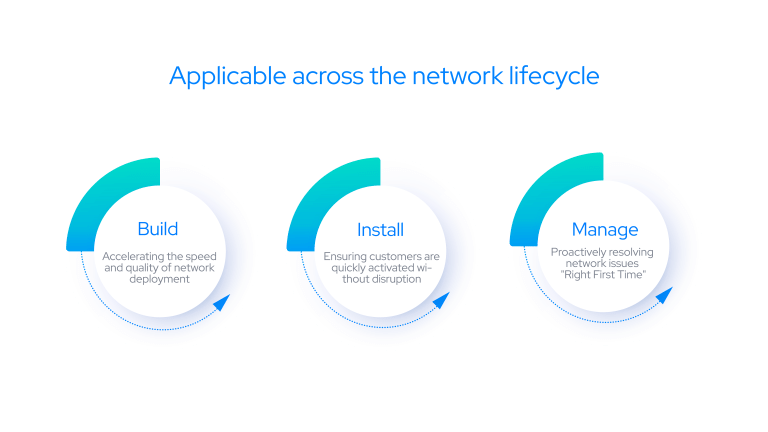
Right First Time (RFT) operations have become the key metric of choice in helping operators address these challenges. It measures whether tasks are correctly completed to the required standard in the initial attempt, without the need for rework. Whether applied to network build, customer install or resolving network faults, RFT reduces revisits, operational costs and time spent on each task.

Computer vision solutions are being deployed to help operators significantly increase RFT rates through the detection of anomalies and poor-quality operations, enabled by the automated analysis of visual data, captured and uploaded by engineers or auditors in the field. Having successfully deployed with FTTP providers in Europe, we see immediate benefits for UK alt-nets.

Openreach PIA: Managing Openreach’s PIA compliance process is a pain-point for many FTTP providers reliant on access to Openreach’s ducts, poles, and chambers to deliver and build out their own networks. Similar to other markets, adherence to strict quality standards and compliance with photographic evidence is mandatory. Using computer vision, operators are able to capture noncompliant photos or sub-standard work prior to sending to Openreach, avoiding delays and unnecessary costs that come with resubmissions or additional site visits.

Network Build Audits: As-built network auditing and documentation is often incomplete, with many operators seeking to improve their quality control processes. Computer vision can be used to ensure build standards are met, avoiding delays in handover and accelerating RFS network availability. Relevant for equipment across end-to-end fibre network, automating real time quality checks via AI, significantly reduces rework, as well as the time, effort and costs needed to complete desktop and site surveys.

Customer Installs: Issues with network availability, splicing, broadband speeds, reinstatement or even poorly mounted ONTs can result in service delays, issues or unhappy customers, where an additional site visit maybe required. Using computer vision to automate install health checks, operators can detect any corrective rework needed on the day of install, as well as guarantee the best possible install experience for their customers.

Inveniam AI – a better way to benefit from computer vision. Inveniam AI is a fully managed solution that integrates computer vision and machine learning capabilities to enhance field service operations, transforming raw data into real time actionable insights when engineers are in the field. With every stage of the computer vision life cycle covered, we build, deploy, and manage transformative computer vision solutions without our customers having to invest in their dedicated AI resources.

Get in touch or meet us at Connected Britain to explore how Inveniam can support you to enhance RFT operations.

Also in the news:
Connected Britain 2023: the keynote panel agenda
T-Mobile signs spectrum deal with Comcast worth up to $3.3 billion
Intel to sell minority stake in IMS Nanofabrication to TSMC

Connected Britain 2023: the keynote panel agenda


A Connected Britain Preview 

Connected Britain 2023 is just around the corner and, with just under a week left to go, it is only fitting that we highlight some of our amazing keynote panels, featuring some of the biggest names in the UK telecoms industry. 
Day 1 – Wednesday 20th September: 

CXO keynote panel: The state of play for the UK’s mobile market (9:35am) 

Moderated by Karen Egan, Senior Telecoms Analyst at Enders Analysis, this panel will explore the current condition of the UK mobile market in depth. 

Speakers: 

Andrea Donà, Chief Network Officer, Vodafone 

Howard Watson, Chief Security & Networks Officer, BT 

Phil Siveter, Chief Executive Officer, UK & Ireland, NOKIA 


CXO keynote panel: Where is the UK fibre market headed? (12:50pm) 

Moderated by Matthew Howett, Founder & Chief Executive Officer of Assembly Research, this panel will explore the latest impacts of the market, understanding the regulatory and investment context for the UK fibre sector, discuss if regulation supports or hinders competition in the market, and address the challenge of adoption.  

Speakers: 

Greg Mesch, Chief Executive Officer, Cityfibre 

Dana Tobak, Founder and Chief Executive Officer, Hyperoptic 

Martyn Taylor, Chief Commercial Officer, BDUK 

Clive Selley, Chief Executive Officer, Openreach 

Daren Baythorpe, Chief Executive Officer, ITS 


CXO keynote panel: Connectivity as the cornerstone of a greener future (17:40pm) 

Moderated by Miran Gilmore, Senior Consultant at STL Partners, this panel will explore how connectivity will play a key role in the country’s environmental future.

Speakers: 

Rafael Jaron, Founder & Chief Executive Officer, Concept for Change 

Wolfgang Schusterr, Executive Director, Connected Places Catapult 

Marzia Zafar, Deputy Director of Governance for Data & Digitalisation, Ofgem 


Day 2 – Thursday 21st September

Understanding the connectivity needs of the UK’s nations and regions (9:30am) 

Moderated by Sophie James, Head of Telecoms and Spectrum Policy at TechUK, this panel will dive into the regional perspectives and priorities of the UK’s connectivity needs, addressing the challenges and opportunities of delivering better connectivity to the nation. 

Speakers: 

Nik Johnson, Mayor of Cambridgeshire & Peterborough Combined Authority 

Robbie McGhee, Deputy Director, Digital Connectivity, Scottish Government 

Theo Blackwell MBE, Chief Digital Officer for London, Greater London Authority 


Beyond the glass: what does it take to ensure modern broadband services and in-life experiences are truly fit for the future (10:10am) 

Our final panel of the event will be moderated by Lorne Mitchell, MD of Objective Designers, and will look at some of the following key questions: 

  • What criteria will networks and broadband services of the future be judged on? And what will be demanded of them? 
  • What decisions and investments today, will help networks and their ISPs stand out from the crowd tomorrow? 
  • Which technologies and approaches are set to enable the best networks and why? 
  • Against this backdrop, how must technology suppliers, networks operators and ISPs work together to realise net-zero/sustainability ambitions? 

Speakers: 

Michel Langlois, Chief Technical Officer, Calix 

Nigel Abraham, Customer CTO, Nokia 

David Tomalin, Group CTO, Cityfibre 

Connected Britain 2023 promises to be bigger and better than ever before. It’s not too late to join us! Check out the full agenda and secure your tickets here

Also in the news:
Are You Winning? Game Changers Build Faster installs With Fewer Experts
T-Mobile signs spectrum deal with Comcast worth up to $3.3 billion
Intel to sell minority stake in IMS Nanofabrication to TSMC

Are You Winning? Game Changers Build Faster installs With Fewer Experts


Insight 

25 years ago, Kapil Singhal worked as a field engineer at Ericsson to deploy some of the first ever mobile networks in India. His involvement with Telcos across the region in building Mobile Switch Centers and Radio Network Services meant he very quickly learnt and understood, first-hand, the key problems field workers faced in network infrastructure and deployment projects.

From arduous paper forms and lengthy inspections that wasted key resources, to inefficiencies in data capture requiring multiple reworks, Kapil felt the difficulty and lack of support to efficiently complete his work to a high standard.

Fast-forward 15 years and Kapil has built teams across Europe to drive significant growth for companies focused on connecting the world, and has now Co-Founded Vyntelligence, a company driven by a singular focus to empower field professionals and organizations to drive efficiencies with higher data quality & analytics. Purposefully  simpler worker life with more time with friends & family and on health.

Led by his passion, Kapil has been fortunate to build a network of game-changing professionals that are excited by the same desire to build a better, safer & sustainable world. Unfortunately, change is slow. On one hand, senior stakeholders are ‘committed’ to driving change and harnessing the power of digital transformation. On the other, the field workforce continues to struggle to complete jobs effectively due to a lack of resources, an aging workforce, regulatory constraints and an increased demand for global connectivity.

Kapil mentions “The amount of time I have seen field people lose / waste time on admin, reporting, conference calls always frustrates me as current channels remain suboptimal to capture quality data; to drive better collaboration, better actions and better decisions.”

But change is not achieved, it’s driven. And part of his mission has been to travel to meet the key players across the industry and enlist them as game-changers pioneering new innovation to drive real benefits and efficiencies in a climate that needs it most.

Leaders such as Fredric Sundin, Head of Network Deployment & Connectivity UK at Vodafone recognise that “there is a shortage of people with the right skills and capabilities in the industry, and more focus and drive are needed to ensure a more flexible workforce with right upskill & cross skilling both into younger workforce and existing”.

How do we do this? BT Advisory Board and ex-CIO with over 25 years experience, Mike Young, shared that “careful communication and community engagement needs to be factored in. Particularly with where our economy is and the cost of living, we need to be very careful we don’t leave people behind. Digital inclusion is key”. On the other hand, he shares that “governments change and therefore Policies can change.  This can have a marked effect on any rollout and the same can be said for environmental concerns”.

In turning to the world of digital, then, Fredric also recommends that technology “will simplify things a lot and result in less resources needed for certain tasks. It will also enable us to do more with less in parallel to being faster and cheaper while providing a better quality with less reliance on human mistakes. Self healing, Self Audit and AI powered automation would result in a proactive approach to ensure network reliability & Safety.

We also spoke with our industry partners to get their expansive insight on the problems faced, and Harish Krishnan, EU Head of Operation Excellence at Prodapt shared that “repeated field surveys due to poor field data capture and lack of A55 field digitisation is impacting the fiber plan and design completion on-time with the right quality”.

It’s clear that the industry & its leaders recognise the problem, and are clear about the solutions too.

But Kapil’s mission spans further. It would be a great oversight to only involve senior leaders in your cause, so through Vyntelligence, Kapil has brought together various game-changers who are already pioneering change at every level.

A commitment to driving organizational change and adopting new technologies is hard, but there are many that have joined the community, driven the change with Vyntelligence and are now advocating the benefits to share with others.

Glyn Albrow, LLU Infrastructure Process Specialist at Openreach mentioned “this is a first for Openreach so is a big achievement that we can remotely audit successfully to the quality standard required.” On speaking about the Vyn SmartVideoNotes platform, he said “We were able to remove the need for any physical visits because the installer was able to audit their own work with the Vyn technology. So 100% audits are now being completed remotely.”

Whilst a well built product that provides targeted solutions to deliver happier customers, contractors & colleagues is essential to achieving these benefits, the credit lies with the game-changers that are not only recognising value, but driving it wherever possible to help others reap the benefits too.

By combining human intelligence with the power of smart, guided asynchronous video for smarter data capture, and harnessing the power of AI/ML capabilities to drive smarter insights and collaboration, a community of game-changers are able to empower themselves, field teams and customers too.

Kapil’s belief has always been that “harnessing the power of video naturally lends to effective remote supervision. It builds better customer engagement, saves field visits (carbon miles), reduces capital programme risks, accelerates productivity and creates safety & compliance as a positive culture”

It is clear now that there is an abundance of smart technologies and new innovations trying to drive change in the industry, but the factor that brings success is culture. A dedicated focus on championing change management within organizations so teams can directly see and feel the value of innovation is what brings together the game-changers. And it only comes when the need has been felt first-hand, the years have been spent building and growing, and the effort has been well placed in bringing together a community of those who recognise value and have a desire to see change.

“I am proud that I’m now able to bring together a community to help the field engineers in the same place as I once was. We’re seeing real commitment and real change leading to real benefits. The work is in progress, and the game is changing” says Kapil.

Are you Vynning?

Vyntelligence is a market-leading enterprise intelligence platform. As the category owner, it holds an 80% market share of top UK infrastructure & telco providers including Openreach. They’ve also won the Orange Fab France Women Start Program amongst over 250 innovative global startups and have joined Tomorrow Street’s SCALEUP X, the next generation of strategic suppliers to Vodafone. Vyn leverages its patented data capture, collaboration & AI-powered analytics platform for clients to see faster, bigger, and smarter asset deployment and service delivery using fewer resources with short guided asynchronous video.

Hear more from Vyntelligence at Connected Britain on the 20 – 21 Sept at Stand 185.

Find out more at vyntelligence.com/telecoms

Also in the news:

Unleashing a connected future: Navigating the UK’s broadband landscape
German fibre coverage hits 36%
Potential ‘remedies’ for Spain’s Orange–MásMóvil merger draw in Digi


Spanish government scrutinising STC Telefónica deal


News 

STC, Saudi Arabia’s largest telecoms operator, contacted the Spanish government last week to inform it of the deal, which if approved, will make STC the Spanish telecom’s largest shareholder

The Spanish government is reportedly carefully examining STC’s proposed acquisition of a 9.9% stake in Telefónica worth €2.1 billion, which was announced last week.  

‘My opinion is that we cannot allow this operation to continue’ said Yolanda Diaz, Spain’s labour minister and second deputy prime minister 

“We cannot allow the operation to continue,” she continued. “Telefonica manages the most important thing in our lives – data.” 

Speaking outside the G20 in New Dheli this week, Spain’s First Deputy Prime Minister and Minister for Economy and Digitalization Nadia Calviño confirmed that the Spanish government will “analyse the operation with the upmost rigor and activate the appropriate mechanisms to protect our general interest”. 

Calviño further added that “Telefónica is a strategic company for our country and as government we will apply all the mechanisms that are necessary to prioritise the defence of our strategic interests”, whilst highlighting the importance of preserving Spain’s ability to attract foreign investment. 

She noted that she had not had the opportunity to speak with Mohamed bin Salmán, the Saudi crown prince at the New Dheli summit, but stressed she is in “constant contact” with José María Álvarez Pallete, Telefónica’s president. 

The Spanish government prohibits the foreign acquisition of over 10% in firms active in sectors related to public order, public security, or public health without prior governmental authorisation, which is why STC’s intends to take a 9.9% stake. Acquisitions of less than 10% are also prohibited if this would result in management of the company.  

The Spanish government has the right to question the acquisition, as the threshold at which the government can intervene was recently lowered to 5% for defence related industries, and Telefónica provides services to Spain’s defence industry. 

To hear more about the global telecoms market, join us at this year’s Total Telecom Congress, 21-22 November 

Also in the news:
The changing landscape of the subsea cable industry with Gulf Bridge International
German fibre coverage hits 36%
Potential ‘remedies’ for Spain’s Orange–MásMóvil merger draw in Digi

Startup stories: SecHard


Contributed Article

Serkan Akcan, Chief Executive Officer, SecHard

SecHard is a cybersecurity software company founded by a constellation of stars and tech gurus. Its story highlights the power of collaboration.

It all began with our CTO, Kadir, a seasoned IT and cybersecurity manager, returning to the academic world for his master’s degree. During his education, he compared his experience with literature reviews and saw the potential for a product that could centralize cybersecurity hardening for different IT products. In 2019, Kadir and his childhood friend, who is now our Chief Software Development Officer, Cihat, developed a prototype. Cihat’s exceptional coding skills are at the core of SecHard’s quality. In 2020, they brought the prototype software to my cybersecurity services company, where I serve as CEO. I’ve been working in the cybersecurity field since 2000 and co-founded a cybersecurity services company in 2005. With this uncommon wealth of experience in cybersecurity, we have a vision for the future.

After seeing SecHard’s prototype, we envisioned that by analysing its shortcomings, we could create a roadmap to address cybersecurity issues worldwide and directly impact cyber resilience. We invested in the prototype software and transformed it into a Cybersecurity Robotic Process Automation product. Our primary goal was to eliminate human-based delays or errors while making cybersecurity improvements through automation and reducing skill and talent shortage gaps. However, we didn’t want to rely solely on our own insights and experiences.

The success of a tech company is directly proportional to the productivity of its employees. In other words, a software company’s most valuable asset is its human resources. Therefore, we endeavoured to bring the best developers and directors to our team. We brought in Ömer, who had held top-level cybersecurity management positions in major companies, as our VP of Product. We appointed Caner, another cybersecurity guru, as Chief Business Officer. Thus, SecHard became a team of stars, and the quality of its products reflects that. 


What is your USP? 

SecHard is the industry’s first cybersecurity robotic process automation tool. According to sources like Gartner and IBM, 95% of cybersecurity incidents are preventable with known and recommended security controls. Many hacking stories trace back to inadequately performed cybersecurity tasks. These tasks are routine and repetitive, making them ideal candidates for robotic process automation. Basically, we can automate the following tasks sequentially: 

– Automatic discovery of cyber assets 

– Automated provisioning of access to discovered assets 

– Automatic cybersecurity gap analysis and risk scoring for accessed assets 

– Automatic configuration enforcement to bring non-compliant assets in line with cybersecurity policies 

– Alerting relevant teams about high-risk assets that cannot be enforced for any reason 

This is just a brief overview. Today, SecHard supports more than 110 IT products, including servers, clients, network devices, databases, web servers, and cloud systems. We fully automate audits and improvements required by CIS Benchmark, DISA STIG, NIST, and some local security standards. We can reduce the need for cybersecurity experts to one in five. 

How have you got to your current stage of development? 

Today, we have more than 40 customers from diverse sectors such as telecom, finance and banking, manufacturing, energy, logistics, retail, and government, as cybersecurity is a universal challenge. We want to take this game-changing product and our expertise to global markets. We participated in the InnogateUK program, an accelerator program at Istanbul Technical University, where we received in-depth training. Over the past year, we sponsored various conferences in London, Dubai, and Azerbaijan. In the next 6 months, we will attend conferences in London, Munich, Dubai, Riyadh, and Texas. In the next two years, we aim to become a cybersecurity provider with a presence on five continents. 

Managed by a technically competent and experienced team, SecHard is also a well-managed company from a commercial perspective. In a very short time, we have made SecHard a profitable company that can finance all its investments, including marketing and go-to-market, from its own budget. This does not mean that we are closed to investors. We are in discussions with investors who will bring more than just money to SecHard, accelerate our entry into global markets, and continue to seek the right investors in return.  

What does the future hold for your SecHard? 

SecHard is set to become a prominent cybersecurity manufacturer alongside the world’s leading cybersecurity companies, operating on five continents and automating cybersecurity problem-solving for organisations. 

Want to learn more about SecHard? Find them at Stand S6 at this year’s Connected Britain, in London on 20-21 September.

Also in the news:
Unleashing a connected future: Navigating the UK’s broadband landscape
German fibre coverage hits 36%
Potential ‘remedies’ for Spain’s Orange–MásMóvil merger draw in Digi 
Full fibre now covers 52% of UK


News 

UK Regulator Ofcom has released its Summer 2023 Study, based on mobile coverage and fixed broadband availability in the UK, as of April and May this year 

According to the ‘Connected Nations’ report, “Full fibre” (FTTP) now reaches 52% of the UK, equalling 15.4 million households. This is up from 48% in January this year. The report notes that this growth has been predominately driven by deployments from larger fibre operators, but has been supported by a number of smaller altnets, serving individual regions and communities. 

However, the UK’s coverage of fixed “superfast broadband”, remains unchanged at 97%, but Northern Ireland saw an increase of 1%, up to 97%. The 3% unable to access this are likely to be in hard-to-reach areas. The study found that the ‘vast majority’ of the UK can access what is described as ‘decent broadband’, meaning download speeds of at least 10 Megabits per second (Mbit/s) and upload speeds of 1 Mbit/s. 

Gigabit-capable broadband availability has reached 75% of homes, or 22.4 million, up from 21.9 million (73%) in January this year, when their last report was published. 

Regarding mobile coverage, there were no notable increases since the January report, however coverage remains stable, with 93% of the UK predicted to have good outdoor 4G coverage from one operator at least.  

5G coverage continues to expand, with 85% of premises able to access outdoor 5G coverage. 

The usage of 3G continues to decline, with its switch off already underway. Virgin Media O2 confirmed this week that its 3G switch off will begin in 2025, becoming the final major UK operator to do so. 

Want to keep up to date with all of the latest telecoms news? Sign up for Total Telecom’s daily newsletter  

Also in the news:
Smart devices are harvesting excessive consumer data, study finds
Unleashing a connected future: Navigating the UK’s broadband landscape
Consolidation begins in UK fibre market as VMO2’s nexfibre acquires altnet Upp

Smart devices are harvesting excessive consumer data, study finds


News 

In its study, Which? analysed the data collection operations of the brands who produce popular smart devices including doorbell cameras, smart speakers and smart washing machines 

New Research from Which? has shown that the makers of smart home devices are collecting more data than is required from their users. This data is then in danger of being shared with third party firms such as social media platforms, without consumers being explicitly aware. 

After analysis of the data collection practises of popular brands, findings of the study included smart doorbell brand Ezvis having the most tracking firms active (including TikTok’s marketing unit, Pangle) Bose smart speakers sharing their user’s data with Meta despite only being supposed to listen when you want them to, LG washing machine necessitating that users provide a date of birth, and smart TVs knowing the viewing habits of users. 

Data collection can be useful to help companies develop better products by optimising them to the need of the consumer. However, it is likely that customers are unaware of the extent to which their data is being used and shared, as a third of people surveyed by Which? do not fully read a device’s privacy policy. 

“Firms should not collect more data than they need to provide the service that’s on offer,” said Rocio Concha, Which? Policy and Advocacy Director, “particularly if they are going to bury this important information in lengthy terms and conditions.” 

Under the General Data Protection Regulations, the data collected by companies must be relevant, and they must be transparent about what data they collect and how it is processed. 

Despite this, companies are often intentionally broad with their reasonings behind using consumer data, giving objectives such as it being in the companies ‘legitimate interests’. 

‘The Information Commissioner’s Office should crack down on data collection by manufacturers and marketing firms that appears to go beyond “legitimate interests”. A proper standard or code of practice should also be put in place to make the rules clearer,’ said Concha. 

Following the release of the report, the Information Commissioner’s Office – a UK government body which upholds information rights in the public interest – have released a statement, emphasising that: 

“Companies must be transparent about the data they collect and how they use it, and ensure that the data is not used or shared in ways that people would not expect. The ICO is developing guidance on data protection and Internet of Things devices and we will act where we don’t see the rules being followed,” said Stephen Almond, Executive Director of Regulatory Risk and the ICO. 

Want to keep up to date with all of the latest telecoms news? Sign up for Total Telecom’s daily newsletter 

Also in the news:
Virgin Media O2 to begin 3G switch off in 2025
Unleashing a connected future: Navigating the UK’s broadband landscape
Consolidation begins in UK fibre market as VMO2’s nexfibre acquires altnet Upp

Virgin Media O2 to begin 3G switch off in 2025 


News

All major UK operators have agreed with the government to phase out 2G and 3G by 2033  

Virgin Media O2 (VMO2) has become the final major UK mobile operator to announce its 3G shut down schedule, aiming to begin the process in 2025. 

The company says that the switch off is part of its ongoing network transformation, with the move freeing up valuable spectrum therefore allowing for the expansion of its 4G and 5G networks. 

3G services were launched in the UK in 2003, but now carry only a small fraction of the country’s total mobile data traffic. In VMO2’s case, only 4% of all data consumed last year was carried over their 3G network. 

VMO2 added that its 4G services now cover 99% of the population, and they expect their 5G coverage to reach 50% of the population by the end of the year. 

This 3G shutdown schedule puts VMO2 slightly behind its rivals, with EE and Three set to begin shutting down their 3G networks next year, while Vodafone UK aims to have completed the process by June next year. 

“3G was once an exciting new development for telecoms providers that brought new opportunities for customers,” said Jeanie York, Chief Technology Officer at Virgin Media O2 in a press release. “But as we continue to evolve our network to provide the best mobile connectivity, it is clear that switching off 3G and focusing our attention and investment on the faster, more reliable and more efficient 4G and 5G services is the right thing to do for our customers, our business and the environment.” 

3G services are likely to be axed before 2G, as 2G remains the only connectivity option in some the most rural parts of the country, as well as used by many Internet of Things services and providing a low power fallback option for more modern networks. 

Hear from Virgin Media O2 at this year’s Connected Britain, the UK’s largest digital economy event – book your tickets now! 

Also in the news:
Unleashing a connected future: Navigating the UK’s broadband landscape
German fibre coverage hits 36%
Potential ‘remedies’ for Spain’s Orange–MásMóvil merger draw in Digi 

Unleashing a connected future: Navigating the UK’s broadband landscape


Contributed Article

by Digital Infrastructure

The strong desire for seamless connectivity is driving the direction of the telecommunications industry in 2023, and its influence is expected to last for many years. In this dynamic environment, providers are working hard to come up with new solutions to satisfy the growing need for fast and affordable internet services all over the UK

In an era marked by remote working and the integration of AI-driven services in business and personal lives, the demand for steadfast, reliable connectivity looms large. And the shift towards a connected future is already in progress, with the race to full fibre underway and the advent of technologies like 5G, which promise to redefine the telecom industry for years to come.

The sector’s transformation unfolds against the backdrop of a concerted drive for efficient network management and collaborative infrastructure sharing. This change isn’t just about technology progressing; it’s a crucial plan to make the industry more resilient and relevant. So, as we think about the future, a major question to consider is: will the UK become a fully connected country by the goal of 2025?

Empowering connectivity

Historically, the UK telecoms market has long been a global powerhouse, a trend that shows no sign of slowing down. Industry projections echo this sentiment, forecasting a surge from USD 34.32 billion in 2023 to an impressive USD 42.95 billion by 2028. This trajectory underscores the UK’s resolute stance as a commanding force in the telecommunications domain on the global stage.

Central to the UK’s journey is the government’s ambition to foster a new era of digital connectivity. By aiming to provide every household and enterprise with access to gigabit-capable broadband by 2025, the government envisions not only economic prosperity but also social cohesion.

The roadmap to this reality relies on full fibre digital connectivity and 5G technology, but security and resilience of the underlying infrastructure is of the utmost importance moving forward.

This effort goes beyond simply possessing advanced technology; it’s a change in society that requires being ready and able to adjust. It’s a cultural shift, a change in the way we interact, work, and live in a world that’s increasingly interconnected. This shift requires individuals, businesses, and institutions to be proactive in embracing the changes, open to exploring new ways of operating, and flexible enough to adjust to the evolving landscape.

A blueprint for transformation

A cornerstone of this transformation is the UK’s pivot to fibre optics, coupled with the impending end of the Public Switched Telephone Network (PSTN) by 2025. Guided by this ‘national switch,’ the outdated copper phone network will gracefully step aside, creating space for the introduction of full fibre connections. Although there might be small interruptions expected, the UK government and Ofcom have taken proactive steps to safeguard the interests of consumers during this significant transformation.

The benefits of this change go beyond just new technology. According to the Centre for Economics and Business Research (CEBR), moving to full fibre could bring together communities that previously had lacklustre internet. This shift could also boost the economy by almost £59 billion because it will enable people to work more efficiently. Additionally, as flexible working becomes more widespread, around a million people might be able to join the workforce again, which would create more opportunities for both individuals and businesses.

At the same time, the widespread introduction of 5G technology since 2019 has opened up exciting possibilities in the world of telecommunications. Offering the advantages of reduced delays, increased data capacity, and faster connection speeds, the fifth-generation cellular network enhances the ability to smoothly navigate a world that’s more connected than ever before. Going beyond these improvements, 5G’s real value becomes evident in its stronger security measures, including advanced ways of confirming identities and verifying users. As 5G becomes available to more people, consumers can look forward to increased efficiency, better cost management, and stronger protection against cyber threats.

A horizon of connectivity

Against this backdrop of transformation, UK consumers stand at the precipice of unprecedented benefits. The upcoming digital revolution could completely change not only how we talk to each other, but also how we live, work, and interact. As time goes on, it’s important for individuals to be prepared so they can take advantage of these chances and make the most of the different aspects of this new digital era.

The trajectory of the UK’s telecommunication sector is promising. With pioneers like Digital Infrastructure and sister company BeFibre leading the way and government support strengthening the progress, the dream of a completely connected UK by 2025 is achievable. The merging of full fibre broadband and 5G technologies is at the heart of a future where consumers and businesses play a key role in a nation that’s empowered by digital advancements. In the upcoming digital era, connectivity is transforming from a luxury to becoming an essential part of everyday life, moulding the shape of an exciting new world.

Want to hear more from Digital Infrastructure on the UK’s broadband journey? Join them at Stand 110 at Connected Britainthe UK’s largest digital economy event

Also in the news:
“Open dialogue for 5G.”
German fibre coverage hits 36%
Potential ‘remedies’ for Spain’s Orange–MásMóvil merger draw in Digi