STC Group acquires a €2.1 billion stake in Telefónica


News

STC announced the investment on Tuesday after trading closing 

STC Group, Saudi Arabia’s largest telecoms operator, has acquired a 9.9% stake in Telefónica worth €2.1 billion, becoming the firm’s largest shareholder. 

The deal includes the acquisition of 4.9% of Telefonica’s shares, with the remaining 5% stake derived from various financial instruments. The Saudi firm plans to secure voting rights for the 5% interest held through financial instruments after receiving regulatory approvals, the company said. 

STC have confirmed that they do not intend to acquire a majority stake in Telefónica, but rather see the move as a “compelling investment opportunity to use our strong balance sheet whilst maintaining our dividend policy,” according to a statement by STC CEO Olayan Alwetaid in a company press release. 

It is no coincidence that STC’s stake stops just shy of reaching 10%, since any foreign investment of 10% or greater in Telefónica would require the approval of the Spanish Council of Ministers. The Spanish government prohibits the foreign acquisition of over 10% in firms active in sectors related to public order, public security, or public health without prior governmental authorisation. It also prohibits acquisitions of less than 10% if this would result in management of the company. 

 “Telefónica and STC Group share many similarities, with a vision to use technology to connect people and a strategy to drive growth. This long-term, significant investment by STC Group is a continuation of our growth strategy, as we invest in vital technology and digital infrastructure sectors across promising markets globally,” said Mohammed K. A. Al Faisal, chairman of STC Group. 

“Our investment in Telefónica demonstrates our confidence in Telefónica’s leadership, its strategy and its ability to create value. As long-term, supportive shareholders, we are committed to strengthening our partnership,” added Alwetaid. 

STC have made a number of investments across the tech and telecoms sectors in recent months, both within Saudi Arabia and globally. Most recently, STC completed the acquisition of tower assets from Netherlands-based United Group in a deal worth €1.22 billion.  

It is also worth noting that STC is not the only Middle Eastern, state-owned telco investing in major European operators. UAE-based e& has slowly been growing its stake in Vodafone Group since 2022, most recently announcing their intention to increase their equity in business to 20%. 

Want to keep up to date with all of the latest international telecoms news? Sign up for Total Telecom’s daily newsletter 

Also in the news:
CityFibre’s network rollout passes 3 million UK premises
Vodafone to begin UK’s largest Open RAN rollout
Potential ‘remedies’ for Spain’s Orange–MásMóvil merger draw in Digi  
Potential ‘remedies’ for Spain’s Orange–MásMóvil merger draw in Digi


News

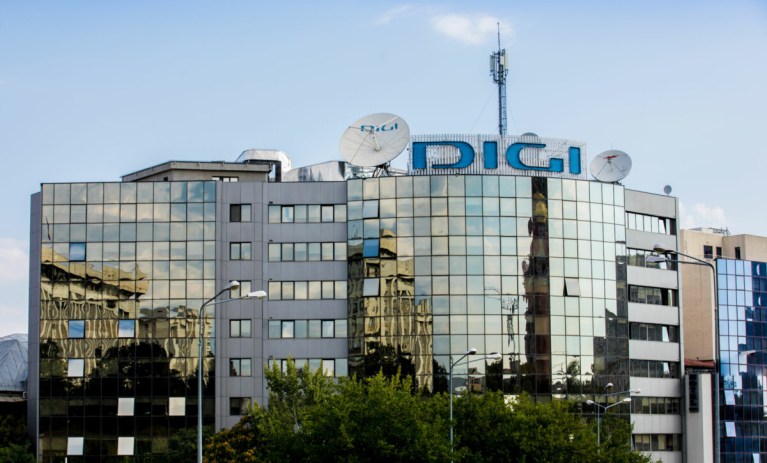
Digi Communications have expressed interest in taking ownership of MásMóvil’s mobile assets if the European Commission (EC) mandates their divestment as part of merger conditions

Earlier this summer, the EC extended its investigation into the potential $19 billion merger of Orange and MásMóvil in Spain, saying they needed more time to assess the true impact of reducing the country’s mobile market from four players to three.

Since then, speculation around the kinds of conditions that the EC may attach to the deal has been rife, with reports suggesting that the EC was preparing a ‘statement of objections’ to present to the operators.

Against the backdrop of these rumours, numerous smaller companies have begun to voice their interest in purchasing the operators’ assets, should they be forced to offload them as part of the EC’s merger stipulations.

These companies include Spanish national mobile and broadband providers Finetwork, Avatel, and Adamo, who have all sought to position themselves as the ideal third party for such dealmaking over the past few months.

More recently, this group of communications service providers have been joined by Romanian telecoms group Digi Communications, whose CEO Serghei Bulgac last month suggested the merger presented a huge opportunity.

“This an important transformative moment for the Spanish market, with the market possibly going from four large players to three large players, and if there is an opportunity… for us to play a part in this process, we will certainly be interested,” he told journalists on an earnings call.

This week, in fact, the company’s interest has been taken one step further, with Digi Spain’s CEO Marius Varzaru saying the company would invest €2 billion if it were to receive MásMóvil’s spectrum and mobile network as part of the merger.

Varzaru told Spanish newspaper El Mundo that the company’s investment in rolling out 5G and fibre networks strengthen the national economy, as well as generating roughly 1,500 jobs. He further argued that Spain needed “four strong mobile operators”, saying that Digi was well positioned to fill that role.

For now, it remains unclear exactly what remedies will be offered by the EC to facilitate the merger, but the wider industry’s interest in MásMóvil’s assets could not be more obvious.

How is the European Commission’s attitude towards telecoms consolidation shifting in 2023? Join the operators in discussion with regulators at this year’s Total Telecom Congress live in Amsterdam

Also in the news:
Altafiber raises $600m in funding for fibre expansion
CityFibre’s network rollout passes 3 million UK premises
Vodafone to begin UK’s largest Open RAN rollout 

How the AI-driven planning and scheduling optimisation is powering service fleets


Contributed Article

by IFS

If your company is considering adding electric vehicles (EVs) to service fleets, whether to save some green or be more green, you can now do so confidently with the help of disruptive technology.

As large telco operators with thousands of service trucks and vans look to incorporate electric vehicles into their fleets in the coming years, how can they manage all the intricacies of keeping an EV charged and on schedule?

While the benefits of EVs are great, allowing telecom organizations to reduce fuel costs and fulfill sustainability missions, the challenge of managing EVs in time-sensitive, intricate, and SLA-driven daily schedules have prevented companies from making the shift. As any EV car owner knows, you must plan your driving routes to ensure that you have access to charging stations and account for the battery recharging time. Now, multiply those requirements by thousands or tens of thousands of service vans and trucks, and you see the challenge.

This is why software designed using artificial intelligence and machine learning that optimises the planning and scheduling of field technicians is being updated to include EV fleet optimisation. As they are known in the field service management (FSM) software market, these scheduling optimization engines are popular amongst telco operators with large field workforces and service vehicle fleets. The solutions enable operators to efficiently plan and manage daily field engineer and long-range project schedules, ensuring that all consumer appointments are handled on-time and service level agreements with business customers are met. In essence, they can ensure that the right field technician with the right parts and skills is always sent to the right place at the right time.

Because these software solutions are infused with AI and machine learning, they can use powerful algorithms to process complex mathematical equations in a matter of minutes. For example, some of the most powerful optimisation engines can intelligently schedule 500,000 field service activities in under an hour. In other words, far faster than any human dispatcher can and without any error.

The benefits include reduced technician travel time by as much as 50% and higher first-time fix rates, all of which translates into lower labor costs, lower fuel costs, lower carbon emissions, and improved customer experiences. So, why not extend the intelligence of these workforce optimisation solutions to include fleets of electric service vehicles? That’s exactly what software vendors like IFS are doing.

Now, in addition to data inputs like customer service level agreements, daily appointment schedules, required drive time between locations, and even field engineer work breaks and time off, this planning software can consider everything needed to keep an EV on the road, including location of charge points, type, capacity, speed of charge and range. The software automatically plans EV charging requirements along with daily technician schedules, and it is nuanced enough to only use EVs in urban areas with more charging stations or for certain journeys that are shorter distances. The next wave of innovation will be supporting IoT-connected EVs that will have real-time battery usage tracking.

If your company is considering switching service fleets over to include EVs, you now can do so confidently. You can even prepare for that future with IFS’ embedded predictive planning tool that allows you to test how your business could cope with a wide range of scenarios including adding EVs into your fleet. It lets you easily visualize your simulated impact on resources, KPIs, and work demand.

IFS is proud to be pioneering innovation in electric vehicle fleet optimization, helping telco operators reduce operational costs, meet corporate sustainability goals, simplify ESG compliance and reporting, and drive efficiencies towards net zero carbon emissions.

Want to learn more about EV fleet and workforce scheduling optimisation from IFS? Meet the team in the IFS Café outside the Keynote Theatre at Connected Britain 2023.

Also in the news:
Altafiber raises $600m in funding for fibre expansion
CityFibre’s network rollout passes 3 million UK premises
Vodafone to begin UK’s largest Open RAN rollout 

AIS and ZTE announce world’s first mmWave Dynamic RIS trial


News

The trial was undertaken at the AZ centre in Bangkok 

Chinese firm ZTE has partnered with Advanced Info Service (AIS), Thailand’s leading mobile operator, to launch the world’s first dynamic RIS (Reconfigurable Intelligent Surface) trial in a mmWave network. 

RIS is a multi-antenna technology that uses electromagnetic metamaterials to extend base station coverage by intelligently reflecting or transmitting wireless signals. This results in improved coverage with both low costs and low carbon emissions.  

By incorporating dynamic functionality, ZTE’s dynamic RIS technology achieves beam sweeping and user tracking. 

In the trial, ZTE used the RIS product in the AIS mmWave network with 400MHz of bandwidth. 

According to ZTE, users in the trial were able to maintain a consistent downlink rate of over 1.6Gbps, and an uplink peak rate of over 260Mbps, in an office room larger than 400 square metres. 

mmWave frequencies can provide 5G networks with high speeds and capacities, but they also present challenges, such as a shorter range and poorer signal propagation. Dynamic RIS technology could be a potential solution to these issues, allowing mmWave to be considerable expanded without the need for as many additional base stations. 

“Our collaboration with ZTE has provided us with the opportunity to explore the application of RIS technology in mmWave communications, leading to groundbreaking achievements. We believe that this technology will accelerate the arrival of the 5G-A era and deliver unprecedented communication experiences to users,” said Wasit Wattanasap, Head of Nationwide Operations and Support at AIS. 

ZTE claims that the trial represents an important milestone in the mmWave communication field, which has the potential to revolutionise the global communications industry for the future of areas such as smart cities and Internet of Things (IoT). 

Want to keep up to date with all of the latest international telecoms news? Sign up for Total Telecom’s daily newsletter   

Also in the news: 
Ericsson and TDC NET launch Denmark’s first 5G Standalone network
Vodafone to begin UK’s largest Open RAN rollout
Vodacom and Eskom sign virtual power wheeling deal 

BT partner with Infovista to streamline customer operations


News 

BT is set to deploy technology from Infovista, a French network lifecycle automation specialist, in an effort to improve “operational efficiency and customer satisfaction” 

As part of the deal, Infovista will utilise their existing solution, the Ativa™ Suite, to improve troubleshooting with intelligent pattern discovery, correlation, analysis, and alarm generation. 

The new automated processes are designed to minimise fixed voice outages and service interruptions.  

Infovista claims that their technology can reduce the resolution times for CSPs by more than 66%, which will streamline customer relations processes, reducing response times to network problems by quickly identifying the root causes of disruptions.  

“CSPs are under pressure to constantly improve the quality of experience they provide, while simultaneously reducing operational costs… This use case shows how automating daily tasks can help CSPs such as BT both drive operational efficiency and improve customer experience and satisfaction,” said Franco Messori, Chief Product & Transformation Officer at Infovista. 

“BT is committed to developing and delivering next-generation services that continue to put our customers at the core of what we do and to deliver better outcomes. This means digitally transforming our own operations and using the power of automation across our network, infrastructure, services and operations,” said Reza Rahnama, BT Group’s managing director for mobile networks. 

Want to keep up to date with all of the latest international telecoms news? Sign up for Total Telecom’s daily newsletter

Also in the news:
Ericsson and TDC NET launch Denmark’s first 5G Standalone network
Vodafone to begin UK’s largest Open RAN rollout
Vodacom and Eskom sign virtual power wheeling deal 

Connected Britain Awards: The Shortlist


News

The Connected Britain Awards recognise the most significant and innovative organisations, solutions, and programmes that are shaping Britain’s digital future. 

This year we’ve had a record number of entries across our 15 categories. 

Join us at the end of Day One at Connected Britain when the winners will be revealed! 

The full 2023 shortlist is as follows:  

B2B Service Provider of the Year Award – Sponsored by Digital Infrastructure 

Finalists: 

Gigabit Networks 

Giganet 

ITS Technology Group 

Pangea 

Truespeed 

Vodafone Business UK 


Broadband Provider of the Year Award – Sponsored by VETRO 

Finalists: 

Brsk Ltd 
Fibrus
Giganet 
Lightning Fibre
Truespeed 

Wessex Internet 

Wildanet 


Digital Skills Award 

Finalists: 

Dorset Council – Embedded digital champions 

Innovation Nottinghamshire – 5G Careers Programme 

Kent County Council (Digital Kent) 

Lloyds Banking Group and We Are Digital 

Vodafone Business & Enterprise Nation – business.connected   


Enterprise Solution of the Year 

Finalists: 

Eseye Infinity IoT Platform 

IFS Planning & Scheduling Optimization (PSO) 

Jetty 

Qualcomm Technologies, Wi-Fi 7 Networking Pro Series platforms 

VETRO 

Vitruvi Software  


Project Rollout Award  

Finalists: 

CityFibre 

County Broadband Ltd 

Liverpool City Region Combined Authority (LCRCA) and LCR Connect 

Lothian Broadband Networks (LBN) 

Openreach 

Truespeed 


The Access Innovation Award 

Finalists: 

Avanti Communications 

 DexGreen Ltd 

Lothian Broadband Networks (LBN) 

Norfolk County Council 

Scottish Water and Atos using Starlink 


The Barrier Removal Award  

Finalists: 

CityFibre 

Intelligens Consulting with with Renfrewshire Council 

Kent County Council – Kent Wayleave Toolkit 

Liverpool City Region Combined Authority (LCRCA) 

Lothian Broadband Networks (LBN) 

Trenches Law 


The Community Improvement Award  

Finalists: 

Coventry City Council #CovConnects 

FullFibre – Fibre Heroes’ Community Investment Fund 

Get Online London 

Greater Manchester Combined Authority – Get Online Greater Manchester: for care leavers 

Ogi, ‘Cefnogi’ Community Fund 

Sunderland City Council’s local connectivity shapes communities fit for the future 

Three Discovery 

Wildanet 


The Full Fibre ISP Innovation Award – Sponsored by Calix 

Finalists: 

Brsk Ltd 

Gigabit Networks 

Giganet 

Hey! Broadband 

Hyperoptic 

TalkTalk Wholesale Services 


The Industrial Innovation Award 

Finalists: 

Dexgreen Ltd – Virtual Buddy Training App 

Neutral Wireless – Private 5G Network Deployed for King Charles III’s Coronation 

Prodapt OpenFibreXchange 

Vodafone – 5G SA Slicing 

Zeti Limited   


The Smart Places Award – Sponsored by ITS 

Finalists: 

Connected for Success: Welcome to Sunderland, City of Smart 

FarrPoint Western Isles IoT Project 

Living Map Ltd 

NYnet Ltd / North Yorkshire Council 

Virgin Media O2 Business and partners. Greater Manchester Local Full Fibre Network programme 


The Wireless Innovation Award 

Finalists: 

EdgeQ 

Freshwave and the City of London Corporation 

Jangala 

Neutral Wireless – Private 5G Network Deployed for King Charles III’s Coronation 

Quickline Communications 

Scottish Water, Blackspot Networks and Atos 


The Rising Star Award 

Finalists: 

Chris Founds, CJ Founds Associates 

Franck Courbon, Ethicronics 

Haseeb Ahmed, NETS International Ltd 

James Harris, Cable Giants Ltd 

Liam Ceaplen, Jetty 

Phil Bairsto, Freedom Fibre 


The Sustainability Award – Sponsored by euNetworks 

Finalists: 

FarrPoint Western Isles IoT Project 

iLOQ Oy – iLOQ 5 Series Battery Free Locking Solution 

KCOM 

Openreach 

Wildanet 

Zayo: Zeus 


Startup of the Year Award 

Finalists: 

Artifeel
AssetHUB
Emu Analytics
Groundhawk io
Inteliports
Jetty
Lumilinks
SecHard
Stacuity
Weaver Labs 


Who will win? Find out at the end of Day 1 of Connected Britain 2022!  

Book your ticket here 

Winter is coming: Vodafone Ukraine ups network investment by 75% to add resiliency


News 

As the war in Ukraine continues, Vodafone is heavily investing in the preservation of its infrastructure 

Vodafone Ukraine increased its capital investments by 75% in the first half of this year, spending over UAH 2 billion ($54.2 million) on repairs and winter preparations. 

As the Russia–Ukraine war continues, Vodafone Ukraine engineers continue to restore destroyed infrastructure, repair equipment, develop and expand the network, and prepare for potential blackouts in the winter. 

According to the company, over 9,000 base stations have been refitted with new batteries, which are adapted to operate in harsh conditions. They are also less sensitive to power surges and frequent power outages, with 2.5–3 times faster charging speeds than the old batteries. 

Additionally, Vodafone Ukraine has supplied a further 1,124 network technical facilities with stationary generators and prepared 522 mobile generators.  The company says it has a sufficient back-up supply of fuel for the winter, backed up by solar power plants and microturbine generators at a number of facilities.  

The firm also reported half-year revenues of UAH 10.4 billion ($283.3 million), a 5% year-on-year increase. 

Last winter was a very difficult period for Ukrainian network operators, which saw their infrastructure targeted alongside the national power grid by a coordinated Russian artillery assault. The attacks saw huge disruption to telecoms services, leaving the operators scrambling to restore and buttress their networks against further attack.  

In a Total Telecom interview with Kyivstar CEO Oleksandr Komarov last December, Komarov noted two noted major problems facing the Ukrainian telcos. The first concerned recovering and restoring sites located in occupied areas of the country, while the second was ensuring the existing sites remains operational during power outages. 

According to Komarov, the main targets of the Russian attacks are generating and transmission facilities of the Ukrainian Energy market, which when they occur, cause huge energy disbalances, resulting in blackouts, which get wider longer with every attack that occurs.  

At the time, Komarov said that up to  25% of the network would be out of operation because of energy supply issues, resulting in 30% of the country being entered into a temporary blackout. 

As such, with winter approaching once again, it should come as no surprise that the operators are turning their attention to reinforcing their power infrastructure by adding new energy solutions and a horde of new generators. 

Want to keep up to date with all of the latest international telecoms news? Click here to receive Total Telecom’s daily newsletter direct to your inbox 

Also in the the news:
T-Mobile to cut 5,000 US jobs 
US government announces $3.5 million in grants to Tribal Communities 
Dish seeks extension for purchase of T-Mobile’s low-band spectrum
 

Deutsche Telekom launches new London network connection


News 

The route is the newest of three between the UK and mainland Europe 

Deutsche Telekom has announced an upgrade to its cross-continental Lambda network, adding a third route across the channel between London and mainland Europe. 

The new route runs between London and Ostend, Belgium, and adds to the existing routes between London and Paris, and London and Amsterdam. 

The Lambda network is a high-bandwidth optical network that delivers cross-continental connectivity, which Deutsche Telekom describes as a cost-effective alternative to building a private network. 

scThe network is powered by Ciena’s WaveLogic 5 Extreme 800G and is built on Dense Wavelength-Division Multiplexing (DWDM) architecture, which is used to increase the bandwidth of existing fibre networks by allowing different wavelengths to be supported over a single fibre.  

As a result, 1G, 10G, 100G, and 400G services can be offered across the whole network, allowing for the development of new applications and the opening of new business opportunities and markets, the firm argues. 

“The three routes connecting London to continental Europe significantly support the region’s efficient exchange of traffic,” said Beatrix Kapitany, head of international sales, network infrastructure solutions at Deutsche Telekom.  

“That’s why we are especially proud to have implemented this third route, which will further increase the stability of customer services. But of course, we will not stop here and will soon follow up with additional routes for other locations to support the growth of our clients.”   

The firm plans to add further routes along additional locations, having recently announced a new route from Sofia, Bulgaria, to Varazdin, Croatia, which the firm says will result in a 5ms latency improvement. 

Want to keep up to date with all of the latest international telecoms news? Sign up for Total Telecom’s daily newsletter  

Also in the news:
T-Mobile to cut 5,000 US jobs
Dish seeks extension for purchase of T-Mobile’s low-band spectrum
Brazil making rapid 5G progress but challenges remain on the horizon

US government announces $3.5 million in grants to Tribal Communities


News 

The funding is part of President Biden’sInternet for All’ initiative, which promises a high-speed internet connection to every American citizen by 2030 

The National Telecommunications and Information Administration (NTIA), part of the US government’s Department of Commerce, has awarded seven grants worth nearly $3.5 million to seven Tribal entities as part of the Tribal Broadband Connectivity Programme (TBCP). 

The TBCP is a $3 billion subsidy programme designed to help bring fast internet to Tribal lands. The scheme is funded by President Biden’s Internet for All Initiative, part of The Bipartisan Infrastructure Law, which will provide $2 billion in funding. The Consolidated Appropriations Act provides a further $980 million, bringing the total funding to just under $3 billion. 

The seven new grants bring the total allocated funds to over $1.79 billion, with money awarded to 198 Tribal entities since the programme began in 2021. Successful recent applicants of the $3.5 million in funding include the Iowa Tribe of Oklahoma, who received $500,000 for the set-up of a wireless site, and the Quileute Tribe of the Quileute Reservation of Washington, which received $466,902 to connect unserved homes and businesses in the community. 

“President Biden’s Investing in America Agenda is helping to close the digital divide on tribal lands,” said Secretary of Commerce Gina Raimondo. 

“These grants will reduce barriers to Internet access for tribal communities across five states, connecting them to the education, good-paying jobs, and health care they need to succeed in our 21st century economy.” 

The expansion of high-speed internet access across the US will result in increased economic development, improve quality of life, allow for the creation of remote learning and employment opportunities, and improve access to telehealth within Native American societies, according to the programme. 

Join the discussion around President Biden’s connectivity goals at next year’s Connected America 2024 live in Dallas, Texas 

Also in the news:
Dish seeks extension for purchase of T-Mobile’s low-band spectrum
Brazil making rapid 5G progress but challenges remain on the horizon
ASA bans ‘misleading’ 5G ads from EE 

T-Mobile to cut 5,000 US jobs


News 

The announcement comes as the firm fights with rising costs in the increasingly competitive market 

T-Mobile US has announced that it will cut 5,000 jobs in the US, reducing its 71,000-person workforce by 7%.  

The job cuts will take place over the next five weeks, and will include both corporate and back-office roles, although the cuts will not impact the firm’s retail and customer care divisions. 

“Impacted roles are primarily duplicative to other roles, or may be aligned to systems or processes that are changing, or may not fit with our current company priorities. Some areas of the business will be implementing more centralized models where they can improve efficiency and effectiveness and save costs. We’re also taking opportunities to build bigger, broader people manager roles with deeper spans and fewer layers, to provide longer-term growth opportunities. At the same time, we’ll also be decreasing our reliance and spend on external workers and resources,” said CEO Mike Sievert in an email to staff. 

“Today’s changes are all about getting us efficiently focused on a finite set of winning strategies, so that we can continue to out-pace our competitors and have the financial capability to deliver a differentiated network and customer experience to a continually growing customer base, while simultaneously meeting our obligations to our shareholders,” he added. 

In the release of its Q2 reports last month, T-Mobile reported profits of $2.2 billion, up from a $108 million loss for the same period last year. Furthermore, the firm announced a gain of 760,000 postpaid mobile customers, its highest increase in the quarter for eight years, and the most in the US mobile industry. 

Considering the firm’s recent success, laying off so many employees may appear questionable, especially given the company’s promises of job creation surrounding the company’s merger with Sprint. Sivert added that “the time to challenge the status quo and write the next chapter, is WHILE we are still successful. That’s how we sustain it.” 

It is estimated that the firm will incur a charge of around $450 million as a result of the move. 

Upon the announcement on Thursday, shares were down 2%. 

T-Mobile’s largest rivals are also undergoing major workforce reductions in recent years; AT&T has cut roughly 45,000 in the last two years, while Verizon has cut around 18,000 in a similar time frame. 

Join the discussion around America’s changing telecoms market at next year’s operators in discussion at Connected America 2024 live in Dallas, Texas 

Also in the news:
Dish seeks extension for purchase of T-Mobile’s low-band spectrum
Brazil making rapid 5G progress but challenges remain on the horizon
ASA bans ‘misleading’ 5G ads from EE