

Five interesting projects from around the world to catch up with: … [visit site to read more]
21
Mai, 2024

Kyivstar puts up $90m to defend against Russian attacks
Keep up-to-date with all the latest news, articles, event and product updates posted on Developing Telecoms.
Subscribe to our FREE weekly email newsletters for the latest telecom info in developing and emerging markets globally.
Sending occasional e-mail from 3rd parties about industry white papers, online and live events relevant to subscribers helps us fund this website and free weekly newsletter. We never sell your personal data. Click here to view our privacy policy.
20
Mai, 2024
BII to invest $30m in TOA Tanzania
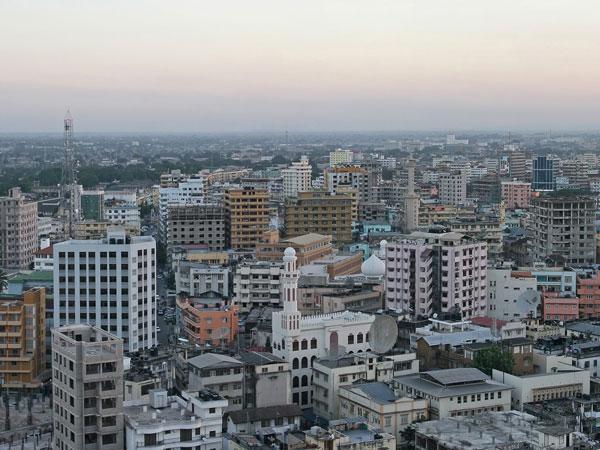
TOA (TowerCo of Africa) Tanzania has signed a US$30 million financing agreement with UK development investor British International Investment (BII).
The agreement will enable TOA Tanzania to deploy a further 200 telecommunications sites across Tanzania as part of its drive to close the country’s digital gap. Positioned strategically across Zanzibar and the mainland, the sites will help to boost coverage nationwide and particularly in rural regions, connecting previously isolated populations.
Innocent Mushi, CEO of TOA Tanzania, said: « With BII’s invaluable support, we are well-equipped to accelerate our growth trajectory and deliver essential telecom services to underserved communities. We are deeply committed to environmental sustainability and community development. The design of our new sites prioritises environmental protection through meticulous site selection, utilisation of renewable energy sources, and responsible waste disposal practices. »
Richard Palmer, Director and Head of Private Debt at British International Investment added: « Expanding digital infrastructure is critical for fostering sustainable economic development in Tanzania. By focusing on rural areas, TOA Tanzania is not only promoting inclusivity but also ensuring that the benefits of technological advancements reach the most underserved communities.”
Founded in February 2023, TOA Tanzania owns and operates passive telecommunications infrastructure for lease to mobile network operators. As part of its growth strategy, the firm aims to double its site portfolio size by the end of its first year of operations. Once completed, the new sites will not only extend network coverage to underserved communities but also support government digitisation efforts, foster financial inclusion, and generate employment opportunities throughout their lifecycle, from design and construction to maintenance.
MORE ARTICLES YOU MAY BE INTERESTED IN…
20
Mai, 2024

Industry Spotlight: FiberLight CEO Bill Major Sees Fiber M&A Ahead
Might we be on the edge of a new phase of consolidation on the US fiber landscape? That’s what FiberLight CEO Bill Major has on his mind at the moment. He took the helm last spring when Morrison & Co finalized the purchase of FiberLight from Thermo Companies. With Morrison’s backing, the company has the resources to be more aggressive both organically and inorganically. How do they view the industry right now? Let’s find out. … [visit site to read more]
Friday Roundup: DC BLOX, FiberLight, Globalinx, BT, Cologix, EXA
Four interesting network expansion projects from this week to catch up with, now that ITW week is coming to a close. … [visit site to read more]
17
Mai, 2024

How Will Data Center Networks Hold Up Under an Avalanche of AI Workloads?
This Industry Viewpoint was authored by Aniket Khosla, Spirent’s Vice President of Wireline Product Management
For a technology limited to sci-fi movies just a few years ago, artificial intelligence (AI) is suddenly everywhere. In a McKinsey survey conducted in April 2024, less than a year after ChatGPT and other first-generation tools debuted, 55% of respondents said they were already using AI. More than two thirds reported that they were planning to increase AI investments. … [visit site to read more]
17
Mai, 2024
MEASAT and Mudah launch telehealth kiosks for rural Malaysia
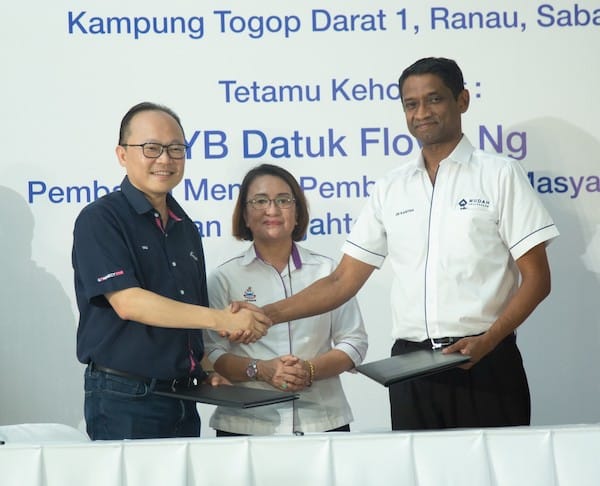
Malaysian satellite operator MEASAT announced on Thursday that it has signed a Memorandum of Understanding (MoU) with local healthcare tech company Mudah Healthtech to bring telehealth services to remote communities.
Under the MoU, Mudah Healthtech will use around 4,000 of MEASAT’s “CONNECTme NOW” satellite broadband hotspots in rural Malaysia to provide Mudah’s Sihat Xpress digital healthcare services for up to 1 million people in unserved and underserved rural and remote communities.
MEASAT and Mudah have also agreed to digitalise clinics in those areas with telehealth capabilities, enabling at least 1,000 doctors to support up to 2,000 Sihat Xpress rural telehealth kiosks to be rolled out at CONNECTme NOW sites within the next two years.
Sihat Xpress telehealth kiosks enable villagers to not only consult a doctor online about various non-emergency medical issues, such as minor illnesses and general health inquiries, but also conduct self- checks for things like oxygen levels, blood pressure and body temperature. In future, the kiosks may also support other services such as blood glucose testing, MEASAT said.
MEASAT chief operating officer Yau Chyong Lim said that by enabling people to do their own basic health screening, the telehealth kiosks could serve as a long-term viable solution for mitigating overcrowding and long wait times at healthcare facilities. They can also potentially improve health literacy in rural communities and limit the spread of non-communicable diseases, he added.
“Through digital healthcare, we aim to help reduce the healthcare delivery gap in remote communities, empowering rural residents to proactively monitor their health via routine checks and online consultations without spending time and money travelling long distances to a healthcare facility,” he said.
The first rural Sihat Xpress site in Malaysia has been established at Kg Togop Darat 1 in Ranau, which MEASAT said will serve as a proof-of-concept to show the potential of telehealth as a cost-effective method to address gaps in high-quality healthcare delivery between urban and rural areas.
Dr Kantha Rasalingam, CEO of Mudah Healthtech, added that the Sihat Xpress initiative in rural areas is aligned with the government’s goals to digitalise all healthcare facilities by 2030.
“Our mission is to make healthcare more accessible, convenient and personalised for everyone, regardless of their location or socioeconomic status,” he said. “We aim to bridge the gap between healthcare providers and patients, offering seamless and integrated platforms that facilitate communication, collaboration and care delivery.”
Flovia Ng, Assistant Minister of Community Development and People’s Wellbeing for Sabah, said telehealth services address the lack of medical professionals in remote areas and can help residents obtain medical advice more easily.
« This is in line with our own efforts to send mobile laboratories to remote districts to conduct medical check-ups and our encouragement of integration and collaboration between the government, private sector and the public to increase awareness on healthcare and improve wellbeing, » she said.
MORE ARTICLES YOU MAY BE INTERESTED IN…
17
Mai, 2024

Telecoms shutdown making Sudan’s humanitarian crisis worse: NGOs
A coalition of humanitarian NGOs in Sudan has warned that the shutdown of telecoms services in the midst of the country’s civil war is making a massive humanitarian crisis even worse, and urged all stakeholders – including Starlink – to restore services as soon as possible.
A nationwide telecoms shutdown in February left almost 30 million Sudanese without access to the internet or telephone calls for more than a month. While some levels of services have since been restored in the east part of Sudan, large parts of the country – including the Darfur region, and parts of Khartoum and the Kordofans – remain disconnected from network providers such as Zain, MTN and Sudani, according to an open letter from the Norwegian Refugee Council (NRC) released earlier this week.
In some areas, the only available service has been via satellite connectivity services like Starlink. The NRC letter said that civilians and local responders, such as emergency response rooms (ERRs), often connect through informal Starlink internet cafes.
However, Starlink is not licenced to operate in Sudan, and the military government has ordered people not to use the service, in part because the paramilitary Rapid Support Force (RSF) has reportedly been using Starlink terminals to communicate.
Last month, Starlink said it would halt roaming services to countries where it doesn’t have an operating licence effective April 30, although various media outlets have reported that Starlink remains accessible in Sudan.
The NRC letter said that services like Starlink remain critical for international humanitarian organizations and local responders to remain operational in unconnected parts of Sudan. The letter warned that shutting down Starlink “would have a disproportionate impact on civilians and the aid organizations who are trying to reach them.”
The NRC letter also said military attacks on telecoms infrastructure, as well as government-ordered shutdowns, have “severely affected civilians’ ability to cope with the effects of the war, as well as aid workers’ capacity to deliver essential services, with local responders most severely impacted.”
In the midst of the fighting, civilians need internet access to not only share and receive critical and lifesaving information, including safe areas and routes, but also access cash and bank transfers so they can purchase basic necessities like food and water, the NRC said.
Meanwhile, local aid groups, who have been the first and main responders in most conflict-affected parts of the country, rely heavily on telecoms to reach vulnerable communities and receive funding for their activities. Humanitarian organizations also need connectivity to coordinate and deliver relief efforts safely, particularly to provide cash assistance into the most remote areas.
“Any shutdown of telecoms services is a violation of human rights and may be considered to be a collective punishment that will not only isolate individuals from their support networks but also exacerbate the already dire economic situation facing millions,” the NRC said.
The letter – which was signed by 94 humanitarian, civil society, human rights organizations and members of the #KeepItOn coalition – calls for all stakeholders to ensure the uninterrupted provision of telecoms services in Sudan, as well as for parties on both sides of the conflict to stop attacking, destroying, damaging or shutting down telecoms infrastructure, and allow repairs to be made.
The letter also said restrictions on satellite services and importation of satellite internet devices should be lifted.
The NRC letter also said service providers need to ensure connectivity by “diversifying the means to access the internet, such as solutions based on satellite (including, though not limited to, Starlink) and WiMAX technology, or the use of e-SIMs near the country’s borders. »
Meanwhile, development donors and financial institutions should support long-term development of the telecoms sector by promoting decentralized infrastructure and reducing barriers for smaller businesses to enter the telecoms market, the letter said.
Finally, the NRC also called on the UN to increase emergency telecoms capacity in Darfur and the Kordofans through the Emergency Telecommunications Cluster.
The NRC said that over a year of relentless warfare and indiscriminate violence has led to Sudan becoming the world’s worst displacement crisis and is on the brink of becoming the world’s worst hunger crisis. In total, nearly 25 million people – more than half of Sudan’s population – need humanitarian aid.
MORE ARTICLES YOU MAY BE INTERESTED IN…
16
Mai, 2024

Veon reveals revenue increase
Keep up-to-date with all the latest news, articles, event and product updates posted on Developing Telecoms.
Subscribe to our FREE weekly email newsletters for the latest telecom info in developing and emerging markets globally.
Sending occasional e-mail from 3rd parties about industry white papers, online and live events relevant to subscribers helps us fund this website and free weekly newsletter. We never sell your personal data. Click here to view our privacy policy.
Colo Bytes: Powerhouse, Quantum Loophole, arc data centers, PAIX, maincubes
Five items from the data center sector from this week to catch up with, three from the US, one from Europe, and one from the Red Sea: … [visit site to read more]