

Several vendor items and infrastructure for a major sports event: … [visit site to read more]

Several vendor items and infrastructure for a major sports event: … [visit site to read more]

Tower company Edotco Bangladesh revealed on Thursday that it signed an MoU with Huawei Technologies (Bangladesh) to collaborate on deploying a telecoms tower in Bangladesh made of fiberglass reinforced plastics (FRP).
Under the MoU, Edotco Bangladesh said it will become the first TowerCo in the country to offer its fiberglass tower solutions to mobile network operators, with Huawei serving as technology partner to help deploy the tower.
FRP is a composite material consisting of a polymer matrix reinforced with fibers. The fibers – which can be made from materials such as glass, carbon, aramid or basalt – provide the strength and stiffness to the composite material.
According to Edotco, using FRP materials reduces tower weight up to 44%, making such towers suitable for rooftop sites in high-density areas. This also makes them easy to install and transport, which will increase construction efficiency up to 75%.
The company also said FRP towers are engineered not to reflect radio waves, ensuring efficient microwave transmission, while their durability allows them to withstand high voltage without damage. The towers also promise low CO2 emissions.
Sunil Issac, country managing director of Edotco Bangladesh, said FRP towers will help drive innovation in Bangladesh’s evolving tower industry landscape.
“We are dedicated to shape the future of this industry and continue to enable connected Bangladesh with advanced sustainable practices in line with SDGs,” he said.
Huyue, chief operating officer for Huawei Technologies (Bangladesh), said the partnership “enhances site facility availability and is set to bring positive change in the tower infrastructure industry.”
Keep up-to-date with all the latest news, articles, event and product updates posted on Developing Telecoms.
Subscribe to our FREE weekly email newsletters for the latest telecom info in developing and emerging markets globally.
Keep up-to-date with all the latest news, articles, event and product updates posted on Developing Telecoms.
Subscribe to our FREE weekly email newsletters for the latest telecom info in developing and emerging markets globally.

Some data center, fixed wireless, and IX news to end the week. … [visit site to read more]
Keep up-to-date with all the latest news, articles, event and product updates posted on Developing Telecoms.
Subscribe to our FREE weekly email newsletters for the latest telecom info in developing and emerging markets globally.

One M&A, one contract win, one technology partnership, and a leadership change: … [visit site to read more]
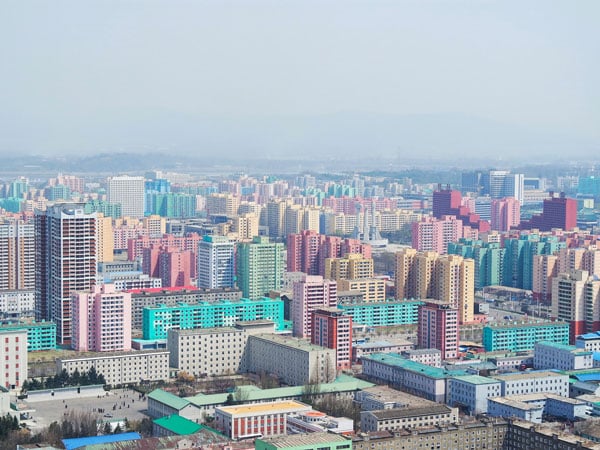
Demand for fixed-line telephone services has reportedly spiked in North Korea’s North Pyongan Province due to the easing of border restrictions with China, which has also led to a spike in installation prices.
According to Daily NK, citing anonymous sources, the relaxation of border controls has led to an increase in traffic in provincial areas like Sinuiju, Ryongchon, Uiju, and Cholsan. As much of that traffic is commercial (to allegedly include smugglers), wholesalers in those areas are starting to install two phones at home, as fixed-line services cost less than mobile phones.
The report also said that demand for fixed-line in North Pyongan has been driven by an increase in families who want to install their own home phone instead of sharing one with another family, mainly due to privacy concerns.
Consequently, post offices in the province have been swamped with requests for phone installations since the beginning of this year – so much so that the North Pyongan Province Post and Telecommunications Bureau has brought forward its annual revenue targets, the report said.
However, this also means provincial post offices have raised installation costs to take advantage of the spike in demand and hit those targets. The report claims the cost of fixed-line phone installation now costs between US$350-450 in Sinuiju and US$400-500 in Ryongchon. By comparison, installing a telephone in the capital Pyongyang costs between US$100-250.
The report’s source said the price of installation is particularly high in Ryongchon County because it has become a major bottleneck for shipping, as goods imported from China must pass through customs in Sinuiju before being distributed throughout the country.
“Since it’s the area where goods are distributed the fastest and wholesale prices are set, home phones are in high demand and installation prices are also high,” the source said.
The source also told NK Daily that Ryongchon County residents filed a complaint with the provincial party committee over the price hike, “but the matter was closed without results.”
According to the latest available figures from the CIA’s World Factbook, North Korea had 1.18 million fixed lines at the end of 2021, which works out to a market penetration of 5%. Figures from the World Bank (also for the end of 2021) say there are 6 million mobile subscriptions in North Korea, which comes to 23% market penetration.

There was a significant bit of consolidation among testing and assurance vendors yesterday. Viavi Solutions has agreed to acquire Spirent in an all cash deal. Both companies focus on testing and assurance products and services, enabling network operators around the world to better manage their infrastructure and serve customers. … [visit site to read more]
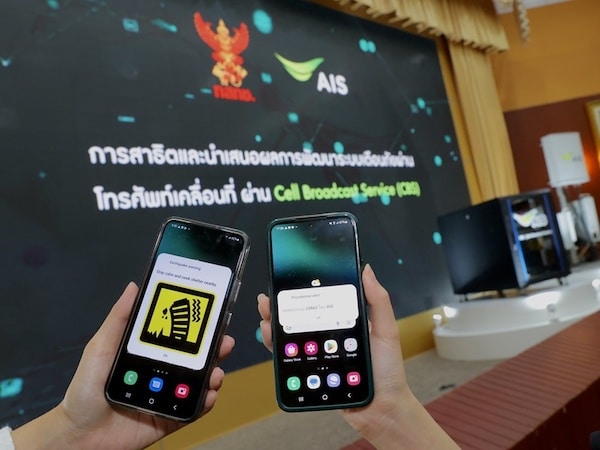
Thai operators AIS and True Corp announced separately on Tuesday that they are ready to implement an emergency cell broadcast service commissioned by the National Broadcasting and Telecommunications Commission (NBTC).
The cell broadcast service is designed to immediately pinpoint specific areas affected by urgent and critical incidents, including violence, shootings, and natural disasters.
The service comprises two parts: a Cell Broadcast Entities (CBE) system, managed and overseen by the central command center of the government, and the Cell Broadcast Center (CBC) system, managed and overseen by mobile 0perators.
The CBE system defines content and delivery areas for messages, consisting of various functions such as system management, message creation and approval. The CBC system is responsible for delivering message content to base stations according to specified areas, comprising system management and configuration, message deployment function, and network management.
The cell broadcast service will send direct warning messages from area base stations to all mobile phones within that region. The message is displayed on the mobile phone screen as a near real-time triggering pop-up notification.
The system differs from regular SMS in that it doesn’t require phone numbers, allowing for rapid and efficient communication of emergency information across the entire affected area. This also means the public doesn’t need to download any specific applications. Additionally, users will receive messages even if the even if the device is switched off.
The Ministry of Digital Economy and Society (DES) first proposed establishing a cell broadcast system for emergency alerts in October 2023 following a shooting at Siam Paragon Mall in which two people were killed and five others injured. Since then, the NBTC has collaborated with DES, the Department of Disaster Prevention and Mitigation (DDPM), the Royal Thai Police, and mobile operators to develop the system.
AIS demonstrated the cell broadcast service on Tuesday at the NBTC office. Clinical professor Sarana Boonbaichaiyapruck, chairman of the NBTC, said the results were satisfactory. “[The system] is ready to connect with the central government’s command cente to serve as a tool or channel for swift and efficient disaster warnings.”
“The latest testing of this technology has successfully achieved its intended goals, and we are ready to expand its integration with the country’s emergency alert system efficiently going forward,” said AIS head of business relations Waroonthep Watcharaporn.
Also on Tuesday, True Corp announced that it was ready to support the service, having successfully testing it on January 15.
“Currently, negotiations are underway with the government to put this system into practice … marking a first step of success for True Corp in developing and cooperating towards the Ministry of Digital Economy and Society, the NBTC, and the DDPM for immediate deployment,” said Chakkrit Urairat, True Corp’s chief corporate affairs officer.
Chakkrit also said that True’s cell broadcast system supports five levels of alerts based on severity:
True also said its system supports five languages: Thai, English, Chinese, Japanese, and Russian.
Neither True nor AIS said how much the implementation would cost. A report in the Bangkok Post last month quoted DES minister Prasert Jantararuangthong as saying the CBE would cost around 400 million baht (US$11 million) to set up. He also said mobile operators may have to spend 300 million baht each to install their own CBCs.
On Tuesday, the NBTC’s Sarana said in a joint statement with AIS that funding for the system would be supported by the Universal Service Obligation (USO) and Telecommunications Infrastructure Fund.