Dialog Axiata launches app to control smart-home devices

Sri Lankan telco Dialog Axiata says it has released a new mobile app that serves as a single remote control point for its suite of smart-home devices.

The new Smart Home App serves as a centralised platform, allowing users to manage and monitor all of Dialog Axiata’s smart devices, as well as smart devices from Chinese AI/IoT company Tuya Smart, from their phone. Dialog and Tuya have been co-developing smart devices under a partnership arrangement since 2020.

Dialog Axiata currently offers a range of smart-home devices, including security cameras, smart wall plugs, smart wall sockets, smart switches and smart extension cords, as well as Wi-Fi mesh and an Alexa-powered smart speaker.

The app enables users to view live camera feeds, activate and deactivate devices, and receive notifications from each connected device.

Dialog Axiata also says the Smart Home App has voice control capabilities that can be seamlessly integrated with popular smart home assistants such as Amazon Alexa and Google Assistant.

“This app aims to redefine smart living, making it effortless for everyone to experience the true potential of their smart-home devices, regardless of their location,” said Dialog Axiata Group CMO Lasantha Theverapperuma in a statement.

According to figures from Statista, Sri Lanka’s smart-home market is still in the fledgling stage, with just 5.7% household penetration projected for this year. That’s forecast to grow to 9.5% household penetration by 2028.

In terms of monetisation, the smart-home market in Sri Lanka is projected to generate US$133.1 million this year, growing at an annual rate of 11.38% to US$204.8 million by 2028.

MORE ARTICLES YOU MAY BE INTERESTED IN…

UAE’s ATRC launches R&D platform to support developing nations

Abu Dhabi’s Advanced Technology Research Council (ATRC) has unveiled what it calls  a pioneering initiative aimed at facilitating global access to cutting-edge technology solutions: the ATRC Global Tech R&D Platform.

The platform, it says, serves as a channel for countries worldwide to tap into the UAE’s technological expertise to address their unique challenges, seeking to bridge technology gaps experienced by nations worldwide by offering tailored solutions to their pressing needs.

To initiate applications through the platform, ATRC is allocating US$200 million in funding to accelerate innovation, particularly for emerging and developing nations. By committing to absorb resource and research costs, the funding facilitates the development of sophisticated technology solutions, empowering these nations to keep pace with the latest advancements.

The ATRC Global Tech R&D Platform invites applications from governments, organisations, and eligible stakeholders all over the world, prioritising collaboration and inclusivity. Through a rigorous evaluation process, initiatives aligned with the platform’s mission will receive support in six priority sectors: aerospace and space; food and agriculture; healthcare; safety and security; sustainability, environment, and energy; and transport.

Over the span of almost four years, ATRC says it has developed a robust R&D ecosystem, with over 850 researchers from more than 70 countries and has built an entire ecosystem that systematically supports every critical stage of a technology’s development journey.

ATRC offers a spectrum of capabilities spanning quantum and AI, autonomous robotics, and cryptography, as well as advanced materials, propulsion, and space – guiding technology needs, as ATRC puts it, from ideation to innovation.

MORE ARTICLES YOU MAY BE INTERESTED IN…

Telia Lithuania taps Ciena to launch 800G service

Ciena announced on Monday that Telia Lithuania is using its coherent optics gear to launch the first 800G wavelength service between major cities in the country as part of a nationwide upgrade of its fibre-optic network.

Telia Lithuania is using Ciena’s WaveLogic 5 Extreme (WL5e) solution, sas well as its network management solutions, to upgrade its countrywide network to support 400G and higher services.

Ciena says the solution enables the telco’s fibre-optic network to deliver more flexible, higher-capacity, and cost-effective, power efficient transport services.

Virginie Hollebecque, VP of EMEA at Ciena, said in a statement that the solution will make Telia Lithuania’s network more resilient, with faster wavelength restoration, quicker issue resolution and improved timing distribution for applications requiring highly reliable synchronization.

“Network resiliency is of great importance for all networks in the Baltic region, considering the region’s heavy reliance on digital technologies,” she said. “Telia Lithuania has a resilient network foundation that can instantly bounce back from any disruptions, minimizing downtime, ensuring service continuity, and safeguarding its communication infrastructure.”

Andrius Šemeškevičius, head of technology at Telia Lithuania, said the network upgrade is essential to support 5G, IoT and other bandwidth-intensive applications.

Šemeškevičius said Ciena’s solution “allows us to reliably and efficiently meet our customers’ varied transport requirements – whether for access, metro, long haul, or enterprise data centre interconnect.”

MORE ARTICLES YOU MAY BE INTERESTED IN…

Cost savings – not social pressure – are driving telcos towards green energy

The telecoms sector has an indisputable impact on the environment. Operating a reliable network requires vast amounts of power, the manufacture of network equipment and personal devices produces significant carbon emissions, and the swift obsolescence of these devices generates a constant stream of e-waste.

With access to telecommunications increasingly viewed as a human right, the expansion of networks and proliferation of devices has raised awareness of the sector’s environmental impact, placing companies under increasing pressure to show leadership in achieving sustainability goals and adopting greener solutions.

While this trend has been gaining traction for years, there has been a pronounced shift towards sustainable solutions in recent years – and the main driving factor has not been social pressure, but cost savings. Companies are increasingly finding that it is not merely financially viable to adopt greener solutions, but attractively cheaper.

This is particularly the case with regards to energy. Enrique Dans, a Senior Fellow at the Centre for European Policy Analysis (CEPA), told us: “From my perspective, the most important factor here is cost. We are witnessing a huge decrease in the cost of renewable energy.”

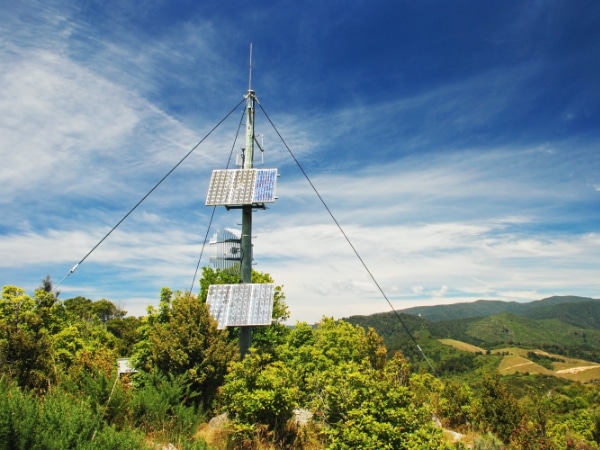
Dans highlights that the key technologies for solar energy – panels and batteries – have both plummeted in terms of overall cost, with solar panels now 99% cheaper than 40 years ago, and batteries 97% cheaper. The efficiency of both technologies has also increased substantially, meaning that it’s now feasible for an operator to power several antennas at an isolated location with just a few solar panels and a battery.

He adds that this is a particularly attractive option in emerging markets as it facilitates the construction of self-sufficient, off-grid sites to enable reliable rural connectivity, and notes that operators in these regions are often able to obtain public funds or even grants from international agencies for deploying sustainable infrastructure projects.

Installation is now the most expensive element of a deployment – formerly, it was materials such as solar panels. This means solar energy is now viable on a widespread industrial scale, which in turn makes it feasible to extend technologies that typically require more reliable energy supplies to areas without grid power. Dans notes that 5G consumes a lot of energy in areas where there is a constant stream of connections, but in an isolated area the base station can remain idle a lot of the time, meaning that it consumes less energy.

Simay Akar, IEEE senior member and the CEO & Founder at AK Energy Consulting, notes that there are still significant challenges in the way of achieving sustainability goals, particularly in emerging markets. She highlights companies needing to integrate renewable energy systems into their infrastructure, noting that investment in these systems will facilitate on-site power generation, reducing dependence on grid power.

The benefits that this can be deliver will be amplified by coordinated collaboration: “It is not an individual effort – they need to follow the policies to collaborate for Power Purchase Agreements…long-term to have more efficient, stable and cost-efficient electricity for their supply and needs. It’s also integrated to their grid – not every company has distributed systems, they’re mostly connected to grids. If they have a distributed generation, they need to make sure they are focusing on their green grid infrastructure. That requires a lot of investment in the green modernization, and they need to focus on smart grid integration in their systems.”

Akar states that it’s not enough for operators to merely invest in renewable energy resources – they must also optimise their network efficiency by upgrading their infrastructure with digital tools including artificial intelligence management systems, cloud technologies, and software defined networks. She notes that by combining these technologies with cooling systems, the physical hardware’s power consumption can be dramatically reduced, but adds that intelligent use of energy storage systems is also essential.

“It’s important to integrate energy storage solutions if using renewable energy resources, because it’s not [just] about the sustainable power we generate – this is also the business, they cannot have power outages.” Outages are not merely a matter of network availability – they are also a threat to data security, so it’s crucial for operators to understand the importance of energy stability and integrate these systems into their turnkey solutions – although Akar underlines the importance of selecting solutions that are suitable for both requirements and location.

“It’s harder and more challenging in emerging markets than developed markets, because you need to know your investment in this area for sustainability will be profitable”, says Akar. “When you have government support incentives, this clean energy transition is always more straightforward, but for emerging markets there are also considerations of what we could do, and what are the opportunities.”

Akar observes that green financing is a promising area, noting that there is sustainable funding available in the form of green bonds, public private partnerships, and private equity. While there are few incentives around this, so it cannot make up for support for a green transition from the sector, she says that these resources are made possible via international collaboration and are typically targeted at emerging markets, so could be instrumental in enabling a transition to cleaner energy in the sector.

As more companies become able to generate power via mini-grids and off-grid solutions, they frequently have surplus to their requirements. With intelligent use of storage systems, Akar explains that they can sell this back to the grid, or alternatively simply store the energy and use it as required to address infrastructure gaps. Even if there are no supportive mechanisms in their local area, through this kind of collaboration it becomes possible for companies to have access to cost efficient energy resources.

“Even if it looks more challenging for emerging markets, there are more opportunities for the future … because implementing these steps can [help] reach sustainability goals and energy sustainability while reducing their operational costs”, explains Akar. “When we talk about all these initiatives, it sounds like we’re investing a lot, but [whether] long term or short term, it’s not really. And overall, by reaching these sustainability goals, they’re also reducing their operational costs – this is important to see the opportunities, improve their energy supply, and make it more stable for their main business.”

The pressure is on – but the opportunities for real change are now viable. Dans observes that initial efforts around sustainability in telecoms amounted to little more than ‘greenwashing’, but underlines that the COP28 UN Climate Change Conference in Dubai, UAE delivered commitments that businesses are no longer able to skirt around. “Everyone was expecting a very low-profile conference, but in the end, the final documents are pretty stringent. They don’t say stop fossil fuels – of course, that was predictable. But the commitments for increasing renewable energy are huge, they’re really important. And they demand a lot of investment.”

MORE ARTICLES YOU MAY BE INTERESTED IN…

Telecel Global Services to receive funding to boost African operations

Telecel Group, an Africa-focused provider of digital and communications services, has announced a major investment in its wholly owned subsidiary Telecel Global Services (TGS), a leading telecommunication service provider for operators and enterprise clients globally with a particular focus on Africa.

Telecel Group and Africa Credit Opportunities Fund (ACOF), a sector-agnostic debt fund that invests in a range of credit opportunities in sub-Saharan Africa, have entered into a strategic partnership to invest US$20 million debt in TGS, to improve connectivity, digitalisation and e-commerce in West Africa and across the continent.

TGS provides a number of services, including cloud, firewall solutions, cybersecurity and data centres,  to more than 350 telecom operators through its hubs in New York, London and South Africa.

Details of how the partership will effect its aims have yet to be shared but it is no secret that Telecel Group has ambitions to expand in Africa, to develop digital and mobile offerings, or to buy all or part of operators on the continent, via its subsidiaries TGS, Telecel Mobile and Telecel Play.

The company made headlines last year in Ghana, where it obtained the green light in January 2023 to acquire 70% of Vodafone Ghana. The Telecel Group is now gearing up to fully rebrand Vodafone Ghana to Telecel by the end of February 2024. The rebranding will cover Vodafone Ghana and its three subsidiaries, Vodafone Wholesale, Vodafone Cash and Vodafone Ghana Foundation.

MORE ARTICLES YOU MAY BE INTERESTED IN…

Ucom taps Nokia for RAN upgrade

Keep up-to-date with all the latest news, articles, event and product updates posted on Developing Telecoms.
Subscribe to our FREE weekly email newsletters for the latest telecom info in developing and emerging markets globally.

Sending occasional e-mail from 3rd parties about industry white papers, online and live events relevant to subscribers helps us fund this website and free weekly newsletter. We never sell your personal data. Click here to view our privacy policy.

Re-imagining Telecom Operations: From Contract Negotiations to Customer Service

This Industry Viewpoint was authored by N Shashidhar, VP & Global platform head, EdgeVerve

In the digital age, telecom is more than just a sector—it’s the ultimate digital influencer, pioneering tech revolutions and ensuring we’re always plugged in. But behind the veneer of seamless connections and next-gen services lies a complex labyrinth of operational challenges ranging from intricate contract negotiations to maintaining high customer service standards. … [visit site to read more]