

Four bits of network and interconnection infrastructure news from around the world before we head home for the holidays here in the US. Ok ok, some of you have surely left already, but hey. … [visit site to read more]
22
Déc, 2023

Airtel lands deal with IntelliSmart to connect 20m smart meters
Indian telco Bharti Airtel said on Thursday its enterprise unit has formed a strategic partnership with smart metering and digital solutions provider IntelliSmart Infrastructure to provide connectivity for up to 20 million smart meters.
Under the partnership, IntelliSmart will use Airtel Business’ IoT Hub to track and monitor its smart meters with advanced analytics, while benefiting from telco-grade reliability and security.
The Airtel IoT hub is hosted in the operator’s cloud network, which Airtel says enables enterprise users to seamlessly connect and manage billions of devices and applications. The hub also makes use of multiple connectivity options, including 4G (NB-IoT or LTE-M), 2G and 3G, depending on the scenario and device requirements. The IntelliSmart deal will likely initially use NB-IoT, which is designed to support low-power devices like smart meters and sensors.
5G is also a future option with the implementation of RedCap (Reduced Capability), an enhancement of 3GPP Release 17 that enables simple, low-power devices to use 5G NR networks. Airtel announced in October that it successfully tested RedCap software from Ericsson on its 5G network.
Airtel claims its IntelliSmart partnership is the largest such deal in India’s smart metering space. If nothing else it’s the largest one for Airtel after its partnership with Secure Meters – announced in April – to deploy 1.3 million smart meters in Bihar using NB-IoT. In December 2022, it won a contract with TP Western Odisha Distribution Limited (TPWODL) – a joint venture between the Odisha government and Tata Power – to deploy 200,000 smart meters in Odisha.
Ganesh Lakshminarayanan, CEO of Airtel Business (India) said the IntelliSmart deal will significantly contribute towards the company’s fast-growing IoT business.
“IoT is one of the fastest-growing business segments for Airtel Business,” he said. “As we connect the devices across the country on our platform, we will exponentially grow our current IoT market share of 55.4% [as of Q1 FY23-24].”
He also said that the deal enables Airtel to “play a pivotal role” in driving the government of India’s Advanced Metering Infrastructure (AMI) initiative, which aims to convert 250 million conventional meters in India to smart meters over the next five years.
MORE ARTICLES YOU MAY BE INTERESTED IN…
21
Déc, 2023

Colombian 5G auction sees big sales for 3.5GHz
The 20th of December at 9 am local time saw the start of an auction to assign 5G spectrum to various players in Colombia. But was everyone happy with the result?
After nine rounds involving various participants, four 80MHz blocks were awarded in the 3.5GHz band, for a claimed value of US$1.37 billion. Each of four operators was assigned a block.
Tigo-Movistar – aka Union Temporal Colombia Movil-Telefonica – bid US$318,306 million for its block. As we reported in October, plans for Colombian operators Tigo and Movistar to move towards unifying their networks have been approved by Colombian business regulator the Superintendencia de Industria y Comercio (SIC), but the companies are expected to stop sharing infrastructure in July 2025.
WOM, which entered the market in 2021, bid US$318,340 million. The even newer entrant Telecall offered US$318,333 million. Claro put forward US $411,384 million.
However, the news in other bands wasn’t quite so positive. According to TeleGeography’s CommsUpdate, a number of other bands were for sale. Claro bid US$157.057 million for a block of 4G-suitable 2.5GHz spectrum. There were no other bidders. The 700MHz, 1900MHz and Extended AWS bands, which range from 1,700 MHz to 2,100 MHz, attracted no bids.
As for who has benefited, despite the apparent indifference to bands outside 3.5GHz and the fees of US$347 million earned by the government coming in well below the hoped-for US$500 million, ICT Minister Mauricio Lizcano suggested that 82.5% of the total available spectrum was acquired during the process. He was also quoted as calling this auction « Historic,” adding: “5G is a reality for Colombians, ».
But operators don’t have a completely free hand by any means. BNamericas says that under the coverage obligations established in the auction, operators must implement networks in nearly 1,200 schools across the country. 4G coverage will also be expanded on some 700 kilometres of primary and secondary roads in the country.
It may not have earned as much as the government hoped but the auction may be good for the country in other ways, with projections of potential long-term investments of around US$7.11 billion.
All four bidders will be able to go ahead with technical trials from January 2024. Commercial 5G deployments are permitted not long after this, in February 2024.
MORE ARTICLES YOU MAY BE INTERESTED IN…
21
Déc, 2023

Bicom Systems Wraps Up 2023 and Looks Forward to 2024
2023 is almost over – wow, what an incredible year it has been! Thank you for joining us on this rollercoaster of groundbreaking innovation, valuable partnerships, and exploration of emerging industry trends.
We asked our brilliant leader Senad Jordanović to share his thoughts on the past 12 months:
As we look forward to that tomorrow, we want to thank you for your dedication and contributions – you are the heart of Bicom Systems and greatly enrich our day-to-day business.
Join us as we remember some of the key releases, events, and resources we shared throughout 2023?
Together we harnessed the power of new possibilities
As you know all too well, the communications industry is constantly changing and evolving to adopt new technologies. Our mission is to empower you and your business with the latest solutions that give you not only a competitive-edge, but also set you up for rock-solid stability down the road. Have we done that in 2023? Let us know in the comments below!
If nothing else, you definitely saw some exciting changes to our product portfolio in the past twelve months! Check out the below for anything you may have missed.
We began offering you more efficiency to manage multiple PBX systems

We kicked off the year with the launch of PBXware SP Edition, a product meticulously crafted to conquer real-life challenges. This edition, developed based on your invaluable feedback, streamlines administrative tasks and automates operational processes for managing multiple PBX systems efficiently.
Did you miss this release? Catch up with all the details in our blog post.
We developed better collaboration and time management features

Our commitment to innovation continued with the release of Version 7.0, introducing new releases across our major communications tools, including PBXware, gloCOM, and Meeting. Have you seen all of the new features? PBXware users are mastering it like pros with the shorter learning curve, gloCOM has more tricks than ever before like auto answer, and Meeting is a virtual party with interactive features like hand-raising and reactions.
Want the full scoop? Explore the benefits in our blog post.
We focused on robust performance and infrastructure

Wrapping up the product releases, we rolled out SERVERware 4.5 and sipPROT with enhanced features, performance updates, and infrastructural enhancements. SERVERware is flexing its muscles with KVM VPSs, improved geo-redundancy, and more features requested by you!
You won’t want to miss any of this – get all of the details in our blog post.
The best part of 2023 was connecting with you
But our business is about so much more than products; it’s about the incredible relationships we’ve built with all of you.
We decided at the beginning of 2023 to make it a priority this year to dedicate time to connecting, collaborating, and strengthening the bonds that make our business thrive. You are not just partners, you’re the heartbeat of all we do.
Together we celebrated years of success at the Partner Summit

The highlight of 2023 was undoubtedly our Partner Summit in September. Held in picturesque Neum, those of you that attended know the event was way more than just a meeting. With 30 partners from around the globe joining us, we enjoyed a celebration of partnership, innovation, and shared success. Think unprecedented networking, the grand reveal of our new strategic roadmap, and workshops to spark creativity.
If you missed it or just want to relive the magic, check out the recap on our blog.
We put the spotlight on insightful conversations
Not wanting to let the excitement of the Partner Summit fade, we introduced Bicom Chats. Featuring interactive conversations with our amazing partners, plus enlightening discussions with our insightful developers and team members, you can find all nine Bicom Chats on YouTube. More than just interviews, these spotlights help us all to learn, grow, and align our goals for the upcoming year.
You shared your stories of triumph and growth
Thank you for helping to grow our library of partner case studies this year with your most compelling triumphs and growth journeys! We are all about shouting from the rooftops about your amazing achievements because your wins inspire us all. And it’s not just about showcasing success; it’s about exploring the strategies that got you there and supporting your peers in their own journey.
Global Telecom Exchange stands out not only as a top-tier VoIP phone provider, but also as a specialist in insurance and financial service telephony across the US and Canada. This lucrative niche has propelled them to secure a dozen new customers in the past six months alone. Feel inspired? Learn how they use PBXware and their ambitious growth plans for the future in their case study.

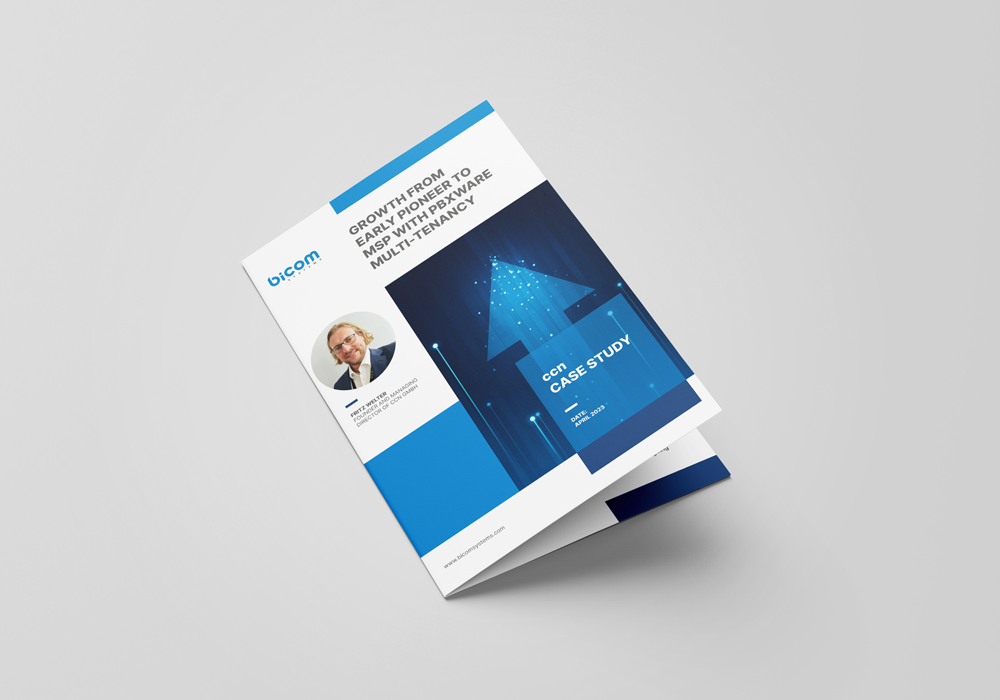
ccn was one of the pioneering German ITSPs in 2014, having since evolved to offer a diverse range of services, including network and VoIP infrastructure, networked transfer points, and support and partner services. Today, 30% of ccn’s annual sales revenue comes from selling Bicom Systems products. Want to learn how you could be next? Learn more about their journey and get insights into their upcoming plans in their case study.
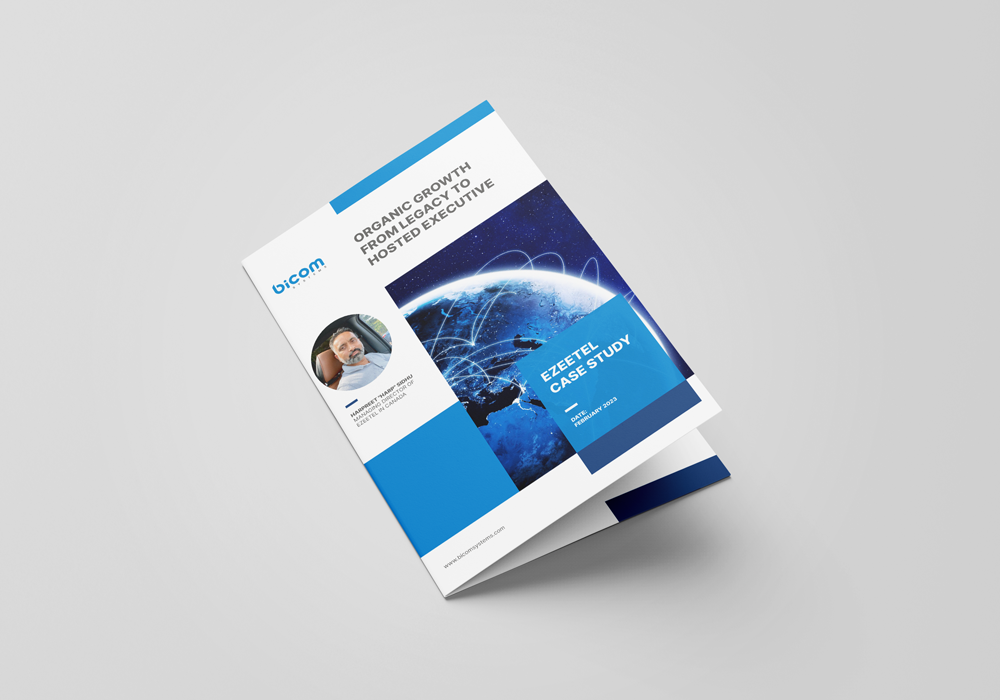
Ezeetel delivers complete VoIP solutions to small, medium, and large businesses all over Canada using PBXware. Since adopting PBXware in 2013, Ezeetel has achieved 100% organic growth through referrals and strategic upgrades within their existing customer base, without the need for traditional marketing efforts. Delve into their strategy, upcoming plans for 2023, and a unique story about their niche in the trucking industry in their case study.
We shared tools for your success journey
As we like to say, your success is our success. We’ve spent the year making an effort to dish out free educational resources that will truly help you grow your solution and your business. Did we miss anything? Let us know what topics you are interested in for 2024!
[ebook] Learn How to Transition your Reluctant Customers to the Cloud
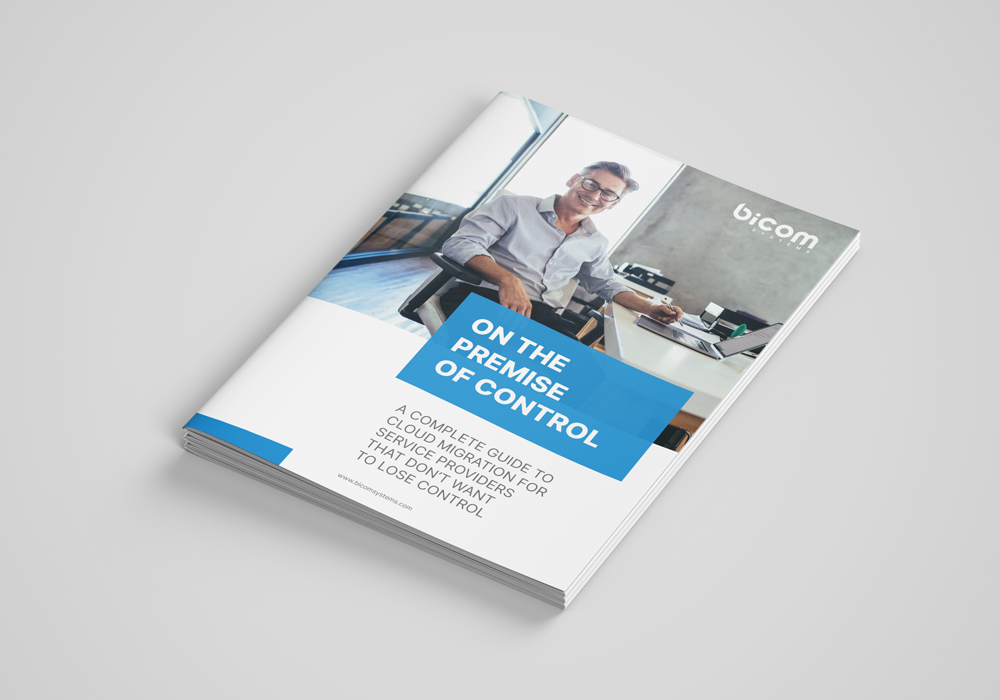
Our first ebook of 2023 explored the reservations many of your customers may harbor about transitioning from on-premise deployments to cloud solutions. This is your guide to making the transition smoother for those reluctant customers that are hanging onto their legacy system for dear life.
Ready to bust some myths and start selling? Read the ebook here.
[ebook] Discover the Power of Artificial Intelligence to Enrich Your VoIP and UC solutions
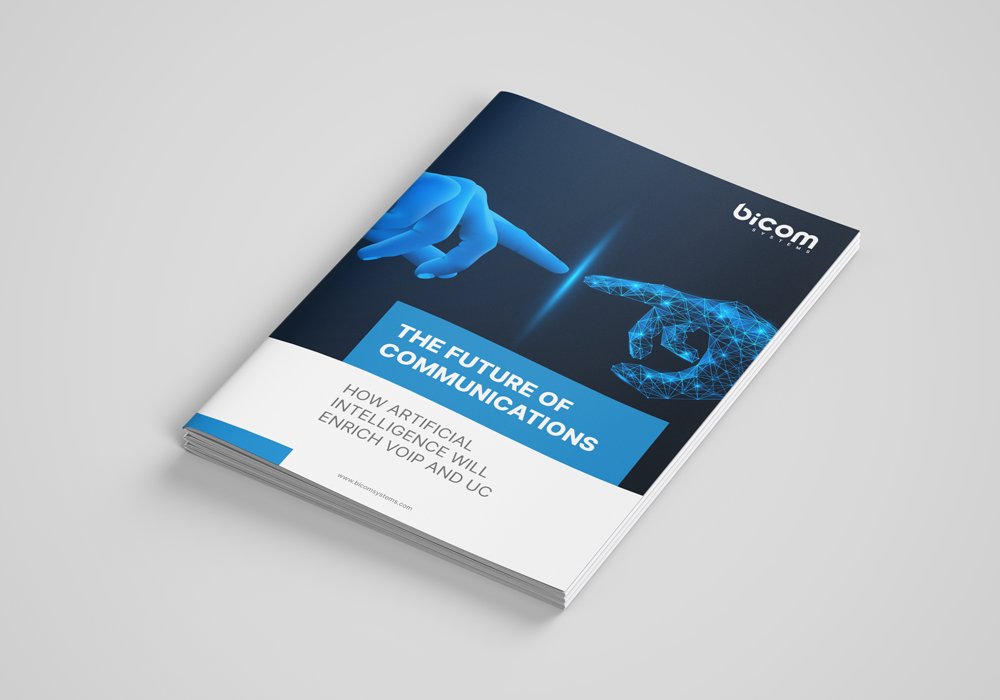
Have you heard that the Artificial Intelligence market is expected to surpass $100 billion by 2025? Overwhelming, we know, but that is why we wrote an ebook exploring the intersection of AI and communications! Imagine a world where virtual assistants and chatbots improve the customer experience, voice and speech recognition open new channels of communication, and predictive insights take the guesswork out of business strategizing.
Want to prepare for the AI wave with us? Read the ebook for all of our thoughts.
[ebook] Get Better at Selling VoIP with an All-Inclusive Solution and Sales Strategy
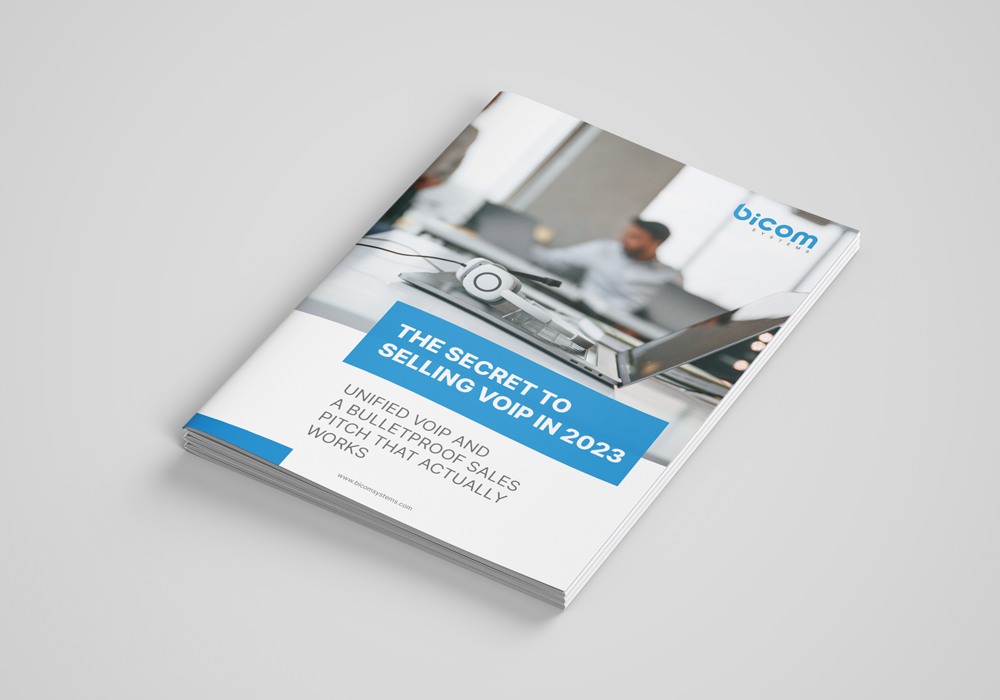
Over half of all buyers express a preference for all-inclusive VoIP solutions, so we wrote an ebook on how you can craft a comprehensive, easy-to-use, budget-friendly product. Already have the product down pat? We also discuss the recipe for a bulletproof sales pitch to make you stand out from the competition.
This is your ticket to mastering the art of selling VoIP! Read the ebook here.
[ebook] Find out How Selling Video Conferencing will Grow Your Brand and Revenue

Have you thought about adding video conferencing to your solution yet? Your current customers want it, your future customers want it, the whole market wants it – what are you waiting for?! Our newest ebook can help you get started with adopting, marketing, and selling video conferencing to grow your business and your sales.
Get the full roadmap in the ebook.
[webinar] Have you Added SMS Integration to Your Solution Yet?
We teamed up with the great folks at Telnyx to bring you something special this year – SMS integration! And we didn’t stop there – we hosted an information-packed webinar to discuss how SMS can be the secret to growing your business. We covered everything from the nitty-gritty steps of SMS integration to real stories from our partners to strategies to dodge common pitfalls.
Watch the webinar recording to catch up on what you missed!
[webinar] Get More from Your Account Portal with Untold Tips and Tricks
Remember the first webinar we had way back in early 2023? We dove deep into untold tips and tricks to using the Account Portal. Did you miss it? Want to refresh yourself on the details?
Watch the video now to learn everything you need to master the Account Portal.
Cheers to you
Wrapping up the incredible journey that was 2023 has been nothing short of amazing and we are thrilled to have shared it with you. But guess what?
The adventure doesn’t stop here! Brace yourself for an even more thrilling 2024 because we have some huge plans and ideas in the pipeline. We can’t spill all the beans yet, but trust us – it’s going to be epic!
As we say goodbye to this stellar year, we want to take a moment to express our heartfelt gratitude. From the entire crew here at Bicom Systems, we’re sending you warm wishes for the holiday season and a successful, prosperous new year. Cheers to you, our fantastic partners!
Bicom Systems Team
21
Déc, 2023

Reading the Telecom Tea Leaves for 2024
 This Industry Viewpoint was authored by Steve Douglas, Head of Market Strategy, Spirent Communications
How can you tell the difference between emerging trends that really are about to shake up the telecom industry, versus those destined to fizzle out? You can’t rely on counting headlines; too many past hype cycles have produced plenty of those, only to fail to deliver. I’d suggest a different rule of thumb: follow the money. … [visit site to read more]
21
Déc, 2023

NBTC dismisses complaints True violated Dtac merger conditions
Thailand’s National Broadcasting and Telecommunications Commission (NBTC) said that operator True Corp has not violated the conditions of its approved merger with Dtac despite complaints from customers over network quality and pricing.
True and Dtac completed their merger in March. When the NBTC formally acknowledged the deal in October 2022, it issued a list of conditions that the merged entity would have to comply with to protect consumers.
Among those conditions were that service quality would be maintained and that True would reduce the price of its services by 12% on average. According to The Nation, a number of True and Dtac users have been complaining that the service is worse and prices have not dropped.
In a press conference Tuesday, NBTC acting secretary-general Trairat Viriyasirikul said it has looked into the complaints and concluded that True hadn’t violated any of the merger conditions. However, he added True was not doing enough to communicate changes related to its ongoing integration with Dtac, the report said.
For example, Trairat said that the NBTC reprimanded True for not informing users ahead of time that it would remove and relocate certain cell sites – a move some users blamed for poor signal quality. However, the report said, NBTC has only fielded 17 complaints about True/Dtac signal quality after the merger.
Moreover, Trairat said it found no evidence that True’s pricing violated the requirement to lower price packages 12% on average, the report added.
Earlier this week, before the NBTC presser, True issued a statement saying it met with NBTC officials to show its progress on network integration, the impact on network coverage and quality, and how its current mobile price packages work.
True said that before the merger, 4G coverage of Dtac and True was 96.9% and 99% respectively, while 5G was 46.8% and 85.6% respectively. Post-merger, the combined networks now provide 99.2% 4G coverage and 90% 5G coverage.
True also said that its ongoing “Single Grid” integration plan – which aims to reduce redundant towers without reducing the total number of base stations – has already resulted in better signal quality and coverage where it has been implemented so far. Last month, True said that its Single Grid pilots in South Thailand has made 4G and 5G signals stronger and more stable.
True also told the NBTC that its pre-paid and post-paid mobile packages start at 100 baht (US$2.85), but the pricing is based on access to different combinations of digital lifestyle services – such as videos, English Premier League matches, insurance products and special offers from food & beverages brands and department stores – and the data usage such services typically generate.
MORE ARTICLES YOU MAY BE INTERESTED IN…
21
Déc, 2023

Hospitality ISP Varnion taps Nokia to upgrade network to PON
Keep up-to-date with all the latest news, articles, event and product updates posted on Developing Telecoms.
Subscribe to our FREE weekly email newsletters for the latest telecom info in developing and emerging markets globally.
Sending occasional e-mail from 3rd parties about industry white papers, online and live events relevant to subscribers helps us fund this website and free weekly newsletter. We never sell your personal data. Click here to view our privacy policy.
20
Déc, 2023

Center3 acquires CMC Networks to expand in Africa and Middle East
STC Group subsidiary centre3 is acquiring CMC Networks, a global service provider offering networking solutions across Africa and the Middle East.
CMC Networks operates across more than 110 service locations with a cost-effective, scalable, and resilient data communications network. It services 51 out of 54 countries in Africa and 12 countries in the Middle East, plus regional hubs in key interconnect locations across Europe, the Americas, and Asia Pacific.
The acquisition aligns with center3’s strategic vision for growth and expansion in the Middle East and African markets. It represents a significant step in the company’s journey to extend its market presence and enhance its offerings in this dynamic and rapidly growing region.
CMC Networks is being acquired from the Carlyle Sub-Saharan Africa Fund (CSSAF). In 2020, the CSSAF team formed a separate private equity firm, Alterra Capital Partners, which continues to advise CSSAF’s investments including CMC Networks.
Fahad Alhajeri, CEO at center3, said: « CMC’s enviable global footprint, high value customer base and portfolio of capabilities is very complementary to center3’s digital infrastructure and connectivity assets. This acquisition exemplifies our strategic commitment to enter key markets with significant growth potential. Our previous investment in 2Africa Cable, coupled with this acquisition, underscores our conviction in Africa’s essential role in center3’s future growth.”
Marisa Trisolino, Group CEO of CMC Networks, said: « This acquisition will bring together the strengths of both companies, fostering innovation, enhancing customer service, and providing new opportunities for growth in the African and the Middle East market.”
The acquisition is subject to customary conditions and approvals.
MORE ARTICLES YOU MAY BE INTERESTED IN…
Vendor bytes: Infinera, Nokia, Ericsson
Three interesting bits of vendor activity from three very different corners of the globe to keep up with: … [visit site to read more]
19
Déc, 2023

Africa’s smartphone market stays strong against adversity
Africa’s smartphone market has shown resilience with a second consecutive quarter of strong recovery in Q3 2023, according to analysis from Canalys.
Shipments hit 17.9 million units, growing 12% year-on-year despite numerous macroeconomic issues, restrictions on imports, and fluctuations in currency value across several major markets.
Tecno Mobile’s parent firm Transsion held onto the top spot with a 48% share of the market, achieving 9% growth. Canalys noted that the firm is expanding its footprint strategically in emerging markets, aiming for the sub-US$100 price bracket.
Samsung saw a year-on-year decline of 13% but held on to second place with a market share of 26%, with mid and high end devices taking a hit while its A-series performed well. Chinese manufacturers Xiaomi and Oppo invested heavily in several markets and were repaid with respective growth rates of 100% and 259%, while realme clocked growth of 11%.
Canalys Senior Consultant, Manish Pravinkumar, said: “Despite rapid currency devaluation, South Africa’s smartphone market exhibited a remarkable growth of 20%. This surge was fuelled by the demand for entry-level devices, particularly catering to the extensive pre-paid segment. Additionally, mid-tier devices experienced heightened demand, the prevalence of load-shedding contributed to this trend, as people increasingly prioritize smartphones with quality screens and robust battery life to keep them entertained during power outages.”
“Nigeria’s smartphone market expanded substantially, with Transsion playing a pivotal role by offering entry-level devices and Xiaomi successfully positioning itself as an aspirational brand for many consumers…a strategy also successful for Xiaomi in North African countries such as Egypt and Morocco. Egypt experienced double-digit 19% growth in smartphone shipments, signalling vendors have successfully addressed the challenges posed by strict import restrictions in the previous year.”
Pravinkumar noted that Canalys expected single-digit growth in 2024, with challenges such as currency devaluation, increased import taxes, and government initiatives promoting local production potentially leading to cost and price hikes. The next few years will likely see 2G plateau in Africa, while 4G and 5G are expected to grow.
“Africa’s smartphone market narrative unfolds as a compelling story of overcoming challenges with resilience and capitalising on opportunities through strategic partnerships, channel dynamics, and a transforming consumer landscape. As the market evolves, vendors must navigate these complexities with agility and foresight to secure a pivotal position in this burgeoning market”, concluded Pravinkumar.