Gabon and World Bank partner to boost digitised public services

Keep up-to-date with all the latest news, articles, event and product updates posted on Developing Telecoms.
Subscribe to our FREE weekly email newsletters for the latest telecom info in developing and emerging markets globally.

Sending occasional e-mail from 3rd parties about industry white papers, online and live events relevant to subscribers helps us fund this website and free weekly newsletter. We never sell your personal data. Click here to view our privacy policy.

Can Paraguay’s state-owned service provider be saved?

The government of Paraguay still seems determined to restore state-owned service provider CorporaciĂłn Paraguaya de Comunicaciones (Copaco) to something like profitability, despite a number of failed attempts in the past.

It is not downplaying the problems Copaco faces, however. President Santiago Peña, quoted by the government’s news service, has described Copaco as “practically bankrupt”.

It probably doesn’t help that Rodrigo Benito Ferreira, who was appointed to run the company four months ago, has now been replaced. New incumbent Oscar Stark’s job won’t be easy; he says that Copaco loses 500 million guaraníes (about US$69,000) a day.

Long-standing issues relating to overstaffing appear to be ongoing, with approximately US$1.92 million allocated every month to wages for the 2,850 employees, plus another US$275,105 for the social security agency. These costs, according to Stark, are unsustainable.

And that’s not all. The BNamericas news service says that the company has accumulated debt equivalent to US$112 million, most of it involving payments to suppliers. 

The new Copaco head plans to draw up measures to be taken within two weeks; these will focus on a sharp reduction in spending. Privatisation – which was attempted in 2002 but failed in the middle of a banking scandal – will not be on the drawing board, given the president’s belief that there is an important role for telecommunications in the country’s digital agenda.

He suggests in particular that Copaco, which owns a national 18,000 kilometre fibre optic network, may support the provision of fibre optics for the educational sector.

The money required is unlikely to come from service provision any time soon, however. Copaco’s fixed telephony service has only 127,000 subscribers; most of the country’s six million inhabitants uses mobile. Copaco does have a mobile unit but this is also losing money and has to compete with big names in the private sector like Tigo Paraguay (Millicom), Claro Paraguay (AmĂ©rica MĂłvil) and Personal Paraguay (Telecom Argentina).

The bottom line is that plans to revive the company, which may include a cash injection, will need to make it much more competitive and efficient, which, so far, has proved difficult.
MORE ARTICLES YOU MAY BE INTERESTED IN…

Fast-tracking secure delivery of products with DevSecOps

This Industry Viewpoint was authored by Lakshmiprasad A, Associate Director, Prodapt

Service providers in the Connectedness industry are challenged with increasing security threats as they handle sensitive data and provide critical services to customers. Security is the need of the hour as service providers target to balance rapid service delivery with adequate security measures, manage the security of complex infrastructure, including networks, servers, and cloud environments, and meet compliance requirements such as GDPR and HIPAA. … [visit site to read more]

New DG for Kenyan regulator after former incumbent’s resignation

Keep up-to-date with all the latest news, articles, event and product updates posted on Developing Telecoms.
Subscribe to our FREE weekly email newsletters for the latest telecom info in developing and emerging markets globally.

Sending occasional e-mail from 3rd parties about industry white papers, online and live events relevant to subscribers helps us fund this website and free weekly newsletter. We never sell your personal data. Click here to view our privacy policy.

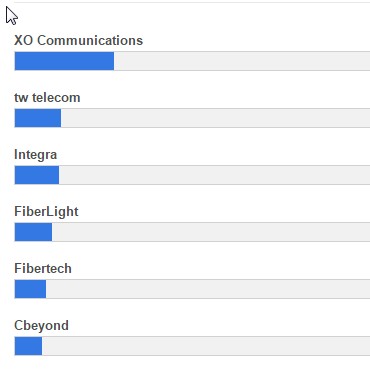
Poll: Which Network Operators Are the Most Likely Buyers in 2024?

We started the week with the question of consolidation targets in the US, and now it’s time for the other side of the coin.  What network operators are most likely to be consolidators in 2024?  We’ll take it as a given that ‘infrastructure funds’ would top the more general list of likely buyers, of course, but let’s focus on the existing network operators looking to expand inorganically in the US.  Last year the perennial favorite Zayo topped the list with Crown Castle and Lightpath in 2nd and third. … [visit site to read more]

Thailand aims to boost MVNO market

The chairman of Thailand’s National Broadcasting and Telecommunications Commission (NBTC), Dr Sarana Boonbaichaiyapruck, has outlined a plan to create more MVNOs in the country.

The plan, which includes a scheme entitled One Region, One Mobile Virtual Network Operator, aims to create four more MVNOs by 2026, in addition to the country’s three existing mobile phone operators.

The regulator also plans to bring in free access to state digital services nationwide by 2026. This means all Thais will be able to use basic state services without internet charges on their mobile tariffs. This will be implemented in collaboration with mobile phone operators, according to the NBTC chairman.

The NBTC office will start implementing both the One Region, One MVNO scheme and free government digital services policies this year.

Will market demand sustain these new entrants against True Corporation, Advanced Info Service (AIS) and National Telecom (NT)? The Bangkok Post points out that the combined subscribers of AIS and True Corp represent more than 96% of total subscribers in the market.

It is also not clear that major operators will want to rent their network capacity to MVNOs at a low fee. However, the NBTC’s proposed regulations imply they may have little choice. That said, major mobile operators can hold a share of the regional MVNOs – but no more than 25%.

As for opportunities, MVNOs may have trouble competing with larger rivals in the mass market but there could be business opportunities in the 5G private network market.

All of this remains to be seen, however. So far The WhiteSpace, the owner of the Penguin SIM brand, is the only MVNO in Thailand. The Bangkok Post suggests its subscriber base is a little over 40,000 in a country of nearly 70 million people.

MORE ARTICLES YOU MAY BE INTERESTED IN…

JD.com wins lawsuit against Alibaba in Chinese court

Keep up-to-date with all the latest news, articles, event and product updates posted on Developing Telecoms.
Subscribe to our FREE weekly email newsletters for the latest telecom info in developing and emerging markets globally.

Sending occasional e-mail from 3rd parties about industry white papers, online and live events relevant to subscribers helps us fund this website and free weekly newsletter. We never sell your personal data. Click here to view our privacy policy.

Poll: Which US Network Operators Are Most Likely To Be Acquired in 2024?

Happy New Year to all!  Last year’s fiber/network M&A activity wasn’t that, well, active in the USA.  And based on the responses to last year’s poll that didn’t surprise too many people, as there was little consensus as to who might be a target.  The Cox/UPN/Segra and Shentel/Horizon deals did land, and on the FTTH front there were some small deals, but the big action was over in Europe in 2023.  Will 2024 be any busier on this side of the Atlantic?  Who you think are the likeliest candidates to be sold (in part or in whole) in 2024.  (Not including already pending transactions). … [visit site to read more]