Reading the Telecom Tea Leaves for 2024

Reading the Telecom Tea Leaves for 2024

This Industry Viewpoint was authored by Steve Douglas, Head of Market Strategy, Spirent Communications

How can you tell the difference between emerging trends that really are about to shake up the telecom industry, versus those destined to fizzle out? You can’t rely on counting headlines; too many past hype cycles have produced plenty of those, only to fail to deliver. I’d suggest a different rule of thumb: follow the money. … [visit site to read more]

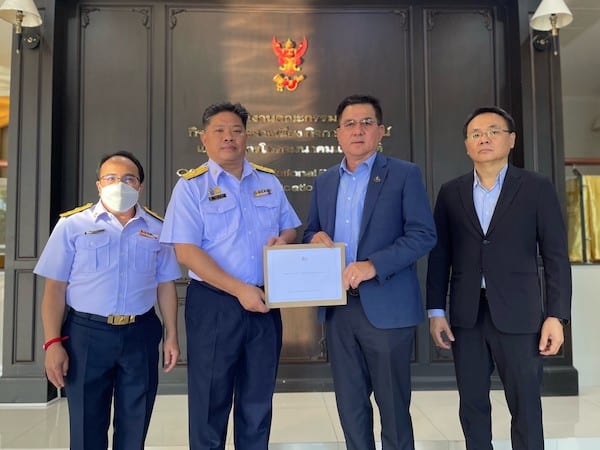
NBTC dismisses complaints True violated Dtac merger conditions

Thailand’s National Broadcasting and Telecommunications Commission (NBTC) said that operator True Corp has not violated the conditions of its approved merger with Dtac despite complaints from customers over network quality and pricing.

True and Dtac completed their merger in March. When the NBTC formally acknowledged the deal in October 2022, it issued a list of conditions that the merged entity would have to comply with to protect consumers.

Among those conditions were that service quality would be maintained and that True would reduce the price of its services by 12% on average. According to The Nation, a number of True and Dtac users have been complaining that the service is worse and prices have not dropped.

In a press conference Tuesday, NBTC acting secretary-general Trairat Viriyasirikul said it has looked into the complaints and concluded that True hadn’t violated any of the merger conditions. However, he added True was not doing enough to communicate changes related to its ongoing integration with Dtac, the report said.

For example, Trairat said that the NBTC reprimanded True for not informing users ahead of time that it would remove and relocate certain cell sites – a move some users blamed for poor signal quality. However, the report said, NBTC has only fielded 17 complaints about True/Dtac signal quality after the merger.

Moreover, Trairat said it found no evidence that True’s pricing violated the requirement to lower price packages 12% on average, the report added.

Earlier this week, before the NBTC presser, True issued a statement saying it met with NBTC officials to show its progress on network integration, the impact on network coverage and quality, and how its current mobile price packages work.

True said that before the merger, 4G coverage of Dtac and True was 96.9% and 99% respectively, while 5G was 46.8% and 85.6% respectively. Post-merger, the combined networks now provide 99.2% 4G coverage and 90% 5G coverage.

True also said that its ongoing “Single Grid” integration plan – which aims to reduce redundant towers without reducing the total number of base stations – has already resulted in better signal quality and coverage where it has been implemented so far. Last month, True said that its Single Grid pilots in South Thailand has made 4G and 5G signals stronger and more stable.

True also told the NBTC that its pre-paid and post-paid mobile packages start at 100 baht (US$2.85), but the pricing is based on access to different combinations of digital lifestyle services – such as videos, English Premier League matches, insurance products and special offers from food & beverages brands and department stores – and the data usage such services typically generate.

MORE ARTICLES YOU MAY BE INTERESTED IN…

Hospitality ISP Varnion taps Nokia to upgrade network to PON

Keep up-to-date with all the latest news, articles, event and product updates posted on Developing Telecoms.
Subscribe to our FREE weekly email newsletters for the latest telecom info in developing and emerging markets globally.

Sending occasional e-mail from 3rd parties about industry white papers, online and live events relevant to subscribers helps us fund this website and free weekly newsletter. We never sell your personal data. Click here to view our privacy policy.

Center3 acquires CMC Networks to expand in Africa and Middle East

STC Group subsidiary centre3 is acquiring CMC Networks, a global service provider offering networking solutions across Africa and the Middle East.

CMC Networks operates across more than 110 service locations with a cost-effective, scalable, and resilient data communications network. It services 51 out of 54 countries in Africa and 12 countries in the Middle East, plus regional hubs in key interconnect locations across Europe, the Americas, and Asia Pacific.

The acquisition aligns with center3’s strategic vision for growth and expansion in the Middle East and African markets. It represents a significant step in the company’s journey to extend its market presence and enhance its offerings in this dynamic and rapidly growing region.

CMC Networks is being acquired from the Carlyle Sub-Saharan Africa Fund (CSSAF). In 2020, the CSSAF team formed a separate private equity firm, Alterra Capital Partners, which continues to advise CSSAF’s investments including CMC Networks.

Fahad Alhajeri, CEO at center3, said: « CMC’s enviable global footprint, high value customer base and portfolio of capabilities is very complementary to center3’s digital infrastructure and connectivity assets. This acquisition exemplifies our strategic commitment to enter key markets with significant growth potential. Our previous investment in 2Africa Cable, coupled with this acquisition, underscores our conviction in Africa’s essential role in center3’s future growth.”

Marisa Trisolino, Group CEO of CMC Networks, said: « This acquisition will bring together the strengths of both companies, fostering innovation, enhancing customer service, and providing new opportunities for growth in the African and the Middle East market.”

The acquisition is subject to customary conditions and approvals.

MORE ARTICLES YOU MAY BE INTERESTED IN…

Africa’s smartphone market stays strong against adversity

Africa’s smartphone market has shown resilience with a second consecutive quarter of strong recovery in Q3 2023, according to analysis from Canalys.

Shipments hit 17.9 million units, growing 12% year-on-year despite numerous macroeconomic issues, restrictions on imports, and fluctuations in currency value across several major markets.

Tecno Mobile’s parent firm Transsion held onto the top spot with a 48% share of the market, achieving 9% growth. Canalys noted that the firm is expanding its footprint strategically in emerging markets, aiming for the sub-US$100 price bracket.

Samsung saw a year-on-year decline of 13% but held on to second place with a market share of 26%, with mid and high end devices taking a hit while its A-series performed well. Chinese manufacturers Xiaomi and Oppo invested heavily in several markets and were repaid with respective growth rates of 100% and 259%, while realme clocked growth of 11%.

Canalys Senior Consultant, Manish Pravinkumar, said: “Despite rapid currency devaluation, South Africa’s smartphone market exhibited a remarkable growth of 20%. This surge was fuelled by the demand for entry-level devices, particularly catering to the extensive pre-paid segment. Additionally, mid-tier devices experienced heightened demand, the prevalence of load-shedding contributed to this trend, as people increasingly prioritize smartphones with quality screens and robust battery life to keep them entertained during power outages.”

“Nigeria’s smartphone market expanded substantially, with Transsion playing a pivotal role by offering entry-level devices and Xiaomi successfully positioning itself as an aspirational brand for many consumers…a strategy also successful for Xiaomi in North African countries such as Egypt and Morocco. Egypt experienced double-digit 19% growth in smartphone shipments, signalling vendors have successfully addressed the challenges posed by strict import restrictions in the previous year.” 

Pravinkumar noted that Canalys expected single-digit growth in 2024, with challenges such as currency devaluation, increased import taxes, and government initiatives promoting local production potentially leading to cost and price hikes. The next few years will likely see 2G plateau in Africa, while 4G and 5G are expected to grow.

“Africa’s smartphone market narrative unfolds as a compelling story of overcoming challenges with resilience and capitalising on opportunities through strategic partnerships, channel dynamics, and a transforming consumer landscape. As the market evolves, vendors must navigate these complexities with agility and foresight to secure a pivotal position in this burgeoning market”, concluded Pravinkumar.

MORE ARTICLES YOU MAY BE INTERESTED IN…

Industry Spotlight: Iceotope’s Nathan Blom on Precision Liquid Cooling

When we talk about the energy side of the data center business, it is often from the facility level down to hot and cold aisles and such.  But with the demands of next generation chips aimed at AI and ever-higher density computing, the need for a revolution in cooling at the component level is growing.  One company looking to take on that challenge is Iceotope, which specializes in Precision Liquid Cooling.  With us today to talk about just what that is and where it fits in the ecosystem of today and the future is Nathan Blom, Chief Commercial Officer at Iceotope. … [visit site to read more]

UAE energy giant works with Nutanix to boost retail expansion

Emirates National Oil Company (Enoc) Group, a leading global energy player, says it has centralised its IT infrastructure on Nutanix, a leader in hybrid multicloud computing, for retail expansion and to deliver what is described as a slick digitally driven customer experience.

Serving thousands of customers across 60 markets, Enoc employs a workforce of over 12,000 employees.

At the core of Enoc’s business are its service stations. However, says Nutanix, siloed IT infrastructure was deployed at each of these service stations to deliver the digital services needed. The lack of redundancy and centralised management contributed to significant IT overheads and risk as the company rapidly scaled its retail operations.

Backed by the expertise of Nutanix’s local team, Enoc has deploy Nutanix Cloud Infrastructure (NCI)  a complete software stack that unifies hybrid cloud infrastructure including compute, storage and network, hypervisors, and containers, in public, managed, and on-premises private clouds – as well as Nutanix Unified Storage (NUS) and the vendor’s disaster recovery solution.

Furthermore, the new partnership will include implementation of Nutanix Cloud Manager System (NCM), which will minimise any IT related issues, given the high demand of requests.

Following the upgrade, Nutanix’s unified infrastructure eliminated the siloed IT infrastructure at each of Enoc’s retail outlets. The centralised management, made possible by NCM, has delivered a claimed 80% reduction in IT operation costs across the 400-plus sites that are now served by Nutanix’s solution.

The high availability and impressive levels of redundancy and resilience made possible by Nutanix mean that Enoc’s service stations can now operate around the clock without disruption to the services they deliver.

MORE ARTICLES YOU MAY BE INTERESTED IN…

The Impact of DDoS Attacks on ISPs: Their Role in Combating Attacks and Arguments for/against ISP Responsibility

This Industry Viewpoint was authored by Donny Chong, Product & Marketing Director, Nexusguard 

Distributed Denial of Service (DDoS) attacks pose a significant threat to the digital landscape, causing major disruptions across various sectors. Internet Service Providers (ISPs) play a crucial role in maintaining a stable and secure internet ecosystem but often bear the brunt of DDoS attacks, resulting in significant downtime for their customers. This article explores the reasons why DDoS attacks on ISPs cause major downtime and discusses the important role ISPs should play in combating these attacks. Furthermore, it presents arguments for and against ISP responsibility in mitigating DDoS attacks. … [visit site to read more]