Keep up-to-date with all the latest news, articles, event and product updates posted on Developing Telecoms. Subscribe to our FREE weekly email newsletters for the latest telecom info in developing and emerging markets globally.
Sending occasional e-mail from 3rd parties about industry white papers, online and live events relevant to subscribers helps us fund this website and free weekly newsletter. We never sell your personal data. Click here to view our privacy policy.
Residential fiber is big right now, and yet it’s just getting started. With all the money backing FTTH buildouts right now, it’s hard to remember how many places there are that you would think have plenty of options but don’t. One such region is California’s Orange County, which is where Cityside Fiber has started rolling out deep fiber infrastructure. With us today to talk about Cityside’s plans, progress, and vision is Founder and CEO Rod Hanson. … [visit site to read more]
Keep up-to-date with all the latest news, articles, event and product updates posted on Developing Telecoms. Subscribe to our FREE weekly email newsletters for the latest telecom info in developing and emerging markets globally.
Sending occasional e-mail from 3rd parties about industry white papers, online and live events relevant to subscribers helps us fund this website and free weekly newsletter. We never sell your personal data. Click here to view our privacy policy.
Keep up-to-date with all the latest news, articles, event and product updates posted on Developing Telecoms. Subscribe to our FREE weekly email newsletters for the latest telecom info in developing and emerging markets globally.
Sending occasional e-mail from 3rd parties about industry white papers, online and live events relevant to subscribers helps us fund this website and free weekly newsletter. We never sell your personal data. Click here to view our privacy policy.
Greetings, everyone. Our teams have been hard at work and have cooked up something tasty for you in the Bicom Systems kitchen as we present the newest versions of SERVERware and sipPROT.
Both of them have been made more robust and easier to manage for our users with a couple of extra quality of life changes on top of the performance updates and infrastructural improvements.
SEE WHAT’S NEW IN 4.5 FIRSTHAND
Here’s what we have in store for you.
SERVERware v4.5
[embedded content]
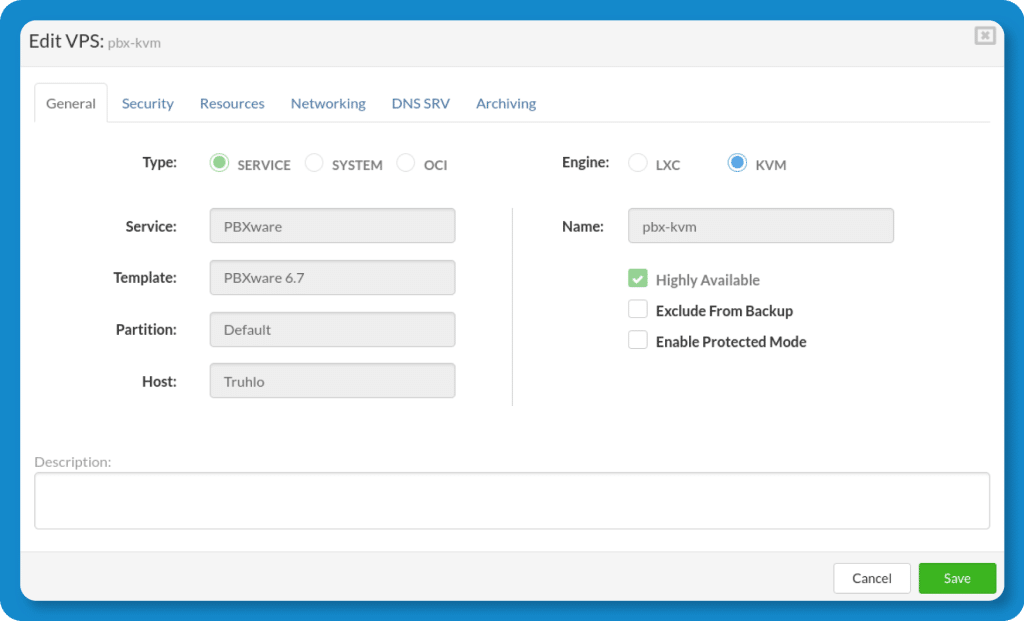
KVMs As VPS Engines
If you want an alternative to the usual LXCs (Linux Containers), then look no further as the SERVERware team has enabled KVMs to double as VPS engines.
While KVM VPSs may offer slightly different performance levels compared to LXC-hosted ones, they come with vastly superior security options, making them a compelling choice in today’s security-conscious business landscape.
Your data and operations are still protected by high level safeguards, providing you peace of mind and confidence in your online presence.
With the KVM hosted VPS you will still be able to enjoy all of the core functionalities that you’re accustomed to, from easy replication and seamless backups to flexible removal options, managing your VPS has never been more efficient.
Improving Our Geo Redundancy Capabilities
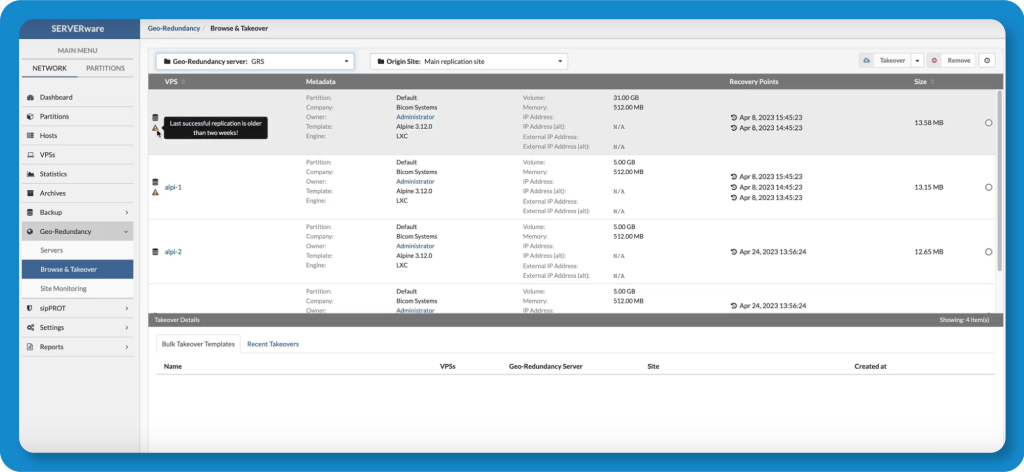
Speaking of security, or data integrity at the very least, the SERVERware team has also done a number of upgrades to our geo redundancy option.
The first change was to make all IPs assigned as alternate IPs get automatically configured to work on the VPS on the secondary site, after the takeover occurs, ensuring minimal service disruption and data loss.
The second change assists with cleanup, letting server admins remove redundant VPS replications directly from SERVERware’s GUI, removing a lot of unnecessary steps to do it otherwise and providing better visual clarity in the server’s infrastructure.
The last change revolves around making it easier to find out when a VPS has gone unsynced with the main server for too long with an alert once a VPS hits the two week threshold.
Improving Installation Procedures
Another quality of life benefit that’s coming with SERVERware v4.5 is the option to create ZFS pools on OS disks.
The install wizard will scan your setup, detect available disks and, based on that information, will suggest optimal ZFS pool configurations.
It should help add additional data redundancy to your system to further improve your system’s data integrity options.
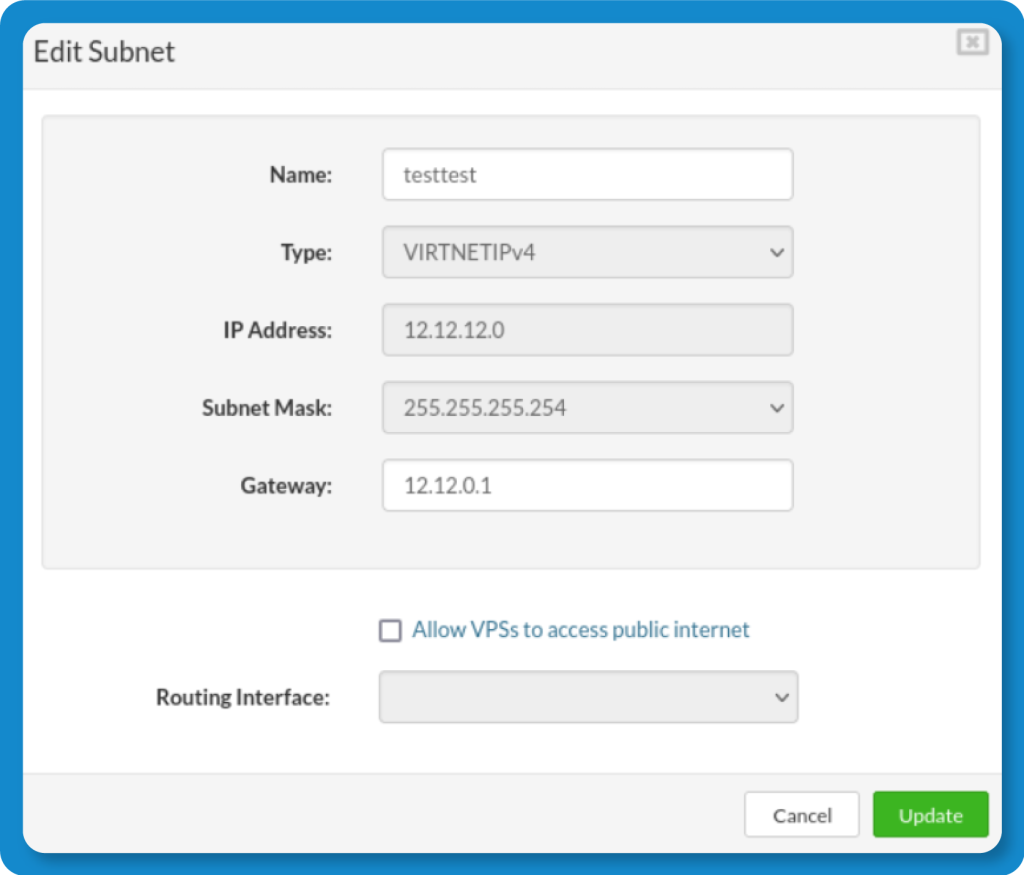
Optimizing The Custom Subnetting Feature
For all of our users who operate with specific network requirements, SERVERware now has the option to add custom subnets to an already existing network, helping improve overall data flow by allowing you to adjust it to your preference.
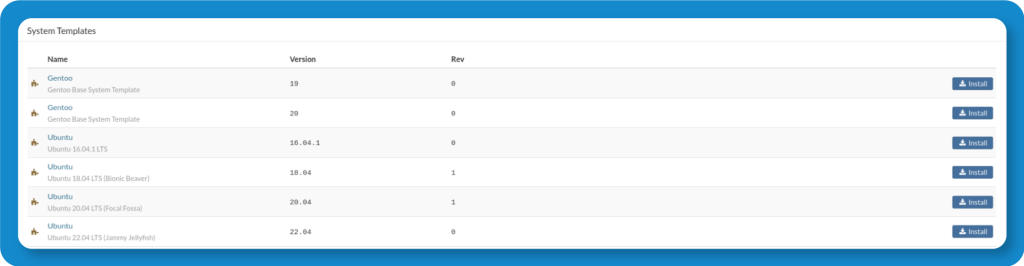
Ubuntu 22.04 Compatible
For all the devheads and other Linux users out there, our SERVERware team has updated SERVERware to be compatible with the newest Ubuntu release, 22.04, making sure that its fantastic features are available to everyone.
QOL Cleanup Across The Board
Aside from these major changes, we have also done a bit of cleanup to improve overall visual clarity and tool intuitiveness with a number of small changes.
While there are too many to count, some of the most relevant ones are:
Adding notices for bad storage and memory values
Renaming domains to partitions to reduce confusion
Improving logging for VPS trim
Added polish to GUI updates
Backend fixes
And many more…
sipPROT v5
[embedded content]
Adding A “Face” To sipPROT
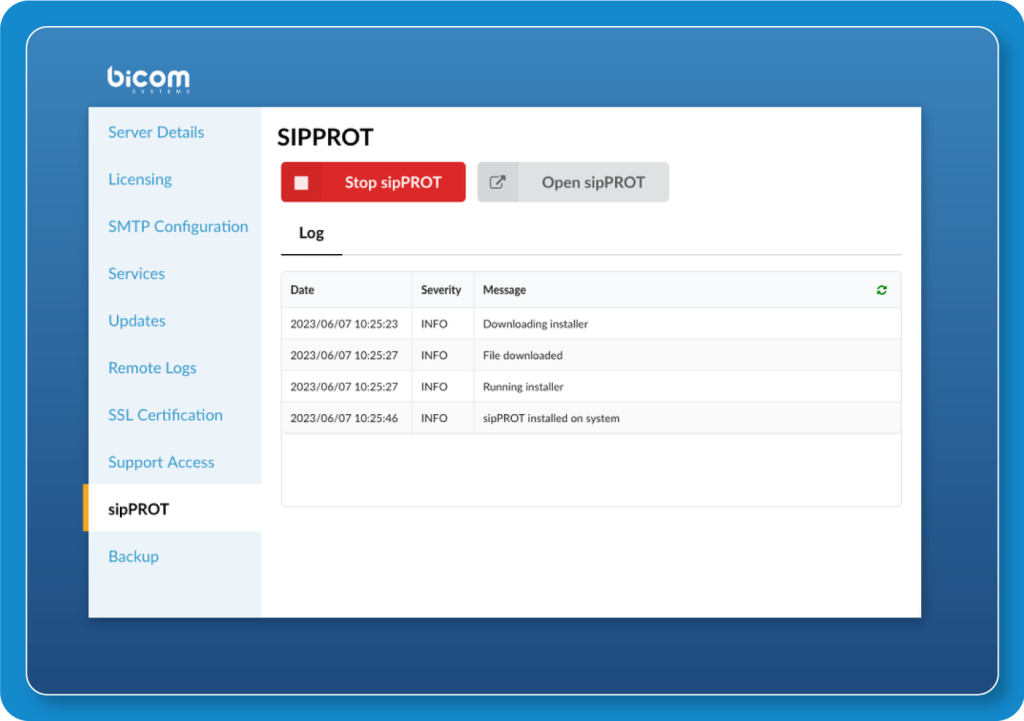
One of the biggest changes that sipPROT has received in v5 is the construction of an interface for sipPROT in PBXware.
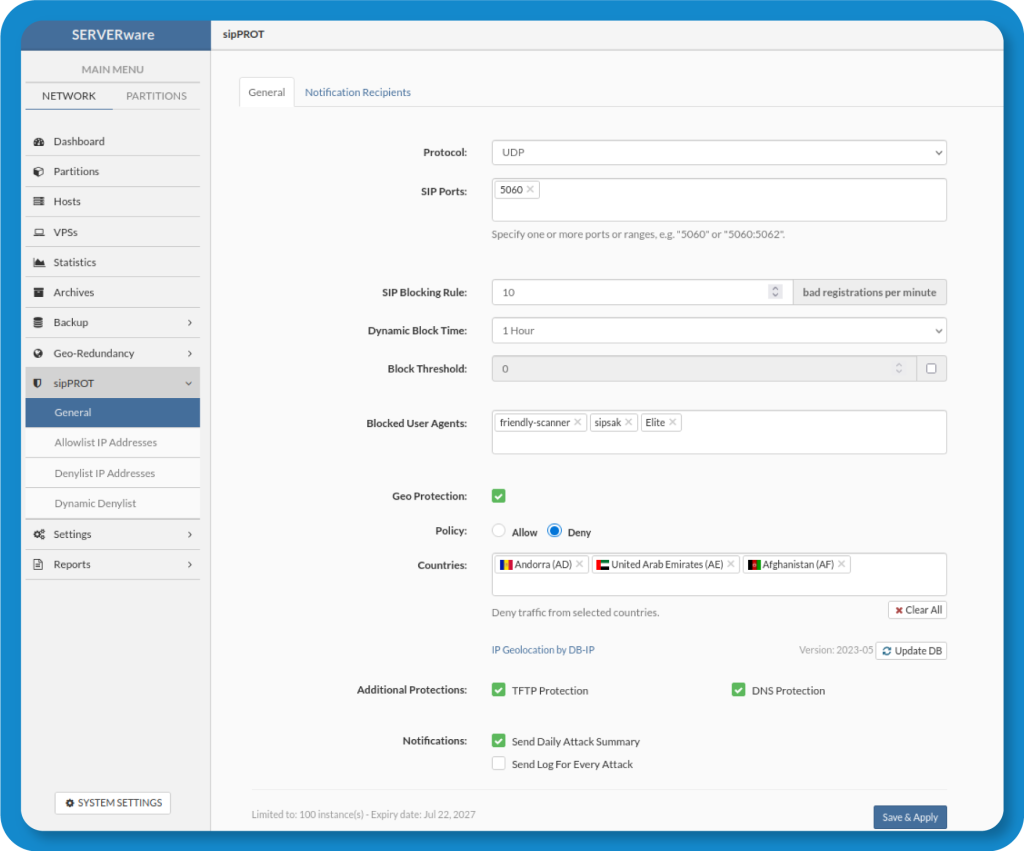
The functionalities remain the same as things like dynamic blocking and geoIP blocking are still present alongside all of the other features.
Now, however, the amount of time required to do some added configurations or other changes to the system should be greatly reduced and managing sipPROT should be more intuitive.
sipPROT Is Now Integrated Into PBXWare
With the v7 release of PBXware, users will now be able to install sipPROT directly from the PBXware interface.
You’ll still need a sipPROT license, but the installation should now only take a few clicks of a button instead of having to go through a whole separate process.
It’ll be accessible directly from the PBXware side panel.
Country-specific Block/Allowlists
Another security feature that was added in sipPROT v5.0 is the ability for admins to directly block or allow traffic from entire countries or specific IP ranges from said country thanks to Allow and Deny policies.
On top of that, transferring these lists to a new server doesn’t have to be manual anymore as the lists can be imported or exported as .csv files and be rebuilt on a new server in mere moments.
Striving Toward A Greater Product
We here at Bicom Systems always aim to bring both our customers and business partners the best product that we can, that’s why we’re always hard at work to keep up with the latest business trends and innovations of our own and integrate them into our products.
We strive to be a company that you can rely on, a company that has everyone’s mutual interests in mind which is why we’ll keep delivering our best with every new product release. We’ll make sure that you can keep up with the market.
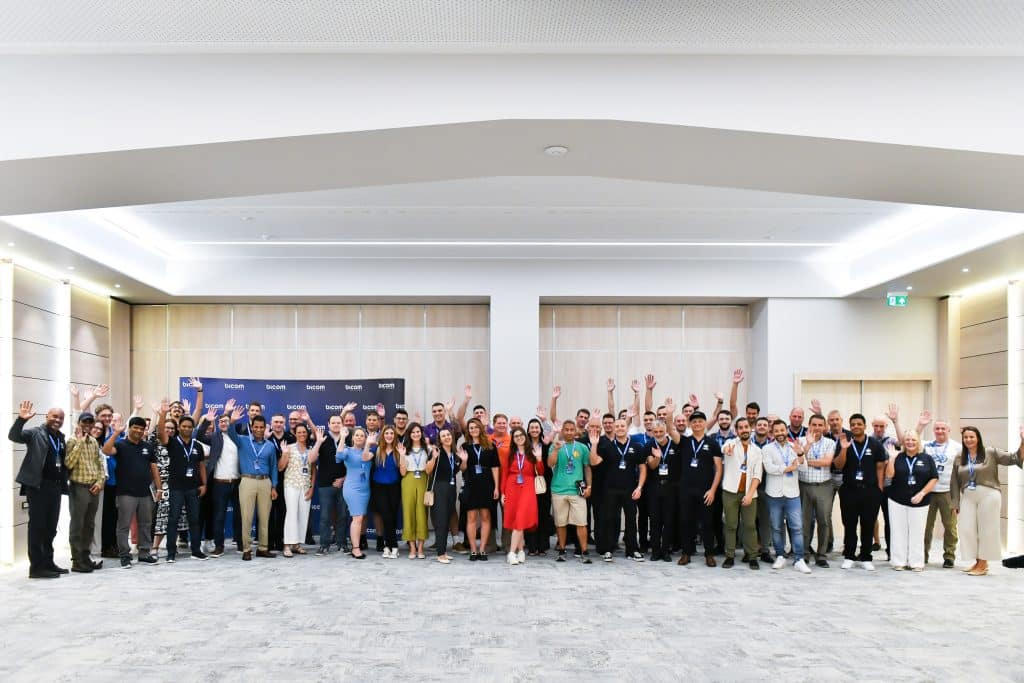
Greetings, valued partners and readers! We’re excited to take you on a journey through the recent Bicom Systems Partners Summit.
This exceptional event, held from September 25 to September 28 in the picturesque Neum, was more than just a summit; it was a celebration of partnership, innovation, and shared success.
[embedded content]
Building Bridges Across the Globe
The Partners Summit was more than just a meeting; it was a global gathering of 30 valued partners from around the world.
Our goal was clear – to foster collaboration, exchange visionary ideas, and set the course for our collective future. It emphasized our unwavering commitment to nurturing and strengthening our partner relationships, which are the bedrock of our continued growth and success.
Key Highlights that Defined the Summit
1. Unprecedented Networking Opportunities
Partners mingled, shared insights, and forged new connections. In the serene ambiance of Neum, invaluable discussions took place, and partnerships were born.
2. Charting a Strategic Roadmap
We unveiled our strategic roadmap for the coming year, revealing exciting opportunities for growth and collaboration. Our partners received an exclusive preview of our plans, enabling them to align their strategies with ours, setting the stage for mutual success.
3. Recognizing Excellence
At the summit, we took a moment to celebrate and recognize the exceptional achievements of our top-performing partners. Their dedication and hard work were duly acknowledged and rewarded, solidifying our commitment to a partnership where everyone wins.
4. Showcasing Cutting-Edge Products
Our partners had the opportunity to explore our latest products and solutions up close. This firsthand experience deepened their understanding of our offerings and how they can be harnessed to meet the ever-evolving needs of their customers.
5. Interactive Workshops and Idea Generation
Interactive product demo sessions led by our outstanding Product Owners and their teams encouraged collaboration and idea generation. Our partners actively contributed to the development of new initiatives and strategies, reinforcing our commitment to mutual growth.
Where Ideas Blossomed – The Bicom Chats Studio
In the heart of the summit was the ‘Bicom Chats’ Studio, a space that embodied collaboration and achievement within our partner network.
This exclusive segment served as a professional environment for interviews, discussions, and media engagement, further strengthening our connections.
A Night of Celebrations – Awards Ceremony
We reserved a special moment to celebrate our partners’ achievements and honor their dedication.
The Partners Summit not only met our expectations but exceeded them in terms of organization, engagement, and the value it delivered to our partners.
It has set a new standard for future events, and we are committed to building upon this success in the years to come.
A Heartfelt Thank You
We extend our heartfelt appreciation to the entire team who worked tirelessly to make this event a reality, as well as to our partners who joined us.
Your dedication and enthusiasm played a pivotal role in making this summit an undeniable success.
Embracing the Future Together
As we move forward, let’s harness the momentum generated by the Partners Summit to deepen our partnerships, explore new avenues of growth, and collectively achieve new heights of success.
Your unwavering support and commitment to our shared goals are the driving force behind our unstoppable journey.
Thank you once again for being an integral part of the Bicom Systems family. Together, we are poised for greatness!
This Industry Viewpoint was authored by Chris Wade, Chief Marketing and Product Officer atGamma
A big change to the UK’s telecoms is coming. In 2025 The Big Switch Off will take effect, launching us into fully digital communications – which many agree is long overdue. … [visit site to read more]
Keep up-to-date with all the latest news, articles, event and product updates posted on Developing Telecoms. Subscribe to our FREE weekly email newsletters for the latest telecom info in developing and emerging markets globally.
Sending occasional e-mail from 3rd parties about industry white papers, online and live events relevant to subscribers helps us fund this website and free weekly newsletter. We never sell your personal data. Click here to view our privacy policy.
Nokia has established a 6G Lab at its Global R&D centre in Bangalore, India.
Billing the project as the first of its kind, Nokia claims that it will accelerate the development of fundamental technologies and innovative use cases underpinned by 6G technology. The Lab was inaugurated virtually by the Hon’ble Minister of Railways, Communications, Electronics & IT, Government of India, Mr Ashwini Vaishnaw.
Nokia’s 6G lab supports the Government of India’s ‘Bharat 6G Vision,’ introduced by Prime Minister Narendra Modi, that envisions a key global role for India in the standardization, development, and implementation of 6G technology. The lab will function as a platform for collaboration for industry stakeholders and facilitate the testing of innovative solutions while establishing their potential for commercialisation.
The lab includes a setup to research ‘Network as a Sensor’ technology that enables the network to sense objects, people and movement without the need for on-board sensors. Sensing will be fully integrated into the wireless network and operate simultaneously with communication services. The lab will also provide an experimental platform for researching algorithms, privacy, and sustainable system design.
The Hon’ble Minister of Railways, Communications, Electronics & IT, Government of India, Mr Ashwini Vaishnaw, said: “The inauguration of the Nokia 6G research lab in Bengaluru today is another step towards PM Narendra Modi’s vision of making India an innovation hub. Interesting use cases coming out of this lab will be related to transportation safety, health care and education which will be another big contribution in the entire Digital India suite.”
Nishant Batra, Chief Strategy and Technology Officer of Nokia, said: “We look forward to collaborating with key stakeholders to help India become a major player in 6G technology development and adoption; and take its place in the global arena as a leading developer and supplier of advanced telecom technologies and solutions.”
We use cookies to personalise content and ads, to provide social media features and to analyse our traffic. We also share information about your use of our site with our social media, advertising and analytics partners. View more
Cookies settings
Accept
Privacy & Cookie policy
Privacy & Cookies policy
Cookies list
Cookie name
Active
Conditions légales
Introduction et qui nous sommes
118812.fr met en relation des spécialistes du monde entier par le biais d'événements, de renseignements et d'éditions savantes. Nous sommes une société du FTSE 100 et notre réseau de marques internationalement respectées aide les gens à travailler plus intelligemment, à prendre de meilleures décisions et à se développer sur des milliers de marchés spécialisés. Les données et les informations sont au cœur des activités de 118812.fr, et nous prenons au sérieux les questions de confidentialité des données. Nous respectons nos relations avec les clients, les visiteurs, les sponsors, les exposants, les fournisseurs et les collègues, ainsi que la confiance qu'ils nous accordent pour la conservation de leurs données personnelles.
Contrôleurs de données de 118812.fr
Cette politique de confidentialité explique comment les membres du groupe 118812.fr collectent, utilisent et protègent les informations personnelles à travers nos marques. Les références à "nous", "notre" ou "nos" renvoient au contrôleur 118812.fr concerné qui traite vos informations personnelles.
118812.fr est structuré en cinq divisions opérationnelles :
Au sein de ces divisions, il existe des entreprises sectorielles et des marques de produits, d'événements et de services. En général, lorsque nous interagissons avec vous, c'est par le biais de l'une de ces marques. L'entité juridique du groupe 118812.fr responsable des données personnelles (désignée comme le contrôleur des données dans l'UE et désignée comme le contrôleur 118812.fr dans la présente politique de confidentialité) sera l'entité indiquée sur les formulaires de réservation, les formulaires Web et les contrats ou les factures. Différentes entités juridiques de 118812.fr sont responsables de différents événements et produits. Pour mettre à jour vos informations personnelles ou vos préférences en matière de marketing, contactez les équipes de marketing de nos divisions énumérées ci-dessous. Pour toute question ou plainte concernant la confidentialité des données, vous pouvez vous adresser à l'équipe 118812.fr Privacy via notre formulaire en ligne.
Couverture internationale et variations
118812.fr opère dans plus de 20 pays, qui ont chacun des lois différentes sur la protection des données. La présente politique de confidentialité s'applique à toutes les activités de 118812.fr dans le monde, sauf dans la mesure où il existe une exigence spécifique à un pays qui la complète, comme indiqué dans le menu de gauche.
Ce que nous recueillons
Cette section vous indique quelles informations personnelles nous pouvons recueillir lorsque vous utilisez nos produits et services, et quelles autres informations personnelles nous pouvons recevoir d'autres sources. Dans la présente politique de confidentialité, les informations personnelles désignent les types de 118812.frtions personnelles qui peuvent être collectées et utilisées, notamment : Les coordonnées, telles que le nom, l'adresse électronique, l'adresse postale et le numéro de téléphone.Informations sur l'éducation, la nationalité et la professionles noms d'utilisateur et les mots de passeCommentaires, réactions, messages et autres contenus soumis, y compris les informations relatives aux enquêtes.Intérêts et préférences de communication, y compris les autorisations de marketing, le cas échéant.Informations de localisation, telles que celles fournies par une application mobileInformations de vérification de l'identité, telles que les détails du passeport, afin de se conformer aux obligations légales dans certains pays et de fournir des lettres d'invitation de visa, le cas échéant.Informations sur l'utilisation du site web et des communications, telles que la correspondance et les détails de votre utilisation de notre site web et de nos services obtenus par le biais de cookies ou d'autres technologies de suivi.
Ces informations personnelles concernent les catégories de personnes suivantes :
Prospects, contacts clients, abonnés et utilisateurs en ce qui concerne nos services et produits ;Visiteurs, sponsors, exposants et conférenciers lors de nos événements ;Les professionnels figurant dans les produits numériques et imprimés, tels que les détails des cadres supérieurs mis à disposition par les produits de renseignement, les recherches et les publications.les auteurs, éditeurs et réviseurs de nos publications.les contacts de nos prestataires de services et partenaires commerciaux.Informations personnelles sensibles
















 This Industry Viewpoint was authored by Chris Wade, Chief Marketing and Product Officer at