How operators and application developers can overcome roadblocks to telecom network APIs

This Industry Viewpoint was authored by Mikko Jarva, Head of Portfolio & Architecture, Network Monetization Platform at Nokia

With 5G deployments now widespread in many markets, telecom network providers are ushering in a new era to enable the building of new and improved software applications that enrich the network experience of business customers and consumers while generating new revenue streams. … [visit site to read more]

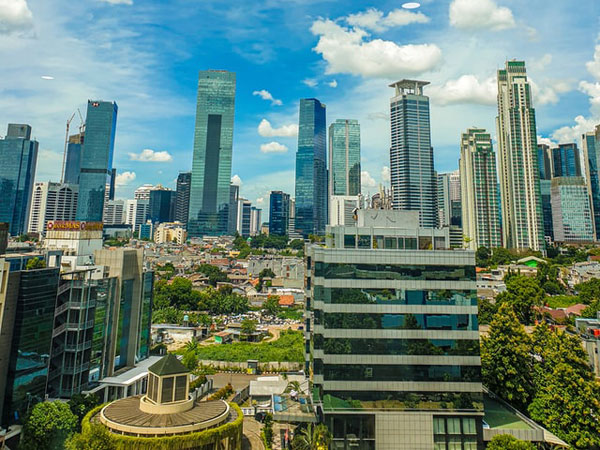
GSMA warns Indonesia its 5G spectrum prices are too high

The GSMA claims that Indonesia stands to lose US$14 billion in GDP gains over the next six years if it doesn’t rethink it 5G spectrum pricing in the next auction.

The Ministry of Communication and Information Technology (Kominfo) is planning to award several frequency bands over the next two years, including 700 MHz, 2.6 GHz and 3.5 GHz, as well as mmWave frequencies in the 26 GHz band. That would more than double the current total supply of mobile spectrum.

However, a new report from GSMA Intelligence points out that estimated annual spectrum costs for mobile operators in Indonesia have increased more than five-fold since 2010, mainly due to auction-related payments and spectrum fees associated with licence renewals.

Making matters worse, average revenue per unique mobile subscriber dropped 48% over the same period (in USD terms). The report estimates that annualised spectrum costs to recurring cellular revenue is currently at 12.2%, compared to the APAC and global median values of 8.7% and 7.0%, respectively.

At the very least, the report says, this could hamper the ability of Indonesian operators to meaningfully invest in 5G infrastructure, which will slow down rollouts and result in poor customer experiences.

The GSMA also frames the issue in terms of the expected socio-economic benefits that 5G will deliver to Indonesia, saying that the country could lose US$14 billion (IDR 216 trillion) in GDP between 2024 and 2030 if it prices 5G spectrum similar to the previous spectrum auction.

The report urges Kominfo to lower reserve prices below estimates of market value, and adjust the way it calculates annual spectrum fees to provide long-run incentives and avoid disproportionate increases in costs that aren’t aligned with market conditions.

The GSMA also recommends that Kominfo come up with a clear and comprehensive spectrum roadmap that accommodates current and future needs, particularly for mid-band spectrum. 

“According to our forecasts, 5G will reach 80% of the population by 2030,” said Julian Gorman, Head of Asia Pacific, GSMA. “For 5G to succeed in Indonesia, the government should focus on the right enabling policies, including spectrum supply and pricing. This requires a well-crafted regulatory framework for a successful auction that delivers a fair return for the government and encourages digital growth.”

MORE ARTICLES YOU MAY BE INTERESTED IN…

Tower sales and strong demand boost Zain KSA Q3 results

Operator Zain KSA has announced a strong Q3 2023 financial performance driven, in part by tower-related business.

The Saudi operator reports its highest quarterly revenues, exceeding SAR 2.5 billion (about US$666.7 million) – a 10% increase compared to the SAR 2.2 billion (US$586.7 million) generated in the third quarter of the previous year, as well as recording SAR 285 million (US$76 million) in net profit, a growth of 234% compared to the corresponding period in 2022.

Importantly, this strong financial performance is in part attributed to Zain’s recent tower infrastructure sale and leaseback deal. This generated gains totalling SAR 139 million (US$37.1 million) during this quarter. However, this is just part of a total financial impact which the company expects to reach SAR 1.1 billion (US$293.3 million) over the 18-month period of the tower ownership transfer.

Saudi Arabia’s second-largest telecoms company completed a deal in January to sell a stake in its tower infrastructure for more than SAR 3 billion (US$800 million). As part of the deal, Zain KSA sold at least 3,000 towers, out of a total of 8,069, to Golden Lattice Investment Company (GLIC), which is owned by the kingdom’s sovereign wealth fund, the Public Investment Fund, Zain KSA, Prince Saud bin Fahad and Sultan Holding Company.

Towers are far from the sole reason for the strong balance sheet in Q3. Zain also cites sustained business growth across all sectors with strong demand for cutting-edge services and solutions such as cloud computing, the Internet of Things, and artificial intelligence.

Beyond the growth in 5G revenue, Zain KSA says it has also witnessed a steady uptick in its consumer services and a surge in demand for Yaqoot digital services and micro-finance solutions offered through Tamam, its fintech arm.

MORE ARTICLES YOU MAY BE INTERESTED IN…

Paratus Group secures loan for African expansion

Keep up-to-date with all the latest news, articles, event and product updates posted on Developing Telecoms.
Subscribe to our FREE weekly email newsletters for the latest telecom info in developing and emerging markets globally.

Sending occasional e-mail from 3rd parties about industry white papers, online and live events relevant to subscribers helps us fund this website and free weekly newsletter. We never sell your personal data. Click here to view our privacy policy.

Juniper Networks to support Digital Edge expansion in Asia

Digital Edge, one of Asia’s fastest-growing digital infrastructure providers, has deployed across its footprint a full stack of wired and wireless upgrades from Juniper Networks, a major name in secure, AI-driven networks.

The upgrades, says Juniper, support the rapid expansion plans of Digital Edge, meant to address the high-growth digital needs of developing and emerging markets across the region.

With the region’s swiftly accelerating digital economy and a corresponding rise in demand for localised data centre facilities, Digital Edge requires networking upgrades for its fast-growing base of enterprise and hyperscale customers.

With ongoing plans to expand its footprint and increase its capacity to 500MW over the next five years, the company has selected Juniper to provide the scalable power, volume and space efficiency required for its campus and data centre network upgrades – leveraging a full-stack suite of solutions to simplify infrastructure engineering and automate networking operations, all while improving operational efficiency as it continues to scale.

Within each data centre, the high-throughput and low-latency QFX5120 data centre switch enables cross-connects, allowing customers to connect to their choice of digital resources or business partners and support a thriving digital ecosystem. In addition, for cost-optimised interconnections, the MX204 universal router provides Digital Edge with a high-density, reliable, and operational simplified platform between the company’s data centres.

To power the campus, across several sites AP43 wireless access points alongside EX2300 and EX3400 Ethernet switches deliver hyper-reliable campus connectivity and intuitive AIOps capabilities. Capitalising on the Juniper Mist cloud with its Wi-Fi and wired assurance services as well as the Marvis virtual network assistant, they realise automation with AIOps, rich insight into experiences, AI-driven RF optimisation, and proactive fault resolutions. Powered by Mist AI, business-critical systems run with minimal intervention.

Juniper says it has enabled Digital Edge to differentiate itself by offering an expanded interconnected ecosystem of seamless high-performance services, regardless of location selected. This, in turn, has provided its customers with the ability to scale as required, at their own pace, and without limitation.

Digital Edge provides carrier-neutral colocation and connectivity services via 17 data centres across six markets in the region. It has a presence in China, India, Indonesia, Japan, Korea and the Philippines.
MORE ARTICLES YOU MAY BE INTERESTED IN…

Infosys opens new proximity centre in Bulgaria

Next-generation digital services and consulting group Infosys has announced what it calls a new proximity centre in Sofia, the capital of Bulgaria, as part of its continued growth in Europe.

The new state-of-the-art centre will, says Infosys, enable it to attract, re-skill, and up-skill 500 new employees. Over the course of the next four years, these new employees will work on global opportunities around next-generation digital technologies including Infosys Cobalt Cloud Solutions, Infosys Topaz AI and automation, data and insights, IoT, 5G and software engineering.

Why Bulgaria? According to Infosys, the country has built a reputation as an attractive market for IT development thanks to its advanced IT infrastructure, strong pool of local IT specialists and excellent IT knowledge.

Located in the nation’s capital, this centre will provide what is described as an ideal environment for companies spanning various sectors such as financial services and retail, both within Bulgaria and throughout Europe, to convene and drive digital transformation efforts.

Partnering with these organisations, the centre will serve as a hub for ideating, incubating, creating, and scaling innovative emerging technology-based solutions.

Serving global and European customers, the centre will support customers as they accelerate their AI and cloud-led digital journeys and will further strengthen Infosys’ existing client relationships in Europe, particularly in manufacturing, retail and financial services sectors.

Infosys says it will also use this centre to rapidly scale up teams across digital and analytical capabilities as well as SAP and cloud.

MORE ARTICLES YOU MAY BE INTERESTED IN…