IQSTEL plans to acquire 51% of Ghana’s Ultranet

IQSTEL, a global connectivity, AI and digital services company, has announced a binding memorandum of understanding (MoU) to acquire a 51% controlling interest in Ghana-headquartered Ultranet Telecom Group.

Ultranet is a fast-growing telecom and technology company headquartered in Ghana, with operations across Africa and international markets.

The parties anticipate that the transaction will support IQSTEL’s long-term growth objectives. Leandro Iglesias, CEO of IQSTEL, explains: « This is more than an acquisition; it is a strategic partnership combining Ultranet’s powerful African telecom platform with IQSTEL’s global commercial infrastructure, AI capabilities, and digital services vision. Together, we intend to accelerate Ultranet’s Africa growth and launch the Ultranet platform into the Middle East and Asia. »

Raymond Oppong-Dapaah, CEO and Owner of Ultranet Telecom Group, adds: « We were looking for a strategic partner to accelerate our Africa growth and expand into the Middle East and Asia. IQSTEL brings global scale, financial strength and a strong digital services vision that we believe will take Ultranet to the next level. »

Ultranet operates across Ghana, Nigeria, Mali, Burkina Faso, Senegal, and Ivory Coast, with commercial activities in Europe, Asia and North America.

A key strategic asset of Ultranet is its portfolio of six exclusive international SMS gateway agreements with leading African mobile operators, granting sole international SMS routing rights in their respective markets.

These strategic exclusivity agreements, says IQSTEL, represent high-barrier-to-entry assets with recurring revenue characteristics and strong long-term commercial value.

The combined platform is expected to operate in approximately 30 countries across five continents. IQSTEL believes the transaction creates substantial strategic value through expanded telecom infrastructure and carrier operations and accelerated growth of high-margin digital services, AI and fintech.

It also believes that this deal will accelerate the company’s presence in Africa, the Middle East and Asia, allow stronger international interconnection capabilities and boost operational synergies and cost efficiencies.

MTN Zambia deploys Huawei’s 5-band indoor 5G solution in Mulungushi Center

Huawei announced on Wednesday that MTN Zambia has commercially deployed the vendor’s five-band LampSite indoor 5G solution in the Mulungushi International Conference Center in Lusaka.

The solution combines 1.8 GHz, 2.1 GHz, 2.3 GHz, TDD 2.6 GHz, and 3.5 GHz in a single box and supports multi-band coordination for peak speeds of 1 Gbps. The deployment enables MTN to support 2G, 3G, 4G and 5G connections on the same system.

Accoding to Huawei, the Mulungushi Center was in need of a better indoor coverage solution to support its summits, exhibitions, and business events, where people are more likely to use bandwidth-intensive mobile apps like HD video, livestreaming, and cloud services.

Outdoor 3.5 GHz macro base stations can’t provide strong 5G signals inside the venue, while the Mulungushi Center’s distributed antenna system (DAS) couldn’t support multi-band connectivity. Expanding the DAS to support more bands would increase equipment complexity, deployment time and O&M costs.

By contrast, LampSite’s optical, multi-band architecture simplified deployment and reduced headends by up to 50% to cover the same area, significantly reducing capex and construction time, while its energy-saving feature also helps the venue save on opex, Huawei said.

“Our 5-in-1 LampSite deployment at Mulungushi enables us to deliver consistent indoor and outdoor experiences,” said MTN Zambia CTO Thomas Ngoma in a statement. “With this deployment, we will be better positioned to provide fast, seamless, and reliable connectivity for indoor HD video calling, online interactions, and AR/XR applications.”

Dr. Philip Song, president of Huawei’s small cell product line, said the Mulungushi Center deployment marks the first commercial deployment of its five-band LampSite solution in the world.

“We will deepen our collaboration with MTN Zambia to replicate the multi-band solution and 4T in more areas like airports, central business districts, and transportation hubs,” Song added.

MTN Zambia launched the country’s first 5G network in January 2022.

Why Veon isn’t worried about hyperscalers winning the AI race

As telecom operators scramble to define their place in the artificial intelligence (AI) value chain, one question continues to hang over the industry: what happens when the hyperscalers arrive?

For many operators, the prospect of competing against the likes of OpenAI, Google, Microsoft and Anthropic appears daunting. Yet for Veon, whose markets span countries including Kazakhstan, Pakistan, Bangladesh and Ukraine, the rise of global AI giants is not viewed as an existential threat.

Instead, the operator sees itself occupying a different layer of the AI ecosystem altogether.

“We’re at the point where AI is becoming the next accelerator of engagement,” said Lasha Tabidze (pictured), Chief Digital Operations Officer at Veon, during a recent media roundtable in London.

The company has spent the past several years transforming itself from a traditional telecoms operator into what Tabidze describes as “a digital services and enterprise company, which also happens to have the telecom licence”.

That transformation now sits at the heart of Veon’s AI 1440 strategy, an evolution of its earlier Digital Operator 1440 programme. The name refers to the 1,440 minutes in a day, with the company aiming to embed AI into customers’ daily lives across finance, healthcare, education and entertainment.

The strategy is already being deployed at scale. Veon operates across markets with a combined population of around half a billion people. Across those markets, roughly one in three people use one of its telecoms services, while one in two use one of its digital platforms.

Distribution matters more than models

While much of the AI industry’s attention remains focused on increasingly powerful large language models (LLMs), Tabidze argues that the real battle has shifted elsewhere.

“Nobody wakes up in the morning thinking about which GPT model they’re using,” he said. “People think about healthcare, education, entertainment and financial stability.”

That belief underpins Veon’s conviction that AI deployment will ultimately prove more valuable than AI development alone.

Rather than trying to build a direct rival to ChatGPT or Gemini, the company has focused on creating local language models and AI-powered services that sit on top of existing global foundation models.

In Kazakhstan, Veon developed Kaz-LLM, a locally trained language model designed around Kazakh language, culture and context. Similar initiatives are underway in Bangladesh, Pakistan and Ukraine.

The approach reflects a pragmatic view of the AI landscape.

“I don’t think there’s any value in competing against hyperscalers,” Tabidze said. “They have resources, they are doing this for the world, they’re doing huge investments.”

Trying to match that investment would be impossible, he argued. “You cannot start discussing putting in 1,000 GPUs when a hyperscaler is discussing 200,000 GPUs in a new data centre.”

Instead, Veon uses global foundation models as a base layer before adding local data, language capabilities and domain-specific functionality.

For the operator, the competitive advantage lies not in building the world’s biggest AI model but in ensuring that AI works effectively for a farmer in rural Bangladesh, a student in Kazakhstan or a small business owner in Pakistan.

Local AI for local markets

A recurring theme throughout the discussion was the importance of context.

Tabidze argued that translation alone is insufficient for many AI applications. Local language models can better capture cultural references, historical context, regulatory requirements and linguistic nuances that global models may overlook.

That is particularly relevant in Veon’s markets, many of which have languages that receive far less attention from major AI developers.

The company views this as both a commercial opportunity and a way of preventing AI from widening the digital divide.

“The next billion users of AI will not be coming from the West,” said Tabidze. “They will be coming from countries like Pakistan, Bangladesh and India.”

For many users in these markets, smartphones represent their primary – and often only – gateway to the internet. Voice interfaces could also become increasingly important where literacy rates remain lower than in developed markets.

The objective is to make AI accessible and affordable enough for mass-market adoption.

That affordability challenge is significant. In some of Veon’s markets, average monthly telecom spending remains below US$2, making Western AI subscription models difficult to replicate.

Telecom’s hidden AI advantage

Veon believes operators possess a major advantage that many in the industry have historically underestimated: distribution.

“Telecoms are the cheapest distribution network for any digital product,” Tabidze argued.

The logic is straightforward. Operators already maintain trusted relationships with millions of customers, understand usage patterns and possess established billing systems.

Those capabilities become particularly valuable when introducing AI services.

Today, more than 2.5 million Veon users actively use AI agents within its platforms. The company’s digital ecosystem now reaches more than 240 million active users over a 90-day period, including around 70 million who are not telecom subscribers at all.

That reach allows Veon to integrate AI directly into existing digital services rather than relying on standalone chatbot applications.

The company has already deployed AI across financial services, healthcare and education. In Kazakhstan, it is also testing AI commerce capabilities that allow users to search for products, make purchases and complete payments through conversational interfaces.

Meanwhile, Veon’s fintech operations now serve around 60 million mobile financial services users.

Growth increasingly driven by digital services

The operator’s confidence in its AI strategy is reflected in its financial ambitions.

According to Tabidze, digital businesses accounted for less than 7% of Veon’s revenues only a few years ago. Today they contribute roughly 25%.

In the first quarter, digital revenues grew by nearly 58% year-on-year in US dollar terms, significantly outpacing the company’s telecoms business, which also delivered double-digit growth.

Veon openly expects digital services to account for half of total revenues by 2030.

The company sees AI as the primary catalyst for reaching that milestone.

As AI becomes embedded into customer-facing applications, Veon expects higher engagement, greater personalisation and stronger monetisation opportunities across its digital portfolio.

Sovereignty, trust and the future

The rise of sovereign AI also plays into Veon’s strategy.

Across many markets, governments are becoming increasingly focused on where data is stored, how AI models are trained and who ultimately controls critical digital infrastructure.

Tabidze views this less as a protectionist trend and more as a matter of digital independence.

Trust, he argues, will become one of the most valuable assets in the AI era.

As AI agents take on more responsibility – from financial transactions to healthcare support and e-commerce purchases – users will need confidence in the systems handling their data and making recommendations.

For operators, that could create an opportunity to leverage decades of customer trust and infrastructure ownership.

Whether telecoms can successfully capitalise on that opportunity remains one of the industry’s defining questions.

Veon, however, appears convinced that the future of AI will not be decided solely by whoever builds the largest model.

It will also depend on who can deploy that intelligence most effectively, make it affordable and place it in the hands of millions of users.

On that front, the company believes telecom operators still have a role to play.

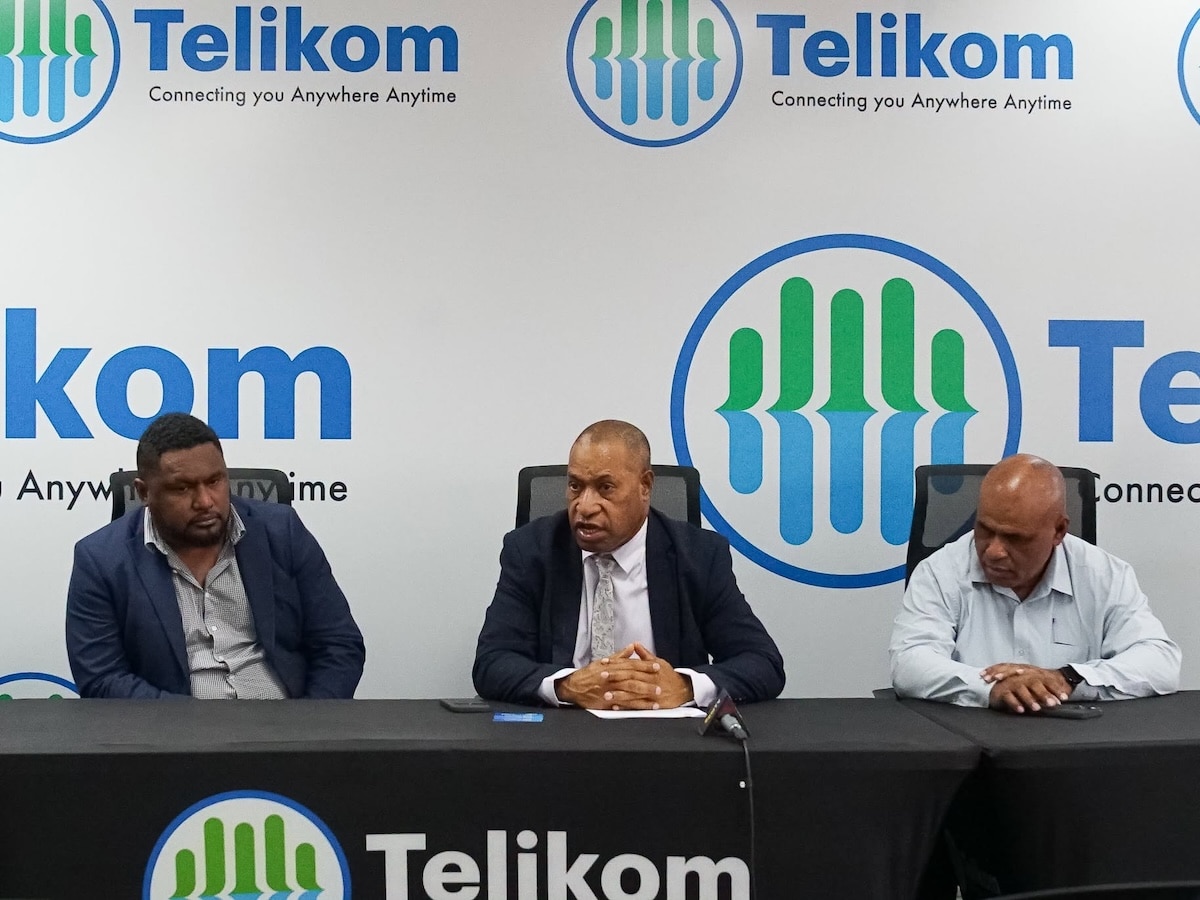
Telikom becomes Starlink’s second reseller in Papua New Guinea

Papua New Guinea’s state-owned telco Telikom PNG has joined the Starlink bandwagon after announcing it has signed a deal to become the country’s second authorised Starlink reseller as of last Friday.

Telikom plans to offer Starlink’s LEO satellite broadband service primarily to government departments, SMEs, verticals such as financial services and mining, and anyone currently using VSAT services.

In a Facebook post on Tuesday, Telikom said it will support the service locally via customer service, billing, installation, technical support, enterprise solutions and managed services.

Telikom CEO Amos Tepi said the Starlink partnership is not about replacing existing services, but complementing and enhancing connectivity options for customers and providing reliable, affordable, and resilient connectivity.

« As a country, we must continue to build redundancy across all critical communications infrastructure. Fibre networks, mobile networks, microwave connections, submarine cables, cloud infrastructure, and satellite technologies must work together to ensure our nation remains connected, » Tepi said in a statement.

Telikom’s Starlink announcement follows last week’s news that Digicel PNG became the first operator in the country to sign a reseller deal with Starlink.

Both announcements came after an April 2026 ruling by the PNG National Court overturned a ban on Starlink operations originally imposed by the Ombudsman Commission in 2024, which enabled the National Information and Communications Technology Authority (NICTA) to approve Starlink’s operator license.

FLAG launches Chennai-Singapore subsea route to boost India-Asia connectivity

FLAG has launched a new subsea route between Chennai and Singapore, adding capacity and route diversity along one of Asia’s busiest connectivity corridors.

The privately-owned subsea cable operator said the route forms part of its Vision 2030 strategy to strengthen global network resilience and expand coverage in key digital markets.

The Chennai-Singapore route follows FLAG’s Mumbai-Singapore investment announced in 2025 and provides a second, geographically distinct connection between India and Singapore. The company said the new path will improve network resilience and offer additional routing options for customers across South and Southeast Asia.

When combined with FLAG’s ECHO subsea cable system linking Singapore and the US, the route also creates new connectivity options between India and the United States, reducing reliance on traditional westbound routes through the Middle East and Europe.

FLAG said the infrastructure is designed to support cloud providers, content delivery networks, enterprises and international carriers seeking greater network redundancy and lower latency.

Chief Strategy and Revenue Officer Paul Abfalter said growing demand for digital services means operators can no longer rely on a limited number of international routes. He added that the new link strengthens FLAG’s ability to manage and reroute traffic across a more resilient network architecture.

Vice President of Product Nadya Melic described India as a key market for FLAG, adding that Chennai is an increasingly important connectivity hub for linking the country into global digital networks.

The launch forms part of FLAG’s broader investment strategy in India, where the company is expanding both its network footprint and local operations.

Space as the Next Network Edge: The Evolution of Global Connectivity

This Industry Viewpoint was authored by Mike Hicks, Principal Solutions Analyst, Cisco ThousandEyes

Satellite constellations are already transforming global connectivity, extending the Internet’s reach to nearly every corner of the planet. Now, as conversations turn toward compute in orbit, the focus is expanding from connectivity alone to how distributed infrastructure will shape the future of digital services. … [visit site to read more]