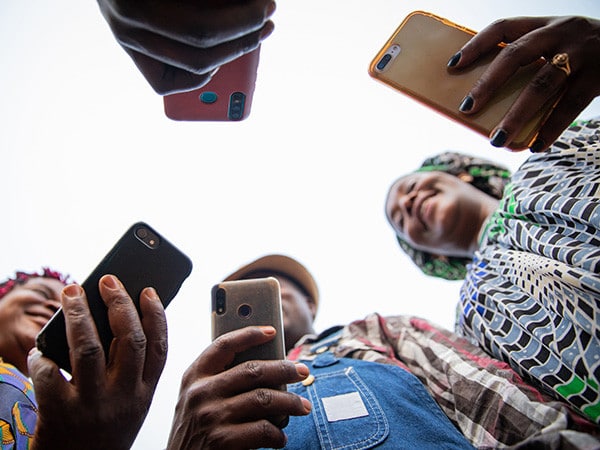
Mobile-based UNESCO project to train women teachers in South Sudan

UNESCO said on Wednesday it has launched the rollout of a new mobile-based teacher professional development initiative in South Sudan that focuses on empowering women school leaders and teachers.

The initiative – spearheaded by UNESCO and its International Institute for Capacity Building in Africa (IICBA) – will use mobile technology and edge computing systems from Japanese IT services and consulting firm Castalia to expand access to professional learning opportunities.

Under the initiative, teachers will be able to access self-paced courses, learning resources and peer-learning networks regardless of location via a platform designed for low-data and offline use.

Forty tablets were also provided to participants to support the rollout of the program, although Yayoi Segi-Vltchek, office head and UNESCO representative to South Sudan, said the success of the initiative won’t be measured by the number of tablets distributed or the number of trainings conducted.

“Its true success will be reflected in how effectively you cascade the knowledge acquired, how many teachers continue to engage with the learning platform, how well you support your peers, and ultimately how many children benefit from improved teaching and learning in classrooms across South Sudan,” Segi-Vltchek said in a statement.

UNESCO said the initiative aims to address the fact that many educators in South Sudan, particularly in remote and underserved areas, have limited opportunities to participate in regular training due to distance, time constraints and economic pressures. These barriers often disproportionately affect women educators.

Natale Majok Lual, principal of Aweil-Maper Teacher Training Institute in Northern Bahr el Ghazal State, said that teachers in South Sudan face a heap of challenges, from the country’s economic crisis, lack of salaries, and the distance they must travel to school to the fact that there simply aren’t enough teachers.

“Some don’t have access to digital equipment, which is needed in today’s world,” Natale said. “This training and project will help introduce our teachers to digital learning and new possibilities and help ease some burdens. For some who cannot travel to the institute regularly, they will now be able to learn online.”

The initiative was officially launched last week during a workshop organised by UNESCO and IICBA in Juba, which brought together education officials from the Ministry of General Education and Instruction and teacher educators from universities and training institutions. The workshop is part of a one-year project being implemented across Algeria, Cameroon, Kenya, Nigeria and South Sudan with support from the Japanese government.

Japan is also providing financial support for the mobile-based teacher development initiative, along with the Pan African Virtual and Electronic University (PAVEU) initiative of the African Union’s Pan African University.

Yas Tanzania and Ericsson partner for enhanced 4G

Operator Yas Tanzania and technology giant Ericsson have announced the first commercial deployment in Africa of Ericsson’s AIR 3285 radio, supporting what they describe as a major step forward in network performance and user experience across the country.

The deployment follows a successful trial and forms part of Yas Tanzania’s ongoing network modernisation and expansion, supporting its ambition to strengthen digital infrastructure and expand access to high-quality connectivity across the country.

Ericsson is supplying the AIR 3285 radios and supporting deployment and integration, helping enhance network capacity and performance. This, it says, enables more reliable and higher-quality connectivity for everyday use cases such as e-learning, remote work and live streaming, while improving user experience in high-traffic environments such as large events, and laying the foundation for new digital services that support inclusive growth.

The enhanced 4G capabilities will enable greater digital inclusion by improving access to high-speed connectivity for individuals and businesses, while also supporting the introduction of advanced digital services such as Internet of Things (IoT) and smart city use cases.

Ericsson’s AIR 3285 is a dual-band frequency division duplexing (FDD) massive MIMO radio weighing only 31kg, making it the lightest in its class. Its optimised weight and size simplify rollouts in high-capacity sites, helping operators meet growing demand for uplink capacity.

It offers up to four times higher uplink capacity and two times higher downlink capacity than traditional 4T/4R solutions, supporting improved network performance and efficiency.

Ericsson and Yas Tanzania say they have a long-standing partnership, including the launch of 5G services in 2022 and the modernisation and expansion of the operator’s 4G network.

DTW 2026 | China Mobile EVP Li Huidi: Autonomous Networks in Future, Faster

On June 23 (local time), the 2026 Digital Transformation World (DTW2026), hosted by TM Forum, opened in Copenhagen, Denmark. Dr. Li Huidi (pictured), EVP of China Mobile, was invited to attend the conference and delivered a keynote speech titled “AN in Future,Faster.”

Li Huidi noted that with the widespread adoption of Gen-AI, token traffic is experiencing explosive growth, driving networks to evolve from traditional “bit transmission” to “bits + tokens delivery.” China Mobile is actively embracing this trend by continuously advancing network upgrades, providing a solid digital infrastructure foundation for the AI era. At the same time, AI technologies are rapidly evolving from “passive training” to “autonomous evolution,” with large models achieving continuous breakthroughs that are reshaping industrial competition and innovation paradigms.

Focusing on the development path toward high-level Autonomous Networks (AN), Li Huidi outlined four key perspectives. First, AI must evolve from“bolt-on” to AI Native. AI will deeply integrated into network elements, operational processes, and services, thereby reshaping operational workflows and continuously improving efficiency. Second, networks must evolve from isolated intelligence to cross-domain End-to-End Collaboration, enabling wireless, core, transport, and IP networks to move beyond siloed operations, they must collaborate around the complete customer journey—from user to connection, from connection to service. Third, AN must shift from efficiency gains to value creation, delivering differentiated experiences, supporting sustainable development, and unlocking new business opportunities across the industry. Fourth, autonomy must evolve from terrestrial networks to Comprehensive Integrated networks, where 5G-A ISAC, computing-network convergence, and future 6G space–air–ground must all become part of a unified autonomous foundation.

As a key global contributor to AN development, China Mobile continues to play an industrial leadership role and accelerate the deployment of high-level autonomy. Currently, 21 high-value scenarios (HVS) have achieved L4 from China Mobile, covering key areas such as service provisioning, change monitoring, quality optimization, and power saving, leading to continuous reductions in operational costs. Over the next three years, China Mobile plans to expand L4 capabilities to 38 HVS and further scale AI-enabled scenarios, building a portfolio of iconic applications and agents that enhance both operational capabilities and business value.

In terms of technological innovation, China Mobile is accelerating the construction of a new autonomous network system featuring “AI Native networks + Digital Twin + Multi-Agent Collaboration + Computing-Network Integration.” In the AI Native networks, intelligent capabilities will be embedded into network equipment such as base stations, core networks, broadband access, and optical transport systems. In the Digital Twin domain, China Mobile will enable simulation, pre-verification, fault replay, and optimal decision-making. In Multi-Agent Collaboration, China Mobile is building a trusted AI system based on network foundation models and multi-agent collaboration frameworks. In Computing-Network Integration, it is developing high-quality infrastructure capabilities to support AI workloads and token-based traffic requirements in the AI era.

In closing, Dr. Li stated that the telecom industry is undergoing a historic transformation—from manual operations to automation, then to autonomous operations, and ultimately toward an AI-native paradigm. The networks of future will no longer merely connect people to people, or people to things. They will connect intent to outcomes.

The networks of future will no longer merely transport bits. They will understand demand, coordinate decisions, and create value.

China Mobile is committed to working hand in hand with global industry partners, upholding openness and collaboration, and advancing the deep integration of AI and information and telecom technology. Together, we will enter a new phase: driven by innovation, powered by thriving industries, built on trust and resilience, and designed to make intelligence accessible to all.

—accelerating the arrival of the future of AN.

Wuhan Smart Megacity: Transforming Urban Governance

Amidst the digital wave, smart city construction has become a popular choice for megacities to address governance challenges. Wuhan, keeping pace with China’s modernization, has continuously innovated in governance, upgraded industries, and optimized the ecosystem, injecting vitality into the city. This allows residents of Wuhan to live and work with much greater convenience, and to embrace a bright future together.

[embedded content]

Project Background

Wuhan, the capital of Hubei province, is often called the « City of Rivers. » As a major metropolis in central China, Wuhan is rich in history and culture. As a megacity and an important comprehensive transportation hub in China, Wuhan is also the center for shipping, the regional economy, innovation in science and technology, commerce, and logistics in the middle reaches of the Yangtze River. Wuhan administers 16 districts, covering an area of about 8,569 square kilometres, with a permanent population of about 13.81 million.

Smart city development has become essential for megacities to address governance challenges. Wuhan, known as the « Crossroads of Nine Provinces, » has remained committed to modernizing its urban governance. This move is a crucial step to respond to residents’ aspirations for a better life. To address common challenges in traditional urban governance, such as fragmented management and delayed responses, Wuhan has partnered with Huawei along with other leading tech companies to build a unified city management platform. With the City Intelligent Twins as the core engine, this platform explores a new path of smart governance, covering perception to thinking and detection all the way to prediction. By deploying this platform, Wuhan sets an example of megacity governance and outlines a practical blueprint for AI CITY construction.

Customer Requirements

For a long time, fragmented management and data silos have been major obstacles to megacity governance. These issues often lead to situations where visible problems cannot be solved and solvable problems cannot be detected in time. To address this, Wuhan needs to build a city neural network that features all-domain perception, intelligent analysis, autonomous handling, and intelligent decision-making. The goal is to break down data silos, integrate information, and ultimately transform it into smart governance.

Based on digital twin and intelligent collaboration technologies, Wuhan has built a warning and handling platform similar to the human immune system, transitioning the focus of urban governance from reactive response to proactive prevention.

Smart city construction should go beyond cost reduction and efficiency improvement, and instead focus on enhancing city competitiveness, residents’ sense of gain, and sustainable development. In other words, technology should serve people, making cities livelier and more welcoming for everyone.

Huawei Solution

Against this backdrop, Wuhan’s smart city construction focuses on three core requirements:

  • Organizing the veins of city awareness to maximize city collaboration efficiency and video transmission quality

Huawei built “One City One Network” for Wuhan, creating a 100G ultra-broadband all-optical foundation to cover the entire backbone network with two cores and four rings. This network supports multiple services, including government extranets and dedicated video networks, significantly improving the efficiency of cross-departmental collaboration and the quality of video transmission. This information highway allows thousands of residential requests, tens of thousands of video signal channels, and over 10 billion IoT data records to be aggregated in real time to the central hub of Wuhan’s city operations center, laying a solid network foundation for smart governance.

  • Building an intelligent city agent to enable data to think and speak

Leveraging the powerful computing power of Wuhan Cloud, Huawei built an intelligent city agent. The system can automatically identify and analyze more than 10,000 channels of video and images backhauled from hundreds of drones patrolling across the city. In addition, it can accurately identify 11 types of typical city governance events, such as parking violations and road flooding.

With the Talk2Video technology, users can converse with the system in natural language, and the system can retrieve onsite and surrounding video resources with nearly zero latency, collecting first-hand information for decision-making. This means that data is not only visible, but also intelligible and can be quickly responded to. This helps transform city governance from passively receiving information to proactively identifying risks and intelligently assisting decision-making.

Powered by the Huawei 2012 Labs’ patented technology, Star-Hopping Engine, the intelligent agent organizes a large amount of unstructured data, including service tickets, documents, and workflows, to build a knowledge base for learning and retrieval. The intelligent agent automatically aggregates incident details and resolution records, allowing staff to interact with it through natural-language dialogues for intelligent data queries, greatly simplifying information access and retrieval. It can also autonomously generate comprehensive summary reports, perform accurate statistics and anomaly analysis on high-frequency and critical events, and produce both periodic and specialized reports.

  • Building a digital twin platform to make data manageable, visible, and controllable

Based on the digital twin foundation, Wuhan has built a 3D map covering 8,569 square kilometres, including a high-precision model of 1,200 square kilometres. The map is connected to hundreds of key check points in the city, such as water accumulation, air quality, and bridges, to comprehensively sense the status of key city infrastructure.

  • Building an app-free video conferencing platform to ensure timely delivery of emergency instruction

Complex incidents require collaboration across regions and departments. To help Wuhan efficiently address such incidents, Huawei built an efficient collaborative response system at the city and district levels using its converged communications technology. This system connects all 16 districts across the city, making dispatch of forces scattered across departments possible with simple clicks of a mouse. During emergency response, the video conferencing system is connected to local carriers’ networks, allowing users to join conferences without installing any apps. This greatly improves the response speed. The system also upgraded the decision mode from traditional serial reporting to parallel collaborative decision-making, truly achieving efficient handling of emergencies.

Customer Benefits

Wuhan has built a number of integrated cross-scenario applications, such as smart gas, smart drainage, and bridge and tunnel safety. The gas safety accident rate has decreased by 60%, the traffic congestion index has decreased by 15%, and the public satisfaction rate has increased to 98%.

Wuhan has integrated the latest digital and intelligent technologies into its urban development, transforming city governance from seeing to understanding and from passive response to proactive anticipation. Located along the Yangtze River and looking toward the future, Wuhan uses its digital and intelligent city plan to better meet residents’ expectations, setting a strong example for global governance of ultra-large cities.

« Managing megacities is a global challenge. The Central government of China has stated that convenient and efficient smart cities need to be built. The core of this is to use technology to serve people, making city governance more refined and residents’ lives more convenient. AI is giving governance a sense of touch, sight, and convenience, and is profoundly changing the lives of Wuhan residents. »

By Geng Feng – Deputy Director of Wuhan City Operations Management Center

For more details, please visit: https://e.huawei.com/en/case-studies/industries/government/202602-wuhan-smart-city

DTW26 Day 1: Trading on Trust

Day One of Digital Transformation World 2026 kicked off with a focus on speed – the runaway pace of AI evolution, the breakneck pace at which enterprises must work together to adapt, and the scramble to take advantage of opportunities as they evolve.

In his opening keynote, TM Forum Chairman Steffen Roehn remarked that as the pace of AI acceleration becomes increasingly overwhelming, speed of collaboration becomes a competitive advantage.

Level Four autonomous networks – in which AI assumes control over decision-making in specific scenarios – are now a reality. Against the backdrop of such rapid evolution, telcos are well-placed to become the trust layer that allows the AI economy to function.

TM Forum CEO & President Nik Willets underlined the importance of trust in what he dubbed the ‘Race to 2030’, in which operators will need to grasp their opportunity to compete in the AI economy. He noted that while 72% of enterprises claim to have high levels of trust in the functionality of their AI agents, just 18% are able to offer regulator-ready evidence to support these claims.

Willets outlined that while architecture certainly still matters, ODA (open digital architecture) must go further, evolving from composable to AI-native to facilitate network autonomy while offering regulation-defensible control layers and AI governance frameworks. Willets described AI-native ODA as effectively the blueprint for building and operating an AI-native telco.

Unlocking impact at scale

But how can telcos translate this ‘AI hope’ into high volume growth? This was the question posed by former Axiata CEO and current advisor to the operator group’s board, Vivek Sood. In emerging markets, AI must help operators to grow sustainably and scale effectively to bring down the cost per GB – because ultimately, AI must help operators deliver value to customers. Sood outlined how traditional AI use cases can demonstrably make networks more efficient – in terms of pipeline quality, infrastructure rollout and operations, energy performance, and capital efficiency – and highlighted that the next step is to monetise this by unlocking AI impact at scale across the enterprise.

TIM Italy CEO Pietro Labiola emphasised how trust, not speed, is now the key parameter for telcos – and that they must demonstrate this by becoming the assurance layer, taking control of data as the issue of AI sovereignty becomes increasingly pressing. Sood agreed, noting that customers in emerging markets are more willing to pay for security and an improved quality of experience. Operators cannot assume that they can continue merely to sell connectivity for revenue – they have to invest in building marketplaces that provide more value to the customer. Sood highlighted that operators must view efficiencies as new growth opportunities.

However, creating differentiation through experience is of course a challenge. Keppel’s Manjot Singh Mann noted that even if AI enables telcos to offer improved customer experiences, they should not expect to charge more for this. The growth opportunities are around increasing efficiencies and reducing costs – telcos must be able to create new business models and revenue pools around AI, rather than expecting to offer more of the same.

Flipping the Script on the PSTN: How the FCC’s Identity Mandates Will Commoditize Trust and Shatter Branded Calling Premiums

Flipping the Script on the PSTN: How the FCC’s Identity Mandates Will Commoditize Trust and Shatter Branded Calling Premiums

This Industry Viewpoint was authored by Gerry Christensen

The outbound enterprise calling landscape is standing on the precipice of its most profound structural shift since the inception of the STIR/SHAKEN framework. For years, the telecommunications industry has wrestled with a fractured trust ecosystem where bad actors thrived on malicious anonymity, and legitimate businesses were forced to pay a premium just to prove they weren’t scammers. … [visit site to read more]

Smart launches new site in San Vicente to support govt SIM programme

PLDT’s wireless arm Smart Communications said on Friday it has switched on a new mobile site in San Vicente, Palawan, as part of the Philippine government’s Bayanihan SIM programme to connect geographically isolated and disadvantaged areas (GIDAs).

At the launch ceremony, Smart and the Department of Information and Communications Technology (DICT) distributed around 1,500 free SIM cards with prepaid load to government-identified beneficiaries, including students.

Under the partnership, beneficiaries will receive 25GB of data per month for 12 months, fully subsidized by the government.

“By bringing fast and reliable mobile connectivity to towns like San Vicente in Palawan, we enable more Filipinos in underserved communities to access opportunities in education, livelihood, and innovation,” said Menardo G. Jimenez, PLDT’s chief operating officer and network head.

As part of the launch, PLDT also gifted Old Caruray Elementary School with a “School-in-a-Bag” package. Billed as a “portable digital classroom”, the package includes a laptop for the teacher, 10 tablets pre-loaded with Department of Education curriculum-based learning materials and interactive educational applications, a Smart Bro LTE Pocket Wi-Fi device and expandable storage.

San Vicente is located around 500 km southwest of Manila, with a population of 33,768 people as of 2024.