

Four items of regional interest to catch up with on the eve of Christmas. … [visit site to read more]

Four items of regional interest to catch up with on the eve of Christmas. … [visit site to read more]

This Industry Viewpoint was authored by Nicholas Rossman, Mobile Ecosystem Forum (MEF)
Trust in the mobile sector could be a lot better. The Mobile Ecosystem Forum’s (MEF’s) 2024 Consumer Trust Study reveals the Global Trust Index, at 55%, to be down one percentage point in like-for-like markets. While this might seem moderate, it underscores a concerning reality: for nearly half of mobile users worldwide, trust in data sharing is fragile. … [visit site to read more]

The IFT-12 tender, in which spectrum will be made available for 5G networks in Mexico, will begin on 27 January when an invitation to would-be buyers to express their interest begins, according to an announcement from regulator the Federal Institute of Telecommunications (IFT).
The IFT-12 tender aims to allocate 2,223 radio spectrum blocks for the provision of wireless access services in different frequency bands. This seems to be mainly for 5G, although some news outlets suggest that some spectrum might be used to support or expand LTE.
In addition, according to Statista, as of September 2024 two 5G networks were actually deployed in Mexico, owned by AT&T and Telcel’s Radiomovil Dipsa. At the same time, says the global data and business intelligence platform, there were also five LTE networks in Mexico, each owned by a different operator.
The bidding mechanism for this tender is called the multiple round ascending simultaneous type. The IFT version will involve a maximum of three competitions in which spectrum acquisition limits will increase in each contest based on demand in the previous contest and spectrum available.
The IFT explains that it is imposing limits seek to prevent levels of spectrum accumulation that may harm free competition and economic competition, as well as avoid the establishment of barriers to entry. In addition, it seeks to encourage the entry of new participants or strengthen the ability to compete of those already established and promote the efficient use of the spectrum.
The IFT has also incorporated incentives to participation, designed to promote competition and the provision of services at competitive prices for end users. Blocks will be available in the 600MHz band, the L-band, the 800MHz band, the AWS band, the PCS band and the 2.5GHz band, for national and other sorts of coverage.
There are some coverage obligations included in the national blocks of the 600MHz band and in the 2.5GHz band, to support less well-served areas. More information is available on the IFT website.
The long-awaited IFT-12 may the last tender carried out by the IFT before its final disappearance in 2025.

Keep up-to-date with all the latest news, articles, event and product updates posted on Developing Telecoms.
Subscribe to our FREE weekly email newsletters for the latest telecom info in developing and emerging markets globally.
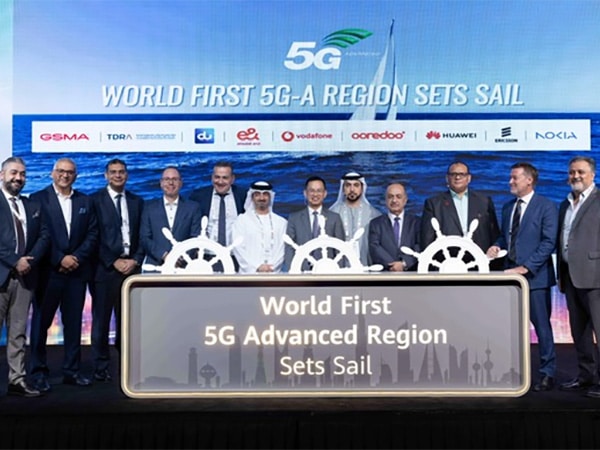
Toni Eid, founder of Telecom Review Group, was undoubtedly right when he said: “5G-Advanced has seen remarkable progress in the Middle East.” He was speaking at the recent 18th Telecom Review Leaders’ Summit 2024 in Dubai where he was delivering the opening speech prior to a panel entitled World’s First 5G-A Region Sets Sail.
The backdrop to this event is 5G-Advanced networks moving from testing to commercial deployment – notably in the Middle East. Which is why a panel of industry associations, regulators, operators and vendors were being asked to describe how far 5G-A had come in the region – and where it could be going next.
Moderator Issam Eid, CMO Africa, Levant, KSA & Qatar, Telecom Review Group, asked the panel about the challenges currently within the 5G-Advanced ecosystem. How, he asked, can industry organisations and government agencies overcome these challenges, drive collaboration and foster a more mature industry value chain?
Fayez Abu Awad, Policy Director, MENA, GSMA, warned: “When considering the next stage of evolution of 5G we have to be mindful of the fact that ARPU has been stagnant for quite a while. We need to make sure that we have the use cases monetised properly in 5G-A.”
His answer (and a regular theme of the panel) was cross-industry collaboration. The GSMA is working on opening access to the capabilities of the network – and advocates for an open API approach.
Dr. Khalid Al Awadi, Manager, Broadcasting and Space Services, of UAE regulator TDRA UAE, focused first of all on spectrum utilisation – notably the adoption of new spectrum frequency allocations for IMT or mobile services.
The integration of non-terrestrial networks – a characteristic of 5G-Advanced – is also a challenge. Will more bands be needed?
More important, perhaps, is the future of private 5G. As he said: “We’re talking about different industries utilising data communication. We have a big challenge with regards to knowledge and understanding.”
Finally can costs be brought down? Regulators, he suggested, need to focus on a framework for spectrum sharing or RAN sharing.
The operator members of the panel then addressed the question of the current status of 5G-Advanced development – and what influence will 5G-Advanced technology evolution and network deployment will have on the Middle East.
Hasan Alshemeili, Head of Technology Planning of Emirates-based operator du, was able to describe a success story in his market where 5G outdoor coverage is almost universal and 5G-Advanced use cases have been demonstrated, notably band aggregation to achieve extraordinary Gigabit speeds.
du was also the first regional operator to deploy 5G-Advanced over DAS using Huawei LampSite X. 5G-Advanced coverage he said, is now 20% of the nation “and our strategy is to increase our footprint to 40% by next year”.
As for applications, he said that 5G-Advanced will help to accelerate digital transformation by enhancing connectivity across different sectors such as healthcare, manufacturing, transportation (V2X for example) and smart cities.
Dr. Ayman Elnashar, VP of Technology Strategy, Architecture & Innovation, e&, highlighted his market’s achievement: the fastest 5G speeds of any nation globally. He also noted that e& is planning for private 5G thanks to a partnership with oil and gas giant ADNOC to deploy the biggest private network in the world.
Of course 5G-Advanced is still being standardised – with enhancements likely to continue for some while. The recent 3GPP Release 18 will enhance the uplink while Reduced Capability (RedCap) New Radio is helping to expand the NR device ecosystem. Artificial intelligence (AI) and machine learning (ML) will play increasingly important roles in 5G-Advanced.
Release 19 promises to expand the addressable market for 5G massive IoT. Base station intelligence, energy-saving ambient IoT, improved power consumption for base stations and devices and continuing enhancements to RedCap will help to address sustainability and energy efficiency. Further ahead, Release 20 will address 6G and AI-focused network design.
Stelios Savvides, Chief Technology Officer, Vodafone Oman, agreed that the GCC area is very advanced in 5G-A but asked: What are the use cases and network scenarios that are helping to drive investments?
One answer comes from Oman itself during Salalah’s tourist season. “We’ve been looking at advanced scheduling, in terms of uplink improvements, to drive throughput and of course some features around sensing interference – how we can drive the network to give a much better experience.”
Segmentation – differentiated quality of services for certain customers – has potential and gaming is an undoubted 5G-A opportunity, he said, as are lowering costs with RedCap and controlling capacity and access on the network, IoT, super low latency, mobile private networks, live feeds and more.
Ramy Boctor, Chief Technology Officer, Vodafone Qatar reminded his audience that “5G SA is a big piece in a bigger puzzle… the nature of traffic is changing now.”
Video on demand, live video streaming, gaming and virtual reality are all video services, but the latency and bandwidth requirements of these are different. What’s going to shape 5G demand soon could be more the application than the end user, he argued. Content providers therefore need open APIs.
“It’s not a matter of getting a connection to the content it’s how you get this connection. How fast do you get it? What’s the nature of this bandwidth?” New features are important, he noted, but 5G is also there to provide premium connectivity.
And new features are coming under 5G-Advanced: enhanced connectivity, uplink, download, latency, power efficiency and sustainability. AI-led automation will enhance site creation and network optimisation. Among applications, 5G-Advanced-led healthcare, smart cities, traffic management, safety, and urban management are part of a constantly lengthening list.
Equipment vendors were then asked about the role equipment vendors can play in application and businesses model explorations when collaborating with operators.
Allen Tang, President of ICT Marketing & Solution Sales Dept, Huawei MECA was very upbeat. Joint innovation has been key: terminal manufacturers, operators, regulators and standard organisations working together will accelerate the maturity of the 5G-A ecosystem, he argued.
New spectrum is becoming available. 3CC aggregation is already influencing deployment – and 3CC smartphones are on the way. New technologies like 5QI with SQL technology will allow new business models (like experience monetisation) for operators. And suppliers like Huawei can do a lot of innovation with operators to solve any issues during the journey to mobile AI, and the transformation from NSA to SA architecture.
Khalid Al Awadi, TDRA, added: “The most important issue that we need to take into consideration to adopt and progress 5G implementation is the collaboration of different stakeholders in the industry.”
Talking about 5G-A monetisation, Zoran Lazarevic, Chief Technology Officer, Ericsson MEA, asked how we can connect every killer application with each and every operator globally. How is it going to be maintained and, where necessary, upgraded? What about contract agreements and monetisation? Ericsson and some of the biggest operator globally are trying to address this with a global network API platform to offer connectivity to developers.
One-size fits all networks may not work with 5G-Advanced capabilities like slicing, low latency and performance-based business models, he suggested. Developing the applications to manage this means collaboration.
Mohamed Samir, VP Middle East Market, Nokia, again noted that 5G-Advanced is an evolution of the promises of 5G, including real-life applications to meet different demands. But while the vendor can supply the technology to enable that, collaboration means different operators can build the right business models to serve different consumers. “It’s all about bringing value at the end to the whole ecosystem,” he said.
Fayez Abu Awad of the GSMA added: “We have here representatives of the supply side economic equation. What we’re missing is the demand side.”
The modern mobile industry will extend to multiple sectors, and, he said: “We will never be experts in aviation, tourism or government. However, the experts within these sectors need to understand the capabilities that we can offer as an ecosystem and start dreaming of their own applications.” And the GSMA open gateway API initiative can help, supporting standardisation that makes a service, no matter where it’s developed, easily and rapidly deployable on your own network.
Another question for vendors was: Can AI can be leveraged to create synergies with 5G? It certainly supported network performance during the Qatar World Cup but with 5G-Advanced embedding AI functionalities in the OSS system this combination is becoming exponentially more powerful. Indeed, the complexity of 5G-A mobile networks cannot be managed by human beings alone; you have to have support from the AI, gen AI and LLMs.
Allen Tang reminded us of the fundamental importance of building for the cloud, of training to support AI, of ongoing telco-to-techco transformation and of the need to address monetising AI in a way that will enhance the customer experience and allow differentiation.
Dr. Ayman Elnashar, of e& also reminded us of the role of AI in solving network problems via automation, managing performance and energy and more. And collaboration, which will extend to the likes of Azure, AWS and Oracle for help building cloud infrastructure and hosting LLMs. With appropriate alliances, he added, operators can take a lead with AI.
The overall message of the day? Well, this panel revealed many fascinating and varied perspectives on 5G-A its role and future, but there was undoubtedly one clear overall message: collaboration will help 5G-A to fulfil its potential.

This Industry Viewpoint was authored by Steve Douglas, Head of Market Strategy, Spirent Communications
The start of a new year is a perfect time to take stock of the telecommunications industry and cast our eyes forward to what’s coming next. Of course, when you work closely with the companies preparing to actually deliver new innovations to users, you don’t need a crystal ball to see what’s coming. You can just observe how they spend their time and resources. … [visit site to read more]

Satellite operator SES has added two more satellites to its next-gen O3b mPOWER constellation that are also the first two satellites with new designs to address power issues in the first six satellites.
SES had put four mPOWER satellites in orbit before discovering in August 2023 that a design glitch was causing power modules to switch off, which shortens their operational life. Two more satellites with the same glitch were launched in April this year so that the mPOWER constellation could commence commercial service, which was already behind schedule.
SES says it has put mitigations in place to compensate for the power glitch in the first six satellites, to include adding two more satellites to the mPOWER constellation, which will now comprise 13 satellites instead of 11.
The two new O3b mPOWER satellites – which were launched on Tuesday by a SpaceX Falcon 9 rocket from Kennedy Space Center in Florida – feature redesigned payload power modules. The remaining five satellites based on that design are currently being manufactured and are scheduled for launch over the next 18 months, SES said.
SES CEO Adel Al-Saleh said the commercial launch of mPOWER service is already paying off for its customers, particularly in developing markets banking on LEO and MEO high-throughput satellites to connect underserved and unserved areas, as well as supply mobile backhaul capacity.
“Ever since the start of service of O3b mPOWER earlier this year, we have seen how it has become an integral part of the connectivity experience of our customers,” he said. “We have also learned a lot and have put all of those insights to work as we progress in our innovation journey to scale up our services and meet even the most sophisticated requirements of our customers.”
SES has signed mPOWER deals with operators in Ecuador, Brazil, United Arab Emirates, the Cook Islands, Senegal and other countries in Africa, among others. India’s Reliance Jio Infocomm plans to use O3b mPOWER satellites for its satellite broadband service JioSpaceFiber.
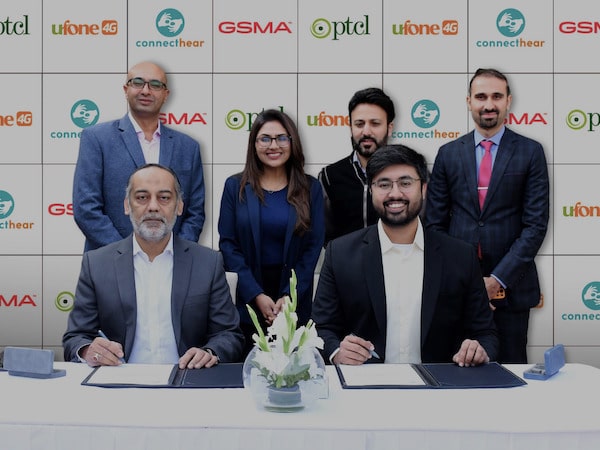
Ufone 4G, the mobile unit of Pakistan Telecommunication Company Limited (PTCL), said on Thursday it has partnered with local assistive technology startup ConnectHear for a GSMA-funded project that will use AI to improve disaster-response communications for deaf people.
Under the project – which is backed by funding from the GSMA Innovation Fund for Humanitarian Challenges – the two companies will enhance ConnectHear’s virtual interpretation services to function in low-bandwidth environments and develop an AI-powered system that automatically generates early warning messages in sign language.
Ufone said this will allow deaf individuals to receive critical, real-time updates during emergencies, bridging a critical gap in disaster communication. Ufone will also zero-rate the ConnectHear app on its network, so that even users with no data package or mobile balance can use it.
Syed Atif Raza, group chief commercial officer for PTCL and Ufone 4G, said the partnership will break down financial and technical barriers for the over 10 million people in Pakistan who are deaf or hard of hearing, who are frequently excluded from early warning systems due to communication barriers.
“By enabling AI-driven sign language alerts and providing zero-rated access to the ConnectHear app, we are removing barriers that often isolate vulnerable communities during critical times,” he said in a statement.
“By optimizing our services for low-bandwidth environments and generating automated sign language alerts, we are ensuring that deaf communities receive the life-saving information they need in real time,” said Arhum Ishtiaq, co-founder and CTO of ConnectHear.
Pakistan is becoming increasingly prone to weather-related natural disasters, according to recent reports that list Pakistan among the ten most affected countries by climate-related disasters.
This year alone, according to the United Nations Office for the Coordination of Humanitarian Affairs (OCHA), the monsoon season from July to September has resulted in flooding that has displaced over 600,000 people. Two years ago, over 30 million people in Pakistan were impacted by severe floods in 2022 .
Phillipe Bellordre, head of GSMA Innovation Fund, GSMA, said successful implementation of the project will serve as a model for other countries and humanitarian organizations looking to improve disaster preparedness for vulnerable populations.

 All the benefits of next generation technologies that are becoming available from the cloud won’t benefit anyone unless they are integrated into operations successfully. From automation to AI, there are always resistance to change and fear of the unknown to overcome. How does a large organization make the transition successfully? And what happens if they don’t? With us today to talk about it is Farès Sakka, Director of Smart Industries, Americas for Orange Business. … [visit site to read more]

Pan-African service provider MTN Group has announced some key leadership changes among its operating companies and at its digital infrastructure business, most notably at MTN Group’s wholesale fibre optic subsidiary Bayobab.
Mitwa Ng’ambi, CEO of MTN Cameroon since September 2022, will move to the same position at MTN Côte d’Ivoire, effective 1 March 2025, as Djibril Ouattara takes early retirement. Wanda Matandela, chief commercial operations officer at MTN South Africa, has been appointed as the new CEO for MTN Cameroon, effective 1 March 2025.
Most significant perhaps is the announcement that, effective 1 January 2025, Mazen Mroue, MTN group chief technology and information officer (GCTIO), will assume additional responsibilities as CEO of Digital Infrastructure (Infraco). This dual role will incorporate the mobility and fibre businesses of Bayobab, along with executing MTN’s data centre strategy as the MTN Group positions itself for growth and profitability in the development of AI across Africa.
Since joining MTN in 1998, Mazen has held various senior positions within the Group’s regional operations in Africa and the Middle East and served as a board member of various companies within the MTN Group.
What this means is that Frédéric Schepens, current CEO of Bayobab, will be leaving the group effective immediately. This is described by news resource ITWeb Africa as “a surprise move” – and indeed this departure has been the main headline for a number of African news outlets reporting these changes.
ITWeb Africa mentions a number of setbacks this year – and certainly the conflict in Sudan the depreciation of the naira, and disruptions caused by multiple subsea cable cuts have been challenging. However, another news source, TechFinancials, reporting on Bayobab’s financial results in August, said: “In this challenging environment, Bayobab achieved a resilient financial performance”, and added that in the first half of the year it had secured a number of new fixed connectivity infrastructure deals
MTN Group, however, simply notes that the changes are “aimed at addressing succession, operational execution, and advancing the Ambition 2025 strategy”.