

One equipment trial and three data center development project items to catch up with: … [visit site to read more]

One equipment trial and three data center development project items to catch up with: … [visit site to read more]
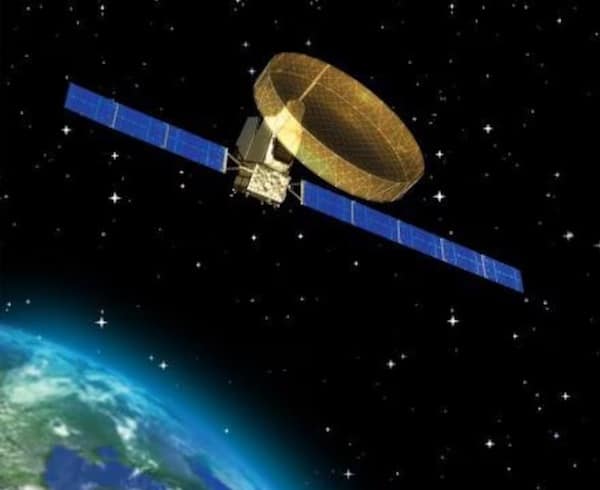
UAE-based satellite operator Space42 announced on Tuesday it has signed a new AED18.7 billion (US$5.1 billion) contract with the UAE government to provide satellite services until 2043, which will also help fund construction of two new satellites in the pipeline.
Space42 currently has two agreements with the government – a capacity services agreement and a managed services mandate – that are in effect until November and December 2026, respectively. The new contract extends that arrangement by another 17 years to 2043, and also combines related operations, maintenance, and technology management services of ground segment satellite systems and terminals currently provided under a separate agreement.
Under the contract, Space42 will provide satellite capacity and related managed services with the existing Al Yah 1 and Al Yah 2 satellites in orbit. The contract also covers capacity from Space42’s upcoming Al Yah 4 and Al Yah 5 satellites, which will provide secure governmental communications across the Middle East, Africa, Europe, and Asia.
In fact, as part of the deal, Space42 said that it will receive AED3.7 billion in advanced payments from the government to construct Al Yah 4 and Al Yah 5, which are expected to launched by SpaceX in 2027 and 2028, respectively.
That advance payment would cover most of the AED 3.9 billion Space42 has budgeted to develop Al Yah 4 and Al Yah 5, including the spacecraft, ground segment infrastructure, launch, and insurance. The satellites are based on the Airbus Eurostar Neo platform, which can deploy flexible multi-band payloads in orbit.
“The Al Yah 4 and Al Yah 5 satellites will offer new capabilities to advance our technology and service offerings, enabling us to continue providing our innovative SpaceTech solutions that meet the UAE Government’s evolving requirements more efficiently, securely and reliably,” said Ali Al Hashemi, CEO of Yahsat Space Services at Space42, in a statement.
Space42 is the product of the merger between Yahsat, the UAE’s flagship satellite operator, and AI-powered geospatial solutions provider Bayanat earlier this year.
In related news, Space42 said that another planned geostationary satellite, Thuraya 4, arrived at Kennedy Space Center in Florida last week, where it will be launched into orbit by SpaceX before the end of this month.
In the pipeline since 2020, Thuraya 4 sports a 12 meter L-band antenna and a payload with on-board processing. Space42 said this will provide advanced routing flexibility of up to 3,200 channels with dynamic power allocation over a large number of spot beams across Europe, Africa, Central Asia, and the Middle East.

Four items of international network news: … [visit site to read more]

 With the rise of AI as a driving force throughout the data center infrastructure sector, we are starting to see effects beyond just space and power. The ecosystem is evolving, and new, unique opportunities are arising. With us today to talk about the changes is Sean Maskell, President and General Manager for Cologix Canada. Cologix Canada operates facilities across the markets of Montreal, Toronto, and Vancouver. … [visit site to read more]
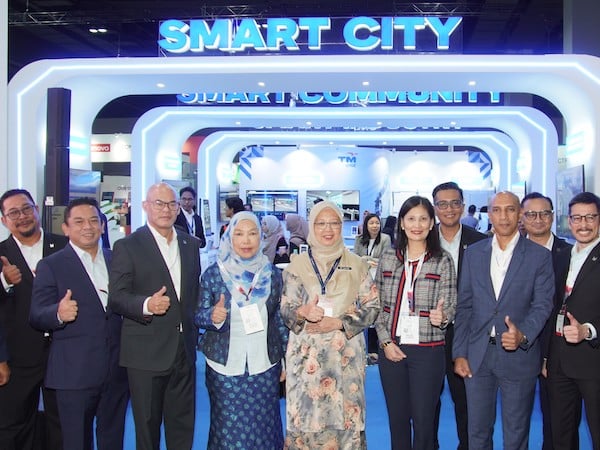
Telekom Malaysia’s enterprise and government sector digital solutions arm TM One announced on Monday it has formed a partnership with local property developer PR1MA Corporation Malaysia to leverage broadband, digital and IoT solutions to help build sustainable smart-housing projects.
Under the three-year deal, TM One will establish a centralised monitoring system for PR1MA’s project tracking and workflows, which it says will improve operations and resource management, and enable data-driven decision-making.
PR1MA will also utilise TM One’s IoT-based solutions for energy and environmental monitoring to lower operational costs and adopt sustainable best practices.
“This partnership supports the creation of connected and eco-friendly living spaces, aligning with PR1MA’s community-centric vision and Malaysia’s Smart City aspirations,” said TM One Executive VP Shazurawati Abd Karim. “By fostering future-ready ecosystems and sustainable urbanisation, we will jointly integrate digital innovation into affordable, high-quality housing.”
Mohd Nazri Md Shariff, PR1MA’s group CEO and Member of Corporation, said PR1MA will also leverage the operator’s solutions to embed smart-home solutions into its residential projects.
“Through this partnership, PR1MA aims to integrate smart solutions from planning to construction, ensuring efficient project management,” he said in a joint statement. “It will also enable our subsidiaries, PR1MA Communications and PR1MA Facilities Management, to provide sustainable connectivity and advanced technologies that enhance convenience, security, and quality of life for residents. These efforts will transform PR1MA’s developments into fully connected, smart communities.”
PR1MA Communications signed a similar deal with CelcomDigi in October 2024, when both companies signed an MoU to collaborate on providing fibre-to-the-home (FTTH) and fixed wireless access (FWA) solutions to PR1MA projects.
That deal also includes implementation of centralised network solutions, managed from a single data centre, to enable “real-time monitoring of bandwidth usage and provide seamless digital experiences at affordable costs”, according to CelcomDigi.
Three data center expansion items of note to catch up with. … [visit site to read more]

Smart Communications, the mobile arm of Philippine telco PLDT, is reportedly making moves to relaunch its original mobile money app, Smart Money, in an apparent bid to directly take on rival telco Globe Telecom’s GCash.
Smart launched Smart Money in 2003 in partnership with Banco de Oro (BDO). At the time, it was the country’s first and only mobile remittance service until Globe launched rival service GCash in 2004. In 2016, Smart Money was discontinued after the launch of Paymaya (later rebranded as Maya), a JV between PLDT and Rocket Internet to offer mobile payments.
According to a report from ABS-CBN on Friday, the Smart Money app has reappeared on Apple’s App Store and Google’s Play Store and is available for download. The app information page says Smart Money will support transactions for “Mobile Load” and “Send Money”. It can also be used for paying postpaid mobile, cable and internet services, as well as utilities, tolls and education fees.
However, the app is still inactive. Users must put their names on a waitlist to use the new Smart Money app, the report said.
The reappearance of Smart Money follows earlier remarks by Anastacio Martirez – who became Smart’s COO in September – that he said he intends to retake market share from GCash.
« We were the first in the industry to introduce Smart Money, ahead of GCash. Somewhere along the way something happened, but that’s not a problem,” he said onstage at last month’s GSMA Digital Nation Summit, according to InsiderPH. “I want to bring it back.”
While PLDT and Smart haven’t elaborated on what a Smart Money relaunch would mean for Maya, the Inquirer’s “Biz Buzz” column notes that Maya’s business model has shifted beyond consumer-to-consumer payments after becoming one of the first six digital banks licensed by the country’s central bank, Bangko Sentral ng Pilipinas (BSP).
Also, the column added, PLDT only holds a minority stake in Maya’s parent company, Voyager Innovations, which means Smart has little say in Maya’s direction.
GCash is the most popular mobile wallet app in the Philippines with around 94 million users. Paymaya had an estimated 44 million users by the end of 2021.

The International Telecommunication Union (ITU), in collaboration with other UN departments established a new body aimed at strengthening the resilience of submarine cables in response to rising outages.
The ITU, the United Nations Agency for Dgital Technologies, and the International Cable Protection Committee (ICPC) have jointly formed the International Advisory Body for Submarine Cable Resilience.
The new body will explore ways to improve cable resilience by promoting best practices for governments and companies. Its focus will include ensuring timely deployment and repair of submarine cables, reducing the risk of damage, and enhancing connectivity continuity.
“Submarine cables carry over 99 per cent of international data exchanges, making their resilience a global imperative,” said ITU Secretary-General Doreen Bogdan-Martin (pictured).
“The Advisory Body will mobilise expertise from around the world to ensure this vital digital infrastructure remains resilient in the face of disasters, accidents, and other risks.”
The ICPC estimates that an average of 150 to 200 faults occur globally each year, requiring around three cable repairs per week. The primary causes of cable damage are accidental human activities, such as fishing and anchoring, as well as natural hazards and equipment failures.
The Advisory Body is co-chaired by H.E. Bosun Tijani, Minister of Communications, Innovation and Digital Economy of the Federal Republic of Nigeria, and Professor Sandra Maximiano, Chair of the Board of Directors of Portugal’s National Communications Authority (ANACOM).
“Submarine cables are essential to the functioning of our connected world, but they face risks that require coordinated, proactive action,” said Tijani. “We are therefore pleased to host the inaugural Submarine Cable Resilience Summit in Nigeria in early 2025.”
“This initiative underscores the global community’s commitment to strengthening these networks and advancing international cooperation for digital resilience,” added Maximiano.
Spain’s leading telecom operator MasOrange has successfully completed the first 1.2Tbps data transfer over a longer distance commercial optical transmission network, using a single wavelength or channel over terrestrial cable.
The transmission network is the fundamental infrastructure that enables data communication between different points of a telecommunications network. These are the digital highways that connect network nodes between different cities allowing information to flow quickly and efficiently. It is the pillar on which all other layers of the network are built and operate.
This milestone, developed between Granada and Cordoba, has shown that it is possible, thanks to a solution developed by Huawei, to reach more than 310 km with 1.2 Tbps transmission over a single wavelength, without regenerating the signal.
For example, in video transmission, the transmission capability of the new technology will support up to 400,000 simultaneous high-definition (HD) channels, or 80,000 simultaneous 4K ultra-high-definition (UHD) video, tripling current commercial capabilities.
MasOrange thus sets a world record in the field of optical telecommunications. Although 1.2 Tbps tests are already available, they use two wavelengths and do not reach distances greater than 200 km. With this demonstration, MasOrange once again positions itself as a leader in technological innovation towards F5.5G era.
This achievement represents a major step forward in the evolution of telecommunications infrastructure, responding to the growing demand for data and connectivity in the 5G era and preparing for future evolution. MasOrange expects data usage to triple in the next five years, mainly due to the spread of 5G networks, the adoption of artificial intelligence, and the new digital services that the combination of the two will enable.
Miguel Santos, Chief Technology Officer of MasOrange said: « At MasOrange we innovate every day to provide the best service to our customers, including through what will be the networks of the future. Broadcasting over a single wavelength at 1.2Tbps is in line with our commitment to providing the best connectivity from a world-first experience. »
Victor Zhou, President of Huawei’s Optical Transmission Domain, pointed out: « We are pleased to cooperate with MasOrange to verify the optimal performance of the 1.2 Tbps solution. Huawei will continue to provide global operators with superior solutions with high quality, reliability and sustainable evolution. »
Four bits of last mile news, three from the Midwestern US and one across the pond: … [visit site to read more]