

A nice chunk of fiber infrastructure has changed hands out in the Midwest. Yesterday, Segra and Everstream announced the acquisition of Everstream’s St. Louis footprint by Segra, which is owned by Cox Communications. … [visit site to read more]

A nice chunk of fiber infrastructure has changed hands out in the Midwest. Yesterday, Segra and Everstream announced the acquisition of Everstream’s St. Louis footprint by Segra, which is owned by Cox Communications. … [visit site to read more]

IL Cazar, a leading real estate company, has announced a partnership agreement with service provider Orange Egypt to provide Orange’s telecommunications services and smart technology solutions to two of IL Cazar’s prime projects in New Cairo, a satellite city within the metropolitan area of Cairo.
Residents of IL Cazar in the Go Heliopolis and Creek Town projects will benefit from Orange’s Triple Play services, which include high-speed internet, IP telephone and IPTV services. A fibre optic network will ensure seamless connectivity and high-speed internet and enhance operational efficiency, significantly improving the overall living experience for residents.
Go Heliopolis, the first integrated residential complex in Heliopolis spans 18,000 square metres with total investments amounting to EGP5 billion (about US$103.6 million). Designed as a multi-use development, it combines residential, commercial, and administrative spaces, catering to families with diverse needs.
Creek Town project, located on 100 acres, is one of the most luxurious residential complexes on the Cairo-Suez Road, featuring a prime location in the heart of the First Settlement. The project includes 1,500 diverse residential units to meet various client needs, including apartments, townhouses, twin houses, and villas. All units boast distinctive views of open spaces, green areas, and water features that cover 80% of the project’s area. The total investments in this project amount to EGP11 billion (about US228.1 million); the company has achieved sales of EGP3 billion (US$62.2 million) this year, out of a targeted EGP4 billion (US$83 million) for 2024.
IL Cazar Development, a leading company in the Egyptian real estate market, is developing nine projects across residential, commercial, and administrative sectors, covering approximately 2,000 acres in prime locations in East Cairo and the North Coast.
A few items from around the world: … [visit site to read more]

Continuing the pace that v7.2 had set, 7.3 directs the focus toward improvements to existing features by adding new functionalities and overall polish to streamline your overall experience across the entire Bicom product suite.
The primary goal of PBXware for 7.3 was to add quality of life features to the SMS feature set with the SMS Blocklist feature being the first one, allowing admins to exclude certain numbers from any PSAs or Campaigns sent out directly from PBXware.
This will help give your customers peace of mind by opting out of the automated message system, either through a specific reply to the automated messages (dependent on SMS provider) or by toggling the opt-in/opt-out options within the app itself.
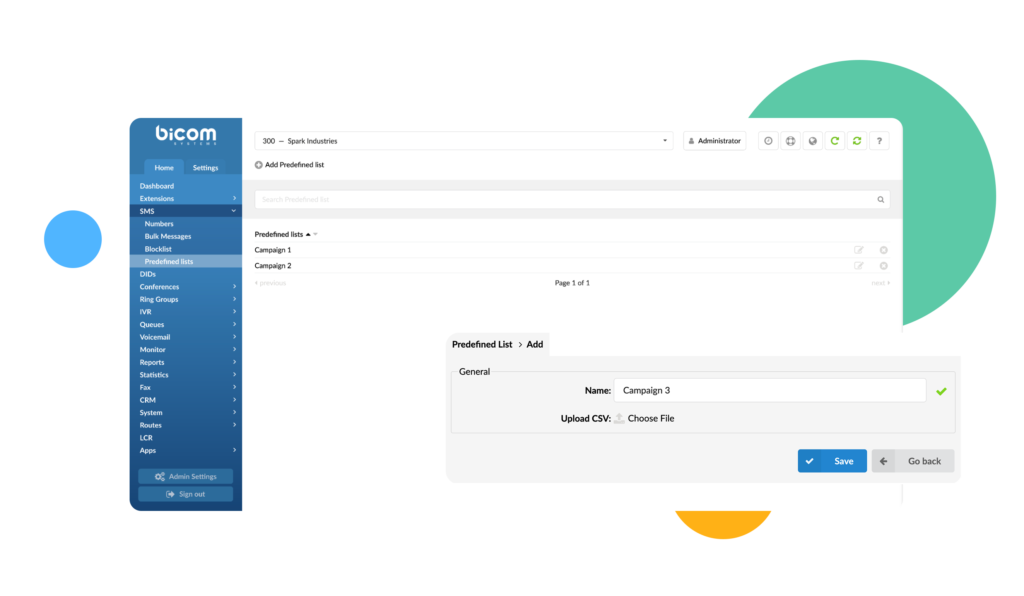
In the same venue, we’ve provided a bit of quality of life to your end as well with the addition of predefined lists to the PBX platform, letting you create lists of SMS numbers when planning campaigns, either manually or through a CSV upload, enabling you to send out SMS messages en masse when needed.
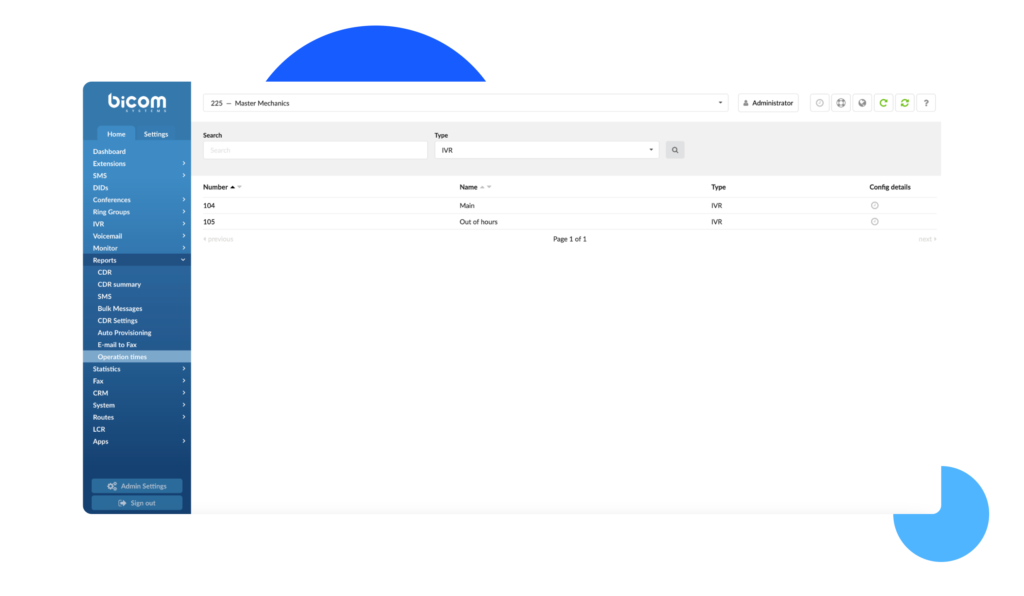
The operation times feature has seen a few adjustments as well. The new Operation Times tab found in the Reports menu now allows you to get a quick overview of all rules set up for every system element in one place, as well as providing easy access for modification when needed, further streamlining the operation process of the PBX platform.
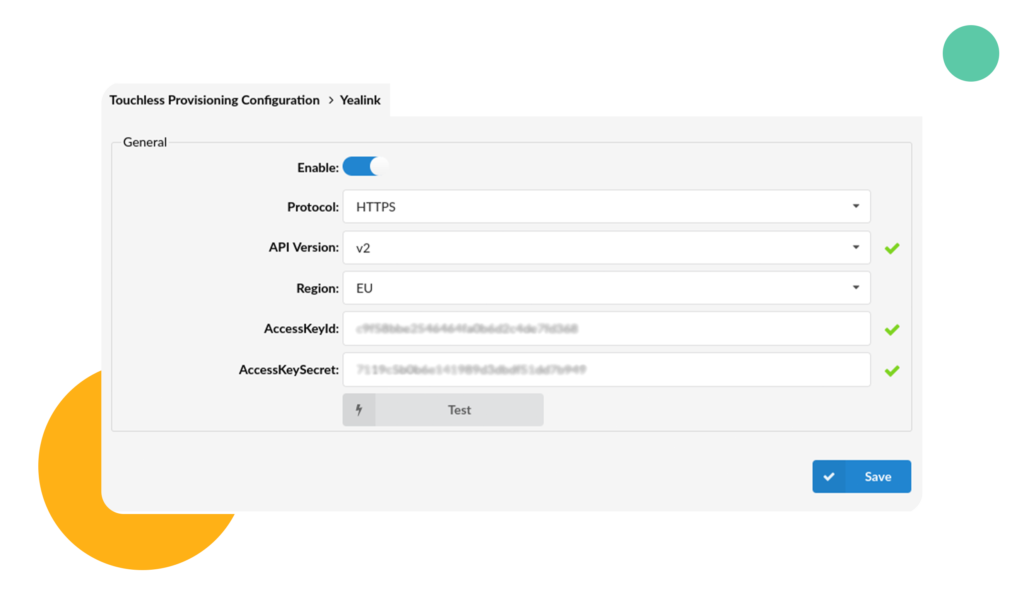
Another change coming with v7.3 is the addition of Touchless provisioning that comes with Yealink’s new Management Cloud Service platform (YMCS), now fully integrated with PBXware.
This brings a new option along with it, the “API Version”, found within the “Touchless Provisioning” tab, allowing you to swap from the currently defunct v1 (old API) to v2 (new API), as well as select your desired region based on the type of Yealink YCMS that you’re utilizing (EU, US or AU)
Contact Center’s 7.3 facelift comes in the form of a neat little quality of life update that allows both Agents and Supervisors better insight into the customer’s thought process by allowing them to see what the message that they’re typing before it’s even sent.
This enables Supervisors to assist Agents when handling customers, if needed, and offers Agents themselves a better idea of what the customer wants and enables them to adjust responses accordingly.
Two relatively small, but greatly significant features added to Contact Center in 7.3 are the typing and seen indicators.
The former allows agents and supervisors alike to note when the customer is actively typing out a reply, letting them stay attentive and ready for an incoming query, streamlining the customer interaction process.
The latter, on the other hand, lets both agents and customers see when the other side has seen their message and allows agents to better read the situation and follow up on their response if needed.

The email communication channel has received a touch-up as well with the addition of the Email signatures option, providing Agents and Supervisors with the ability to create, edit and manage a number of email signatures for professional use within email correspondence and choose which created option to use with a given email response.
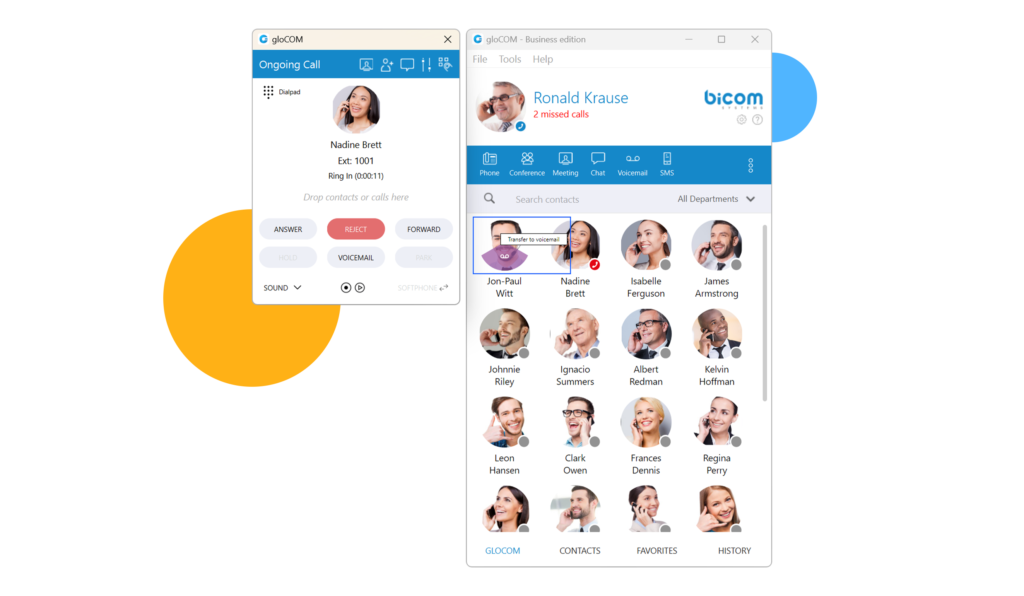
gloCOM has seen a number of quality of life changes within v7.3, the first of which is the ability to transfer any call to a voicemail through the drag and drop functionality, allowing for much quicker call resolution and workflow streamlining.
Starting with v7.3 there’ll no longer be a need for separate meeting mobile applications as you’ll be able to join meetings directly through the gloCOM GO app thanks to the integration of the meeting module.
This will not only help improve your overall experience with gloCOM GO, but will also streamline any future maintenance, support and release processes for mobile stores.
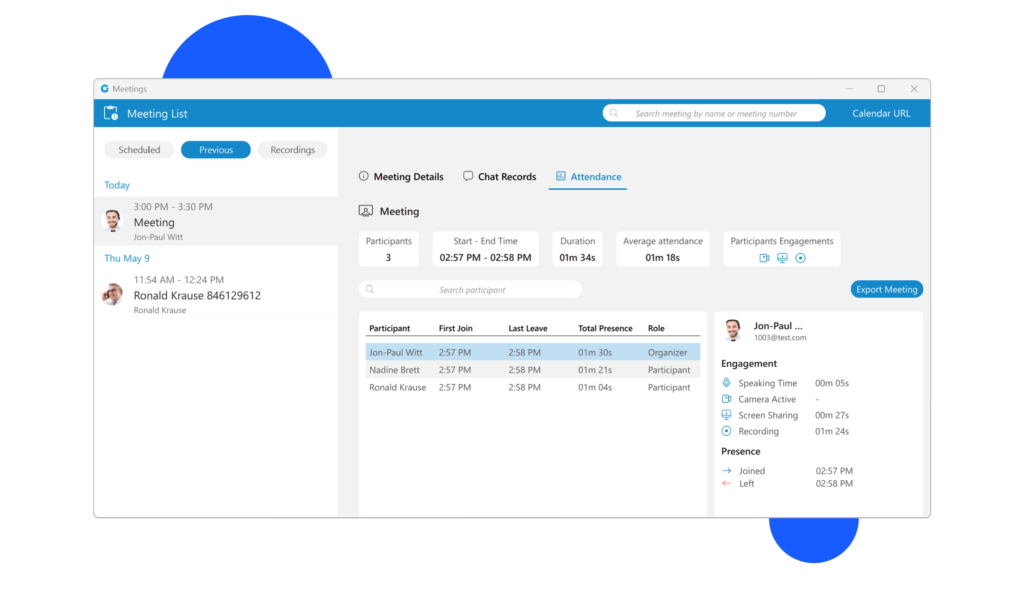
7.3 sees the introduction of meeting attendance reports, giving you a better overview of meeting attendance and engagement that can be analyzed in order to improve future meetings and make them more productive, optimizing work hours and reducing potential frustrations that would otherwise occur.
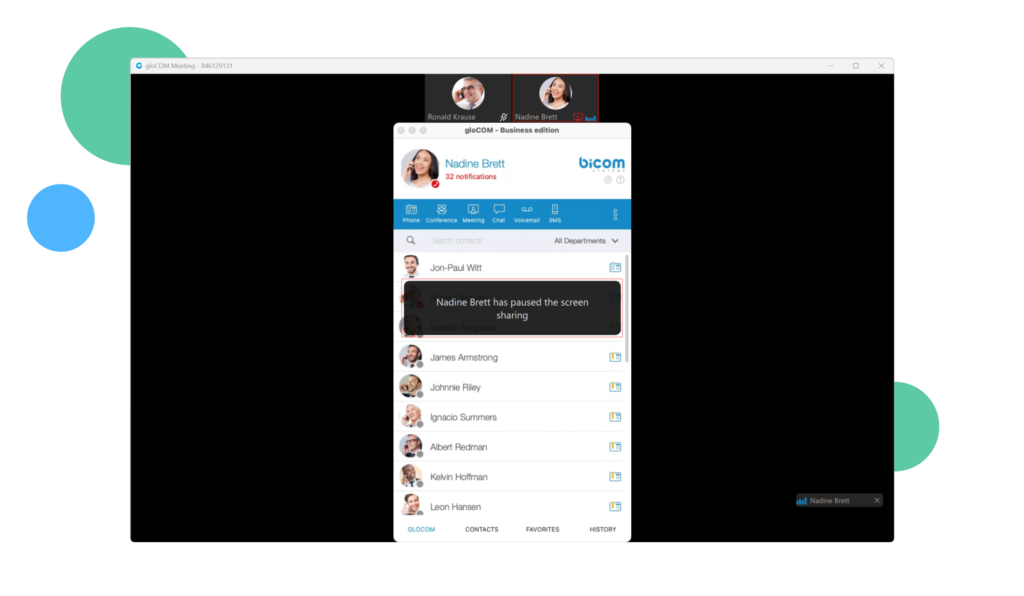
To improve clarity during large meetings, we have implemented an indicator to meetings to better relay to meeting participants when the presenter pauses their screen sharing, reducing potential confusion that may arise from lack of information otherwise and to improve meeting flow.
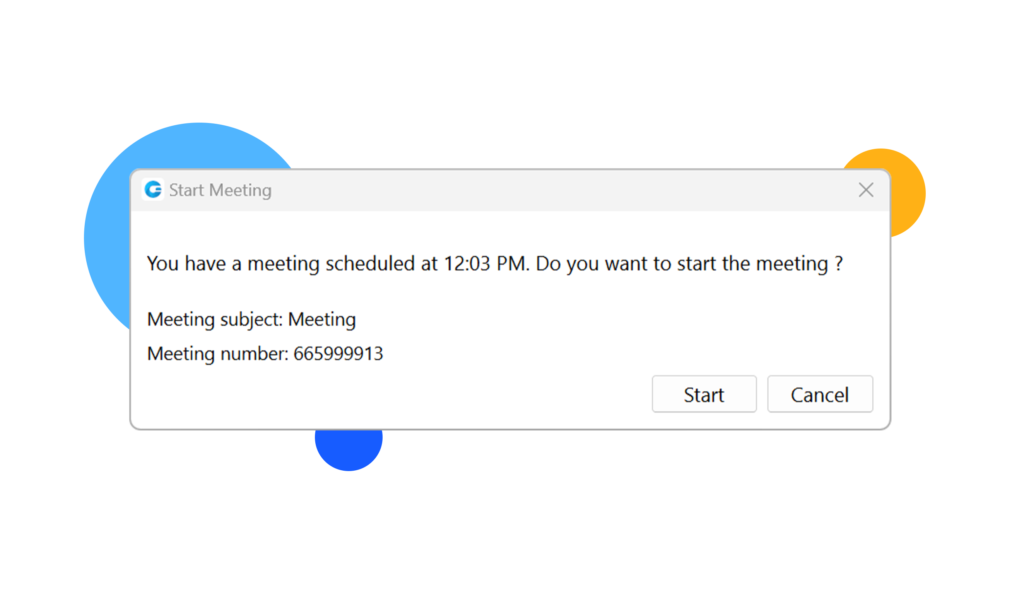
The final notable addition was a small reminder for meeting organizers that notifies them when a scheduled meeting is due to start, as well as enabling them to start the meeting directly from the popup, becoming an incredible timesaver in the long run.
These are only some of the more notable changes that have been introduced with the release of 7.3.
Plenty of other bug fixes, quality of life changes and feature updates have also been introduced, like:
• Updates to First response timeout (automatic ticket transfer)
We believe that these changes will make the Bicom product suite even more intuitive than before and we look forward to seeing how these new changes have affected your business in v7.3.
Until the next major release, we hope that we can continue delivering on the features that help benefit you and your business as a whole. If you have any extra questions, feel free to Contact Us.
The second major announcement related to Indian operator Vodafone Idea and Nokia in only a few days sees Vodafone Idea strengthen its network security with Nokia NetGuard Endpoint Detection and Response (EDR).
Vodafone Idea will roll out NetGuard EDR in its core network, covering all of its consumer and enterprise subscribers in India.
As the name impiles, NetGuard EDR is designed to strengthen network security against rising cyberthreats and security vulnerabilities for its consumer and enterprise customers.
It’s a telco-specific threat detection suite that, says Nokia, will provide Vodafone Idea with real-time, automated monitoring to enable rapid detection and mitigation of endpoint-related security incidents.
Nokia says it will minimise security gaps, reduce the need for extensive testing, and optimise operational costs, while maintaining continuous service availability and performance of the protected endpoints in the entire operational technology (OT) network.
Arvind Khurana, India Market Leader, Cloud and Network Services at Nokia, explains: « NetGuard EDR will deliver to Vodafone Idea the advanced threat detection and response capabilities they need to ensure proactive protection against ever-evolving and more sophisticated cyberthreats. With seamless integration and real-time monitoring, NetGuard EDR will also strengthen the operator’s OT infrastructure to safeguard its mission-critical telecom networks and maintain service continuity. »
NetGuard EDR’s vendor-agnostic capabilities will integrate seamlessly with Vodafone Idea’s existing security tools and processes, strengthening the operator’s network security and furthering Vodafone Idea’s work of building a state-of-the-art security operations centre.
The deployment will initially cover Vodafone Idea’s 4G networks, and eventually the operator’s 5G network.
With this deal, Nokia says it further expands its relationship with Vodafone Idea, which already uses Nokia products, including multiple core solutions and 4G RAN.
Indeed, as we reported yesterday, Nokia has also announced a billion-dollar network contract win with Vodafone Idea to modernise and expand its 4G network – to include 5G upgrades – over the next three years.

Four items on four continents to start the week: … [visit site to read more]

In what may seem an unusual form of diversification, Pakistan’s Mari Petroleum Company Limited (MPCL) has said it plans to invest in the establishment of data centres, cloud computing, artificial intelligence and related technology ventures.
According to a number of reports, MPCL, in collaboration with its partners, will lead this expansion by developing Tier III and Tier IV-certified, purpose-built data centres across Pakistan to meet the data management and processing needs of a wide range of public and private institutions. Pakistan currently has 22 data centres.
As local press resource The Business Recorder puts it, these data centres will provide co-location and cloud services, addressing the evolving requirements of businesses across different sectors.
The move may seem unusual, but it isn’t totally unexpected. As the Data Centre Dynamics website points out, in August, MPCL announced the formation of a subsidiary focusing on cloud computing and artificial intelligence (AI). The company reportedly said this week that it has formed a new digital infrastructure subsidiary with an equity investment of some US$36 million.
The news of MPCL’s move into data centres appeared this week in a Pakistan Stock Exchange (PSX) stock exchange announcement, which was notable mainly for its brevity. Indeed, numbers of data centres, where they will be located, size, scale, partnerships, and timing of the date centre rollout were not mentioned.
However, the PSX announcement said the project launch ceremony for the first data centre took place this week in Karachi and suggested that MPCL’s plans to form a dedicated company relevant to the sector will help tap the rising demand for cloud computing and artificial intelligence.
MPCL, founded in 1984, is controlled by Pakistani conglomerate the Fauji Foundation, which, says Data Centre Dynamics, is largely controlled by the country’s armed forces.

The International Finance Corporation (IFC) has approved a $400 million loan for Pakistan Telecommunications Company Limited (PTCL), marking a significant step toward its acquisition of Telenor Group’s operations in Pakistan.
In a statement, PTCL confirmed the approval, which had been anticipated since April, with initial expectations for completion by July.
The IFC detailed in a seperate statement, $224.5 million will come directly from IFC and an additional $175.5 million from British International Investment and the Silk Road Fund, structured over a seven-year term.
This acquisition will see PTCL take control of Telenor Pakistan and Orion Towers Private Limited, with plans to merge its mobile subsidiary, Pak Telecom Mobile Limited (Ufone), with Telenor Pakistan.
The combined entity is projected to serve around 70 million subscribers, reducing the number of mobile network operators in the country from four to three. The main competitors left in the market will be Zong and Jazz.
The merger represents another strategic exit by Telenor from Asian markets, following its previous mergers in Thailand and Malaysia and its withdrawal from Myanmar. Telenor still retains its stake in Grameenphone in Bangladesh.
The IFC emphasised that Pakistan’s telecommunications sector presents substantial growth opportunities, with broadband and mobile user penetration currently below regional averages. “Pakistan’s telecommunications market offers significant opportunities for growth and investment,” said Khawaja Aftab Ahmed, IFC’s Regional Director for the Middle East, Pakistan, and Afghanistan.
Commenting on the deal, Hatem Bamatraf, President and Group CEO of PTCL and PTML, highlighted the landmark nature of the financing: “This is the largest single financing ever secured in the industry, and it strengthens the PTCL Group while promoting long-term stability across the telecom sector. The enhanced economies of scale will allow the industry to contribute more effectively to Pakistan’s economic and social progress.”

This Industry Viewpoint was authored by Jeff Miller, President and CEO of Synchronoss Technologies
In today’s hyper-connected world, the importance of data security cannot be overstated. In Appdome’s 2024 Mobile Consumer Security Survey, 58% of consumers named mobile fraud their primary worry today, especially with AI-based scams on the rise. Deloitte’s 2023 Connected Consumer Survey found similar results, with 67% of mobile users reporting concerns about data security and privacy on their smartphones and 62% of smart home users reporting anxiety … [visit site to read more]

South African telco Vodacom said on Thursday its enterprise unit is working with local governments to implement smart city solutions for use cases such as utilities management, healthcare, education and security.
Under a five-year transversal contract with the National Treasury, Vodacom Business said it is delivering digital solutions that will enable municipal governments to make services more efficient and inclusive.
“We aim to use our experience and expertise in understanding government needs to achieve their smart city goals,” said Vodacom Business Director Videsha Proothveerajh in a statement. “This includes digitalising utilities management, healthcare, education and security, which streamline operations, enhance efficiencies and improve the lives of citizens.”
Vodacom Business’ smart utilities management system uses connected smart meters to provide real-time information on consumption and enable more accurate billing and revenue collection.
On the healthcare front, Vodacom Business offers a stock visibility solution for healthcare facilities to better keep track of equipment, supplies and dispensing of medication, and a smart dispatch system that allows users to track ambulance requests. Meanwhile, the AitaHealth smartphone-based platform helps community health workers to deliver preventative care services at home.
Smart education solutions include remote learning and streamlined online admissions processes. And public safety apps include IoT-based soltuions such as bodycams and real-time firearm tracking and geofencing.
Vodacom Business said it has also developed and deployed a “citizen engagement” app that enables “two-way communication and collaboration between citizens and municipalities, including logging service requests and tracking their progress.”
The South African government has been keen on harnessing smart-city tech for several years now. In 2021, the Department of Cooperative Governance published the South African Smart Cities Framework in collaboration with the Council for Scientific and Industrial Research.
In 2020, President Cyril Ramaphosa launched several smart city infrastructure projects, including the ZAR84 billion (US$4.8 billion) Mooikloof Mega City project near Pretoria, and another smart city project near Lanseria Airport near Johannesburg.
However, it’s been slow going for both projects. According to the latest media reports, Mooikloof is still in the construction phase and has been reportedly hampered by funding disputes between the government and developer Balwin Properties.
Meanwhile, developers at the Lanseria site reportedly have not yet broken ground, having spent the last four years developing a plan for the project and getting the necessary approvals to build out the bulk infrastructure
All of which could mean that existing municipalalities that adopt smart city solutions from Vodacom and other solution providers may potentially end up as poster children for the promised benefits of smart-city tech long before dedicated smart city projects are completed.