

Here is a set of regional infrastructure news to catch up with: … [visit site to read more]
Here is a set of regional infrastructure news to catch up with: … [visit site to read more]
Leading financial services platform Mukuru has announced the launch of its new mobile wallet in Malawi, the Mukuru Wallet, which, Mukuru says, is designed to address the growing demand for a convenient, secure, efficient way to manage funds and make money transfers.
The Mukuru Wallet enables customers to seamlessly receive and send funds both locally and internationally, and store, save and earn interest on funds.
Mukuru explains that mobile wallets are proving to be a critical financial tool for underserved and unbanked communities, offering a safe and effective means of accessing financial services. In Malawi, the wallet enables an alternative means of accessing formal banking services in both rural and urban areas.
The Reserve Bank of Malawi (RBM) National Payment Systems report for the period ended December 2022 showed a 14.1% increase in the number of mobile money subscribers, which stands at 12.2 million, up from 10.7 million in 2021. According to Pride Chiwaya, Malawi Country Manager at Mukuru, it was this massive demand that led to Mukuru launching the wallet.
This Mukuru Wallet has been designed specifically for the Malawian market, complete with two pockets called Nyanja and Moyo. Nyanja is for all domestic money transfer transactions and cash-ins, while Moyo is for customers to receive their international money transfers. No fees are charged when cashing out from the Moyo pocket. In addition to this, customers earn interest on the funds in their wallet on a quarterly basis.
Mukuru says that, with a safe, secure, digital means of storing money that also enables them to pay bills directly from the wallet, Malawians will not only benefit from the reduced risk of not having to withdraw large sums of cash, but they can also actively take part in the modern, digital financial economy.
Three industry leaders teamed up for some big bandwidth between continents. Nokia, Windstream Wholesale, and Colt Technology Services recently put the latest technology to work in an 800GbE trial between continents. … [visit site to read more]

Four bits of expansion news from Europe and Asia to keep up with: … [visit site to read more]
Keep up-to-date with all the latest news, articles, event and product updates posted on Developing Telecoms.
Subscribe to our FREE weekly email newsletters for the latest telecom info in developing and emerging markets globally.

Keep up-to-date with all the latest news, articles, event and product updates posted on Developing Telecoms.
Subscribe to our FREE weekly email newsletters for the latest telecom info in developing and emerging markets globally.

 This Industry Viewpoint was authored by Richard Brandon, VP of Strategy at RtBrick
The 2024 Trump vs. Harris election presents numerous polarizing issues that teeter headlines daily, including how federal spending should be allocated. Funding within the telecom and broadband space has been an issue of contention for years, most recently playing out in political moves like Trump’s rip-and-replace program, which aimed to eliminate outdated systems, and Biden’s BEAD program, meant to aid the digital divide. … [visit site to read more]
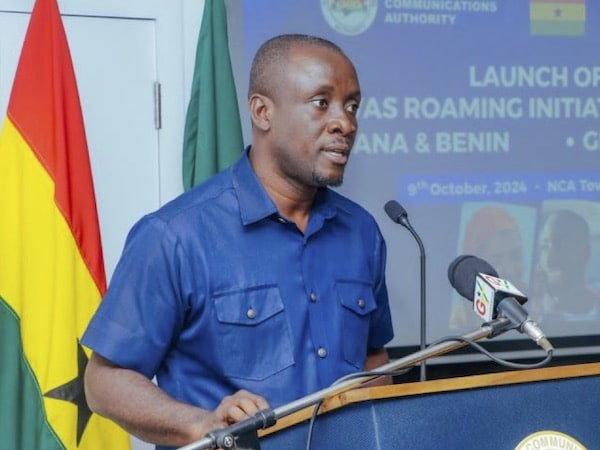
The government of Ghana said that it has implemented free roaming with Benin and Togo, enabling residents of all three West African countries to use their mobile services without having to pay international roaming charges.
According to a statement from Ghana’s National Communications Authority (NCA) on Wednesday, mobile users from Ghana, Togo and Benin can send voice calls and text messages – either locally or internationally – at local rates for 30 consecutive days when they travel within all three countries. Incoming calls and SMSs will be free of charge.
Internet access is also charged at local data bundle rates, although users outside of their home country won’t be able to purchase new data plans.
In a speech at a press event in Accra, Deputy Minister for Communications and Digitalisation Charles Acheampong said the initiative would encourage more travel and create a more unified and interconnected region.
“This initiative will allow our citizens to stay connected seamlessly, without the burden of high roaming charges or the inconvenience of multiple SIMs,” he said.
Michel Yaovi Galley, director general of Togo’s Regulatory Authority for Electronic Communications (ARCEP Togo), said that mobile operators from Ghana, Togo and Benin were all committed to the success of the project.
The agreements are part of the Free Roaming Initiative launched by the Economic Community of West African States (ECOWAS).
While the initiative was signed in 2016, ECOWAS member states have struggled to implement it, not least because of ongoing political and economic instability in the region, as well as the COVID pandemic. It was only in June 2023 that the first free roaming agreement was launched between Ghana and Côte d’Ivoire.
Apart from Ghana, Togo, Benin and Côte d’Ivoire, other ECOWAS members include Burkina Faso, Cabo Verde, The Gambia, Guinea, Guinea-Bissau, Liberia, Mali, Niger, Nigeria, Senegal and Sierra Leone.
Meanwhile, Acheampong urged the NCA to set clear metrics to gauge the success of the roaming initiative.
“Only by measuring our progress can we ensure that we are delivering on the promises made to our citizens and achieving the intended outcomes,” he said.

Operators Brisanet, Ligga/Sercomtel and TIM have been declared the winners of Brazil’s first reverse mobile auction, held by the Ministry of Communications, the regulator Anatel and Seja Digital, the group involved in effecting the transition to digital TV broadcasting in Brazil, which, in turn, has opened up 4G spectrum.
The winners of the first 100% digital auction to choose operators to install and operate telephony and mobile internet antennas in 59 unserved remote locations were announced earlier this week.
Brisanet, Ligga/Sercomtel and TIM will operate in the states of Bahia, Minas Gerais, Mato Grosso do Sul, Pará, Paraíba, Maranhão, Pernambuco, Rondônia, Tocantins and Ceará. They will have 90 days, which may be extendable, to install and operate the infrastructure.
The auction was held in the reverse format, in which the participants who gave the lowest bids for each location won. The event had a ceiling of BRL108.8 million (about US$19.5 million) and was concluded with a 41% discount. The difference will be allocated to other stages of the project, with at least one more round of reverse auction planned. Cloud2u and Claro were also bidders.
The investment will be BRL64 million (about US$11.46 million), a saving of 41% compared to the auction reference value.
Telephone operators were able to choose one or more locations from the list and make a single bid for each one, below the limit stipulated in the notice. The company that adopted the lowest subsidy amount won.
According to Carlos Baigorri, president of Anatel, the first edition of the auction was considered a success. It will be a pilot for others to be carried out in order to use the remaining balance of BRL250 million (US$44.76 million) in available resources.

Four projects of regional and metro scope to talk about today: … [visit site to read more]